
A gap in your shingles rarely stays small. One good windstorm off Lake Ontario, a hailstorm rolling through the GTA, or simple age-related wear can leave a section of your roof deck exposed, and every hour it sits open is an hour of risk for water intrusion, insulation damage, and mould growth in your attic. If you have just discovered missing shingles after a storm, you need a plan that stops the bleeding today and a permanent fix that holds up through the next Toronto winter.
This guide covers the 3 best solutions for missing shingles emergency roof repair, ranked from fastest temporary fix to full permanent replacement, so you can make the right call whether you are dealing with a single blown-off shingle or a whole section of exposed decking. We will walk through what each solution actually involves, how long it lasts, what it costs, and when it is time to call in a professional roofing crew instead of climbing up there yourself.
Toronto’s climate is part of the problem. Freeze-thaw cycles crack and lift asphalt shingle tabs, summer heat softens sealant strips just enough for wind to catch an edge, and sudden July thunderstorms can strip a weakened shingle in seconds. Knowing your options before an emergency happens means you will not be scrambling to figure out solutions for missing shingles emergency roof repair while rain is actively coming through your ceiling.
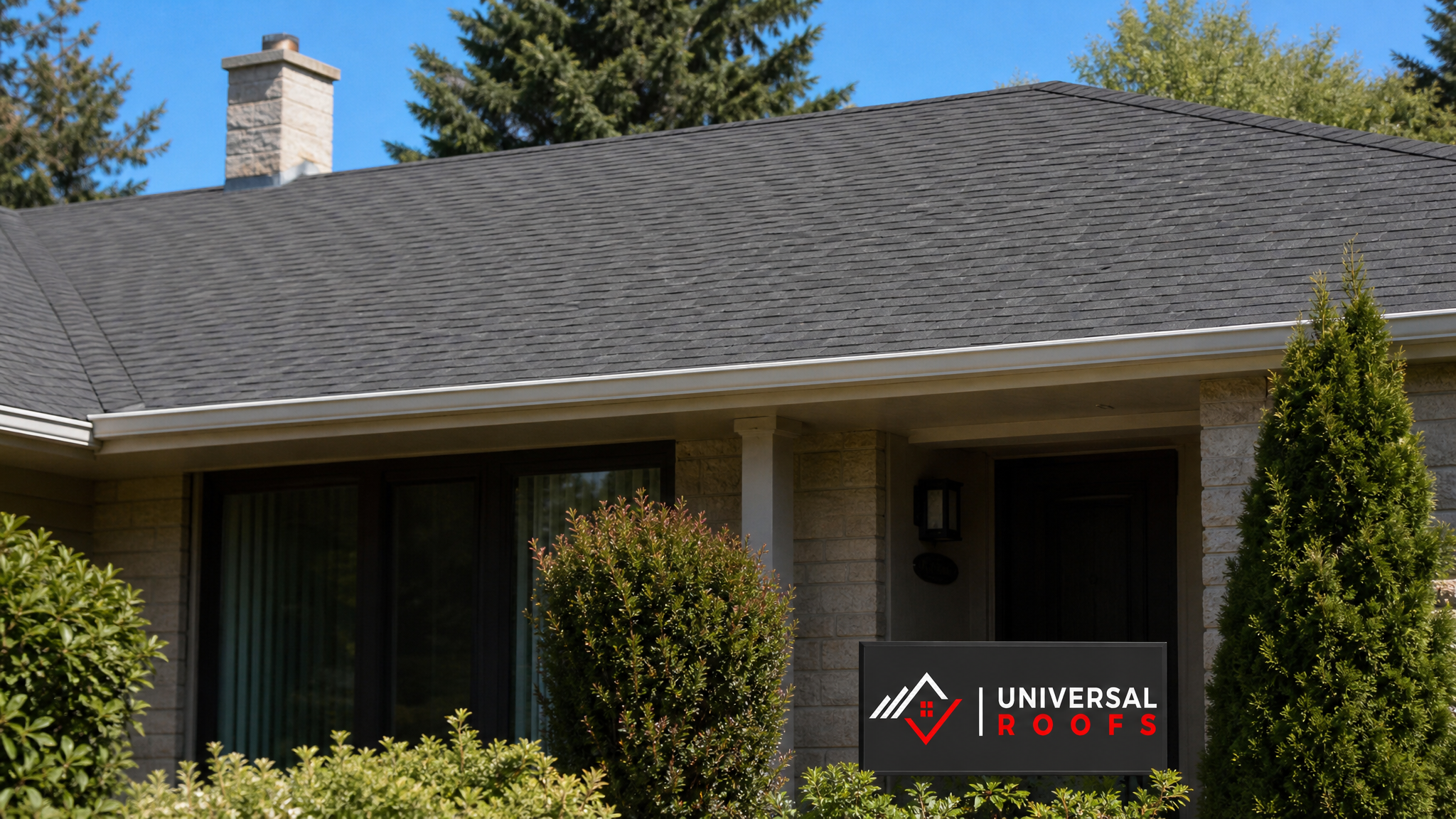
How to Spot Missing Shingles Before They Become a Bigger Problem
Most homeowners discover missing shingles one of two ways: they see torn pieces of asphalt shingle in the yard after a storm, or they notice a water stain spreading across a bedroom or hallway ceiling. Both are worth taking seriously, but the second one means water has already reached your attic or interior framing.
From the ground, walk the perimeter of your house and look up at the roof slopes facing the street and the backyard. You are looking for:
- Dark rectangular patches where the shingle granules and mat are missing, exposing the black underlayment or bare wood decking
- Shingles that are curled, lifted, or flapping at the edges, especially along the roof’s ridges and the edges facing prevailing winds
- Granules collecting in your eavestroughs or at the base of downspouts, a sign of accelerated shingle wear
- Visible daylight through the attic when you check from inside on a bright day, which indicates a full gap in the roof deck
If you can safely see the roof from a ladder without climbing onto the slope itself, take photos. These are useful both for a contractor’s quote and for an insurance claim if the damage was storm-related. Do not walk on a wet or steeply pitched roof to inspect it yourself; this is one of the most common ways homeowners get seriously hurt during a roofing emergency, and it is exactly the kind of job better left to a licensed roof repair crew with proper fall protection.
| Warning Sign | What It Means | Urgency Level | Recommended Action |
|---|---|---|---|
| Bare patch of exposed underlayment or decking | One or more shingles blown off completely | High | Tarp or temporary patch within 24 hours |
| Curled or lifted shingle tabs | Sealant strip has failed, shingle is loose | Medium | Reseal or replace within the week |
| Granule loss in eavestroughs | Shingles are aging and losing UV protection | Low to Medium | Schedule an inspection this season |
| Water stain on ceiling or wall | Active leak reaching interior framing | Emergency | Call a roofer same day, tarp immediately |
| Daylight visible in attic | Full gap through roof deck | Emergency | Interior and exterior action needed immediately |
Solution 1: Emergency Tarping for an Immediate, Temporary Fix
When shingles go missing during or right after a storm and you cannot get a crew on the roof the same day, a properly installed emergency tarp is your best short-term defence. This is not a cosmetic fix — it is a genuine, weatherproof barrier that can hold for days or even a few weeks while you arrange permanent repairs.
A correctly done emergency tarp job involves more than just throwing a blue poly sheet over the damaged area. It requires:
- A heavy-duty tarp rated for exterior use, sized to extend at least 1.2 metres past the damaged area in every direction
- Furring strips or 2×4 lumber battens to sandwich and anchor the tarp edges, rather than nailing directly through the tarp material, which tears in wind
- Sealed fastener points so new holes in the roof deck do not create additional leak paths
- An overlap draped fully over the ridge line if the damage is near the peak, so wind-driven rain cannot get underneath from the opposite slope
Done properly, a tarp is genuinely one of the best solutions for missing shingles emergency roof repair because it buys time without making the eventual permanent repair harder. Done poorly — thin plastic sheeting, a few random bricks or sandbags, staples straight through the membrane — it often fails in the very next windstorm and can actually funnel more water into the gap than if nothing had been done at all.
If you are in a genuinely dangerous situation, such as active rain entering a finished living space, do not attempt this yourself on a wet, sloped roof. Contact a professional roof repair team that carries emergency tarping as part of their storm response service; most established roofing companies in the GTA can be on-site within hours for genuine emergencies.
Solution 2: Targeted Shingle Replacement for a Permanent Localized Fix
Once the situation is stabilized, the next best solution — and often the final one, if the surrounding roof is still in good shape — is a targeted shingle replacement. This means removing the damaged section down to sound decking, checking the underlayment and flashing underneath, and installing new shingles that are matched as closely as possible to the existing roof in colour and profile.
A proper targeted repair includes several steps that are easy to skip if you are trying to save time or money, but each one matters for long-term performance:
- Deck inspection — checking for soft or rotted plywood under the missing shingles, since water sitting exposed for even a few days can begin to soften OSB or plywood sheathing
- Underlayment replacement — the felt or synthetic underlayment beneath the shingles is your real waterproofing layer, and it should be replaced in the repaired section, not just patched
- Proper shingle weaving — new shingles need to be woven into the surrounding courses with correct overlap and nail placement, not simply laid on top of the gap
- Flashing check — if the missing shingles were near a valley, chimney, vent pipe, or skylight, the flashing in that area should be inspected and resealed or replaced as needed, which is especially relevant if your home also has a skylight nearby
- Sealant strip activation — new shingles rely on a heat-activated adhesive strip to bond to the course below; in cool weather this sometimes needs to be hand-sealed with roofing cement to bond properly right away
The biggest limitation of targeted replacement is colour and granule matching. Asphalt shingles fade with UV exposure over time, so a brand-new shingle patched next to a 10-year-old roof will often look slightly different for a season or two until it weathers in. For most homeowners this is an acceptable trade-off against the cost of a full replacement, especially if the rest of the roof still has years of service life left.
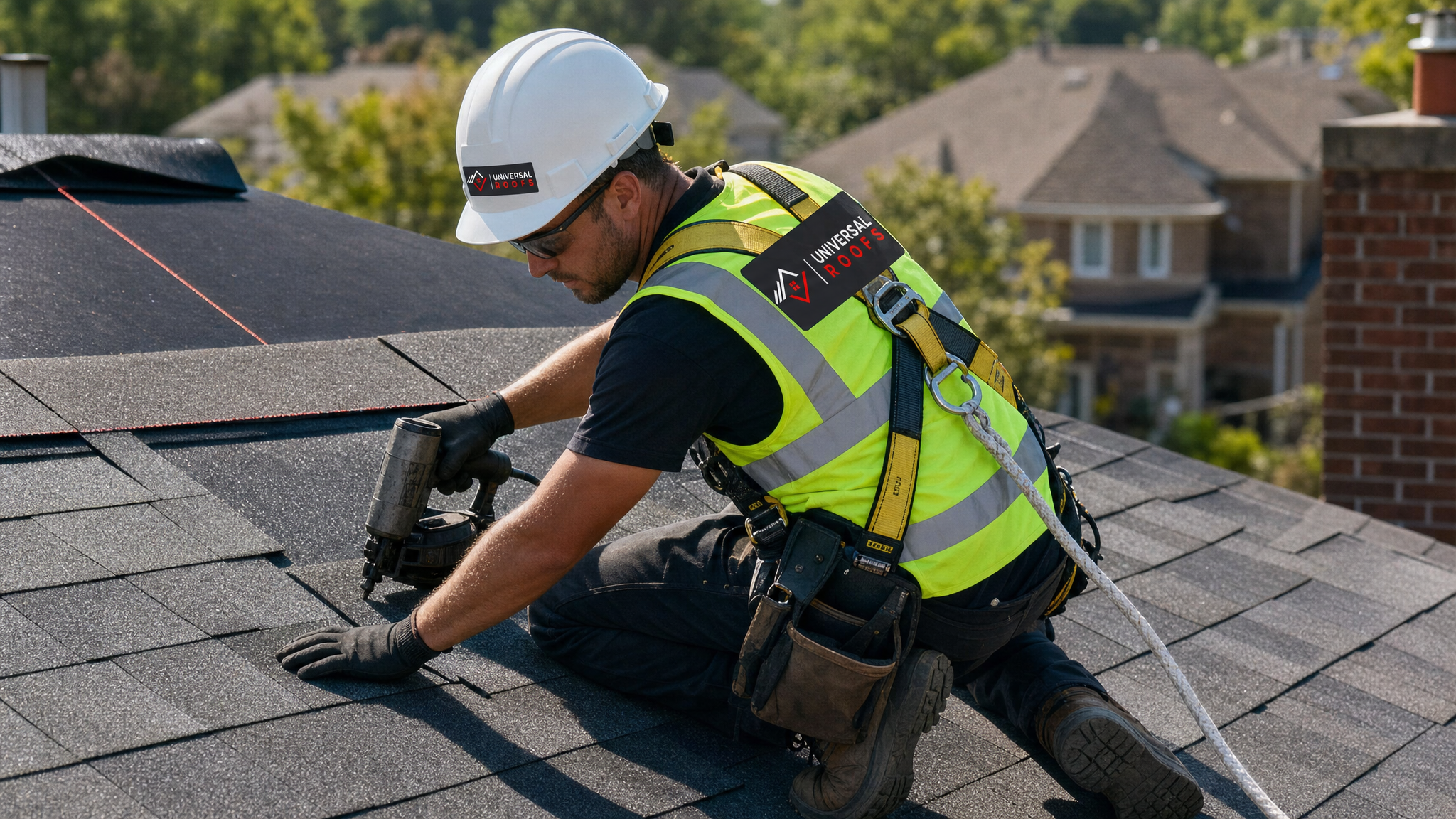
| Repair Method | Typical Timeline | Average Cost Range (CAD) | Expected Lifespan of Fix |
|---|---|---|---|
| Emergency tarping only | Same day, 1-2 hours | $250 – $600 | Days to a few weeks |
| Targeted shingle replacement (1-3 shingles) | 1 day | $300 – $750 | 10-15 years, matched to roof age |
| Section replacement (larger storm damage area) | 1-2 days | $800 – $2,200 | 15-20 years |
| Full roof replacement | 1-3 days | $8,000 – $18,000+ | 20-30 years depending on material |
Solution 3: Full Roof Replacement When Damage Is Widespread
Sometimes missing shingles are not an isolated event — they are a symptom of a roof that is at the end of its service life. If you are finding multiple bare patches across different slopes, if your shingles are original to a roof installed more than 18-20 years ago, or if a contractor lifts a few shingles nearby and finds the surrounding mat brittle and cracking, targeted repairs become a temporary patch on a larger problem.
In these cases, a full roof replacement is genuinely the most cost-effective of the 3 best solutions for missing shingles emergency roof repair, even though it carries the highest upfront cost. Here is why it often makes more financial sense than repeated emergency patches:
- Every emergency call-out and targeted repair carries its own labour cost, and these add up quickly on an aging roof that keeps failing in new spots each storm season
- A full tear-off allows a complete inspection and replacement of the roof deck, underlayment, ice and water shield along the eaves, and all flashing — addressing hidden problems that patch jobs cannot reach
- New shingles come with a full manufacturer warranty, whereas patches on an old roof typically are not covered the same way
- Modern shingle products offer significantly better wind ratings (some rated to 210 km/h) and impact resistance than shingles installed 15-20 years ago, which matters given how frequently the GTA now sees severe summer thunderstorms
Homeowners considering this route should also have their attic ventilation assessed at the same time. Poor attic ventilation accelerates shingle aging from the underside, and it is far more efficient to correct venting during a full replacement than to retrofit it afterward.
Insurance, Warranty, and Documentation Considerations
If the missing shingles resulted from a wind or hailstorm, most home insurance policies in Ontario will cover repair or replacement costs after your deductible, provided the damage is reported and documented promptly. A few practical steps make this process much smoother:
- Photograph the damage from the ground and, if safe, from a ladder, both immediately after discovery and again once repairs begin
- Keep a copy of any weather event records (Environment Canada storm advisories are useful supporting evidence for GTA claims)
- Request an itemized quote from your roofing contractor that separates emergency mitigation (tarping) from permanent repair, since insurers often process these as distinct line items
- Ask whether your contractor offers a workmanship warranty in addition to the shingle manufacturer’s material warranty — reputable companies stand behind both
Acting quickly also matters for the claim itself: most policies require “reasonable efforts to prevent further damage,” meaning a delayed tarp or repair could affect your claim if the interior damage is found to have worsened due to inaction.
DIY vs. Professional Repair: What You Should and Should Not Attempt
There is a meaningful difference between what a comfortable, careful homeowner can safely do and what genuinely requires a licensed professional. Understanding that line protects both your safety and your roof’s warranty.
| Task | DIY-Appropriate? | Key Risk if Done Incorrectly | Notes |
|---|---|---|---|
| Ground-level visual inspection with binoculars | Yes | Minimal risk | Safe starting point for any homeowner |
| Clearing debris from eavestroughs at ground level | Yes, with proper ladder safety | Fall risk from ladder | Use a stabilizer and have someone spot you |
| Applying roofing cement to a small lifted tab | Conditionally, low-slope only | Improper sealant can trap moisture | Steep or wet roofs should be left to professionals |
| Installing an emergency tarp on a sloped roof | Not recommended | Serious fall risk, improper anchoring causes leaks | Call a professional emergency crew |
| Replacing shingles and checking underlayment | No | Voided warranty, incorrect weaving causes future leaks | Requires trained, insured roofing technicians |
| Diagnosing deck rot or structural issues | No | Missed structural damage, safety hazard | Always requires a licensed inspection |
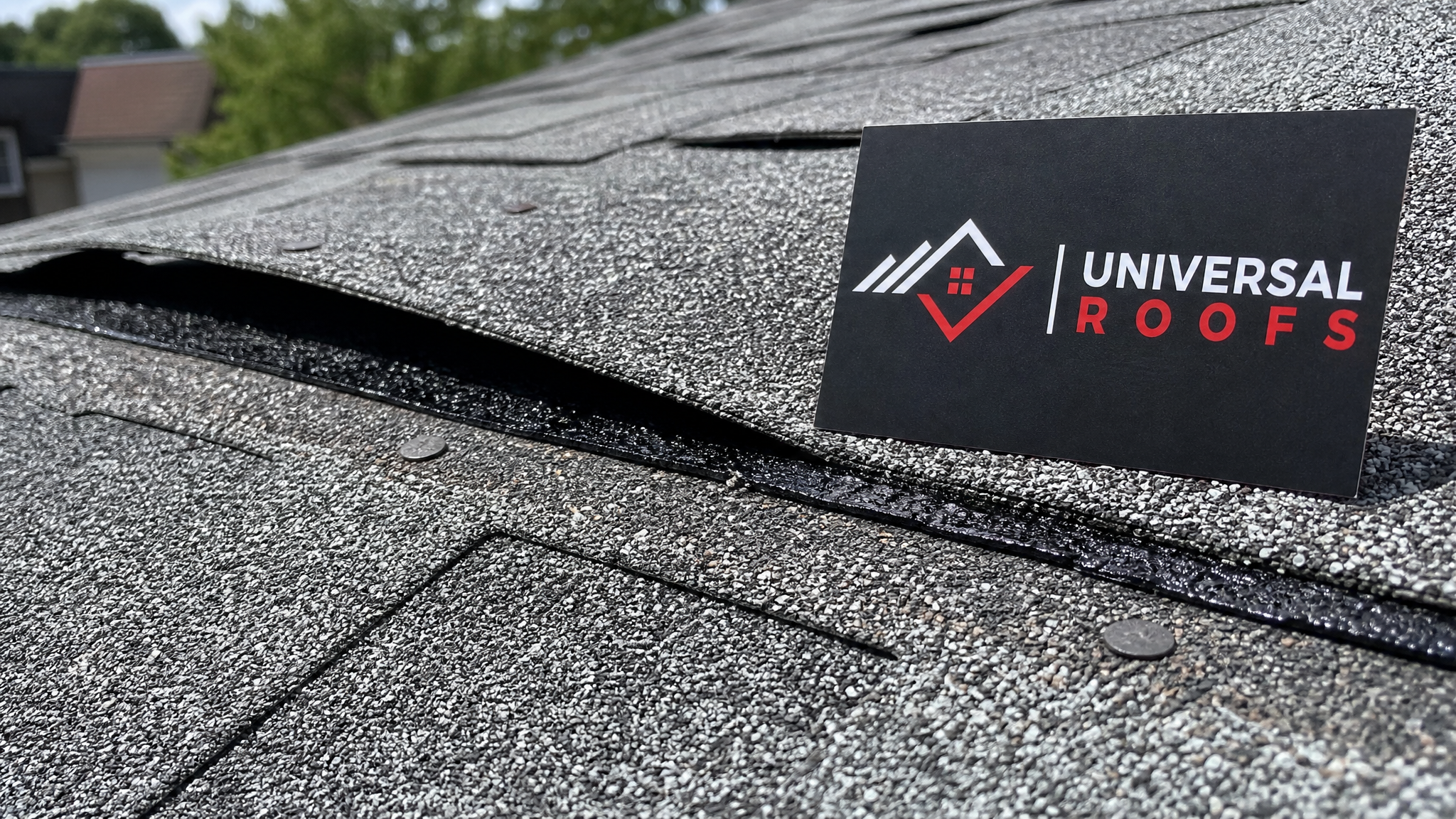
Preventing the Next Emergency: Seasonal Maintenance That Actually Works
The most reliable way to avoid another round of solutions for missing shingles emergency roof repair is routine seasonal maintenance. Toronto’s climate puts asphalt shingles through an unusually demanding cycle: winter freeze-thaw, spring wind and rain, and summer UV and heat, all in the span of twelve months.
A practical seasonal maintenance routine includes:
- Spring: inspect for winter damage, clear eavestroughs of debris, check for any shingles loosened by ice or wind
- Summer: schedule any needed repairs before fall storm season, check attic ventilation and insulation while the attic is accessible and dry
- Fall: clear leaves and debris before the first snowfall, confirm flashing around chimneys and vents is sealed
- Winter: monitor for ice damming, avoid removing snow yourself unless it can be done safely from ground level with a roof rake
Homeowners who schedule a professional inspection once a year, ideally in late spring or early summer, catch small problems — a lifted tab, a cracked seal, minor granule loss — long before they become a missing-shingle emergency. It is also worth having your flat roofing sections, if you have any over a garage or addition, inspected on the same visit, since flat roof membranes fail differently than sloped shingle roofs but are just as prone to sudden leaks if neglected.
If you are unsure whether your roof needs a repair, a full replacement, or simply a maintenance visit, our FAQ page covers many of the most common homeowner questions, and our reviews page reflects the kind of long-term relationships we build with homeowners across the GTA who call us back year after year for exactly this kind of seasonal check-up.
Choosing the Right Roofing Company for Emergency Repairs
Not every roofing company that advertises “emergency service” is equipped to actually deliver it. When you are vetting a contractor for missing shingle repairs, especially under time pressure, look for a few concrete signals of a legitimate, professional operation:
- A real physical presence and licence in Ontario, with liability insurance and WSIB coverage for their crews
- Clear communication about what is covered under emergency tarping versus the permanent repair that follows
- Willingness to provide before-and-after photos of the repair for your records and any insurance claim
- A workmanship warranty separate from the shingle manufacturer’s material warranty
- Positive, verifiable reviews from homeowners in your specific area of the GTA
Universal Roofs has served homeowners across Toronto and the surrounding regions since 2005, and our crews are experienced in exactly this kind of urgent, time-sensitive repair. Whether you are in Toronto, the Peel Region, York Region, Halton Region, or Durham Region, our team can typically respond quickly to genuine roofing emergencies and walk you through which of the three solutions above makes the most sense for your specific situation. Learn more about our history and approach on our about page.
What are the best solutions for missing shingles emergency roof repair?
How quickly do I need to address missing shingles after a storm?
Can I install an emergency tarp myself to cover missing shingles?
Will my home insurance cover missing shingles emergency roof repair?
How do I know if I need a repair or a full roof replacement?
What causes shingles to go missing in the first place?
Need Help With 3 Best Solutions for?
Missing shingles are not a problem that improves with time, and the right response depends entirely on how much damage you are dealing with and how old your roof already is. Universal Roofs can help you determine, quickly and honestly, whether an emergency tarp, a targeted shingle replacement, or a full roof replacement is the right call for your home.
Call us today at (416) 732-2421 or request a free inspection to get started.
Universal Roofs proudly serves Toronto, Mississauga, Brampton, Vaughan, Markham, Oakville and the GTA since 2005.