
If you have never given much thought to the narrow strips of material tucked under your roofline, you are not alone. Soffit and fascia repair rarely tops a homeowner’s to-do list until a sagging board, a peeling strip of paint, or a family of squirrels makes the problem impossible to ignore. Yet these two unassuming components quietly do more to protect your home than almost any other exterior feature.
In the Greater Toronto Area, where summer humidity gives way to punishing winter freeze-thaw cycles, soffit and fascia repair is essential for long lasting durability of your entire roofing system. Neglect the fascia board and you risk rot spreading into your roof deck. Ignore damaged soffit panels and you choke off the attic ventilation your shingles depend on to survive a Canadian winter. This guide walks through exactly why these components matter, how to spot trouble early, what repair and replacement actually involve, and how to keep your roofline in good shape for decades.
Whether you are dealing with a single warped fascia board after a windstorm or planning a full soffit refresh before selling your home, understanding the mechanics of these systems will help you make smarter decisions and avoid costly water damage down the road.
What Soffit and Fascia Actually Do
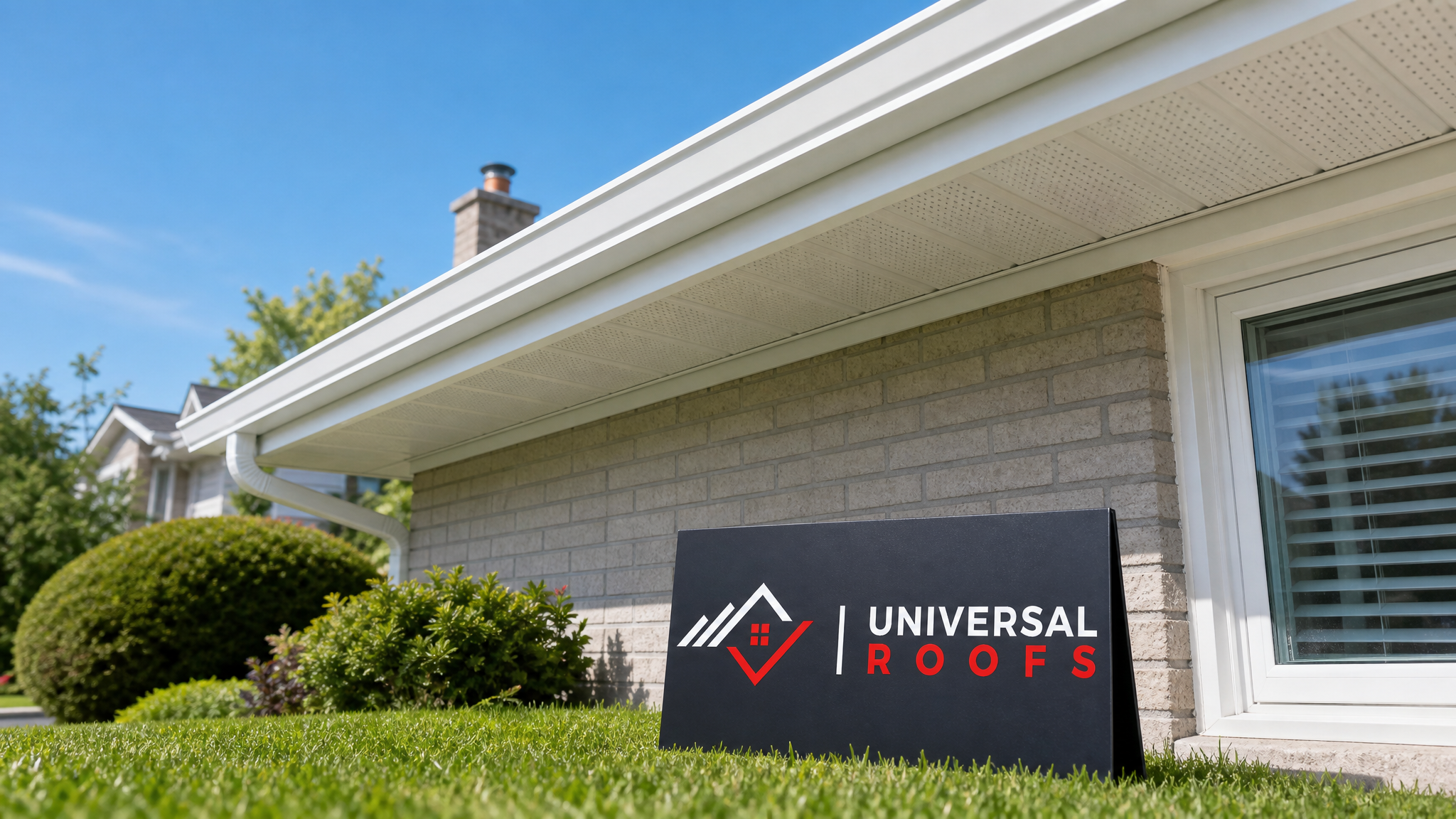
Before getting into repair techniques, it helps to understand what these two building components are and why builders include them at all. The fascia is the vertical board that runs along the edge of your roofline, fastened directly to the ends of your roof trusses or rafters. It is the surface your eavestroughs are mounted to, and it forms the finished edge you see when you look up at your roof from the street.
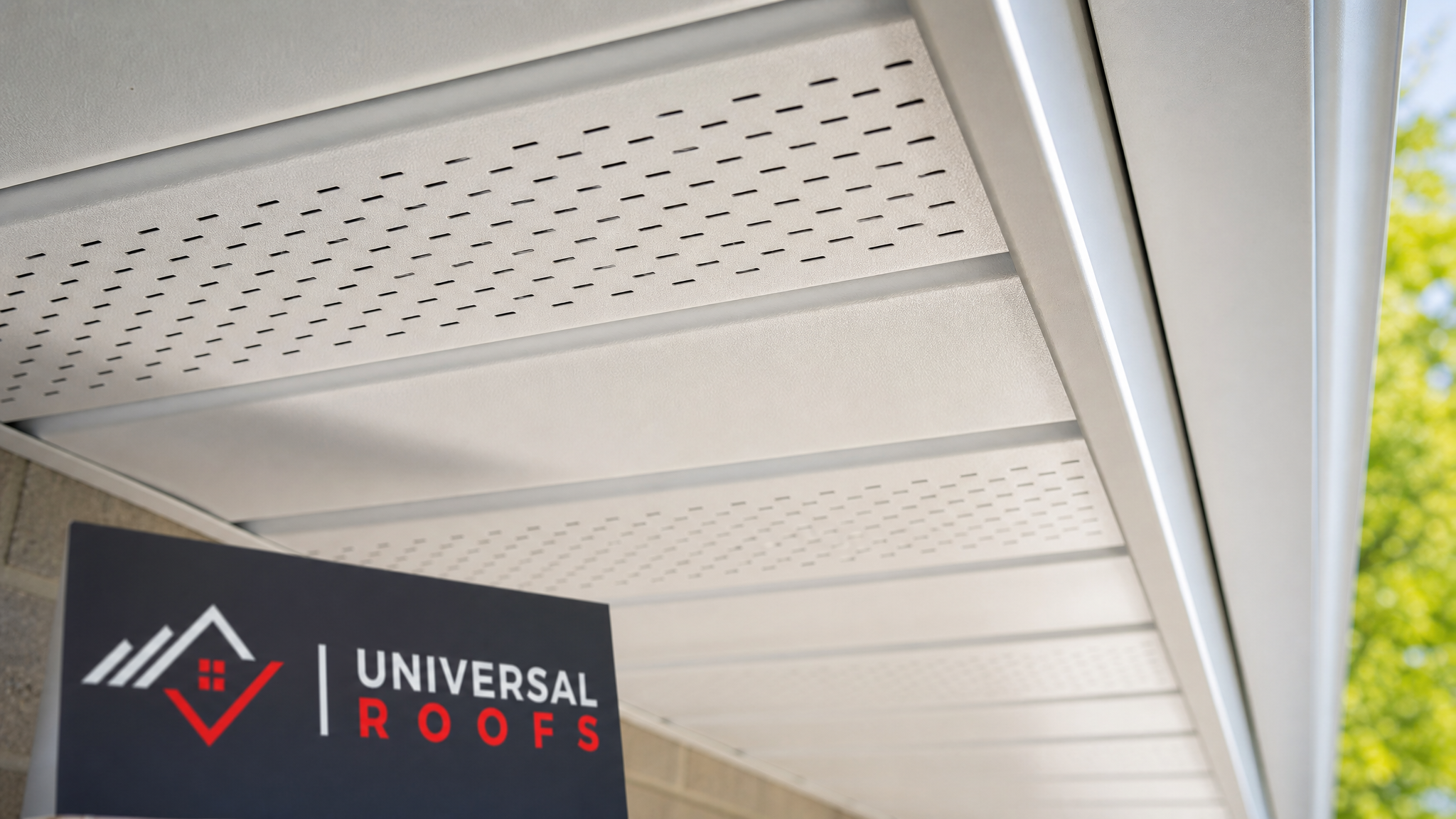
The soffit is the horizontal (or sometimes angled) panel that covers the underside of your roof overhang, connecting the fascia to the exterior wall of the house. Most soffit panels include small perforations or vents that allow outside air to flow into the attic space. Together, soffit and fascia repair essential for long lasting durability comes down to protecting a system with three critical jobs: sealing the roof structure from moisture and pests, supporting the eavestrough system, and ventilating the attic.
When either component fails, the consequences rarely stay contained to that one part. A cracked fascia board lets water track behind your eavestroughs and into your fascia board and roof deck. A blocked or damaged soffit vent starves your attic of the intake air it needs, which in Toronto’s climate can accelerate ice damming, encourage mould growth, and shorten the lifespan of your shingles. This is why professional roof repair specialists always inspect the soffit and fascia alongside the shingles themselves rather than treating them as a separate, lower-priority task.
Common Signs Your Soffit and Fascia Need Attention
Most soffit and fascia problems develop slowly, which is exactly why they tend to get worse before anyone notices. Homeowners in Mississauga, Brampton, Markham, and across the GTA often only spot the damage once it becomes visible from the ground, at which point the underlying rot has usually been progressing for a season or more.
Here are the warning signs worth checking for at least twice a year, ideally in spring and late summer when you can safely inspect from a ladder or with binoculars:
- Peeling, bubbling, or flaking paint on the fascia board, which usually indicates trapped moisture underneath
- Visible sagging or waviness along the soffit panels, often a sign that fasteners have failed or the substrate has softened
- Small gaps or holes in the soffit, which are an open invitation for squirrels, wasps, and birds
- Water stains or streaking on the fascia, especially just below where the eavestrough attaches
- Soft or spongy wood when gently pressed with a gloved hand or screwdriver tip
- Eavestroughs pulling away from the roofline, which often means the fascia board underneath has weakened
- Increased pest activity in the attic, particularly scratching sounds near the roof edge
If you notice two or more of these signs together, it is worth scheduling a proper inspection rather than waiting. A full roof replacement is a far bigger investment than catching fascia rot early, and the two problems are directly connected: a compromised roof edge undermines whatever roofing system sits above it, regardless of how new the shingles are.
Why Soffit and Fascia Repair Is Essential for Long Lasting Durability
It is tempting to think of soffit and fascia as purely cosmetic trim, but that view misses how much structural and functional work these components perform. Soffit and fascia repair essential for long lasting durability is really a statement about the roofing system as a whole, not just the two boards themselves.
Consider what each component protects against:
Moisture intrusion. The fascia board is the last line of defence before water reaches your roof deck and wall framing. Toronto’s climate delivers roughly 800 millimetres of precipitation annually, split between rain and snow, and every one of those millimetres eventually has to shed off the roof edge. A cracked or rotted fascia board gives that water a direct path into your home’s structure.
Pest exclusion. Squirrels, raccoons, and birds are persistent and surprisingly strong. A gap of even a few centimetres in a damaged soffit panel is enough for a squirrel to widen into an entry point within days. Once pests are inside the attic, they chew wiring, shred insulation, and leave droppings that create their own moisture and odour problems.
Attic ventilation balance. Modern roofing systems rely on a balanced intake-and-exhaust airflow, with soffit vents supplying intake air and ridge or roof vents handling exhaust. When soffit vents are blocked by damage, paint overspray, or improperly installed insulation, that balance breaks down. Poor ventilation traps heat and moisture in the attic, which in a Toronto winter directly contributes to ice damming along the eaves. Learn more about how airflow protects your roof on our attic ventilation page.
Structural support. Your eavestrough system is fastened almost entirely to the fascia board. If that board rots or weakens, the eavestroughs sag, pull away from the house, or detach entirely, sending water cascading down your siding and foundation instead of into the downspouts where it belongs.
Put simply, the fascia and soffit are the connective tissue between your roof and your walls. Neglecting them accelerates wear on everything around them, while proactive soffit and fascia repair protects the durability of your shingles, your eavestroughs, your attic, and ultimately your foundation.
Soffit and Fascia Materials Compared
Not all soffit and fascia materials perform equally well in the GTA’s climate. Some homes still have the original wood trim from decades ago, while newer builds and renovations typically favour aluminum or engineered options. The table below compares the most common materials homeowners encounter during a repair or replacement project.
| Material | Typical Lifespan | Moisture Resistance | Maintenance Needs | Relative Cost |
|---|---|---|---|---|
| Solid wood | 10-20 years | Low without repainting | Repaint every 3-5 years | Low upfront, higher long-term |
| Aluminum | 25-40 years | Excellent | Occasional cleaning only | Moderate |
| Vinyl | 20-30 years | Very good | Occasional cleaning only | Low to moderate |
| Fibre cement | 30-50 years | Very good | Repaint every 8-10 years | Higher |
| Engineered wood composite | 20-30 years | Good with sealed edges | Inspect edges annually | Moderate |
Aluminum has become the default choice across much of the GTA for good reason. It will not rot, does not require repainting, and holds up well against the freeze-thaw cycles that punish organic materials each winter. That said, wood fascia is still common on older homes, particularly in established Toronto neighbourhoods, and many homeowners prefer to restore it rather than replace it in order to preserve original architectural details.
How Professional Repair Actually Works
When you book a soffit and fascia inspection, a qualified technician will typically climb to roof level (using proper fall protection) to assess the boards directly rather than relying only on a ground-level view, since deterioration often hides on the underside or behind the eavestrough.
The repair process generally follows these steps:
- Eavestrough detachment. The eavestrough is carefully unclipped or unscrewed from the fascia so the board underneath can be fully accessed and assessed.
- Damage assessment. The technician probes the fascia and adjoining soffit panels to determine how far rot or damage extends, checking the roof deck edge and sub-fascia for hidden problems.
- Removal of compromised material. Damaged sections are cut out or fully removed, taking care not to disturb sound material or the roof edge flashing.
- Replacement installation. New fascia board or soffit panel is cut to size, fitted, and fastened securely, with attention paid to matching vent spacing on soffit panels so airflow is not restricted.
- Flashing and sealant check. Drip edge flashing is inspected or replaced to ensure water sheds properly away from the new fascia board.
- Eavestrough reattachment. The eavestrough is reinstalled with fresh fasteners, checked for proper slope toward the downspouts.
- Final inspection and cleanup. The completed area is checked for gaps, paint touch-ups (for wood), and overall fit before the crew leaves site.
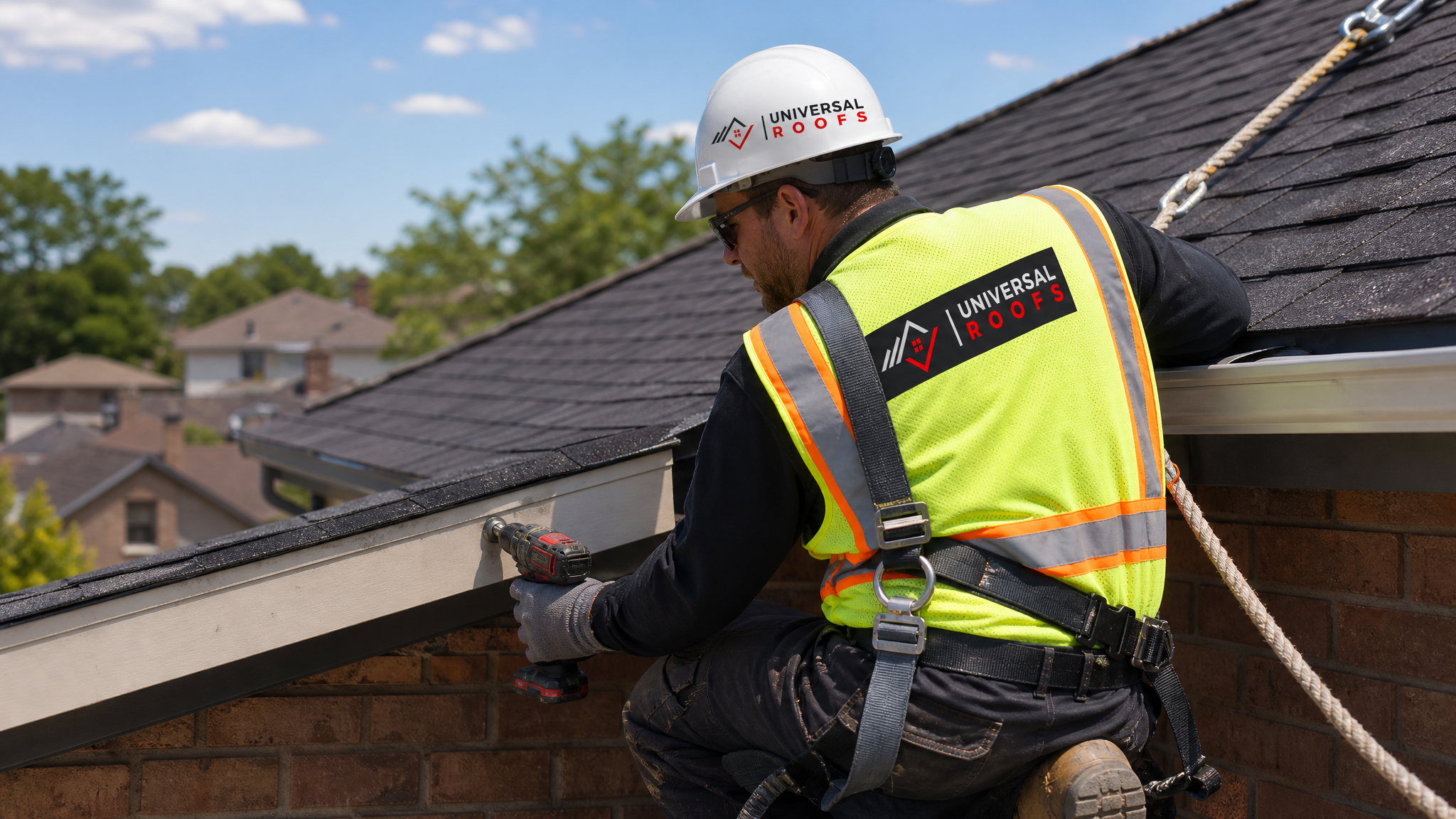
This is not a task most homeowners should attempt themselves. Working at the roof edge without proper fall protection is genuinely dangerous, and improperly reattached eavestroughs are one of the most common causes of repeat water damage we see when inspecting homes that had DIY repairs attempted previously. If you are dealing with more than a single small section, it is worth having a professional assess whether a targeted roof repair visit can address it in one trip.
Repair Versus Replacement: Making the Right Call
One of the most common questions homeowners ask is whether a specific section of soffit or fascia can be repaired, or whether the whole run needs to be replaced. The honest answer depends on how extensive the damage is and how old the existing material is. The table below outlines general guidance, though every home should still be assessed individually.
| Situation | Recommended Approach | Typical Timeline | Notes |
|---|---|---|---|
| Small localized rot (under 1 metre) | Spot repair with matching material | Half a day | Cost-effective if caught early |
| Rot spanning multiple sections | Partial run replacement | 1 day | Often paired with eavestrough adjustment |
| Widespread rot across the home | Full soffit and fascia replacement | 1-3 days | Good opportunity to upgrade ventilation |
| Original wood trim over 25 years old | Full replacement with aluminum or composite | 1-3 days | Reduces future maintenance significantly |
| Pest entry with structural chewing | Replacement plus exclusion sealing | 1-2 days | Should be paired with pest remediation |
As a general rule, if more than roughly 20 to 25 percent of a soffit or fascia run shows signs of deterioration, replacing the entire run tends to be more cost-effective than piecemeal patching, since labour and equipment setup account for a large share of the total cost regardless of how much material is actually swapped out. It also produces a cleaner, more uniform look, which matters if you are planning to sell or simply want your roofline to look sharp from the street.
Seasonal Timing for Soffit and Fascia Work in the GTA
Summer, right now, is genuinely one of the best windows for this kind of exterior work. Warm, dry conditions allow for proper curing of any sealants or paint, and it is far more comfortable for crews working at height for extended periods than the depths of a Toronto winter. It also means any issues get resolved well before the fall rains and winter freeze-thaw cycles that tend to punish weakened fascia boards the hardest.
That said, soffit and fascia problems do not wait for convenient weather, and repairs can generally be performed any time the material is not frozen or covered in snow. If you notice signs of damage in the fall or even early winter, it is usually better to have a temporary fix applied and schedule a fuller repair once conditions improve rather than letting water intrusion continue unaddressed through the coldest months.
How Soffit and Fascia Condition Affects the Rest of Your Roof
It is worth stepping back to look at how the roofline connects to the rest of your home’s building envelope. Attic ventilation is a genuine system, not a single component, and soffit vents are the intake half of that system. When soffit and fascia repair essential for long lasting durability gets deferred, the downstream effects tend to show up in unexpected places:
Shingles can experience accelerated granule loss when trapped attic heat radiates upward from underneath. Wood roof decking can develop soft spots where persistent moisture collects near a damaged fascia edge. Homes with flat roofing sections are not exempt either, since parapet-adjacent fascia and drip edges perform a similar water-shedding role even without a traditional sloped soffit system.
Skylights installed near a roof edge can also be affected indirectly, since compromised flashing at the fascia line sometimes tracks water toward nearby penetrations. If you notice staining near a skylight after fascia damage was reported nearby, it is worth having both areas checked together. Our skylights and skylight replacement pages cover what to look for if you suspect a related issue.
Cost Factors for Soffit and Fascia Repair
Homeowners frequently ask what a soffit and fascia repair project should cost, and the honest answer is that it depends heavily on scope, material, and accessibility. The table below breaks down the main factors that influence pricing so you know what to expect when getting quotes.
| Cost Factor | Impact on Price | Why It Matters |
|---|---|---|
| Linear metres of fascia/soffit affected | Direct, scales with length | More material and labour required |
| Material chosen (wood vs. aluminum vs. composite) | Moderate to significant | Premium materials cost more upfront but last longer |
| Roof height and pitch | Moderate | Steeper, taller roofs require more safety equipment and time |
| Extent of hidden rot in roof deck | Can be significant | Deck repair adds materials and labour beyond trim replacement |
| Eavestrough condition | Minor to moderate | Old eavestroughs may need replacing at the same time |
| Pest damage remediation | Variable | May require exclusion work alongside the repair itself |
Getting an on-site assessment is really the only reliable way to get an accurate number, since two homes with seemingly similar damage can have very different underlying conditions once a technician gets a close look at the roof deck and framing.
Preventive Maintenance to Extend the Life of Your Repair
Once soffit and fascia repair is complete, a small amount of ongoing maintenance goes a long way toward protecting that investment for years to come. Consider building these habits into your annual home maintenance routine:
- Clean eavestroughs at least twice a year, in late spring and late fall, so debris does not trap moisture against the fascia
- Trim back tree branches that touch or overhang the roofline, since constant rubbing wears through paint and material over time
- Check soffit vents for blockages after any insulation work in the attic, as loose insulation can drift and cover the vents from inside
- Repaint wood fascia every three to five years, or sooner if you notice peeling
- Schedule a professional roof inspection every one to two years, which should always include a check of the soffit and fascia condition
- Watch for pest activity at the roofline in early spring and fall, the two seasons when animals most actively seek shelter
These habits are simple, but they are also exactly the kind of maintenance that gets skipped when life gets busy. Setting a recurring calendar reminder is often enough to keep your roofline in good shape between professional inspections.
Choosing the Right Contractor for Soffit and Fascia Repair
Soffit and fascia repair looks straightforward from the ground, but doing it properly requires working safely at height, understanding how ventilation systems function, and correctly detailing the connection between fascia, flashing, and eavestroughs. When vetting a contractor, look for a company that:
- Carries proper liability insurance and follows current safety practices for working at height
- Inspects the roof deck and flashing, not just the visible trim
- Provides a written scope of work and warranty on materials and labour
- Has verifiable local experience, ideally with reviews from homeowners in your area
- Understands attic ventilation requirements, not just cosmetic trim replacement
You can read what past clients across the GTA have said about their experience with our crews on our reviews page, and browse answers to more detailed technical questions on our FAQ page. To learn more about our background and licensing, visit our about page.
Service Areas Across the GTA
Soffit and fascia conditions vary somewhat across the region depending on tree cover, prevailing wind exposure, and building age, but the underlying repair principles remain consistent everywhere we work. We regularly handle soffit and fascia repair projects throughout Toronto, Peel Region (including Mississauga and Brampton), York Region (including Markham and Vaughan), Halton Region (including Oakville and Burlington), and Durham Region.
No matter which municipality you are in, the same core question applies: is your roofline sealed, ventilated, and structurally sound enough to protect the rest of your home through another Canadian winter? If you are not sure, a professional inspection is the fastest way to find out.
Why is soffit and fascia repair essential for long lasting durability?
How do I know if my soffit or fascia needs repair?
What is the best material for soffit and fascia in Toronto’s climate?
Can I repair soffit and fascia myself?
How much does soffit and fascia repair cost?
Is soffit and fascia repair urgent, or can it wait?
Need Help With Why Is Soffit and Fascia Repair Essential?
Keeping your roofline sealed, ventilated, and structurally sound is one of the most cost-effective ways to protect your entire roof. If you have noticed peeling paint, sagging panels, or signs of pests near your eavestroughs, the team at Universal Roofs can assess the damage and recommend the right fix for your home.
Call us today at (416) 732-2421 or request a free inspection to get started.
Universal Roofs proudly serves Toronto, Mississauga, Brampton, Vaughan, Markham, Oakville and the GTA since 2005.