
Every winter, Toronto homeowners watch heavy, wet snow pile up on their rooflines and wonder whether it is safe to leave it alone or whether it needs to come off right away. The truth is that not all snow is created equal, not all roofs handle load the same way, and not all snow removal tools are appropriate for every situation. This ultimate guide to the best roof snow removal tools walks through the equipment that actually works, the techniques professional roofers use, and the mistakes that turn a routine winter chore into an expensive repair bill.
Southern Ontario’s freeze-thaw cycles make this more than a cosmetic concern. A roof that holds snow for weeks, then experiences a mid-winter thaw followed by a hard freeze, is a roof that is actively building ice dams along the eaves. Those ice dams back water up under the shingles, and from there it finds its way into attic insulation, ceiling drywall, and exterior walls. Choosing the right roof snow removal tools, and knowing when to use them, is one of the cheapest forms of insurance a homeowner can buy.
We wrote this guide from the perspective of a roofing contractor who has pulled snow off thousands of GTA roofs, repaired the damage from ice dams that were never addressed, and fielded countless calls asking “which roof rake should I buy?” Below we cover every major tool category, compare their strengths and weaknesses, walk through a step-by-step removal process, and flag the situations where calling a professional is the safer and cheaper option.
Why Roof Snow Removal Matters in the GTA
Toronto and the surrounding regions rarely see the kind of dry, powdery snow that blows off a roof on its own. Lake-effect moisture means our snow tends to be heavy and wet, sometimes gaining density as it partially melts and refreezes over several days. A cubic foot of fresh powder can weigh as little as 7 kilograms, but the same volume of wet, compacted snow can weigh 20 kilograms or more. Spread across a typical 140-square-metre roof, that difference adds up to several tonnes of extra structural load.
Most residential roof trusses in the GTA are engineered to handle Ontario Building Code snow loads, but those calculations assume the snow is evenly distributed and that the structure is in good condition. Roofs with existing damage, older homes with undersized rafters, additions built without full engineering review, or flat and low-slope sections are all more vulnerable. If you are unsure how your roof’s structure was built or whether it has been inspected recently, our roof repair team can assess load-bearing condition alongside any snow-related concerns.
Beyond structural load, snow removal is really about preventing ice dams. When heat escapes from a poorly insulated attic, it warms the underside of the roof deck and melts the bottom layer of snow even while the air outside stays below freezing. That meltwater runs down under the remaining snowpack until it reaches the colder overhang past the exterior wall, where it refreezes into a ridge of ice. Water continues to pool behind that ridge, and eventually it is forced backward under the shingles. Removing snow load from the lower few metres of roof, the eave zone, is the single most effective way to interrupt this cycle without needing to fix insulation or ventilation mid-winter. For a longer-term fix, our attic insulation and ventilation services address the root cause rather than just the symptom.
The Best Roof Snow Removal Tools, Compared
There is no single best tool for every job. The right choice depends on your roof’s slope, height, accessibility, and the type of snow you are dealing with. The table below compares the main categories of roof snow removal tools available to homeowners and contractors.
| Tool | Best For | Typical Cost (CAD) | Roof Height Limit | Skill Level |
|---|---|---|---|---|
| Telescoping roof rake (plastic blade) | Single-storey eaves, light to moderate snow | $60 – $150 | Up to 6 metres reach | Beginner |
| Roof rake with wheels/rollers | Protecting shingles while raking, all snow types | $100 – $220 | Up to 6 metres reach | Beginner |
| Snow removal shovel (roof-specific, poly blade) | Flat and low-slope roofs, direct access only | $40 – $90 | N/A (walked on roof) | Intermediate, requires roof access |
| Roof snow removal rope/cable system | Steep pitches, breaking up compacted snow bridges | $150 – $300 | Any height with proper anchoring | Advanced |
| Calcium chloride ice melt socks | Preventing new ice dams at the eave line | $20 – $50 per sock | N/A, placed by hand or rake | Beginner |
| Roof heat cables (self-regulating) | Chronic ice dam zones, valleys, and gutters | $200 – $600 installed | N/A, permanent installation | Professional installation recommended |
| Professional steam removal equipment | Complete ice dam removal without shingle damage | Contractor service only | Any height | Professional only |
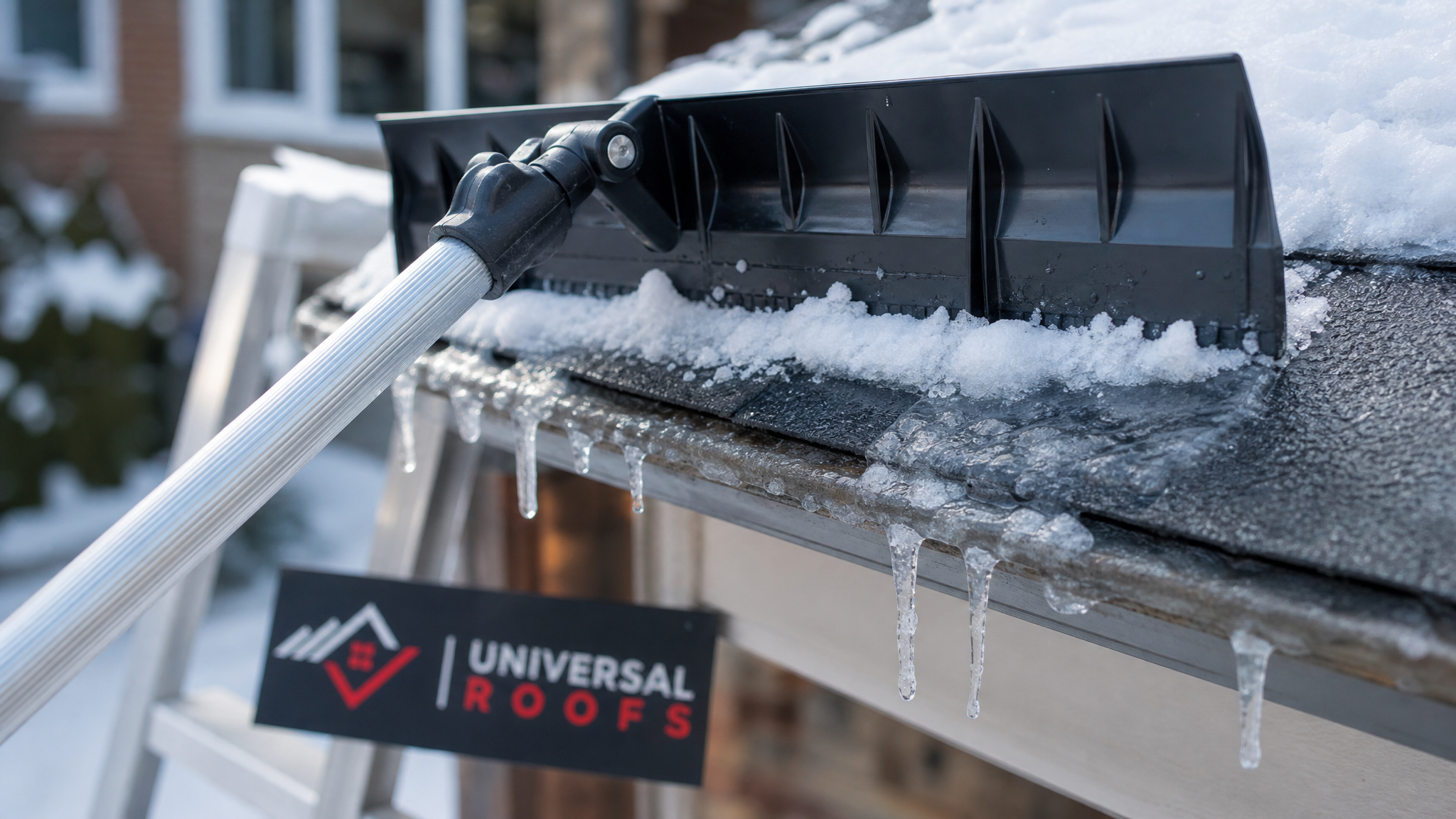
Telescoping roof rakes with plastic or poly blades remain the most common tool for a reason: they let a homeowner clear the bottom 1.5 to 2 metres of roof from the ground, which is exactly the zone most responsible for ice damming. Look for a rake with a roller or wheel bar along the blade edge. This lifts the blade slightly off the shingle surface as you pull, which dramatically reduces the risk of gouging or lifting granules off asphalt shingles.
Roof rakes without rollers are cheaper but riskier. Aggressive scraping motions can strip the protective granule layer off shingles, shortening their lifespan and voiding some manufacturer warranties. If your roof is due for a refresh regardless, our roof replacement team can advise whether repeated snow damage justifies replacing sections early.
Step-by-Step: How to Safely Remove Snow From Your Roof
Whether you are using a basic rake or a more advanced rope system, following the right sequence protects both you and your roof.
| Step | Action | Why It Matters | Time Estimate |
|---|---|---|---|
| 1 | Check the forecast and wind conditions | Working in high wind increases the chance of losing control of a rake or being struck by falling snow | 5 minutes |
| 2 | Clear a safe zone at ground level | Snow sliding off the roof can weigh hundreds of kilograms per section; bystanders and pets need to stay clear | 5 minutes |
| 3 | Start at the eaves, working upward | Removing the lowest, densest snow first relieves the most load and reduces ice dam risk immediately | 20-40 minutes |
| 4 | Work parallel to the roofline, not straight up the slope | Pulling snow sideways rather than lifting it prevents shingle damage and rake strain | Ongoing |
| 5 | Leave a thin layer of snow on the shingles | Scraping down to bare shingle risks granule loss; a few centimetres of snow acts as a buffer | Ongoing |
| 6 | Check gutters and downspouts for ice blockages | Melting snow needs a clear path off the roof, or it will back up under shingles | 10-15 minutes |
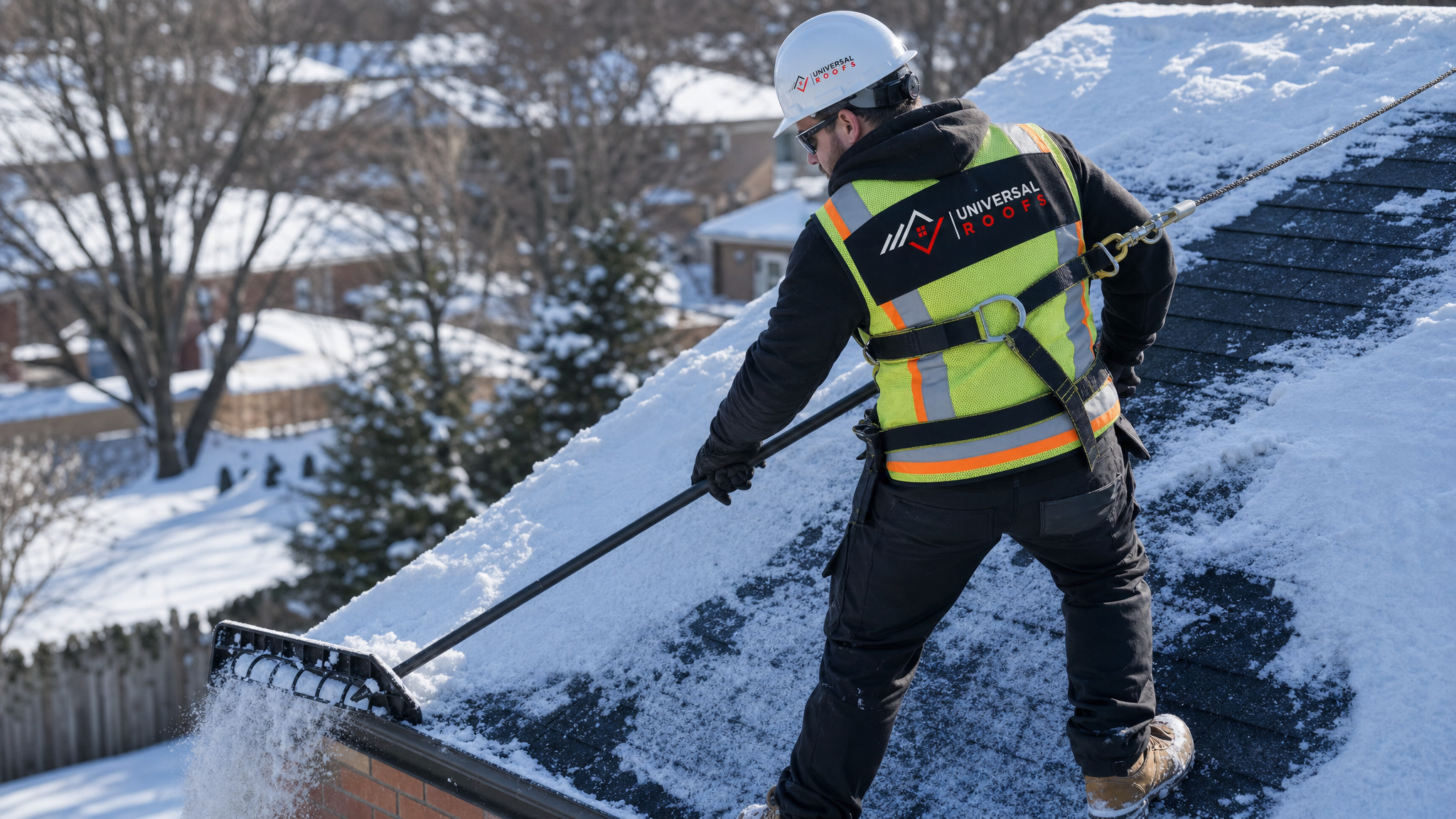
Homeowners should never climb onto a snow-covered or icy roof to use a shovel or walk-behind tool unless they have proper fall protection, non-slip footwear rated for ice, and a spotter on the ground. This is exactly where a professional call makes sense. Our crews use certified harnesses, anchor points, and roof-rated ladders on every job, whether it is snow removal or a routine inspection through our roof repair service.
Flat and Low-Slope Roofs Need a Different Approach
Flat and low-slope roofs, common on additions, garages, and some commercial-style GTA homes, cannot be cleared with a ground-level rake alone because snow accumulates evenly across the entire surface rather than sliding toward the eaves. These roofs typically require direct access and a plastic-bladed roof shovel designed specifically to avoid puncturing membrane roofing.
Never use a metal snow shovel on a flat roof. Metal edges catch on seams, flashing, and membrane surfaces, and a single puncture can lead to a slow leak that is not discovered until spring, when the damage has already spread to insulation and decking below. If your home has a flat roof section, our flat roofing specialists can advise on snow load limits specific to your membrane type, and can perform removal safely if the accumulation exceeds what should be handled without professional equipment.
Flat roofs are also where skylights are most commonly installed, and snow buildup around a skylight curb creates its own set of problems. Compacted snow against the upslope side of a skylight can trap meltwater and push it toward seals that were never designed for standing water. If you notice snow consistently piling against a skylight curb, our skylights team can check flashing integrity, and our skylight replacement service is available if older units are no longer sealing properly under seasonal stress.
Preventing Ice Dams Before They Start
The best roof snow removal tools are only half the equation. Preventing ice dams from forming in the first place reduces how often you need to remove snow at all. Three factors control ice dam formation: attic insulation levels, attic ventilation, and roofline snow load. Improving any one of these helps, but addressing all three together is the most effective long-term strategy.
Calcium chloride ice melt socks, sometimes called roof melt socks, are a simple and inexpensive stopgap. These are mesh tubes filled with calcium chloride pellets that homeowners lay perpendicular across the eave, creating a channel through existing ice for meltwater to drain. They are not a permanent fix, but they buy time during an active thaw-freeze cycle when climbing on the roof is not safe.
Self-regulating heat cables installed in a zigzag pattern along the eaves and inside gutters are a more permanent solution for roofs with chronic ice dam problems, particularly in shaded north-facing sections that never get direct sun to help melt snow naturally. These draw electricity throughout the winter, so they are best reserved for problem areas rather than an entire roofline.
The most durable fix, however, is addressing the attic itself. Adding insulation to attic floor level and ensuring soffit-to-ridge airflow keeps the entire roof deck at a consistent, cold temperature that matches the outdoor air. When the whole roof surface stays cold, snow melts evenly from sun exposure rather than from heat loss, and ice dams become far less likely. This is a service our attic team handles regularly heading into every winter season.
Tool Comparison for Different Roof Types
Not every home in the GTA has the same roof profile, and the right tool changes depending on pitch, material, and accessibility. The table below breaks down our recommendations by common roof type.
| Roof Type | Recommended Tool | Tool to Avoid | Notes |
|---|---|---|---|
| Steep-pitch asphalt shingle | Roller-blade telescoping rake from ground level | Metal shovels, walking on the roof | Focus on eave zone only; steep pitch usually sheds upper snow naturally |
| Low-slope asphalt shingle | Telescoping rake plus ice melt socks | Aggressive scraping tools | Snow tends to accumulate evenly; check valleys closely |
| Flat membrane roof | Plastic-bladed roof shovel, direct access | Metal shovels, ice picks, salt directly on membrane | Requires professional access in most cases |
| Metal roofing | Plastic roof rake only | Any rake with metal edges or rollers with exposed hardware | Metal roofs shed snow fastest but scratch easily |
| Cedar shake or slate | Professional removal only | Any homeowner-operated rake or shovel | Fragile materials crack under rake pressure; call a specialist |
Signs You Should Call a Professional Instead of DIY Snow Removal
Roof snow removal tools are effective for routine maintenance, but certain warning signs mean it is time to stop and call in a professional crew rather than continuing on your own.
Watch for sagging rooflines, new cracks in interior ceiling drywall, doors or windows that suddenly stick, or unusual creaking sounds from the attic during heavy snowfall. These can indicate the structure is under more load than it was designed for, and adding a person’s weight or repeated rake pressure could worsen the situation. Large icicles longer than 60 centimetres hanging from the eaves are also a signal that an ice dam has already formed and water is likely pooling somewhere it should not be.
If your roof is steeper than roughly a 6:12 pitch, higher than a single storey, or has a history of leaks, the risk of a DIY attempt outweighs the cost of a professional visit. Toronto winters bring genuinely dangerous roof conditions, glazed ice under fresh snow, wind gusts off the lake, and short daylight hours, and a fall from height is a far more expensive outcome than any repair bill.
Our crews serve homeowners throughout Toronto, the Peel Region, York Region, Halton Region, and Durham Region with emergency winter roof service, and we carry the certified fall protection equipment and steam-based ice dam removal tools that go beyond what any homeowner should attempt with a rake.
Maintaining Your Roof Snow Removal Tools
Like any equipment, roof snow removal tools last longer and perform better with basic upkeep. Store telescoping rakes fully retracted in a dry area to prevent the extension locks from corroding. Check plastic blades each season for cracks, since cold temperatures make plastic brittle and a cracked blade edge can gouge shingles rather than glide over them. If you use a rope-and-pulley system for steep roofs, inspect the rope for fraying before each use and replace it annually regardless of visible wear, since UV exposure and cold weaken rope fibres in ways that are not always visible.
For heat cables, test the system in the fall before the first snowfall to confirm the elements are still functioning, and clear any leaves or debris from gutters before the cables are buried under the season’s first accumulation. A cable running under debris works far less effectively than one following a clear channel.
Building a Year-Round Roof Maintenance Plan
Even though it is summer as you read this, the best time to prepare for next winter’s snow load is before the leaves finish falling. A pre-winter roof inspection catches loose or damaged shingles that would otherwise fail under snow weight, confirms that gutters and downspouts are clear and properly sloped, and verifies that attic insulation and ventilation are performing as intended.
Homeowners who wait until the first major snowfall to think about roof snow removal tools are often the same ones who end up with ice dam damage by February. A short inspection in September or October, paired with the right rake or ice melt socks on hand before the first storm, prevents the emergency calls that come in every January. You can review verified feedback from homeowners we have helped prepare for winter on our reviews page, and browse common seasonal questions on our FAQ page.
We have been serving the GTA since 2005, and the patterns repeat every year: roofs that get a fall inspection and appropriate snow management rarely see ice dam damage, while roofs left unchecked account for the majority of our emergency winter calls. Learn more about our approach and history on our about page.
Common Mistakes to Avoid When Removing Roof Snow
Even well-intentioned homeowners make errors that turn a simple task into a costly one. The most frequent mistake is using a metal shovel or ice pick directly on shingles or membrane roofing, which tears the surface and creates leak points that are invisible until the next rainfall. Another common error is trying to remove all snow down to bare roof, when leaving a thin protective layer actually preserves the shingle granules better than aggressive scraping.
Working during high winds or icy conditions is another frequent hazard, as is standing directly beneath the section being cleared, where falling snow and ice chunks can cause injury. Finally, many homeowners attempt to chip away at an already-formed ice dam with a hammer or pick, which almost always damages shingles and flashing. Established ice dams are best treated with calcium chloride socks for immediate relief and professional steam removal for complete elimination without surface damage.
What are the best roof snow removal tools for a typical Toronto home?
Is it safe to remove roof snow myself, or should I call a professional?
How much snow on a roof is too much for a GTA home?
Will using a roof rake damage my shingles?
What is the difference between a roof rake and heat cables for preventing ice dams?
Can I use a metal shovel to remove snow from a flat roof?
Need Help With Ultimate Guide Best Roof?
Whether you need routine winter snow removal, an ice dam repaired before it causes interior damage, or a full inspection to prepare your roof for the season ahead, the team at Universal Roofs has the equipment, training, and local experience to handle it safely.
Call us today at (416) 732-2421 or request a free inspection to get started.
Universal Roofs proudly serves Toronto, Mississauga, Brampton, Vaughan, Markham, Oakville and the GTA since 2005.