
Roofing in Downtown Toronto: Row Houses, Semis and Older Homes
Older downtown houses have steep fronts, flat roofs at the back, walls shared with the neighbours and almost no room to work. Universal Roofs repairs and replaces roofs on row houses, semis and older homes across the core.
✓ Downtown and the old city
Since 2005 | Rated 5.0 on Google | Fully Licensed & Insured Roofers | Workmanship Warranty | Office open every day, 8 am to 11:30 pm | Emergency line 24/7: (416) 732-2421
Why downtown is different
Old houses, shared roofs, tight lots
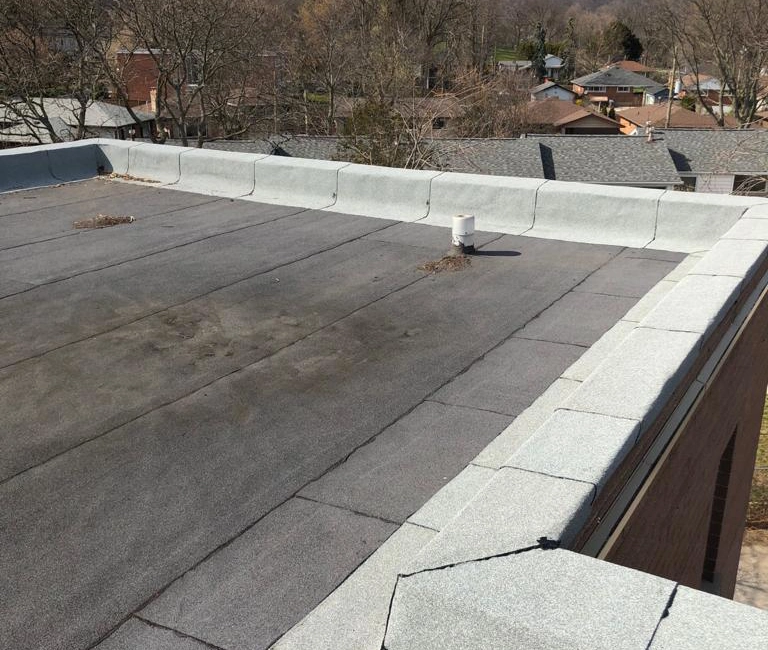
Many houses in the core date from the late 1800s and early 1900s. They are tall and narrow, joined to the house next door, and have been added onto at the back. So one house can have a steep front roof, a flat roof or two behind it, a brick chimney and a roof line shared with a neighbour. This page covers roofing in downtown Toronto and the older streets around it.
Older details
Three things older downtown roofs hide

Old vent stacks
Many older houses have a cast-iron plumbing stack through the roof. The flashing around it splits with age and lets water run down the pipe into the wall below. Read why vent pipes leak.

Brick chimneys and parapets
Brick above the roof takes the worst of the weather. Leaks start where old counter flashing pulls out of worn mortar. Caulk is a stopgap; the flashing needs to be set back into the joints.

Old layers, board decking
Older houses can carry two or three layers of shingles over board sheathing rather than plywood. A tear-off shows what’s underneath, so plan for some deck repairs. Read about roof care on heritage homes.
House by house
Where downtown roofs usually leak
Bay-and-gable house
Typical roof: Steep front gable over a bay window, low-slope roof behind.
Where leaks usually start: Valleys beside the gable, the small roof over the bay, the chimney.
Usual fix: Valley and flashing repairs, or re-roofing the front slope.

Row house or semi
Typical roof: Roof joined to the neighbours’ along the party wall.
Where leaks usually start: The joint on the shared line, parapets, end walls.
Usual fix: Continuous flashing along the shared line, agreed with the neighbour.

Rear addition or kitchen
Typical roof: Flat or low-slope roof.
Where leaks usually start: Seams, the drain or scupper, the joint with the main wall.
Usual fix: Membrane repair, or a new membrane roof with flashing set into the wall.

Mansard or third-floor dormer
Typical roof: Very steep sides with a flat top.
Where leaks usually start: Dormer sides and sills, the flat top.
Usual fix: New dormer flashing, a new membrane on the flat top.

Laneway garage or coach house
Typical roof: Flat or low-slope roof, often ignored for years.
Where leaks usually start: Ponding, rotted edges, flashing at walls.
Usual fix: Repair if the deck is sound, a new roof if it is soft.
Not sure what you have?
Flat sections are covered on our flat roofing page. Leaks on the steep front are a roof repair job; a worn-out front slope needs a roof replacement.
Send a photo of the front and one of the back.
Skylights
Skylights in narrow houses
With houses on both sides, the middle of a row house gets little daylight, so skylights over stairwells, hallways and bathrooms are common. Older units tend to leak at the flashing or the curb, or fog between the panes. If the glass is sound, new flashing or a reseal may be enough; a unit with failed glass is usually better replaced together with its flashing. See skylight installation and repair and skylight replacement.
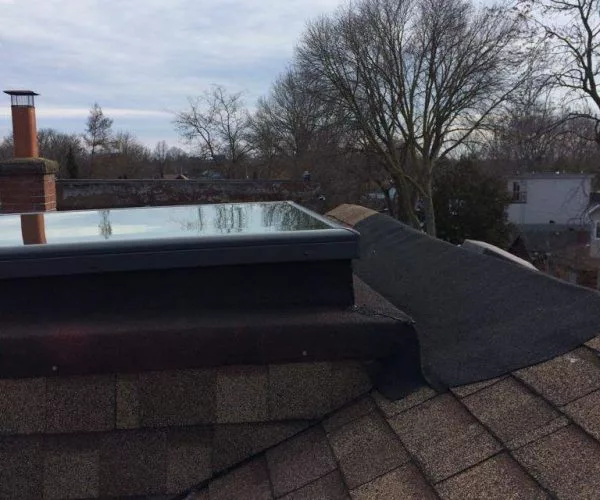
Before the job
Bins, parking, lanes and permits
On a downtown job the logistics need as much planning as the roof. These are the points to settle before work starts. City rules change, so check the current requirements.
Bin on the street
A bin on the street, the boulevard or a public lane generally needs a City street occupation permit.
Parking
Many downtown streets have permit parking, meters or rush-hour limits, and work trucks need a legal spot close to the house.
Laneways
If the house backs onto a public lane, the bin and materials can sometimes go at the back instead of the street. Tell us about the lane when you book.
Neighbours
On semis and row houses the work reaches the shared roof line, and ladders may need to stand on the neighbour’s side. Talk to them early about the dates and about how the shared edge will be finished.
Heritage districts
Parts of downtown, Cabbagetown among them, are heritage conservation districts. Changing the roofing material or the look of the front roof may need heritage approval first.
Building permits
Like-for-like re-roofing usually needs no building permit, but structural work or a new skylight opening can; see roof replacement permits.
How it runs
How a downtown job runs
Step 1
Send two photos
One of the front of the house and one of the back, with the address. Tell us whether there’s a lane behind and whether the roof is shared with a neighbour.
Step 2
We look up close
We check the steep front, the flat sections at the back, the shared edges and the chimney, and the ceiling or attic under any leak.
Step 3
The quote
You get a price for the roof work. Once we know the condition of your roof, we provide a detailed, no-hidden-fee estimate. We walk you through your options. From cost-effective IKO asphalt shingles to premium SOPREMA flat roofing systems. We explain the how and the why behind our recommendations.
Step 4
The work
Tell your neighbours the dates and keep the side path clear.
Downtown and old-city neighbourhoods
We cover these neighbourhoods: The Annex, Kensington Market, Liberty Village, King West, Queen West, Yorkville, Harbourfront, St. Lawrence, Cabbagetown, Roncesvalles.
Elsewhere in the city, see the areas we serve in Toronto, or go to roofing in Etobicoke, roofing in North York or roofing in Scarborough. Photos of our work are on the projects page.
FAQ
Questions about downtown roofs
Can you re-roof just my half of a semi?
It can be done, as long as the join is done properly. Along the party wall your new roofing meets your neighbour’s old roofing, and that seam needs flashing and careful lapping or it becomes the next leak. Talk to your neighbour first, since their roof edge gets handled too. If theirs is also near the end, doing both at once saves a second set-up.
Where does the bin go if I don’t have a driveway?
On the street, the boulevard or a lane behind the house, and each of those generally needs a City street occupation permit. On very tight streets, some roofers use a smaller bin or bag the debris instead.
Why does the flat roof at the back keep leaking after it’s been patched?
Patches last only when they fix the cause. On rear additions that is often the wall joint: the membrane should turn up the brick under flashing set into the mortar, and many older roofs have only caulking there. Drains sitting higher than the roof around them and split seams are the other usual causes. Shingles on a nearly flat roof will keep leaking whatever you patch.
My house is in a heritage district. Does that change the roof job?
It can: Cabbagetown and several other downtown areas are heritage conservation districts, where changing the roofing material or visible details such as slate or trim may need the City’s heritage approval first. Like-for-like repairs are usually simpler, so check before you choose a new material.
Can a leaking skylight over the stairs be fixed without replacing it?
Often. If the glass and frame are sound and the water comes in at the flashing or the curb, new flashing or a reseal can stop it. Fogged or cracked panes and a rotting frame mean replacement with new flashing is the longer-lasting fix. Water dripping in winter is often condensation from indoor humidity rather than a leak; a bathroom fan and lower humidity help.
Do I need to be home while the roof is being done?
Not the whole time, but someone should be reachable, and the crew may need to see the attic or the ceiling under a leak. Move cars, bikes and anything breakable away from the side of the house where debris comes down, and warn your neighbours about the noise and the bin.
Are you licensed and insured?
Yes, we are fully licensed and insured and ready to help with all your roofing needs in Toronto.
Do you work with insurance claims for storm and wind damage?
Yes. We offer help with insurance claims for roof damage. Give us a call to learn more about our process.
Need Roofing Service? Contact Us Today!
- 416-732-2421
- 30 Braddock Rd, Etobicoke, ON, M9W 5H8
Follow Us On Social Media:
Planning roof work on an older downtown house?
Send Universal Roofs the address with a photo of the front and the back, or call (416) 732-2421. The office is open every day, 8 am to 11:30 pm, and emergency calls are answered 24/7.