
Planning a roof project and trying to figure out what roofing York Region homeowners actually pay in 2026 is harder than it should be. Quotes for the same house can differ by thousands of dollars, material names blur together, and every contractor claims to be the best value. This guide breaks down what roofing in York Region really costs this year, which materials hold up in the local climate, what the Ontario Building Code requires, and how to separate a solid roofing contractor from a poor one. The goal is simple: give you enough grounding to read a quote critically and make a decision you will not regret in five years.
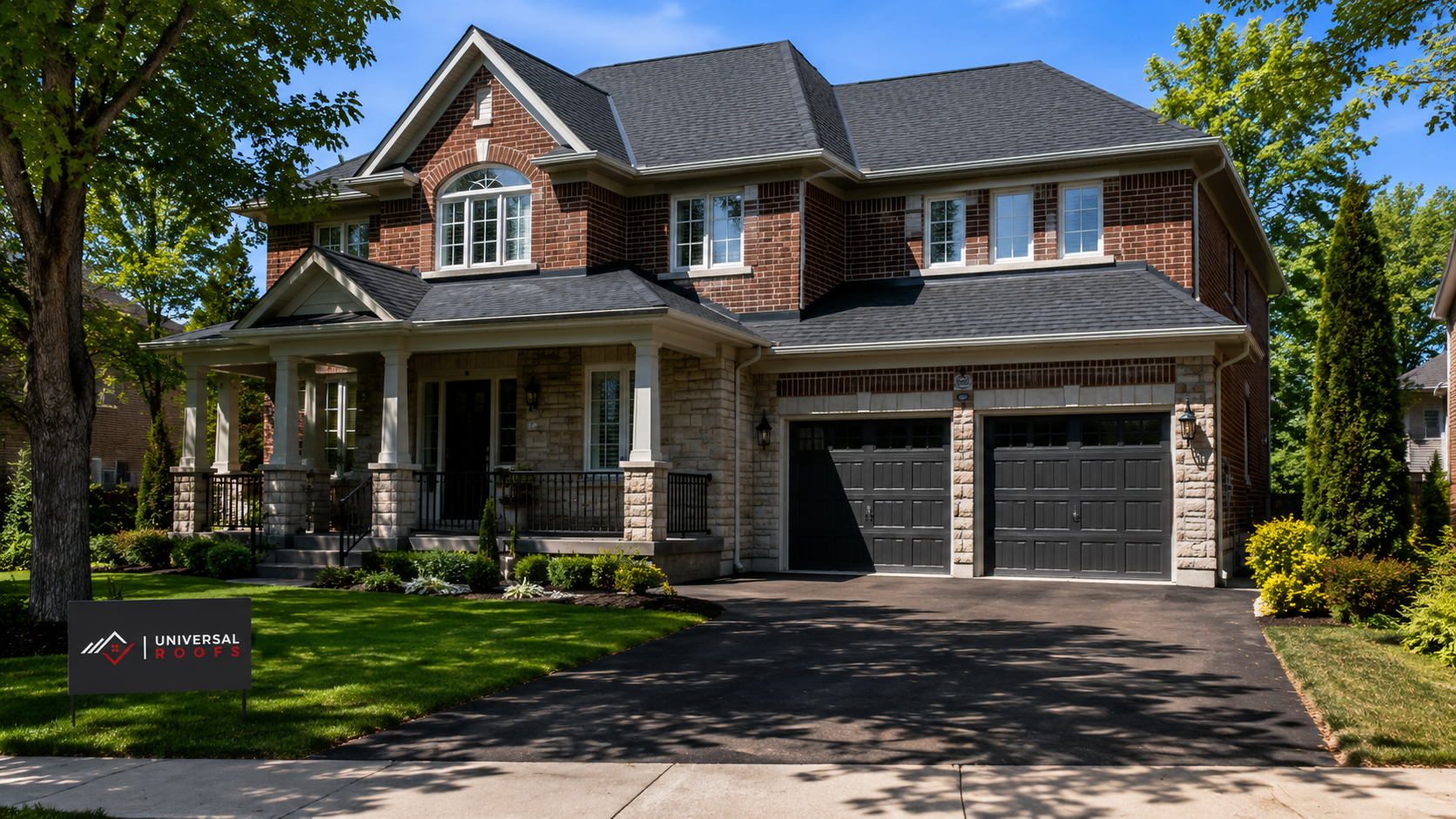
York Region covers a wide band north of Toronto, from the older established parts of Markham, Vaughan and Richmond Hill up through Aurora, Newmarket, East Gwillimbury and the rural stretches of King and Whitchurch-Stouffville. That range matters, because roofing in York Region is not one job. A postwar bungalow with a simple gable and a modest footprint is a completely different project from a large subdivision home built in the mid-2000s with multiple dormers, deep valleys and a second-storey walkout. Pricing, material choice and even scheduling for roofing in York Region all shift depending on which of those buckets your house falls into.
What Makes Roofing in York Region Different
Roofing in York Region deals with a climate that is measurably harder on a roof than downtown Toronto. The area sits far enough north of Lake Ontario that it loses much of the lake’s moderating effect, so winter temperatures run colder, snow accumulation is heavier, and the freeze and thaw cycles that pry at flashing and shingle edges happen more often through late winter and early spring. Homes in the northern municipalities, closer to the Oak Ridges Moraine and Lake Simcoe, see this most clearly.
Three climate factors drive most roofing failures here:
- Snow load and ice damming. Heavier snowpack sits on roofs longer. Where attic heat escapes unevenly, the snow melts, runs to the cold eave and refreezes, forcing water back under the shingles.
- Freeze and thaw cycling. Repeated expansion and contraction loosens nails, cracks sealant beads at flashing joints and accelerates the loss of protective granules from asphalt shingles.
- Summer thermal load. July and August attic temperatures in a poorly vented roof assembly can climb well past 50 degrees Celsius, which shortens shingle life from the underside outward.
Wind exposure is the fourth factor and it is uneven across the region. Homes on open estate lots, on newer subdivision edges backing onto farmland, or on higher ground north of Aurora take considerably more wind than a house sheltered inside a mature, tree-lined 1960s neighbourhood. That difference alone can justify stepping up to a higher wind-rated shingle.
The Housing Mix and What It Means for Your Roof
Understanding roofing in York Region starts with understanding what got built and when. The housing character varies sharply by municipality and by pocket within each one, and roof design follows construction era closely.
Postwar and mid-century bungalows and sidesplits. Found through older parts of Richmond Hill, Newmarket and Markham’s original village cores, these homes typically have simple gable or hip roofs, shallow to moderate pitch, and small roof areas. They are the least expensive roofs to replace, but they often carry the most accumulated history: multiple shingle layers, original board sheathing rather than plywood, undersized or missing soffit venting, and flashing details that predate current practice.
Subdivision homes from the 1970s through the 1990s. The large tracts across Thornhill, Unionville, central Richmond Hill and older Vaughan fall here. Roofs get more complex, with intersecting gables, front-facing dormers and more valley footage. Most are on their second or third shingle roof by 2026. Plywood sheathing is standard, though it may be showing soft spots where ventilation has been marginal for decades.
Subdivisions built from 2000 onward. Newer Vaughan, Markham, Aurora, Newmarket and Stouffville developments produced steep, articulated roofs with many facets, deep valleys, box-out bays and often a low-slope section over a garage or rear addition. These roofs are expensive to replace because of the complexity and the steep pitch, not just the square footage. Many built in the mid-2000s are reaching the end of their original builder-grade shingles right now.
Estate and custom homes. Larger lots in King, north Vaughan, parts of Aurora and rural Whitchurch-Stouffville carry the biggest and most complex roof assemblies. Slate, cedar, standing seam metal and premium designer asphalt all show up here, along with turrets, multiple chimneys, extensive metal flashing work and long valley runs.
Older brick homes and heritage stock. The historic main streets and surrounding blocks in places like Markham Village, Unionville, Aurora and Newmarket include century homes with steep pitches, original masonry chimneys and details that need careful flashing work rather than a fast tear-off and cover.
Roofing Costs in York Region in 2026
The price of roofing in York Region rose sharply through the early 2020s and has been comparatively stable through 2025 and into 2026, with material pricing settling and labour remaining the larger variable. The figures below reflect complete tear-off and replacement, including disposal, new synthetic underlayment, ice and water shield at eaves and valleys, new drip edge, standard flashing and cleanup. They assume no significant sheathing replacement.
| Home type | Typical roof area | Architectural asphalt (installed) | Metal or premium option | Typical on-site time |
|---|---|---|---|---|
| Postwar bungalow, simple gable | 1,200 to 1,600 sq ft | $6,500 to $10,000 | $17,000 to $26,000 | 1 to 2 days |
| Semi-detached or freehold townhouse | 900 to 1,400 sq ft | $5,500 to $9,000 | $15,000 to $23,000 | 1 to 2 days |
| Two-storey subdivision detached, moderate complexity | 1,800 to 2,600 sq ft | $10,000 to $17,000 | $26,000 to $42,000 | 2 to 3 days |
| Large detached with multiple dormers and valleys | 2,800 to 4,000 sq ft | $16,000 to $27,000 | $42,000 to $68,000 | 3 to 5 days |
| Estate or custom home, steep and highly articulated | 4,000 sq ft and up | $26,000 and up | $70,000 and up | 5 to 10 days |
Several conditions push a quote for roofing in York Region toward the upper end of these ranges or beyond them. Steep pitch above roughly 8:12 requires roof jacks, staging and slower work. Three-storey homes need longer ladders and more elaborate fall protection. Removing two or three existing shingle layers roughly doubles tear-off labour and disposal volume. Replacing rotted sheathing typically adds $90 to $140 per sheet installed. Chimney reflashing, new plumbing stack boots, replacement of a rusted vent, or the addition of proper intake venting all add line items to the total.
Be cautious with any quote that comes in far below these ranges. Underpriced roofing work in York Region almost always means one of the following: a layover instead of a tear-off, builder-grade three-tab shingles, ice and water shield omitted or applied to a single course, no permit where one is genuinely needed, or a crew without WSIB coverage and liability insurance. Any of those saves money today and costs more later. If you are weighing a full tear-off, our overview of what a full roof replacement involves walks through the scope in more detail.
Choosing Roofing Materials for the Local Climate
Asphalt shingles account for the overwhelming majority of roofing in York Region, and for good reason: the cost per year of service is hard to beat and the material handles the local freeze and thaw pattern well when installed correctly. That said, the gap between the cheapest and the best asphalt product is significant, and there are situations where stepping outside asphalt makes sense.
| Material | Realistic service life | Installed cost per sq ft (2026) | Best suited to | Notes for York Region |
|---|---|---|---|---|
| Three-tab asphalt | 12 to 16 years | $4.00 to $5.50 | Rentals and short holding periods | Lower wind rating; rarely worth the small saving |
| Architectural laminate asphalt | 22 to 30 years | $5.50 to $8.50 | Most detached and semi-detached homes | The practical default; look for high wind ratings |
| Premium designer asphalt | 28 to 35 years | $8.50 to $13.00 | Larger homes and high-visibility roofs | Heavier mat, better impact and wind performance |
| Standing seam steel | 45 to 60 years | $16.00 to $26.00 | Estate homes, low-slope to steep sections | Excellent snow shedding; plan snow guards over entries |
| Metal shingle or tile profile | 40 to 55 years | $14.00 to $22.00 | Homes wanting metal without the ribbed look | Lighter than concrete tile; suits existing structure |
| Cedar shake | 25 to 35 years | $14.00 to $22.00 | Heritage and custom homes | Requires ongoing maintenance; verify insurer acceptance |
| Modified bitumen or TPO (low slope) | 20 to 30 years | $10.00 to $16.00 | Garage tops, rear additions, dormer decks | Necessary anywhere pitch drops below roughly 2:12 |
A few practical notes. Many York Region homes are hybrids, with a steep asphalt main roof and a low-slope section over a garage, sunroom or rear addition. Those low-slope areas must not be shingled. They need a membrane system, and the transition detail between the two is one of the most common leak points on suburban homes. If your house has one of those sections, ask specifically how the crew handling your roofing in York Region intends to tie it in, and consider a proper low-slope membrane assembly rather than a patched extension of the shingle field.
On colour, darker shingles remain the regional default and they do run hotter, but with adequate ventilation the difference in shingle life is modest. Choose for appearance and resale value, then make sure the ventilation behind them is right. Material selection for roofing in York Region should always be settled after the ventilation plan, not before it.
Permits, Code and Insurance Requirements
A straight like-for-like shingle replacement on a house generally does not require a building permit in York Region municipalities, since it is treated as maintenance. Permits do become necessary when the work goes beyond simple replacement. That includes structural changes to the roof framing, altering the roof line or pitch, adding or enlarging a dormer, converting the roof covering in a way that materially increases dead load, and most work on multi-unit residential or commercial buildings. Permit administration sits with each local municipality rather than with the Region, so requirements and fees vary between Markham, Vaughan, Richmond Hill, Aurora, Newmarket, King, East Gwillimbury, Georgina and Whitchurch-Stouffville.
Regardless of whether a permit is pulled, the Ontario Building Code sets baseline requirements for roofing in York Region that any competent installation follows:
- Eave protection. An ice and water membrane is required from the eave edge to a point at least 300 mm inside the interior face of the exterior wall. On a house with deep overhangs, that means the membrane must run further up the deck than a single course, and a second course is often needed. This is one of the most frequently shortchanged items in roofing in York Region.
- Attic ventilation. The Code calls for a minimum unobstructed vent area of roughly 1 to 300 of the insulated ceiling area on most standard assemblies, split between intake at the soffit and exhaust near the ridge.
- Fastening and wind resistance. Nail count, placement within the manufacturer’s nailing zone, and starter course sealing all matter. Most shingle warranty claims that get denied are denied on fastening.
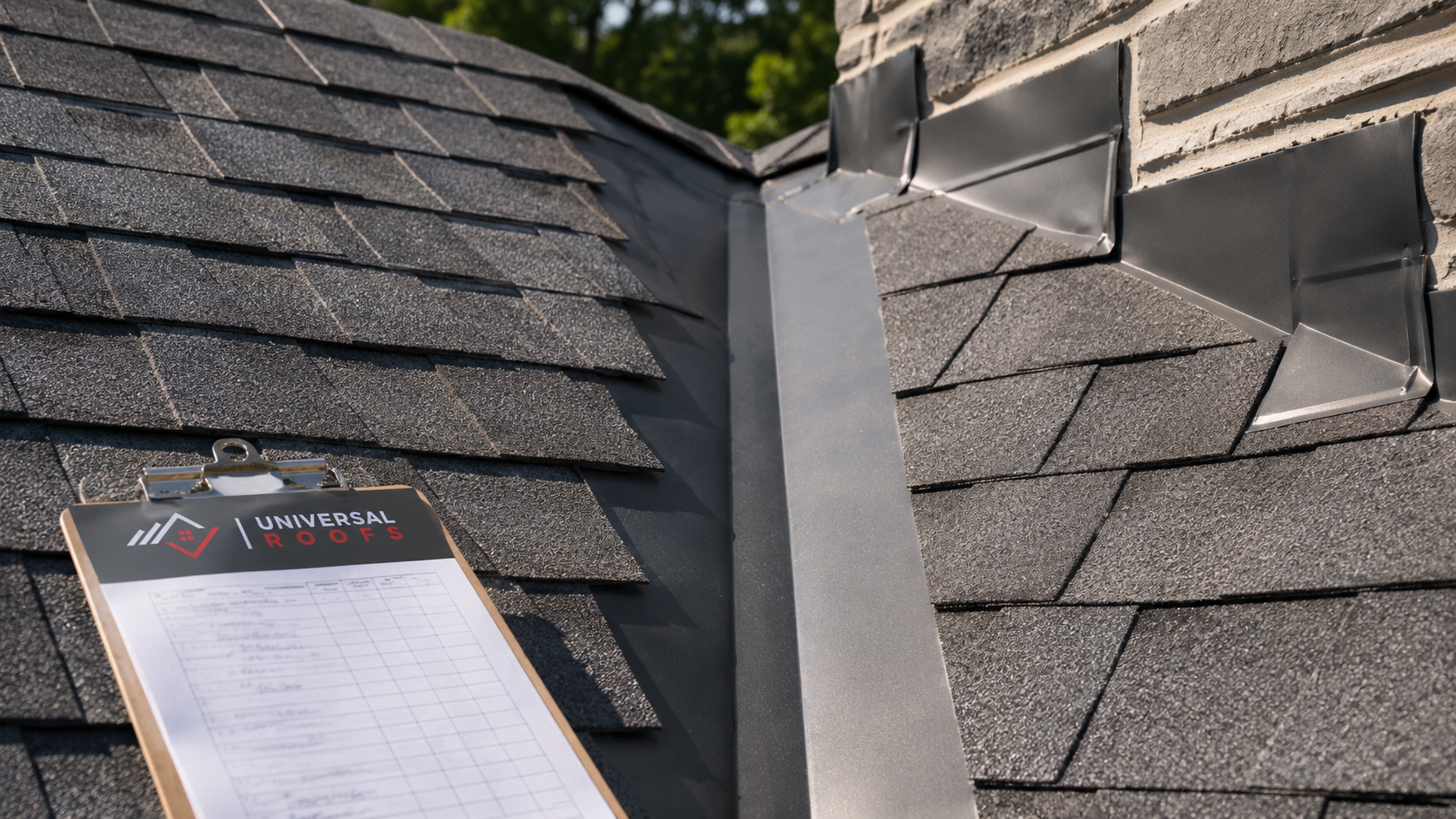
- Flashing. Step flashing at walls, counterflashing at chimneys, correct valley treatment and drip edge at eaves and rakes are all expected work, not optional upgrades.
On the insurance side, confirm your contractor carries current WSIB clearance and at least $2 million in commercial general liability coverage. Ask for the certificates rather than taking the claim at face value. If an uninsured worker is injured on your property, the exposure can land on the homeowner. Also notify your home insurer after a replacement, since some policies offer a small premium adjustment for a new roof and most require accurate roof age reporting at renewal.
How to Evaluate Roofing Contractors in York Region
The single biggest variable in how long your roof lasts is workmanship, not the brand printed on the shingle bundle. Two crews installing the identical product on identical houses can produce roofs that differ by a decade in service life. When you are comparing companies for roofing in York Region, vetting matters far more than shopping on price.
| What to verify | Why it matters | What a good answer looks like |
|---|---|---|
| WSIB clearance certificate | Protects you from liability if a worker is injured | Current certificate provided without hesitation |
| Commercial general liability insurance | Covers property damage during the work | $2 million minimum, certificate naming the company |
| Written scope of work | Prevents disputes about what was included | Line items for tear-off, underlayment, ice and water coverage, flashing, venting and disposal |
| Ventilation plan | Drives shingle life and ice dam risk | Stated intake and exhaust counts, not a vague promise to add vents |
| Sheathing contingency | Avoids surprise mid-job pricing | A fixed per-sheet price agreed in writing beforehand |
| Warranty terms | Separates real coverage from marketing | Manufacturer material warranty plus a written workmanship term in years |
| Local references and recent work | Confirms genuine regional experience | Recent projects in comparable York Region housing |
Three warning signs are worth taking seriously. First, pressure to sign the same day, or a discount that expires within hours. Legitimate roofing work is scheduled weeks out and priced on scope, not urgency. Second, a large deposit demand. A modest deposit for material ordering is normal on a big job, but anything approaching half the contract value before work begins is not. Third, a verbal quote or a single-line written price with no breakdown. If the scope is not written down, it is not included.
Universal Roofs is based in the Toronto area and works throughout the region, and you can review the full range of our roofing services for York Region homeowners, including municipality-specific pages for Markham, Vaughan, Richmond Hill, Aurora, Newmarket and Whitchurch-Stouffville.
Repair or Replace: Making the Call
Not every roof problem calls for a full replacement, and any company doing roofing in York Region should tell you plainly when it does not. Repair is usually the right answer when the roof is under roughly 15 years old, the shingle field is intact, and the issue is localized: a lifted section after a windstorm, a failed plumbing stack boot, deteriorated chimney counterflashing, or a valley that was detailed poorly at installation. A targeted roof repair in those cases can buy years of service for a fraction of the replacement cost.
Replacement becomes the better economic choice when several of these are true at once:
- The roof is past 18 to 20 years on standard architectural shingles.
- Granule loss is widespread, with visible accumulation in gutters and at downspout outlets.
- Shingles are curling, cupping or cracking across multiple slopes rather than in one area.
- There are two or more existing layers, which limits repair options and complicates warranty coverage.
- You have had leaks in more than one location, or the same leak has been repaired more than once.
- The deck feels soft underfoot in places, which points to sheathing deterioration.
Repeated repair spending on an aging roof rarely pays off, and it is one of the most common money traps in residential roofing in York Region. As a rough test, if a proposed repair costs more than about 20 percent of a full replacement and the roof is already beyond 15 years old, replacement is usually the better use of the money.
Attic Ventilation and Insulation: The Overlooked Half of the Job
Ventilation gets far less attention than shingle brand, but it largely determines how long the roof actually lasts and how much your winter heating costs. A balanced system pulls cool air in at the soffit and exhausts warm, moist air near the ridge. Any quote for roofing in York Region should say clearly how that balance will be achieved. When intake is blocked by insulation stuffed into the eaves, or when exhaust vents are added without matching intake, the system short-circuits and the attic stays hot and humid.
The consequences show up in predictable ways: premature shingle aging from underside heat, frost buildup on the underside of the sheathing in January, mould on the deck, and ice damming at the eaves during thaw cycles. All of these are common in older York Region housing, where the original venting was minimal and later insulation upgrades often made intake worse without anyone noticing.
The right time to fix this is during a replacement, when the deck is exposed and vents can be cut, baffles installed and insulation levels corrected efficiently. Ontario’s recommended attic insulation level for existing homes is roughly R-50 to R-60, and many homes built before 2000 are sitting closer to R-20 or R-30. Combining a roof replacement with an attic insulation and ventilation upgrade is usually cheaper than doing them separately, and it produces a noticeably more comfortable second floor.
Skylights deserve a mention here too. Any existing unit should be assessed at the same time as the roof, because reflashing a skylight into a new shingle field is straightforward while the deck is open and expensive to revisit afterward. If a unit is more than 20 years old or shows condensation between the panes, replacing it alongside the roof is almost always the cheaper path. The same logic applies to skylight replacement and installation generally.
What to Expect During the Project
Most single-family roofing in York Region is completed in one to three working days, weather permitting. Knowing the sequence makes the disruption much easier to plan around.
Before the crew arrives. Move vehicles clear of the driveway, take fragile items off walls on the top floor since tear-off vibration travels through the structure, and clear patio areas below the eaves. If you have a satellite dish, antenna or solar equipment on the roof, flag it in advance.
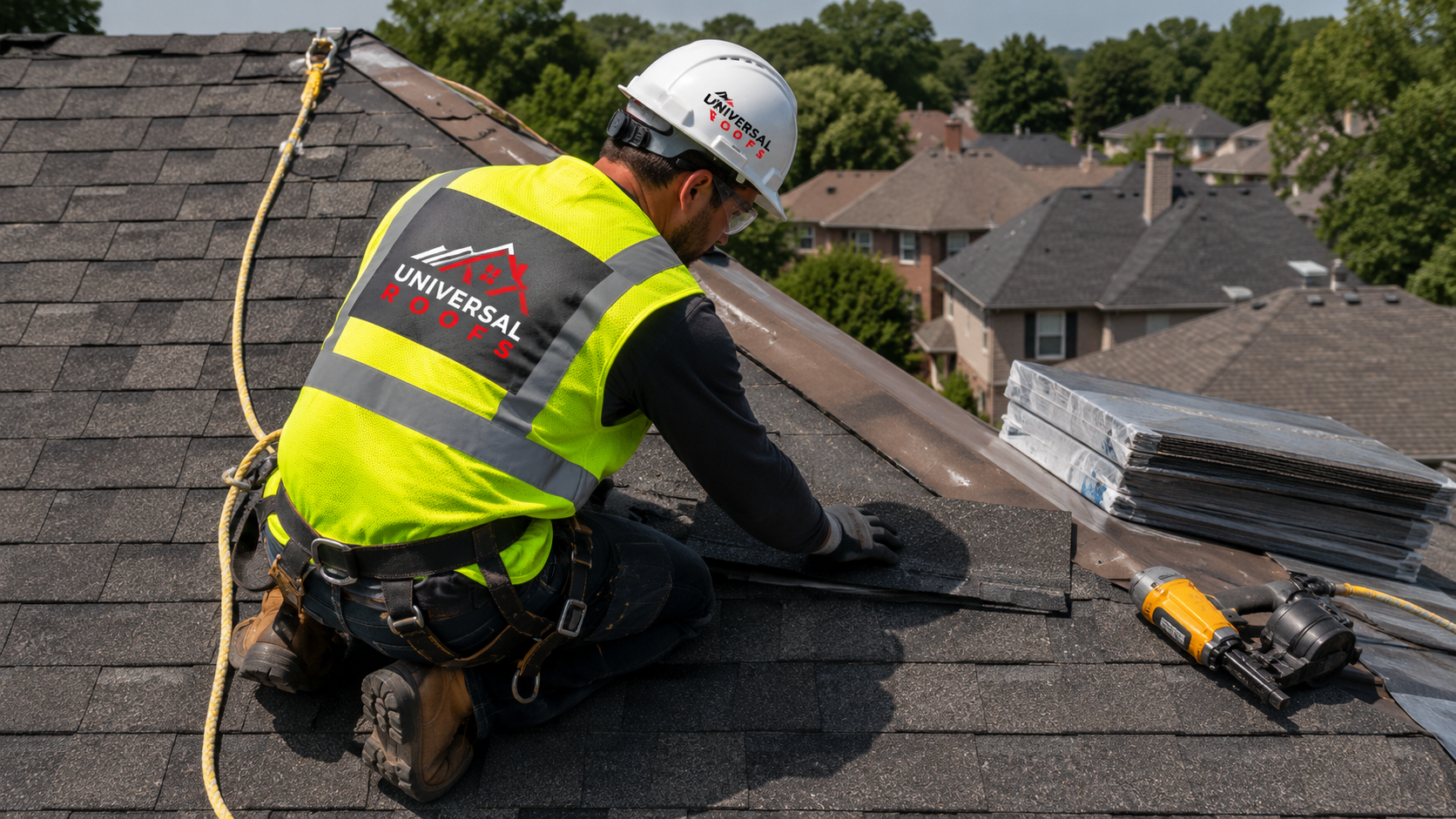
Day one. Protection goes down over landscaping and windows, then tear-off begins. This is the loud part. The crew removes the old covering down to the deck, inspects the sheathing, replaces damaged sections, and installs drip edge, ice and water membrane at eaves and valleys, and underlayment across the field.
Day one to two. Starter course, field shingles, flashing at walls and penetrations, valley detailing, ridge venting and ridge cap. On complex or steep roofs this stretches longer.
Final day. Full cleanup, magnetic sweep of the lawn and driveway for nails, disposal bin removal and a walkthrough. Ask for photos of flashing and valley details, since these are the areas you cannot inspect from the ground and they are exactly where quality shows.
Scheduling note: late spring through early autumn is peak season across the region, and lead times of three to six weeks are normal for reputable crews during that stretch. Shoulder season work in April or late October often books faster, and pricing for roofing in York Region can be marginally softer outside the summer rush. Shingles need adequate temperature to seal properly, so deep winter installations are possible but require extra care with hand-sealing and generally cost more.
Roofing York Region Homeowners Ask About Most
How much does a new roof cost in York Region in 2026?
Do I need a building permit to replace my roof?
How long should a roof last in this climate?
What is the best time of year to replace a roof?
Can I install new shingles over the existing layer?
Why do quotes for the same house differ so much?
Get a Straight Answer on Roofing in York Region
A roof is one of the few home investments where the difference between a good decision and a poor one shows up years later, usually at the worst possible time. Universal Roofs is a Toronto-area roofing contractor serving homeowners throughout York Region, from Markham and Vaughan through Richmond Hill, Aurora, Newmarket and Whitchurch-Stouffville. We provide written, itemized quotes so you can see exactly what is included, compare bids fairly, and understand what your roof actually needs before committing to anything. Every quote we issue for roofing in York Region is based on a measured roof, not a rough guess from the driveway.
Call us today at (416) 732-2421 or request a free consultation. We will assess your roof, explain its condition in plain terms, and give you honest options for repair or replacement with no pressure to decide on the spot. You can also read through our customer reviews or browse common questions on our roofing FAQ page.
Universal Roofs provides roof replacement, repair, flat roofing, skylight and attic services to homeowners across York Region and the wider Greater Toronto Area.