
A top up is one of the few home improvements where the numbers are genuinely easy to verify, and attic insulation Stouffville homeowners are quoted this autumn generally falls into a narrow, predictable range. What is far less predictable is whether the job is done in a way that actually helps, because insulation added over blocked soffit intake does not just underperform, it can push moisture into your roof deck.
This guide covers what attic insulation Stouffville properties costs in 2026, what a top up realistically saves on energy, how to work out how much intake venting your attic needs, and the shortcuts that turn a useful upgrade into a roof problem. Early autumn is the right moment to look at it, before the heating season and while roof-side venting corrections can still be made comfortably.
What Attic Insulation Stouffville Homes Costs In 2026
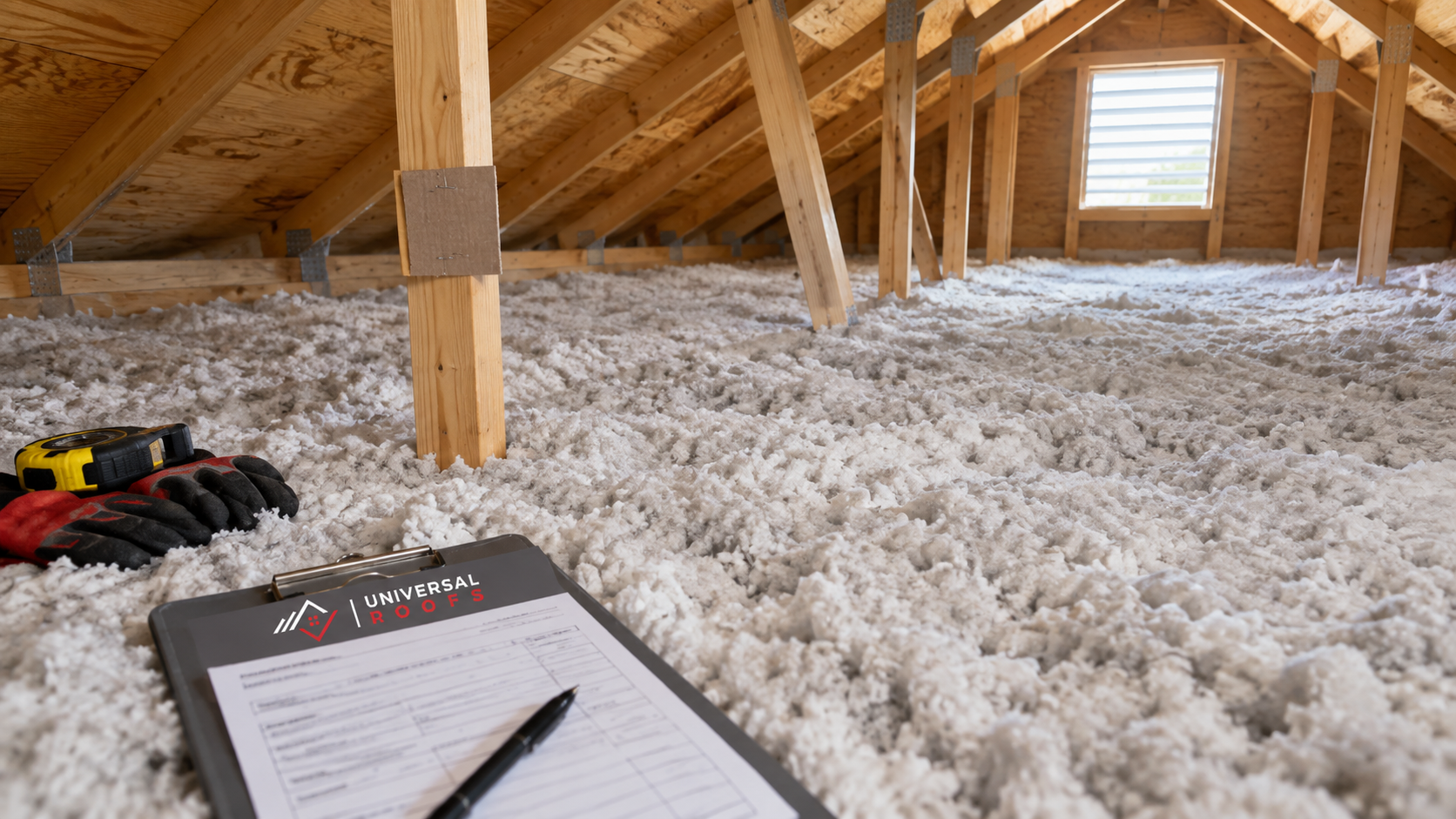
Pricing for attic insulation Stouffville contractors quote is driven by attic floor area, the preparation required, and whether any existing material has to come out. A clean top up over dry, sound insulation is the cheapest scenario. Removing settled, rodent-affected or moisture-damaged material roughly doubles the labour.
| Scope | 800 to 1,000 sq ft attic | 1,000 to 1,400 sq ft attic | 1,400 to 1,900 sq ft attic |
|---|---|---|---|
| Air sealing the ceiling plane | $350 to $700 | $450 to $900 | $600 to $1,200 |
| Baffles at every rafter bay | $180 to $420 | $250 to $550 | $350 to $750 |
| Blown top up to R-60 | $1,900 to $3,000 | $2,400 to $4,100 | $3,300 to $5,600 |
| Removal of existing material | $1,400 to $2,600 | $1,900 to $3,400 | $2,600 to $4,200 |
| New roof vents and soffit corrections | $400 to $1,000 | $500 to $1,200 | $700 to $1,600 |
| Typical complete job, no removal | $2,400 to $4,100 | $3,100 to $5,400 | $4,300 to $7,400 |
Two line items in that table are the ones homeowners try to cut, and they are the two that should never go. Air sealing and baffles together are often under fifteen per cent of the total, and they determine whether the insulation performs and whether your roof deck stays dry. A quote for attic insulation Stouffville crews can complete in two hours for a thousand dollars is a quote for blown material only, and it is not the same product.
What A Top Up Actually Saves
Be careful with savings claims attached to attic insulation Stouffville quotes. Roughly a quarter of the heat loss in a typical detached home goes through the ceiling plane, so improving it produces real but bounded savings. The table below gives realistic expectations rather than sales figures.
| Starting condition | Upgrade to | Typical reduction in heating and cooling energy | Simple payback |
|---|---|---|---|
| R-0 to R-12, older uninsulated attic | R-60 | 20 to 30 per cent | 3 to 6 years |
| R-12 to R-20 | R-60 | 12 to 20 per cent | 5 to 9 years |
| R-20 to R-31 | R-60 | 8 to 14 per cent | 7 to 12 years |
| R-31 to R-40 | R-60 | 4 to 8 per cent | 11 to 18 years |
| R-40 or better | R-60 | Under 4 per cent | Rarely worth it alone |
The pattern is diminishing returns, and it matters. Going from nothing to R-60 is transformative. Going from R-40 to R-60 is marginal and usually only worth doing if the attic is open for other reasons. If a company selling attic insulation Stouffville homeowners contacted promises to halve your heating bill from an already decent starting point, that is not a claim supported by building science.
There are benefits that do not show on a bill. Comfort improves noticeably: fewer cold ceilings, less temperature stratification between floors, and upstairs rooms that hold their temperature overnight. Sound transmission from outside drops. And the roof deck runs closer to outdoor conditions, which reduces the condensation that shortens sheathing and shingle life. For many households those are the stronger arguments for attic insulation Stouffville projects than payback alone.
On incentives, programs change frequently and eligibility rules shift. Check what provincial and utility programs are currently open before you commit, and be sceptical of any contractor who promises a specific rebate amount as part of a sales pitch rather than pointing you to the program itself.
Intake Venting Is Not Optional
Here is the part of attic insulation Stouffville work that gets skipped. An attic needs air moving through it, entering low at the soffits and leaving high at ridge or roof vents. That flow carries away the moisture that inevitably makes its way up from the house, and it keeps the deck near outdoor temperature.
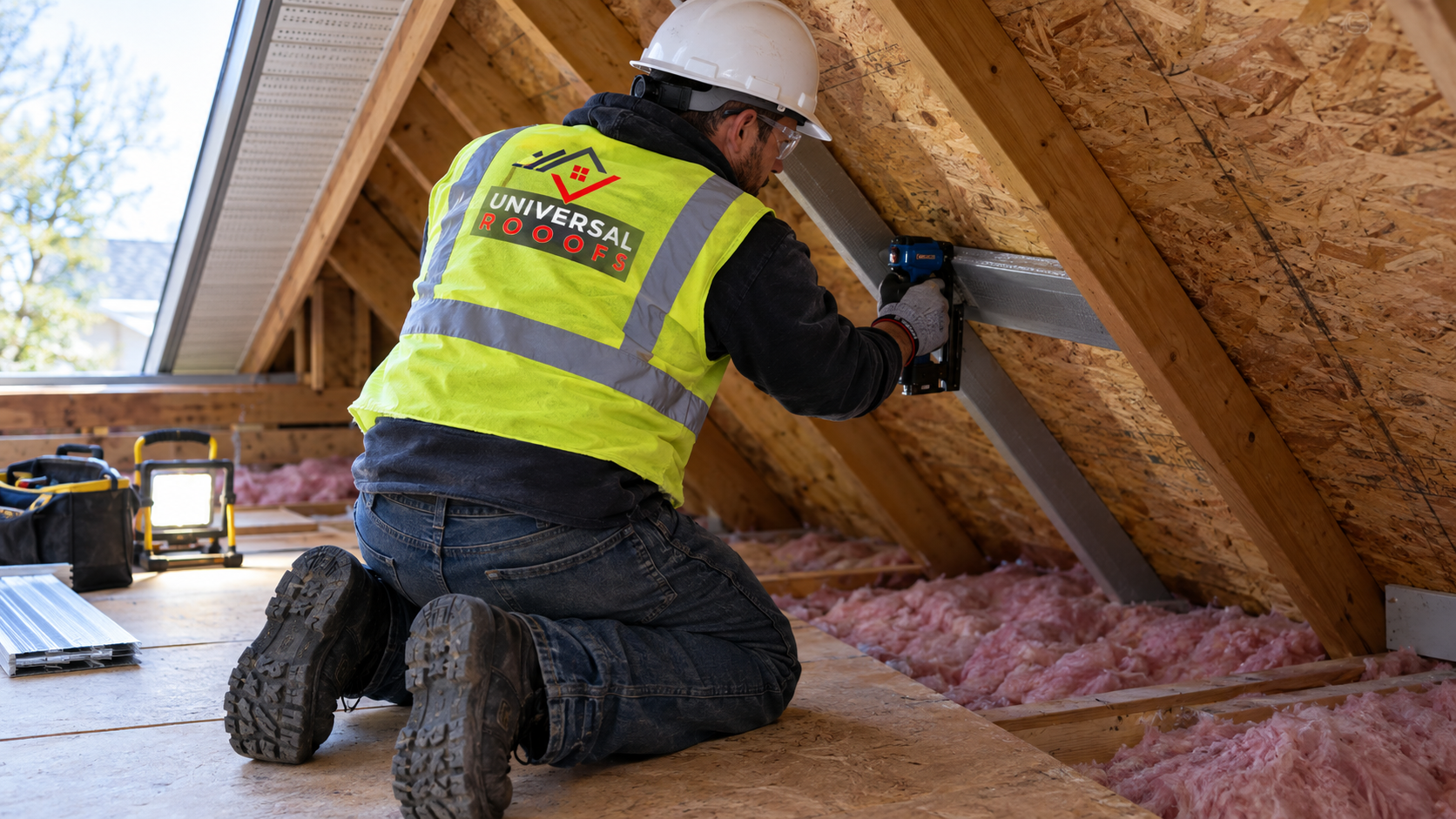
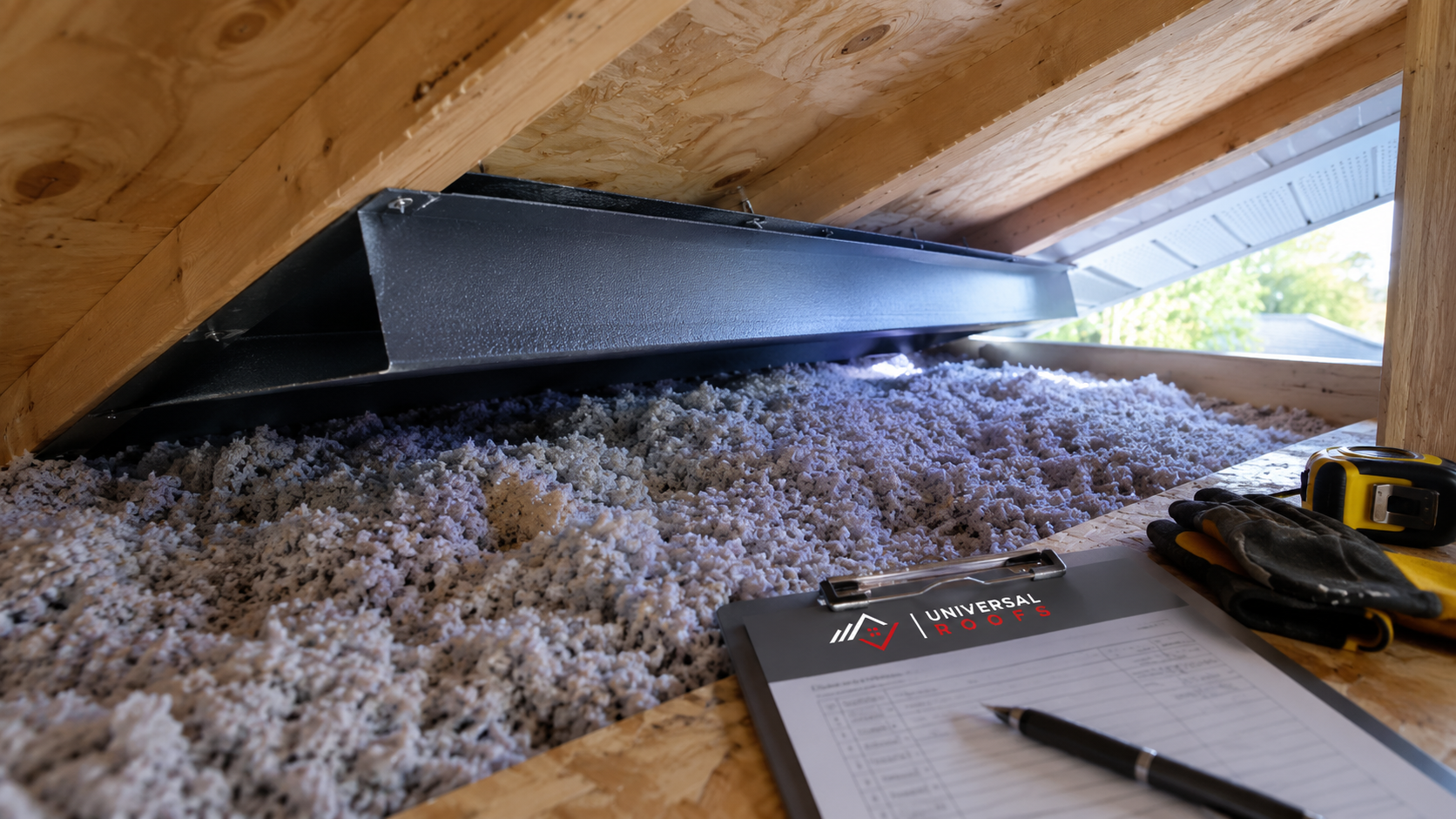
Insulation makes intake venting more fragile, not less important. Blown material naturally flows toward the low point at the eaves, which is exactly where the soffit openings are. Without a physical barrier, a top up will smother the intake path of every rafter bay it reaches. The barrier is a baffle, a rigid channel stapled between the rafters that holds material back and preserves an open air gap from the soffit into the attic body.
Baffles must go in every bay. Installing them only where the installer could easily reach leaves the rest blocked, and the result is an attic with plenty of exhaust and no intake. In that state the exhaust vents pull their replacement air from the heated house below, drawing conditioned air and household humidity straight up into the attic, which is precisely the opposite of what you paid for. Any quote for attic insulation Stouffville homes should state the baffle count or say explicitly that every bay is baffled.
Exhaust matters too, but the common failure is mixing types. Ridge vent combined with static box vents on the same roof plane short circuits the airflow, with the ridge drawing from the box vents rather than the soffits. Choose one exhaust strategy per plane and size the intake to match it.
How Much Intake Your Attic Needs
Sizing intake for attic insulation Stouffville projects starts with a simple target: one square foot of net free vent area for every three hundred square feet of attic floor, split roughly evenly between intake and exhaust. Net free area is the actual open area of a vent after subtracting its screen and louvres, and it is always smaller than the vent’s physical size. Typical continuous aluminum soffit gives in the region of six to ten square inches of net free area per linear foot, while individual rectangular soffit vents give roughly five to nine square inches each.
| Attic floor area | Total net free area required | Intake required (half) | Approximate soffit provision |
|---|---|---|---|
| 800 sq ft | 384 sq in | 192 sq in | 24 to 32 linear ft of vented soffit |
| 1,000 sq ft | 480 sq in | 240 sq in | 30 to 40 linear ft of vented soffit |
| 1,400 sq ft | 672 sq in | 336 sq in | 42 to 56 linear ft of vented soffit |
| 1,800 sq ft | 864 sq in | 432 sq in | 54 to 72 linear ft of vented soffit |
| 2,200 sq ft | 1,056 sq in | 528 sq in | 66 to 88 linear ft of vented soffit |
Treat these as planning figures rather than a code calculation, since exact requirements depend on the vent products used and the roof geometry. The practical point is that most homes have enough soffit length to meet the target easily, and fail only because the soffit is blocked, painted over, or was installed as solid panel with a token vented section. Confirming this is a basic part of any attic insulation Stouffville assessment.
Where Homes In This Area Commonly Fall Short
Whitchurch-Stouffville has a distinctive housing mix, and it shapes what attic insulation Stouffville homes actually need. The town saw very rapid subdivision growth through the 2000s and 2010s, so a large share of homes are relatively new with deep trussed attics and reasonable original insulation, though often finished to the minimum standard of their build year. Surrounding that are older village properties and rural homes with smaller, lower attics, minimal original insulation and soffits that were never generously vented, plus outbuildings and additions with their own separate attic spaces that get forgotten.
The failures we see most often are consistent. Bathroom exhaust fans ducted into the attic rather than through the roof, pumping shower humidity at the deck every day. Pot lights and plumbing stacks left unsealed at the ceiling plane. Insulation blown right out to the eaves with no baffles, blocking intake in every bay it reached. Additions and bonus rooms over garages with almost no insulation at all. And attic hatches left uninsulated and unsealed, which on a cold night is a straightforward hole in the ceiling.
Each of these is inexpensive to correct while the attic is open and expensive to revisit later. Homeowners can read what the work covers on our attic insulation and ventilation service page, and our Whitchurch-Stouffville roofing services page explains how we handle attic and roof work together locally.
Signs Your Attic Is Underperforming
You do not need instruments to work out whether your attic is doing its job. A few observations from inside the house and a careful look through the hatch will tell you most of what matters, and they are worth making now rather than in January.
If the ceiling joists stand proud above the insulation, you are well below current standards and a top up is worth pricing. If upstairs rooms run noticeably cooler than the main floor, or a bonus room over a garage never holds its temperature, the ceiling plane above them is likely the weak point. If you can feel air movement around pot lights or the attic hatch, the ceiling plane is leaking and air sealing should come before any new material.
Looking into the attic itself, check whether you can see daylight at the eaves through an open air channel, or whether the insulation runs solidly into the corner with no gap. The second is a blocked soffit and it is the most common finding of all. Dark staining or a damp feel on the underside of the sheathing indicates moisture that the current ventilation is not removing, and that is the condition that shortens deck and shingle life. Any of these findings justifies a proper attic insulation Stouffville assessment before the heating season begins.
Material And Target Depth
For a conventional vented attic, blown attic insulation Stouffville crews install is the right choice because it fills irregular cavities and flows around framing in a way batts cannot. Blown fibreglass delivers roughly R-2.6 per inch and blown cellulose roughly R-3.4 per inch, so reaching R-60 means about twenty-three inches of fibreglass or about eighteen inches of cellulose. In low attics where headroom at the eaves is limited, cellulose reaches target in less depth, which is a genuine advantage.
Batts have a place at knee walls, hatches and small accessible spaces where blown material would not stay put. Closed cell spray foam belongs on cathedral ceilings and deliberately unvented assemblies, and it is the wrong product on a conventional attic floor where it costs several times as much for no functional gain. A contractor recommending spray foam for a standard vented attic insulation Stouffville job should be asked to justify it in detail.
Ask for depth markers to be installed and left in place. They are inexpensive cardboard rulers stapled to the trusses, and they let anyone verify the finished depth years later, including a future buyer’s home inspector.
What To Expect On The Day
A typical attic insulation Stouffville job takes half a day to a full day. The crew protects the access route and hatch area, inspects the existing material for moisture, rodents and settling, and removes anything contaminated. Air sealing follows at every ceiling penetration. Baffles go in at each rafter bay. Fan ducting and venting corrections are made while access is clear. Then the new material is blown to a measured depth, the hatch is sealed and insulated, and the crew photographs the finished depth and the baffle installation.
Roof-side work, meaning new vents or soffit corrections, is handled from outside on the same visit where possible. This is why having a roofing contractor carry out attic insulation Stouffville homeowners are planning is usually more efficient than using an insulation-only company that cannot work on the roof, since the intake and exhaust get designed as a single system rather than negotiated between two trades.
Frequently Asked Questions
What does attic insulation Stouffville homeowners need cost in 2026?
How much will a top up actually save on my bills?
Why does intake venting matter so much for attic insulation Stouffville projects?
How deep should the insulation be?
Do I need to remove the old insulation first?
Can attic work be done at the same time as a roof replacement?
Get A Quote For Attic Insulation Stouffville Homes Need This Season
The right time to look at an attic is before the heating season, while air sealing, baffles and venting corrections can all still be done properly. Universal Roofs works from its Toronto base throughout Whitchurch-Stouffville and York Region, and because we are roofers we assess the insulation, the intake venting and the deck condition together rather than quoting depth in isolation.
Call us today at (416) 732-2421 or request a free consultation. We will measure your existing depth, check the soffits and fan terminations, and give you a written scope covering sealing, baffles, venting and material with a realistic savings estimate.
Universal Roofs proudly serves homeowners in Whitchurch-Stouffville and across the Greater Toronto Area.