
Roof repair in Stouffville is rarely a one-size-fits-all job, because the housing stock across Whitchurch-Stouffville spans several distinct building eras. A postwar bungalow on a mature lot, a 1990s two-storey in an established subdivision, and a recently built home with complex rooflines all fail in different ways and need different fixes. Understanding what your roof is actually made of, how old it is, and which parts are most likely to leak will save you money and prevent you from paying for a full replacement when a targeted repair would have carried the roof another decade.
This guide walks through what homeowners weighing roof repair in Stouffville should expect in 2026: realistic pricing, how repair decisions are made, what the Ontario Building Code requires, when a permit is needed, and how to evaluate a contractor before signing anything. The goal is to give you enough working knowledge that you can ask sharper questions and recognise a fair quote when you see one.
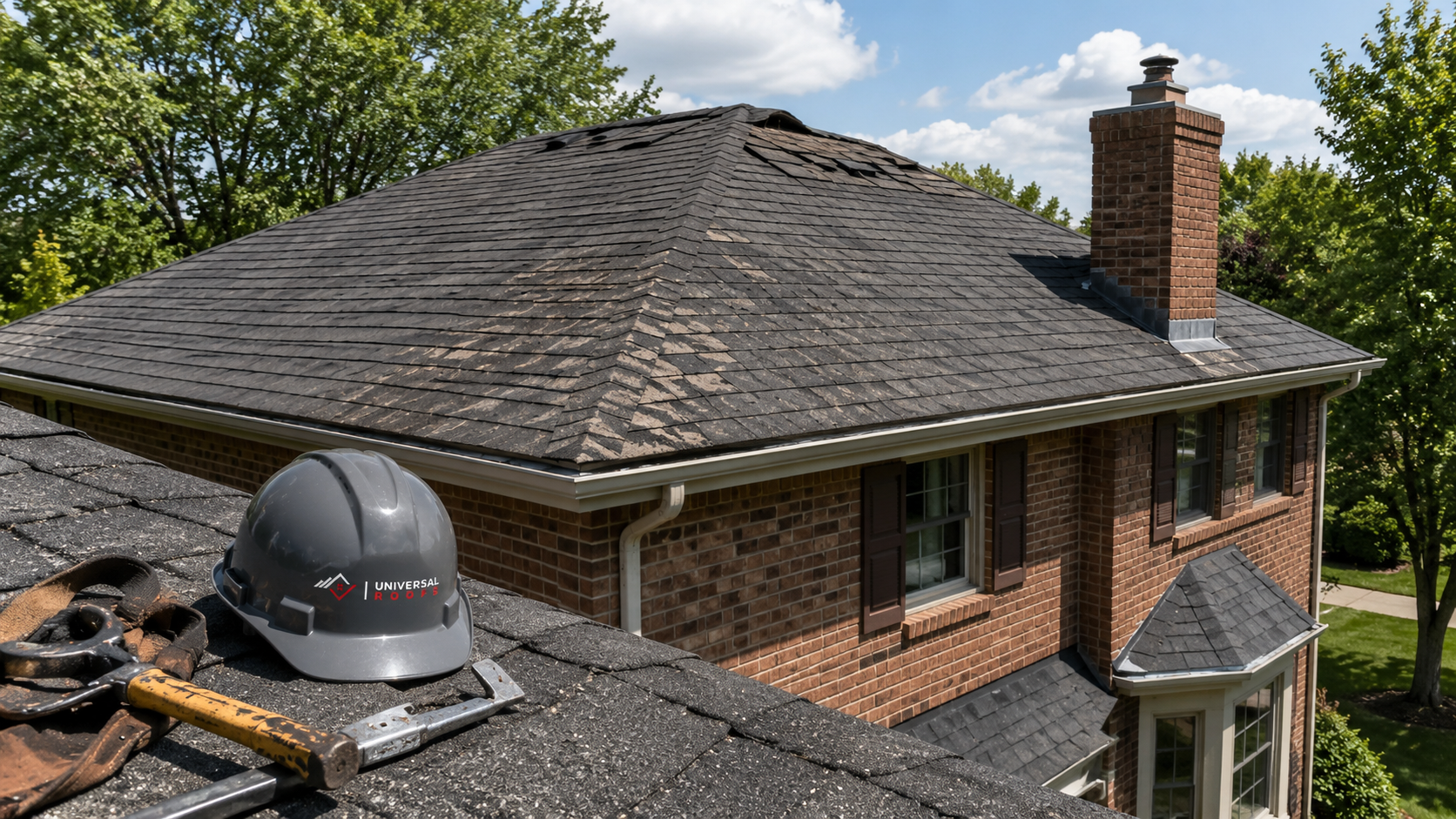
What Makes Roof Repair in Stouffville Different
Whitchurch-Stouffville sits on the northern edge of the Greater Toronto Area, where open farmland meets suburban development. That geography matters more than most homeowners realise. Homes on estate lots and along the edges of subdivisions get considerably more direct wind exposure than a house buried in the middle of a dense city block. Wind uplift is one of the most common causes of shingle loss in the area, and it tends to show up first along ridges, rakes and exposed corners.
The second factor is the range of building ages. Older brick homes and postwar bungalows in the village core often carry decades of layered repairs, original board sheathing, and roof geometry that predates modern ventilation standards. Newer subdivisions built from the late 1990s onward tend to have steeper pitches, more valleys, more dormers, and more penetrations, which means more flashing points that can fail. Roof repair in Stouffville therefore ranges from a simple shingle patch on a straightforward gable to a multi-day flashing and valley rebuild on a complicated roof.
The third factor behind most roof repair in Stouffville is climate load. This part of York Region sees real freeze-thaw cycling from late autumn through early spring, meaningful snow accumulation, and hot, humid summers that cook asphalt shingles. A roof here works harder than the same roof would in a milder climate, and repairs that ignore ventilation or ice protection tend to fail again within a few seasons.
The Most Common Roof Problems on Local Homes
Across the Stouffville homes we inspect, a short list of failures accounts for most roof repair calls. Knowing them helps you describe your problem accurately when you phone for help.
Failed flashing at walls, chimneys and skylights
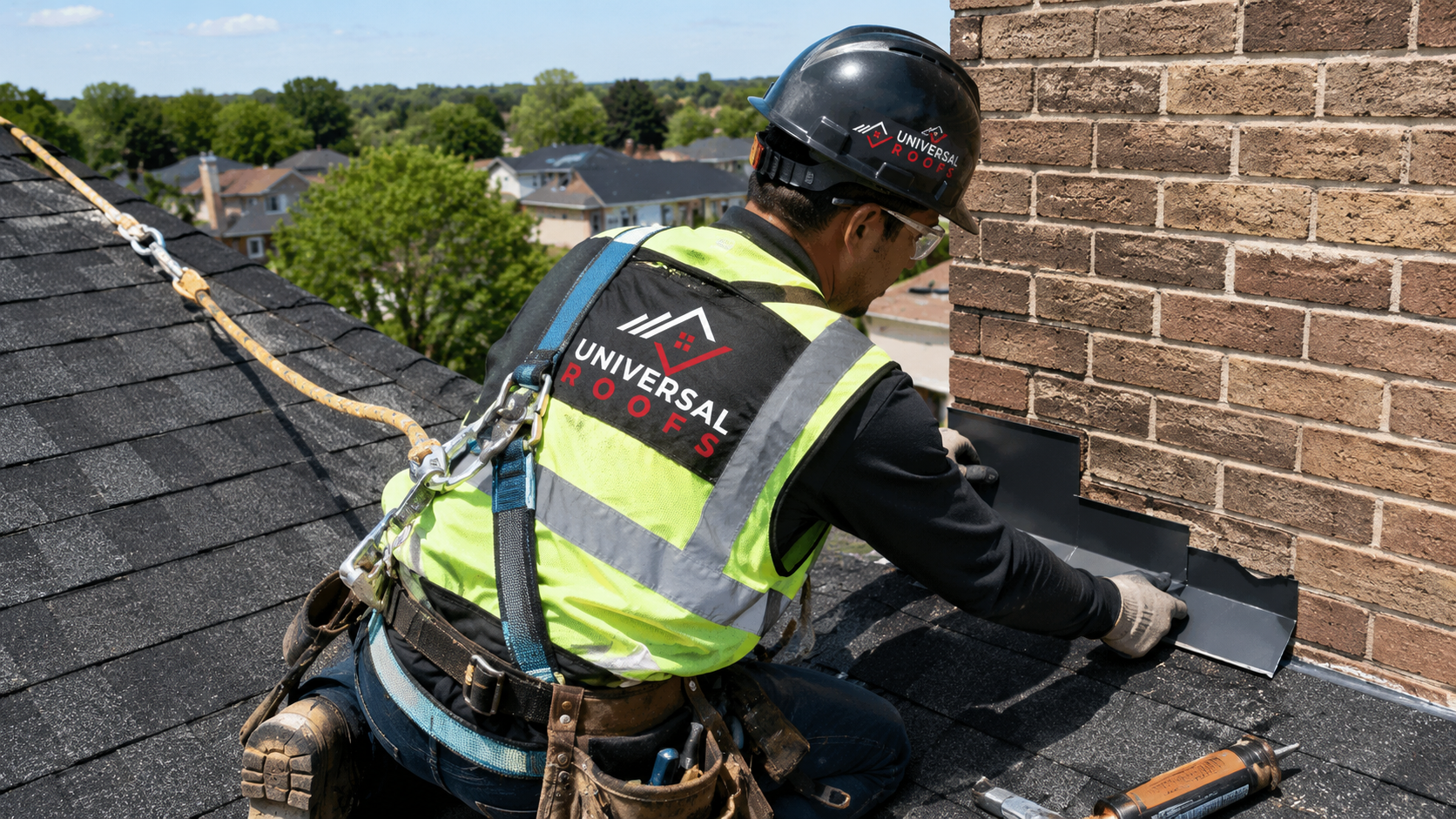
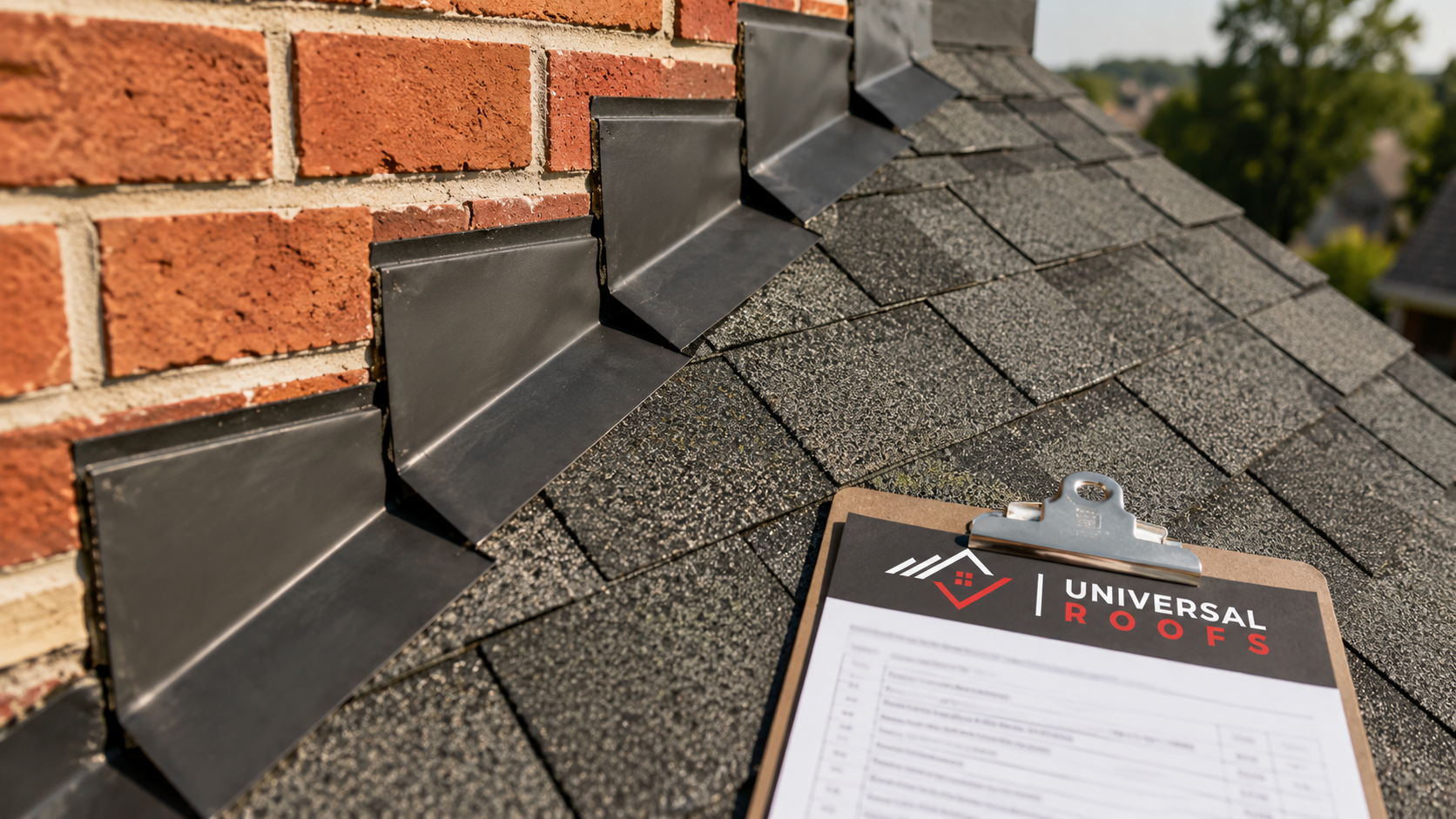
Flashing is the metal that bridges the roof surface and anything that interrupts it. It is the single most common leak source we find. Chimney counterflashing that was never properly cut into the mortar, step flashing that was reused during a previous reroof, and skylight flashing kits that were installed without the manufacturer’s components all leak eventually. The shingles around the problem often look perfectly fine, which is why homeowners are surprised when the water shows up on a ceiling several metres away from the actual entry point.
Valley wear and open valley corrosion
Valleys carry the highest water volume on any roof. On homes with multiple gables and dormers, which describes a lot of newer construction in the area, valleys take a beating from both water flow and sliding snow and ice. Granule loss down the centre of a woven valley or rust perforation in an older metal valley is a clear signal that repair is needed before the deck below starts to rot.
Wind-lifted and creased shingles
A shingle that has been lifted and folded back by wind rarely reseals properly, even if it settles back into place. The crease becomes a hinge that cracks through the mat. On exposed lots, we often find a scattered pattern of creased shingles across a whole slope rather than one obvious hole.
Ice damming and eave leaks
Ice dams form when heat escaping from the living space melts snow on the upper roof, which then refreezes at the cold eave. Water backs up under the shingles and finds its way inside. The visible symptom is a roof leak; the actual cause is usually a combination of insufficient attic insulation, air leakage from the house into the attic, and inadequate ventilation. Repairing the shingles without addressing the attic guarantees a repeat.
Deteriorated pipe boots and vent seals
The rubber collars around plumbing stacks are among the shortest-lived components on a roof. Ontario’s ultraviolet exposure and temperature swings crack them, often within ten to fifteen years, well before the shingles themselves are finished. They are inexpensive to replace and a frequent cause of small, slow ceiling stains.
Nail pops and fastener backout
As sheathing expands and contracts, nails can gradually back out and push up through the shingle above. Each raised nail head is a small puncture waiting to happen. Sealing or resetting them is routine maintenance work rather than a major repair, but ignoring them shortens the life of the whole assembly.
What Roof Repair in Stouffville Costs in 2026
Pricing for roof repair in Stouffville depends on access, roof pitch, the material involved, and how much of the underlying structure has to be opened up. The figures below reflect typical 2026 pricing across York Region for residential asphalt shingle roofs. Steep-slope work above roughly 8/12, three-storey access, and heritage or specialty materials sit above these ranges.
| Repair type | Typical 2026 range | Usual time on site | Notes |
|---|---|---|---|
| Service call and leak diagnosis | $200 to $400 | 1 to 2 hours | Often credited toward the repair |
| Pipe boot or vent seal replacement | $300 to $650 per penetration | Half day | Cheaper when combined with other work |
| Shingle patch, small area | $450 to $1,100 | Half day | Colour matching on older roofs is imperfect |
| Chimney or wall flashing rebuild | $900 to $2,600 | 1 to 2 days | Masonry repointing may add cost |
| Valley replacement, single valley | $1,200 to $3,200 | 1 to 2 days | Depends on length and adjacent shingle condition |
| Sheathing replacement | $120 to $220 per sheet installed | Added to base job | Only known once the roof is opened |
| Emergency tarping and water control | $400 to $900 | Same day | Temporary measure, not a repair |
Two cost drivers on roof repair in Stouffville surprise homeowners more than any others. The first is hidden deck damage, which cannot be quoted accurately until the shingles come off. A good contractor gives you a per-sheet unit price up front so there is no argument later. The second is access. Homes on estate lots with landscaping, retaining walls or limited equipment approach take longer to set up safely, and that time is real.
Repair or Replace: How the Decision Actually Gets Made
The honest answer is that roof repair in Stouffville makes sense when the failure is localised and the rest of the roof still has meaningful service life. It stops making sense when you are spending real money on an assembly that is going to be torn off within a few years anyway.
Here is the framework a competent estimator uses. First, establish the roof’s true age, not the age of the house. Second, assess the condition of the shingle field away from the leak: granule cover, mat flexibility, and whether the shingles have gone brittle. Third, count how many separate problem areas exist. One failed flashing detail on a fifteen-year-old roof is a repair. Four scattered leaks on a twenty-two-year-old roof is a replacement being delayed at a premium.
| Roof age | Condition of shingle field | Number of problem areas | Usual recommendation |
|---|---|---|---|
| Under 10 years | Good, granules intact | One or two | Repair, and check for installation defects covered by warranty |
| 10 to 15 years | Fair to good | One or two | Repair, plan replacement budget |
| 15 to 20 years | Fair, some granule loss | Three or more | Get both a repair and a replacement quote |
| Over 20 years | Brittle, curling, bare patches | Any | Replacement is usually the better value |
| Any age | Widespread deck sponginess | Any | Replacement, deck must be assessed fully |
There is a middle path that gets overlooked: a slope-by-slope replacement. If a single south or west-facing slope has weathered far faster than the rest, replacing that one plane can be a sensible compromise. It will not match perfectly, but it buys years at a fraction of full replacement cost. If a full tear-off is where you land, our roof replacement page explains how that process works.
How Stouffville’s Housing Mix Shapes the Repair Approach
Whitchurch-Stouffville is not architecturally uniform, and the right approach to roof repair in Stouffville shifts with the building era. Older brick homes and postwar bungalows tend to have simple roof shapes but dated underlying assemblies: board sheathing rather than plywood, minimal or no soffit ventilation, and eave details that predate modern ice and water membrane requirements. On these homes, a repair often includes upgrading the detail rather than simply restoring it, because restoring the original detail restores the original failure mode.
Homes built through the 1980s and 1990s usually have plywood or oriented strand board sheathing and at least basic ridge and soffit ventilation, but many are now on their second roof. Second reroofs are where installation shortcuts show up: reused flashing, shingles run tight into walls without step flashing, and vents that were shingled over instead of replaced.
Newer subdivision homes and estate builds present a different challenge again. The roofs are complex, with multiple intersecting planes, dormers, dead valleys and sometimes low-slope sections over garages or rear additions. Low-slope areas cannot be shingled and require a membrane system, and mixing the two correctly at the transition is where a lot of leaks originate. If you have a low-slope section, our flat roofing work covers those assemblies specifically.
Skylights deserve their own mention. They are common on newer local builds and are frequently blamed for leaks that are actually flashing failures around the unit rather than the glass itself. Correct skylight flashing uses the manufacturer’s kit integrated with the shingle courses, not caulking.
Materials, Ventilation and Ontario Building Code Requirements
A few code and best-practice points are worth knowing before you approve any roof repair in Stouffville scope of work.
- Ice and water protective membrane is required at eaves in this climate zone, extending from the roof edge to a point measured well inside the interior wall line. Any eave-area repair should restore that membrane, not just the shingles above it.
- Attic ventilation is governed by a minimum ratio of net free vent area to insulated ceiling area, typically split between intake at the soffits and exhaust at or near the ridge. Blocked soffits are extremely common and quietly destroy roofs from below.
- Mixing exhaust vent types on the same attic space, for example ridge vent plus powered vents, can short-circuit airflow and should be avoided.
- Fastener count and placement matters for wind resistance. High-exposure lots benefit from the manufacturer’s high-wind nailing pattern, which uses more nails placed in the reinforced strip.
- Starter strip and drip edge at eaves and rakes are not optional details. Cut-up shingles used as starter are a shortcut that shows up years later as edge blow-off.
- Maximum layers. Two layers of asphalt shingles is the practical and code-governed limit before a full tear-off is required. If your home already has two layers, plan on a tear-off.
On the material side, most repairs in the area use architectural laminate asphalt shingles, which have largely replaced three-tab. If your roof still carries three-tab shingles, an exact match may no longer be available, and a repair will be visible. That is a cosmetic consideration, not a performance one, but you should know before the work starts rather than after.
| Material | Typical service life in Ontario | Relative repair cost | Best suited to |
|---|---|---|---|
| Three-tab asphalt shingle | 15 to 20 years | Low, but matching is difficult | Older roofs, simple gables |
| Architectural laminate shingle | 25 to 30 years | Low to moderate | Most residential roofs |
| Premium designer shingle | 30 to 40 years | Moderate to high | Estate homes, steep visible slopes |
| Standing seam metal | 40 to 60 years | High, specialty labour | Long slopes, snow shedding |
| Modified bitumen membrane | 18 to 25 years | Moderate | Low-slope garage and addition roofs |
| Single-ply TPO or EPDM | 20 to 30 years | Moderate | Flat sections, rear additions |
Permits, Insurance and Timelines
Straightforward roof repair in Stouffville, meaning shingle, flashing or vent work that does not alter the structure, generally does not require a building permit. A permit is typically triggered when structural members are being replaced or modified, when the roof framing is being altered, or when the work is part of a larger addition or structural change. Municipal requirements change, so the correct step is always to confirm with the Town of Whitchurch-Stouffville building department before assuming, and a reputable contractor will tell you plainly when a permit applies.
Insurance on roof repair in Stouffville is a separate question. Sudden, accidental damage such as wind or hail loss is often covered by a homeowner policy, subject to your deductible and to depreciation on older roofs. Gradual deterioration, wear and tear, and damage traced to deferred maintenance are typically not covered. If you suspect a storm-related claim, photograph everything, keep the damaged materials if practical, and get a written assessment before repairs begin.
On timelines, most roof repair in Stouffville jobs are completed in a single day. Flashing rebuilds and valley work commonly run one to two days. The realistic constraint in summer is scheduling rather than the work itself, since this is peak season across York Region. Weather also governs: asphalt shingles seal properly in warm conditions, which makes late spring through early autumn the ideal window for permanent repairs.
How to Choose a Contractor for Roof Repair in Stouffville
The market for roof repair in Stouffville has a wide quality spread, and the cheapest quote is frequently the most expensive outcome. Use these checks before you commit.
- WSIB clearance and liability insurance. Ask for current certificates, not verbal assurance. If an uninsured worker is injured on your property, the exposure is yours.
- A written scope, not a price. A one-line quote saying “repair roof leak” tells you nothing. The scope should name the materials, the area, and what happens if deck damage is found.
- A diagnosis, not a guess. The contractor should be able to explain where the water is entering and why, and show you photographs.
- Workmanship warranty in writing. Repair warranties are typically shorter than full replacement warranties. One to five years on the repaired area is a reasonable range. Get the term stated on paper.
- No pressure and no large deposit. Deposits on modest repairs should be small or none at all. High-pressure same-day discounts are a warning sign.
- Local references and reviews. Look at what other homeowners in the region say. You can read our customer reviews to see how we work.
One more practical point on roof repair in Stouffville: door-knocking crews spike after every significant windstorm. Some are legitimate. Many are not. If someone tells you from the ground that your roof is failing, get an independent second opinion before authorising anything.
Preventive Maintenance That Reduces Repair Costs
Most of the expensive roof repair in Stouffville work we perform was preventable. A modest maintenance routine dramatically lowers lifetime roofing cost.
- Inspect twice yearly, in late spring and again in autumn before the weather turns. From the ground with binoculars is fine for a first look.
- Keep eavestroughs clear. Overflowing troughs saturate fascia and eave sheathing, which is a slow, invisible form of damage.
- Trim back overhanging limbs. Branches abrade granules and drop debris into valleys where it holds moisture.
- Check the attic, not just the roof. Frost on the underside of the sheathing in winter, damp insulation, or a musty smell all point to ventilation and air-sealing problems. Our attic insulation and ventilation work addresses the root cause of many recurring roof leaks.
- Photograph the roof after major storms. A dated photo record is useful for both maintenance planning and insurance claims.
- Address small items immediately. A cracked pipe boot costs a few hundred dollars. The rotted deck, ruined insulation and stained ceiling it causes cost several thousand.
Homeowners comparing options for roof repair in Stouffville and looking for a full overview of the services available in their community can see our Whitchurch-Stouffville roofing services, and the technical detail of how we diagnose and carry out a roof repair is set out on our service page. We also serve neighbouring communities including Markham and Aurora across York Region.
What to Expect During the Repair Itself
A well-run roof repair in Stouffville follows a predictable sequence, and knowing it helps you tell a professional job from a rushed one. The crew arrives and sets up fall protection and ground protection before anything else. Landscaping and driveways near the work area should be covered. The affected area is then opened up so the actual condition of the underlayment and sheathing can be assessed, and you should be shown what is found before new material goes down.
New membrane and flashing are installed in the correct sequence, working from the bottom of the slope upward so every layer sheds water onto the one below it. Shingles are woven back into the existing courses rather than simply laid over top. The site is then cleaned, including a magnetic sweep for nails, which matters a great deal on properties with children, pets or bare feet in summer.
Finally, you should receive photographs of the completed work and a written record of what was done. If a repair is performed and the leak persists, that documentation is what makes the follow-up conversation straightforward instead of adversarial. Any reputable company doing roof repair in Stouffville will stand behind a repair that did not solve the problem and return to reassess at no charge within the warranty term.
How much does roof repair in Stouffville typically cost?
Do I need a permit for roof repair in Stouffville?
Should I repair or replace a roof that is 18 years old?
What is the best time of year to have a roof repaired?
Why does my ceiling stain appear far from the actual roof leak?
How long does a typical repair take?
Book Your Roof Repair in Stouffville Assessment
If you have a stain on a ceiling, a shingle in the yard after a windstorm, or simply a roof old enough to warrant a closer look, good roof repair in Stouffville starts with a thorough inspection. Universal Roofs is based in the Toronto area and serves homeowners throughout Whitchurch-Stouffville and the surrounding York Region communities, with detailed photographic assessments, honest repair-versus-replace advice, and written scopes so you know exactly what you are paying for. If you still have questions about the process, our frequently asked questions page covers the basics.
Call us today at (416) 732-2421 or request a free consultation.
Universal Roofs serves Whitchurch-Stouffville, Markham, Aurora, Newmarket, Richmond Hill and communities across York Region and the Greater Toronto Area.