
Wood shake roofs bring a warmth and texture to a home that few other materials can match, but that natural charm comes with a maintenance obligation that many Toronto-area homeowners underestimate. Cedar shakes are organic material, and organic material breathes, swells, contracts, and eventually dries out under years of sun, rain, and our brutal freeze-thaw winters. Understanding the process for re sealing and re coating a wood shake roof is essential if you want to protect your investment rather than watch it curl, split, and rot ahead of schedule.
Re-sealing and re-coating are not the same thing as a full roof replacement, and they are also not a simple weekend do-it-yourself project, despite what a few online videos might suggest. Done correctly, the process restores water resistance, slows UV degradation, discourages moss and algae growth, and can add five to ten years of usable life to a cedar shake or shingle roof. Done poorly, it can trap moisture underneath the shakes and accelerate the very decay it was meant to prevent. This guide walks through the entire process step by step, the materials involved, realistic timelines and costs, and the warning signs that tell you it is time to call a professional rather than reach for a paint roller.
At Universal Roofs, we have been maintaining, repairing, and re-coating wood shake roofs across the Greater Toronto Area since 2005, and this article reflects what we have actually seen work on real roofs through real Ontario winters.
Why Wood Shake Roofs Need Re-Sealing and Re-Coating
Untreated cedar shakes begin to lose their natural oils within the first five to seven years of installation, especially on roof slopes that receive direct southern or western sun exposure. Those oils are what originally made the wood resistant to insects, rot, and moisture penetration. Once they leach out, the wood becomes porous, and every rain event, every melting snowbank, and every humid Toronto summer day pushes a little more moisture into the fibres of the shake.
The re-sealing and re-coating process addresses this directly by cleaning out debris and biological growth, restoring lost moisture balance, and applying a fresh barrier product that resists water and UV radiation. This is fundamentally different from replacing shakes, which only makes sense once individual pieces are physically broken, missing, or rotted through. For a roof that is structurally sound but simply weathered, re-sealing is the more cost-effective and less disruptive path, and it is one of the services our team discusses often when homeowners come in through our roof repair department rather than jumping straight to a full roof replacement.
Toronto’s climate makes this maintenance particularly important. We see roughly 40 freeze-thaw cycles per winter in the GTA, and every one of those cycles works water further into unprotected wood fibres, then expands it as ice. Add in the humidity of a Toronto summer, and cedar shakes here age faster than the same product would in a drier climate. That is precisely why re-sealing schedules recommended by manufacturers for dry Western regions are usually too conservative for Ontario homes.
Step 1: Full Roof Inspection and Assessment
Every legitimate re-sealing job starts with a thorough inspection, not a sales pitch. A qualified roofer will walk the entire roof surface, checking for:
- Cupping, curling, or splitting shakes
- Areas of moss, lichen, or algae growth
- Soft spots that indicate rot has already set in
- Missing or badly displaced shakes
- Condition of flashing around chimneys, vents, and valleys
- Attic ventilation and any signs of moisture intrusion from below
This assessment matters because re-sealing only makes sense on roofs where at least 80 percent of the shakes are structurally sound. If a large percentage of the material is already rotted, cupped beyond repair, or brittle, a coating will not fix the underlying problem, and money spent on sealant is wasted. This is also the point where a contractor should check your attic ventilation, since poor airflow is one of the leading causes of premature shake decay from the underside up.
Step 2: Cleaning the Roof Surface
Cleaning is the single most important step in the entire process, and it is also the step most often rushed by inexperienced crews. A sealant or coating applied over dirt, moss, or old degraded oils will not bond properly and will fail early, sometimes within a single season.
Professional cleaning typically involves:
- Removing debris (leaves, twigs, pine needles) by hand or soft brush from between and on top of shakes
- Low-pressure washing, never high-pressure, since aggressive water pressure can drive moisture deep into the wood or physically damage aged shakes
- Application of a biocide or roof-safe cleaning solution to kill moss, algae, and lichen at the root rather than just knocking the visible growth off the surface
- A rinse cycle to remove all cleaning residue
High-pressure washing is one of the most common mistakes we see from previous contractors on roofs we are called in to fix. Pressure washers rated above 1,200 to 1,500 PSI can blast away the softer summer-growth wood grain, leaving the harder winter grain raised and rough, which actually reduces the roof’s water-shedding ability rather than improving it.
Step 3: Drying Time — The Step Everyone Underestimates
Cedar is hygroscopic, meaning it absorbs and releases moisture based on the surrounding humidity. After washing, the wood needs to dry out fully before any sealant or coating touches it, because trapping moisture beneath a coating is the fastest way to cause rot from the inside.
Depending on humidity, temperature, and sun exposure, proper drying takes anywhere from 24 to 72 hours. This is why the process is heavily weather-dependent, and it is also why summer months like July are actually one of the better windows for this kind of work in Toronto: long daylight hours, warm temperatures, and typically drier stretches between rain events allow the wood to dry properly before sealant goes on. Contractors who rush this step to finish a job in a day are setting the roof up for early failure.
| Season | Typical Drying Time | Suitability for Re-Coating | Notes |
|---|---|---|---|
| Summer (Jun–Aug) | 24–36 hours | Excellent | Longest working window, lowest humidity swings |
| Early Fall (Sep–Oct) | 36–48 hours | Good | Cooling temperatures slow curing slightly |
| Spring (Apr–May) | 48–60 hours | Fair | Higher rainfall frequency can delay scheduling |
| Winter (Nov–Mar) | Not recommended | Poor | Sealants will not cure properly below 10°C |
Step 4: Repairing Damaged Shakes Before Sealing
You never seal over damage and hope for the best. Any shakes that are split, cupped severely, or showing early rot need to be replaced with matching cedar before the coating stage begins. This is a spot-repair process, not a full re-roof, and it typically involves:
- Carefully removing damaged shakes without disturbing surrounding pieces
- Installing new, properly weathered cedar shakes matched for thickness and exposure
- Securing with corrosion-resistant fasteners appropriate for wood roofing
- Checking and repairing flashing at valleys, chimneys, and skylight curbs while access is available
If your home has roof-mounted skylights, this is also a smart moment to have them inspected, since flashing failures around skylights are a common hidden source of leaks that get blamed on the shake roof itself. Our skylights and skylight replacement teams frequently coordinate with roof maintenance visits for exactly this reason.
Step 5: Applying the Sealant or Water Repellent
Once the roof is clean, dry, and repaired, the actual sealing stage begins. Most professional-grade wood roof sealants are penetrating oil-based or water-based repellents designed to soak into the wood fibres rather than simply sit on the surface like paint. This preserves the natural cedar texture and colour variation while restoring water resistance.
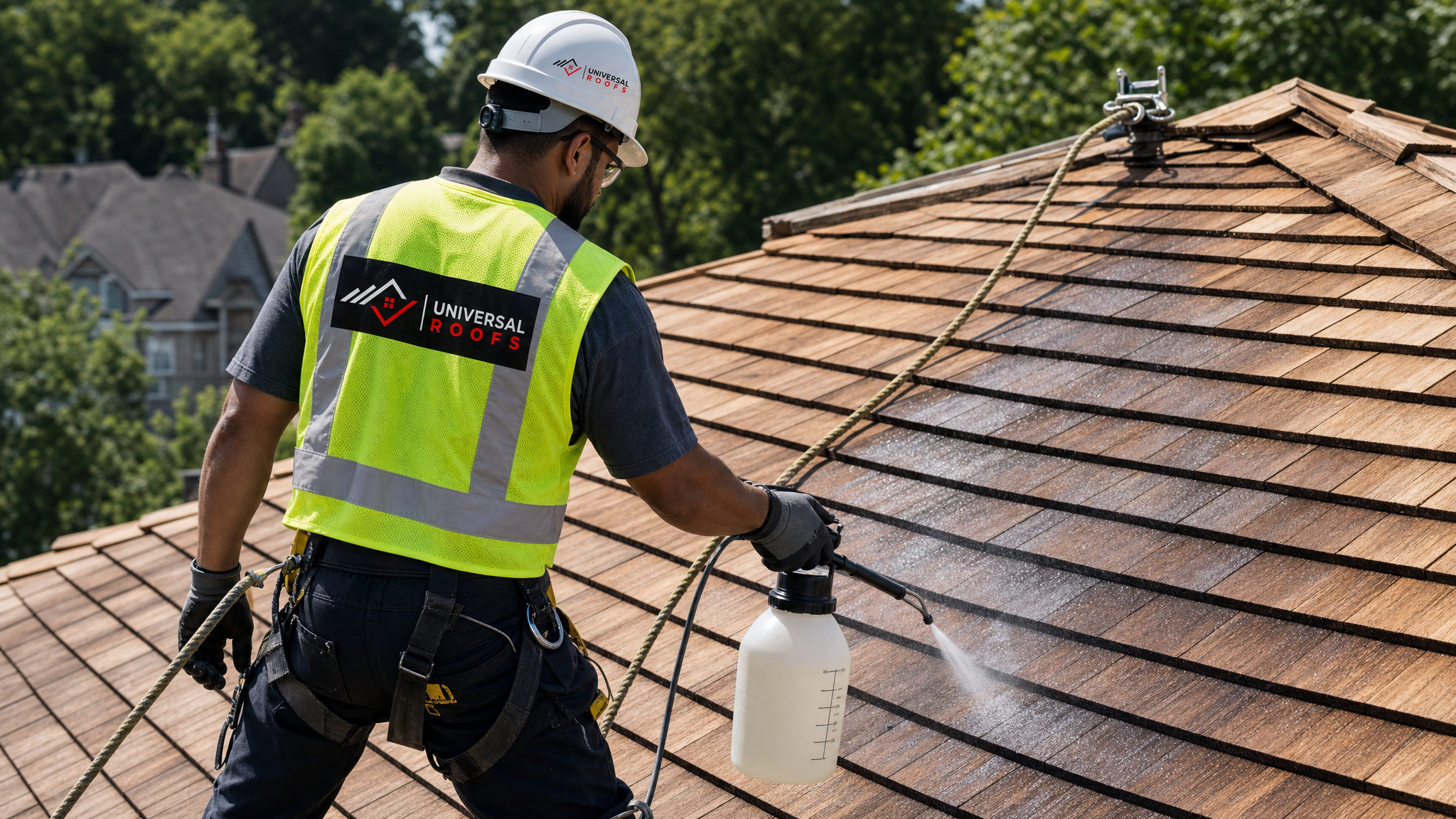
Application is typically done with a low-pressure sprayer, back-brushed by hand to work the product into gaps between shakes, joints, and butt ends where water intrusion happens most. Two coats are standard: the first coat penetrates and conditions the wood, and the second coat builds the protective film. Manufacturers generally specify a minimum recoat window of several hours between coats, which is why full re-sealing jobs on an average GTA roof take two to four days from wash to final coat, not a single afternoon.
| Product Type | Application Method | Expected Lifespan | Best For |
|---|---|---|---|
| Penetrating oil sealant | Spray + back-brush | 3–5 years | Preserving natural cedar look |
| Water-repellent preservative (WRP) | Spray or roller | 2–4 years | Budget-conscious maintenance |
| Semi-transparent stain sealant | Brush + roller | 4–6 years | Colour restoration plus protection |
| Elastomeric roof coating | Roller or spray, multi-coat | 7–10 years | Older roofs needing maximum waterproofing |
Step 6: Fire-Retardant and Anti-Fungal Treatments
Many municipalities and insurance providers in Ontario now require or strongly favour fire-retardant treatment on wood roofing, and re-sealing is the ideal time to reapply it since the original factory treatment degrades over time just like the natural oils do. A quality re-coating job will include a Class C or better fire-retardant product alongside a fungicide or anti-fungal additive mixed into the sealant itself, which helps slow the return of moss and algae in Toronto’s humid summer months and shaded, tree-covered lots.
Step 7: Final Inspection and Quality Control
Once the coating has cured, a proper crew performs a final walkthrough to confirm even coverage, no missed sections, no pooling or drips that could indicate over-application, and that flashing and repaired areas blend properly with the rest of the roof. This is also when photos should be taken for your records, both for warranty purposes and for your own home maintenance file, since you will want a clear before-and-after reference when scheduling your next re-seal.
How Often Should You Re-Seal a Wood Shake Roof in the GTA?
This is the question we get asked most, and the honest answer depends on sun exposure, tree cover, slope, and the product originally used. As a general rule for the Toronto climate:
| Roof Condition / Exposure | Recommended Re-Seal Interval | Key Risk If Delayed |
|---|---|---|
| South/west-facing, full sun | Every 2–3 years | UV-driven splitting and cupping |
| North-facing, shaded, tree cover | Every 3–4 years | Moss, algae, moisture retention |
| Steep slope, good drainage | Every 4–5 years | Slower degradation overall |
| Low slope or flat sections | Every 2 years | Standing water and premature rot |
| Roof over 20 years old | Annual inspection, reseal as needed | Underlying rot masked by surface coating |
If your home has a low-slope section transitioning into a flat roof area, that section ages differently and may need separate attention. Our flat roofing team frequently handles these transition zones where wood shake meets a membrane roof.
Signs Your Wood Shake Roof Needs Re-Sealing Now
Rather than working strictly off a calendar, watch for these visible warning signs:
- Grey, faded, or bleached-out shake colour with no protective sheen
- Shakes that feel dry, brittle, or splinter easily to the touch
- Visible cupping or curling at the edges of individual shakes
- Moss or algae patches, especially on shaded northern slopes
- Water stains appearing on attic sheathing or ceiling drywall below the roof
- Small cracks running along the grain of multiple shakes
Any one of these on its own may not be urgent, but two or more together usually means the roof has moved past simple cosmetic ageing and needs professional attention soon. If you notice active leaking rather than just surface wear, that calls for immediate roof repair rather than a cosmetic recoat.
Re-Sealing vs. Full Replacement: How to Decide
Homeowners often ask whether it is worth re-sealing an older roof at all, or whether that money should go toward replacement instead. The general guidance our estimators use in the field:
| Roof Age / Condition | Recommended Action | Approximate Cost Range (GTA) |
|---|---|---|
| 0–10 years, minor wear | Clean and re-seal | $1,800–$3,500 |
| 10–20 years, moderate wear, isolated damage | Repair damaged shakes then re-seal | $3,000–$6,000 |
| 20–25 years, widespread cupping/splitting | Evaluate case-by-case; often still repairable | $4,500–$8,000 |
| 25+ years, structural rot, multiple leak points | Full roof replacement | $15,000–$30,000+ |
These figures vary based on roof size, pitch, and accessibility, and they should always be confirmed with an in-person assessment. If more than a quarter of the shakes show rot rather than just surface weathering, replacement is usually the more economical long-term choice, and our team will tell you that honestly rather than upsell a coating that will not hold.
DIY Re-Sealing vs. Hiring a Professional
It is technically possible for a confident homeowner to rent a low-pressure sprayer and apply a big-box store sealant to a wood shake roof. In practice, we see three recurring problems with DIY attempts:
- Safety. Wood shake roofs become extremely slippery when wet or freshly coated, and working at height without proper fall protection is genuinely dangerous.
- Missed damage. Homeowners without roofing experience routinely coat over cupped, split, or rotting shakes that should have been replaced first, sealing in problems rather than solving them.
- Product and application errors. Consumer-grade sealants applied without proper cleaning, drying time, or back-brushing technique often fail within a single season, wasting the material cost and the labour.
A professional crew carries the right low-pressure equipment, uses commercial-grade penetrating sealants not sold at retail stores, and — critically — has the experience to spot rot, flashing failures, and ventilation problems that a coating alone will not fix. Given that your roof protects the single largest investment most people own, this is one home maintenance task where the labour cost is genuinely worth it.
Regional Considerations Across the GTA
Wood shake maintenance needs vary somewhat across the region depending on tree cover, humidity pockets, and typical roof age. We see denser tree canopy and correspondingly higher moss pressure in older established neighbourhoods across Toronto, while newer subdivisions in Peel Region and York Region tend to have more sun-exposed roofs that age faster from UV rather than moisture. Homes near the escarpment and lakeshore areas of Halton Region and the rural-suburban mix across Durham Region often see a blend of both factors. Wherever you are in the GTA, local microclimate genuinely affects your re-sealing schedule, which is why we recommend an on-site assessment rather than relying purely on a generic timeline.
Maintaining Your Roof Between Re-Sealing Cycles
A few simple habits extend the life of a fresh sealing job considerably:
- Keep gutters clear so water does not back up under the lowest course of shakes
- Trim overhanging branches to reduce shade, debris, and moss pressure
- Have your attic ventilation checked annually, since trapped heat and humidity attack shakes from below
- Schedule a light inspection every spring and fall to catch small issues early
- Avoid walking on the roof unnecessarily, since foot traffic on dry or brittle shakes causes cracking
Homeowners who follow this kind of routine maintenance schedule consistently get more years out of each re-sealing cycle than those who only think about the roof after a leak appears. You can read what other GTA homeowners have experienced working with our crews on our reviews page, and browse common questions on our FAQ page if you want more background before booking an assessment.
Frequently Asked Questions
What is the process for re sealing and re coating a wood shake roof?
How long does re-sealing a wood shake roof take?
How often should a cedar shake roof be re-sealed in Toronto’s climate?
Can you re-seal a wood shake roof yourself?
What is the difference between re-sealing and full roof replacement?
Why is drying time important before applying a sealant to wood shakes?
Need Help With What Is the Process?
If your cedar shake roof is looking faded, dry, or starting to show moss and cupping, do not wait until it turns into a full leak. The team at Universal Roofs has been assessing, repairing, and re-sealing wood shake roofs across the GTA since 2005, and we can tell you honestly whether your roof needs a simple recoat or something more.
Call us today at (416) 732-2421 or request a free inspection to get started.
Universal Roofs proudly serves Toronto, Mississauga, Brampton, Vaughan, Markham, Oakville and the GTA since 2005.