
Wood shake roofs give Toronto and GTA homes a warm, textured look that asphalt shingles simply cannot match, but that natural beauty comes with a maintenance schedule. Cedar shakes weather, curl, split, and grow moss faster in our humid summers and freeze-thaw winters than most homeowners expect, and knowing when to patch, when to re-coat, when to strip and re-lay, and when to walk away entirely toward full replacement can save thousands of dollars.
At Universal Roofs, we have been repairing and replacing wood shake roofs across the Greater Toronto Area since 2005, and one question comes up on almost every inspection: “can this be repaired, or do I need a whole new roof?” The honest answer depends on the age of the shakes, the extent of the damage, the condition of the decking underneath, and your budget. This guide walks through the four best options for wood shake roof repair or replacement, in order of least to most invasive, so you can make an informed decision before you call anyone out to your property.
We will cover spot repairs, partial re-shaking, chemical and coating treatments that extend service life, and full tear-off replacement, along with realistic cost ranges, timelines, and the warning signs that tell you which option applies to your specific roof.
How to Tell Which Option Fits Your Wood Shake Roof
Before choosing between repair and replacement, you need an honest assessment of what is actually happening to your shakes. Wood shake roofs typically last 25 to 30 years in the GTA climate when properly ventilated and maintained, but individual shakes fail at different rates depending on their exposure to sun, shade, and moisture. A north-facing slope under overhanging trees will show moss and rot years before a sun-exposed south slope on the same house.
Walk your property line and look up, or better yet, use binoculars from the ground, and note these signs:
- Curling or cupping shakes that have lost their flat profile
- Split shakes with cracks running with the grain
- Missing or blown-off shakes leaving bare patches of underlayment
- Dark streaking, moss, or algae growth, especially on shaded slopes
- Soft, spongy spots that indicate rot has reached the decking
- Granular black debris in the gutters (decomposing wood fibre)
- Daylight visible through the roof deck from inside the attic
If the damage is isolated to a handful of shakes and the rest of the roof still has flexibility and colour, targeted repair is usually the right call. If damage is spread across 25 percent or more of the roof surface, or if you can see decking failure, a full roof replacement conversation needs to happen. We always recommend a professional inspection before committing to either path, since what looks like surface weathering from the ground can hide deeper decking problems that only become obvious once shakes are pulled back.
| Warning Sign | Likely Cause | Recommended Option | Urgency |
|---|---|---|---|
| 1-5 curled or split shakes | Localized weathering or wind damage | Spot repair | Moderate |
| Moss/algae on one slope only | Shade, poor drainage, trapped moisture | Cleaning + preservative treatment | Moderate |
| 10-25% of shakes damaged | Age-related wear across a section | Partial re-shaking | High |
| Widespread curling, thinning shakes | Roof nearing end of service life | Full replacement | High |
| Soft decking, interior leaks, daylight through roof | Structural rot, failed underlayment | Full tear-off and replacement | Urgent |
Option 1: Targeted Spot Repair for Isolated Shake Damage
Spot repair is the least invasive and least expensive of the wood shake roof repair or replacement options, and it is the right call when damage is limited to individual shakes rather than an entire section of roof. A qualified roofer removes each damaged shake by splitting it out with a froe or shake ripper, taking care not to disturb the surrounding courses, then slides a new cedar shake into place and secures it with corrosion-resistant stainless steel or hot-dipped galvanized nails.
The trick with spot repair is matching the exposure and thickness of the existing shakes so the new pieces sit flush with their neighbours rather than creating a visible high spot that catches wind and rain. An experienced installer will also check the underlayment beneath the removed shake before installing the replacement, since a hidden tear in the felt or synthetic underlayment is often the actual source of a leak that shows up as a stained ceiling two rooms away.
Spot repairs typically take one to three hours depending on how many shakes need replacing and how accessible the roof pitch is. For homeowners in older GTA neighbourhoods with steep Victorian or Edwardian rooflines, safe access alone can take longer than the repair itself, which is why we always send crews with proper fall protection and staging equipment rather than relying on ladders propped against the eave.
| Repair Scope | Typical Cost (CAD) | Time to Complete | Expected Added Life |
|---|---|---|---|
| 1-3 shakes | $250 – $450 | 1-2 hours | 5-10 years (localized) |
| 4-10 shakes across one area | $450 – $900 | 2-4 hours | 5-10 years |
| Flashing resealed alongside repair | +$150 – $350 | +1 hour | Prevents recurring leak |
| Ridge cap shake replacement | $300 – $600 | 2-3 hours | 8-12 years |
Spot repair works best as a maintenance strategy on a roof that is otherwise sound. If you find yourself calling for spot repairs every season on different parts of the same roof, that is a strong signal the shakes are failing broadly and a more comprehensive option, like partial re-shaking or full replacement, will save money over time compared to repeated one-off callouts.
Option 2: Cleaning and Preservative Treatment to Extend Shake Life
Many wood shake roofs that look like candidates for replacement are actually suffering from surface-level moss, algae, and lichen growth rather than structural decay. In the GTA’s humid summers, north-facing and heavily shaded slopes accumulate organic growth that traps moisture against the wood, accelerates rot, and gives the whole roof a prematurely aged appearance. Addressing this before it becomes structural damage is one of the most cost-effective options available.
A proper treatment involves a soft wash (never high-pressure washing, which strips the wood’s natural oils and drives water under the shakes) using a biocide solution formulated for cedar, followed by a rinse and full dry-out period. Once the shakes are clean and dry, a breathable wood preservative or fire retardant treatment can be applied to slow future organic growth and UV degradation. This is not a coating that seals the wood like paint; it needs to remain vapour-permeable so the shakes can continue to dry out after rain, which is critical to preventing rot in our climate.
Preservative treatments are typically recommended every 3 to 5 years as part of routine maintenance, and summer is the ideal season to schedule this work since the shakes need several consecutive dry days to fully absorb and cure the treatment. Scheduling this in July or August, while conditions are warm and dry, gets better results than trying to squeeze it in during a damp spring or fall window.
| Treatment Type | Cost Range (CAD, avg. bungalow) | Recommended Frequency | Best Season |
|---|---|---|---|
| Soft wash (moss/algae removal) | $400 – $800 | Every 2-3 years | Late spring – summer |
| Wood preservative application | $600 – $1,200 | Every 3-5 years | Summer (dry days needed) |
| Fire retardant treatment | $800 – $1,500 | Every 3-5 years, per local code | Summer |
| Combined wash + preservative package | $1,000 – $1,800 | Every 3-5 years | Summer |
Treatment alone will not fix split, curled, or missing shakes; it is a preservation strategy for shakes that are structurally sound but showing surface aging. Many homeowners combine treatment with spot repair in the same visit, addressing both the handful of damaged shakes and the broader organic growth issue at once. This combination approach tends to offer the best value per dollar spent for roofs under 15 years old that have been neglected but not yet structurally compromised.
Option 3: Partial Re-Shaking for Concentrated Damage
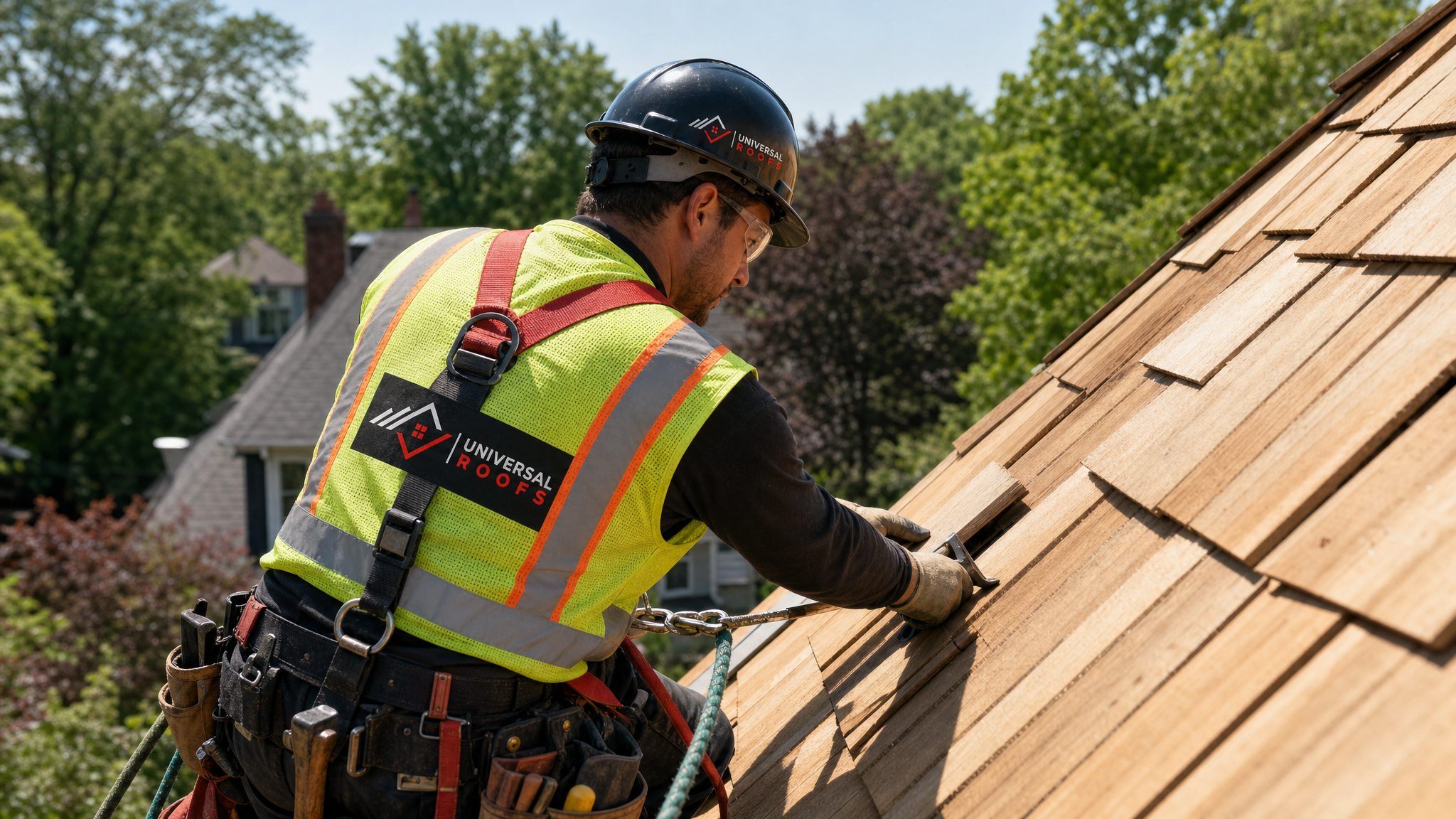
When damage is concentrated in one section of the roof, typically a single slope that takes the brunt of prevailing winds and sun exposure, but the rest of the roof remains in good condition, partial re-shaking is often the smartest middle-ground option. This involves stripping the damaged section down to the decking, inspecting and repairing the underlayment and any compromised sheathing, and installing an entirely new run of shakes matched in species, thickness, and exposure to the surrounding sections.
Partial re-shaking makes the most sense on roofs where one slope has clearly aged faster due to sun exposure or drainage issues, since replacing only that section avoids the expense of a full tear-off while still addressing the root cause rather than patching symptoms indefinitely. It is common on GTA homes with a south or west-facing slope that has taken years of direct summer sun while the shaded north slope remains in serviceable condition.
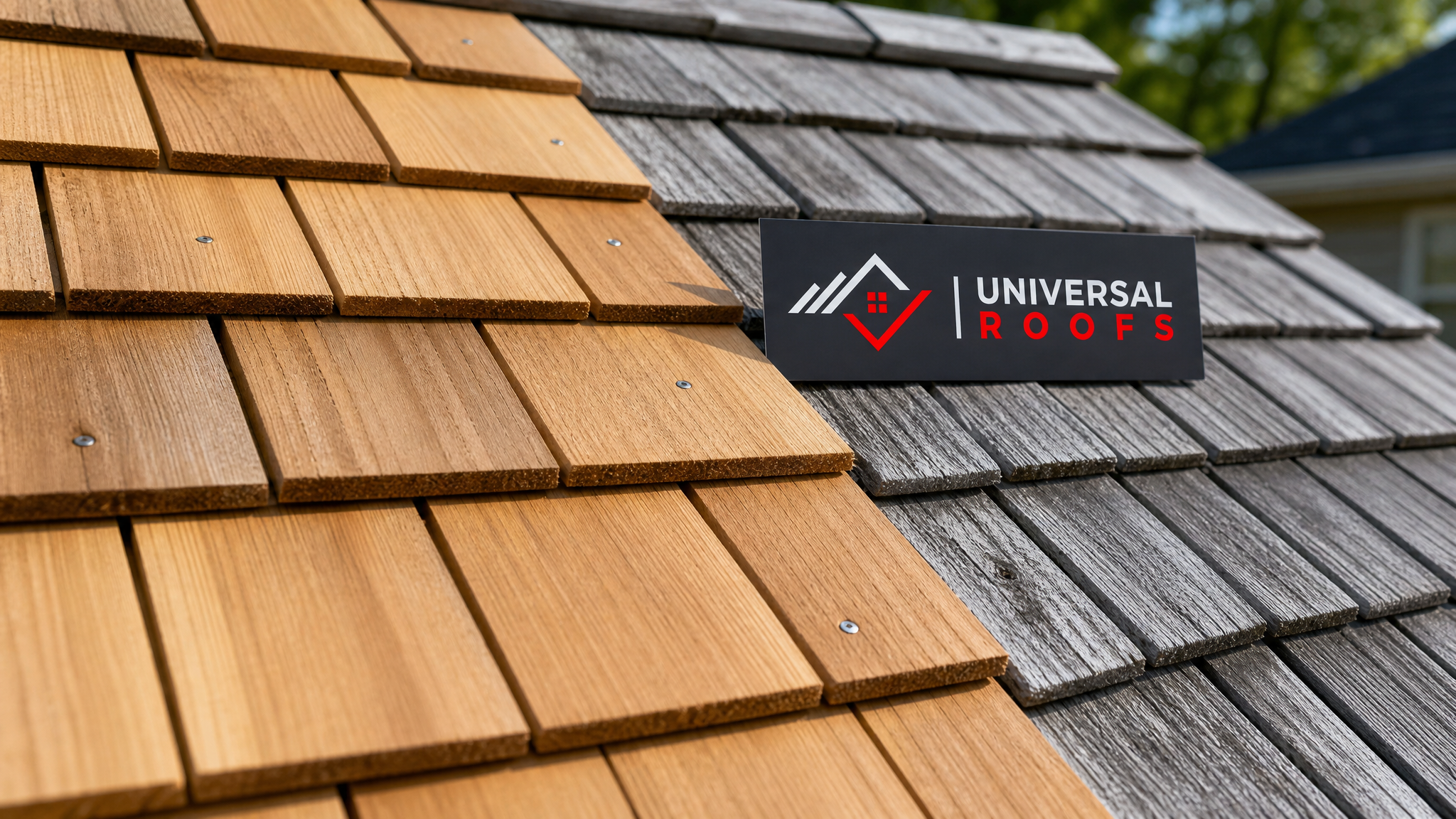
The key challenge with partial re-shaking is colour and weathering matching. New cedar shakes arrive a warm honey-blonde colour and will not match the silvered grey of shakes that have weathered for a decade or more. Some homeowners embrace the two-tone look temporarily, knowing UV exposure will grey the new shakes within 12 to 18 months. Others ask us to apply a weathering stain or accelerant to blend the new section faster. We always discuss this expectation upfront during the estimate so there are no surprises once the work is complete.
| Re-Shaking Scope | Typical Cost (CAD) | Timeline | Notes |
|---|---|---|---|
| Single slope (small bungalow) | $3,500 – $6,000 | 2-3 days | Includes decking inspection |
| Single slope (larger two-storey) | $6,000 – $11,000 | 3-5 days | May require additional staging |
| Two adjoining slopes | $9,000 – $16,000 | 5-7 days | Better colour continuity across corner |
| Underlayment replacement (add-on) | +$1.50 – $3.00/sq ft | +1-2 days | Recommended if felt is over 15 years old |
Partial re-shaking is also the point in the decision tree where a proper attic ventilation assessment pays for itself. Poor attic airflow is one of the leading causes of premature shake failure on one slope of a roof while the opposite slope stays healthy, because trapped heat and moisture cook the underside of the shakes from below. If we find inadequate ridge or soffit ventilation during a partial re-shaking job, we will flag it, since re-shaking without correcting the ventilation problem often means facing the same damage again on the new section within a decade.
Option 4: Full Tear-Off and Roof Replacement
Full replacement is the most significant investment of the four options, but it is the right call once a wood shake roof has reached the end of its practical service life, or when damage and rot have spread broadly enough that repair costs start to rival replacement costs. A full tear-off removes every shake, strips the old underlayment down to the decking, replaces any rotted or delaminated sheathing, installs new synthetic or felt underlayment, and lays an entirely new roof system, whether that means fresh cedar shakes or a switch to a more maintenance-friendly material.
This is also the point where many GTA homeowners reconsider their material choice entirely. Cedar shakes are beautiful, but they demand consistent maintenance, periodic treatment, and a watchful eye for the kind of localized damage we have covered above. Some homeowners choose to replace like-for-like with new cedar shakes to preserve their home’s character, particularly on heritage properties in older Toronto neighbourhoods where the aesthetic matters for resale value and streetscape consistency. Others use the full replacement as an opportunity to move to a more durable alternative that mimics the shake look with less upkeep.
A full tear-off is also the right time to address related roofing systems while the deck is exposed. If your home has a skylight or is due for a skylight replacement, integrating that flashing work during the shake replacement avoids the added cost of a second mobilization later. The same goes for any low-slope sections tied into the main roof; if part of your property has a flat roofing section over a porch or addition, coordinating both scopes in one project typically saves on labour and staging costs.
| Replacement Scope | Typical Cost (CAD) | Timeline | Material Life Expectancy |
|---|---|---|---|
| Full tear-off, new cedar shakes (avg. bungalow) | $18,000 – $28,000 | 5-8 days | 25-30 years |
| Full tear-off, new cedar shakes (larger 2-storey) | $28,000 – $45,000 | 8-14 days | 25-30 years |
| Decking replacement (if rotted) | +$3 – $6/sq ft | +2-4 days | Matches new roof system |
| Switch to shake-profile architectural shingle | $12,000 – $20,000 | 3-5 days | 25-30 years, lower upkeep |
| Ventilation upgrade (ridge + soffit) | +$1,200 – $2,500 | +1 day | Extends life of entire system |
Before committing to full replacement, get a written scope from a licensed contractor that itemizes decking condition, underlayment type, ventilation upgrades, and disposal of old material, since these line items are where quotes vary the most between contractors and where corners get cut on lower bids. A properly executed roof replacement should come with a clear workmanship warranty separate from the manufacturer’s material warranty.
Comparing All Four Options Side by Side
With the four approaches laid out individually, it helps to see them compared directly against the questions homeowners actually ask: how much does it cost, how long does it take, and how long will the fix last. Use this table as a quick reference once you have identified which category your roof damage falls into using the diagnostic checklist earlier in this guide.
| Option | Best For | Cost Range (CAD) | Added Roof Life |
|---|---|---|---|
| 1. Spot repair | Isolated shake damage, otherwise sound roof | $250 – $900 | 5-10 years (localized) |
| 2. Cleaning + preservative treatment | Surface moss/algae, structurally sound shakes | $400 – $1,800 | Extends interval before repair needed |
| 3. Partial re-shaking | One damaged slope, rest of roof healthy | $3,500 – $16,000 | 15-25 years (on re-shaked section) |
| 4. Full tear-off replacement | Widespread damage, aging system, structural rot | $12,000 – $45,000 | 25-30 years (full system) |
Notice that the jump from option 3 to option 4 is significant, which is exactly why an honest inspection matters before signing a contract. A contractor who pushes straight to full replacement without walking through the roof and attic first, or one who promises a cheap patch on a roof that is clearly failing across multiple slopes, is not giving you the full picture. Ask for photos of the actual damage, a look at the underside of the decking from the attic where accessible, and a written explanation of why the recommended option was chosen over the alternatives.
Toronto and GTA Climate Factors That Affect Your Decision
The Greater Toronto Area’s climate is uniquely hard on wood shake roofs compared to drier regions where cedar shakes originated. Our winters bring repeated freeze-thaw cycles that force water into tiny cracks in the wood, then expand it as ice, widening those cracks year over year. Spring brings heavy rain and rapid snowmelt that tests every seam and flashing detail. Summer humidity, especially on shaded or poorly ventilated slopes, promotes the moss and algae growth covered in option two above.
This means the timeline for choosing between repair and replacement in the GTA tends to run faster than manufacturer literature suggests, which is often based on drier West Coast climates where cedar shakes are milled. A roof that might comfortably last 35 years in coastal British Columbia may show significant wear by year 25 in Toronto, particularly if the attic ventilation was undersized when originally installed, a common shortcut on homes built before ventilation codes tightened.
Homeowners across our service areas, including Toronto, Peel Region, York Region, Halton Region, and Durham Region, tend to see the same failure patterns: south and west slopes wearing faster from sun exposure, north slopes accumulating moss from shade and moisture, and valleys and flashing points failing before the shake field itself does. Knowing which pattern applies to your roof helps target inspection time and repair dollars where they matter most.
Maintenance Habits That Delay the Need for Replacement
Regardless of which option applies to your roof today, a few consistent maintenance habits meaningfully extend the interval before you need the next, more expensive tier of work. These are the same recommendations we give every client after a repair or partial re-shaking project, and they cost far less than emergency callouts down the road.
- Clear debris (leaves, needles, branches) from valleys and gutters every autumn before winter freeze sets in
- Trim overhanging branches back at least 3 metres from the roofline to reduce shade-driven moss growth and abrasion damage
- Schedule a professional inspection every 2 to 3 years, or immediately after any major wind or hail event
- Address small leaks and split shakes the season they appear rather than waiting for a convenient time, since deferred maintenance always compounds
- Verify attic insulation and ventilation are adequate; trapped heat and humidity accelerate shake decay from underneath
- Avoid pressure washing shakes; use soft wash methods only to prevent driving water beneath the wood
Homeowners who stay on top of these habits routinely get the full 25 to 30 year lifespan out of a cedar shake roof, while those who defer maintenance often find themselves facing full replacement 8 to 10 years earlier than necessary. If you are unsure whether your current maintenance routine is sufficient, our FAQ page covers many of the most common questions we field from GTA homeowners about shake roof care.
Choosing the Right Contractor for Wood Shake Work
Not every roofing contractor has genuine cedar shake experience, and this is one area of roofing where the wrong hire can cost you far more than a bad quote. Improper nailing patterns, incorrect exposure spacing, or the use of the wrong fastener material (galvanized nails corrode and streak shakes within a few years, which is why stainless steel or hot-dipped galvanized fasteners are standard) all shorten the life of otherwise good material.
When evaluating contractors for wood shake repair or replacement, ask specifically about their shake experience rather than general roofing experience, request to see photos of completed shake projects, confirm they carry liability insurance and WSIB coverage for their crews, and get a written scope that specifies shake grade, fastener type, and underlayment material. Read reviews from homeowners who have had similar work done, and do not be afraid to ask a contractor to walk you through why they are recommending one of the four options over the others for your specific roof.
We encourage every homeowner considering shake repair or replacement to learn more about our team and our approach before booking, since a company with genuine cedar shake specialization will have a very different answer to “can this be repaired” than a general contractor who mostly installs asphalt shingles and treats wood shake as a side service.
What are the best options for wood shake roof repair or replacement?
How do I know if my wood shake roof needs repair or full replacement?
How much does wood shake roof repair typically cost in Toronto?
Can moss and algae on a wood shake roof be removed without replacing the shakes?
How long do wood shake roofs last in the GTA climate?
Is it worth replacing wood shakes with a different material during a full roof replacement?
Need Help With 4 Best Options for?
Whichever option fits your roof, getting an honest, experienced assessment is the first step, and that is exactly what Universal Roofs provides on every wood shake inspection across the GTA.
Call us today at (416) 732-2421 or request a free inspection to get started.
Universal Roofs proudly serves Toronto, Mississauga, Brampton, Vaughan, Markham, Oakville and the GTA since 2005.