
A summer squall rolls through the GTA, the wind gusts past 80 km/h, and the next morning you notice a strip of shingles missing along the ridge or scattered across the lawn. The first question most homeowners ask is whether they can just patch it themselves. The second, more important question is why does roof wind damage require an insurance claim at all, rather than simply being paid for out of pocket like a routine repair.
The honest answer is that it doesn’t always require a claim — but in most cases involving real structural wind damage, filing one is the financially smarter move, and sometimes it is the only way to get the repair done properly and documented. Wind damage sits in a grey zone between “storm event” and “maintenance issue,” and insurers, contractors, and homeowners don’t always agree on which side of that line a given roof falls on. Understanding how adjusters actually evaluate wind claims, what evidence they look for, and where the cost thresholds sit will save you time, money, and a lot of frustration.
This guide walks through the mechanics of wind damage, the reasons an insurance claim is usually the right path, the exceptions where it isn’t, and exactly how a claim moves from the first phone call to a cheque in hand. As a licensed roofing contractor working across the Toronto area since 2005, Universal Roofs has assisted thousands of homeowners through this exact process, and this article distills what we’ve learned about doing it right.
What Counts as Wind Damage to a Roof
Before asking whether wind damage requires an insurance claim, it helps to understand what actually qualifies as wind damage in the eyes of an insurer. Not every loose shingle or granule in the eavestrough is a covered loss. Insurance policies in Ontario generally define wind damage as sudden, accidental harm caused by a specific weather event, as opposed to gradual deterioration from age, poor installation, or lack of maintenance.
Typical wind-related damage includes:
- Shingles torn off, lifted, or creased along the tab lines
- Missing or cracked ridge cap shingles at the roof’s peak
- Flashing pulled away from chimneys, skylights, or wall junctions
- Punctures or tears from wind-driven branches and debris
- Soffit or fascia panels bent or detached
- Water staining on ceilings that appears within days of a storm, indicating a new breach rather than a slow leak
The key word is sudden. An adjuster comparing your roof to photos from a previous claim, a real estate listing, or even a Google Street View image can often tell whether shingles were already curling and brittle before the storm, or whether the damage pattern matches a genuine wind event — for example, missing shingles concentrated on the side of the roof that faced the prevailing gusts, or a clean tear line rather than gradual granule loss.
Why Wind Damage Almost Always Points Toward a Claim
There are several practical reasons why roof wind damage is usually handled through an insurance claim rather than paid for privately, even when a homeowner could technically afford the repair.
1. Repair Costs Are Higher Than They Look
A missing three-tab shingle looks like a five-minute fix, but a proper repair after wind damage involves more than swapping a shingle. It requires inspecting the underlayment for water intrusion, checking adjacent courses for hidden lifting, resealing nail heads, and confirming the decking hasn’t been compromised. On a typical GTA home, even a “minor” wind repair often runs from several hundred dollars for a small patch to several thousand for a full slope replacement — and that’s before accounting for interior damage if water got in before the problem was noticed.
2. Interior and Secondary Damage Adds Up Fast
Wind rarely damages just the shingles. Once a section is compromised, wind-driven rain can get under the felt or synthetic underlayment within a single storm cycle. That means insulation, drywall, and even electrical fixtures in the attic can be affected. These secondary costs are exactly what a homeowner’s policy is designed to absorb, and they are very difficult to recover without a formal claim, because most repair invoices for interior finishing require an adjuster’s sign-off to be reimbursed.
3. Documentation Protects You Later
Filing a claim creates an official record tied to a specific storm date. If a related issue surfaces months later — a soft spot in the decking, a recurring leak near the same flashing — having an open or closed claim on file makes it far easier to prove the damage traces back to that wind event rather than being dismissed as “pre-existing” or “wear and tear” during a future claim or home sale.
4. Some Damage Is Not Visible From the Ground
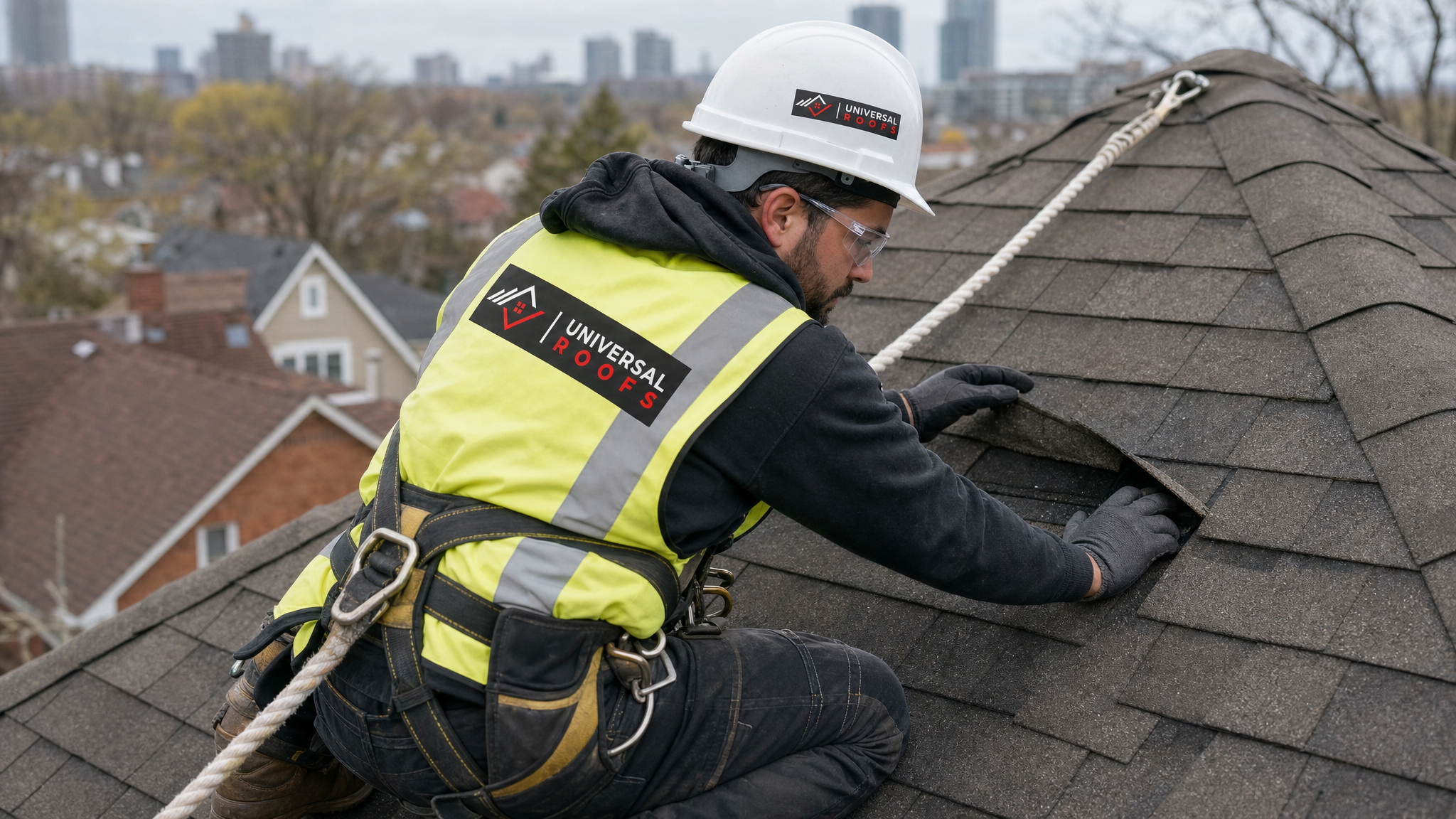
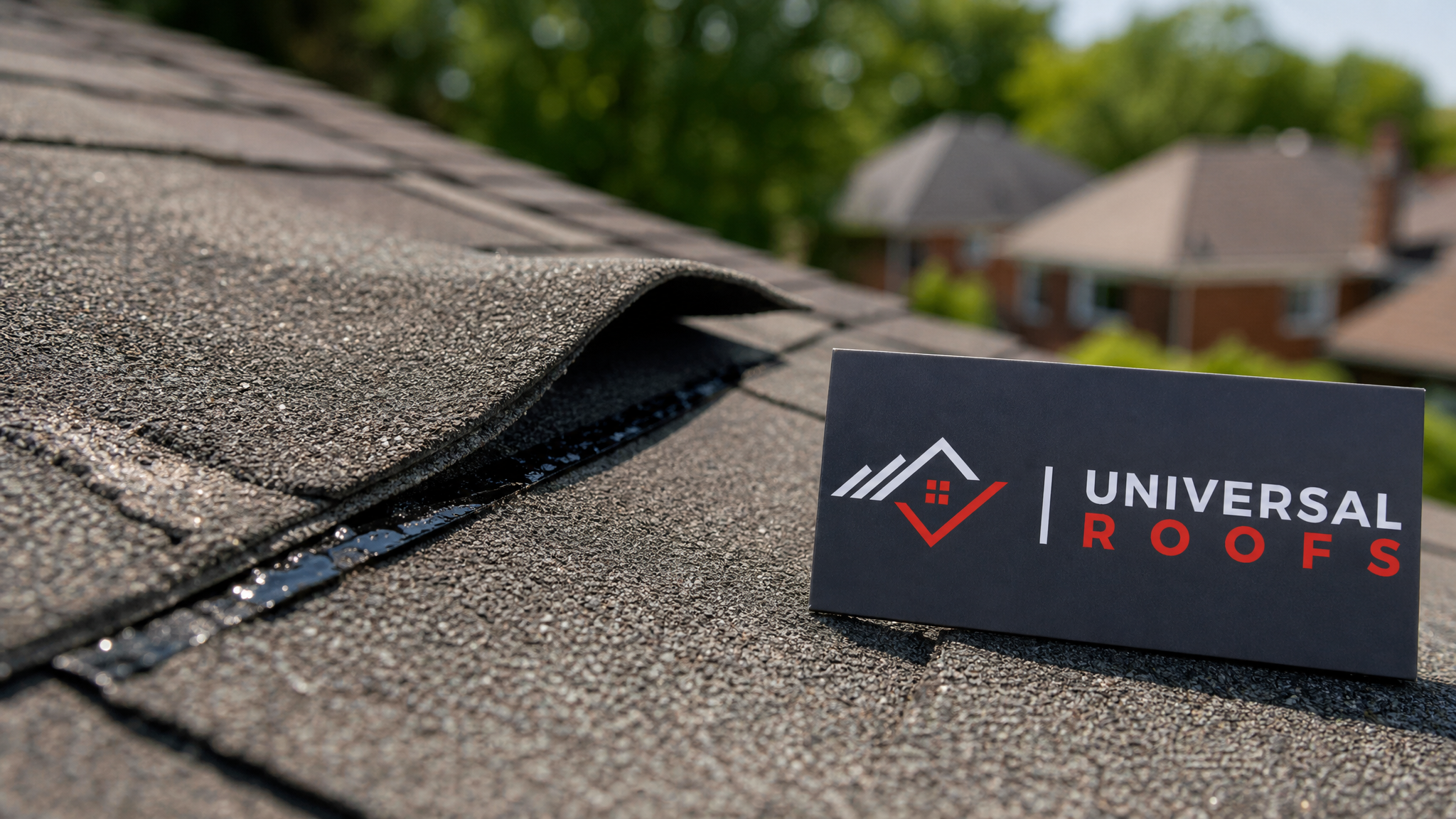
Wind can lift shingles just enough to break the seal strip without tearing them off entirely. From the driveway, the roof can look untouched, yet the compromised seal allows water infiltration during the next rain. An insurance-approved inspection, usually carried out by a licensed contractor working alongside the adjuster, is the only reliable way to catch this before it becomes a much larger repair.
When You Should NOT File a Wind Damage Claim
Filing a claim is not automatically the right move in every situation. Homeowners insurance in Ontario is experience-rated, meaning multiple claims — even small ones — can raise premiums or make future coverage harder to obtain. Consider these scenarios where a private repair may make more sense:
- The damage is cosmetic only. A single shingle with minor granule loss and no exposed underlayment may cost less to repair directly than your deductible.
- The roof is already near end of life. Insurers may apply significant depreciation to an older roof, and some policies only pay actual cash value rather than full replacement cost once shingles pass 15-20 years old, which can shrink your payout dramatically.
- The repair cost is close to or below your deductible. If your deductible is $1,000 and the repair is quoted at $900, filing does nothing but create a claim record with no payout.
- You suspect the damage predates the storm. Filing a claim for damage that isn’t storm-related can be flagged as misrepresentation, which complicates future coverage.
A reputable contractor should tell you honestly which category your damage falls into rather than pushing every job through insurance regardless of scope. If you’re unsure, an inspection through our roof repair service will give you a clear cost estimate to compare against your deductible before you decide whether to call your insurer at all.
Comparing Repair Paths: Insurance Claim vs. Out-of-Pocket Repair
| Factor | Insurance Claim Route | Out-of-Pocket Repair |
|---|---|---|
| Best for | Structural damage, missing shingles, active leaks | Cosmetic damage under deductible value |
| Typical timeline | 2-6 weeks from claim to completed repair | 1-5 days, contractor availability permitting |
| Cost to homeowner | Deductible only (typically $500-$2,500) | Full repair cost, no deductible involved |
| Documentation created | Formal adjuster report and claim number | Contractor invoice only |
| Impact on premiums | Possible increase depending on claim history | None |
| Coverage for interior damage | Usually included if storm-related | Homeowner pays separately |
How the Wind Damage Claims Process Actually Works
Once you’ve confirmed a claim makes sense, the process generally follows the same sequence regardless of insurer:
Step 1: Document Everything Immediately
Photograph the damage from the ground and, if safe, from a ladder — never climb onto a wind-damaged roof yourself. Note the date and approximate time of the storm, and check local weather records or Environment Canada advisories that confirm high wind speeds in your area on that date. This corroborating evidence strengthens your claim significantly.
Step 2: Call Your Insurer to Open the Claim
Report the damage as soon as reasonably possible. Most Ontario policies require notification “as soon as practicable,” and delays can be used to question the claim’s validity. You’ll receive a claim number and, usually, contact information for the adjuster assigned to your file.
Step 3: Get an Independent Contractor Inspection
This is the step many homeowners skip, to their detriment. While the insurance adjuster represents the insurer’s interests, a licensed roofing contractor works for you. Having your own detailed inspection report — with photos of the seal strip failures, flashing separation, and decking condition — gives you leverage if the adjuster’s initial assessment undervalues the damage. Our team frequently attends site alongside adjusters specifically to make sure nothing is missed.
Step 4: Adjuster Assessment and Scope of Work
The adjuster (or a contractor working on the insurer’s behalf) will inspect the roof and issue a scope of work outlining what will be repaired and at what cost. This is where discrepancies most often arise — insurers sometimes approve a patch repair where a full slope or full roof replacement is genuinely warranted, particularly if the shingles are an older style no longer manufactured in a matching colour or profile.
Step 5: Repair Approval and Completion
Once the scope is agreed upon, repairs proceed. Depending on the extent of the damage, this might mean anything from a targeted patch through our roof repair service to a full roof replacement if enough of the roof surface was compromised. If the wind event also affected flashing around a skylight or ventilation components tied to the attic, those should be scoped and repaired at the same time to avoid a second claim later.
Typical Wind Damage Repair Costs by Scope
| Damage Scope | Approximate Cost (CAD) | Typical Timeline |
|---|---|---|
| Single shingle or small patch (under 3 sq. m) | $350 – $800 | Same day to 1 day |
| Ridge cap or flashing repair | $600 – $1,500 | 1 day |
| Partial slope replacement | $1,800 – $4,500 | 1-2 days |
| Full roof replacement (average GTA home) | $9,000 – $18,000+ | 2-4 days |
| Interior water damage restoration (if applicable) | $1,000 – $6,000+ | 1-3 weeks |
These figures vary with roof size, pitch, material, and access difficulty, but they illustrate why even a moderate wind event can quickly exceed a standard deductible, tipping the math in favour of filing a claim rather than paying out of pocket.
Why Adjusters Sometimes Deny or Underscope Wind Claims
Not every claim is approved at full value on the first pass, and understanding why helps you push back effectively.
- Wear-and-tear classification. Insurers may argue the shingles were already at end of life and the wind simply “finished off” damage that maintenance neglect caused. A contractor’s report showing granule loss patterns consistent with wind lift, not age, helps counter this.
- Matching shingle unavailability. If your shingle line has been discontinued, insurers may only approve the damaged section rather than a full slope, leaving a visible colour mismatch. This is negotiable, particularly with photographic evidence and a written estimate showing why partial replacement compromises the roof’s water-shedding integrity.
- Insufficient proof of storm date. Without a documented weather event, insurers may question whether the damage happened during a covered occurrence.
- Delayed reporting. Waiting weeks or months to report a leak allows insurers to argue that ongoing water damage, rather than the original wind event, caused the bulk of the loss.
Troubleshooting Common Wind Damage Claim Problems
| Problem | Likely Cause | Recommended Action |
|---|---|---|
| Adjuster offers a cash settlement lower than contractor quote | Scope of work underestimates hidden damage | Request a joint site visit with your contractor present |
| Claim denied as “wear and tear” | No clear documentation tying damage to a specific storm | Submit weather records and photos showing sudden damage pattern |
| Only partial slope approved, shingles don’t match | Discontinued product line | Provide manufacturer discontinuation notice to support full-slope replacement |
| Interior water stains appear weeks after storm | Delayed underlayment failure from wind-lifted shingles | Reopen or amend the existing claim promptly, don’t wait |
| Contractor and adjuster estimates differ significantly | Different definitions of “repair” vs. “replace” | Request a detailed written scope comparison from both parties |
Toronto’s Climate Makes Wind Damage Claims More Common Than You’d Think
The GTA sees a wide range of wind exposure through the year, from summer downburst storms and derecho-style squall lines to winter nor’easters barreling off the lake. Add in freeze-thaw cycling each spring and fall that leaves shingle seals more brittle, and a single strong summer storm can do more damage here than the same wind speed might cause on a newer, more flexible roof in a milder climate. Homes in Toronto, the Peel Region, York Region, Halton Region, and Durham Region all see enough severe wind events annually that most local roofing contractors handle insurance-related repairs on a routine basis, not as a rare exception.
Tips to Strengthen Your Claim and Avoid Delays
- Report the damage within days of the storm, not weeks
- Keep a copy of every photo, invoice, and email exchange with your insurer
- Ask your contractor for a written scope of work that itemizes materials and labour separately
- Request a copy of the adjuster’s report so you can compare it line by line against your contractor’s estimate
- Confirm whether your policy pays actual cash value or replacement cost, since this materially affects your payout on an older roof
- Have your roof inspected annually so any pre-existing wear is documented before a storm, making post-storm claims cleaner to substantiate
If you’re unsure whether your specific situation warrants a claim, our FAQ page covers many of the follow-up questions homeowners ask after a storm, and our reviews page includes feedback from GTA homeowners who went through this exact process with our team.
Why does roof wind damage require an insurance claim instead of a simple repair?
How do I know if my roof’s wind damage is severe enough to file a claim?
What evidence do insurance adjusters look for in a wind damage claim?
Will filing a wind damage claim raise my home insurance premiums?
Can I get my own contractor’s opinion before the insurance adjuster inspects the roof?
How long does a typical roof wind damage insurance claim take from start to finish?
Need Help With Why Does Roof Wind?
Whether you’re dealing with a handful of missing shingles or a full slope torn open after a summer storm, getting the assessment right the first time protects both your roof and your claim. Universal Roofs has guided GTA homeowners through wind damage inspections and insurance claims for two decades, and we know exactly what adjusters look for and what they sometimes miss.
Call us today at (416) 732-2421 or request a free inspection to get started.
Universal Roofs proudly serves Toronto, Mississauga, Brampton, Vaughan, Markham, Oakville and the GTA since 2005.