
Metal roofing has a reputation for durability, but it is not immune to one persistent threat: wildlife. Squirrels, raccoons, birds, and even bats regularly find their way onto GTA rooflines, and once they discover a weak seam or gap, they can turn a small vulnerability into a serious structural issue. Understanding why metal roof repair for animal or pest damage matters — and how to recognize the early signs — can save homeowners thousands of dollars in water damage and insulation replacement.
At Universal Roofs, we respond to animal-related metal roof damage calls throughout the year, but especially in spring and fall when wildlife is actively seeking shelter. This guide explains how animals damage metal roofing, why prompt repair matters more than it does with asphalt shingles, and what homeowners should watch for.
How Animals and Pests Damage Metal Roofing
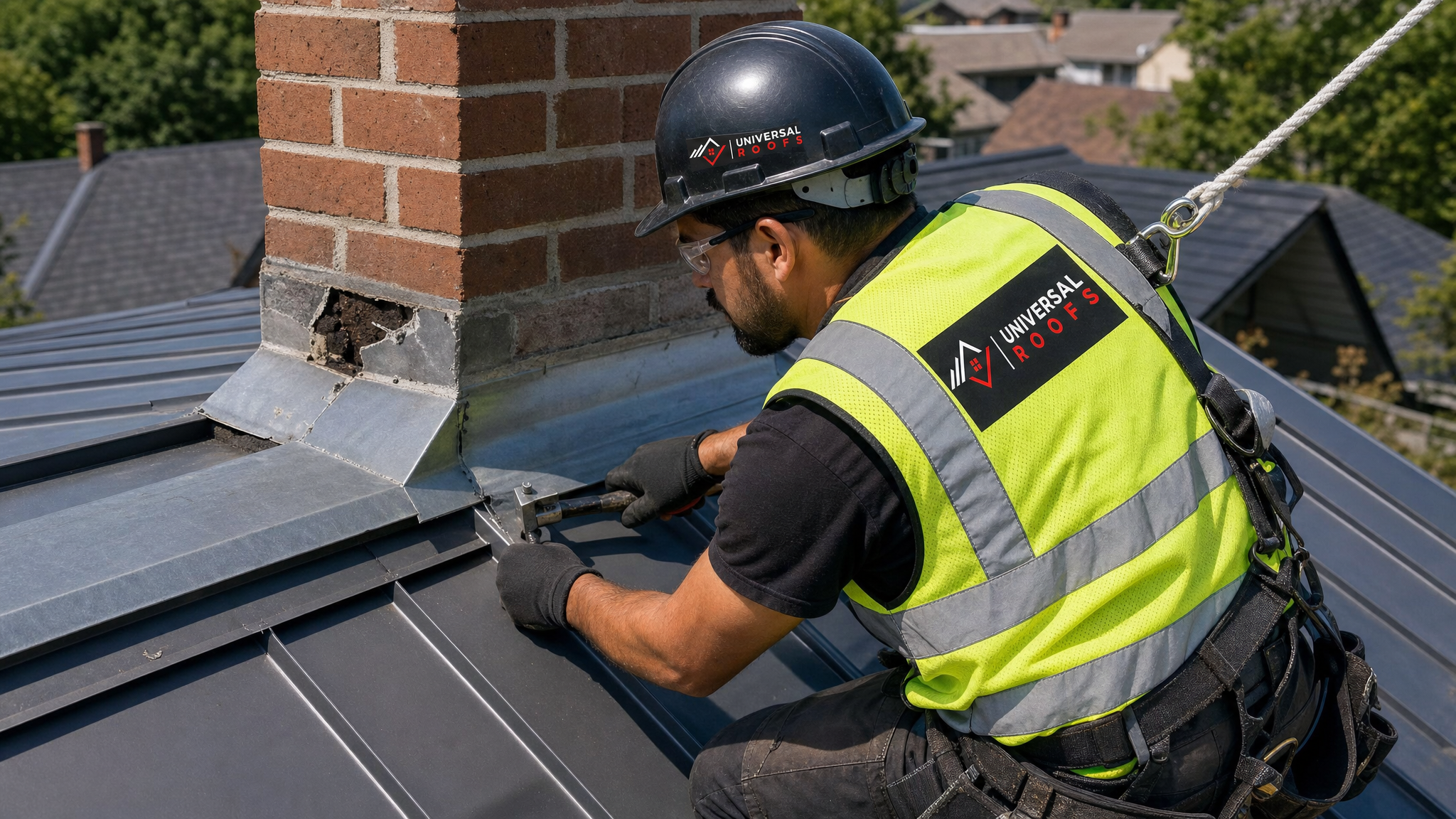
Unlike asphalt shingles, metal roofing panels rely on continuous seams, fasteners, and flashing to stay watertight. Animals do not need to claw through solid metal to cause damage — they exploit existing weak points. Squirrels and raccoons target loose flashing around chimneys, vents, and skylights, prying at the edges until they create an opening large enough to squeeze through. Once inside, their claws scratch protective coatings, and their nesting materials trap moisture against the metal surface, accelerating corrosion.
Birds, particularly starlings and pigeons, tend to nest under ridge caps or within gaps at the eaves, and their droppings are acidic enough to degrade paint finishes and protective coatings over time. Bats can squeeze through gaps as small as half an inch, entering at loose flashing or vented ridge caps, and colonies can grow quickly once established, adding weight and moisture through guano accumulation in the attic below.
| Animal/Pest | Common Entry Point | Typical Damage | Season Most Active |
|---|---|---|---|
| Squirrels | Loose flashing, fascia gaps | Chewed seams, scratched coating, nesting | Spring, Fall |
| Raccoons | Chimney flashing, roof vents | Bent panels, torn flashing, large openings | Spring, Fall |
| Birds (starlings, pigeons) | Ridge caps, eave gaps | Acidic droppings, blocked drainage, nesting debris | Spring, Summer |
| Bats | Ridge vents, loose flashing gaps | Guano accumulation, moisture, odour | Summer |
Why Metal Roof Repair for Animal or Pest Damage Cannot Wait
A small gap at a flashing edge might seem minor, but metal roofing systems depend on an unbroken watertight seal. Once an animal creates or widens an opening, rainwater and snowmelt follow the same path the animal used, running behind panels and onto the roof deck below. Because metal panels can span large sections of roof, a single compromised seam near a valley or chimney can direct water across a wide area before it becomes visible as a ceiling stain.
There is also a corrosion risk unique to metal roofing. Scratches from claws remove the protective zinc or paint coating that prevents rust, and once bare steel is exposed, moisture trapped by nesting material accelerates oxidation. A scratch that takes a technician twenty minutes to touch up today can become a rusted-through panel requiring full section replacement within a few seasons if left unaddressed.
Why Metal Roofing Is Both More Resistant and More Vulnerable
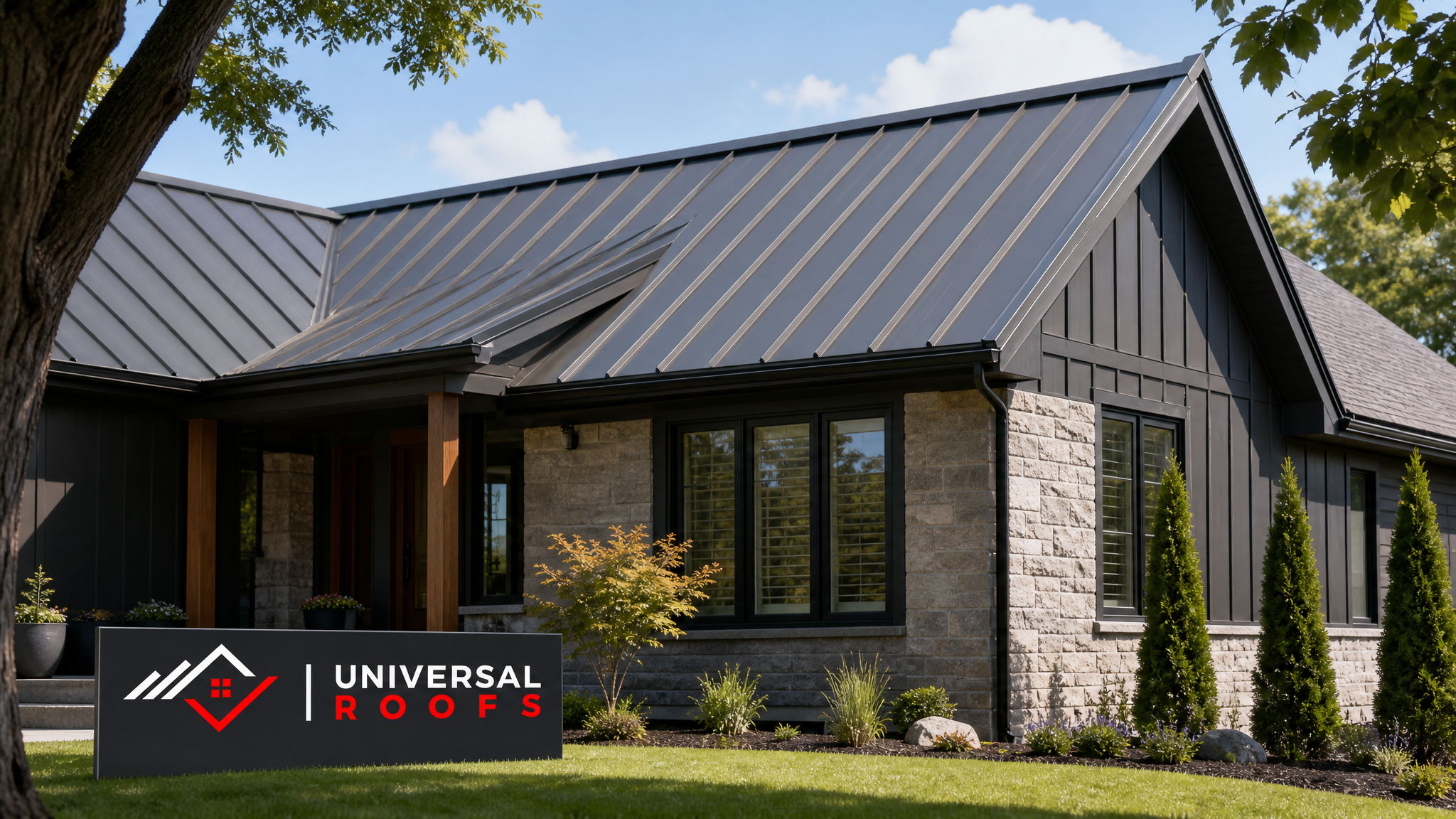
It is worth understanding the paradox at the centre of this issue. Metal roofing is chosen precisely because it resists the problems that plague asphalt shingles — it does not absorb water, it does not crack from freeze-thaw cycling the way granular surfaces can, and it typically outlasts shingle roofing by decades. Animals cannot chew through a steel or aluminum panel the way rodents can gnaw through wood fascia or soft flashing on an older roof.
But that same rigidity means metal roofing has almost no capacity to self-heal or flex around minor damage the way a shingle roof can absorb a small scuff. A shingle roof with a scratched granule surface can often go years without a leak. A metal roof with a coating breach in the same location will begin oxidizing almost immediately if moisture reaches the bare substrate, and once rust starts, it spreads laterally under the coating in a way that is often invisible until the panel needs replacing. This is precisely why animal and pest damage, which might seem cosmetic on any other roofing material, deserves faster attention on metal.
Identifying Animal Damage on a Metal Roof
Because metal roofs are harder to inspect from the ground than asphalt shingles, animal damage often goes unnoticed until it causes an interior leak. Homeowners should watch for scratching or scampering sounds in the attic, especially at dawn and dusk when nocturnal animals are most active. Visible gaps at chimney flashing, bent or lifted ridge caps, and debris such as leaves, twigs, or fur caught at roof edges are all signs that an animal has been active on the roof.
Inside the attic, look for daylight coming through small gaps, droppings or nesting material, and any staining on the underside of the roof deck. A musty or ammonia-like smell can indicate a bat colony or accumulated bird droppings, both of which need prompt attention not just for the roof but for indoor air quality.
| Sign | Where to Look | What It Usually Means |
|---|---|---|
| Scratching sounds at dawn/dusk | Attic, near eaves | Active squirrel or raccoon presence |
| Bent or lifted ridge cap | Roof peak | Animal prying for entry, possible open seam |
| Daylight through attic gaps | Attic, viewed from inside | Flashing or panel seam has been breached |
| Musty or ammonia odour | Attic hatch area | Bat guano or bird droppings accumulation |
| Debris caught at roof edge | Eaves, valleys | Nesting material transported by wildlife |
The Repair Process for Animal-Damaged Metal Roofing
Effective metal roof repair for animal or pest damage starts with removing the animal or colony safely and humanely, which in many cases requires coordination with a licensed wildlife removal service before roofing work begins. Once the roof is clear, our technicians inspect every seam, fastener, and flashing point in the affected area, not just the obvious point of entry, since wildlife often test multiple weak spots before settling on one.
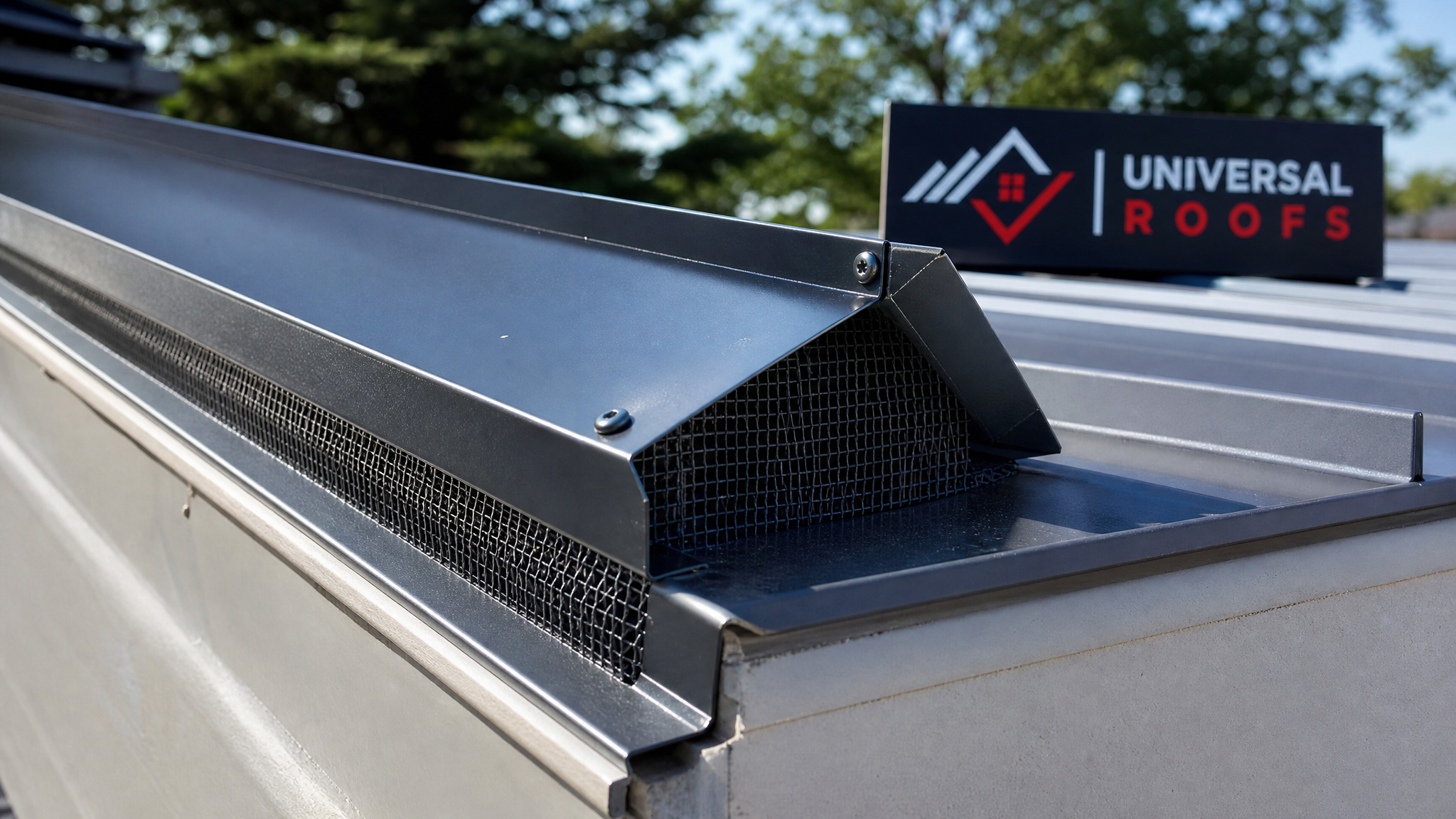
Damaged flashing is removed and replaced rather than patched, since bent or twisted flashing rarely seals properly even after being reshaped. Scratched panel coatings are treated with a matching protective finish to prevent corrosion, and any panel with deep gouges or punctures is replaced outright. Ridge caps are resecured with proper fasteners and, where gaps allowed entry, animal-proof mesh is installed behind vents and ridge caps to prevent recurrence without blocking required airflow.
Preventing Future Animal and Pest Damage
Once repairs are complete, prevention becomes the priority. Trimming tree branches that overhang the roofline removes an easy access route for squirrels and raccoons, since most wildlife prefers to travel from branch to roof rather than climb exterior walls. Chimney caps and vent guards should be checked annually, as these are the most common entry points across every animal type we encounter.
For homes with a history of repeated wildlife issues, we recommend a full attic inspection alongside the metal roof assessment, since gaps at the soffit or fascia often connect directly to attic access even when the roof panels themselves are intact. Sealing these secondary entry points is often what actually stops recurring problems, rather than repeated roof-only repairs.
| Prevention Step | Why It Helps | Recommended Frequency |
|---|---|---|
| Trim overhanging branches | Removes easy roof access route | Annually or as needed |
| Install chimney caps | Blocks a top entry point for raccoons | One-time, inspect yearly |
| Add vent guards/mesh | Prevents bats and birds entering ridge vents | One-time, inspect yearly |
| Seal soffit and fascia gaps | Closes secondary attic access points | Inspect during annual roof check |
Seasonal Patterns Homeowners Should Watch For
Wildlife activity on GTA roofs follows a fairly predictable seasonal rhythm, and knowing the pattern helps homeowners stay ahead of damage rather than reacting to it. Late winter and early spring bring a surge in squirrel and raccoon activity as females search for secure denning sites to raise young, often favouring warm, dry attic spaces accessed through roof flashing. This is typically the single busiest period for animal-related roof calls we receive each year.
Fall brings a second wave, as animals prepare for winter and again seek insulated shelter, sometimes returning to the same entry point used earlier in the year if it was not properly sealed. Summer tends to be quieter for mammals but is peak season for bird nesting and bat activity, since warm ridge cavities and vent gaps offer ideal conditions. Scheduling a roof and attic check in early spring and again in early fall, even without obvious signs of trouble, catches developing entry points before they are actively used by a new season’s wildlife.
When to Call a Professional Versus a Wildlife Removal Service
It is worth understanding the division of responsibility here: wildlife removal companies handle the safe extraction of animals and, in the case of bats, must often follow provincial regulations regarding timing to avoid separating mothers from young. Roofing professionals handle the structural repair — resealing panels, replacing flashing, and restoring the roof’s watertight integrity once the animals are gone.
Attempting to seal an active entry point before an animal has been removed can trap the animal inside, leading to far worse damage as it tries to claw its way back out, often through drywall or new roofing material. We always confirm a space is clear before beginning permanent repairs, and we are happy to coordinate timing with a wildlife removal provider if one is already involved. If you are unsure whether current damage started with wildlife or a separate cause such as wind or ice, our roof repair team can assess the roof and identify the source before recommending a fix.
Insurance and Cost Considerations for Animal-Related Repairs
Homeowners are sometimes surprised to learn that animal and pest damage to a roof is treated differently by insurance providers than storm or wind damage. Many policies classify wildlife intrusion as a maintenance issue rather than a sudden and accidental event, particularly if there is evidence the damage developed gradually or if entry points were left unaddressed after a previous incident. This makes prompt repair even more important financially, not just structurally, since waiting rarely improves the odds of coverage and only increases the eventual repair scope.
When damage does qualify for coverage, such as a sudden event like a fallen branch that both damaged the roof and created an animal entry point, documentation matters. Photographing the damage, keeping records of when scratching sounds or droppings were first noticed, and obtaining a professional written assessment all help support a claim. Our technicians provide detailed repair estimates that break out material and labour for the flashing, coating, and mesh work involved, which insurers and homeowners alike find easier to evaluate than a single lump-sum quote.
What This Means for Your Roof’s Long-Term Value
Metal roofing is often chosen specifically for its long service life, frequently 40 to 60 years with proper maintenance, but that lifespan assumes the protective coating and seams remain intact. Unaddressed animal damage undermines the very durability that makes metal roofing worth the investment in the first place, since corrosion spreads from a single scratch far faster than most homeowners expect once the coating is broken.
Addressing metal roof repair for animal or pest damage promptly is almost always less expensive than waiting for a leak to appear, since early repairs are localized while water damage repairs involve drywall, insulation, and sometimes structural framing. If you have noticed sounds in your attic or visible gaps at your roofline, our team can inspect the roof, confirm whether animals are the cause, and outline a repair plan. You can see examples of past repair work and client feedback on our reviews page, or browse common questions on our FAQ page.
Why is metal roof repair for animal or pest damage more urgent than shingle repair?
What animals most commonly damage metal roofs in the GTA?
Can I repair animal damage on a metal roof myself?
Should I call a wildlife removal service or a roofer first?
How do I know if my attic noises are from animals?
How can I prevent future animal damage to my metal roof?
Need Help With Metal Roof Repair?
Since 2005, Universal Roofs has helped homeowners across the GTA protect their properties with expert workmanship and honest advice.
Call us today at (416) 732-2421 or request a free inspection to get started.
Universal Roofs proudly serves Toronto, Mississauga, Brampton, Vaughan, Markham, Oakville and the GTA since 2005.