
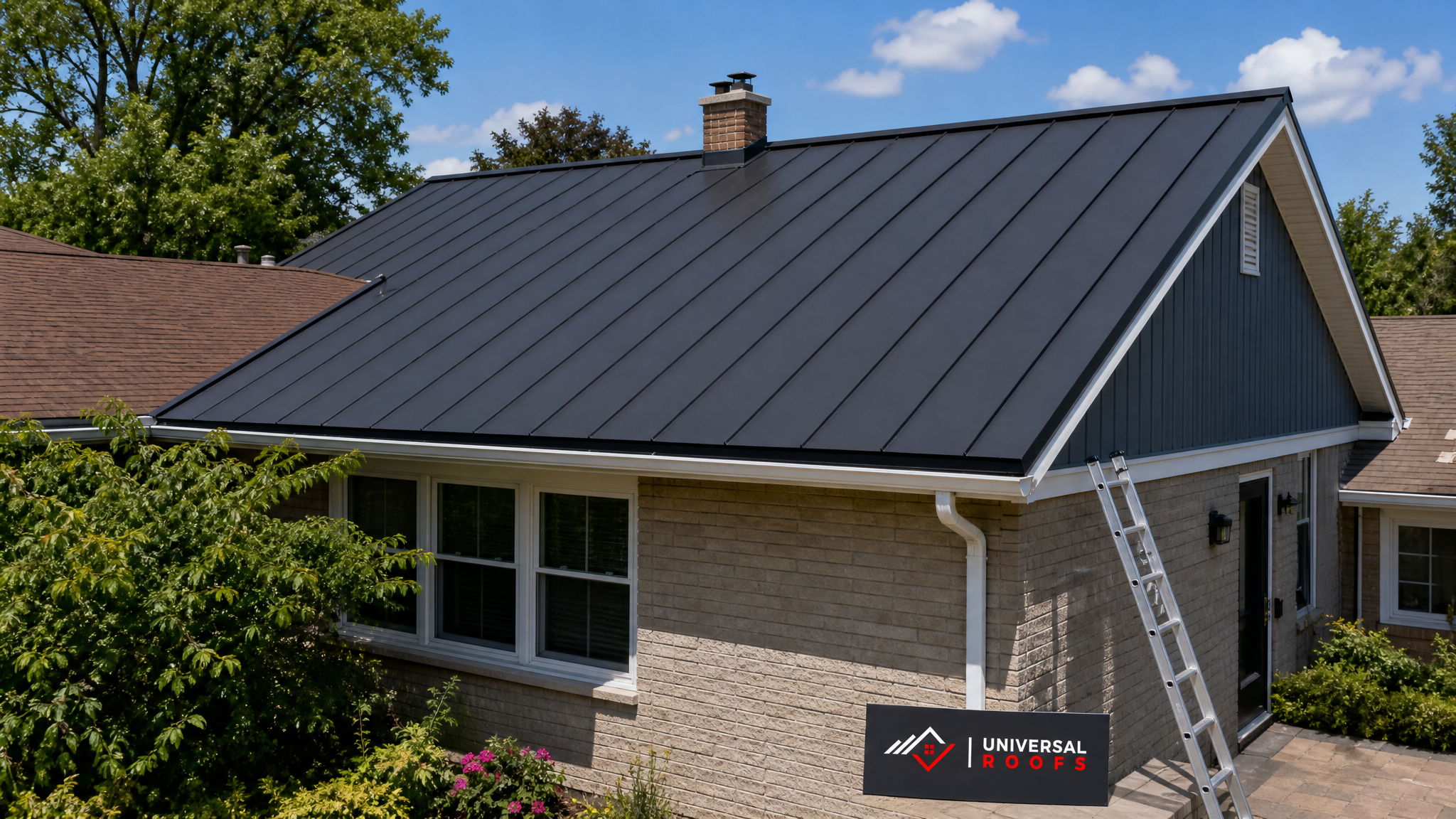
If you have noticed small bumps, raised patches, or peeling flakes on your metal roof, you are dealing with one of the most common cosmetic and structural warning signs a metal roof can show: blistering or bubbling paint on metal roofs. It is easy to dismiss as a minor eyesore, but in most cases it is a symptom of something happening underneath the coating that deserves a closer look before it turns into corrosion, leaks, or a full repaint.
Metal roofing is popular across the Greater Toronto Area because it is durable, energy efficient, and can last 40 to 70 years when properly maintained. But the factory or field-applied paint finish that protects the metal substrate is not indestructible. Sun exposure, humidity, freeze-thaw cycles, and improper installation can all cause the coating to lose its bond with the metal below, and that loss of adhesion is exactly what blistering and bubbling look like from the ground.
In this guide, we will walk through what actually causes blistering or bubbling paint on metal roofs, how to tell the difference between a cosmetic issue and an early sign of corrosion, what your repair options are, what it costs, and how to prevent it from happening again. This is homeowner guidance based on real inspections across Toronto, Mississauga, Brampton, and the surrounding regions, where our climate puts extra stress on painted metal surfaces.
What Blistering or Bubbling Paint on Metal Roofs Actually Looks Like
Before diagnosing the cause, it helps to know exactly what you are looking at. Paint blistering appears as small, dome-shaped bumps on the surface of the metal, usually ranging from the size of a pea to a few centimetres across. Bubbling is similar but often looser and more irregular, sometimes appearing as raised ridges rather than round bumps. In both cases, the paint film has separated from the metal panel underneath, and there is a pocket of air, moisture, or gas trapped between the coating and the substrate.
If you press on a blister and it feels soft or gives slightly, that usually means there is still liquid moisture trapped inside. If it feels hard and hollow, the moisture may have already evaporated, leaving an air pocket. Either way, the paint has failed to stay bonded to the panel, and the exposed metal underneath is now vulnerable to oxidation and corrosion.
It is worth distinguishing this from simple fading or chalking, which is a normal, gradual breakdown of the paint’s pigment and resin from UV exposure. Chalking leaves a powdery residue on your hand when you wipe the surface but does not involve raised bumps. Blistering and bubbling are a different, more serious failure mode because they indicate a loss of adhesion, not just surface wear.
The Main Causes of Blistering or Bubbling Paint on Metal Roofs
There is rarely a single cause. In most cases we inspect, blistering or bubbling paint on metal roofs is the result of two or more contributing factors working together. Here are the most common culprits we see on GTA homes.
1. Trapped Moisture Beneath the Coating
This is by far the most frequent cause. Moisture gets underneath the paint film through a scratch, a fastener hole, a seam, or a pinhole in the coating, and then has nowhere to escape. As temperatures rise during the day, that trapped moisture turns to vapour and expands, pushing the paint film outward and forming a blister. Overnight, it cools and contracts again, which repeatedly stresses the bond between paint and metal until it eventually fails completely and the paint peels or flakes off.
2. Condensation From the Underside of the Panel
Metal roofs installed over poorly ventilated attics are especially prone to this. Warm, moist air rising from inside the home hits the cold underside of the metal panel and condenses. Over time, this moisture works its way to the topside coating or corrodes the panel from below, which can telegraph through as blistering on the painted surface. This is one of the reasons proper attic ventilation is just as important to your roof’s paint finish as the exterior coating itself.
3. Poor Surface Preparation During the Original Paint or Coating Application
If a metal roof was field-painted or recoated and the panels were not properly cleaned, degreased, and primed before the topcoat went on, the paint will never form a strong mechanical or chemical bond. Mill oils, dust, chalking residue, or rust left on the substrate all prevent proper adhesion. This type of failure tends to show up as widespread blistering across large areas rather than isolated spots, often within a year or two of the paint job.
4. Incompatible Paint Systems
Not all paints are formulated for the specific metal alloy or existing coating on your roof. Applying a solvent-based topcoat over an incompatible primer, or using a coating not rated for galvanized steel, aluminum, or pre-painted Galvalume panels, can cause chemical incompatibility that leads to blistering as the layers react with one another.
5. UV Degradation and Thermal Cycling
Toronto’s climate swings from humid summer heat to sub-zero winter temperatures, and metal roofing panels expand and contract significantly with those swings. Over many cycles, this repeated movement stresses the paint film, particularly at panel seams, fastener locations, and areas where the coating is already thin from UV breakdown. Combined with freeze-thaw cycles that force any trapped moisture to expand as ice, this thermal stress accelerates blister formation in older coatings.
6. Galvanic Corrosion and Rust Underneath the Paint
When dissimilar metals are in contact, such as steel fasteners against aluminum panels, or when the protective zinc or Galvalume coating has been scratched through to bare steel, corrosion can start forming beneath the paint. As rust forms, it expands and pushes the paint film up from underneath, creating blisters that often have a reddish-brown stain visible once they rupture.
DIY Assessment vs. Calling a Professional
Homeowners can safely do a visual inspection from the ground with binoculars or from a ladder at the eaves, but we do not recommend walking on a metal roof yourself. Painted metal panels can be slippery even when dry, and stepping in the wrong spot can dent panels or crack the coating further, making the problem worse. Here is how to think about when a DIY look is appropriate versus when you need a professional roof repair assessment.
| Situation | DIY Appropriate? | Recommended Action |
|---|---|---|
| A few isolated blisters spotted from the ground | Yes, for observation only | Photograph and monitor; schedule a professional inspection if it spreads |
| Blistering concentrated near seams or fasteners | Limited | Have a professional check for active leaks or loosened fasteners |
| Blisters that have ruptured and show rust underneath | No | Book a roof repair assessment promptly to stop corrosion spread |
| Widespread blistering across most panels | No | Full coating evaluation; may indicate a systemic adhesion or ventilation failure |
| Blistering paired with interior ceiling stains | No | Treat as an active leak; schedule an urgent inspection |
If you are ever unsure, our roof repair team can perform a full diagnostic that includes checking the attic side of the deck, not just the visible topside coating, since many of the root causes originate from below the panel.
Step-by-Step: How Professionals Diagnose and Repair Blistering or Bubbling Paint
When we investigate blistering or bubbling paint on metal roofs, we follow a consistent process to identify the root cause rather than just patching the visible symptom.
- Visual and moisture inspection. We examine the pattern of blisters, check whether they are isolated or widespread, and use a moisture meter on the underside where accessible to check for trapped condensation.
- Attic ventilation check. Since condensation from below is such a common cause, we inspect soffit vents, ridge vents, and insulation for signs of inadequate airflow or moisture buildup, which ties directly into our attic inspection process.
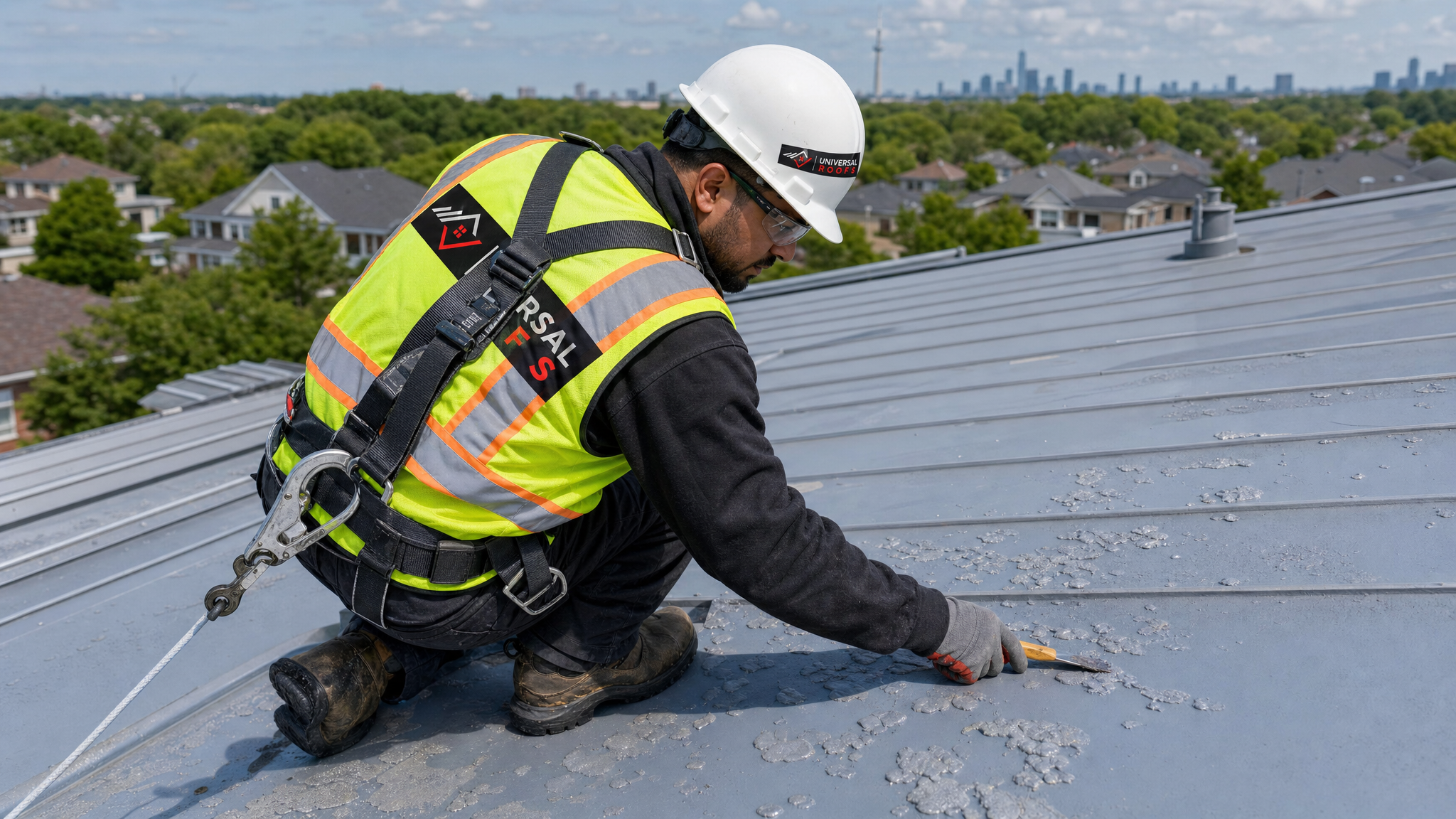
- Test scrape and adhesion test. We scrape a small section of the blistered coating to see how easily it separates from the substrate and check for rust or bare metal underneath.
- Substrate assessment. If corrosion is present, we determine how far it has spread and whether panel replacement is needed versus a surface repair.
- Surface preparation. Failed coating is scraped, sanded, or media-blasted back to sound metal. Any rust is treated with a rust-converting primer.
- Repriming and recoating. A compatible primer and topcoat system, matched to the panel’s metal type, is applied in proper film thickness and cured per manufacturer specifications.
- Sealing vulnerable points. Seams, fastener heads, and panel overlaps are resealed with an appropriate sealant to prevent moisture re-entry.
Cost Considerations for Repairing Blistered or Bubbling Paint
The cost to address blistering or bubbling paint on metal roofs depends heavily on the extent of the damage and whether corrosion has already started. A handful of small blisters caught early is a minor repair. Widespread blistering that has led to rust-through requires a more significant investment.
| Repair Scope | Typical Approach | Relative Cost Range |
|---|---|---|
| Spot repair (isolated blisters) | Scrape, prime, and touch-up paint small sections | Low |
| Partial recoat (one slope or section) | Strip and repaint the affected area with matched system | Moderate |
| Full roof recoat | Complete surface prep and recoat across all panels | Moderate to high |
| Panel replacement (corrosion damage) | Remove and replace rusted-through panels, then coat | High |
| Ventilation correction plus recoat | Add or repair soffit/ridge venting alongside surface repair | Moderate to high |
Because costs vary so much based on panel type, roof pitch, and access, we always recommend an in-person assessment rather than relying on a rough estimate. If the underlying metal has deteriorated significantly, it may make more sense to discuss roof replacement options rather than repeatedly recoating a roof that keeps failing.
When Blistering Paint Signals a Bigger Problem
Not every blister means your roof is failing, but certain warning signs mean you should not wait for your next scheduled maintenance visit.
- Blisters that rupture and reveal orange or brown rust staining underneath
- Blistering concentrated around skylights, chimneys, or other roof penetrations, which can indicate flashing failure rather than just a coating issue
- New blisters appearing rapidly after a repaint job, suggesting incompatible products or poor surface prep
- Blistering accompanied by soft spots, sagging, or visible panel deformation
- Interior signs like musty attic odours, visible mould, or ceiling stains appearing alongside exterior blistering
If your roof has skylights and you are noticing blistering or moisture issues near those penetrations specifically, it is worth having them checked separately, since flashing details around skylights are a common leak point that can masquerade as a coating problem. In some cases, an ageing skylight unit itself is the moisture source, and skylight replacement resolves the issue at the source rather than just treating the symptom on the metal panels around it.
Prevention and Ongoing Maintenance
The best way to deal with blistering or bubbling paint on metal roofs is to prevent it from starting in the first place. A few maintenance habits go a long way in our climate.
Keep Gutters and Drainage Clear
Standing water and debris trapped against panel seams or valleys accelerates coating breakdown. Clear gutters each spring and fall so water sheds properly instead of sitting against painted surfaces.
Maintain Proper Attic Ventilation
Balanced intake and exhaust ventilation keeps warm, moist interior air from condensing on the underside of your roof deck and panels. If your attic feels noticeably warm or humid in summer, or you see frost on the underside of the roof deck in winter, have your ventilation evaluated.
Address Scratches and Chips Promptly
Any break in the paint film, whether from a fallen branch, hail, or foot traffic during other roof work, is an entry point for moisture. A small touch-up now is far cheaper than a blistered, corroded panel later.
Schedule Regular Professional Inspections
An annual or bi-annual inspection catches early-stage blistering before it spreads or leads to structural corrosion. This is especially important for roofs approaching 15 to 20 years old, when original factory coatings begin to naturally lose elasticity and bonding strength.
Use Compatible, Quality Coating Systems
If a recoat is ever needed, insist on a system specifically formulated for your panel’s metal type, with proper primer, and applied by a contractor experienced with metal roofing coatings rather than standard exterior paint.
| Maintenance Task | Recommended Frequency | Why It Matters |
|---|---|---|
| Visual roof inspection | Twice yearly (spring and fall) | Catches early blistering before it spreads or corrodes |
| Gutter and drainage cleaning | Twice yearly | Prevents standing water against seams and panel edges |
| Attic ventilation check | Annually | Reduces condensation-driven coating failure from below |
| Touch-up of scratches or chips | As needed, promptly | Stops moisture entry points before blisters form |
| Professional coating assessment | Every 5 years, or at 15+ years of age | Identifies adhesion loss before widespread failure occurs |
Homeowners in our service areas across Toronto, Peel Region, York Region, Halton Region, and Durham Region can book a seasonal inspection to catch coating issues early, before a small blister becomes a costly corrosion repair.
Flat Roofs and Related Coating Concerns
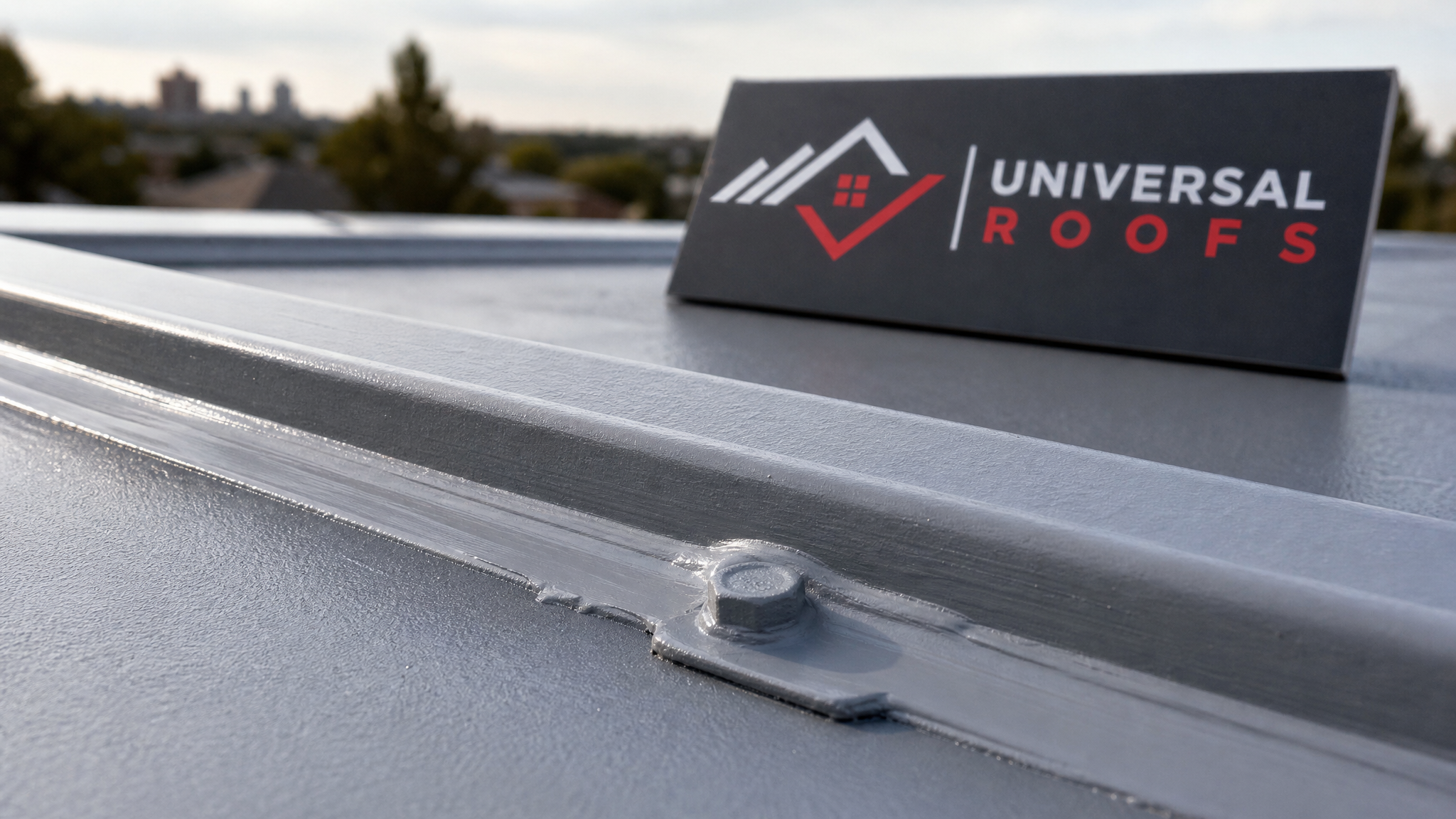
While this article focuses on painted metal roof panels, many GTA homes and commercial buildings also have flat roof sections that face similar moisture-driven coating issues, just with membrane materials instead of painted metal. If your property has a mix of sloped metal roofing and a flat roof section, it is worth having both assessed together, since moisture problems in one area can sometimes originate from or contribute to issues in the other. Our flat roofing team can evaluate adjoining sections as part of a comprehensive roof inspection.
You can also read what other GTA homeowners have said about their experience diagnosing and repairing similar coating and moisture issues on our reviews page, or check our FAQ page for answers to other common metal roofing questions. To learn more about our background and approach to roof diagnostics, visit our about page.
What causes blistering or bubbling paint on metal roofs?
Is blistering or bubbling paint on a metal roof a sign of a leak?
Can I fix blistering or bubbling paint on a metal roof myself?
How much does it cost to repair blistering or bubbling paint on a metal roof?
Does poor attic ventilation cause bubbling paint on metal roofs?
Will blistering or bubbling paint get worse if I ignore it?
Need Help With What Causes Blistering or?
If you have spotted blistering or bubbling paint on your metal roof, it is worth having it looked at before the underlying cause spreads or leads to corrosion. Universal Roofs has been diagnosing and repairing metal roof coating issues across the GTA since 2005, and we take the time to identify the actual root cause rather than just repainting over a problem that will resurface.
Call us today at (416) 732-2421 or request a free inspection to get started.
Universal Roofs proudly serves Toronto, Mississauga, Brampton, Vaughan, Markham, Oakville and the GTA since 2005.