
A sagging ridge line, a bouncy ceiling, or a crack that keeps reappearing above a doorway are not cosmetic problems. More often than not, they are symptoms of a structural issue hiding above the ceiling drywall: a roof truss system that was not installed correctly in the first place. Roof trusses are engineered assemblies, and every member, connector plate, and brace is designed to work together under a specific load path. When even one component is out of place, the entire system can be compromised, sometimes for years before visible signs appear.
Homeowners across the Greater Toronto Area often discover truss problems only after a home inspection, a renovation that opens up the attic, or a particularly heavy snow load exposes a weakness that should never have existed. The good news is that improperly installed roof trusses are almost always fixable. The solutions range from simple, low-cost bracing corrections to more involved structural sistering, and in rare cases, partial or full truss replacement. What matters most is identifying the specific failure early and matching it with the right repair method.
In this guide, we walk through how truss installation errors happen, how to recognize them, and the full range of proven solutions, so you know exactly what to expect whether you are dealing with a builder’s oversight on a new home or a decades-old renovation that cut corners.
Why Roof Trusses Get Installed Improperly in the First Place
Roof trusses arrive from the manufacturer as pre-engineered components, but the way they are handled, braced, and connected on site is entirely up to the installation crew. Most improperly installed roof trusses trace back to one of a handful of recurring mistakes.
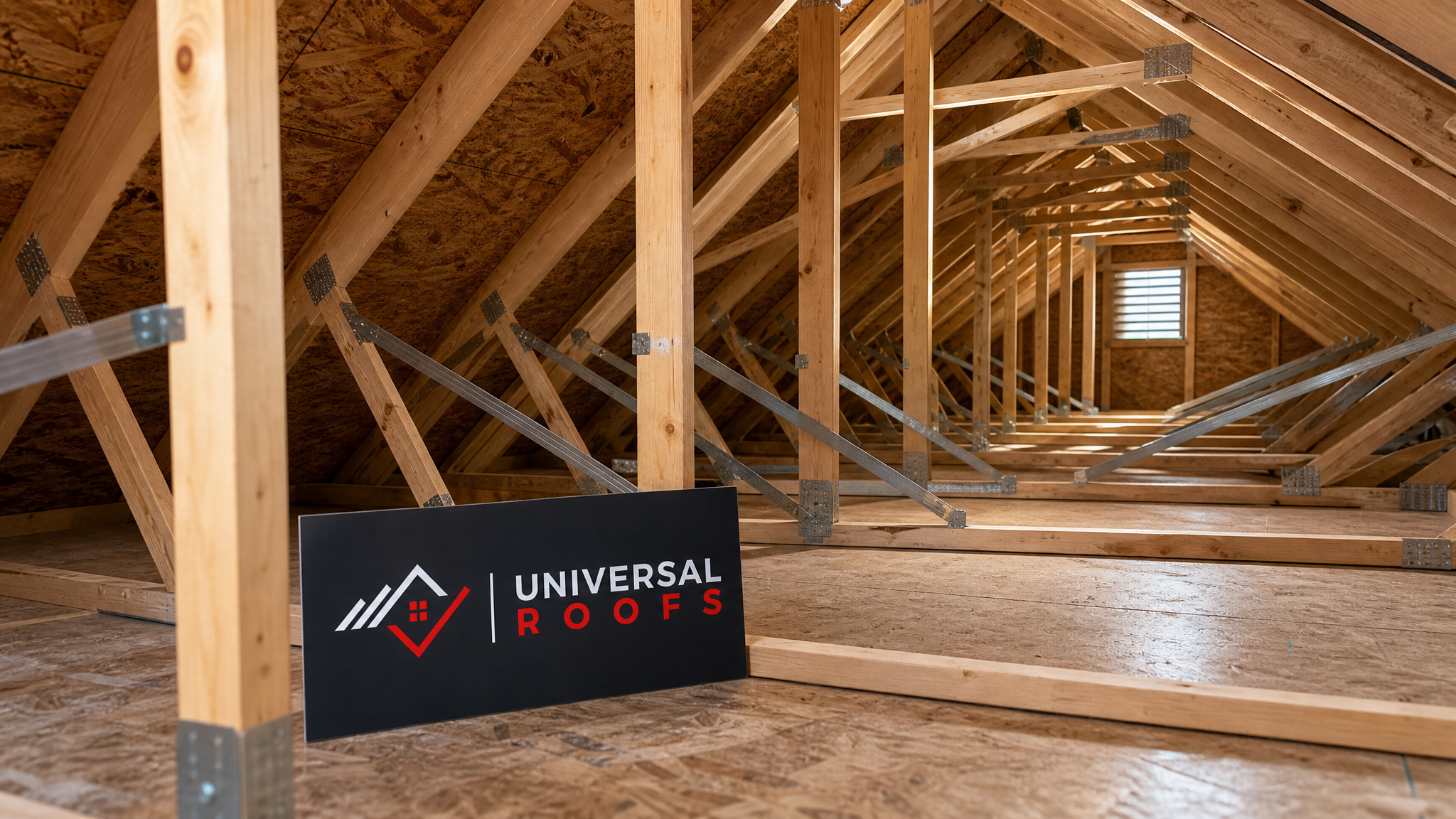
The most common culprit is missing or inadequate temporary and permanent bracing. Trusses are stable as a finished, sheathed roof assembly, but individually they are floppy and prone to buckling sideways until lateral bracing, diagonal bracing, and permanent web bracing are installed according to the truss manufacturer’s drawings. Crews working quickly, especially on tight production-home schedules, sometimes skip rows of bracing or space it too far apart.
Overloading during construction is another frequent cause. Stacking bundles of shingles, plywood, or mechanical equipment directly on unbraced trusses can bend or crack chords before the roof is even finished. Cutting or notching a truss member on site to route ductwork, plumbing vents, or electrical wiring is also a serious and surprisingly common error, since trusses are engineered systems that cannot be field-modified without an engineer’s sign-off.
Incorrect spacing and misaligned bearing points round out the list. Trusses are designed to sit on specific bearing walls with even spacing (commonly 24 inches on centre in residential construction). If a crew shifts spacing to fit awkward framing, or lands a truss on a non-load-bearing partition instead of an exterior wall, the load path the engineer designed for is broken from day one. Older Toronto and GTA homes that have gone through additions or attic conversions are particularly prone to this, since new loads get introduced into a truss system that was never engineered to carry them.
| Installation Error | Typical Cause | Common Warning Sign | Urgency Level |
|---|---|---|---|
| Missing or insufficient bracing | Rushed installation, crew skipped bracing rows | Trusses leaning or rippling out of plane | High |
| Field-cut or notched chords | Ductwork or plumbing routed without engineering review | Visible crack at cut point, local sagging | High |
| Incorrect truss spacing | Framing shortcuts, mismatched layout | Uneven ceiling lines, roof sheathing sag | Medium |
| Overloaded during construction | Materials stacked on unbraced trusses | Bowed top chord, split lumber | High |
| Improper bearing point | Truss set on wrong wall or beam | Cracked drywall over the wall, door frames binding | High |
| Loose or damaged connector plates | Poor nailing, moisture, age | Visible gaps at joints, rust staining | Medium to High |
How to Recognize a Truss Installation Problem in Your Home
Because trusses hide above the ceiling, most homeowners only notice the downstream effects rather than the truss itself. Learning to read those signs is the first step toward getting the right fix.
Inside the home, look for a ceiling that appears to sag, ripple, or dip in a straight line running parallel to the trusses. Cracks that form in a repeating pattern along ceiling seams, especially ones that reopen after being patched, are a strong indicator of truss movement rather than simple drywall settling. Doors and windows on upper floors that suddenly stick or no longer latch properly can point to a wall that is bearing more load than it was designed for, which often traces back to a truss resting in the wrong spot.
From the exterior, a wavy or uneven roofline, a ridge that dips instead of running straight, or shingles that appear to pucker in one section are all visible signs worth investigating. Inside the attic itself, the signs are more direct: gaps at connector plates, split or cracked chords, trusses that are visibly out of plane with their neighbours, bracing that has come loose or was never installed, and daylight visible through gaps that should not exist at the ridge or eaves.
Freeze-thaw cycles common to the Toronto climate can accelerate all of these issues. Repeated expansion and contraction stresses loose connector plates and can widen existing cracks in a truss chord, which is why a problem that seemed stable in autumn can noticeably worsen by the following spring. If you notice any of these signs, a professional roof repair assessment should be scheduled before the next heavy snow load tests the structure further.
DIY Fixes vs. When You Genuinely Need a Professional
It is worth being direct about this: roof trusses are structural, engineered components, and there is very little in this category that is safely a do-it-yourself project. Trusses work as a complete system, and altering one member changes the load path for the entire roof, sometimes for the entire house.
There are a few narrow exceptions. A homeowner comfortable working safely in an attic can visually inspect trusses for early warning signs, tighten obviously loose fasteners on non-structural items hanging from trusses, and improve attic ventilation, which helps prevent the moisture buildup that weakens wood fibre and connector plates over time. Beyond that, any actual structural correction, whether it is adding bracing, sistering a damaged chord, or adjusting bearing points, requires a load calculation that only a structural engineer or an experienced roofing contractor working from engineered specifications can provide safely.
The risk of a DIY structural fix is not just wasted effort. Under-bracing a truss, using undersized lumber for a sistering repair, or fastening incorrectly can mask a problem temporarily while leaving the underlying weakness in place, which is often worse than doing nothing because it delays a proper fix while giving false confidence. If you are ever unsure whether an attic issue is structural, it is far cheaper to have it assessed early than to wait for a full roof replacement to become the only remaining option.
Proven Solutions for Improperly Installed Roof Trusses
The right solution depends entirely on what is wrong. Here is how the most common repair methods stack up, from least to most involved.
1. Adding or Correcting Bracing
When the trusses themselves are structurally sound but simply under-braced, the fix is often the least invasive: installing the lateral, diagonal, and permanent web bracing that should have gone in during original construction. This is done according to the truss manufacturer’s engineered bracing diagram, not by guesswork, and it restores the rigidity the whole roof assembly depends on.
2. Sistering Damaged or Cracked Members
If a specific chord or web member has cracked, split, or was improperly notched, sistering is usually the go-to solution. This involves fastening a new piece of lumber (or in some cases a steel reinforcing plate) directly alongside the damaged member, sized and fastened according to an engineer’s specification so the new piece shares the load with, or fully takes over from, the compromised original.
3. Correcting Bearing Points
Where a truss was set on an incorrect bearing wall or beam, the fix may involve adding a properly sized load-bearing beam or post beneath the truss to redirect the load to where it can actually be supported, or in some cases relocating the truss entirely. This work typically requires temporary shoring to safely support the roof while the correction is made.
4. Repairing or Replacing Connector Plates
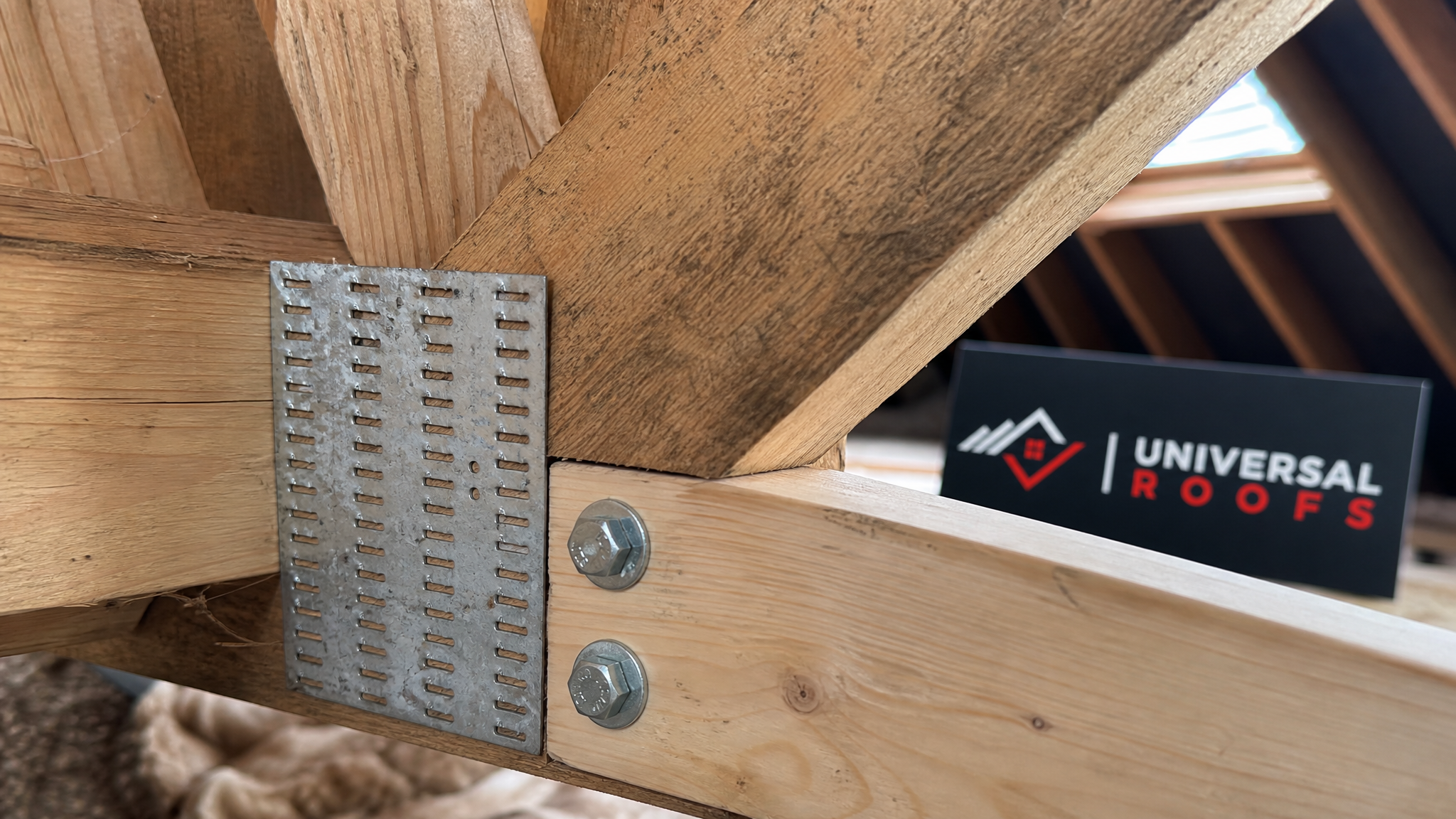
Loose, rusted, or under-driven metal connector plates at truss joints can be reinforced with additional plywood gusset plates or replacement steel connectors, restoring the joint strength the original design called for.
5. Partial or Full Truss Replacement
When a truss has multiple compromised members, has been altered beyond what sistering can safely address, or shows signs of long-term moisture damage and rot, replacement of the individual truss (or in more serious cases, a section of the roof structure) is the safest long-term solution. This is more involved and typically coordinated with a broader roof repair or roof replacement project so the new structural work and the roofing assembly above it are addressed together.
| Solution | Best For | Typical Timeline | Relative Cost |
|---|---|---|---|
| Adding/correcting bracing | Sound trusses, missing lateral or web bracing | 1 day | Low |
| Sistering a damaged member | Single cracked, split, or notched chord/web | 1 to 2 days | Low to Moderate |
| Correcting bearing points | Truss landing on wrong wall or beam | 2 to 4 days | Moderate |
| Connector plate repair | Loose, rusted, or failing joint plates | 1 day | Low |
| Partial truss replacement | Multiple compromised members on one truss | 2 to 5 days | Moderate to High |
| Full structural replacement | Widespread failure, rot, or unsafe modifications | 1 to 2+ weeks | High |
The Step-by-Step Repair Process
A trustworthy truss repair follows a consistent, methodical sequence rather than jumping straight to a fix. Here is what that process should look like when done correctly.
The first step is a full structural assessment. This means inspecting every truss in the affected roof plane, not just the one showing visible symptoms, because a bracing failure or overload event frequently affects neighbouring trusses even before they show obvious signs. Photographs, measurements of any sag or deflection, and documentation of connector plate condition all feed into this assessment.
Next comes engineering review for anything beyond simple bracing correction. Sistering dimensions, bearing point relocations, and any load-path changes should be specified by a structural engineer or an experienced contractor working to code, factoring in the specific snow and wind loads required under Ontario building code for the GTA region. This is not a step to skip, even when the fix looks straightforward from the attic floor.
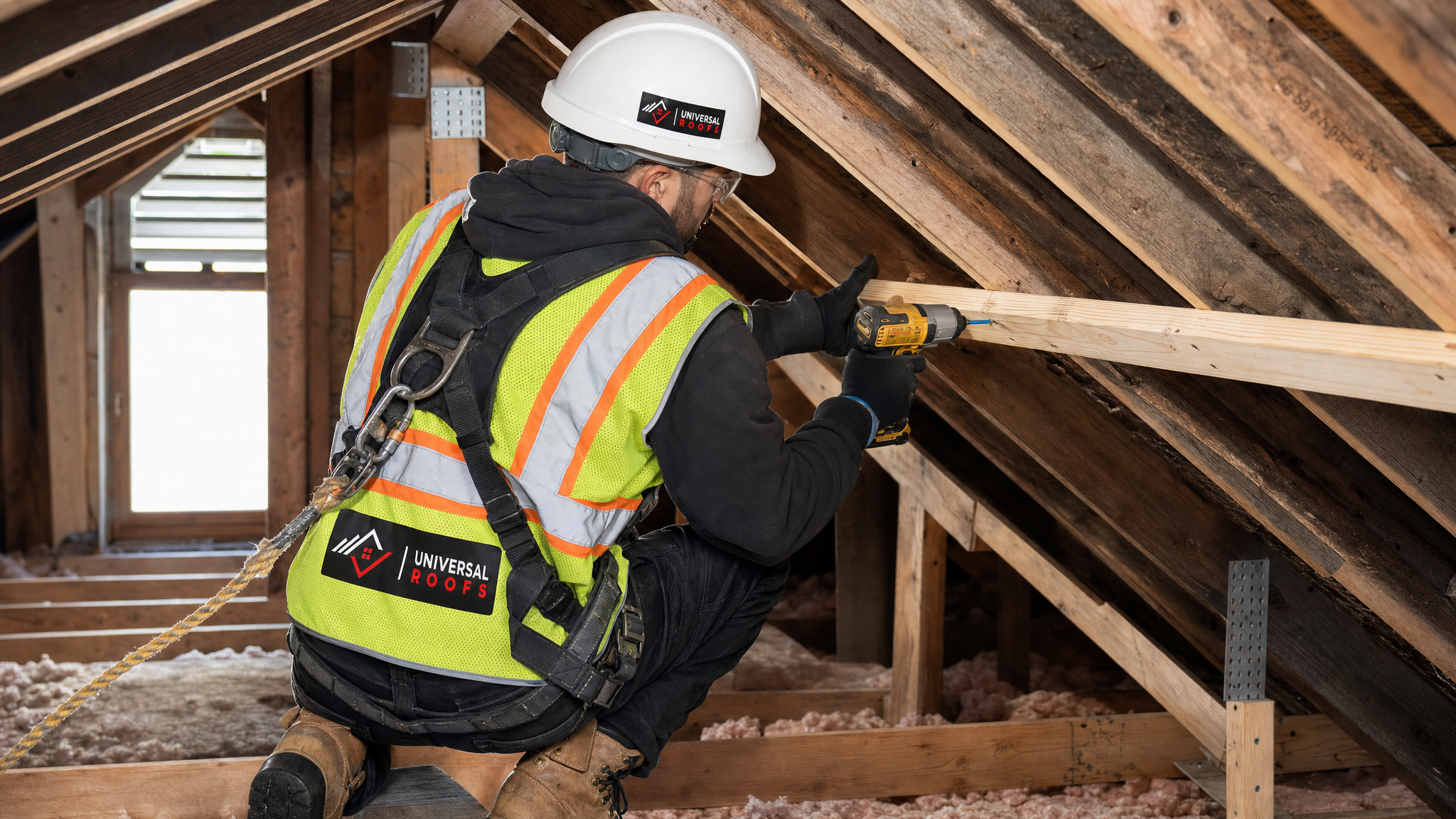
Temporary shoring is then installed if the repair involves any load-bearing correction, ensuring the roof stays safely supported while the permanent fix is made. The actual repair work follows: bracing installation, sistering, connector plate reinforcement, bearing correction, or member replacement, carried out with construction-grade lumber and fasteners matched to the engineered spec, not whatever happens to be on hand.
Finally, a post-repair inspection confirms the fix is holding as designed, checking for proper fastener seating, correct brace spacing, and confirming no new stress points have appeared elsewhere in the roof structure. If the repair was significant, this is also the point where attic insulation and ventilation should be reviewed, since disturbed insulation during the repair can create new moisture or heat-loss issues if not restored properly.
What Truss Repairs Typically Cost in the GTA
Cost varies significantly based on the scope of the problem, roof accessibility, and whether drywall or insulation needs to be removed and replaced to access the trusses. The table below reflects typical ranges seen across Toronto and the surrounding regions for common truss correction work.
| Repair Type | Typical Price Range (CAD) | Factors That Increase Cost |
|---|---|---|
| Bracing correction (per roof plane) | $400 to $1,200 | Steep pitch, limited attic access, extent of missing bracing |
| Single truss sistering | $600 to $1,800 | Number of members affected, material specified by engineer |
| Connector plate repair (per joint) | $150 to $500 | Number of joints, plate size, accessibility |
| Bearing point correction | $1,500 to $4,500 | Shoring requirements, new beam sizing, wall modifications |
| Partial truss replacement | $2,000 to $6,000 | Roof re-sheathing, shingle disturbance, drywall repair |
| Full structural section replacement | $6,000 and up | Roof size, extent of damage, engineering fees, permit requirements |
These figures assume a straightforward Toronto-area residential roof. Steeper roof pitches, multi-storey attic access, or repairs that overlap with a broader roof repair project can shift these numbers higher. On the other hand, catching a bracing issue early, before it causes secondary damage to the roof sheathing or ceiling drywall, is consistently the least expensive path, which is why early inspection pays for itself.
Preventing Future Truss Problems
Once a truss system has been corrected, a handful of ongoing practices keep it that way. Regular attic inspections, ideally once a year and always after a major snow event, catch loose bracing or new cracking before it becomes serious. Never allow renovation crews, whether for electrical, HVAC, or low-voltage wiring, to cut or notch a truss member without a structural engineer’s approval; this single rule prevents the majority of truss failures we see in homes that were originally built correctly.
Keeping attic insulation properly installed and ventilation clear also protects the wood itself. Moisture trapped by poor ventilation is one of the leading causes of connector plate corrosion and slow wood decay in truss systems, and a well-ventilated attic significantly extends the service life of the entire roof structure. If your home has rooftop penetrations such as skylights, make sure any framing around the opening was engineered to redistribute the load those cuts create, since skylight installations are one of the more common places improper truss modifications occur.
Finally, keep records. If a previous owner, contractor, or renovation crew ever performed work in your attic, ask for documentation of what was done and whether an engineer reviewed it. This single piece of due diligence, whether you are buying a home or planning your own addition, can save significant time and cost down the road.
When to Call In a Professional Roofing Contractor
Any sign of ceiling sagging, a wavy roofline, recurring drywall cracks, or visible truss damage in the attic warrants a professional assessment. Trusses are not a component where “wait and see” is a safe strategy, because the loads they carry, snow, wind, and the weight of the roofing materials themselves, do not pause while a decision is being made.
An experienced contractor will be able to tell within a single attic inspection whether you are looking at a straightforward bracing fix or something that needs engineering input. Our team at Universal Roofs has been assessing and correcting structural roofing issues across the GTA since 2005, and we coordinate directly with structural engineers whenever a repair involves load-path changes, so you get a fix that is documented and code-compliant, not just patched over.
If your home is also due for shingle replacement, addressing truss issues at the same time as a roof replacement can be more cost-effective than tackling them separately, since the roof deck is already exposed. The same applies to homes with flat roof sections, where structural issues are sometimes discovered during flat roofing repairs. Whatever the scope, a proper diagnosis is always the right starting point.
What are the most common solutions for improperly installed roof trusses?
Can I fix an improperly installed roof truss myself?
How do I know if my roof trusses were installed incorrectly?
How much does it cost to repair improperly installed roof trusses in the GTA?
Does sistering permanently fix a damaged roof truss?
Will home insurance cover repairs for improperly installed roof trusses?
Need Help With What Are the Solutions?
Improperly installed roof trusses will not correct themselves, and every freeze-thaw cycle and snow load adds stress to a system that was already compromised from the start. The team at Universal Roofs has spent nearly two decades diagnosing and correcting structural roofing issues throughout the GTA, and we can tell you exactly what your attic needs, whether that is simple bracing or a full engineered repair.
Call us today at (416) 732-2421 or request a free inspection to get started.
Universal Roofs proudly serves Toronto, Mississauga, Brampton, Vaughan, Markham, Oakville and the GTA since 2005.