
A roof that keeps water out is the difference between a home that lasts and a home that slowly deteriorates from the top down. When homeowners ask us which waterproofing solution is “best,” the honest answer is that the right choice depends on your roof type, its slope, its age, and the specific trouble spots we find during an inspection. There is no single product that solves every waterproofing problem on every GTA roof.
That said, after two decades of working on roofs across Toronto, Mississauga, Brampton, Vaughan, Markham, Oakville and the wider region, we have found that most effective waterproofing strategies fall into five categories. Some are membrane systems installed during a full roofing job, others are targeted repairs for specific failure points, and a few are maintenance-level solutions homeowners can monitor between professional inspections. Together, they cover the vast majority of leak sources we encounter on service calls.
In this guide, we walk through the five best waterproofing solutions for your roof, what each one is actually good at, where it falls short, and how to know which one your home needs. Whether you are dealing with a nagging leak, planning a roof replacement, or simply want to extend the life of a roof that is currently performing well, these five solutions represent the core of what keeps a GTA roof genuinely watertight.
What Makes a Waterproofing Solution Actually Work in the GTA
Before comparing specific solutions, it helps to understand what “waterproofing” needs to withstand in this region. Toronto and the surrounding municipalities go through a demanding annual cycle: months of sub-zero temperatures with repeated freeze-thaw swings, a wet spring with sustained rainfall, humid summer thunderstorms, and autumn winds that drive rain sideways into every gap and seam. A waterproofing product that performs well in a drier or more temperature-stable climate can fail here within a fraction of its rated lifespan.
The best solutions share a few traits. They accommodate thermal movement without cracking, since roofing materials expand and contract significantly between a February cold snap and a July heatwave. They bond or seal reliably even when installed in less-than-ideal weather windows, which matters in a climate with a short dry-installation season. And they are matched correctly to the roof type — a solution designed for a low-slope membrane roof will not perform the same way on a steep asphalt shingle roof, and vice versa.
We also weigh cost against service life. A cheaper fix that needs to be redone every two or three years often costs more over a decade than a properly engineered solution installed once. That calculation is central to how we advise homeowners during an inspection, whether the issue is a small isolated leak or a roof nearing the end of its functional life.
| Waterproofing Solution | Best For | Typical Lifespan | Approx. Cost Range (CAD) |
|---|---|---|---|
| Ice and water shield membrane | Pitched shingle roofs, eaves and valleys | 25-40 years (matches roof) | $3-$6 per sq. ft. installed |
| Fully adhered EPDM/TPO membrane | Flat and low-slope roofs | 20-30 years | $8-$14 per sq. ft. installed |
| Liquid-applied roof coating | Restoration over aging membranes or metal | 10-15 years per application | $3-$7 per sq. ft. installed |
| Engineered flashing systems | Chimneys, skylights, vents, walls | 25+ years (metal), 15-20 (rubber boots) | $300-$1,200 per detail |
| Sealant and caulking maintenance | Minor gaps, seam touch-ups, spot repairs | 3-7 years per application | $150-$500 per service call |
Solution 1: Self-Adhering Ice and Water Shield Membrane
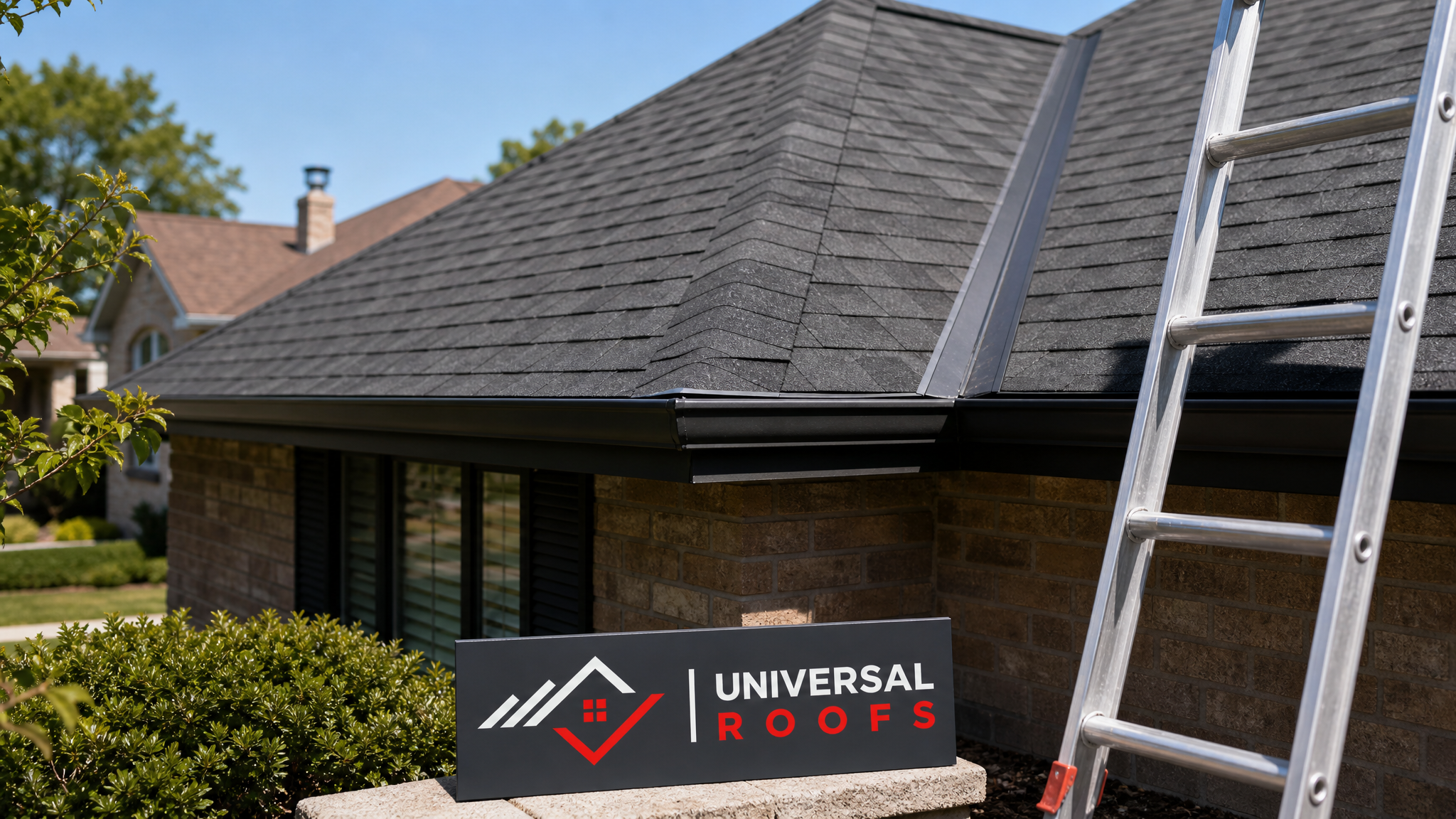
For pitched, shingled roofs — the majority of homes across Toronto and the 905 region — the single most effective waterproofing solution is a self-adhering ice and water shield membrane installed underneath the shingles at the eaves, valleys, and around every penetration. This rubberized asphalt membrane bonds directly to the roof deck and self-seals around nail penetrations, creating a continuous secondary barrier that stops water even if wind-driven rain or ice damming defeats the shingle layer above it.
Ontario building code requires this membrane to extend a minimum distance up-slope from the exterior wall line, typically enough to cover the zone where ice damming most commonly forms. On homes with a history of ice dams, complex rooflines, or low-slope sections, we routinely recommend extending coverage further, and in some cases covering the entire deck rather than just the code-minimum strip. Valleys, where two roof planes meet and water volume concentrates dramatically during a storm, should always receive this membrane regardless of the roof’s overall pitch, because valleys carry a disproportionate share of total roof runoff.
The main advantage of this solution is that it works silently in the background for the full life of the roof — 25 to 40 years in most cases — with no maintenance required once installed correctly. The main limitation is that it can only be installed during a full roof replacement or a significant tear-off, since it goes beneath the shingles. If your existing membrane was installed decades ago or applied incorrectly, this is one of the strongest arguments for prioritizing it during your next roof replacement rather than treating it as an afterthought.
Solution 2: Fully Adhered Membrane Systems for Flat and Low-Slope Roofs
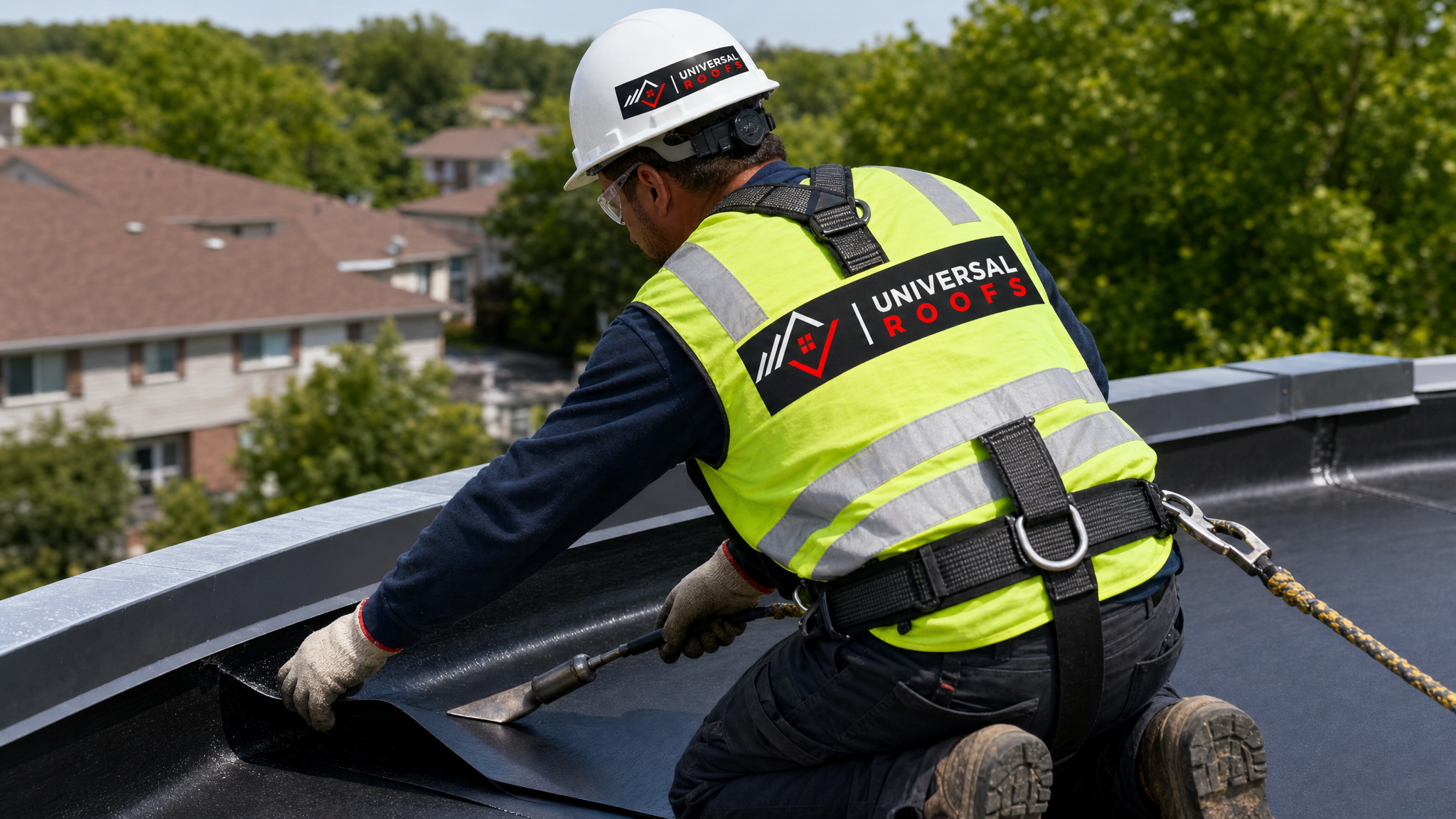
Flat and low-slope roofs waterproof in a fundamentally different way from pitched shingle roofs, since there is little to no gravity assistance in shedding water off the surface. The entire system depends on a continuous, properly seamed, fully adhered membrane. EPDM rubber, TPO, and modified bitumen are the three most common membrane types we install and service across the GTA, and each has a different profile for lifespan, seam behaviour, and vulnerability.
EPDM rubber membranes are prized for flexibility and a long track record — often 20 to 30 years — but rely on adhesive-bonded seams that need to be inspected periodically, since seam failure (not the membrane field itself) is the most common cause of EPDM leaks we diagnose. TPO membranes are heat-welded rather than glued, which creates a stronger seam when done correctly, and their reflective white surface helps reduce summer heat gain, though weld quality varies significantly by installer experience. Modified bitumen systems, often installed with a torch-applied or self-adhered cap sheet, offer excellent durability but need a UV-protective cap layer to avoid premature degradation.
Regardless of membrane type, drainage is just as important as the membrane itself. Ponding water — standing water that remains on a flat roof for more than 48 hours after rainfall — is one of the clearest signs of a waterproofing or slope problem, and it accelerates membrane breakdown while adding unnecessary structural load. Our flat roofing crews frequently find that what looks like a membrane failure is actually a blocked internal drain or a slope deficiency that needs correcting before any new membrane is installed.
Solution 3: Liquid-Applied Roof Coatings for Restoration
Not every waterproofing problem calls for a full membrane replacement. Liquid-applied roof coatings — acrylic, silicone, or polyurethane formulations rolled or sprayed directly onto an existing roof surface — offer a cost-effective way to restore waterproofing performance to an aging membrane, a metal roof, or even certain low-slope built-up systems without a full tear-off.
These coatings work by forming a seamless, elastomeric layer that bridges small cracks, seals minor seam separations, and adds a fresh UV-resistant barrier over a substrate that has started to chalk, crack, or lose its original waterproofing capacity. Silicone coatings in particular perform well in our climate because they resist ponding water and remain flexible through the freeze-thaw cycle far better than many older coating chemistries. The tradeoff is that coatings are a restoration solution, not a permanent one — most systems need reapplication on a 10 to 15 year cycle, and they are only effective when applied to a clean, structurally sound, properly prepared substrate.
We typically recommend coatings when a roof still has years of useful structural life left but has lost its surface-level waterproofing integrity due to UV exposure or minor cracking. Applying a coating over a roof with underlying structural problems, active leaks, or trapped moisture will not solve the root issue and can actually mask a problem that needs a more thorough roof repair first. An honest inspection before recommending a coating is essential, which is why we always assess the substrate condition before proposing this as the right fix.
Solution 4: Engineered Flashing Systems for Roof Penetrations
Flashing — the metal or rubber components installed wherever the roof meets chimneys, vents, skylights, walls, and valleys — is responsible for more waterproofing failures than the main roofing surface itself. Water rarely penetrates a properly installed shingle field or membrane; it almost always finds its way in through a flashing detail that has rusted, cracked, separated, or was improperly installed to begin with.
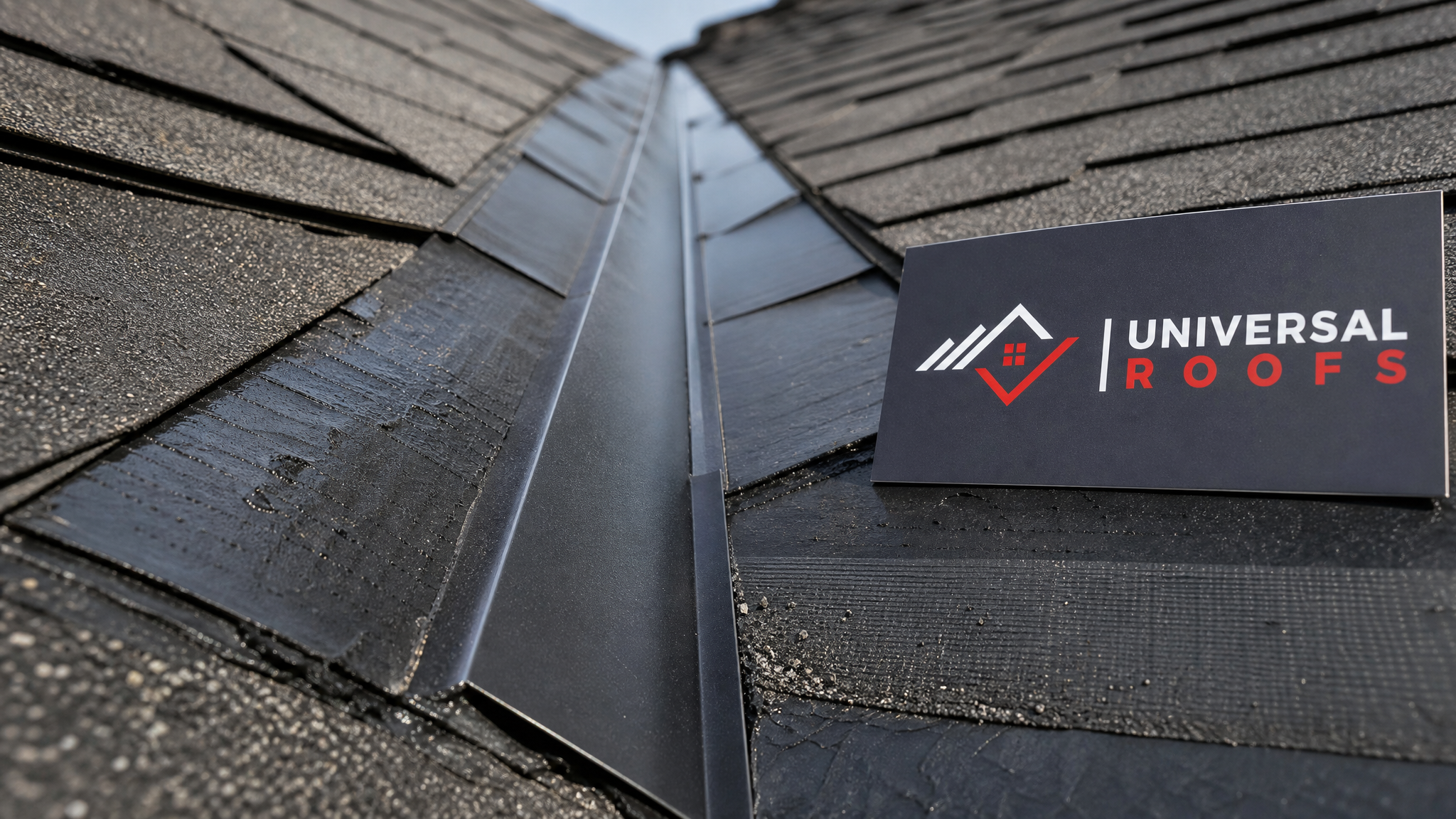
Step flashing at wall intersections should be woven into each course of shingles, never simply caulked over as a shortcut repair. Chimney flashing needs both step flashing and counter-flashing set into the mortar joint, not surface-mounted sealant that will crack within a few seasons of thermal movement. Skylight flashing kits are engineered specifically for the make and model of the unit being installed, and mismatched or generic flashing is one of the leading causes of skylight leaks we diagnose on service calls. If your home has ageing skylights, pairing a quality skylight replacement or new skylight installation with correctly engineered flashing dramatically reduces long-term leak risk compared to patching an old unit repeatedly.
Vent pipe boots — the rubber collars around plumbing stacks — are a particularly common failure point because the rubber degrades faster than the surrounding metal or shingle components, often within 10 to 15 years, well before the rest of the roof needs replacing. A visual inspection of every penetration at least once a year, ideally after winter and before the fall rains, catches this before it becomes an interior leak. Because flashing failures are so often the true root cause behind what looks like a “roof leak,” a proper diagnosis usually starts with a close look at every penetration detail rather than the field material.
| Flashing Location | Common Failure Mode | Recommended Fix | Inspection Frequency |
|---|---|---|---|
| Chimney base | Cracked mortar-set counter-flashing | Re-set counter-flashing into fresh mortar joint | Annually |
| Skylight perimeter | Mismatched or generic flashing kit | Manufacturer-matched flashing kit | Annually |
| Vent pipe boots | Rubber collar cracking/UV degradation | Replace boot every 10-15 years | Every 1-2 years |
| Wall/roof intersection | Caulk-only patch instead of step flashing | Woven step flashing per shingle course | Annually |
| Valleys | Underlapped or corroded metal valley liner | Continuous metal valley with ice and water shield beneath | Annually |
Solution 5: Attic Ventilation and Moisture Management
The fifth solution is easy to overlook because it does not involve sealing anything on the exterior of the roof at all — it involves managing moisture from the inside. Waterproofing is not only about keeping outside water out; it is equally about preventing warm, humid indoor air from condensing on the underside of a cold roof deck in winter. When an attic is poorly ventilated or improperly insulated, this condensation can soak sheathing and insulation from below just as thoroughly as an exterior leak, while also feeding the ice-damming cycle that undermines the other four solutions on this list.
A balanced ventilation system relies on intake at the soffits and exhaust at or near the ridge, sized so that air moves continuously through the attic space rather than pooling stagnant, humid air against the roof deck. Insulation needs to be installed without gaps or compression, and any bathroom, kitchen, or dryer exhaust fans must vent completely outside the building envelope rather than dumping moist air into the attic — a mistake we find surprisingly often during inspections. Getting this balance right protects the wood structure, the insulation’s effectiveness, and every other waterproofing measure from the inside out.
Because attic moisture problems often masquerade as roof leaks — staining on the underside of the deck can look identical whether it came from outside rain or inside condensation — a thorough waterproofing assessment always includes a look inside the attic, not just an inspection of the shingles or membrane from above. This is one of the most common blind spots we see homeowners overlook when they are focused entirely on the visible roof surface.
How to Choose the Right Waterproofing Solution for Your Roof
With five legitimate solutions on the table, the practical question homeowners ask is which one applies to their specific roof. The honest answer starts with an inspection, but there are some general patterns worth knowing before you call a contractor. If your roof is pitched and shingled, the ice and water shield membrane is almost always the foundational solution, since it protects the areas most prone to failure and only needs attention during a reroofing project. If your roof is flat or low-slope, the membrane type and drainage design matter more than almost any other factor.
If you already have a leak, the cause is more often a flashing failure than a failure of the main roofing material itself, so start by having every penetration checked before assuming the whole roof needs replacing. And if your attic shows signs of moisture — musty smells, visible mould on the underside of the deck, or frost buildup in winter — ventilation and insulation issues need to be addressed alongside any exterior repair, or the underlying problem will simply recur.
Budget also plays a role in sequencing these solutions. A liquid-applied coating can buy several more years of service life from an ageing membrane at a fraction of the cost of full replacement, which can be the right call if the substrate is still sound. Conversely, patching flashing repeatedly on a roof that is already past its expected service life often costs more over time than committing to a full roof replacement with a proper membrane system built in from the start.
| Symptom You’re Seeing | Most Likely Cause | Recommended Solution |
|---|---|---|
| Leak near chimney or skylight | Failed or mismatched flashing | Engineered flashing replacement |
| Standing water on flat roof after 48+ hours | Drainage/slope deficiency or membrane wear | Membrane repair plus drain correction |
| Ice buildup at eaves every winter | Missing or insufficient ice and water shield, poor ventilation | Ice and water shield membrane, attic ventilation review |
| Musty smell or frost in attic | Condensation from poor ventilation/insulation | Attic ventilation and insulation upgrade |
| Faded, chalky, cracking flat roof surface | UV degradation of membrane surface | Liquid-applied restorative coating |
Regional Considerations Across the GTA
Waterproofing priorities shift slightly depending on where in the GTA your home is located, mostly due to tree cover, roof age profiles, and microclimate differences. Homes in established Toronto neighbourhoods often have mature tree canopies that shed debris into valleys and onto flat roof sections, making valley flashing and drain maintenance a higher priority. Newer subdivisions across Peel Region and York Region tend to have younger roofs where the ice and water shield membrane installed at construction is still performing well, but where builder-grade flashing at skylights and vents is a more common early failure point.
In Halton Region and Durham Region, we see a wider mix of older rural and estate properties alongside newer developments, which means waterproofing recommendations vary more from street to street than in more uniformly built areas. Regardless of the municipality, the underlying five solutions remain the same — what changes is which one is most urgently needed on a given roof, and that is exactly what a proper inspection is designed to determine.
Homeowners considering any of these solutions for the first time often want to see real results from other GTA properties before committing. Our reviews page includes feedback from clients across these regions describing their waterproofing and repair experiences, and our FAQ page answers many of the follow-up questions homeowners have about cost, timelines, and warranty coverage for each solution.
Maintaining Your Waterproofing Investment Year-Round
Even the best waterproofing solution degrades faster without basic seasonal maintenance. Gutters and downspouts should be cleared before the fall rains and again after leaves have finished dropping, since blocked gutters back water up under the shingle edge and drip edge flashing. Flat roof drains and scuppers need to be checked for debris after every significant storm, particularly through the summer thunderstorm season we are in right now, since a single blocked drain can undo the benefit of an otherwise excellent membrane installation.
An annual professional inspection — ideally scheduled in late spring after the freeze-thaw season has ended, or in early fall before winter arrives — catches small issues like a cracked vent boot or a lifted shingle tab before they become a full leak requiring interior repairs. This is a far less expensive habit than reactive repairs after water has already reached the drywall or insulation. Our team can walk you through which of the five solutions above applies to your specific roof, and give you a clear, honest picture of what needs attention now versus what can be monitored for a future season. Learn more about our approach and history on our about page.
What is the best waterproofing solution for your roof if you have a flat roof?
How long do roof waterproofing solutions typically last?
Can I apply a waterproofing coating over an existing damaged roof?
Why does flashing fail before the main waterproofing solution on my roof?
Does attic ventilation really count as a waterproofing solution?
How do I know which waterproofing solution my GTA roof needs?
Need Help With 5 Best Waterproofing Solutions?
Choosing and installing the right combination of these five solutions is what keeps a roof watertight for its full service life, and it is exactly the kind of work Universal Roofs has been doing for GTA homeowners since 2005.
Call us today at (416) 732-2421 or request a free inspection to get started.
Universal Roofs proudly serves Toronto, Mississauga, Brampton, Vaughan, Markham, Oakville and the GTA since 2005.