
Insulated vinyl siding is regular vinyl siding with a contoured foam backing attached to every panel. It is often sold as an energy upgrade, and it does add some insulation, but the bigger everyday differences are usually a straighter, more solid-looking wall and better resistance to dents and cracks. Whether the foam pays off for your house depends on what is already in your walls, how long you will stay, and whether a continuous layer of exterior insulation board would do the job better.
It helps to separate the two promises. The look and toughness of the wall are things you will notice every day; the energy benefit is real but small, and it is easy to oversell. Autumn, as the heating season starts, is when many owners start thinking about drafty walls and next year’s exterior projects.
How Insulated Vinyl Siding Is Made
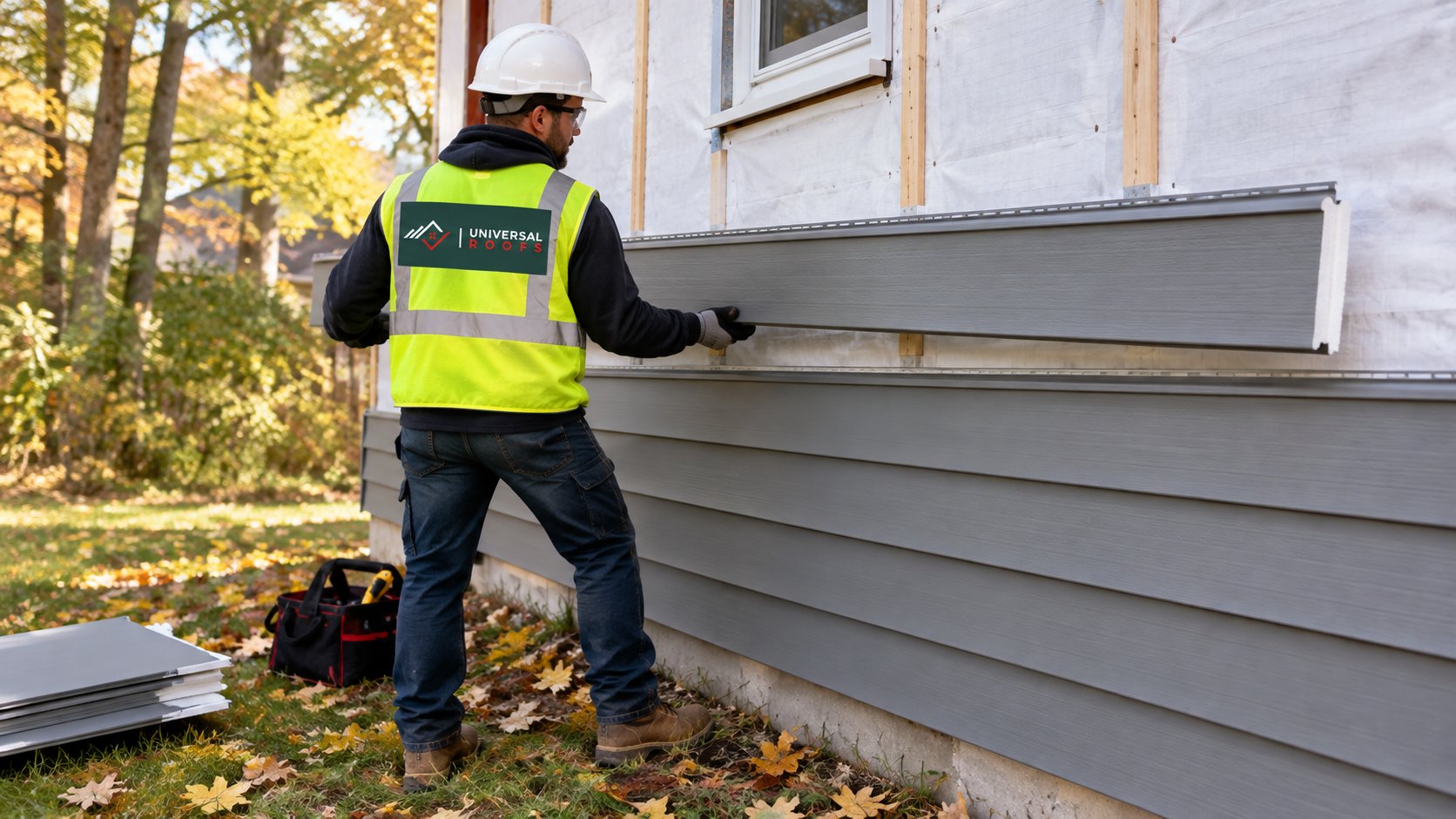
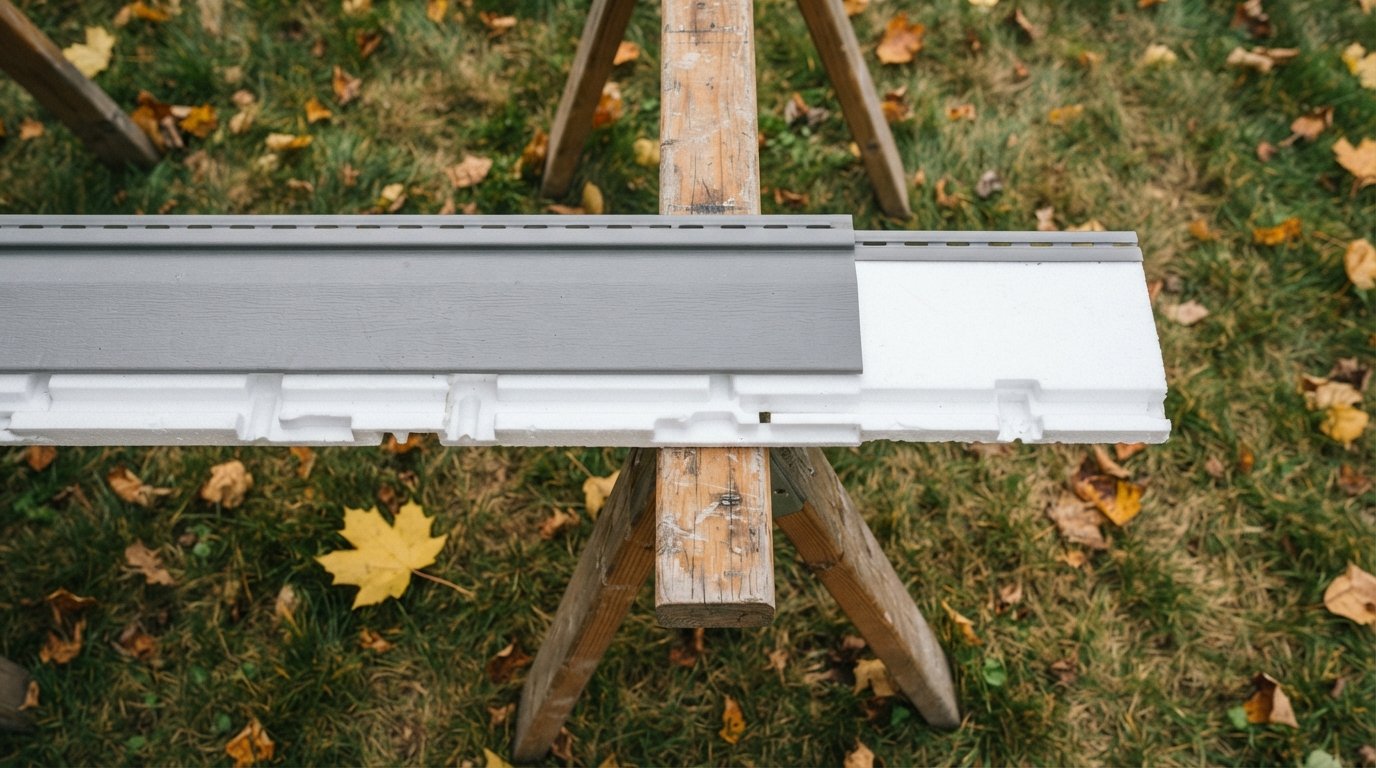
Standard vinyl siding is a thin, hollow-backed panel that hangs on the wall with air spaces behind the laps. Insulated vinyl siding fills that space with a rigid foam backing, usually expanded polystyrene, shaped to match the profile of the panel. The foam is bonded or attached to the vinyl at the factory, so the installer handles each panel as a single, thicker piece.
That thicker profile changes installation details. Accessories such as J-channel, corner posts and starter strips have to suit the deeper panels, and trim around windows and doors needs enough depth to receive them. Many foam-backed products also have grooves or channels in the back of the foam to help any water that gets behind the siding drain down and out.
Like any cladding, insulated vinyl is only the outer layer of the wall. It still needs a properly lapped sheathing membrane or house wrap, flashed windows and doors, and sound sheathing behind it. If you are planning new cladding, our siding, soffit and fascia services cover the whole exterior from the wall membrane to the trim at the roofline.
What Insulated Vinyl Siding Adds In R-Value
This is where expectations most often get ahead of reality. The foam backing adds a modest amount of insulation, typically in the low single digits of R-value, depending on the product and its foam thickness. Manufacturers publish the tested value for each product, and that number is the one to compare.
Why the real effect can be smaller than the label
- The foam is contoured, not flat. It follows the shape of the panel, so its thickness varies across each course.
- Joints and edges are not sealed. Panels overlap and meet at accessories, leaving seams that are not taped or air sealed like an insulation board layer.
- It is not an air barrier. Much of the heat lost through older walls is air leakage. Foam-backed siding does little to stop that by itself.
- The rest of the wall matters more. A wall with full cavity insulation already has far more R-value than the foam adds, so the relative improvement is small.
Where the foam does help
The main thermal benefit is that the foam covers the outer face of the studs. Wood framing conducts more heat than the insulated cavities between studs, and a continuous outer layer reduces that thermal bridging. On older walls with thin or settled cavity insulation, the foam can make a noticeable difference to how cold the inside face of an exterior wall feels. On a newer, well-insulated wall, the change is usually modest.
Avoid any seller who promises a specific percentage cut in your heating bills from the siding alone. Actual savings depend on the whole house: attic insulation, air leakage, windows, the furnace and how you live in the home.
Rigidity, Impact Resistance And Appearance
For many owners, this is where insulated vinyl siding earns its premium.
Straighter walls
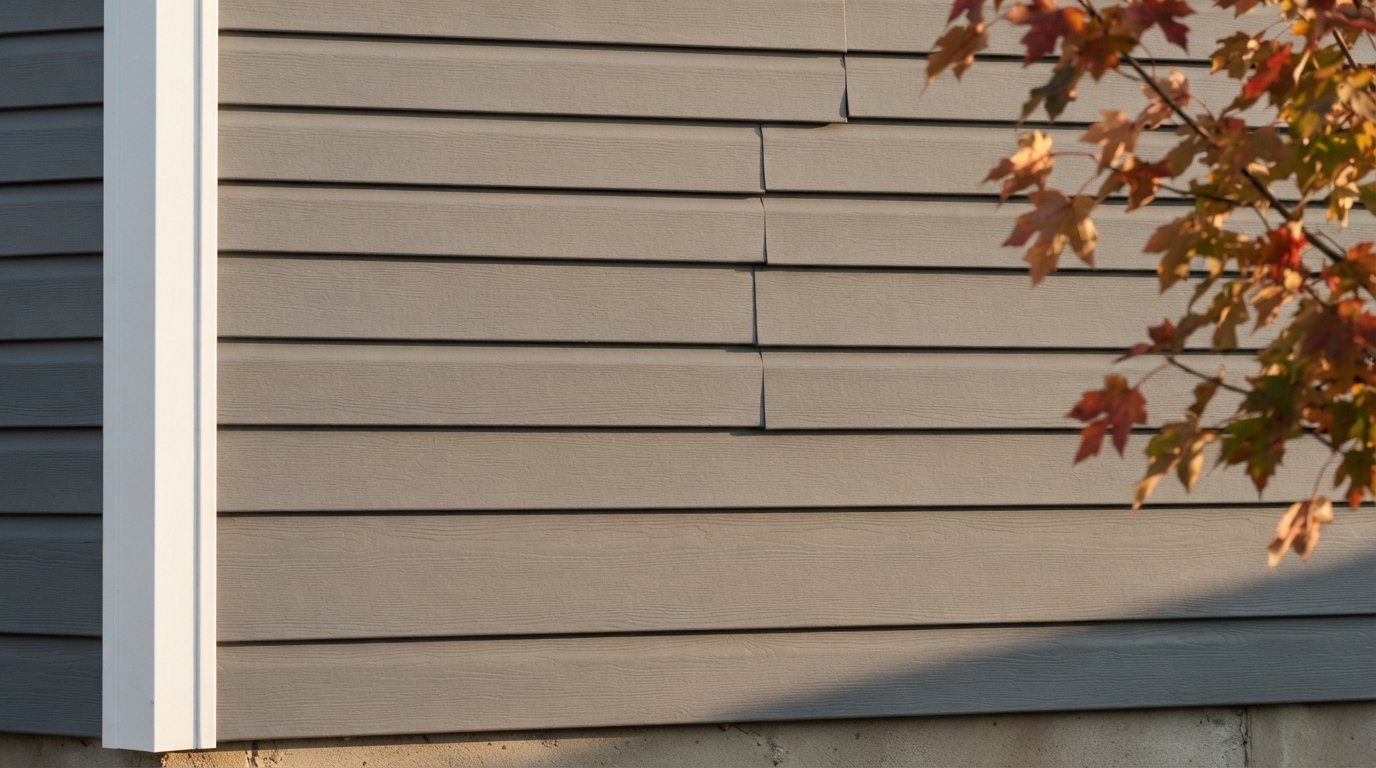
Standard vinyl follows every bump and dip in the wall. On older houses with uneven sheathing, that shows as waviness, especially in low-angle morning or evening light. The foam backing bridges small irregularities and gives the panel a flatter, more solid look that is closer to wood or fibre cement from a distance.
Impact resistance
Because the foam supports the panel from behind, a ball, a lawn trimmer or a bump from a ladder is less likely to dent or crack it. This matters most on lower courses near driveways, side yards and play areas, and in cold weather, when standard vinyl becomes more brittle.
Feel and sound
Foam-backed panels feel solid rather than hollow when tapped, and some owners notice slightly less wind rattle and outside noise. These are comfort differences rather than measured performance claims, and results vary.
| Feature | Standard vinyl | Insulated vinyl siding | Standard siding over insulation board |
|---|---|---|---|
| Added insulation | Negligible | Modest, contoured foam behind each panel | Greater, continuous layer of a chosen thickness |
| Thermal bridging at studs | Not reduced | Partly reduced | Substantially reduced |
| Air sealing | None | Little | Can act as part of the air control layer if seams are taped and detailed |
| Wall flatness | Shows wall irregularities | Noticeably flatter | Depends on cladding; board can help flatten the wall |
| Impact resistance | Lowest | Improved | Depends on cladding chosen |
| Window and door trim changes | Usually minimal | Some extra depth needed | Extensions usually needed for thicker walls |
| Design input | Minimal | Minimal | Moisture and vapour control should be reviewed |
The Cost Premium, As Estimates
Insulated vinyl siding costs more than standard vinyl because the panels are more expensive and slightly slower to handle. Labour for tear-off, membrane, flashing and trim is similar. The figures below are rough estimates for a typical detached GTA home and vary with wall area, height, the number of windows and doors, and the condition of the wall.
| Scope (typical detached GTA home) | Estimated range in CAD | What moves the number |
|---|---|---|
| Tear-off and standard vinyl with new membrane | Often $15,000 to $35,000 | Wall area, storeys, trim and soffit scope |
| Same scope with insulated vinyl siding | Often $20,000 to $45,000 | Product line, accessories, wall area |
| Rigid insulation board added behind standard vinyl | Often $5,000 to $15,000 more than standard vinyl alone | Board type and thickness, window and door extensions |
| Sheathing repairs found after tear-off | Often priced per sheet or per area as found | Extent of water damage behind old cladding |
Treat these as broad guides only. Ask contractors to quote standard and insulated options on the same scope so you see the real difference for your house.
When Exterior Insulation Board Is The Better Upgrade
If improving the energy performance of your walls is the main goal, a continuous layer of rigid exterior insulation behind the cladding usually delivers more than foam-backed vinyl. Common materials include rigid foam boards and mineral wool boards, installed over the sheathing, with seams taped or detailed, and then covered with siding, often on strapping that creates a drainage gap.
Why it performs better
- Thickness is chosen, not fixed. You can install the amount of insulation the wall needs, rather than whatever the siding backing provides.
- It is continuous. Board is installed in a flat layer across studs, plates and rim joists, reducing thermal bridging much more thoroughly.
- It can support air sealing. With taped seams and careful detailing, the board layer can contribute to the air control strategy of the wall.
- It works with any cladding. Vinyl, fibre cement, engineered wood or steel can all go over it.
What it requires
Exterior insulation makes the wall thicker, so windows and doors need extended jambs and trim, and the window flashing has to be rethought so water still drains outward. Longer fasteners are needed to reach the framing. In Ontario, the type and thickness of exterior insulation interact with the wall’s vapour control, and building code requirements apply to how these layers are combined. The plan should be reviewed by someone who understands building science, and you should confirm requirements with your municipality before work begins.
Where insulated vinyl siding still wins
- You mainly want flatter, tougher vinyl and the insulation is a bonus.
- The budget or the window and door details cannot accommodate a thicker wall.
- The walls are already reasonably insulated and air sealed.
- You want a simpler project with fewer trim changes.
Installation Details That Decide How It Performs
Insulated vinyl siding is forgiving in some ways, because the foam hides minor wall irregularities, but it is less forgiving in others. These are the details worth checking with any installer.
- Wall preparation. Old cladding is removed, soft sheathing is replaced, and a sheathing membrane is lapped shingle-style so water always runs outward. The foam backing does not replace any of this.
- Window and door flashing. Head flashings, sill protection and properly integrated membrane at each opening matter more than the siding itself. Most wall leaks start at openings.
- Accessory depth. J-channel, corner posts and starter strips need to suit the thicker panels. Standard-depth accessories make the panels sit awkwardly and leave gaps.
- Fastening for movement. Like all vinyl, foam-backed panels expand and contract. Fasteners sit mid-slot with a little play under the head, and panel ends stop short of trim to leave room for movement, following the manufacturer’s instructions for the temperature at installation.
- Clean cuts. The foam must be cut cleanly at trim and openings so the panel seats properly and no loose foam blocks drainage paths.
- Heat sources. Darker colours and strongly reflective nearby windows can raise surface temperatures. Ask about the product’s colour guidance if you want a deep shade.
Questions to ask before you sign
- Which exact product is quoted, and what is its published R-value?
- Is the old cladding being removed, and what membrane and flashing are included?
- How will window and door trim be adapted to the thicker panels?
- What is the price difference against standard vinyl on the same scope?
- Would exterior insulation board fit my house and budget better?
Making The Decision For Your House
Start by understanding the wall you already have. An energy assessment, an infrared scan on a cold day, or a few panels removed during a siding quote can reveal whether the cavities are full, partial or empty. Older GTA homes with uninsulated or poorly insulated walls benefit more from added exterior insulation than newer homes do.
| Your situation | Usually the better fit | Reason |
|---|---|---|
| Newer, well-insulated walls; want a better-looking wall | Insulated vinyl siding | Flatter, tougher panels; modest thermal benefit |
| Older walls with little cavity insulation | Insulation board plus siding | Larger, continuous insulation improvement |
| Tight budget, replacing failing siding | Standard vinyl with good membrane and flashing | Fixes the essentials at the lowest cost |
| High impact exposure near play areas or driveways | Insulated vinyl siding or a tougher cladding | Better resistance to dents and cracks |
| Planning a deep energy retrofit | Insulation board with designed wall assembly | Most control over insulation and air sealing |
Maintenance and lifespan
Day to day, insulated vinyl siding is cared for like any vinyl: an occasional gentle wash, keeping eavestroughs from overflowing onto the wall, and checking caulked joints at penetrations. The foam itself needs no maintenance. The vinyl face will still fade slowly with sun exposure, so it is worth keeping a few spare panels from the original order for future repairs, because matching a faded colour years later is difficult. Replacing a damaged panel follows the same unlocking method as standard vinyl, although the thicker panels are a little stiffer to work with.
Can you combine both?
Some owners install a layer of insulation board and then finish it with foam-backed vinyl. It works, but the extra cost of the insulated panels buys less on a wall that already has continuous exterior insulation. In that case, the rigidity and impact resistance become the main reasons to choose the foam-backed product.
Do not skip the attic
Heat rises, and many GTA homes lose more heat through an under-insulated attic and air leaks at the ceiling than through their walls. Before spending extra on wall insulation, check the attic. Our attic insulation services are often the most cost-effective first step, and the work is unaffected by the season.
Incentive programs
Government and utility energy-efficiency programs change frequently. Some have covered wall and attic insulation in the past. If you hope to use one, check the current federal, provincial and utility programs before you sign a contract, because many require an energy assessment before any work begins.
Pricing the walls and the attic side by side usually shows where an energy budget does the most good, and that is how our Halton Region roofing, eavestroughs and attic work team prefers to quote an exterior upgrade.
Foam-Backed Siding Questions
Is insulated vinyl siding worth the extra cost?
What R-value does foam-backed siding add?
Does insulated siding stop drafts?
Is insulated vinyl more resistant to cracking?
Does it need different trim and accessories?
Does the house still need house wrap?
Explore Insulated Vinyl Siding With Us
If you are weighing foam-backed panels, standard vinyl or insulation board, we will look at your walls, attic and budget and explain the trade-offs plainly. Universal Roofs handles siding, soffit, fascia and attic work so the whole envelope is considered together.
Call us today at (416) 732-2421 or request a free estimate.
Advising homeowners in Halton Region and the wider GTA on walls, roofs and attics.