
Plenty of postwar bungalows, side-splits and two-storey homes across the GTA still wear their original aluminum siding, often installed in the 1960s or 1970s over the wood clapboard the house was built with. Decades later, that cladding tends to show the same handful of problems: a chalky film that rubs off on your hand, colour that has faded unevenly from wall to wall, dents from hail, ladders and stray balls, and, less visibly, moisture hiding behind it. Sooner or later the owner has to decide whether to clean and paint what is there, repair the damaged sections, or replace the whole exterior.
There is no single right answer, because cladding that is merely tired is a very different situation from cladding that is hiding a soft, wet wall. The money question, paint at a fraction of the cost or replace for the long term, only makes sense once you know which of those two walls you have.
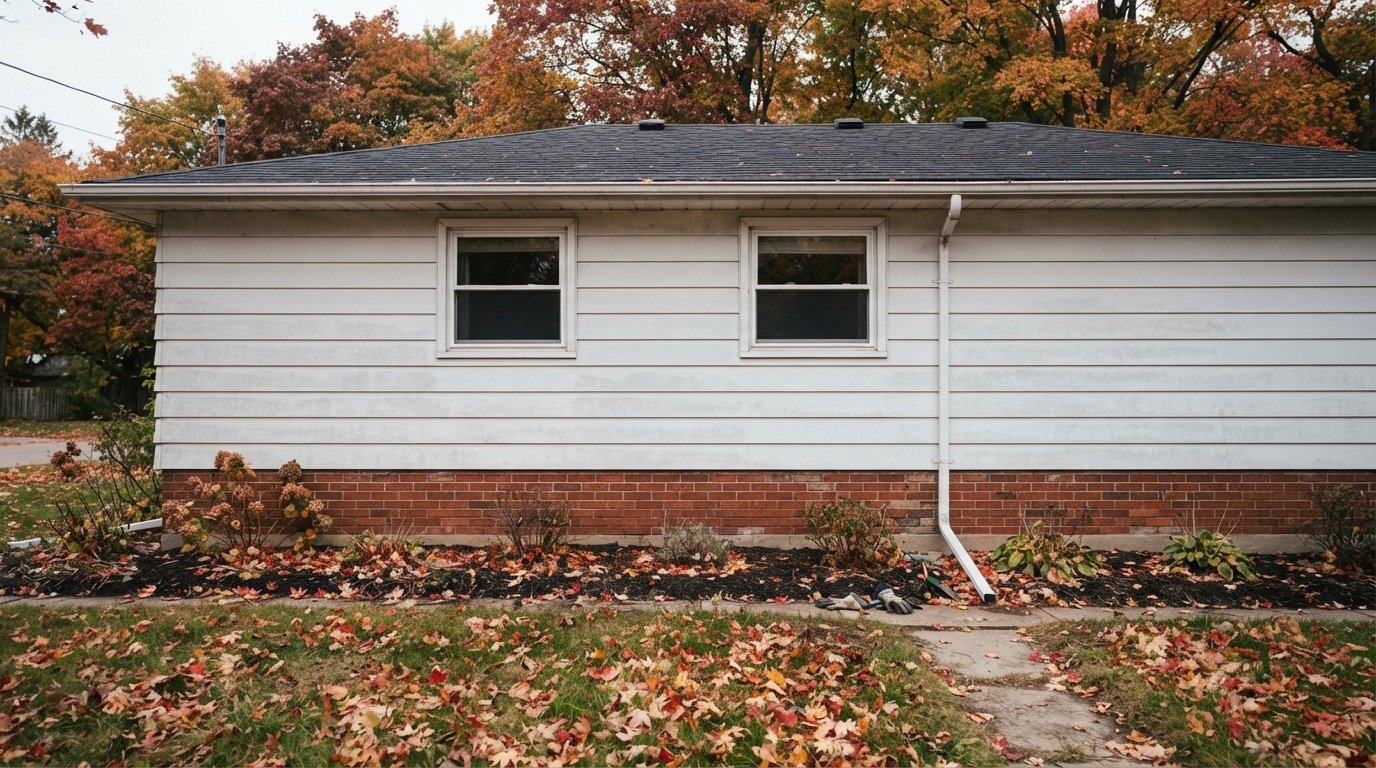
Reading The Condition Of Older Aluminum Siding
Before you price paint or new cladding, walk the house with a critical eye. Start on the south and west walls, where sunlight breaks down the factory finish fastest, then check the north side, where algae and slow-drying moisture show up first.
Chalking and fading
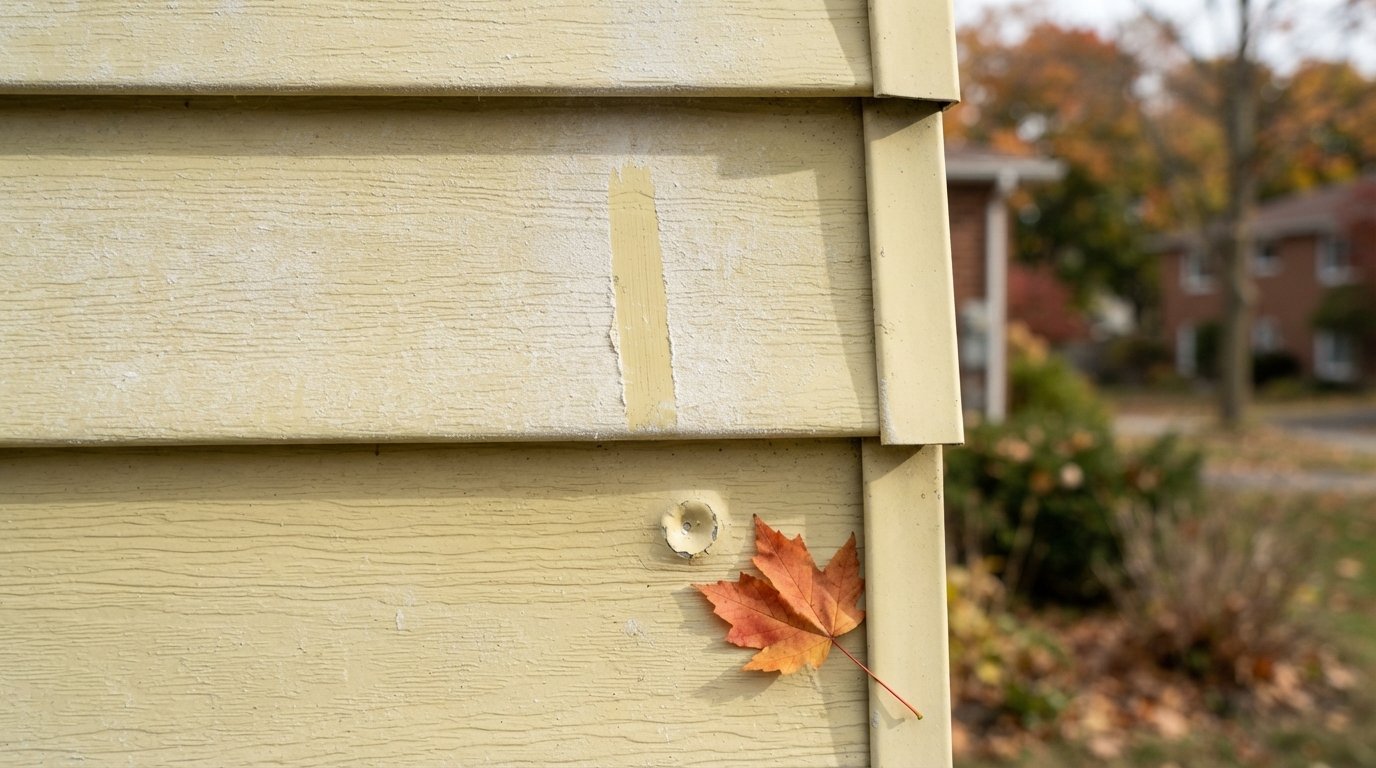
Most original aluminum cladding carried a baked factory finish. Ultraviolet light slowly breaks down the binder in that coating and leaves loose pigment on the surface. Rub a clean, dark cloth across a panel: if it comes away covered in powder, the siding is chalking. That is cosmetic. It means the finish is near the end of its life, not that the metal is failing, but new paint will not bond to a powdery surface. Fading is the related symptom. A beige house may now be four slightly different beiges, and any panels replaced over the years look newer than the rest, which is why repairs on old cladding are rarely invisible.
Dents, creases and loose panels
Aluminum is soft and has no memory, so once it dents it stays dented. Hail leaves a uniform pattern of dimples across one or two elevations, ladders leave paired creases near the top of a wall, and lawn equipment chews the bottom course. Also look for panels that have unlocked from the course below, pulled-out nails and corner posts separating from the wall. Loose pieces rattle in wind and let rain in behind.
Signs of trouble behind the cladding
The most important part of the walk-around is looking for hidden water: dark streaks running down from window corners, panels that bulge outward, nail heads backing out in one area, swollen trim or peeling paint around windows inside, and a musty smell in rooms along one wall. Any of these calls for a closer look before you commit to painting.
If you want a professional opinion on the walls along with the eavestroughs, soffits and fascia above them, our siding, soffit and fascia service covers inspection, repair and replacement of the whole exterior from the roofline down.
Painting Aluminum Siding: When It Works And How It Is Done
Painting is often the most economical way to refresh aluminum siding that is flat, well fastened and dry behind. A properly prepared job can look very good for years. It goes wrong when preparation is rushed, and preparation is most of the work.
The preparation sequence
- Wash off the chalk. The surface is scrubbed with a cleaner suited to chalking metal, using soft brushes and a low-pressure rinse. A pressure washer aimed upward can force water behind the laps and dent soft panels.
- Test the surface. Once dry, a dark cloth should come away nearly clean. If it still picks up powder, the wash is repeated.
- Treat bare spots. Where the finish has worn through, the metal may show white oxidation. Those spots are cleaned and primed with a product the paint maker recommends for bare aluminum.
- Prime if the system calls for it. Some exterior acrylics are designed to go over clean, sound factory finishes; others need a bonding primer. Follow the product data sheet, not general advice.
- Apply two coats of quality exterior acrylic. Spraying with back-rolling is typical, ideally in shade, because hot metal flashes the paint and leaves lap marks.
Colour and timing
Light and mid-tone colours are the safer choice on metal cladding. Very dark colours absorb more heat, increasing movement and making waviness more visible, although some paint lines offer heat-reflective dark tints for exactly this reason. Paint also needs air and surface temperatures above the minimum on the can through drying. Early to mid autumn can still work on mild, dry days, but cool nights and heavy dew shorten the window quickly, so it is often better to wash and repair now and paint in late spring.
Repairing Dents And Damaged Sections
Small dents can sometimes be treated like auto-body damage: the area is scuffed, a small screw pulls the low point outward, then filler is applied, sanded flush and spot painted. Done well, it is hard to spot from a few metres away, but on faded panels the touch-up colour will not match unless the whole wall is painted afterward.
Creased or holed panels are usually fixed with a cut-and-lap repair. The damaged face is cut out, leaving the nailing hem at the top still fastened. A new piece has its own nailing strip trimmed off, is bedded in a suitable sealant, locked into the course below and pressed onto the remaining top portion. Laps are staggered and oriented away from the main viewing angle.
Unlocked panels, common near corners and under the eaves, are re-engaged with a siding unlocking tool and refastened through the nailing hem. Face-nailing aluminum is a common shortcut that leaves dimples and lets water track through the nail hole.
Matching Discontinued Aluminum Siding Profiles
This is where repairs on older cladding get difficult. Many houses carry profiles that are no longer made: double four inch or double five inch horizontal lap, wider single-lap boards, vertical board and batten, smooth or woodgrain faces. Even when a current profile looks close, the exposure, butt depth, lock shape and embossing may differ just enough that a new piece will not lock in or casts a different shadow line.
- Salvage from a hidden wall. Panels are taken from a low-visibility area, such as behind a deck or along a fence line, to repair the front. The hidden area is then reclad with the closest current product.
- Repair, then paint the elevation. Salvaged and new pieces rarely match faded neighbours, so visible repairs are often followed by painting that whole wall.
- Treat repeated compromise as a signal. If every repair is a mismatch, the money is often better spent toward new cladding.
| Symptom | Likely cause | Typical response |
|---|---|---|
| Powder on your hand | UV breakdown of the factory finish (chalking) | Wash, test, then paint if the panels are sound |
| Uniform small dimples on one or two walls | Hail exposure | Paint if minor; replace the elevation if severe or if insurance is involved |
| Paired creases near the top of a wall | Ladder rails leaning on the siding | Cut-and-lap repair with matching or salvaged panels |
| Bulging panels or nails backing out | Swelling or rot in sheathing or clapboard behind | Open the wall before deciding on paint |
| Dark streaks below window corners | Missing head flashing or failed caulking | Remove panels below the window to inspect and reflash |
| Panels unlocked near corners or eaves | Wind loading, loose fasteners | Re-lock and refasten through the nailing hem |
The Rot You Cannot See Behind Aluminum Siding
When aluminum siding went onto older GTA homes, it was usually fastened directly over the original clapboard or a thin fibreboard backer, often with no modern sheathing membrane. Window and door openings were wrapped in aluminum trim and caulked, and that caulking was expected to do much of the waterproofing. Decades later, it has dried out and cracked.
Where water usually gets in
- Window heads. Without a head flashing that kicks water outward, rain runs behind the J-channel and down the old wood.
- Roof-to-wall intersections. Missing step and kickout flashing where a lower roof meets a wall sends water behind the cladding. This is often corrected as part of a roof repair.
- Overflowing eavestroughs. Troughs clogged with autumn leaves spill down the wall face every rain, soaking the bottom of the wall and the sill plate over the years.
- Ground contact and penetrations. Cladding buried in soil or mulch wicks moisture, while hose bibs, vents and light fixtures rely on caulk alone.
The responsible approach is to remove a few panels in the worst area and probe the wood with an awl. Localised damage can be cut out and replaced, the opening reflashed, a membrane added and the cladding reinstalled. If softness runs along the wall, painting would only cover up a growing problem, which is why we hesitate to recommend paint on a house with bulging panels or interior water stains.
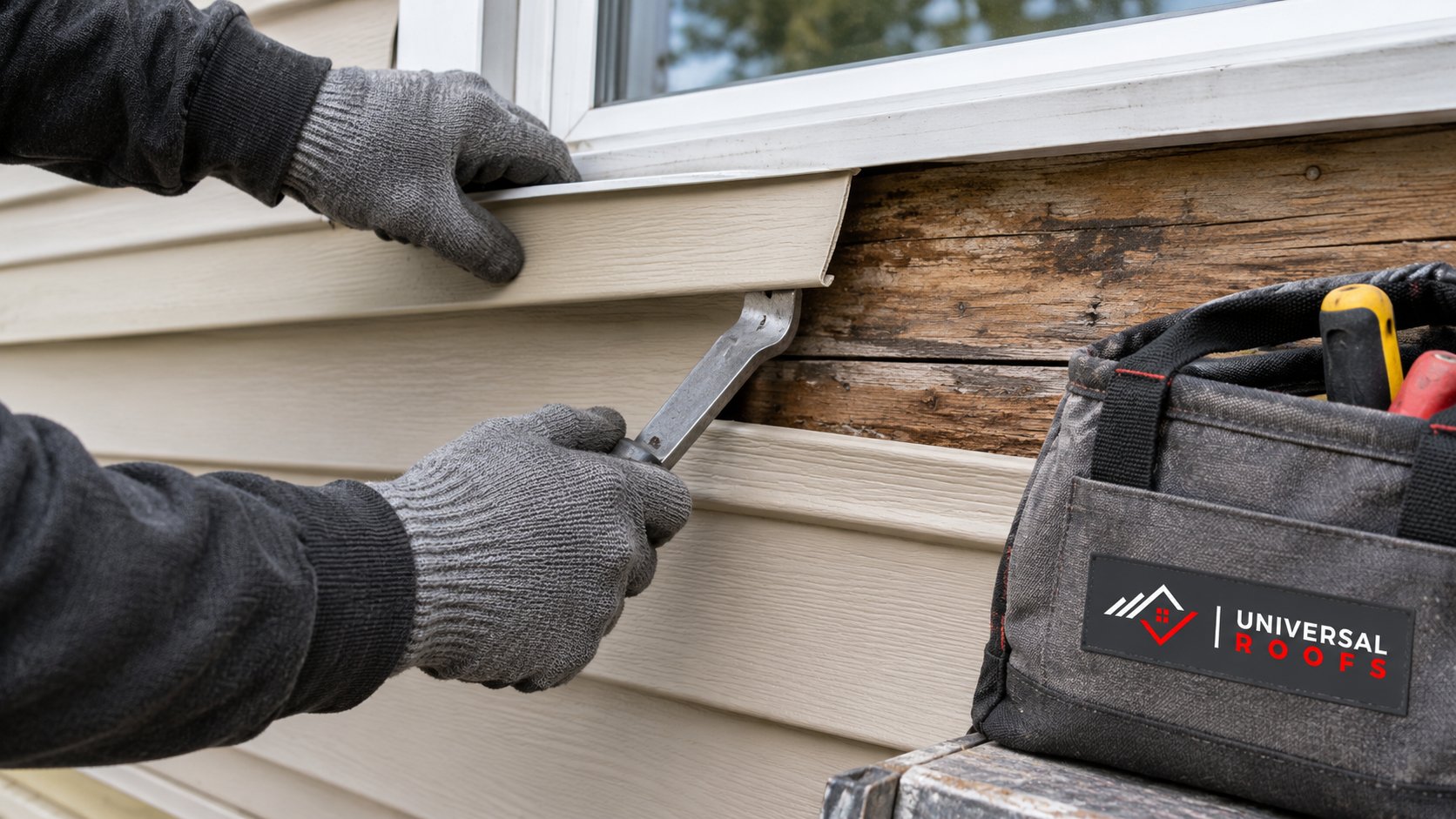
Paint, Repair Or Replace: A Decision Framework
Four things usually settle it: the wall behind, how much cladding is damaged, how long you plan to stay and how much appearance matters.
| Situation | Paint | Spot repair | Replace |
|---|---|---|---|
| Sound, flat panels with chalking only | Strong fit | Rarely needed | Usually premature |
| A few dents on one wall | After repairs, to blend | Strong fit | Usually premature |
| Hail damage across several elevations | Cosmetic only, dents stay visible | Impractical at scale | Often the better choice |
| Discontinued profile, many damaged pieces | Does not fix damage | Limited by salvage supply | Often the better choice |
| Wet or soft wood behind | Not advisable until the wall is fixed | Possible if localised | Often the better choice, with wall repairs |
| Selling soon, cladding sound | Strong fit for curb appeal | Fix obvious damage first | Rarely recovers its cost quickly |
Keep three more points in mind. Painted metal becomes a maintenance surface that will need repainting again, while new factory-finished cladding generally will not. Scrap aluminum from a tear-off has recycling value, so ask whether a quote accounts for it. And if new windows, a new roof or new eavestroughs are coming in the next few years, coordinating them with the cladding avoids tearing out new trim and flashing twice.
Replacement Options For Older Homes
If replacement wins, the next decision is the material, which changes how the house looks, how it is maintained and what the wall behind it needs.
- Vinyl siding is the most common replacement for aluminum siding in Ontario. It never needs paint, colour runs through the material, and profiles are plentiful. Thin grades can look wavy on long walls, and vinyl can crack from impacts in deep cold, so thicker or insulated panels are worth pricing.
- Fibre cement gives a convincing painted-wood look with crisp shadow lines. It is heavy, needs dust-controlled cutting and careful joint and clearance details, and factory-finished versions reduce site painting.
- Engineered wood offers a real-wood look with a factory finish, provided clearances are respected and cut ends are sealed.
- Steel siding resists dents far better than aluminum and comes in lap and vertical styles.
- New aluminum siding is still produced in limited profiles and colours. Confirm availability, colour range and lead time with local suppliers before planning around it.
What should happen to the wall during replacement
Whatever the cladding, replacement is the best chance in decades to fix the wall. A good job removes the old aluminum, repairs the clapboard or sheathing, installs a correctly lapped sheathing membrane, flashes every window and door head, adds kickout flashing at roof-wall corners and mounts penetrations on proper blocks. Some owners add rigid insulation board at the same time, which means extending window and door trim. Confirm current Ontario Building Code requirements for the wall assembly with your contractor and the municipality.
| Scope (typical detached GTA home) | Estimated range in CAD | What moves the number |
|---|---|---|
| Washing and painting existing aluminum siding | Often $3,500 to $9,000 | Wall area, storeys, prep needed, number of colours |
| Small dent and panel repairs | Often $400 to $1,500 | Number of panels, salvage needed, access height |
| Opening and repairing a wet wall section | Often $1,000 to $4,000 per area | Extent of rot, flashing work, interior damage |
| Tear-off and standard vinyl replacement | Often $15,000 to $35,000 | House size, height, trim and soffit scope |
| Tear-off and fibre cement or engineered wood | Often $25,000 to $60,000 or more | Material grade, finish, detailing, storeys |
Treat these as rough estimates; size, access and what turns up behind the panels can move them a long way.
Hidden Materials And Safety In Older Walls
- Asbestos-cement siding underneath. Some mid-century houses had asbestos-cement shingles that were later covered. If there is any chance of this, test before tear-off and have removal handled by a qualified abatement firm under Ontario’s asbestos rules.
- Lead paint on old clapboard. Older exterior paint, especially on houses built before about 1960, may contain lead, so scraping or cutting the clapboard needs dust control and careful cleanup.
- Electrical penetrations. Moving or disconnecting exterior lights, outlets or the service entrance is work for a licensed electrical contractor under Electrical Safety Authority rules, and fasteners must stay clear of wiring inside the wall.
Questions To Ask Before Hiring Anyone
- Will you remove panels to check the wall before quoting paint or new cladding?
- How will you remove chalk, and what pressure will you wash at?
- Do the primer and paint makers approve their products over factory finishes on aluminum?
- For replacement, what membrane and flashing details are included at windows, roof-wall corners and penetrations?
- What happens to the schedule and price if rot or hazardous material is found?
So much wall damage starts at the roof edge that an assessment from our York Region roofing, eavestroughs and attic work team takes in the roofline and troughs along with the walls. Our frequently asked questions explain how we schedule and quote exterior work.
Aluminum Siding Questions From Owners Of Older Homes
Can you paint old aluminum siding?
Why does my siding leave white powder on my hands?
Can a single damaged panel be replaced?
How do I know if there is rot behind the siding?
What is the most common replacement for aluminum siding?
Is it worth replacing siding before selling?
Get An Honest Assessment Of Your Aluminum Siding
Whether your walls need a wash and paint, a few careful repairs or full recladding with proper flashing, the right answer starts with knowing what is behind the panels. Universal Roofs inspects cladding, eavestroughs, soffits and fascia together so you get one clear recommendation instead of guesswork.
Call us today at (416) 732-2421 or request a free estimate.
Helping owners of older homes in York Region and across the GTA decide what their siding needs.