
A skylight is one of the few features on your roof that combines a structural penetration, a glazing assembly, and a weatherproofing system all in one spot. When any part of that assembly weakens, wind does not simply blow past it — wind actively exploits the weak point, prying at seals, lifting flashing, and flexing glazing until something gives. That is why skylight repair important for wind resistance is not a marketing phrase but a genuine engineering concern for GTA homeowners.
Toronto and the surrounding region see a demanding mix of conditions: winter nor’easters, spring squalls off Lake Ontario, and increasingly frequent summer downburst events that arrive with almost no warning. Each of these wind events tests a skylight’s seals, fasteners, and flashing in a different way. A skylight that was watertight and wind-tight five years ago may now have degraded gaskets, a curb that has shifted slightly, or flashing that has worked loose from decades of thermal expansion and contraction.
This guide walks through exactly why skylight repair matters for wind performance, what wind actually does to a skylight assembly, how to recognize the early warning signs, and what a proper repair versus replacement decision looks like. We will also cover costs, timelines, and the specific components that most often fail first in high-wind events, all with a Toronto-area lens.
How Wind Actually Attacks a Skylight Assembly
Wind does not push on a skylight the way most homeowners picture it. The real mechanism is uplift pressure, the same aerodynamic force that keeps an airplane wing aloft. As wind moves across a roof plane and over the raised profile of a skylight curb, it creates a zone of lower pressure directly above and around the unit. Meanwhile, higher pressure air can find its way underneath flashing laps, curb joints, or degraded seals from inside the attic or roof assembly. That pressure differential pulls upward and outward on every component — the glazing, the frame, the flashing, and the fasteners holding it all down.
This is why a skylight that has developed even small gaps is far more vulnerable than one that is fully sealed. A gap that lets air infiltrate underneath step flashing gives wind a foothold. Once wind gets under a flashing lap, it can peel the metal back millimetre by millimetre with every gust cycle, widening the opening each time. This is a progressive failure mode: it starts small and accelerates, which is exactly why proactive skylight repair is so much cheaper than waiting for a wind event to finish the job.
There are four components that bear the brunt of wind loading on a residential skylight:
- The glazing unit (the glass or acrylic dome itself) and its perimeter gasket
- The frame that holds the glazing and transfers loads to the curb
- The curb, the raised wooden or insulated box the skylight sits on
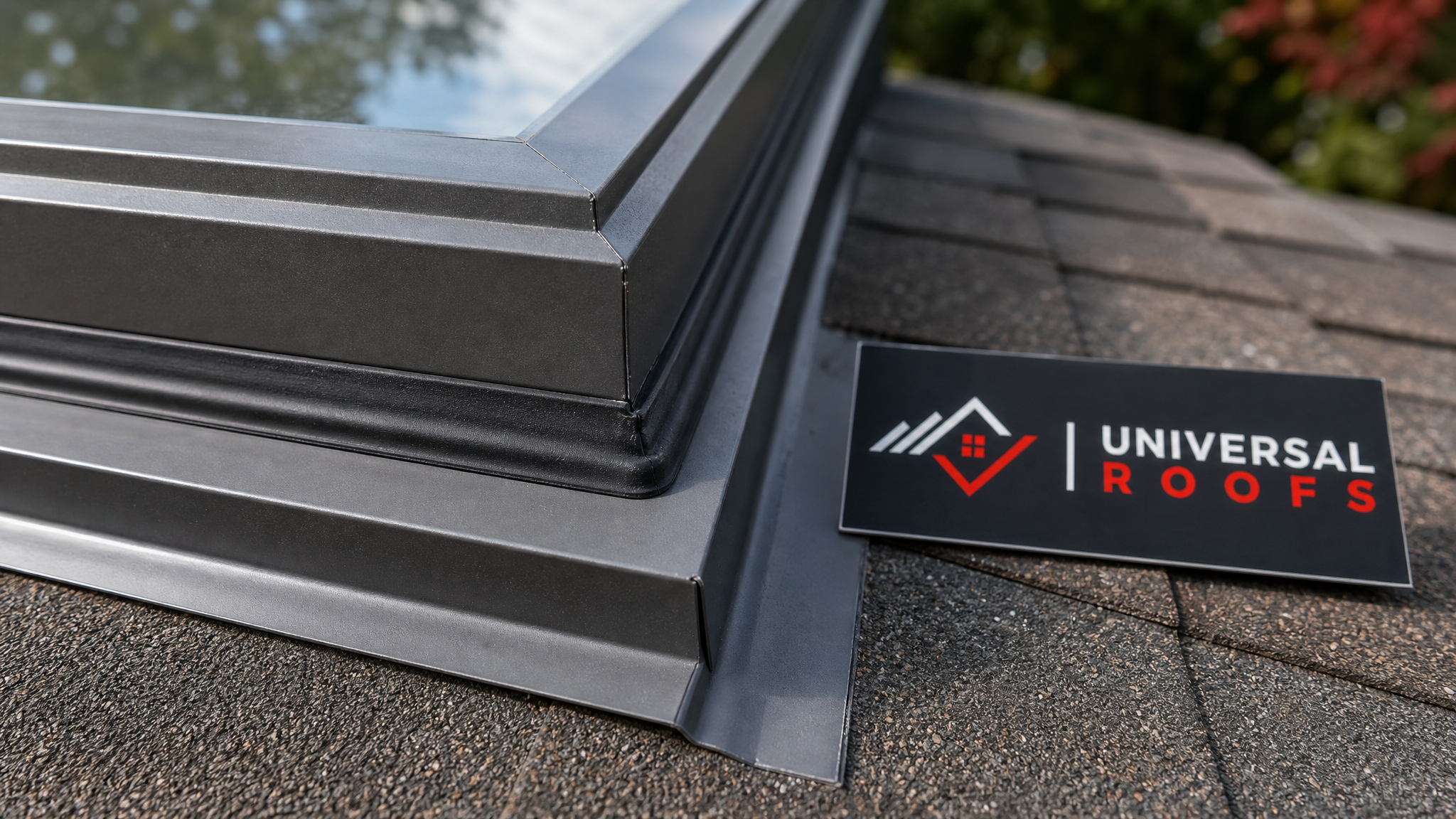
- The flashing, the metal weatherproofing that ties the curb into the surrounding roof membrane or shingles
Wind resistance depends on every one of these holding its integrity simultaneously. A single failed component, even a two-millimetre gap in flashing, can compromise the wind performance of the entire assembly.
Warning Signs Your Skylight Has Lost Wind Resistance
Most skylight wind failures are preceded by warning signs that are visible weeks or months in advance, if you know what to look for. Homeowners often dismiss these signs as cosmetic until a storm turns them into an emergency repair.
| Warning Sign | What It Indicates | Wind Risk Level | Recommended Action |
|---|---|---|---|
| Whistling or humming sound during wind | Air is passing through a gap in the seal or frame | Moderate | Schedule inspection within 2-4 weeks |
| Visible daylight around the frame from inside | Gasket has shrunk, cracked, or pulled away | High | Book a repair within days |
| Flashing edges lifting or curling | Fasteners have backed out or sealant has failed | High | Repair before next storm event |
| Condensation or staining on interior trim | Moisture is entering through a compromised seal | Moderate to high | Inspect and reseal promptly |
| Visible movement or rattling in strong gusts | Frame or curb fasteners have loosened | Severe | Emergency repair required |
| Cracked or crazed glazing surface | Structural integrity of the pane is compromised | Severe | Replace glazing immediately |
If you notice any of the higher-risk signs above, particularly rattling, visible daylight, or lifting flashing, it is worth having a professional assess the unit before the next windstorm rather than after. Our skylight services team frequently gets calls the day after a wind event asking for emergency repairs that could have been scheduled calmly a month earlier.
Why Toronto’s Climate Makes This Especially Important
The Greater Toronto Area sits in a climate zone that cycles through freeze-thaw conditions dozens of times each winter. That constant expansion and contraction is brutal on sealants, gaskets, and flashing laps. A bead of sealant that was flexible and tight in October can become brittle and cracked by March, simply from repeated freezing and thawing. By the time spring wind storms roll through in April and May, many skylights across the GTA have already lost a portion of their original wind resistance without the homeowner noticing anything visually dramatic.
Summer brings its own version of the same problem. Toronto’s July and August heat can push asphalt shingle and metal flashing surface temperatures well above 60°C, causing materials to expand, then contract again overnight. Combine that with the sudden downburst winds that increasingly accompany summer thunderstorms in this region, and a skylight with marginal seals can fail quickly, sometimes catastrophically, during a single severe weather event.
This seasonal cycle is also why we recommend having skylights checked at least once a year, ideally in late spring before storm season and again in the fall before the freeze-thaw cycle begins. A quick inspection through our contact page can catch problems while they are still inexpensive to fix.
The Core Repair Techniques That Restore Wind Resistance
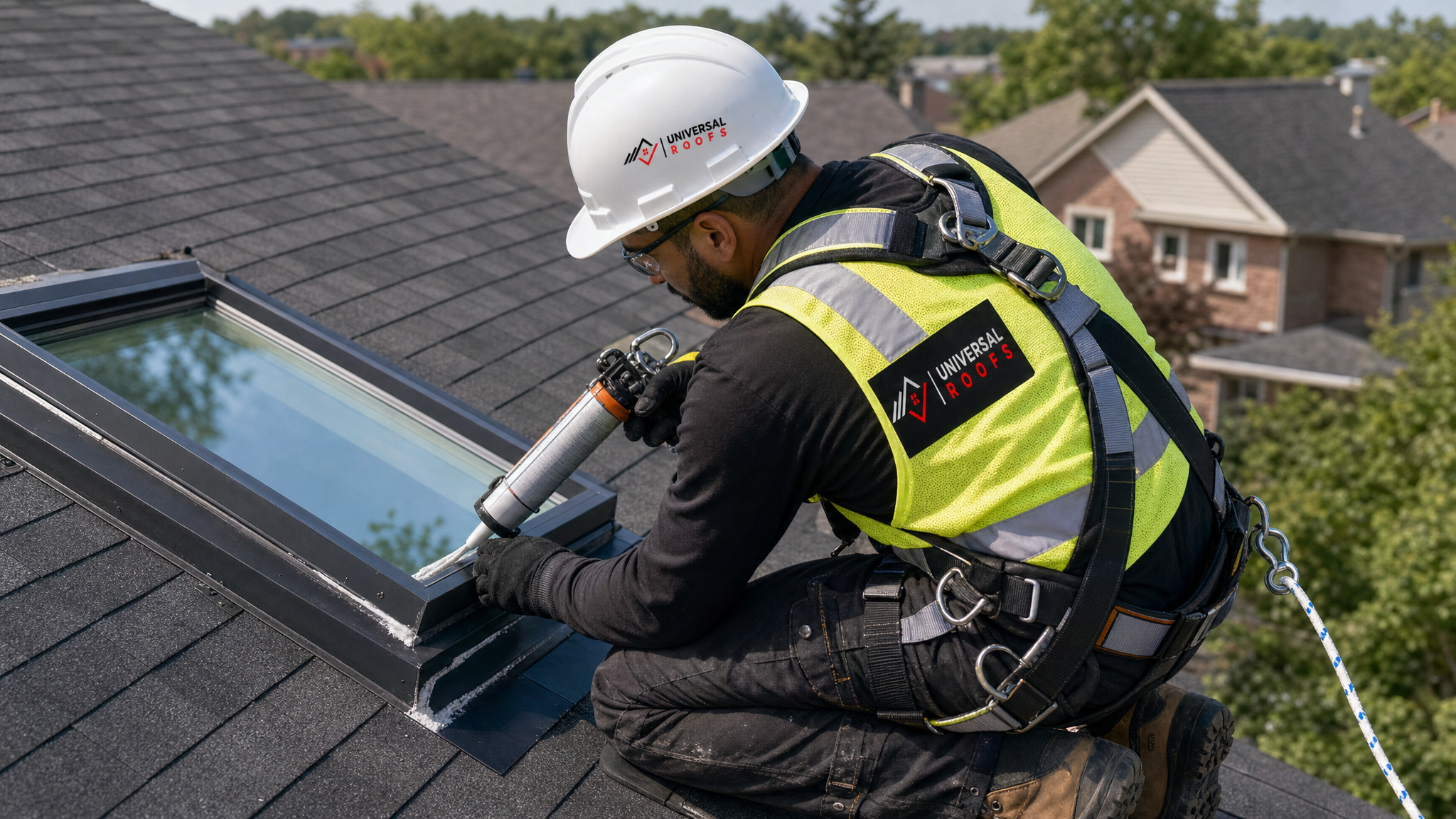
Not every skylight problem calls for full replacement. In many cases, a targeted repair restores the wind resistance of an otherwise sound unit. The right technique depends on which component has failed.
Reflashing the Curb
When flashing has lifted, corroded, or been improperly installed in the first place, reflashing is usually the most effective fix. This involves removing the old step flashing and counter-flashing, inspecting the curb and deck below for hidden rot or moisture damage, and installing new flashing with proper laps and fastening patterns. Reflashing done correctly restores the mechanical seal between the skylight curb and the surrounding roof, which is the single most important line of defence against wind uplift.
Gasket and Seal Replacement
The rubber or EPDM gasket that seals the glazing to the frame degrades over time from UV exposure and temperature cycling. Replacing this gasket is a relatively quick repair but requires precise fitting, since a gasket that is even slightly undersized will not compress evenly and will leave a gap for wind to exploit.
Fastener Re-Torquing and Replacement
Wood expands and contracts, which means the screws or fasteners holding a skylight frame to its curb can loosen slightly over years of service. Re-torquing existing fasteners, or replacing them with longer or corrosion-resistant alternatives, tightens the entire assembly back to its designed wind rating.
Sealant Renewal
Perimeter sealant beads, particularly where flashing meets the frame or where counter-flashing meets the wall or chimney, need periodic renewal. Old, cracked sealant is one of the most common entry points for wind-driven rain and one of the cheapest issues to fix if caught early.
| Repair Type | Typical Cost Range (CAD) | Typical Timeline | Wind Resistance Improvement |
|---|---|---|---|
| Sealant renewal | $150 – $350 | 1-2 hours | Moderate |
| Gasket replacement | $250 – $600 | Half day | Moderate to high |
| Fastener re-torquing/replacement | $200 – $450 | Half day | High |
| Full reflashing | $600 – $1,500 | 1 full day | Very high |
| Curb rebuild + reflashing | $1,200 – $2,800 | 1-2 days | Complete restoration |
These figures are general planning estimates for the GTA market and vary with skylight size, roof pitch, and accessibility. For an accurate number on your specific unit, it is best to request a free inspection rather than rely on averages.
Repair Versus Replacement: Making the Right Call
Homeowners often ask whether it makes more sense to repair an aging skylight or replace it outright. The honest answer depends on the age of the unit, the extent of the damage, and whether the underlying curb structure is still sound.
As a general rule, if a skylight is under 15 years old and the glazing itself is intact, a proper reflashing and reseal will usually restore full wind resistance at a fraction of replacement cost. But if the curb has rotted, the frame has warped, or the glazing has multiple stress cracks, repair becomes a temporary patch rather than a real fix. In those cases, our team typically recommends moving to skylight replacement so you are not paying for repairs on a unit that will need replacing within a year or two anyway.
| Condition | Repair Recommended? | Replacement Recommended? | Reasoning |
|---|---|---|---|
| Unit under 10 years old, isolated flashing failure | Yes | No | Curb and glazing still within service life |
| Unit 10-15 years old, gasket and sealant wear only | Yes | Maybe | Repair extends life several more years cost-effectively |
| Unit 15-20 years old with multiple failure points | Maybe | Yes | Cumulative wear often points to diminishing returns on repair |
| Visible curb rot or structural warping | No | Yes | Repair cannot restore structural wind resistance |
| Cracked or delaminating glazing | No | Yes | Glazing failure is not repairable in place |
If you are unsure which category your skylight falls into, a visual inspection from a licenced technician is the fastest way to know. This is also a good moment to review your attic ventilation and insulation, since skylight wells often interact with attic airflow and any moisture that has entered through a failing seal may already be affecting insulation performance above your ceiling.
What Happens When Repairs Are Delayed
The cost of delaying skylight repair rarely stays flat. A small flashing gap that would cost a few hundred dollars to fix today can, after a single severe wind event, turn into torn flashing, a cracked frame, water intrusion into the ceiling below, and even damage to insulation and drywall. We have seen cases across Toronto, Mississauga, and Vaughan where a $400 reflashing job that was postponed for a season turned into a $4,000 repair bill after wind lifted a section of flashing entirely off the curb during a spring storm.
Beyond the direct repair cost, there is also the risk to the rest of your roof system. Wind that gets underneath skylight flashing does not stop there; it can travel under adjacent shingles or membrane, working the failure point wider and threatening the surrounding roof repair zone as well. This is one of the reasons skylight maintenance should never be treated as separate from your overall roof maintenance plan.
Flat Roof Skylights Face Additional Wind Considerations
If your home or building has a flat or low-slope roof, skylight wind resistance depends heavily on how well the unit integrates with the surrounding membrane. Unlike sloped shingle roofs, where water and wind are directed away by gravity and overlapping shingle courses, flat roofs rely almost entirely on the quality of the seal between the skylight curb and the membrane itself.
On flat roofing systems, wind uplift at the corners and edges of a skylight curb is often the very first place a membrane begins to fail, since flat roof edges already experience the highest wind pressure of any part of the roof according to standard wind load engineering. Regular inspection of the membrane-to-curb transition is critical on these roof types, and any sign of membrane pulling away from the curb should be treated as an urgent repair, not a cosmetic item to address later.
DIY Inspection Versus Professional Assessment
Homeowners can do a basic visual check themselves between professional inspections. From inside, look for any daylight visible around the frame perimeter, staining on the drywall or trim surrounding the skylight well, and listen for whistling sounds during windy conditions. From the ground with binoculars, or safely from a ladder if you are comfortable doing so, look for lifted or discoloured flashing, gaps in sealant beads, and any visible movement in the frame during gusts.
That said, a true wind resistance assessment requires getting onto the roof to physically test flashing attachment, check fastener tension, and inspect the curb-to-deck connection, none of which can be done safely or accurately from the ground. Given the fall risk and specialized knowledge required, this is one area where we strongly recommend a professional assessment rather than a DIY approach, particularly for skylights installed on steep-slope roofs or above two-storey homes.
How Regional Weather Patterns Affect Repair Timing
Across the areas we serve, wind exposure and repair urgency can vary based on lot orientation and surrounding terrain. Homes in more open areas of Durham Region and parts of York Region tend to see higher sustained wind speeds due to less tree cover and building density compared to more sheltered lots in central Toronto. Meanwhile, homes closer to Lake Ontario, including many properties across Peel Region and Halton Region, can experience stronger lake-effect gusts, especially during fall and spring transition seasons.
None of this means homeowners in more sheltered areas can ignore skylight maintenance, but it does mean that if your property sits in a more wind-exposed location, annual inspection is even more important than the general two-year guideline some homeowners assume is sufficient.
A Practical Maintenance Schedule for Long-Term Wind Resistance
| Season | Recommended Task | Why It Matters | Estimated Time Needed |
|---|---|---|---|
| Spring (April-May) | Full visual and physical flashing inspection | Checks for freeze-thaw damage before storm season | 30-60 minutes |
| Summer (June-August) | Sealant and gasket check after heat cycling | UV and heat accelerate sealant breakdown | 20-30 minutes |
| Fall (September-October) | Fastener tension check and debris clearing | Prepares assembly for winter wind loading | 30-45 minutes |
| Winter (After major storms) | Post-storm visual check from inside and outside | Catches sudden damage before it worsens | 15-20 minutes |
Keeping to a schedule like this, and pairing it with a professional inspection at least once a year, is the most reliable way to ensure your skylight continues performing at its designed wind resistance rating year after year.
Why Professional Installation Quality Matters From Day One
It’s worth noting that many of the wind resistance problems we are called out to repair actually trace back to installation shortcuts made years earlier, not simply age or weather. Incorrect flashing laps, insufficient fastener spacing, or the wrong gasket material for the local climate can all shorten the effective wind-resistant life of a skylight by years. This is why, whether you are having a skylight repaired or considering a full skylight replacement, it pays to verify the contractor’s track record. You can review real feedback from homeowners across the GTA on our reviews page, and check common questions on our FAQ page before making a decision.
Since 2005, Universal Roofs has repaired and replaced thousands of skylights across the GTA, and the pattern is consistent: units installed with proper flashing technique and matched to the local climate hold up dramatically better in wind events than those installed with shortcuts. Learn more about our approach and history on our about page.
Why is skylight repair important for wind resistance in the first place?
How often should skylights be inspected for wind resistance in Toronto?
Can a skylight repair really improve wind resistance, or is replacement always better?
What are the first signs that a skylight is losing its wind resistance?
Does Toronto’s climate make skylight wind repair more urgent than in other regions?
How much does skylight repair for wind resistance typically cost in the GTA?
Need Help With Why Is Skylight Repair?
If you have noticed whistling, drafts, visible daylight, or lifted flashing around your skylight, do not wait for the next windstorm to find out how much worse it has gotten. The team at Universal Roofs has spent nearly two decades diagnosing and repairing exactly these wind resistance issues across the GTA.
Call us today at (416) 732-2421 or request a free inspection to get started.
Universal Roofs proudly serves Toronto, Mississauga, Brampton, Vaughan, Markham, Oakville and the GTA since 2005.