
A water stain spreading across the ceiling around your skylight is one of the most unsettling things a homeowner can discover. It usually shows up after a heavy summer thunderstorm or a spring melt, and by the time you notice the discolouration, water has often already been finding its way in for weeks. Understanding what causes water damage in skylights and how to fix it is the first step toward stopping the problem before it spreads into drywall, insulation, and framing.
Skylights are one of the best upgrades you can make to a Toronto-area home — they flood rooms with natural light and can dramatically change how a space feels. But they also introduce a penetration through your roof deck, and any penetration is a potential water entry point if it isn’t installed, sealed, and maintained correctly. The good news is that skylight leaks are almost always traceable to a small number of well-understood causes, and most are fixable without replacing the entire unit.
In this guide, we’ll walk through the most common causes of skylight water damage, how to tell them apart, what each repair typically costs, and when a patch job simply isn’t enough. If you’re dealing with an active leak right now, our team at Universal Roofs can usually diagnose the source and get you a same-week fix.
The Most Common Causes of Skylight Water Damage
Before you can fix a leaking skylight, you need to know which part of the system has failed. Skylight leaks fall into a handful of recurring categories, and the fix is completely different depending on which one you’re dealing with.
1. Failed or Corroded Flashing
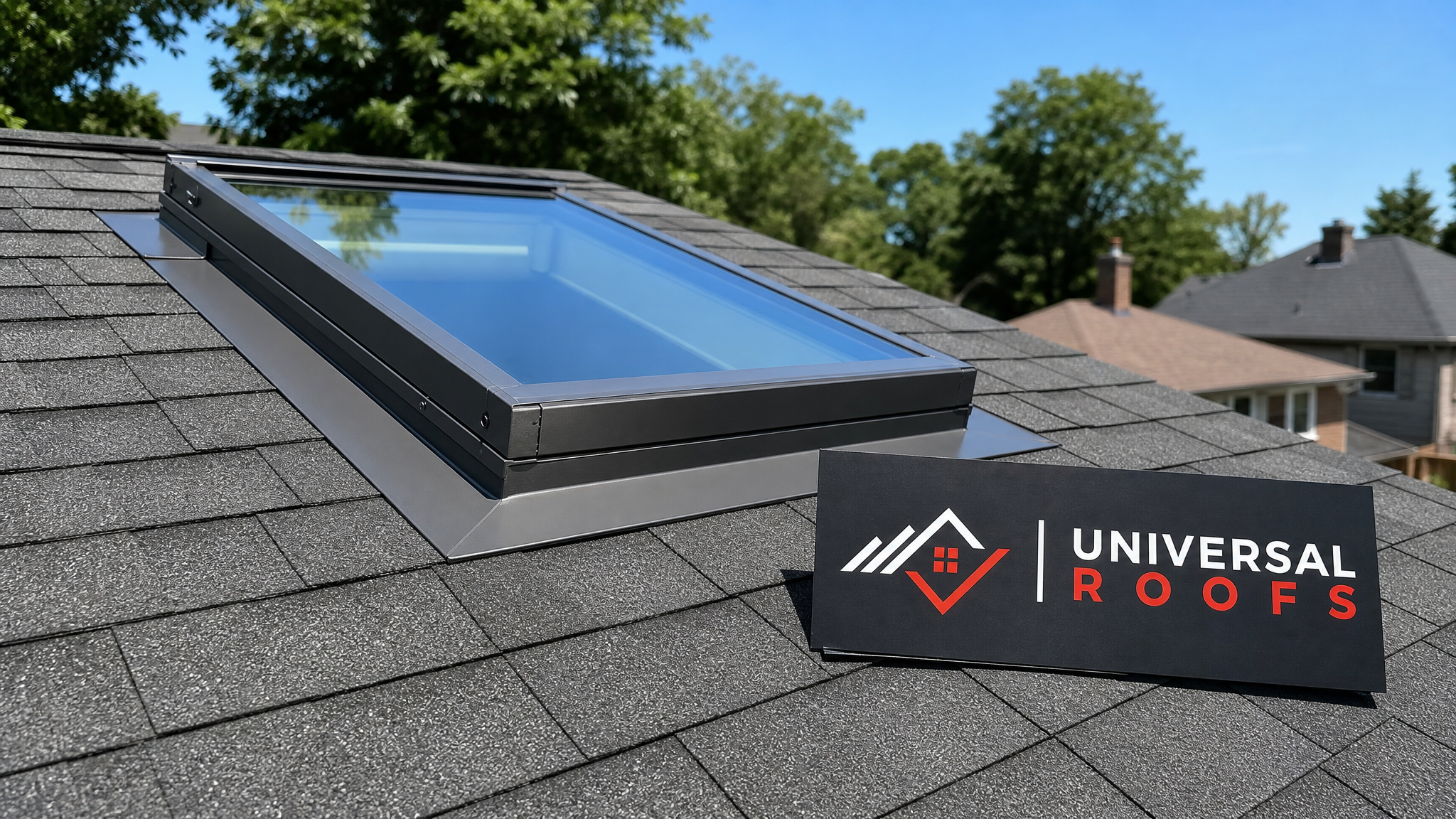
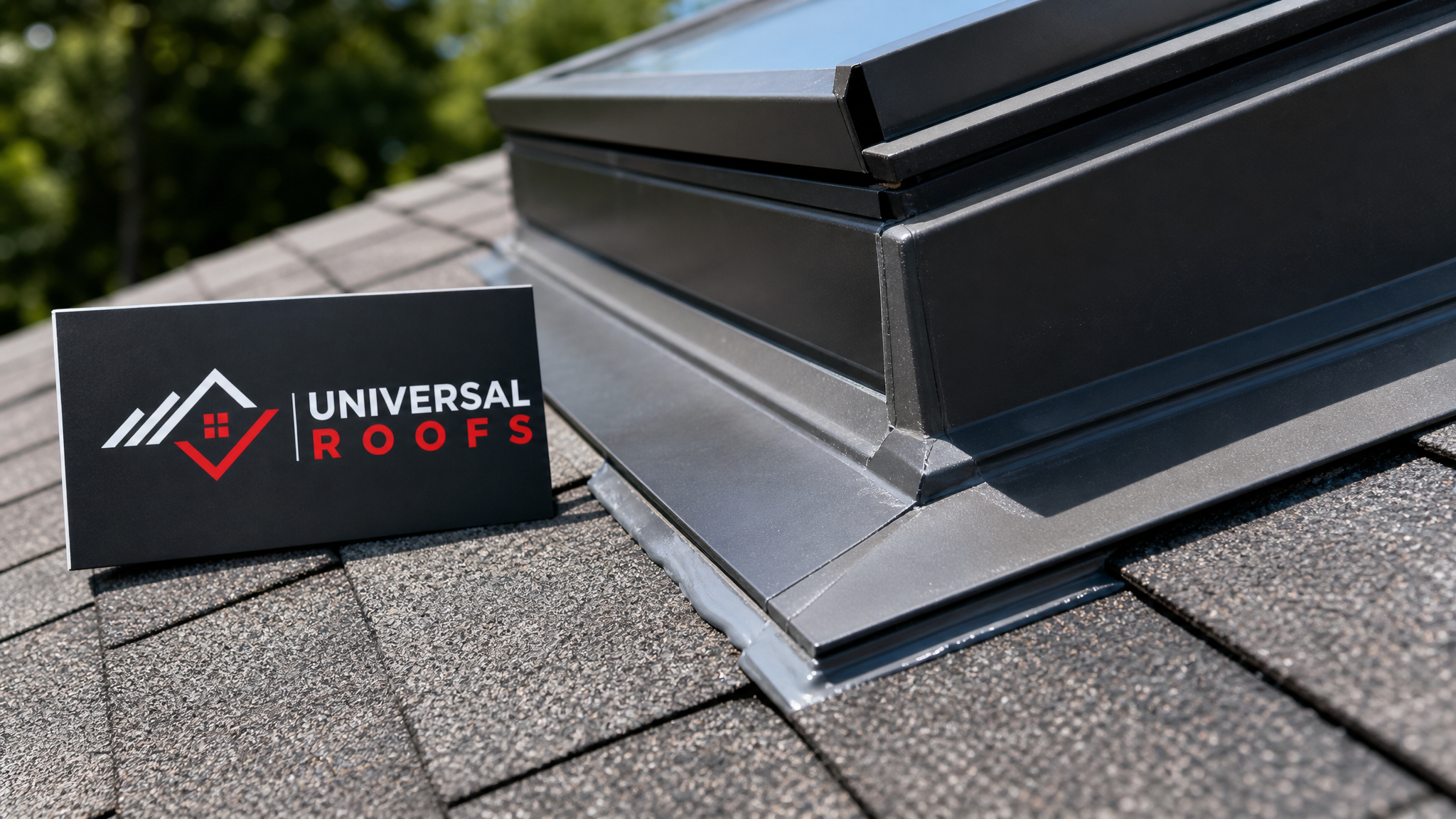
Flashing is the metal (or, on older installs, sometimes plastic) trim that wraps around the base of the skylight and ties into the surrounding shingles or roofing membrane. It is designed to shed water away from the skylight frame in layers, similar to how shingles overlap. Flashing fails when it corrodes, is punctured by falling branches or ice, or was never installed with the correct step-and-counter-flashing sequence in the first place. This is, by a wide margin, the number one cause of skylight leaks we see across Toronto, Mississauga, and the wider GTA.
2. Deteriorated or Missing Sealant
Sealant and rubber gaskets around the skylight glazing and frame naturally break down under UV exposure and temperature swings. In our climate, the freeze-thaw cycle is particularly brutal — sealant that’s flexible in July can become brittle and cracked by the following February, opening tiny gaps that widen with each freeze-thaw cycle.
3. Condensation Mistaken for a Leak
Not every water stain is a roof leak. Warm, humid indoor air hitting the cool glass or frame of a skylight condenses, and that moisture can drip down the interior just like a leak would. This is especially common in bathrooms, kitchens, and homes with poor attic ventilation, and it tends to show up more in cold months — though poorly ventilated skylight wells can condense in humid summer weather too.
4. Cracked Glazing or Failed Seals Between Glass Panes
Older skylights, or lower-quality units, can develop cracks in the glazing or a failed seal between double-pane glass. A failed seal often shows up first as fogging or a cloudy haze between the panes before it progresses to an actual water leak.
5. Clogged or Poorly Designed Drainage Channels
Many skylights have small drainage channels built into the frame to direct incidental condensation or wind-driven rain back outside. When these fill with debris, pollen, or dead insects, water backs up and finds its way inside instead of draining out.
6. Improper Original Installation
A surprising number of skylight leaks trace back to the installation itself — insufficient underlayment, missing ice-and-water shield around the curb, incorrect fastener placement, or a curb height that’s too low for the surrounding roof slope. These issues can take years to surface, which makes them tricky to diagnose without an experienced eye.
How to Tell the Difference: Diagnostic Signs by Cause
Homeowners often assume any water near a skylight means the whole unit needs replacing, but the visual clues usually point to a specific cause. Use the table below as a starting diagnostic guide before you call in a professional.
| Symptom | Likely Cause | When It Typically Appears | Urgency |
|---|---|---|---|
| Stains along the outer edge of the ceiling opening | Failed flashing | During or right after rain/snowmelt | High |
| Water beading only on the inside of the glass | Condensation | Cold mornings or humid days | Low-Medium |
| Fogging or haze between glass panes | Failed insulated glass seal | Gradual, worsens over months | Medium |
| Dripping directly from the frame corners | Cracked or dried-out sealant | Heavy wind-driven rain | High |
| Musty smell with no visible stain yet | Hidden leak in the well or insulation | Ongoing, hard to pinpoint | High |
| Staining that appears only during ice storms | Ice damming above the skylight curb | Winter freeze-thaw events | Medium-High |
How to Fix Each Type of Skylight Water Damage
Once you’ve identified the likely cause, the fix generally falls into one of a few categories. Here’s what’s actually involved with each.
Re-Flashing the Skylight
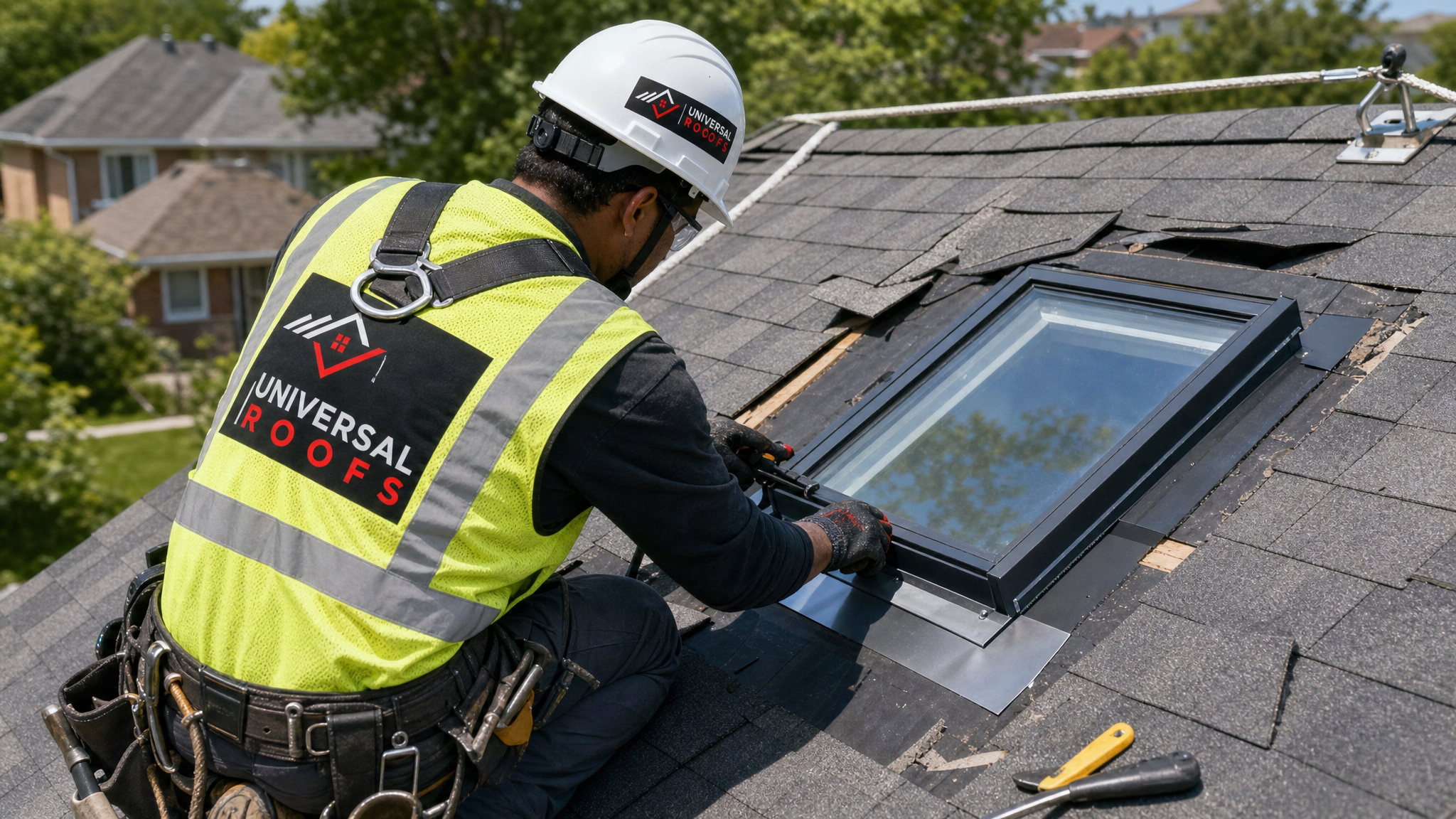
If the flashing has corroded, been damaged, or was installed incorrectly, the fix is to remove the surrounding shingles, strip out the old flashing, and install a new step-and-counter-flashing kit sized to the skylight curb. This is not a surface-level patch — it requires temporarily lifting shingles, laying new ice-and-water membrane around the curb, and re-shingling over the new flashing so water sheds correctly in every direction. It’s detailed work, and it’s the repair most likely to actually solve a persistent leak for good. You can see examples of completed flashing and skylight work on our skylights page.
Re-Sealing the Frame
When the issue is cracked or dried-out sealant rather than the flashing itself, the fix is more contained: removing the old, brittle sealant, cleaning the frame surface, and applying a fresh bead of roofing-grade sealant rated for exterior temperature swings. This is a legitimate short-term or even medium-term fix, but it’s worth noting that sealant is a wear item — it should be inspected annually and typically needs renewal every 3-5 years in our climate.
Improving Attic and Well Ventilation
If condensation is the culprit, no amount of resealing the exterior will fix it, because the moisture is coming from inside the house, not outside. The fix here is improving airflow around the skylight well and, in many cases, improving overall attic ventilation so warm, moist air isn’t getting trapped near the glass. Our attic ventilation services address this at the source rather than just treating the symptom.
Replacing the Insulated Glass Unit or the Whole Skylight
A failed seal between glass panes can’t be repaired — the sealed unit needs to be swapped out. Depending on the skylight’s age, brand, and condition of the frame and curb, it’s often more cost-effective to replace the entire unit rather than source a matching glass unit for an older model. This is especially true for skylights installed more than 15-20 years ago, where the frame material itself may be reaching the end of its service life. Our team handles this through our dedicated skylight replacement service.
Clearing Drainage Channels
This is the simplest fix on the list: carefully clearing debris from the built-in weep holes or drainage channels so water can flow back out as designed. It’s also one homeowners can sometimes do themselves with a soft brush, though we’d recommend having a professional inspect the channel design if clogging keeps recurring, since that can point to a deeper installation issue.
Repair Costs and Timelines in the GTA
Costs vary depending on the skylight’s size, roof pitch, accessibility, and the extent of any hidden damage to the roof deck or interior finishes. The figures below reflect typical ranges we see across Toronto and the surrounding regions in 2026.
| Repair Type | Typical Cost Range (CAD) | Typical Timeline | Expected Lifespan of Fix |
|---|---|---|---|
| Re-sealing frame/glazing | $250 – $600 | Half a day | 3-5 years |
| Full re-flashing | $800 – $2,200 | 1 full day | 15-20+ years |
| Attic/well ventilation improvement | $400 – $1,500 | 1 day | Ongoing (long-term fix) |
| Insulated glass unit replacement | $600 – $1,400 | Half to 1 day | 15-25 years |
| Full skylight replacement | $1,200 – $3,500+ | 1-2 days | 20-30 years |
| Interior water damage repair (drywall/paint) | $300 – $1,800 | 1-3 days | N/A |
These ranges assume a straightforward residential job with reasonable roof access. Steeper roof pitches, multiple skylights, or extensive hidden rot in the roof deck can push costs higher. It’s also worth remembering that interior water damage repair is a separate line item from the roofing fix itself — patching the leak doesn’t repair the stained drywall or damaged insulation, so budget for both if damage has already progressed.
Why Toronto’s Climate Makes This Worse
The GTA’s weather pattern is uniquely hard on roof penetrations like skylights. Winters bring repeated freeze-thaw cycles that expand and contract sealant, metal flashing, and even the roofing membrane itself, gradually working tiny gaps open. Ice damming — where melted snow refreezes at the roof edge or around obstructions like a skylight curb — can force water backward under flashing that would otherwise shed water just fine in a straight downpour. Then summer brings intense thunderstorms with heavy, wind-driven rain that tests every seal at once.
This is also why a skylight that was watertight when installed can start leaking five, ten, or fifteen years later even if nothing visibly changed — the materials have simply fatigued from years of expansion, contraction, and UV exposure. Homeowners in Toronto, the Peel Region, York Region, Halton Region, and Durham Region all deal with essentially the same climate stresses, so the failure patterns we see are consistent across the whole service area.
Preventing Future Water Damage
Once a skylight leak is fixed, a bit of routine maintenance goes a long way toward making sure it stays fixed.
- Inspect sealant annually, ideally in spring after the freeze-thaw season has finished doing its damage.
- Clear debris from around the skylight curb and any drainage channels each fall before leaves and needles pile up.
- Check the attic for adequate insulation and airflow near the skylight shaft, especially if you notice recurring condensation.
- Have flashing inspected every few years, particularly after major storms, hail events, or if you notice granule loss on nearby shingles.
- Address small leaks immediately. A minor drip that seems manageable today can rot roof decking and drywall within a single wet season if ignored.
If your skylight is original to the home and more than 15 years old, it’s also worth having it assessed proactively rather than waiting for a leak. Our roof repair and roof replacement teams frequently find that a skylight nearing the end of its service life is a good opportunity to address surrounding roofing sections at the same time, since the shingles or membrane around an older skylight are often reaching a similar age.
DIY vs. Professional Repair: What You Can (and Shouldn’t) Handle Yourself
Not every skylight issue requires a professional, but the margin for error is smaller than it looks. Here’s a realistic breakdown of what’s reasonable to tackle yourself versus what warrants a licenced roofer.
| Task | DIY-Friendly? | Risk Level | Recommended Approach |
|---|---|---|---|
| Clearing visible debris from the skylight well | Yes | Low | Soft brush, from inside where possible |
| Wiping condensation and monitoring recurrence | Yes | Low | Track when/how often it happens |
| Applying new exterior sealant | Not recommended | Medium-High | Requires roof access and correct product |
| Diagnosing the true leak source | Not recommended | Medium | Hidden leaks often travel before they show |
| Re-flashing or replacing the unit | No | High | Licenced roofing contractor only |
The biggest risk with DIY skylight repair isn’t usually the sealant application itself — it’s working safely at height on a sloped roof, and correctly diagnosing where water is actually entering versus where it’s simply showing up on the ceiling. Water can travel several metres along framing or insulation before it drips through drywall, so the visible stain is often nowhere near the actual point of entry. This is exactly the kind of diagnostic work our technicians handle daily; you can read about past jobs on our reviews page or learn more about our approach on the about page.
When to Call a Professional Roofer
A same-day call is worth making if you notice any of the following: active dripping during or after rain, a growing or spreading ceiling stain, visible daylight around the skylight frame from inside, or a musty smell in a room with a skylight even without visible staining. Waiting on these symptoms rarely makes them cheaper to fix — water damage compounds, and what starts as a $300 sealant job can become a $2,000+ deck and drywall repair if left through even one more storm cycle.
If you’re anywhere across Toronto, the Peel Region, York Region, Halton Region, or Durham Region and need a skylight assessed, our team can typically get out within a few days for non-emergency inspections and same-day for active leaks. Check our FAQ page for answers to common questions about scheduling and what to expect during an inspection.
Flat Roofs and Skylights: A Special Case
Skylights installed on flat or low-slope roofs face a different set of challenges than those on steep pitched roofs. Without gravity doing as much of the work to shed water quickly, flat-roof skylight curbs need to be built higher and the surrounding membrane needs a more robust termination detail to prevent ponding water from finding any gap in the seal. If your home or commercial building has a flat roof section with a skylight, it’s worth having both assessed together — our flat roofing specialists routinely handle this exact combination and can flag ponding or membrane wear that would otherwise go unnoticed until it becomes a skylight leak.
What causes water damage in skylights most often?
How do I know if my skylight leak is condensation or an actual roof leak?
Can I fix skylight water damage myself?
How much does it cost to fix water damage around a skylight in Toronto?
Will homeowners insurance cover skylight water damage?
How long does a skylight repair take?
Need Help With What Causes Water Damage?
Water stains around a skylight rarely resolve themselves, and the longer a leak sits, the more expensive the eventual repair becomes. The team at Universal Roofs has spent nearly two decades diagnosing and fixing exactly this kind of issue across the GTA, from simple re-sealing jobs to full flashing replacements.
Call us today at (416) 732-2421 or request a free inspection to get started.
Universal Roofs proudly serves Toronto, Mississauga, Brampton, Vaughan, Markham, Oakville and the GTA since 2005.