
A drip during a summer thunderstorm, a stained ceiling below a skylight, or a musty smell in the attic after a heavy rain are all signs that something has gone wrong up top. Finding effective solutions for skylight leak repair and roof repair quickly matters because water rarely stays where it enters. It travels along rafters, soaks into insulation, and can show up on a ceiling metres away from the actual failure point, which is why so many Toronto homeowners misdiagnose the source of a leak.
Skylights and roofs fail for related but distinct reasons. A roof leaks because shingles, underlayment, or flashing lose their ability to shed water. A skylight leaks because the seal between the glass unit, the frame, and the surrounding roofing material breaks down. Because skylights are penetrations through an otherwise continuous roof plane, they are consistently one of the most common leak points on any home, and understanding both problems together is the fastest way to a lasting fix.
This guide walks through how to diagnose the real source of a leak, compares the repair methods available for both skylights and roofs, explains realistic costs and timelines, and outlines when a patch is enough versus when replacement is the smarter long-term investment. Whether you are dealing with an active drip right now or trying to get ahead of problems before the fall rains arrive, the goal is the same: stop water from getting in, and keep it out for good.
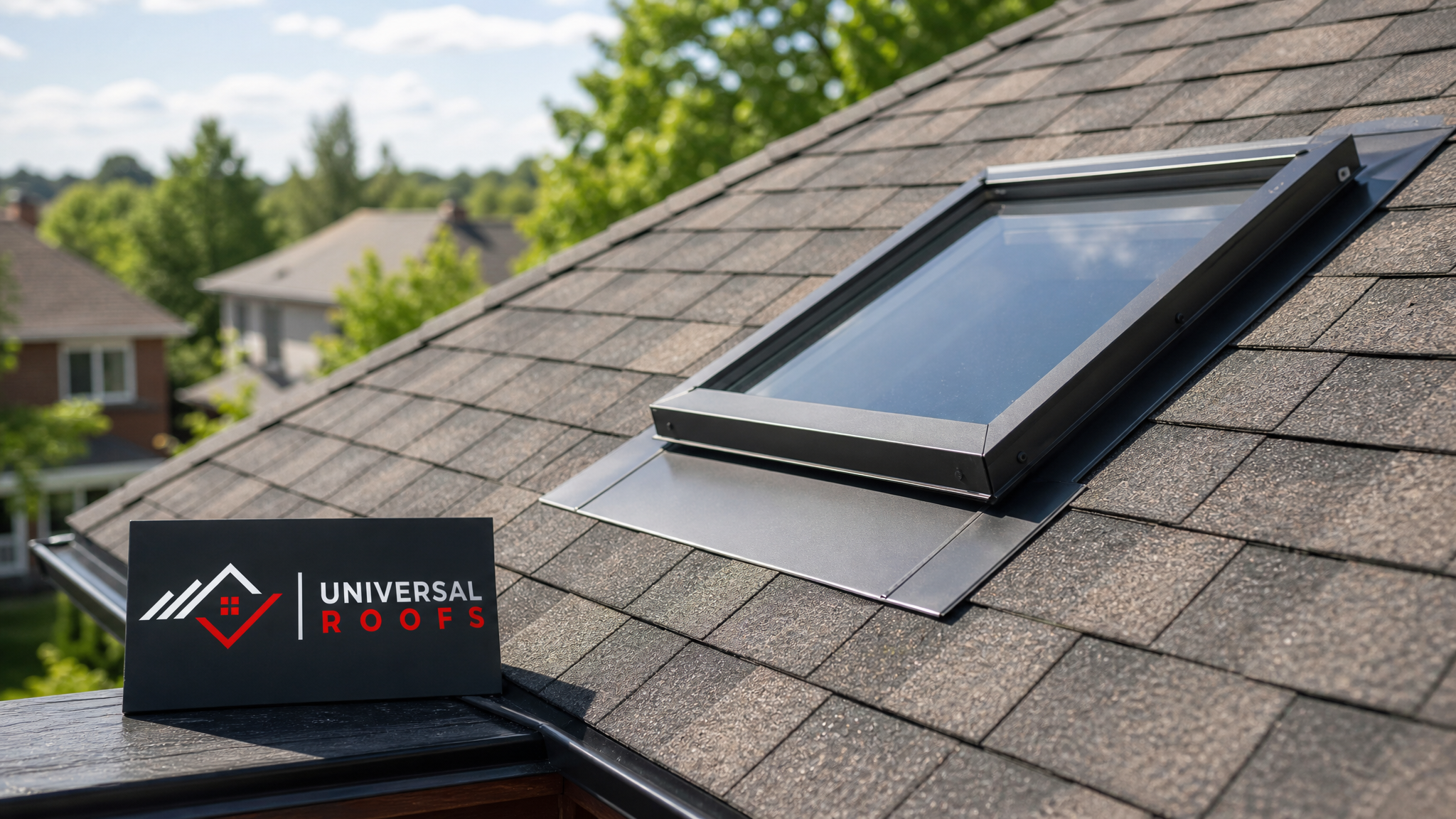
How to Diagnose the Real Source of a Skylight or Roof Leak
Before any repair begins, the leak has to be traced to its actual origin, not just where the water shows up inside the house. This is the step most homeowners skip, and it is the reason some repairs fail within a season. Water follows the path of least resistance along roof sheathing, rafters, and drywall, so a stain in the corner of a bedroom ceiling might trace back to a skylight flashing failure two metres away, or even to a completely unrelated roof vent.
Start with a visual inspection from inside the attic or roof space, if it is accessible, during or immediately after a rainfall. Look for wet insulation, dark staining on wood framing, or active dripping. From outside, examine the skylight curb (the raised frame the skylight sits on), the step flashing along its sides, and the head flashing above it for gaps, rust, or lifted edges. On the broader roof, check for cracked, curling, or missing shingles, exposed nail heads, and deteriorated caulking around any penetration such as a vent stack, chimney, or bathroom exhaust.
A simple garden hose test can help isolate the source when the leak is intermittent. Starting at the lowest point of a suspected area and working upward in stages, run water for several minutes at each stage while someone watches inside. This method takes patience, but it prevents the common mistake of resealing the wrong spot. For anyone uncomfortable getting on a roof or unsure what they are looking at, a professional roof repair assessment is the safer and often faster route, since an experienced technician can usually pinpoint the failure within minutes using known failure patterns.
| Leak Symptom | Likely Source | Diagnostic Method | Urgency |
|---|---|---|---|
| Staining directly under skylight edge | Failed skylight flashing or seal | Visual inspection of curb and flashing | High |
| Drip only during wind-driven rain | Lifted shingle or gap in step flashing | Hose test with wind simulation | Medium |
| Musty attic smell, no visible drip | Slow leak, condensation, or ventilation issue | Attic inspection after rainfall | Medium |
| Ceiling stain metres from skylight | Water tracking along rafters from a separate penetration | Full roof inspection, not just local area | High |
| Leak appears only in freeze-thaw season | Ice damming or cracked sealant from thermal cycling | Seasonal monitoring, attic insulation check | Medium |
Skylight Leak Repair Solutions Compared
Once the source is confirmed as the skylight itself, there are several repair paths depending on severity. The most common cause is degraded flashing, the metal or membrane material that channels water around the skylight opening and directs it back onto the shingles below. Flashing has a working life, and in Toronto’s freeze-thaw climate, repeated expansion and contraction cycles cause sealant to crack and metal joints to separate years before the skylight glazing itself fails.
A second common cause is a failed seal between the glass unit and its frame, which shows up as fogging between panes or water intrusion directly through the glazing rather than around it. This is different from a flashing problem and requires different tools and materials to fix properly. A third cause, especially on older skylights, is a deteriorated curb, the wooden or insulated frame the unit sits on, which can rot from years of trapped moisture.
Matching the repair method to the actual failure is what separates a lasting fix from a temporary patch. The table below compares the main approaches.
| Repair Method | Best For | Typical Lifespan of Fix | Relative Cost |
|---|---|---|---|
| Flashing resealing (caulk/sealant only) | Minor gaps, early-stage wear | 1-2 years | $ |
| Full step and head flashing replacement | Cracked, rusted, or separated flashing | 15-20 years | $$ |
| Glazing seal repair or unit reseal | Fogging or leaks through the glass unit | 5-10 years | $$ |
| Curb rebuild and insulation upgrade | Rotted or under-insulated curb framing | 20+ years | $$$ |
| Full skylight replacement | Unit is over 15-20 years old or repeatedly failing | 20-25 years | $$$ |
Sealant-only fixes have their place, particularly as a stopgap before winter or when a skylight is otherwise in good condition. But sealant is not a substitute for flashing, and applying caulk over a structural flashing gap tends to trap moisture rather than release it, which can accelerate rot in the curb. When a skylight has already needed two or more repairs within a few years, it is usually more cost-effective to move to skylight replacement rather than continuing to chase leaks on an aging unit.
When Roof Repair Is the Right Solution
Sometimes the skylight itself is fine, but the surrounding roof is the actual weak point. This is common on homes where the roof is nearing the end of its service life while the skylight was installed or replaced more recently. Asphalt shingles in the GTA typically last 20-25 years, but sun exposure, ice damming, and wind-driven rain can shorten that considerably, especially on south and west-facing slopes.
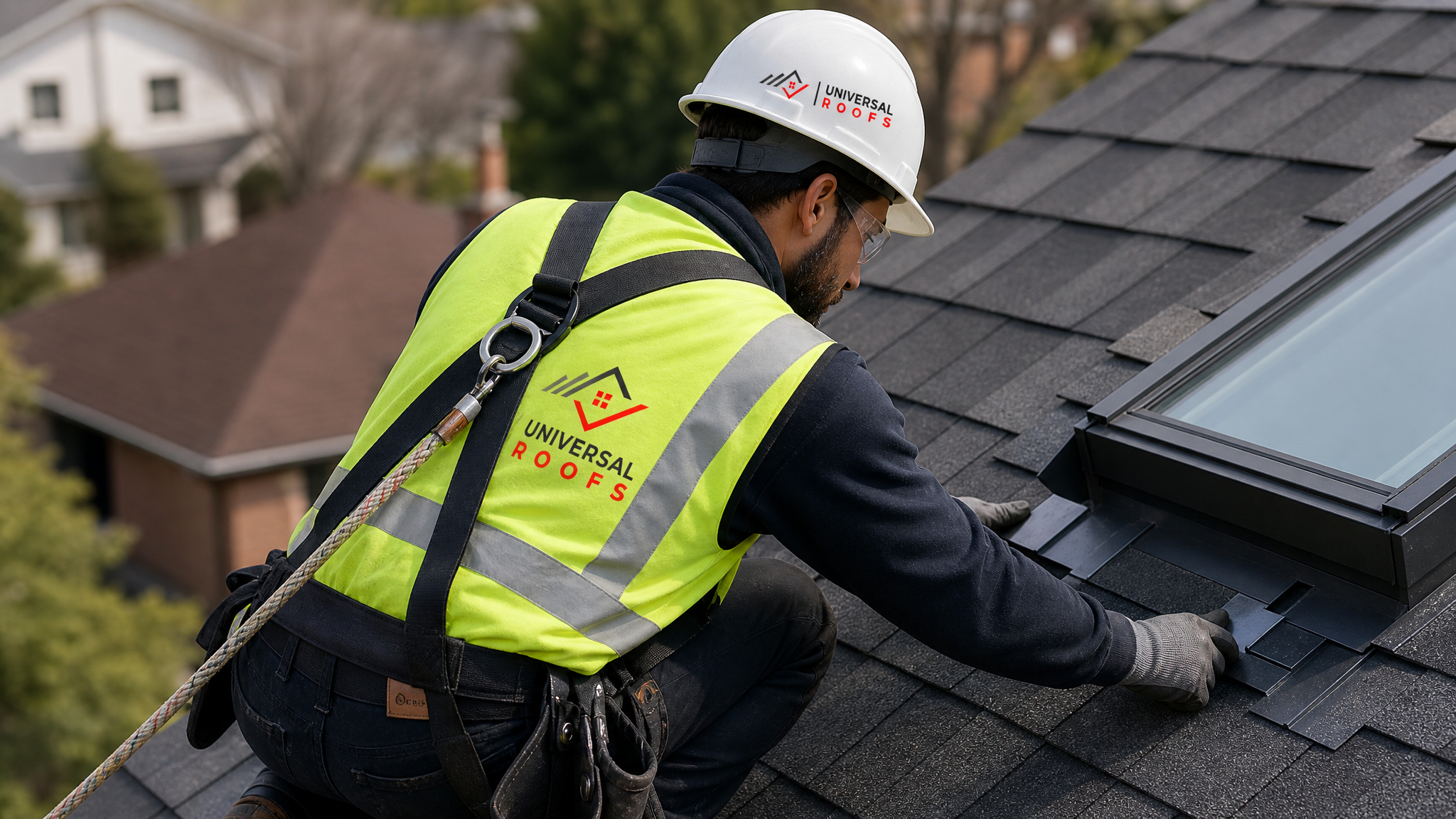
Roof repair solutions range from small, targeted fixes to broader sectional work. Spot repairs address a handful of damaged shingles, a cracked vent boot, or a small area of compromised underlayment. Sectional repairs replace an entire slope or valley when damage is concentrated in one area, such as around a chimney or in a valley where water volume is highest. Full roof replacement becomes the right call when shingles are failing broadly across the roof, when the underlayment has been compromised in multiple areas, or when repeated patch repairs have not resolved the underlying problem.
| Roof Issue | Recommended Solution | Estimated Timeline | When to Escalate |
|---|---|---|---|
| A few damaged or missing shingles | Spot shingle replacement | Half a day | If damage recurs in the same area within a year |
| Valley or chimney flashing failure | Sectional flashing and shingle repair | 1 day | If adjoining sections also show wear |
| Widespread granule loss, curling shingles | Full roof replacement | 1-3 days | Immediately if leaks are already active |
| Ice damming along eaves each winter | Attic ventilation and insulation upgrade plus ice-and-water membrane | 1-2 days | If damming has caused interior water damage |
| Flat or low-slope roof sections pooling water | Membrane repair or flat roofing system upgrade | 1-2 days | If ponding persists more than 48 hours after rain |
Flat or low-slope roof sections, common on additions, garages, and some skylight wells, need a different approach than sloped shingle roofs. Persistent ponding water is a strong sign that the membrane or drainage slope needs attention, and our flat roofing team addresses this with membrane repairs or a full system upgrade depending on the age and condition of the existing surface.
Why Skylights and Roof Leaks Are So Often Connected
It is worth understanding why these two problems show up together so frequently. A skylight is a hole cut into the roof deck, and every seam around that opening, the curb, the step flashing along the sides, the head flashing above, and the apron flashing below, is a potential entry point. When the surrounding shingles age and lose their ability to shed water efficiently, more water sits against that flashing for longer periods, accelerating its failure. Conversely, if a skylight’s flashing fails first, water can travel under adjacent shingles and cause damage that looks, at first glance, like a broader roofing problem.
This interdependence is exactly why an isolated fix, resealing just the skylight without checking the shingles around it, or replacing shingles without inspecting the flashing underneath, so often fails to resolve the issue for good. A proper repair treats the skylight and the surrounding roof section as one connected system.
Attic ventilation plays an underrated role here too. Poor ventilation traps warm, moist air against the underside of the roof deck, which contributes to condensation, accelerates shingle aging from beneath, and worsens ice damming in winter. If leaks keep recurring despite repeated flashing repairs, it is worth having the attic ventilation and insulation checked as part of the diagnosis, since a moisture problem originating inside the attic can mimic the symptoms of an external roof leak.
Repair Versus Replacement: Making the Right Call
Homeowners often want a simple answer to whether they need a repair or a full replacement, but the honest answer depends on age, extent of damage, and repair history. As a general rule, a single, well-defined leak on a roof or skylight installed within the last 10-15 years is usually a repair situation. Recurring leaks, visible interior damage, or a roof and skylight both original to a home built more than two decades ago point toward replacement being the more sound investment.
Cost is naturally a factor, but it should be weighed against the cost of repeated repairs and the risk of water damage to framing, insulation, and drywall if a problem is deferred. A $400 flashing repair that fails again in 18 months has cost more than a $2,500 flashing and shingle section replacement that lasts 15-20 years. The following comparison summarizes the key decision points.
| Factor | Favours Repair | Favours Replacement |
|---|---|---|
| Age of skylight or roof section | Under 10-15 years | Over 15-20 years |
| Repair history | First-time issue | Second or third repair on same area |
| Extent of damage | Localized to one point | Spread across multiple areas |
| Interior damage present | None or minimal | Staining, rot, or mould visible |
| Energy efficiency concerns | Not a current issue | Old glazing or poor attic insulation |
Seasonal Timing and Toronto Climate Considerations
July is one of the more favourable months in the GTA for skylight and roof work. Shingles are pliable in warm weather, which allows for a better seal, and there is no snow or ice to work around. Summer storms, however, are exactly when existing weaknesses reveal themselves, since heavy, wind-driven rain puts more pressure on flashing and seals than a gentle winter melt does. If you noticed a leak during a recent thunderstorm, addressing it now, while conditions are dry and stable, is far easier and less costly than waiting until autumn rains or winter freeze-thaw cycles make the problem worse.
Toronto’s freeze-thaw cycles are one of the toughest tests any roofing material faces in Canada. Water that gets behind flashing or under shingles in the fall can freeze, expand, and force materials further apart over winter, turning a small gap into a much larger failure by spring. This is part of why proactive repair before the fall rainy season consistently saves homeowners money compared to reactive repair after a winter of freeze-thaw damage. Homeowners across our Toronto, Peel Region, York Region, Halton Region, and Durham Region service areas see this pattern every year, and the advice is consistent regardless of neighbourhood: address flashing and seal issues while the weather favours a durable repair.
What a Professional Repair Actually Involves
A thorough skylight and roof leak repair follows a fairly consistent sequence, regardless of which contractor performs it, and knowing the steps helps homeowners evaluate whether a quote or completed job was done properly. First comes diagnosis, tracing the leak to its true source rather than its visible symptom. Second is removal of the compromised material, whether that is old flashing, damaged shingles, or degraded sealant, since new material applied over failing material rarely holds. Third is replacement with appropriate materials matched to the existing roofing system, using proper underlayment, ice-and-water membrane where needed, and correctly lapped flashing that directs water downward and outward rather than trapping it. Finally, the repaired area is tested, ideally with water, to confirm the fix holds before the crew leaves the site.
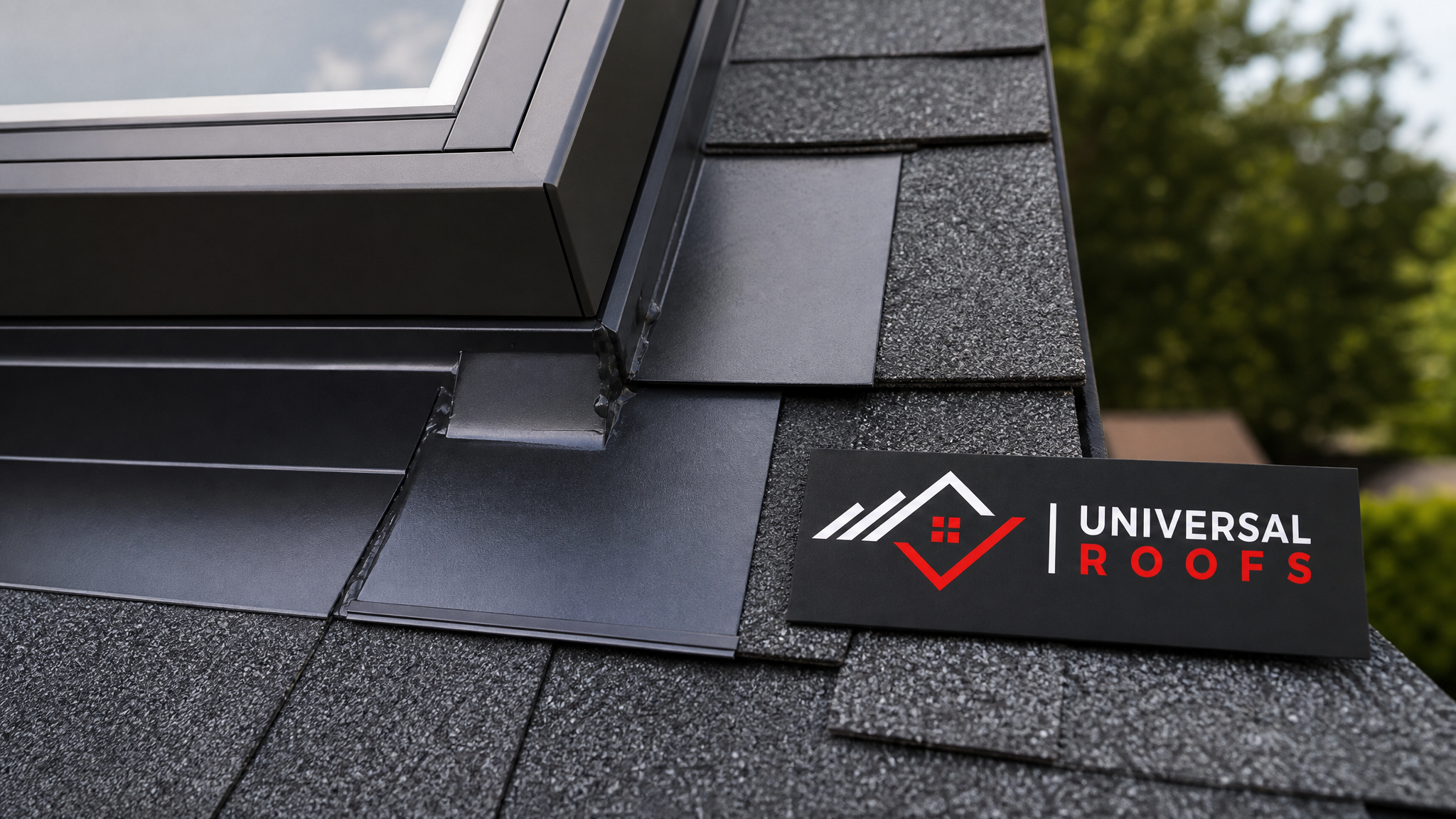
Materials matter as much as technique. Flashing should be corrosion-resistant metal, properly lapped shingle-style so each piece overlaps the one below it, never simply caulked flat against the roof deck. Sealants should be a roofing-grade product rated for the temperature swings of the local climate, not general-purpose caulk. On the shingle side, replacement shingles should match the existing product where possible to maintain a consistent seal and appearance, and nailing should follow manufacturer specifications for pattern and depth to avoid creating new leak points.
Maintenance Steps That Prevent Future Leaks
Once a leak has been repaired, a few ongoing habits reduce the odds of a repeat problem. A visual check of the skylight and surrounding shingles twice a year, in spring and fall, catches early signs of wear before they become active leaks. Keeping gutters and downspouts clear prevents water backup that can push moisture up under shingles near the eaves. Trimming overhanging branches reduces debris accumulation around the skylight curb, where leaves and needles trap moisture against flashing. And after any major storm, a quick look at the ceiling below the skylight and a glance at the roof from ground level can catch a new problem while it is still small and inexpensive to fix.
For homeowners who want a professional second opinion on a roof or skylight nearing the end of a repair cycle, reading through reviews from other GTA homeowners, checking our FAQ page for common questions, or learning more about how our team approaches these assessments can help set expectations before a technician arrives on site.
What are the most effective solutions for skylight leak repair and roof repair?
How do I know if my leak is coming from the skylight or the roof itself?
Can a skylight leak be repaired without replacing the whole unit?
How much does professional roof and skylight leak repair typically cost?
Is summer a good time to schedule skylight leak repair and roof repair in Toronto?
Will fixing a roof leak also stop a related skylight leak, or do they need separate repairs?
Need Help With Top Solutions for Skylight?
Whether the issue is a stubborn drip around a skylight curb or a broader roof section showing its age, Universal Roofs has the experience to diagnose the true source and apply a repair that actually lasts, not just one that holds until the next storm.
Call us today at (416) 732-2421 or request a free inspection to get started.
Universal Roofs proudly serves Toronto, Mississauga, Brampton, Vaughan, Markham, Oakville and the GTA since 2005.