
Revitalizing aging skylight systems essential repair work is one of the most overlooked jobs on a Toronto roof. Skylights bring in natural light and open up a home, but the seals, flashing, and glazing around them do not last forever. After ten or fifteen years of freeze-thaw cycles, summer heat, and driving rain, even a well-installed skylight can start to fail. The good news is that revitalizing aging skylight systems essential repair is almost always possible without a full replacement, provided the underlying frame and glazing are still sound.
At Universal Roofs, we have spent nearly two decades diagnosing, repairing, and restoring skylights across the GTA. This guide walks through the warning signs of an ageing skylight, the specific repair techniques that bring old units back to life, and the point at which repair no longer makes financial sense compared to replacement.
Why Skylights Age Faster Than the Rest of Your Roof
A skylight is essentially a hole cut into your roof deck, sealed with a combination of flashing, membrane, and glazing seals. Every one of those components is exposed to more thermal movement and UV exposure than a typical shingle field. That is why revitalizing aging skylight systems essential repair projects tend to come up years before a full roof replacement is needed.
The frame expands and contracts with temperature swings far more than the surrounding roofing material. Rubber gaskets and butyl seals harden and shrink. Aluminum flashing corrodes where it meets dissimilar metals. Insulated glass units lose their seal and fog up between the panes. Each of these failure points has its own repair approach, and understanding which one is failing is the first step toward a lasting fix.
Toronto’s climate makes this worse. We see deep winter cold snaps, spring freeze-thaw cycling, humid summers, and heavy autumn rain, sometimes all within the same calendar year. A skylight seal that would last twenty years in a milder climate might only last twelve here. If you are noticing drafts, staining, or condensation around a skylight installed more than a decade ago, it is worth having it assessed before small issues become structural ones.
Signs Your Skylight Needs Restoration, Not Replacement
Homeowners often assume any skylight problem means a full tear-out and replacement. In our experience, the majority of ageing skylight complaints can be solved through targeted repair. Here is how to tell which category your skylight falls into.
| Symptom | Likely Cause | Repair Approach | Urgency |
|---|---|---|---|
| Water staining on interior trim | Failed flashing or sealant | Reflash and reseal | High |
| Fogging between glass panes | Broken insulated glass unit seal | Reglaze with new sealed unit | Medium |
| Whistling or drafts | Shrunk weatherstripping or gasket | Gasket replacement | Medium |
| Visible cracks in the curb | Wood rot or structural movement | Curb rebuild plus reseal | High |
| Chalky, discoloured frame | UV degradation of coating | Refinish or reglaze | Low |
If your symptoms match the top two rows of that table, act quickly. Water intrusion around a skylight rarely stays contained to the unit itself; it tracks along the roof deck and can damage insulation, drywall, and framing well before it becomes visible inside the home. Our roof repair team is often called out specifically for skylight-related leaks that started small and grew over one or two seasons.
Resealing: The First Line of Defence
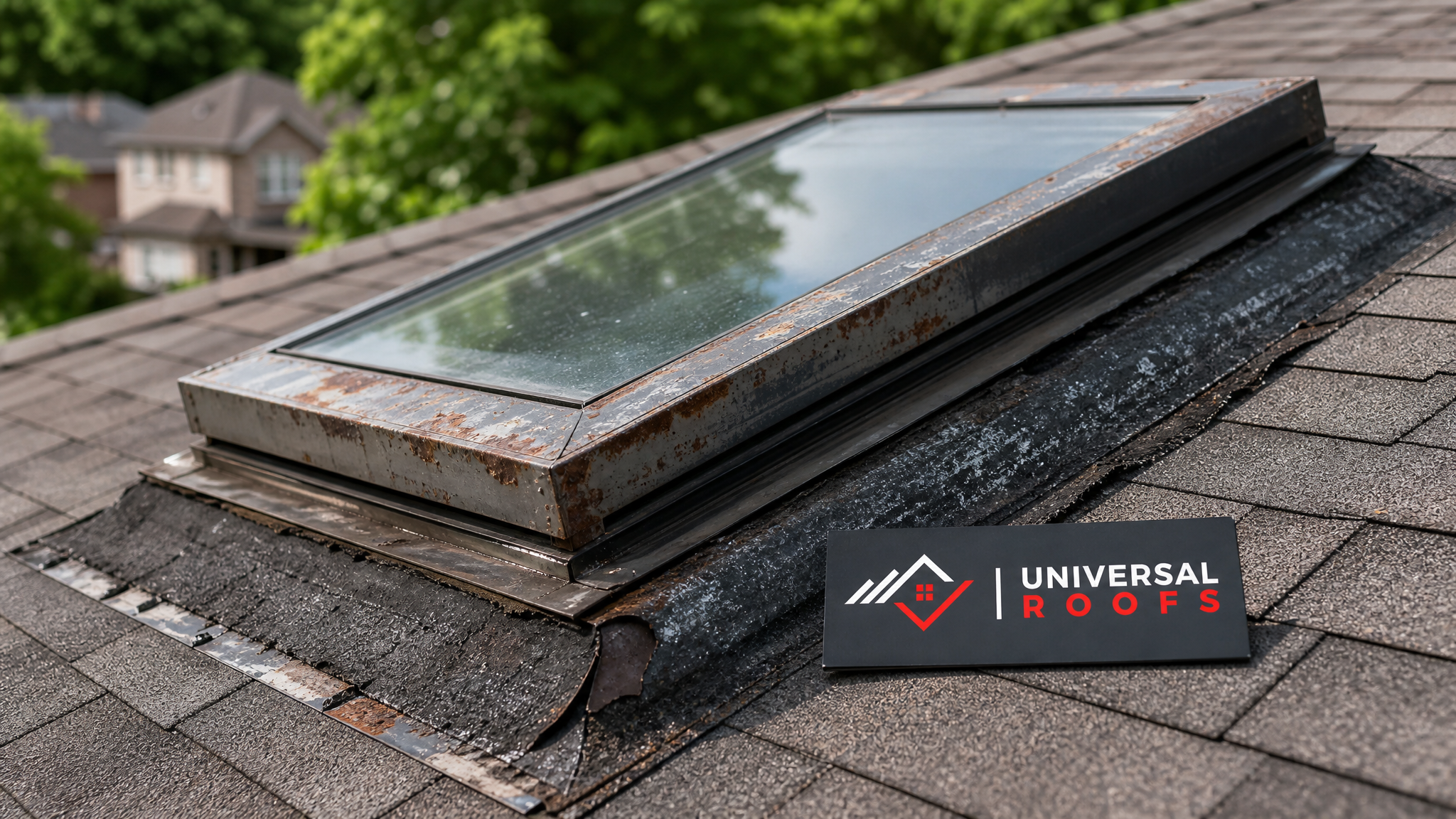
Resealing is the least invasive and most common repair we perform on ageing skylights. Over time, the original sealant used around the skylight curb, the glazing, and the flashing joints breaks down. UV exposure makes butyl and silicone sealants brittle, and once they crack, water finds a path inward.
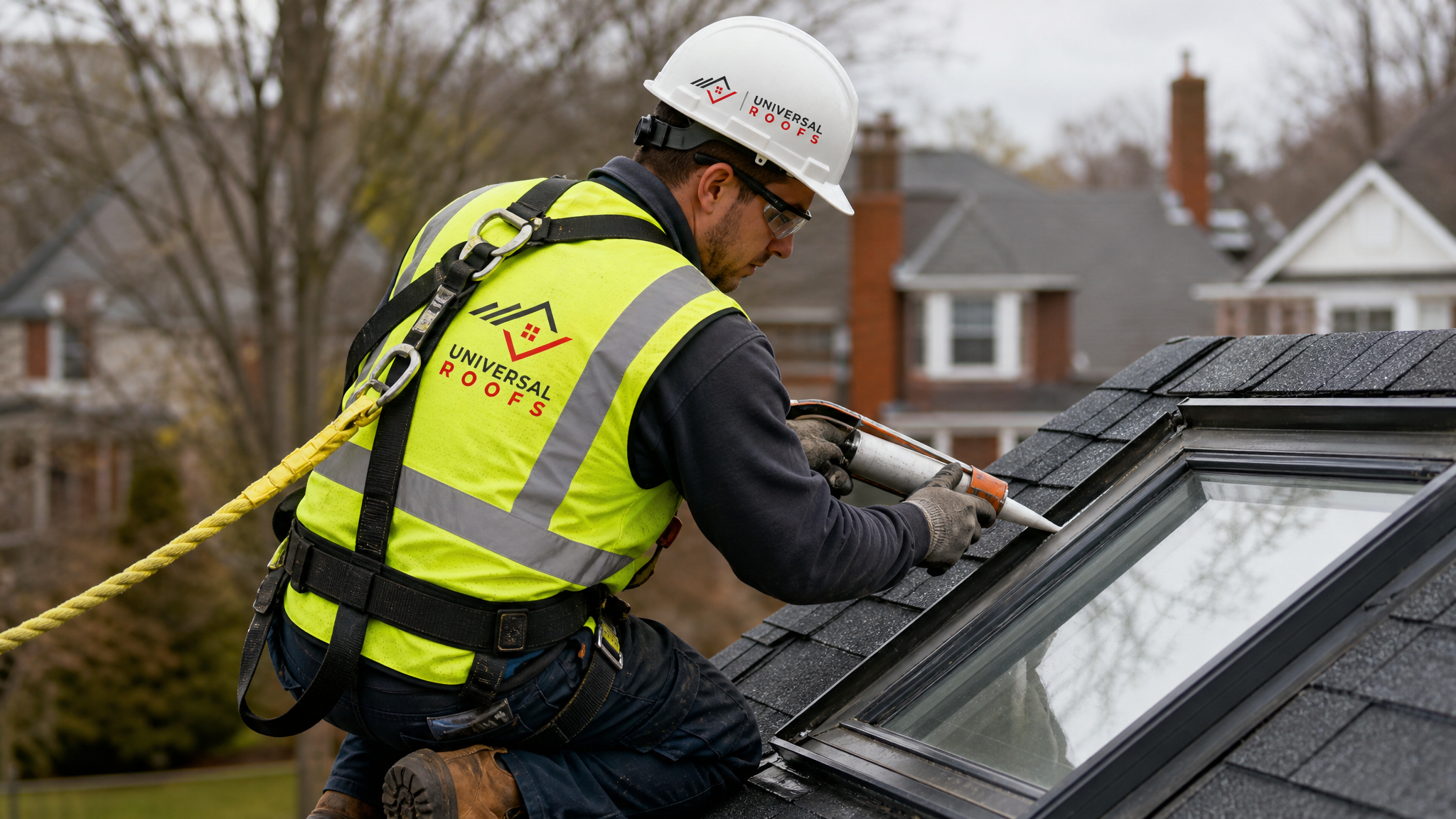
A proper reseal is not a matter of caulking over the old bead. Our crews remove all failed sealant back to clean substrate, inspect the surface underneath for hidden rot or corrosion, and apply a fresh, roofing-grade sealant rated for the specific material combination involved (aluminum-to-membrane, glass-to-frame, and so on). Skipping the removal step and simply layering new sealant over old is one of the most common mistakes we see from less experienced contractors, and it usually fails within a single season.
Resealing alone typically restores three to seven years of service life to an otherwise sound skylight, depending on the unit’s age and exposure. It is the most cost-effective repair on this list and should always be the first thing evaluated when a skylight starts to show minor symptoms.
Reglazing: Restoring Clarity and Insulation Performance
When the glass itself has failed, whether through a broken seal that lets moisture between the panes or physical damage such as cracking, reglazing becomes the right repair. Reglazing means removing the existing glazing unit and installing a new, properly sized insulated glass unit into the existing frame, rather than replacing the entire skylight structure.
This is where revitalizing aging skylight systems essential repair work delivers the most visible improvement. A fogged, cloudy skylight that has been an eyesore for years can look brand new after reglazing, and the home typically sees a real difference in heat loss and condensation once a modern low-E, argon-filled unit replaces a decades-old single or double pane.
Reglazing requires precise measurement, because even small tolerances matter when fitting a new sealed unit into an older frame that may have shifted slightly over time. It also requires temporary weatherproofing of the opening while the work is completed, which is why reglazing projects should always be scheduled around a stretch of dry weather.
Flashing and Curb Repair
The flashing around a skylight, whether step flashing, counter-flashing, or a continuous membrane collar, is arguably more important to long-term performance than the skylight unit itself. Flashing failure is the single most common cause of leaks we diagnose, and it is frequently misdiagnosed by homeowners as a problem with the glass or frame.
| Flashing Type | Typical Lifespan | Common Failure Mode | Repair Method |
|---|---|---|---|
| Step flashing | 20-25 years | Corrosion, nail-hole leaks | Full replacement with new courses |
| Counter-flashing | 20-30 years | Sealant failure at reglet | Reseal or replace with new bend |
| Membrane collar (flat roofs) | 10-15 years | UV cracking, shrinkage | Cut out and replace collar |
| Wood curb | 15-20 years | Rot from trapped moisture | Rebuild curb, then reflash |
On flat and low-slope roofs, which are common throughout Toronto’s older neighbourhoods, skylight curbs are especially prone to trapping water at the base if the surrounding membrane has degraded. Our flat roofing specialists frequently combine skylight flashing repair with a broader membrane assessment, since the two systems are directly connected and a failure in one accelerates failure in the other.
When a curb has rotted, patchwork repair is not an option. The rotted section needs to be cut out and rebuilt with pressure-treated lumber or a suitable composite, properly tied into the surrounding roof deck, before any new flashing is installed. Attempting to reflash over a compromised curb only delays the inevitable and can mask a much larger structural problem.
Upgrading Glazing and Insulation During Restoration
Restoration is also an opportunity for improvement, not just a return to original condition. Many skylights installed fifteen or twenty years ago used single-pane or basic double-pane glass with minimal coatings. When we reglaze an older unit, we almost always recommend upgrading to a modern low-E, argon-filled insulated glass package.
The performance difference is substantial. A homeowner who upgrades glazing during a restoration project typically notices less summer heat gain, less winter heat loss, and a significant reduction in condensation on the interior glass surface during cold snaps. Because the frame and curb are already proven and sound, this upgrade can often be done for a fraction of the cost of a full skylight replacement.
It is also worth inspecting the insulation around the skylight shaft itself during any restoration project. Older installations sometimes used minimal insulation in the light shaft connecting the skylight to the ceiling opening below, which creates a thermal bridge regardless of how good the new glazing is. Our attic team can assess whether shaft insulation should be upgraded at the same time, since opening up the surrounding area for skylight work is the easiest opportunity to address it.
When Repair No Longer Makes Sense
Not every ageing skylight is a good candidate for restoration. There is a point at which the cost and complexity of repair approaches or exceeds the cost of replacement, and a homeowner is better served by a new unit.
| Condition | Repair Feasible? | Recommended Action | Approximate Cost Range (CAD) |
|---|---|---|---|
| Sound frame, failed seal only | Yes | Reseal | $300-$700 |
| Sound frame, fogged glass | Yes | Reglaze | $600-$1,500 |
| Corroded frame with surface rust | Usually | Reflash, treat frame, reseal | $800-$2,000 |
| Structural curb rot | Sometimes | Rebuild curb, reflash, reglaze | $1,500-$3,500 |
| Cracked or warped frame body | No | Full replacement | $2,500-$6,000+ |
As a rule of thumb, if the frame body itself is cracked, warped, or has lost structural integrity, no amount of resealing or reglazing will produce a lasting result. In that situation, our roof replacement team can evaluate whether a full skylight swap makes sense as part of a broader roofing project, which often reduces overall labour costs compared to treating the skylight as an isolated job.
A useful gut check: if you have already paid for two or more repair visits on the same skylight within a five year span, replacement is usually the more economical long-term choice. Recurring repair costs add up quickly, and a new unit comes with a fresh warranty and modern energy performance.
What a Professional Restoration Inspection Involves
Because so many failure points look similar from the ground or from inside the home, an accurate diagnosis requires a hands-on inspection. When our technicians assess an ageing skylight, we check the condition of the glazing seal, the flashing at every junction, the curb structure, the interior finish for staining, and the surrounding roofing material for related wear.
We also test for airflow and drainage around the unit, since a skylight that traps water even briefly during heavy rain will fail faster than one that sheds water cleanly. Photographs are taken of any hidden damage found during the inspection so homeowners can see exactly what is happening before committing to a repair scope.
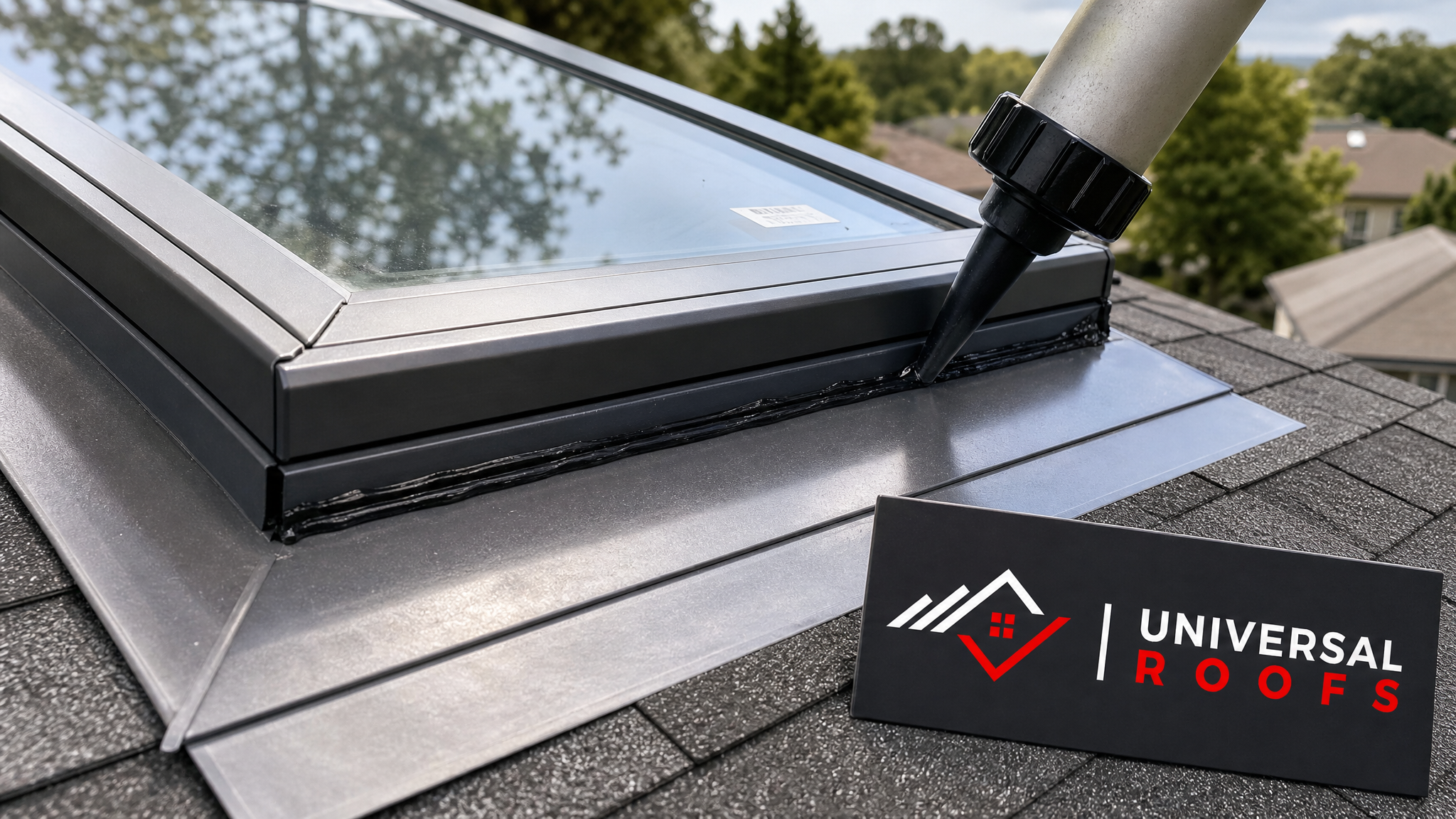
This inspection process is the foundation of any successful revitalizing aging skylight systems essential repair plan. Skipping straight to a repair without understanding the full scope of what has failed is how homeowners end up paying for the same fix twice. We always recommend reviewing our reviews from other GTA homeowners who have gone through this exact process, many of whom initially assumed they needed a full replacement and were pleasantly surprised by a more modest repair scope.
Maintaining a Restored Skylight
Once a skylight has been resealed, reglazed, or reflashed, a small amount of ongoing maintenance goes a long way toward protecting that investment. Keep the surrounding roof area free of debris, since leaves and branches trap moisture directly against the flashing. Have the seals visually checked during any general roof inspection, ideally once a year. Watch for any new staining on interior trim immediately after a heavy storm, since early detection is far cheaper to address than a leak that has been running for weeks.
If your home is in a neighbourhood with mature tree cover, consider a slightly more frequent inspection schedule, since falling debris and prolonged shade both accelerate wear on skylight seals and glazing. Homeowners throughout our Toronto service area often ask us to combine a skylight check with their regular roof maintenance visit, which is an efficient way to catch small issues before they become expensive ones.
What does revitalizing aging skylight systems essential repair actually involve?
How do I know if my skylight needs resealing versus a full replacement?
How long does a skylight reseal or reglaze typically last?
Why do Toronto skylights age faster than skylights in milder climates?
Can I upgrade the glass during a skylight restoration?
How much does skylight restoration typically cost in the GTA?
Need Help With Skylight Repair?
Since 2005, homeowners across the GTA have trusted Universal Roofs to diagnose skylight problems accurately and repair them right the first time, whether that means a simple reseal or a full curb rebuild. We would rather restore a sound skylight than sell an unnecessary replacement, and our inspection process is built around that principle.
Call us today at (416) 732-2421 or request a free inspection to get started.
Universal Roofs proudly serves Toronto, Mississauga, Brampton, Vaughan, Markham, Oakville and the GTA since 2005.