
A heavy GTA snowfall can turn a skylight from a favourite architectural feature into a source of worry. Snow piles up on the glazing, ice forms along the kerb, and homeowners are left wondering whether it is safe to leave the load alone or whether it needs to come off right away. The truth sits in between: some snow accumulation is normal and harmless, but left unmanaged it can trap heat, accelerate ice damming, and stress seals that were never designed to hold a metre of wet snow.
Toronto winters bring exactly the freeze-thaw cycling that makes skylight snow management tricky. A daytime thaw followed by an overnight refreeze can turn a soft snow cap into a solid ice sheet bonded to the glazing and flashing. Understanding ways to clear snow from skylights safely, and knowing when the task is better left to a professional, protects both your roof and the people trying to clear it.
This guide walks through eight practical, field-tested methods for clearing snow from residential skylights, the tools each one requires, the situations where DIY makes sense, and the point at which calling a licensed roofer is the smarter and safer call. We will also cover the underlying causes of snow buildup, a step-by-step removal process, realistic costs, and the maintenance habits that keep your skylights performing through every GTA winter.
Why Snow Builds Up on Skylights in the First Place
Skylights sit slightly proud of the surrounding roof plane, which means wind-driven snow tends to collect against the upslope edge and curb. Because glazing units are typically double- or triple-glazed with a sealed air gap, they also lose less interior heat than a standard roof deck, so snow on a skylight can persist longer than snow on the surrounding shingles nearby, or in some cases melt faster if the unit is older and poorly insulated. Both scenarios create problems: persistent snow adds weight and blocks light, while uneven melting refreezes into ice along the frame.
Several factors influence how much snow accumulates and how it behaves:
- Roof pitch and skylight orientation relative to prevailing winds
- Attic insulation and ventilation, which determine how much heat escapes through the roof deck
- The age and glazing type of the skylight unit itself
- Overhanging trees or nearby structures that create drifting patterns
- The condition of the flashing and curb seal around the unit
Homes with inconsistent attic insulation often see a distinct halo of melted snow around the skylight curb even when the rest of the roof stays covered. That halo is usually a sign of heat loss, not a defect in the skylight itself, though it does increase the odds of ice forming right where you least want it. If you notice this pattern repeatedly, it is worth having your attic insulation assessed alongside the skylight.
Is It Safe to Leave Snow on a Skylight?
In most cases, a few centimetres of fresh, dry snow on a skylight is not an emergency. Skylights sold for GTA climates are engineered to bear typical seasonal snow loads, and the glazing units used by reputable manufacturers are rated for far more weight than a single storm typically deposits. The concern grows when:
- Snow accumulation exceeds 30 to 45 centimetres, particularly if it is wet and heavy rather than light and powdery
- Snow has been sitting for multiple freeze-thaw cycles and has turned to dense ice
- You notice sagging, cracking sounds, or visible stress on the skylight frame
- Water staining appears on the interior ceiling or well around the skylight
- Icicles are forming along the skylight’s lower edge, indicating active ice damming
Any of these signs mean it is time to intervene rather than wait for a spring thaw to sort things out. Left unaddressed, trapped moisture can work its way past the flashing and into the roof deck, leading to interior leaks and, eventually, a need for full roof repair.
8 Effective Ways to Clear Snow from Skylights
1. Use a Roof Snow Rake From the Ground
A roof snow rake, sometimes called a roof rake, is a long-handled tool with a flat, angled blade designed to pull snow off a roof surface without you ever leaving the ground. For skylights positioned near the eave or within reach of an extendable pole, this is the safest first option most homeowners have. Pull the snow toward you in short strokes rather than pushing it, and stop as soon as you reach the shingle or glazing surface to avoid scratching either.
Roof rakes work best on single-storey sections or bungalow-style roofs where the skylight sits within 4 to 6 metres of grade. On steeper, multi-storey homes common across Toronto and the surrounding regions, the reach simply is not there, and this method should be skipped in favour of a professional visit.
2. Apply a Calcium-Chloride-Based Ice Melt (Sparingly)
For thin ice sheets that have formed along the skylight curb, a calcium chloride or magnesium chloride ice melt product, applied carefully and sparingly by hand from a stable ladder position, can loosen the bond between ice and flashing. Rock salt (sodium chloride) should be avoided outright, as it is corrosive to aluminum flashing and can degrade rubber gaskets over time. Only use products explicitly labelled safe for roofing metals, and never pour melt directly onto glazing, since rapid temperature differentials can stress glass.
3. Clear Snow With a Soft-Bristle Push Broom
Light, fresh, powdery snow can often be swept off a skylight using a soft-bristle push broom on an extension pole. This method is gentle on the glazing and works well as a quick maintenance pass after a light snowfall, before accumulation has a chance to compact or bond to the surface. Never use a broom with stiff plastic bristles or a metal-edged tool, as these can scratch coatings or crack older acrylic domes.
4. Run Roof and Gutter Heat Cables
Heat cable systems installed along the roof edge, gutters, and around the skylight perimeter provide an ongoing, low-maintenance way to prevent ice dams from forming in the first place. Rather than removing snow after the fact, heat cables create a channel for meltwater to drain safely off the roof instead of refreezing against the skylight frame. This is a preventive measure best installed in the fall, but it is worth mentioning here because homeowners dealing with repeat ice issues often ask about it mid-winter.
5. Improve Attic Ventilation and Insulation
Because uneven roof-deck heat loss is one of the biggest contributors to skylight ice damming, addressing the source, your attic, is one of the most effective long-term “removal” strategies available. A well-insulated, properly ventilated attic keeps the entire roof deck at a more uniform temperature, which reduces the freeze-thaw cycling that bonds ice to the skylight curb. This will not clear snow that is already there, but it dramatically reduces how often you need to intervene during the season.
6. Hire a Professional for Steep or High-Pitch Roofs
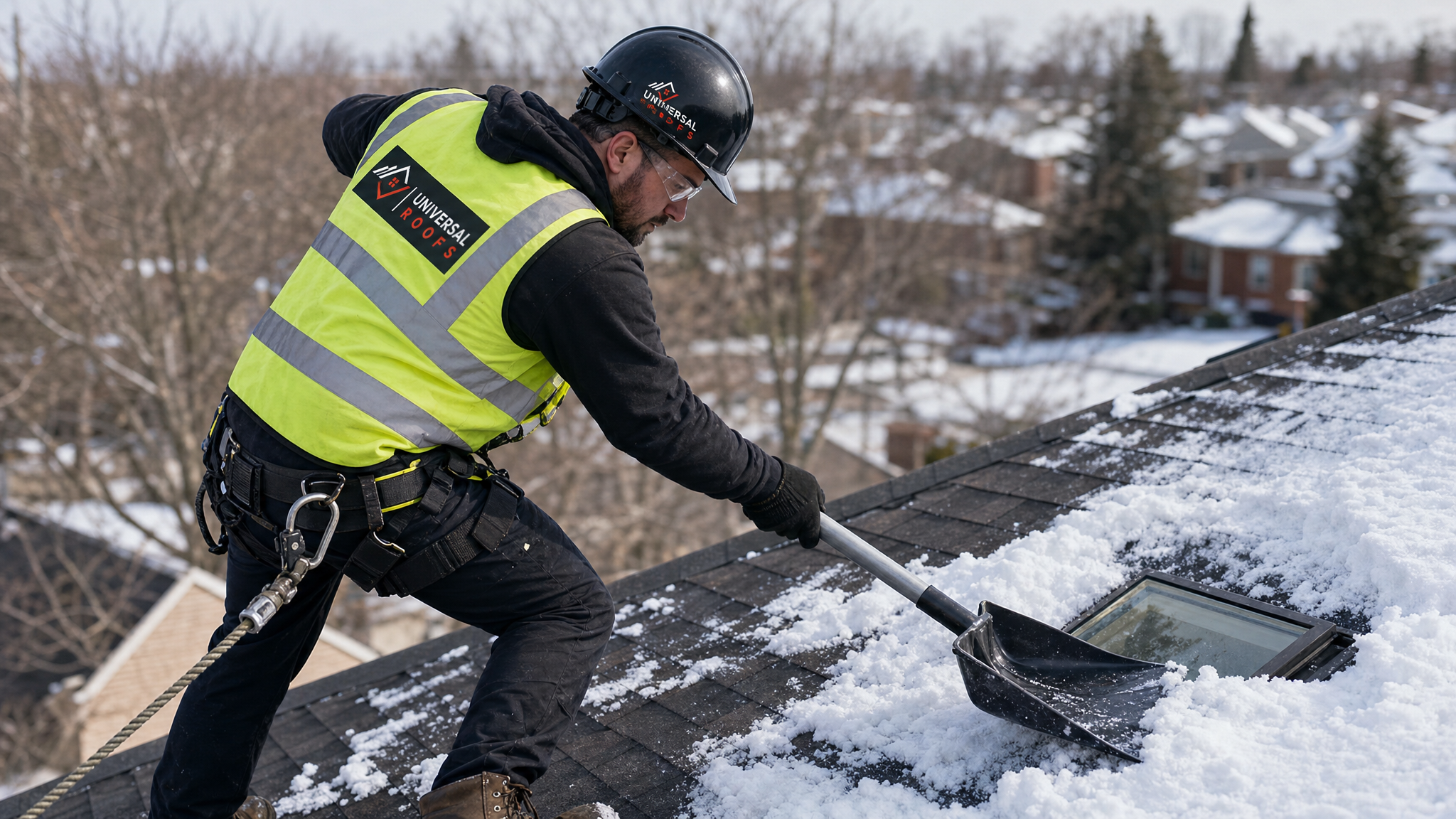
Once a roof pitch exceeds roughly 6/12, or the skylight is positioned more than one storey above grade, manual snow clearing from the ground stops being a realistic option, and getting onto the roof yourself introduces real fall risk. A professional roofing crew uses proper fall-protection harnesses, roped anchor points, and non-marring plastic shovels to clear snow directly from the roof surface without damaging shingles, flashing, or the skylight seal. This is the safest and most thorough method for GTA homes with dormered or high-slope roofs.
7. Use Interior Heat Strategically (With Caution)
Some homeowners raise interior temperature near the skylight well slightly during a heavy snow event to encourage gradual, even melting rather than allowing a large ice mass to build. This should be done cautiously and only as a supporting measure, since aggressive interior heating right beneath a snow-covered skylight can actually accelerate the freeze-thaw cycle at the glazing edge if the rest of the roof stays cold. It works best in combination with proper attic ventilation, not as a substitute for it.
8. Schedule a Pre-Winter Skylight Inspection and Seal Check
The most effective way to deal with snow-related skylight problems is to prevent them before the first snowfall. A pre-winter inspection checks the condition of the flashing, curb seal, and glazing gaskets, catching small gaps or degraded seals before they become entry points for meltwater. If your skylight is more than 12 to 15 years old and showing signs of wear, this is also the point where a skylight replacement often makes more financial sense than continued patch repairs each winter.
Step-by-Step: How to Clear Snow from a Skylight Safely
When snow does need to come off, following a consistent process reduces the risk of damage to the glazing, flashing, or yourself.
| Step | Action | Tools Needed | Notes |
|---|---|---|---|
| 1 | Assess snow depth and roof pitch from ground level | None | Decide whether ground-based tools are sufficient or a professional is required |
| 2 | Clear pathways and check for icicles or falling hazards below | None | Rope off the area beneath the skylight before starting work |
| 3 | Use a roof rake for reachable sections, pulling snow toward you | Roof snow rake | Stop before scraping the shingle or glazing surface directly |
| 4 | Sweep remaining light snow with a soft-bristle broom | Extension-pole broom | Avoid stiff bristles that can scratch coatings |
| 5 | Inspect for ice damming along the curb and flashing | Binoculars or zoom camera | Look for icicles, discoloured shingles, or interior water stains |
| 6 | Apply roofing-safe ice melt sparingly if ice is present | Calcium chloride melt | Never apply directly to glazing surfaces |
| 7 | Call a licensed roofer for anything beyond ground-based reach | N/A | Steep pitches and multi-storey skylights require professional equipment |
DIY vs. Professional Snow Clearing: Which Is Right for Your Home?
Not every skylight snow situation calls for the same response. The table below compares the two approaches across the factors that matter most to GTA homeowners.
| Factor | DIY Ground-Based Clearing | Professional Roof Clearing |
|---|---|---|
| Best for | Single-storey homes, bungalows, light-to-moderate snow | Multi-storey roofs, steep pitches, heavy ice buildup |
| Safety equipment required | Roof rake, stable footing, eye protection | Fall-protection harness, anchor points, roof-rated footwear |
| Risk of skylight damage | Moderate if tools are used carelessly | Low, due to trained handling and proper tools |
| Typical cost | $0 to $150 for tools (one-time) | $150 to $450 per visit, depending on roof access |
| Ability to inspect flashing and seals simultaneously | Limited to visual check from ground | Full hands-on inspection during the same visit |
| Recommended frequency | After each significant snowfall, if accessible | 1 to 2 times per winter, or after major storms |
What Snow Clearing Typically Costs in the GTA
Pricing for professional skylight snow clearing varies based on roof access, pitch, the number of skylights, and whether ice removal is required in addition to snow removal. As a general guide for the Greater Toronto Area:
| Service Type | Typical Price Range | What’s Included | Turnaround |
|---|---|---|---|
| Single skylight, ground-accessible | $100 to $175 | Rake clearing, visual seal check | Same day |
| Single skylight, roof access required | $200 to $350 | Full roof-based clearing, harnessed crew | Same day to 48 hours |
| Multiple skylights, one visit | $300 to $600 | All units cleared, flashing inspection included | 1 to 2 days |
| Ice dam removal (steam or manual) | $250 to $500 additional | Targeted ice removal without damaging shingles | 1 to 3 days, weather dependent |
| Pre-winter inspection and seal service | $150 to $300 | Flashing, gasket, and curb seal check | Scheduled in advance |
These figures are general guidance rather than a quote. Every roof is different, and pricing depends on the specific access, pitch, and condition of your skylight. For an accurate number, it is worth having a technician assess the property directly.
When to Call a Professional Instead of Doing It Yourself
While several of the methods above are safe for homeowners to attempt, there are clear situations where climbing onto the roof or attempting DIY ice removal is not worth the risk:
- The roof pitch is steep enough that footing is unstable, even with snow cleats
- The skylight is positioned above a second storey or higher
- You can see visible ice damming, icicles, or water stains on the interior ceiling
- Previous snow removal attempts have left scratches, cracked seals, or bent flashing
- The skylight is older than 15 years and has not had a recent inspection
- Weather conditions include high winds, freezing rain, or low visibility
Attempting to clear snow or ice from a roof in any of these conditions puts both the skylight and the person on the ladder at unnecessary risk. A licensed crew carries the harnesses, anchor points, and roof-rated footwear needed to work safely at height, something a homeowner rarely has on hand for a once-a-winter task. If your existing unit is showing repeated stress each winter, it may also be time to discuss skylight options that are better suited to heavy snow loads, or to have your broader roof condition reviewed, including flat roofing sections where skylights are frequently installed.
Preventing Future Snow and Ice Buildup on Skylights
Clearing snow after the fact is only half the equation. A handful of maintenance habits, applied consistently, reduce how often you need to deal with buildup in the first place.
- Schedule a fall inspection. Catching a degraded seal or gap in flashing before winter prevents a small issue from becoming a leak during the first thaw.
- Keep attic insulation and ventilation up to code. Even roof-deck temperatures reduce the freeze-thaw cycling that drives ice damming around skylight curbs.
- Trim overhanging branches. Trees that shade or drop debris near a skylight change how snow drifts and melts across the surface.
- Clean gutters before the first snowfall. Blocked gutters back water up toward the roof edge, compounding ice dam risk near nearby skylights.
- Consider heat cable installation. For roofs with a documented history of ice damming, this is one of the most reliable preventive investments available.
- Track the age of your skylight. Units approaching 15 to 20 years old lose seal integrity gradually, making winter buildup more likely to cause problems.
Homeowners across Peel Region, York Region, Halton Region, and Durham Region all deal with the same freeze-thaw pattern each winter, and the same preventive steps apply regardless of neighbourhood. The details, like roof pitch, tree cover, and skylight age, are what determine how much intervention any individual home needs.
Signs Your Skylight Needs More Than Snow Removal
Sometimes what looks like a snow problem is actually pointing to a deeper issue with the skylight itself. Watch for these signs during or after clearing:
| Sign | Likely Cause | Recommended Action | Urgency |
|---|---|---|---|
| Water stains on interior ceiling around the well | Failed flashing or seal | Book a leak inspection | High |
| Recurring ice dam in the same spot each winter | Uneven attic heat loss | Insulation and ventilation assessment | Medium |
| Visible condensation between glass panes | Failed seal on double or triple glazing | Skylight replacement quote | Medium |
| Cracking or popping sounds under snow load | Frame stress or aging structure | Immediate professional inspection | High |
| Discoloured or curling shingles near the skylight | Long-term moisture exposure | Combined roof and skylight inspection | Medium |
What are the safest ways to clear snow from skylights on a steep roof?
Can I use a regular shovel to clear snow off a skylight?
How much snow is too much for a skylight to hold safely?
Does ice melt damage skylight flashing?
Why does snow melt unevenly around my skylight?
How often should skylights be checked for snow and ice damage in the winter?
Need Help With 8 Effective Ways to?
Managing snow and ice around your skylights does not have to be a season-long guessing game. The team at Universal Roofs has been helping GTA homeowners protect their roofs and skylights safely since 2005, with the harnessed crews and roofing-safe tools needed to clear snow without risking damage to your home or your safety.
Call us today at (416) 732-2421 or request a free inspection to get started.
Universal Roofs proudly serves Toronto, Mississauga, Brampton, Vaughan, Markham, Oakville and the GTA since 2005.