
A leaking or foggy skylight does not always mean you need a full skylight replacement. Most skylight problems homeowners deal with across the GTA start small: a failed seal, a cracked pane of glass, worn flashing, or a blind mechanism that has stopped working. Tackled early and with the right repair, these issues can be resolved for a fraction of what a full unit swap costs.
The trouble is that “skylight repair” covers a wide range of jobs, and not every option is priced or suited the same way. Some fixes are genuinely inexpensive DIY-friendly tasks. Others look cheap on paper but only mask a bigger problem, which ends up costing more once the damage spreads to your attic insulation and roof deck. This guide breaks down the 7 best budget friendly skylight repair options available to Toronto-area homeowners, what each one actually costs, when it is the right call, and when it is a false economy that will cost you more later.
We wrote this guide with GTA weather specifically in mind. Freeze-thaw cycles through the winter, ice damming along roof valleys, and the summer humidity swings we are in right now all put unique stress on skylight seals and flashing. A repair that works fine in a drier climate can fail here within a season if it is not matched to local conditions.
What Counts as Budget Friendly Skylight Repair
Before comparing options, it helps to define the term. A budget friendly skylight repair is any fix that resolves the actual root cause of the problem, not just the symptom, at a cost significantly lower than removing and replacing the entire skylight unit. In the GTA, a full skylight replacement for a standard residential unit typically runs anywhere from $1,200 to $3,500 depending on size, glazing type, and roof access. Most of the repairs on this list land well under that, often in the $150 to $900 range.
The key word is “root cause.” A caulk-only patch over a flashing failure might cost $80 and look like a bargain, but if it fails again in four months because the underlying flashing is still corroded, you have not actually saved money — you have delayed and compounded the expense. Genuine budget friendly repair means matching the fix to the actual failure point: seal, flashing, glazing, hardware, or drainage.
Our roof repair crews see the same handful of skylight failure patterns across Toronto, Mississauga, Vaughan, and the surrounding regions every summer after the spring thaw exposes winter damage. The seven options below cover essentially all of them, ranked roughly from least to most involved.
Option 1: Reseal the Perimeter With Butyl or Silicone Sealant
The single cheapest and most common budget friendly skylight repair is a perimeter reseal. If your skylight is leaking only during heavy wind-driven rain, and there is no visible cracking in the glazing or damage to the surrounding flashing, a worn or shrunken sealant bead is often the whole story.
Over time, UV exposure and Toronto’s temperature swings (which regularly move from minus 20 in January to plus 30 in July) cause sealant to dry out, shrink, and pull away from the frame. This creates hairline gaps that let wind-driven rain in even though the skylight itself is structurally fine.
A proper reseal involves removing the old, failed sealant completely — not caulking over it — cleaning the substrate, and applying a fresh bead of a high-quality butyl or polyurethane sealant rated for roofing applications and UV exposure. Silicone can work but tends to perform worse over the long term on painted metal frames because it does not bond as well and can actually trap moisture underneath if applied incorrectly.
| Sealant Type | Typical Lifespan | Best For | Approx. Cost (Materials + Labour) |
|---|---|---|---|
| Butyl rubber | 10-15 years | Metal flashing joints, frame perimeter | $150-$300 |
| Polyurethane roofing sealant | 8-12 years | General frame-to-shingle transitions | $150-$350 |
| Silicone (roofing grade) | 5-8 years | Glass-to-frame gaskets only | $100-$250 |
| Acrylic latex caulk | 1-3 years | Not recommended for exterior roofing use | $50-$100 (low value) |
A word of caution: resealing only works if the flashing underneath is still intact. If a contractor pressures you into “just caulking it” without inspecting the flashing first, ask questions. That approach is cheap in the short term and expensive once water finds a new path under the shingles.
Option 2: Replace Worn Weatherstripping and Gaskets
Many residential skylights, especially vented or operable models, rely on rubber gaskets and weatherstripping rather than sealant alone to keep the seal watertight where the sash meets the frame. These components are designed to be replaceable and typically cost far less than resealing the entire perimeter.
Signs you need this specific repair rather than a full reseal: condensation forming only along the operable sash edge, a faint whistling sound during windy days, or visible cracking and stiffness in the rubber when you press on it. Gasket material degrades faster than the frame sealant because it flexes every time the skylight opens and closes, and UV exposure makes rubber brittle over several seasons.
Most manufacturers, including major brands sold through GTA distributors, keep gasket kits in stock for units up to about 15 years old. If your skylight is a well-known brand, this repair is often the cheapest line item on this entire list.
Option 3: Patch or Replace a Cracked Glazing Panel
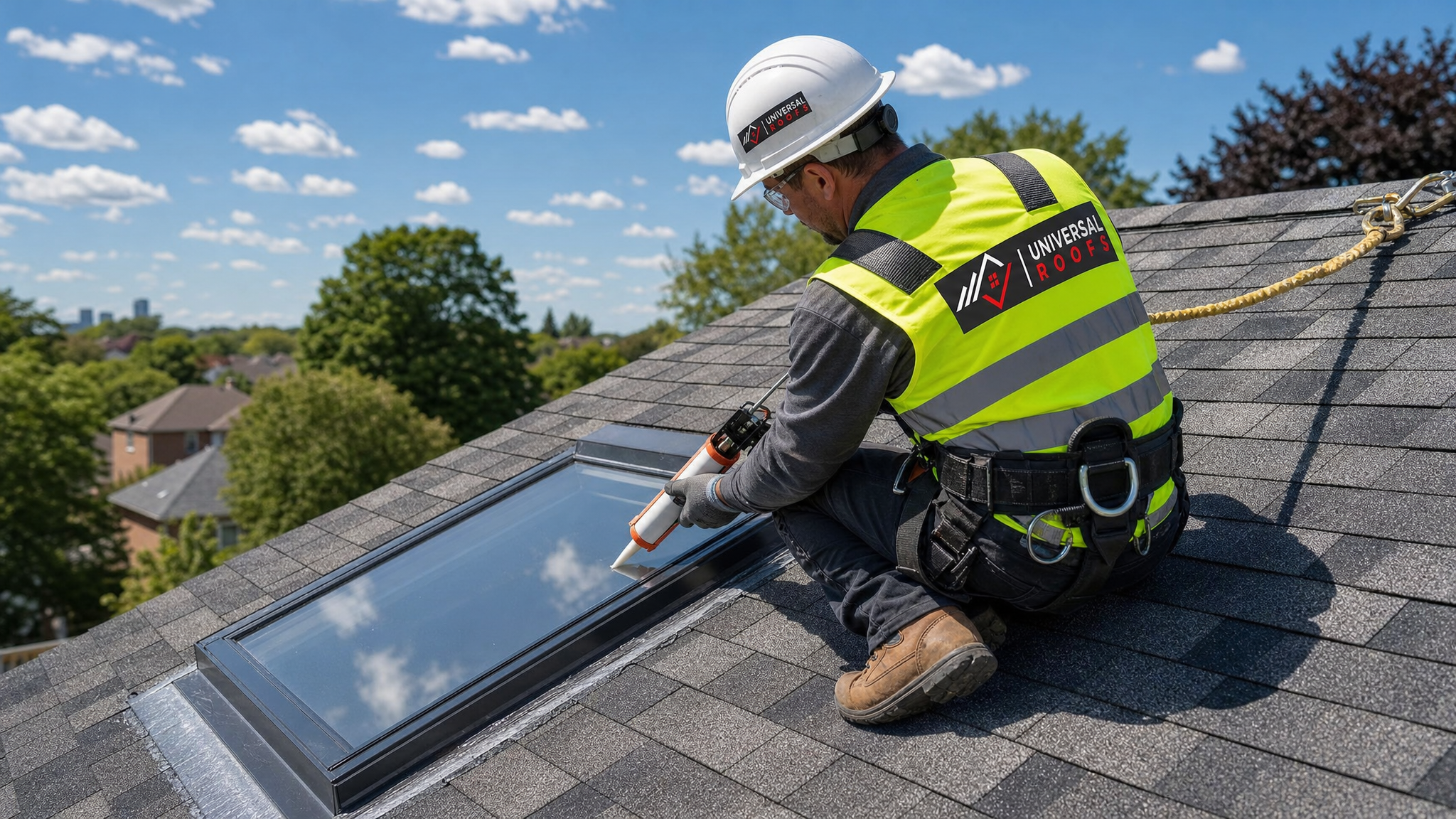
If the leak is coming from a crack in the glass or acrylic dome itself rather than the frame, sealant will not fix it. Depending on the severity, homeowners have two budget-conscious options here rather than jumping straight to full unit replacement.
For hairline stress cracks in tempered glass units that are not actively leaking, a specialized glass sealant designed for skylight glazing can stabilize the crack and stop moisture intrusion for a period of years. This is genuinely a stopgap, not a permanent fix, but it buys time and is inexpensive.
For a fully cracked pane, replacing just the glazing unit (the insulated glass or acrylic dome) while keeping the existing frame and flashing intact is significantly cheaper than a full skylight swap, provided the frame is still in good structural condition and the replacement glazing is available for your exact model.
| Glazing Issue | Recommended Repair | Approx. Cost | Expected Lifespan of Fix |
|---|---|---|---|
| Hairline stress crack, no active leak | Specialized glass sealant / crack stabilizer | $100-$250 | 1-3 years (temporary) |
| Fogged insulated glass unit (seal failure) | IGU (glass unit) replacement only | $350-$700 | 10-15 years |
| Cracked acrylic dome | Dome replacement, frame retained | $300-$600 | 10-20 years |
| Shattered or structurally compromised glass | Full skylight replacement recommended | $1,200-$3,500 | 20-25 years |
Option 4: Fix Fogging With Insulated Glass Unit (IGU) Replacement
Fogging between the panes of a double or triple-glazed skylight is one of the most common complaints we hear, and homeowners are often surprised to learn it is repairable without replacing the whole unit. Fogging happens when the seal around the insulated glass unit fails and lets humid air migrate between the panes, where it condenses against the cooler outer pane.
This is purely a glazing problem, not a structural one. If the frame, flashing, and hardware are all in good shape, replacing just the IGU restores clarity and insulation performance without the cost of tearing out the whole skylight and re-flashing the roof opening. This is one of the better value repairs on this list precisely because the labour to swap a glass unit is a fraction of a full replacement’s labour, while resolving the cosmetic and thermal issue completely.
One caveat specific to older skylights (installed before roughly 2010): some manufacturers have since changed glazing profiles, and an exact replacement IGU may not be available. In that case, a full unit replacement becomes the more sensible long-term option, and our skylights team can advise on compatible upgrades that fit the existing rough opening.
Option 5: Repair or Replace Step and Counter Flashing
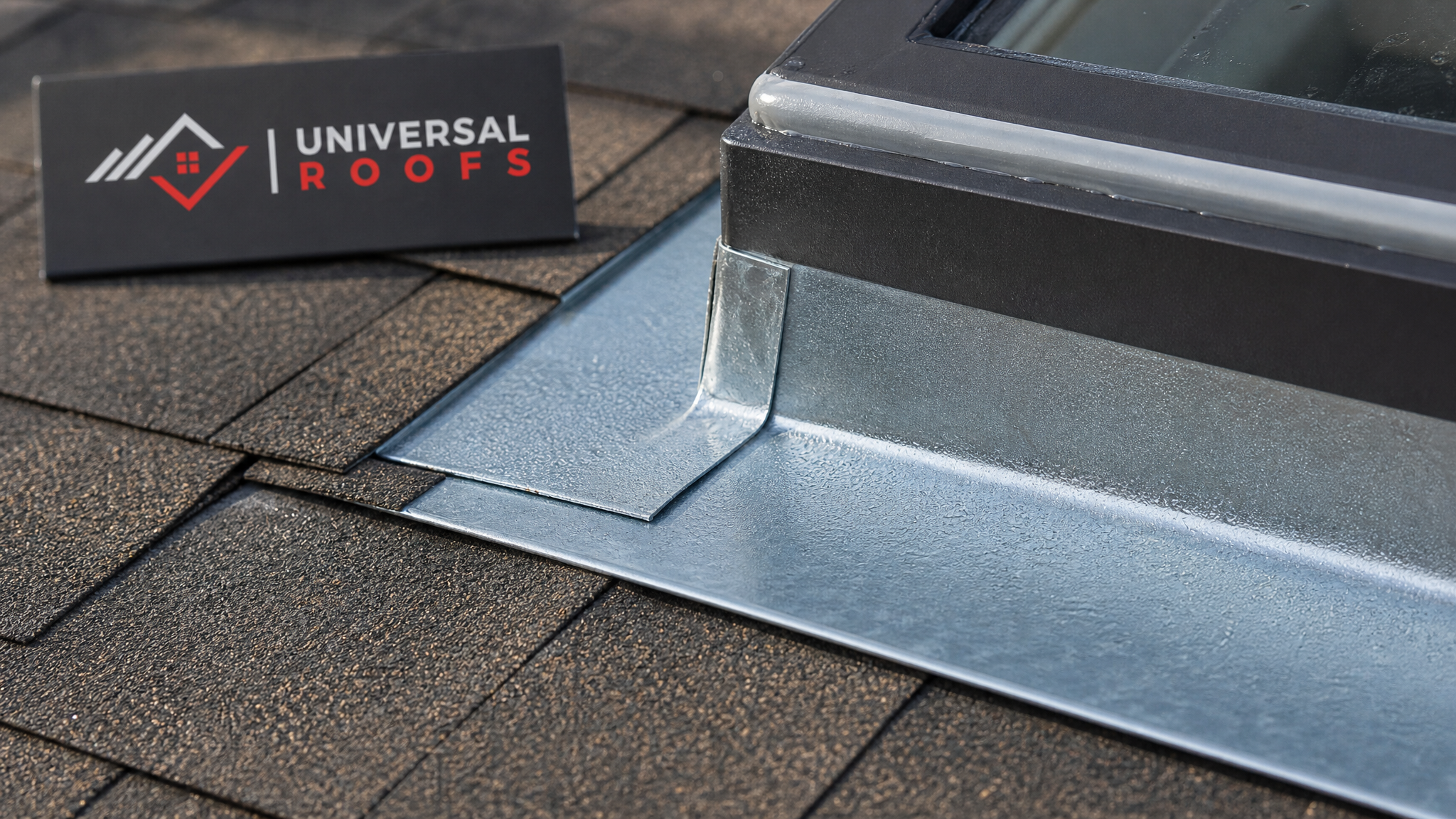
Flashing repair sits in a slightly higher cost bracket than the options above, but it is still dramatically cheaper than full replacement and is often the actual fix needed when a “resealed” skylight keeps leaking. Flashing is the metal barrier around the skylight curb that channels water around the opening and into the surrounding shingle courses.
Flashing fails from corrosion, physical damage (ice or falling branches), or improper original installation where the step flashing was not woven correctly into the shingle courses. Unlike sealant, flashing cannot simply be patched indefinitely — corroded or bent flashing needs to be removed and replaced with new step and counter-flashing pieces, then properly integrated with the surrounding shingles.
This is one of the repairs where hiring a professional matters most. Flashing looks simple but the sequencing (which piece overlaps which, and in what order relative to the shingle courses) determines whether water sheds correctly or pools and finds its way in. Our roof repair crews handle this as a routine job, typically completed in a single day for a standard residential skylight.
| Repair Option | Typical Timeline | Approx. Cost | Best When |
|---|---|---|---|
| Perimeter reseal | 1-2 hours | $150-$350 | Flashing intact, sealant only has degraded |
| Gasket/weatherstripping replacement | 1-2 hours | $100-$250 | Operable skylights with sash-level leaks |
| Glazing crack stabilizer | 1 hour | $100-$250 | Non-leaking hairline cracks, temporary fix |
| IGU (glass unit) replacement | Half day | $350-$700 | Fogging between panes, frame is sound |
| Step/counter flashing repair | Full day | $400-$900 | Recurring leaks despite resealing |
| Curb and drainage correction | Full day | $300-$800 | Water pooling on low-slope or flat roof curbs |
| Full skylight replacement | 1-2 days | $1,200-$3,500 | Structural frame failure, shattered glass, unit over 20 years old |
Option 6: Correct Curb Height and Drainage Issues
On low-slope and flat roofing sections, a surprisingly common and inexpensive fix is correcting the curb height or the drainage slope around the skylight base. Building codes call for a minimum curb height above the roof membrane specifically so water cannot pool against the skylight base during heavy rain or spring snowmelt.
If a previous roofing job lowered the surrounding roofline (through a re-roof or membrane build-up) without raising the skylight curb to match, water can start pooling right at the base even though the skylight itself and its flashing are otherwise fine. The fix is often as simple as building up the curb with treated lumber or adding proper tapered insulation and crickets to redirect water flow, rather than touching the skylight unit at all.
This repair is frequently overlooked because homeowners assume a pooling problem near the skylight must mean the skylight is broken, when the real issue is the surrounding roof geometry. Correcting it is inexpensive relative to unit replacement and often solves a leak that has resisted multiple sealant attempts.
Option 7: Interior Condensation Fixes That Prevent Repeat Repairs
Not every “leak” is actually a leak. A significant share of the skylight complaints we investigate turn out to be interior condensation dripping off the glass rather than water intruding from outside. This distinction matters enormously for your wallet, because fixing condensation costs nothing close to a roofing repair.
Condensation forms when warm, humid indoor air contacts the cooler glass surface of the skylight, particularly common in bathrooms, kitchens, and rooms with poor ventilation. Budget friendly fixes include improving attic and room ventilation, adding or upgrading the skylight’s insulated shaft liner, sealing gaps between the drywall and the skylight shaft that let humid house air rise directly to the glass, and in more persistent cases, adding a small ventilation fan tied to a humidistat.
Because attic ventilation is so closely tied to skylight condensation, it is worth having your attic insulation and venting checked at the same time as any skylight repair. Poor attic airflow is one of the most common root causes behind recurring “leaks” that are actually condensation, and it is a genuinely inexpensive fix compared with repeated skylight service calls.
When a Repair Is No Longer the Budget Friendly Option
Every repair on this list has a point past which it stops being the economical choice. A skylight that is more than 20 to 25 years old, has had multiple flashing repairs, shows visible frame rot or corrosion, or has glazing that is no longer manufactured is usually cheaper to replace outright than to keep patching. Repeated service calls add up quickly, and older units also tend to have far worse energy performance than current double or triple-glazed models, meaning you are also paying for the leak indirectly through higher heating and cooling bills.
A reasonable rule of thumb GTA roofing professionals use: if the cost of the needed repair exceeds roughly 40 to 50 percent of a full replacement, or if the unit has already needed two or more separate repairs within five years, replacement is the more sensible long-term investment. Our skylight replacement page has more detail on current unit options and typical project timelines if you land in that category.
How to Choose the Right Budget Friendly Repair for Your Situation
The fastest way to avoid overspending on a skylight repair, or underspending on one that will not last, is an on-site inspection rather than guessing from the symptoms alone. A stain on the ceiling below a skylight can mean any of the seven issues above, and the wrong fix wastes money without solving the underlying problem.
Before calling a contractor, homeowners can do a quick visual check themselves: look at the exterior sealant bead for visible cracking or gaps, check whether the leak coincides with wind-driven rain versus still, humid days, and inspect the interior shaft for insulation gaps. This basic triage helps a technician diagnose faster and can shorten the inspection visit.
Homeowners across Toronto, Mississauga, Brampton, Vaughan, Markham, and Oakville have relied on Universal Roofs for straightforward, honestly priced skylight diagnostics since 2005. You can read what past customers have said about our repair work on our reviews page, and our FAQ page answers many of the other common questions we get about skylight servicing and roofing scope in general.
Regional Notes for GTA Homeowners
Skylight failure patterns vary slightly by region within the GTA, largely due to differences in typical roof age, tree cover, and micro-climate exposure. Homes in established neighbourhoods across Toronto often have older skylight units original to the home, making flashing corrosion and IGU fogging more common. In the Peel Region, newer subdivisions tend to see more condensation-related complaints tied to builder-grade attic ventilation. Homes throughout York Region and Halton Region with larger tree canopies see more physical flashing damage from debris, while properties in Durham Region closer to the lake often deal with wind-driven rain intrusion during fall storms. Knowing which pattern is common in your area can help you and your contractor prioritize which of the seven repair options to check first.
What is the most budget friendly skylight repair option?
Can a cracked skylight be repaired instead of replaced?
Why does my skylight fog up between the panes?
How do I know if my skylight leak is condensation, not a real leak?
When should I stop repairing my skylight and replace it instead?
Is flashing repair cheaper than resealing a skylight?
Need Help With 7 Best Budget Friendly?
Whatever the source of your skylight trouble, the team at Universal Roofs has diagnosed and repaired thousands of skylights across the GTA, and we always start with an honest assessment of which of these budget friendly options actually fits your situation.
Call us today at (416) 732-2421 or request a free inspection to get started.
Universal Roofs proudly serves Toronto, Mississauga, Brampton, Vaughan, Markham, Oakville and the GTA since 2005.