
When a roof repair job lands on your Toronto home, the shingle you choose to patch or replace with matters just as much as the workmanship. Pick the wrong product and you end up with mismatched colour, a shorter lifespan, or a patch that fails the next freeze-thaw cycle. Pick the right one and the repair blends in, sheds water properly, and buys you another decade or more of protection.
This guide walks through the shingle choices for roof repair that actually make sense for GTA homes, from budget three-tab asphalt to premium laminated architectural shingles, impact-resistant products, and the specialty options used around chimneys, valleys, and skylights. We will compare durability, cost, wind and impact ratings, and how each option performs against Toronto’s specific climate stresses: hot, humid summers, ice storms, and repeated freeze-thaw cycling every spring and fall.
Whether you are patching a small wind-lifted section or replacing shingles around a failed skylight, the right material selection is the difference between a repair that lasts and one you will be paying for again next year.
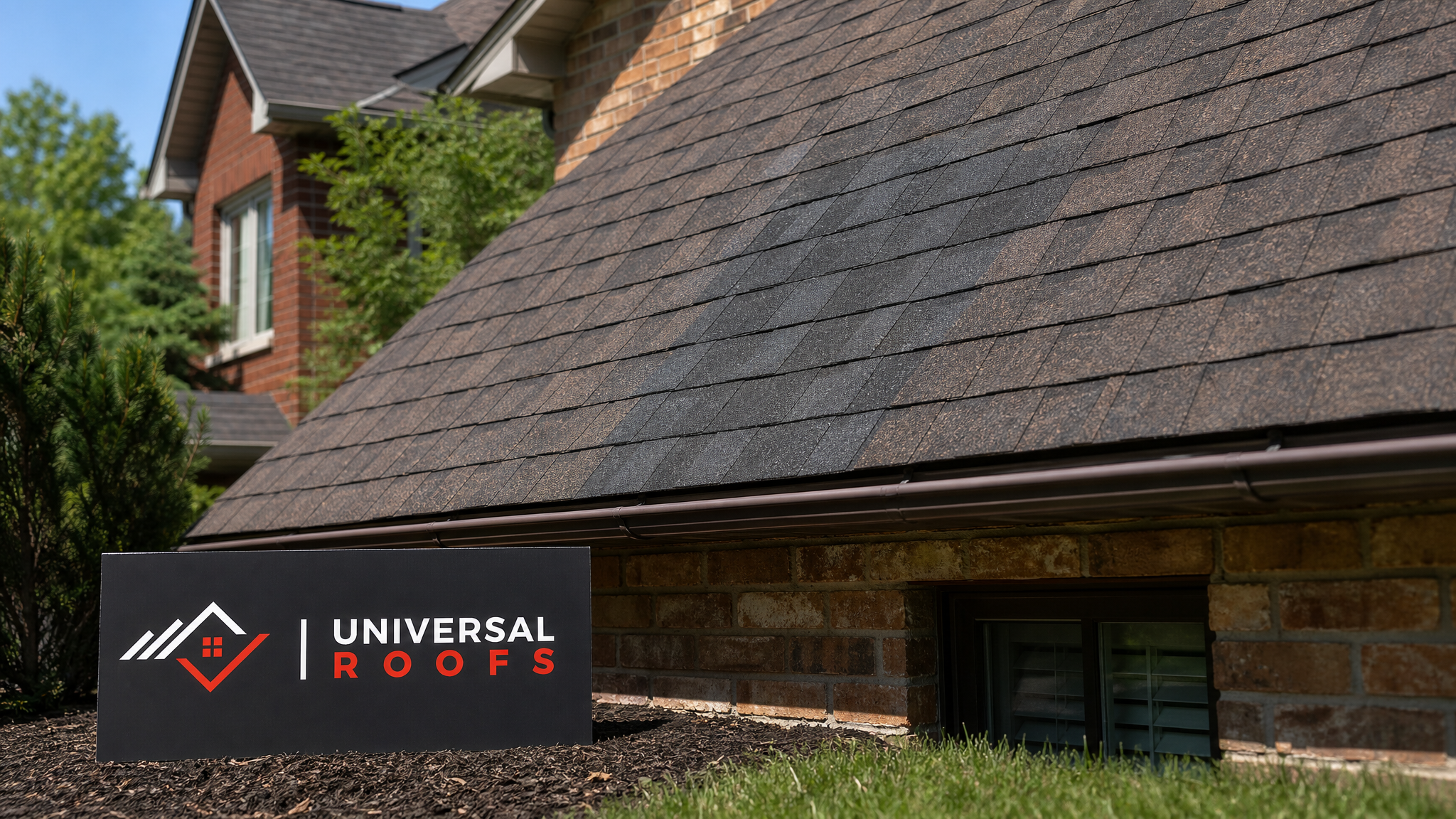
Why Shingle Choice Matters for a Successful Roof Repair
Homeowners often assume any shingle repair is the same as another, but the shingle you select drives four outcomes: how well the patch matches your existing roof, how long the repair lasts, how the repaired section performs in wind and hail, and how much you pay both now and over the life of the roof.
Toronto roofs see an unusually wide range of stress in a single year. Winter brings ice damming and freeze-thaw expansion that can crack brittle, aged shingles. Summer brings UV exposure and heat that softens asphalt and accelerates granule loss. Spring and fall wind storms test the sealant strip on every tab. A shingle that is not rated for the climate, or one that does not match the granule blend and profile of your existing roof, will stand out visually and may fail faster than the surrounding material.
This is also why professional roof repair starts with correctly identifying your existing shingle type, its age, and its manufacturer before ordering replacement material. A mismatch in thickness or profile creates a visible seam and can even trap water at the transition point.
The Main Shingle Categories Used in Repairs
Before comparing specific products, it helps to understand the four broad categories of asphalt shingle used in residential roof repair across the GTA. Nearly every repair job pulls from one of these families.
- 3-tab asphalt shingles — the traditional flat-profile shingle, now largely discontinued by major manufacturers but still found on older homes needing patch repairs.
- Laminated (architectural/dimensional) shingles — two or more layers bonded together for a thicker, textured profile; the current industry standard for both full replacement and repair.
- Impact-resistant (Class 4) shingles — reinforced with modified asphalt or rubber polymers to resist hail and debris strikes, often eligible for insurance discounts.
- Premium/designer shingles — mimic slate or cedar shake profiles, used on higher-end homes where visual character matters as much as performance.
Below is a comparison of how these four categories stack up on the metrics that matter most for a repair decision.
| Shingle Type | Typical Lifespan | Wind Rating | Approx. Cost per Square* | Best Use Case |
|---|---|---|---|---|
| 3-Tab Asphalt | 15-20 years | 60-70 mph | $110-$160 | Matching older existing roofs |
| Laminated/Architectural | 25-30 years | 110-130 mph | $160-$260 | Standard repairs and replacements |
| Impact-Resistant Class 4 | 30-40 years | 110-130 mph | $220-$340 | Hail-prone areas, insurance savings |
| Premium/Designer | 40-50 years | 120-150 mph | $320-$500 | Character homes, curb appeal focus |
*A “square” equals 100 square feet of roof coverage. Prices are material-only estimates and will vary with supplier and shingle brand.
Matching Shingles for a Seamless Repair
The single biggest challenge in shingle repair is not selecting a good product in isolation — it is matching that product to what is already on your roof. Manufacturers change granule blends, profile thickness, and even nailing patterns every few product generations, so a shingle bought today rarely matches one installed twelve years ago exactly.
A few strategies experienced roofers use to minimize mismatch:
- Source from the same manufacturer line where possible, since colour codes are more consistent within a single product family.
- Pull spare shingles from a low-visibility area (such as a rear slope) to patch a highly visible front-facing repair, then use new shingles on the less visible section.
- Blend granule colours by mixing new and salvaged shingles across the repaired slope rather than concentrating all new material in one visible block.
- Accept a partial-slope replacement when the mismatch would otherwise be too visible — sometimes redoing an entire roof plane, rather than a small patch, is more cost-effective long-term.
This is one of the reasons a full roof assessment before a repair pays off. Our roof repair team keeps records of common shingle lines used across GTA subdivisions built in similar eras, which speeds up sourcing a close colour match.
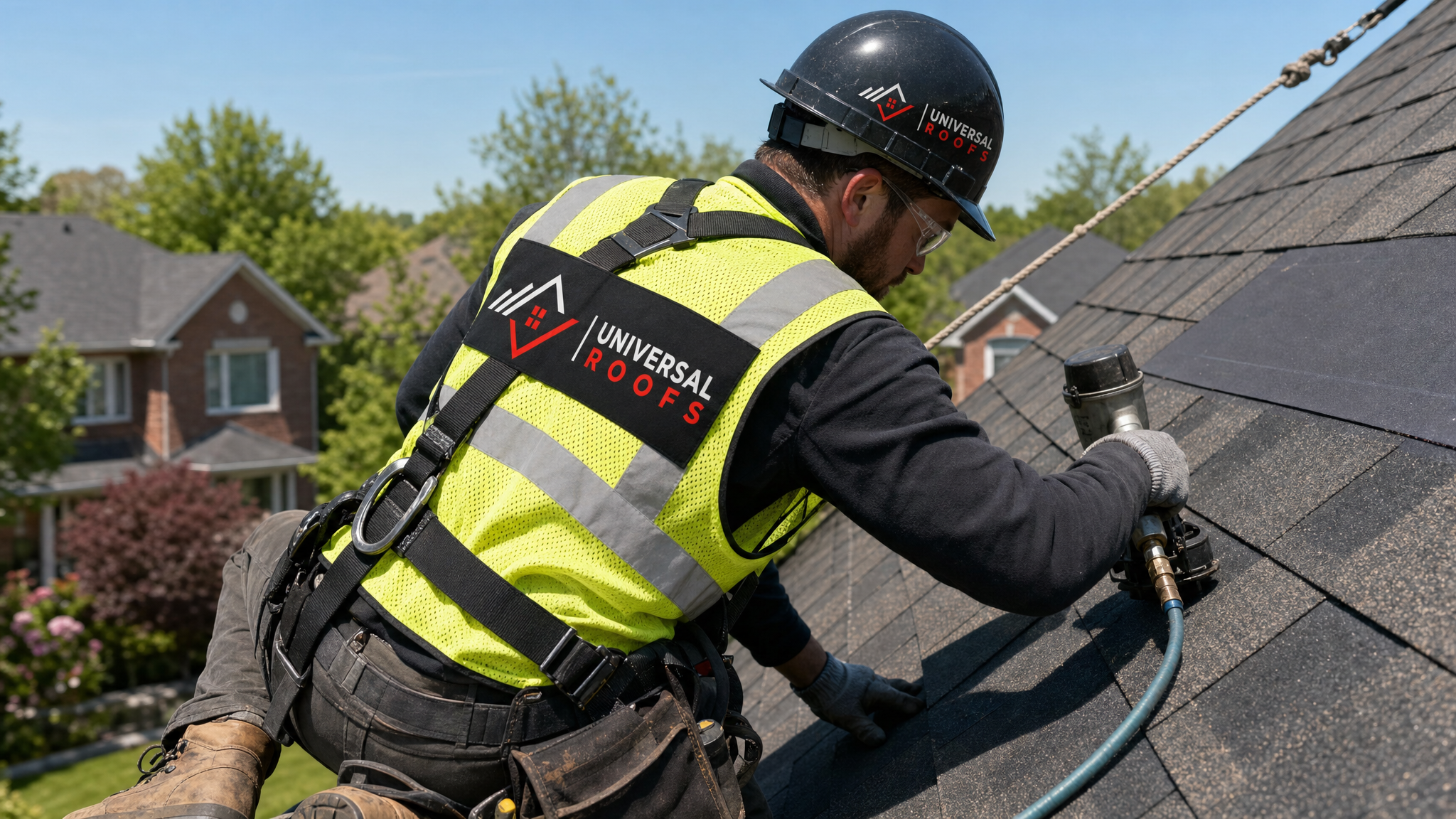
Impact-Resistant Shingles: Worth the Upgrade for Repairs?
Class 4 impact-resistant shingles have become increasingly popular for Toronto-area repairs, particularly after hailstorms damage a section of roof. These shingles use a reinforced modified-asphalt or SBS rubber layer that absorbs impact energy rather than cracking, which matters given the hail events the GTA sees most summers.
The upgrade cost over standard laminated shingles is usually 25-40% more per square, but many homeowners recoup part of that through insurance premium discounts — some Ontario insurers offer 10-20% off wind and hail coverage for Class 4 roofing. If you are repairing a section after storm damage anyway, it is often the right moment to upgrade that slope, since you are already paying labour costs to strip and re-nail.
One caveat: because impact-resistant shingles have a distinct, often thicker profile with a heavier granule texture, matching them to an existing standard laminated roof is difficult. This upgrade works best when you are prepared to redo an entire slope or the full roof, not just a small patch.
Repair-Specific Considerations: Valleys, Flashing Lines, and Chimneys
Not every shingle repair is a simple flat-field patch. Some of the most common repair calls we handle involve transition points where shingles meet flashing, valleys, or vertical surfaces like chimneys and dormers. These areas fail more often than open field shingles because they experience concentrated water flow and more movement from thermal expansion.
When repairing shingles near these transitions, a few extra considerations apply:
- Valley shingles should be cut and woven (or laid with a closed-cut method) to match the original installation style — mixing methods on the same valley creates weak points.
- Shingles around chimney flashing need to be trimmed with enough clearance for step flashing and counter-flashing to be re-integrated without forcing water behind the shingle course.
- Shingles adjacent to skylights require careful sequencing with the flashing kit; if your skylight is older, it may be more cost-effective to combine the shingle repair with a skylight replacement rather than repairing around a unit nearing the end of its service life.
- Low-slope transitions that tie into a flat roof section should use products rated for low-slope application — standard shingles are not designed for slopes under 2:12 and will fail prematurely; see our flat roofing page for appropriate membrane options in these zones.
Getting these transition details right is often more important to the longevity of the repair than the shingle brand itself.
Cost Breakdown: What Drives Shingle Repair Pricing in the GTA
Homeowners frequently ask why one repair quote is double another for what looks like the same job. Shingle selection is one factor, but the table below breaks down the typical cost components for a mid-size shingle repair (roughly 2-4 squares) across the Greater Toronto Area.
| Cost Component | Typical Range | Notes |
|---|---|---|
| Material (standard laminated) | $320-$780 | Varies with square footage and brand |
| Material (impact-resistant upgrade) | $440-$1,100 | Best value when redoing a full slope |
| Labour | $300-$900 | Depends on pitch, height, and access |
| Flashing/underlayment replacement | $100-$400 | Often required at valleys and penetrations |
| Disposal and cleanup | $75-$200 | Bin rental or bag removal for old shingles |
Steeper roofs, third-storey access, and older homes with multiple roof layers to strip will push costs toward the higher end of each range. A transparent, itemized quote from your contractor should break out material and labour separately so you can see exactly what shingle grade you are paying for.
Signs You Need a Shingle Repair (Not a Full Replacement)
Not every roof issue calls for a complete tear-off. Understanding when a targeted shingle repair is sufficient — versus when you actually need a broader roof replacement — saves significant money.
Signs that point toward a localized repair rather than full replacement:
- Isolated wind damage affecting a small section (typically under 10-15% of total roof area)
- A handful of cracked, curled, or missing shingles concentrated in one area, such as after a storm
- Localized granule loss or blistering near a single vent pipe or flashing point
- The overall roof is under 15 years old with the rest of the field in good condition
Signs that suggest a repair will only be a temporary fix, and full replacement should be considered:
- Widespread granule loss across most slopes, exposing the asphalt mat
- Multiple layers of curling or cupping shingles across more than 25-30% of the roof
- The roof is already past 20-25 years old (typical lifespan for standard laminated shingles)
- Recurring leaks in different locations each season, suggesting systemic underlayment failure
A qualified inspection is the best way to determine which category your roof falls into — our team can walk you through both options honestly rather than defaulting to the more expensive one.
Seasonal Timing for Shingle Repairs in Toronto
July is actually one of the better months to schedule a shingle repair in the GTA. Asphalt shingles seal properly through thermal bonding, which requires warm temperatures (generally above 10°C) to activate the adhesive strip on each tab. Summer heat helps that seal set quickly, and dry conditions reduce the risk of trapped moisture under new shingles.
That said, extreme midsummer heat (above 30°C) can make shingles soft and easy to scuff during installation, so experienced crews often schedule repair work for early morning. If you notice storm damage or missing shingles right now, do not wait until fall — repairing promptly prevents water infiltration into the deck and insulation during the next rainfall, and avoids scrambling for a contractor once the autumn storm season creates a backlog.
Do-It-Yourself vs. Professional Shingle Repair
Small, single-shingle repairs are sometimes within reach for a comfortable DIYer, but there are real risks that make professional repair the safer and often more cost-effective choice for most Toronto homeowners.
| Factor | DIY Repair | Professional Repair |
|---|---|---|
| Shingle matching | Limited to retail-available colours | Access to contractor supply lines and salvage matching |
| Warranty | None on labour; manufacturer warranty may be voided | Labour warranty plus manufacturer warranty intact |
| Fall protection | Often skipped, high injury risk | Harness and rope systems used on every job |
| Flashing integration | Frequently done incorrectly, causing leaks | Flashing re-integrated to code |
| Time to complete | A full weekend for a small patch | Typically same-day for most repairs |
If your repair involves working near a roof edge, a chimney, or above the first storey, the fall risk alone makes this a job worth hiring out. Roofing is consistently ranked among the more hazardous trades for fall injuries, and a botched flashing detail can cause far more expensive water damage than the original problem.
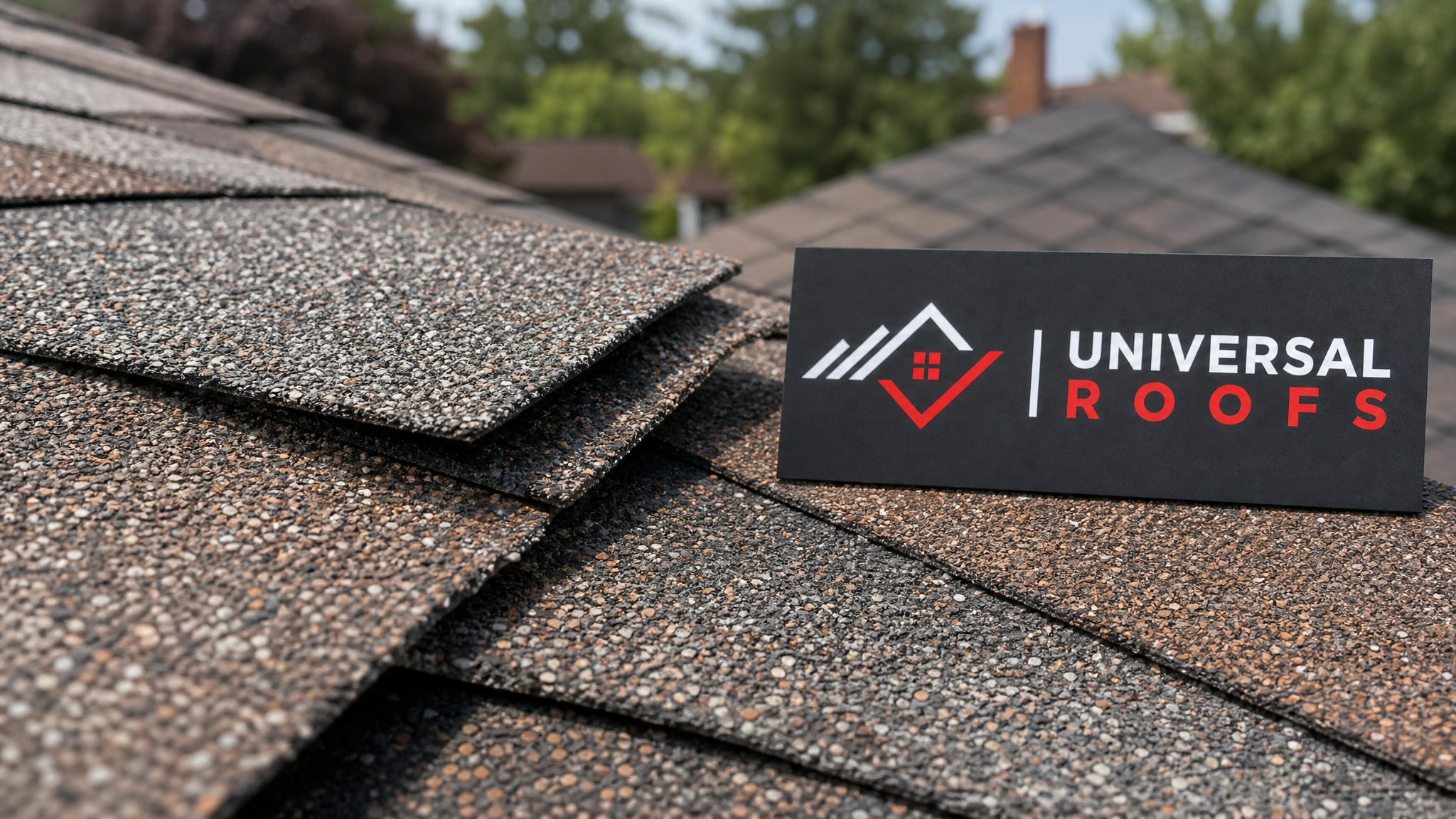
Choosing a Colour and Profile That Matches Your Home
Beyond performance, shingle colour and profile affect resale value and street appeal. Darker shingles (charcoal, black, dark brown) absorb more heat, which can slightly raise attic temperatures in summer but also help snow and ice melt faster in winter. Lighter shingles (weathered wood, driftwood, light grey) reflect more heat and tend to show less colour fading over time, which matters for long-term aesthetic consistency after a repair.
When only repairing a section, it is usually smarter to stay as close as possible to your existing colour rather than trying to “upgrade” the look of a single slope — a repair that visually clashes with the rest of the roof will hurt curb appeal more than the original damage did. If you are considering a colour change, that is best done as part of a full replacement rather than a partial repair.
Working With a Licensed, Insured Roofing Contractor
Ontario does not currently require province-wide licensing for roofing contractors, which makes it especially important to verify insurance, workers’ compensation coverage (WSIB), and manufacturer certification before hiring anyone for a shingle repair. A contractor certified by a major shingle manufacturer can often offer extended labour warranties that are not available to uncertified installers.
Before signing a contract, ask for proof of liability insurance, confirm which specific shingle product line will be used, and get the warranty terms in writing. You can review verified feedback from other GTA homeowners on our reviews page, and browse common questions on our FAQ page before booking an assessment.
Frequently Asked Questions About Shingle Choices for Roof Repair
What are the best shingle choices for roof repair on an older Toronto home?
How do I match new shingles to my existing roof after a repair?
Are impact-resistant shingles a good choice for a roof repair?
How much does a shingle roof repair cost in the GTA?
Can shingle repairs be done in winter in Toronto?
Should I repair or fully replace my shingle roof?
Need Help With Top Shingle Choices for?
Choosing the right shingle for a repair is not something to guess at — the wrong match can leave your roof looking patchy and failing years ahead of schedule. Since 2005, Universal Roofs has helped GTA homeowners select and install the right shingle product for every repair, from small storm-damage patches to full slope replacements.
Call us today at (416) 732-2421 or request a free inspection to get started.
Universal Roofs proudly serves Toronto, Mississauga, Brampton, Vaughan, Markham, Oakville and the GTA since 2005.