
Choosing among the many roofing contractors in Halton Region is harder than it looks, because the roofs themselves vary so much across Oakville, Burlington and Milton. A 1950s bungalow near the Burlington lakeshore, a two-storey detached home in a north Oakville subdivision and a builder-grade townhouse in Milton all age differently, need different materials and carry very different price tags. This guide explains what roof work actually costs in Halton in 2026, which materials suit the local housing stock, what the Ontario Building Code requires, and how to separate credible roofing contractors in Halton Region from the seasonal operators who appear every spring.
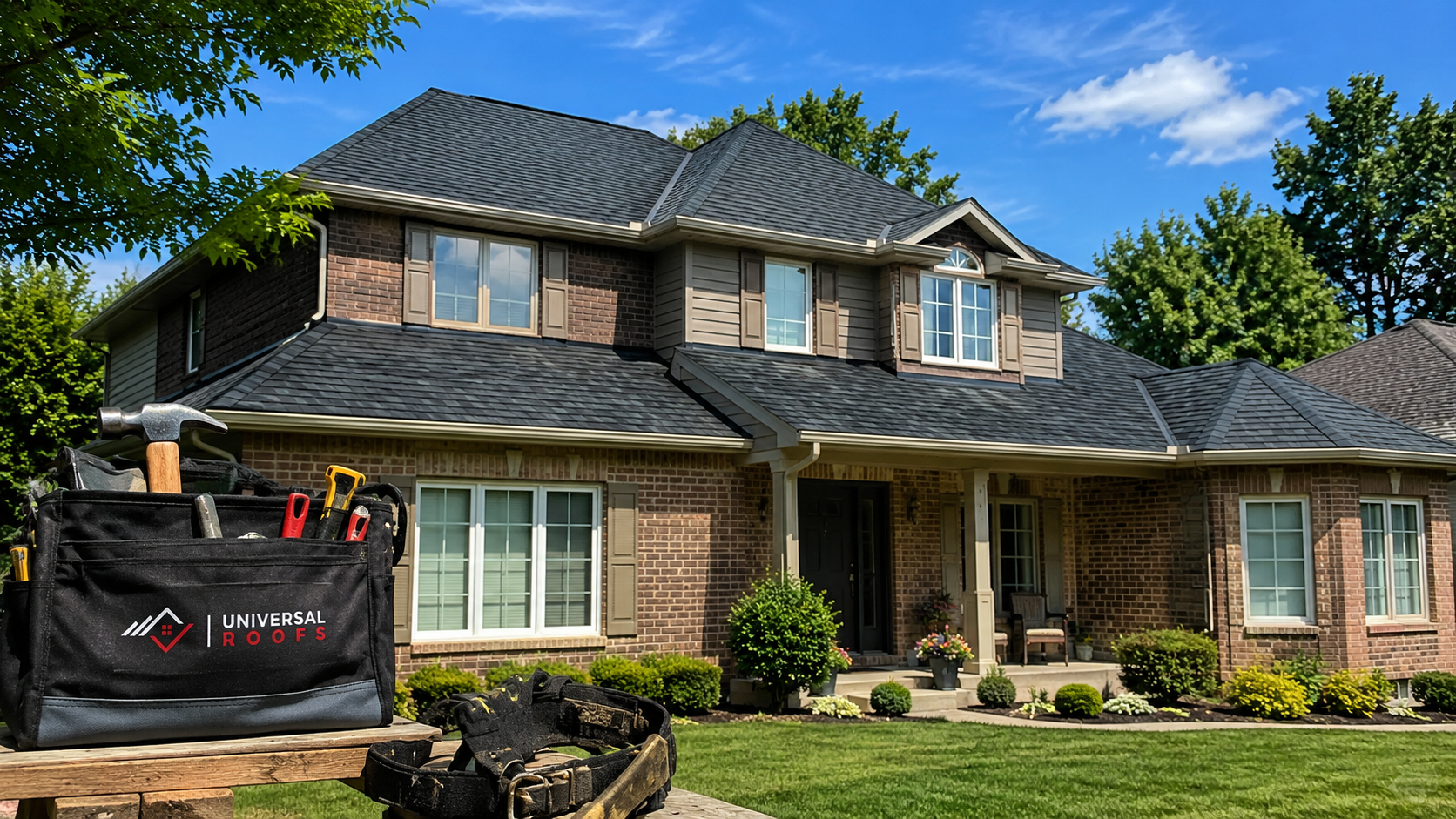
Why Roofing Contractors in Halton Region Deal With Unusual Conditions
Halton sits between Lake Ontario and the Niagara Escarpment, and that geography shapes roof performance. Homes closer to the lakeshore in Burlington and south Oakville take steady onshore wind, higher humidity and heavier freeze and thaw cycling through the shoulder seasons. Homes on the higher ground toward Milton, Campbellville and the escarpment edge see stronger gusting, more open exposure and less tree shelter. Experienced roofing contractors in Halton Region price and spec these two situations differently, because wind uplift resistance and edge detailing matter far more on an exposed lot than on a sheltered street with mature canopy.
The second factor is age spread. Halton contains some of the oldest continuously occupied housing in the western Greater Toronto Area alongside some of the newest. That means a contractor may be tearing off cedar over skip sheathing on one job and re-shingling a 2008 subdivision home with plywood decking and factory truss framing on the next. The diagnostic work is different, the disposal costs are different, and the code obligations triggered by the tear-off are different. If you are comparing roofing contractors in Halton Region and one quote is dramatically cheaper, the usual explanation is that it assumes a straightforward overlay or a minimal tear-off on a house that will not cooperate.
Third, Halton has a high proportion of homes with attached garages, bonus rooms over garages, and multiple roof-to-wall transitions. Those junctions are where most leaks begin. Good roofing contractors in Halton Region spend as much time on step flashing, kick-out flashing and valley detail as they do on the field shingles, because that is where the callbacks come from.
Housing Character Across Oakville, Burlington and Milton
Understanding your own housing type is the fastest way to make sense of quotes. Halton’s stock falls into a few broad groups.
- Postwar bungalows and side-splits. Common through central and east Burlington and older parts of Oakville. Simple, low, walkable roof planes, often with small attics, minimal soffit venting and original or first-replacement sheathing. Straightforward to shingle, but frequently need ventilation and eave protection upgrades.
- Older brick two-storey homes. Found in the established parts of both towns. Steeper pitches, chimneys that need reflashing, and sometimes original board decking that requires partial or full replacement once exposed.
- Late-century and early-2000s subdivision housing. The dominant type across north Oakville and much of Milton. Steep pitches, multiple gables, long valleys, and complex roof-to-wall junctions. More material waste, more labour, more staging.
- Townhouses and semi-detached blocks. Heavily represented in Milton. Smaller individual roof areas but shared party walls, restricted access and, in condominium blocks, corporation approval requirements.
- Estate and rural properties. Larger lots toward Halton Hills and the escarpment, often with sizeable roof areas, dormers, cedar or metal, and outbuildings quoted separately.
None of this is cosmetic. Roof area, pitch, number of penetrations and access difficulty are the four variables that drive nearly every quote you will receive from roofing contractors in Halton Region.
2026 Roof Replacement Costs Across Halton Region
Prices moved upward through 2024 and 2025 on materials, disposal and insurance, and settled into a fairly predictable band for 2026. The figures below reflect complete tear-off, disposal, new underlayment and eave protection, new flashings, ridge venting and architectural asphalt shingles, before HST. Treat them as planning ranges rather than quotes, because access, pitch and deck condition can move any project within or past its band.
| Home type | Typical roof area | 2026 installed range | Site time |
|---|---|---|---|
| Townhouse or semi-detached unit | 1,000 to 1,500 sq ft | $6,500 to $10,500 | 1 day |
| Postwar bungalow or side-split | 1,500 to 2,200 sq ft | $9,500 to $15,000 | 1 to 2 days |
| Two-storey detached, moderate complexity | 2,200 to 3,200 sq ft | $14,000 to $23,000 | 2 to 3 days |
| Detached with multiple gables and valleys | 3,200 to 4,500 sq ft | $21,000 to $34,000 | 3 to 4 days |
| Estate-scale home or steep complex roof | 4,500 sq ft and up | $32,000 and up | 4 to 7 days |
Two line items sit outside those ranges often enough to plan for them. Deck replacement is priced per sheet once the old roof is off, generally in the range of $80 to $140 per 4 by 8 sheet installed, and a home with original board sheathing may need a great deal of it. Chimney reflashing or rebuilding is also quoted separately, because masonry work is a different trade. Reputable roofing contractors in Halton Region will state both allowances in writing before the tear-off starts rather than discovering them on day two.
If you are budgeting for a full asphalt shingle roof replacement, add 13 percent HST to the contract figure and set aside a further contingency of roughly five to ten percent for deck and flashing surprises on any home built before about 1980.
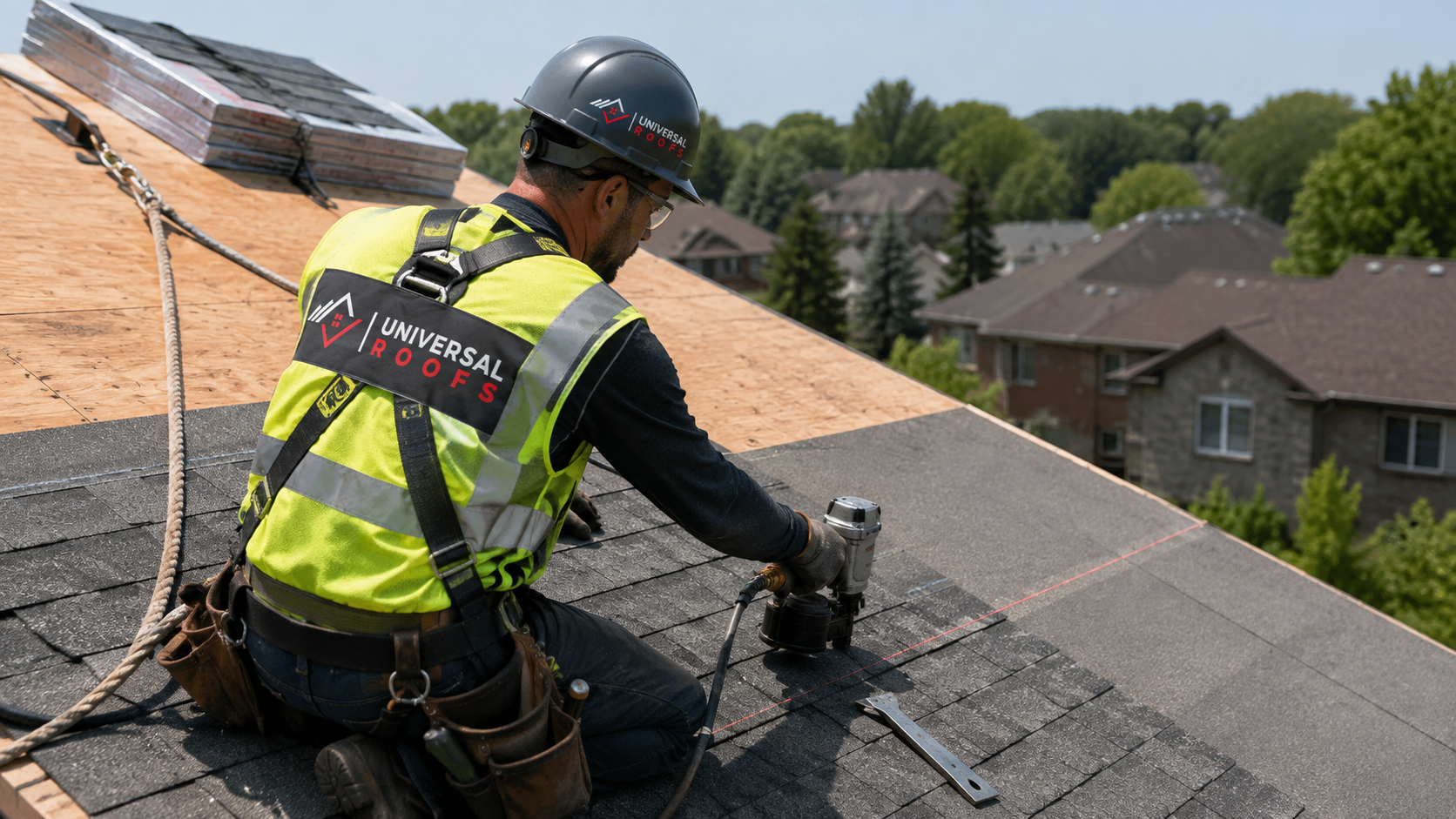
Materials That Perform Well on Halton Homes
Architectural asphalt remains the default for good reason: it balances cost, wind rating and appearance, and it is what the vast majority of Halton subdivisions were originally built with. But it is not the only sensible answer, particularly on low-slope sections, additions and exposed rural properties.
| Material | 2026 installed cost per sq ft | Realistic service life | Best suited to |
|---|---|---|---|
| Architectural asphalt shingle | $6.00 to $9.50 | 22 to 30 years | Most sloped Halton roofs |
| Designer or impact-rated asphalt | $9.00 to $13.50 | 28 to 40 years | Exposed lots, heritage-style homes |
| Standing seam metal | $16.00 to $26.00 | 45 to 60 years | Estate homes, escarpment exposure |
| Cedar shake or shingle | $14.00 to $22.00 | 25 to 35 years with upkeep | Character homes, rural properties |
| Modified bitumen (two-ply torch) | $10.00 to $16.00 | 20 to 30 years | Low-slope additions and porch roofs |
| EPDM or TPO single-ply | $9.50 to $15.00 | 20 to 30 years | Flat garage and extension roofs |
Many Halton homes are hybrids. A sloped main roof over the living space with a flat rear addition or a flat garage deck is extremely common, and those two areas cannot be treated with the same product. Roofing contractors in Halton Region who handle both sloped and low-slope membrane systems can detail the transition properly instead of running shingles down onto a pitch they were never rated for. Asphalt shingles generally require a minimum slope of 2:12 with doubled underlayment, and below that a membrane is the only correct answer.
Permits, Ontario Building Code and Municipal Requirements
Straight re-roofing normally does not require a building permit anywhere in Halton. Replacing shingles with shingles, on the same structure, without altering framing, is treated as maintenance by the building departments in Oakville, Burlington, Milton and Halton Hills. A permit becomes necessary once the work changes the structure: new dormers, altered roof geometry, replacement or repair of trusses and rafters, converting a flat roof to a pitched roof, or structural repairs after fire or water damage. If a contractor tells you a permit is never needed for anything roof related, that is a knowledge gap worth noting.
Code obligations still apply to permit-exempt re-roofing. The three that matter most on Halton homes are eave protection, ventilation and fastening. Eave protection, in practice a self-adhered ice and water membrane, must extend from the roof edge up the slope to a line measured a minimum of 900 mm inside the inner face of the exterior wall. On a low-slope roof or a deep overhang that can mean two courses rather than one. Attic ventilation for most residential roofs must provide unobstructed vent area of not less than 1/300 of the insulated ceiling area, split reasonably between intake at the soffit and exhaust at or near the ridge. Fastening follows the manufacturer’s high-wind instructions, which on most architectural shingles means six nails per shingle in exposed conditions rather than four.
Ventilation is where a surprising number of Halton bungalows fall short. Original soffit venting was often minimal, and decades of blown-in insulation frequently blocks whatever intake existed. Adding ridge vent without restoring intake simply pulls conditioned air out of the house. A contractor who inspects the attic and insulation before quoting is doing the job properly; one who quotes from the driveway is not.
Repair Pricing and When Repair Beats Replacement
Not every problem justifies a full tear-off. A roof with eight to twelve years of life left and one failing detail is a repair candidate. A roof with widespread granule loss, curling, cracked shingles across multiple planes and repeated leaks is not, and money spent patching it is money lost.
| Repair type | 2026 price range | Typical duration | Common trigger |
|---|---|---|---|
| Chimney reflashing | $650 to $1,600 | Half day | Staining on the ceiling beside the chimney |
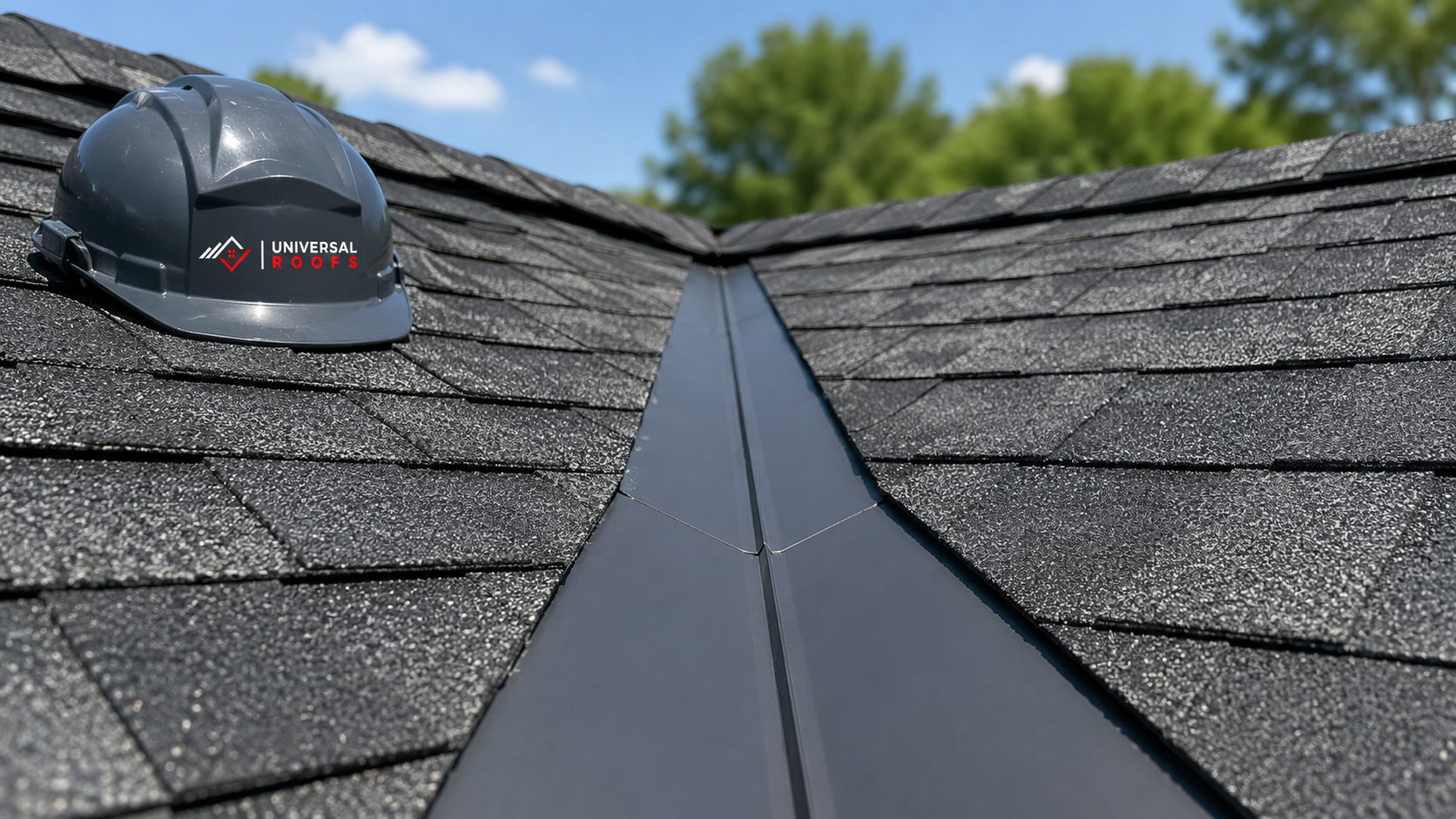
| Valley repair or rebuild | $800 to $2,400 | Half to full day | Rust, wear or debris damming |
| Roof-to-wall step flashing correction | $700 to $2,000 | Half to full day | Leaks near garage or bonus room walls |
| Wind damage shingle replacement | $450 to $1,500 | Half day | Missing tabs after a spring storm |
| Skylight reflash and reseal | $700 to $2,200 | Half to full day | Drips at the light well corners |
| Ventilation upgrade (intake and exhaust) | $900 to $2,800 | One day | Attic frost, ice damming, hot upper floor |
A sensible rule: if the cost of the proposed roof repair work exceeds about 25 percent of a replacement quote and the roof is past two thirds of its expected life, replacement is usually the better financial decision. Honest roofing contractors in Halton Region will tell you when a repair is the smarter option, even though it is the smaller invoice.
How to Vet Roofing Contractors in Halton Region
Ontario does not license roofers the way it licenses electricians or plumbers, so the burden of verification sits with the homeowner. The good news is that the checks are quick and every legitimate contractor expects them.
- WSIB clearance certificate. Ask for a current one and verify it directly through WSIB’s online service. Without it, an injury on your property can become your liability.
- Commercial general liability insurance. Two million dollars is the standard expectation. Request the certificate, not a verbal assurance.
- Working at Heights training. Ontario requires it for anyone on a residential roof, along with a compliant fall-protection system anchored to the structure.
- Written scope, not a one-line price. The quote should name the shingle line, underlayment, eave protection coverage, ventilation plan, flashing work, deck allowance and disposal.
- Separate workmanship and manufacturer warranties. The shingle warranty comes from the manufacturer. The installation warranty comes from the contractor, and its length means nothing if the company has no track record.
- Verifiable local work. Ask for recent addresses in Oakville, Burlington or Milton and read independent customer reviews rather than testimonials printed on a brochure.
Two warning signs come up repeatedly. The first is a large deposit demanded before any material is ordered; a deposit of ten to twenty percent is normal, half the contract value is not. The second is pressure to sign the same day the estimate is delivered. Established roofing contractors in Halton Region hold their pricing for a reasonable window because they are not chasing a single season.
What a Halton Roof Replacement Looks Like Day by Day
On a typical detached home, a competent crew follows a predictable sequence. Day one begins with property protection: plywood against windows and siding, tarps over gardens and air conditioning units, and a disposal bin positioned to protect the driveway. Tear-off follows, usually one roof plane at a time so the structure is never fully exposed longer than necessary. Deck inspection happens as the old material comes off, and this is the moment any additional sheathing cost is identified and communicated.
Next comes eave protection along the perimeter and in the valleys, then synthetic underlayment across the field, then drip edge, then starter course. Flashings are replaced rather than reused wherever the metal has aged, and step flashing at walls is woven into the courses as they go up rather than caulked on afterward. Ridge cap and ventilation finish the roof, and the day ends with magnetic nail sweeps across the lawn, driveway and gardens.
Most Halton homes are completed in one to three working days. Weather is the main variable, and any contractor who commits to shingling through a rain event should be questioned, because underlayment installed over wet decking traps moisture. If your home has skylights, plan to address them during the tear-off; replacing or reflashing skylight units while the roof is already open is far cheaper than returning later.
Seasonal Timing and Booking Windows
Asphalt shingles seal by thermal activation, which means installation temperature matters. Late spring through early autumn gives the best sealing conditions and the widest choice of crews. The trade-off is that this is also when demand peaks, so lead times stretch. Booking in late winter for a summer installation usually secures both better scheduling and steadier pricing.
Autumn installations are entirely workable in Halton and often carry good availability once summer demand eases, but the sealing window narrows as temperatures drop. Winter roofing is possible for emergency repairs and remains common after storm damage, though hand-sealing is required and homeowners should expect a slower pace. Emergency work does not wait for a season: an active leak needs a tarp and a proper repair regardless of the calendar.
Because so much of the region’s housing was built in concentrated waves, entire Halton streets tend to reach the end of their roof life around the same time. That clustering is one reason experienced roofing contractors in Halton Region book out weeks ahead in peak season. If several neighbours are planning work, coordinating scheduling can sometimes reduce setup and disposal costs for everyone.
Working With a Contractor Who Knows the Region
The practical advantage of hiring roofing contractors in Halton Region familiar with local housing is diagnostic speed. A crew that has re-roofed dozens of Burlington side-splits knows where the intake venting was skipped. A crew that has worked across Milton’s newer subdivisions knows which valley details in that era of construction tend to fail first. That knowledge shows up as fewer surprises mid-project and fewer callbacks in year three.
Universal Roofs is based in the Toronto area and serves homeowners across the western GTA, including full roofing services throughout Halton Region covering Oakville, Burlington, Milton and Halton Hills. Quotes are written against a measured roof and a documented deck and ventilation assessment, so the number you sign is the number you plan around. If you have questions about materials or process before booking, the roofing FAQ covers the questions homeowners ask most often.
How much do roofing contractors in Halton Region charge for a full roof replacement?
Do I need a building permit to replace my roof in Oakville, Burlington or Milton?
What should I verify before hiring roofing contractors in Halton Region?
How long does a roof replacement take on a Halton home?
Is it better to repair or replace an aging roof?
When is the best time of year to book roof work in Halton?
Talk to Roofing Contractors in Halton Region About Your Project
A roof is a twenty-five year decision, and the difference between a good installation and a rushed one shows up long after the bin leaves the driveway. Universal Roofs provides written, measured quotes with a documented deck and ventilation assessment, so Halton homeowners can compare offers on substance rather than on headline price alone.
Call us today at (416) 732-2421 or request a free consultation to have your roof assessed and receive a detailed written estimate.
Universal Roofs serves homeowners across Halton Region, including Oakville, Burlington, Milton and Halton Hills, along with communities throughout the Greater Toronto Area.