
Hiring one of the many roofing companies in Brampton is one of the larger spending decisions a homeowner in Peel Region will make, and it is one of the few where the finished product is almost impossible to inspect yourself. Most people never climb onto their own roof, so the quality of the work comes down entirely to the quality of the contractor. This guide explains how to compare roofing companies in Brampton in 2026: what the paperwork should say, what a fair price looks like, which materials suit local weather, and which warning signs should end a conversation early.
Why Comparing Roofing Companies in Brampton Takes More Than Three Quotes
The standard advice is to collect three estimates and pick the middle one. That advice is not wrong, but it assumes the three quotes describe the same job, and in practice they rarely do. Roofing companies in Brampton price work in different ways: some quote per square (100 square feet), some quote a flat project total, some include disposal and permits while others treat them as extras, and some quietly assume the existing decking is sound while others build in an allowance for replacing damaged sheathing.
A useful comparison starts by making the quotes describe the same scope. Ask every contractor to state the same six things: total roof area, number of existing layers being removed, underlayment and eave protection products, ventilation work included, flashing that will be replaced rather than reused, and the allowance for sheathing repair. Once those six items match, the price differences become meaningful. Until they match, you are comparing three different projects and choosing largely at random.
There is a second reason careful comparison matters here. Brampton has grown quickly, and fast-growing suburbs attract a mix of long-standing contractors and short-lived operations that follow storm damage from town to town. Established roofing companies in Brampton and across the wider GTA carry the insurance, the trained crews and the service history to stand behind a twenty-year installation. A crew assembled for one busy season cannot, no matter what the sales paperwork says.
Brampton’s Housing Stock and What It Means for Your Roof
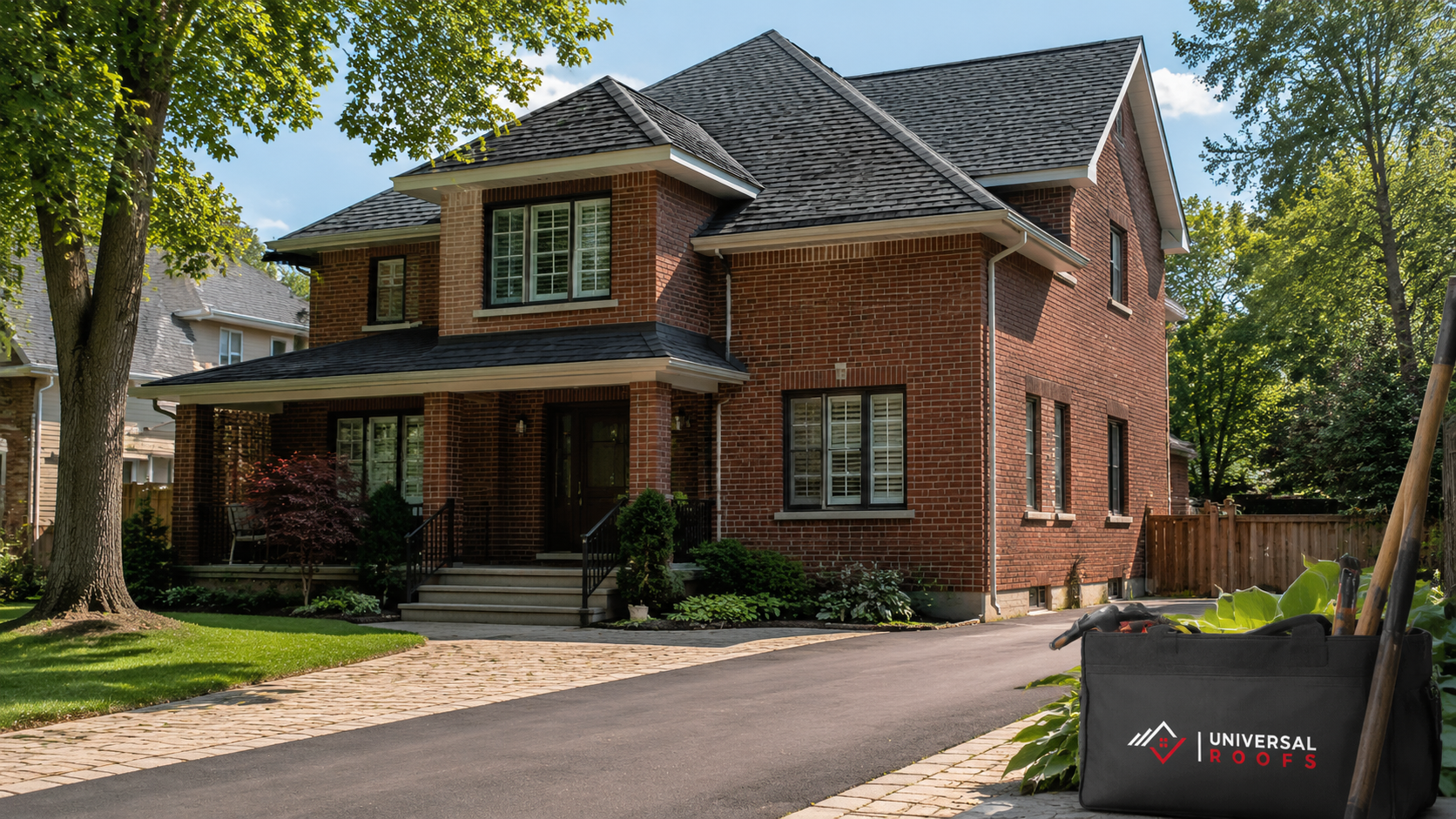
Brampton is not one kind of neighbourhood, and the roofing companies in Brampton that do good work adjust their methods accordingly. Older sections near the historic downtown include modest postwar bungalows and one-and-a-half-storey homes with simple gable roofs, shallow attics and, in many cases, original plank decking rather than plywood. Move outward and you find 1970s and 1980s subdivisions with larger footprints, attached garages and more complicated rooflines. The newest subdivisions in the north and east bring steep pitches, multiple dormers, tall two-storey elevations and large expanses of shingle visible from the street. Scattered through the outer edges are estate lots with wide, low-slope sections and long runs of valley.
Those differences change the job in real terms. A bungalow with a walkable pitch and short ladder runs is straightforward, and the main risks are hidden plank decking and undersized attic ventilation. A newer two-storey with a steep pitch needs staging, roof jacks and a full fall-protection setup, which adds labour hours before a single bundle is laid. Homes with several dormers or intersecting valleys need far more flashing detail, and flashing is where the majority of premature leaks begin.
| Brampton home type | Typical roof characteristics | Common issues found | Effect on quoted price |
|---|---|---|---|
| Postwar bungalow, older central areas | Simple gable, low to medium pitch, small attic volume | Plank decking, weak soffit intake, one or two old layers | Lower labour, possible decking and venting add-ons |
| 1970s to 1980s subdivision two-storey | Medium pitch, attached garage, one or two valleys | Worn valley metal, rusted vents, original bathroom fan ducting | Mid-range, flashing replacement usually needed |
| 1990s to 2000s subdivision home | Steeper pitch, larger area, several penetrations | First-generation shingles at end of life, sealant-only flashing | Higher due to roof area and access |
| Newer north and east subdivision home | Steep pitch, dormers, tall elevations, complex hips | Ice damming at wall junctions, ventilation imbalance | Highest labour factor, safety setup adds hours |
| Estate lot property | Mixed steep and low-slope sections, long valleys | Transitions between shingle and flat membrane | Two systems quoted on one project |
When you speak to roofing companies in Brampton, ask which of these categories your home falls into and what they expect to find once the old shingles come off. A contractor who has worked across the city will answer specifically and will tell you what the likely surprises are. One who has not will speak in generalities and leave the surprises for the invoice.
Licensing, Insurance and Paperwork to Verify Before You Sign
Ontario does not license residential roofers the way it licenses electricians or gas technicians. Roofing is not a compulsory trade, which means anyone can print a business card and start selling roofs. The protection available to you is documentary, and you have to ask for it. These are the items that separate serious roofing companies in Brampton from temporary operations.
- WSIB clearance certificate. Request a current clearance letter in the company’s legal name. Without it, an injury on your property can become your exposure. Clearance letters are dated and can be verified directly with WSIB.
- Commercial general liability insurance. Two million dollars in coverage is the working standard across the GTA in 2026. Ask for a certificate of insurance naming the company, not a screenshot of a policy number.
- Business registration and HST number. A legitimate contractor charging HST has a registration number and prints it on the invoice. An offer to skip HST for cash also skips your paper trail and, in practice, your warranty.
- Written contract before any deposit. Ontario’s consumer protection legislation gives you a ten-day cooling-off period on most agreements signed at your home. A salesperson pressuring you to sign and pay on the spot is working against that protection.
- Manufacturer credentials. Certified installer status with a shingle manufacturer is not proof of quality on its own, but it does mean the company has a verifiable account history and can register extended system warranties.
Ask for these documents before the estimate rather than after. The roofing companies in Brampton worth hiring will send them the same day, because they already keep everything current. If a company hesitates, treats the request as an insult, or sends a certificate that expired last season, you have learned what you needed to know at no cost.
What Roof Work Costs in Brampton in 2026
Prices in Peel Region track the broader GTA market closely. Material costs have stabilised compared with the volatility of the early 2020s, but labour remains the larger variable, and steep or complex roofs push totals up quickly. The ranges below reflect complete work on an average detached Brampton home, including tear-off, disposal, underlayment, new flashing and cleanup. The figures roofing companies in Brampton quote for your specific address will vary with roof area, pitch, access and the condition of the decking underneath.
| Scope of work | Typical 2026 range | What is usually included | Common extras |
|---|---|---|---|
| Targeted repair (small leak, few shingles, one flashing) | $450 to $1,500 | Diagnosis, materials, labour, minor sealing | Interior investigation, attic access work |
| Section replacement (one slope or garage roof) | $2,500 to $6,500 | Tear-off, underlayment, shingles, disposal | Decking replacement, new vents |
| Full asphalt shingle replacement, bungalow | $8,500 to $15,000 | Full tear-off, eave protection, ventilation update | Sheathing over plank decking, fascia and eaves |
| Full asphalt shingle replacement, two-storey | $13,000 to $24,000 | Full tear-off, all flashing renewed, staging and safety | Skylight replacement, chimney flashing rebuild |
| Standing seam metal roof | $18 to $30 per square foot installed | Panels, clips, underlayment, trim | Structural review, snow retention |
| Low-slope membrane section (modified bitumen) | $13 to $22 per square foot installed | Membrane, insulation as specified, edge metal | Drain or scupper work, tapered insulation |
Two notes on reading that table. First, a quote well below the low end of a range is not a bargain, it is a signal that something has been left out, usually disposal, underlayment quality, or the true number of layers being removed. Second, a decking allowance stated as a per-sheet price, commonly $85 to $145 per sheet of plywood supplied and installed in 2026, is a sign of an honest quote, because no contractor can see the condition of the decking through the shingles.
Materials Suited to Peel Region Weather
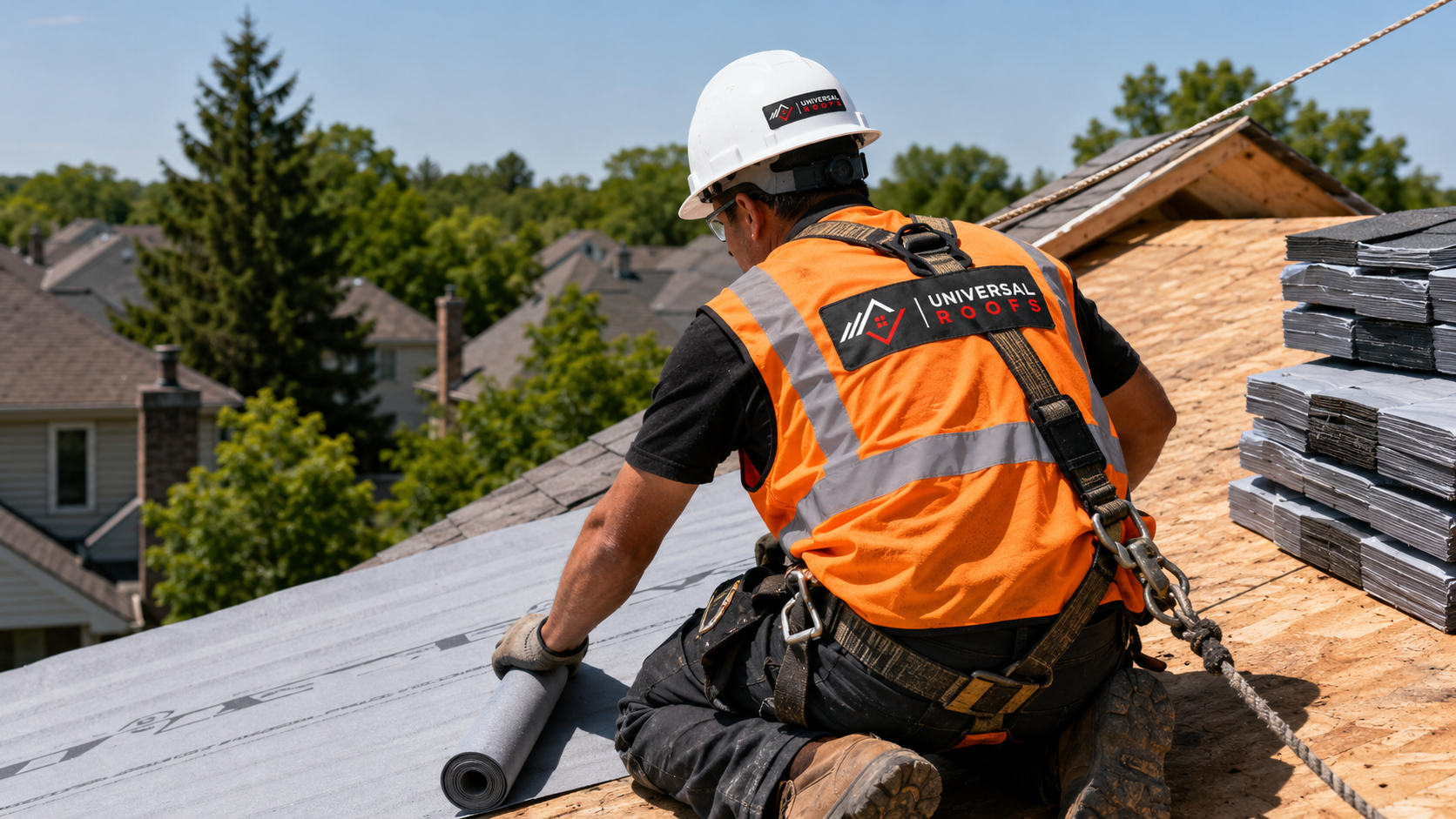
Brampton sits in the same climate band as the rest of the western GTA: hot, humid summers with occasional severe thunderstorms and hail, and winters that swing repeatedly above and below freezing. That freeze and thaw cycling, more than raw cold, is what destroys roofs here. Water enters a small gap, freezes, widens the gap, and repeats the process dozens of times each season. Material choice should be made with that cycle in mind rather than on appearance alone, and good roofing companies in Brampton will steer the conversation that way.
| Material | Realistic service life in the GTA | Strengths | Trade-offs |
|---|---|---|---|
| Architectural asphalt shingle | 22 to 30 years | Best cost per year, wide colour range, easy future repair | Vulnerable to poor ventilation and ice damming |
| Premium impact-resistant asphalt shingle | 28 to 35 years | Better hail and wind performance, thicker profile | Roughly 20 to 35 percent higher material cost |
| Standing seam metal | 45 to 60 years | Sheds snow, excellent wind rating, very long service life | High upfront cost, fewer qualified installers |
| Modified bitumen (low slope) | 18 to 25 years | Proven on flat sections, repairable in place | Torch or adhesive application needs skilled crews |
| TPO or EPDM single ply (low slope) | 20 to 30 years | Lightweight, reflective options, clean welded seams | Seam quality determines the entire outcome |
| Cedar shake | 25 to 35 years with maintenance | Distinct appearance on estate properties | Highest maintenance demand in a humid climate |
For most Brampton homes, an architectural asphalt shingle installed over a correctly detailed underlayment system remains the sensible choice. Where a home has a low-slope section over an addition, a porch or a garage, that section needs a membrane system rather than shingles, and mixing the two systems on one property is completely normal. Contractors who handle both, including flat and low-slope membrane systems, can detail the transition properly instead of forcing shingles onto a pitch they were never rated for.
Ventilation, Ice Protection and the Details That Prevent Callbacks
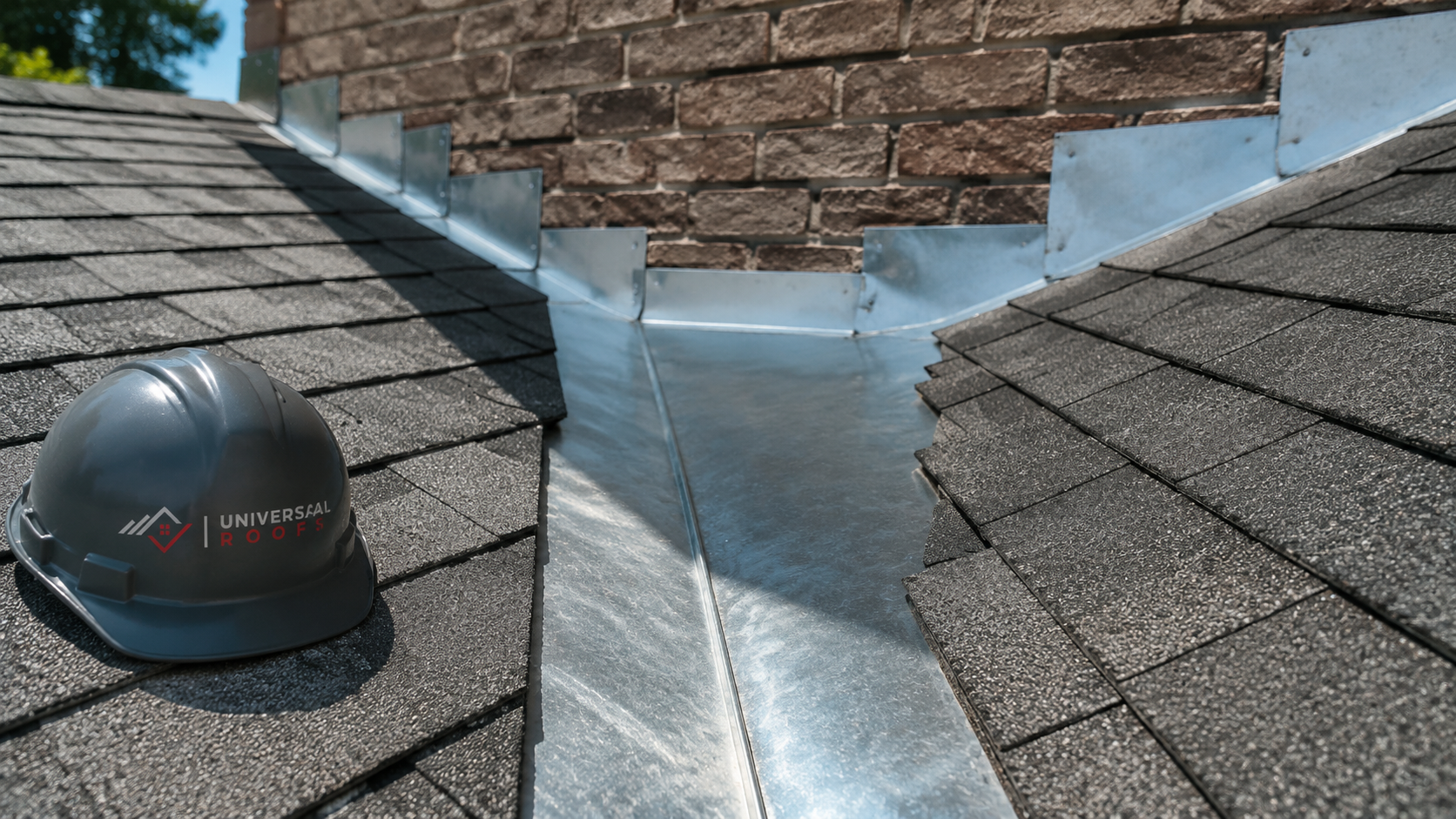
The shingle is the visible part of a roof and the least likely part to fail first. Leaks in this climate usually begin at flashing, at valleys, at penetrations, or at the eave where ice builds up. The Ontario Building Code addresses several of these directly, and a quote that ignores them should be questioned before you sign it. Experienced roofing companies in Brampton will raise these details on their own rather than waiting to be asked.
Eave protection is required on shingle roofs and must extend from the roof edge far enough up the slope to pass the inner face of the exterior wall, which on most Brampton homes means at least one full membrane course and often two on wide overhangs. Attic ventilation must be balanced between intake at the soffit and exhaust near the ridge, and the Code sets a minimum unobstructed vent area relative to the insulated ceiling area. In practice, the most common defect found on older Brampton homes is plenty of roof vents combined with soffit intake that has been blocked by insulation, painted shut, or never opened at all. Adding more exhaust to a roof with no intake makes the problem worse rather than better, because the vents simply pull conditioned air out of the house.
Other details worth naming explicitly in the contract:
- New flashing rather than reused flashing. Step flashing at walls, counter flashing at chimneys and valley metal should all be replaced during a full roof, not bent back and re-caulked.
- Bathroom and kitchen fans ducted outside. Fans discharging into the attic are a frequent cause of winter frost and spring staining on ceilings below.
- Correct fastener placement. Nails driven too high, at an angle, or overdriven are the leading cause of wind loss on otherwise sound shingles.
- Insulation and air sealing. Warm air escaping into the attic drives the melt and refreeze cycle that creates ice dams, which is why attic insulation and ventilation work is often part of a lasting fix.
If a roof is only a few years old and already showing stains, a full replacement may not be the answer at all. A focused roof repair to trace and seal the actual leak is usually the correct first step, and any contractor who moves immediately to a replacement quote without inspecting the attic side of the deck deserves a second opinion.
Reading Quotes and Spotting Red Flags
Once the scopes match, most of the remaining judgement is about how a company behaves during the sales process. Behaviour before the deposit tends to predict behaviour after it, and this is where homeowners narrow a list of roofing companies in Brampton down to one.
- Large upfront deposits. A deposit of 10 to 25 percent to schedule materials is normal. A demand for half or more before any material arrives on site is not.
- Today-only pricing. Roofing materials do not go on sale for one afternoon. Artificial discount deadlines exist to prevent you from comparing quotes.
- No physical address. A mobile number and a magnetic sign are not a business location. Ask where the company actually operates from and who owns it.
- Door-knocking immediately after a storm. Legitimate contractors do canvass, but storm-chasing crews from outside the region often leave the province before the first winter tests their work.
- Insurance claim coaching. Any suggestion of inflating a claim or absorbing your deductible is fraud, and it puts your policy at risk rather than the contractor’s.
- Vague warranty language. The word “lifetime” means nothing without a document naming the term, the transfer conditions and the circumstances that void it.
Reviews help, but read them for content rather than for the star average. Reviews that describe a specific problem and how the company resolved it are far more informative than a wall of one-line praise. You can see how a contractor responds to real jobs by reading through customer reviews and feedback from across the GTA.
Warranties, Timelines and What Happens on Installation Day
A roof carries two separate warranties. The manufacturer covers the shingles against defects, typically on a prorated schedule after an initial full-coverage period. The contractor covers workmanship, which is what actually protects you, because most failures are installation errors rather than product defects. Across the GTA in 2026, a five-year workmanship warranty is common, ten years is competitive, and anything longer is only as good as the company’s likelihood of still being in business. Ask how long the company has operated and who answers the phone for a service call in year six.
On timing: most detached Brampton homes are stripped and re-roofed in one to two working days, with larger or more complex homes taking three. Crews start early, and the tear-off phase is loud and messy by nature. Reputable roofing companies in Brampton protect landscaping, use plywood shields against siding and windows, and run a magnet sweep across the property for nails at the end of each day. Ask specifically about the magnet sweep, because it is the step most often skipped.
Permits are usually not required in Brampton for a like-for-like shingle replacement where nothing structural changes. Permits do come into play when the roof structure is altered, when a low-slope section is converted, when new openings such as skylights are cut, or when a dormer or addition is involved. Confirm the current requirement with the City of Brampton’s building division rather than relying on a contractor’s assumption, and make sure the contract states clearly who is responsible for obtaining any permit that is needed.
Homeowners comparing roofing companies in Brampton very often ask whether to repair or replace. The practical test is age combined with pattern. A roof under fifteen years old with a single localised problem is usually a repair. A roof past twenty years with granule loss across multiple slopes, curling edges and repeat leak locations is a replacement, and continuing to patch it means spending money on a system already at the end of its service life. A contractor should be willing to give you that answer plainly, including when the answer costs them the larger job. It is worth understanding the difference between targeted work and a full roof replacement project before you decide.
Local Knowledge Across Peel Region and the Wider GTA
Local experience matters, though not in the way advertising usually suggests. What matters is that a crew has worked repeatedly on the same housing types, knows what tends to be hidden under the shingles on a 1960s bungalow compared with a 2005 two-storey, and has dealt with the same combination of summer heat and winter thaw cycles for years. Roofing companies in Brampton that work across Peel Region and neighbouring municipalities see enough repetition to recognise those patterns quickly and price them accurately.
If you want to see the range of work available in your area, the full list of roofing services offered to Brampton homeowners covers repairs, replacements, low-slope systems and attic work. The same crews work throughout the GTA, including Vaughan and Markham, which is how a company builds the steady volume of work that keeps skilled installers employed year-round rather than seasonally.
One last point about honesty in advertising. Some roofing companies in Brampton market themselves as strictly local when they are in fact regional operations serving the whole GTA, and there is nothing wrong with that as long as they say so plainly. A regional contractor with a real base of operations, a service department and a decade of documented history is a safer choice than a company claiming a Brampton address it does not occupy. Ask directly where the company is based and how far its service area extends. A straight answer to that question is a good sign, and an evasive one tells you just as much.
How much do roofing companies in Brampton charge for a full roof replacement in 2026?
Do I need a building permit to replace my roof in Brampton?
Are roofers licensed in Ontario?
How long does a roof replacement take in Brampton?
Should I repair my roof or replace it?
What questions should I ask roofing companies in Brampton before signing?
Talk to One of the Experienced Roofing Companies in Brampton Today
Universal Roofs is a Toronto-area roofing contractor serving homeowners throughout Brampton and Peel Region, with crews experienced on everything from older central bungalows to steep-pitched homes in the newer subdivisions. We provide written scopes that state roof area, layer count, underlayment products, flashing replacement and decking allowances, so you can compare our quote against any other on equal terms. If you would like to understand the process first, our roofing questions and answers page covers the basics.
Call us today at (416) 732-2421 or request a free consultation to book an inspection and receive a written estimate for your home.
Universal Roofs serves Brampton, Mississauga, Caledon and communities across the Greater Toronto Area with residential and commercial roofing services.