
A roof replacement in Richmond Hill is one of the largest single investments most homeowners in York Region will make on their property, and the price range is wide enough that a vague quote over the phone tells you almost nothing useful. Between the postwar bungalows on the older established streets, the brick two storey homes built through the 1980s and 1990s, and the larger subdivision houses and estate lots that went up more recently, the town contains several very different kinds of roof. Those differences drive cost, scheduling and the amount of prep work involved. This guide sets out realistic 2026 pricing, honest timelines, permit and code considerations, and the questions that separate a solid quote from a thin one.
What Makes Roof Replacement in Richmond Hill Different
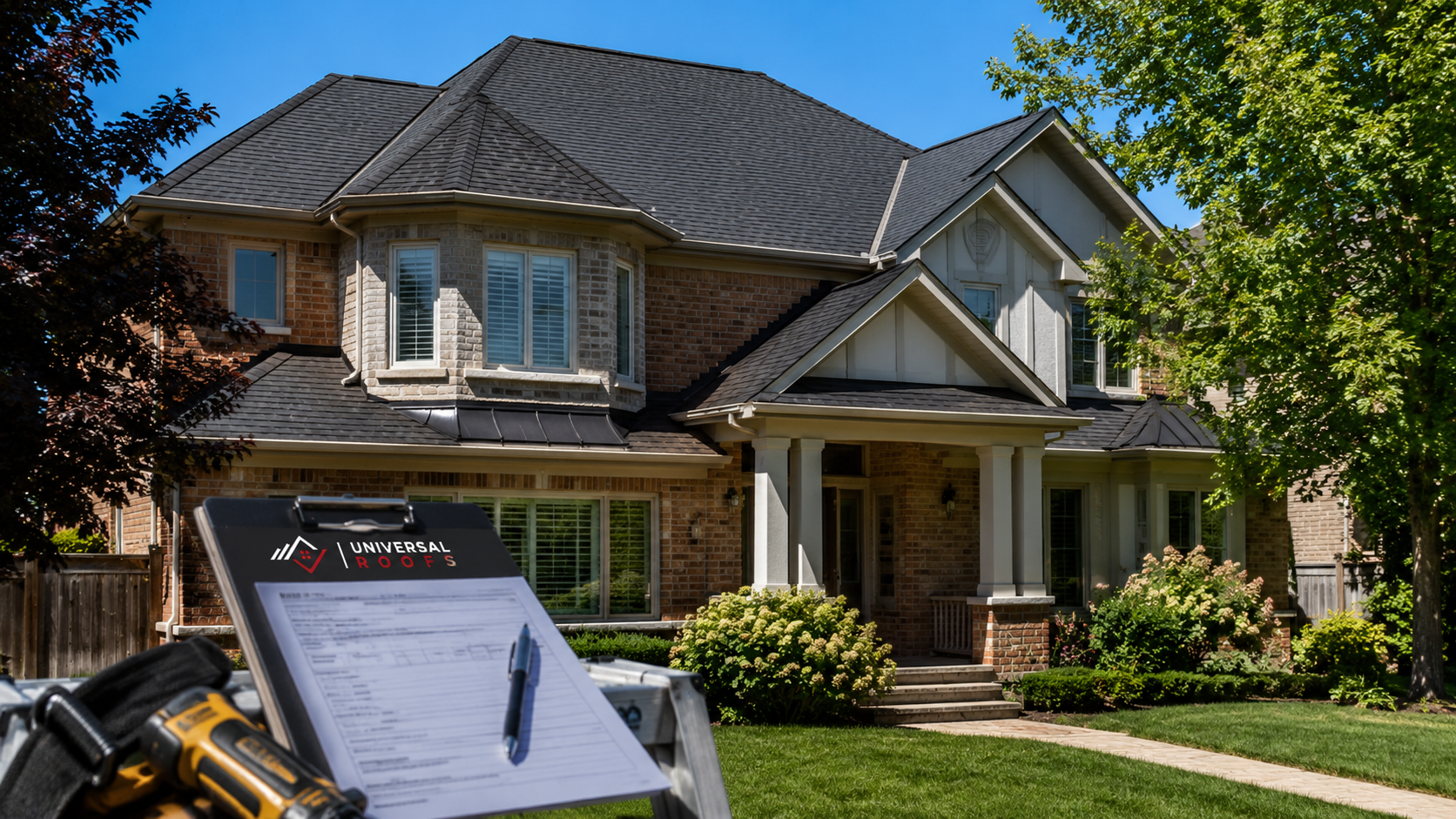
Roof replacement in Richmond Hill is shaped by the town’s mixed housing stock more than by anything unusual about the climate. The weather here is the same York Region pattern that affects Markham and Vaughan: freeze and thaw cycling from late autumn through early spring, ice damming at the eaves on poorly ventilated attics, summer heat that ages south facing slopes faster than north facing ones, and occasional summer wind and hail events that lift or bruise shingles.
What changes from street to street is the building itself. An older bungalow on a mature lot often has a simple gable roof, low complexity, and a small total area, but it may also carry two or three layers of old shingles, plank sheathing rather than plywood, and an attic that was never brought up to modern ventilation and insulation standards. A newer subdivision home has plywood or OSB sheathing and a single shingle layer, but far more complexity: multiple valleys, dormers, gable returns, a front elevation with steep decorative pitches, and sometimes a low slope section over a garage or a rear addition that needs a different roofing system entirely.
Estate properties in the western and northern parts of the town push complexity further again, with large surface areas, steeper pitches, taller elevations that require more staging and fall protection, and sometimes premium materials such as slate look composite, standing seam metal, or cedar. All of that is normal work, but it belongs in a written quote rather than a verbal guess. Any contractor quoting roof replacement in Richmond Hill without measuring the roof or looking in the attic is quoting a number, not a job.
Mature tree cover on the older streets adds one more factor. Heavy overhanging limbs mean more organic debris in valleys and gutters, faster moss and algae growth on shaded northern slopes, and more frequent granule wear where branches rub. Homeowners on those lots often see their shingles reach end of life a few years earlier than the manufacturer’s rating suggests.
What Roof Replacement in Richmond Hill Costs in 2026
The most common question is simply what a roof replacement in Richmond Hill costs. For a standard asphalt shingle tear off and replacement on a typical detached home, most 2026 quotes in York Region land somewhere between eight thousand and twenty two thousand dollars, with the wide spread driven by roof size, complexity, material grade, and how much deck repair turns up once the old shingles are off.
The table below reflects typical installed pricing for asphalt shingle systems, including tear off, disposal, underlayment, ice and water shield at the eaves and valleys, new flashings, ridge venting and labour. Prices are before HST and assume no major structural repairs.
| Home type | Approximate roof area | Typical 2026 installed cost | Common complications |
|---|---|---|---|
| Small bungalow, simple gable | 1,200 to 1,600 sq ft | $8,000 to $12,000 | Multiple old layers, plank sheathing |
| Raised bungalow or side split | 1,600 to 2,100 sq ft | $10,500 to $15,000 | Roof to wall flashing, small low slope areas |
| Two storey detached, moderate complexity | 1,800 to 2,600 sq ft | $12,500 to $19,000 | Multiple valleys, dormers, steeper front pitch |
| Larger subdivision or estate home | 2,800 to 4,500 sq ft | $19,000 to $38,000 | Steep pitch, high elevations, premium materials |
| Semi detached or townhome section | 700 to 1,200 sq ft | $6,000 to $10,000 | Shared walls, party wall flashing, access limits |
Two line items surprise homeowners more than any others. The first is plywood replacement. Sheathing is only visible once the old roofing is stripped, so quotes usually include a per sheet allowance, commonly in the range of ninety to one hundred and forty dollars per sheet installed. The second is chimney work. Older brick chimneys frequently need new counter flashing, and sometimes repointing, which is masonry work rather than roofing and may be quoted separately.
How Material Choice Changes the Price and the Lifespan
Architectural asphalt shingles remain the default across most of York Region because they balance cost, appearance and service life well. That said, homeowners planning a roof replacement in Richmond Hill on a home they intend to keep for decades often look at longer life systems, and the arithmetic is worth understanding before you decide.
| Material | Installed cost per sq ft (2026) | Realistic service life | Best suited to |
|---|---|---|---|
| Three tab asphalt shingle | $4.75 to $6.50 | 15 to 20 years | Budget replacements, rentals, garages |
| Architectural asphalt shingle | $6.00 to $9.00 | 25 to 30 years | Most detached homes across the town |
| Premium or impact rated asphalt | $8.50 to $12.00 | 30 to 40 years | Exposed lots, wind and hail concerns |
| Standing seam metal | $14.00 to $24.00 | 45 to 60 years | Estate homes, accent roofs, steep elevations |
| Composite slate or synthetic shake | $16.00 to $28.00 | 40 to 50 years | Larger homes with a heritage appearance |
| Modified bitumen, low slope sections | $9.00 to $15.00 | 18 to 25 years | Garage tops, rear additions, flat areas |
Several homes needing a roof replacement in Richmond Hill combine steep and low slope areas, particularly where a rear addition or a covered porch was built after the original house. Those areas cannot take shingles safely at pitches below roughly 2:12, so they need a membrane system instead. If your property has a section like that, ask specifically how the transition will be detailed, because the junction between a shingled slope and a membrane deck is one of the most common leak points on a suburban roof. Our team handles those sections as part of our flat roofing work so the whole roof is finished by one crew rather than split between two trades.
How Long a Roof Replacement in Richmond Hill Takes
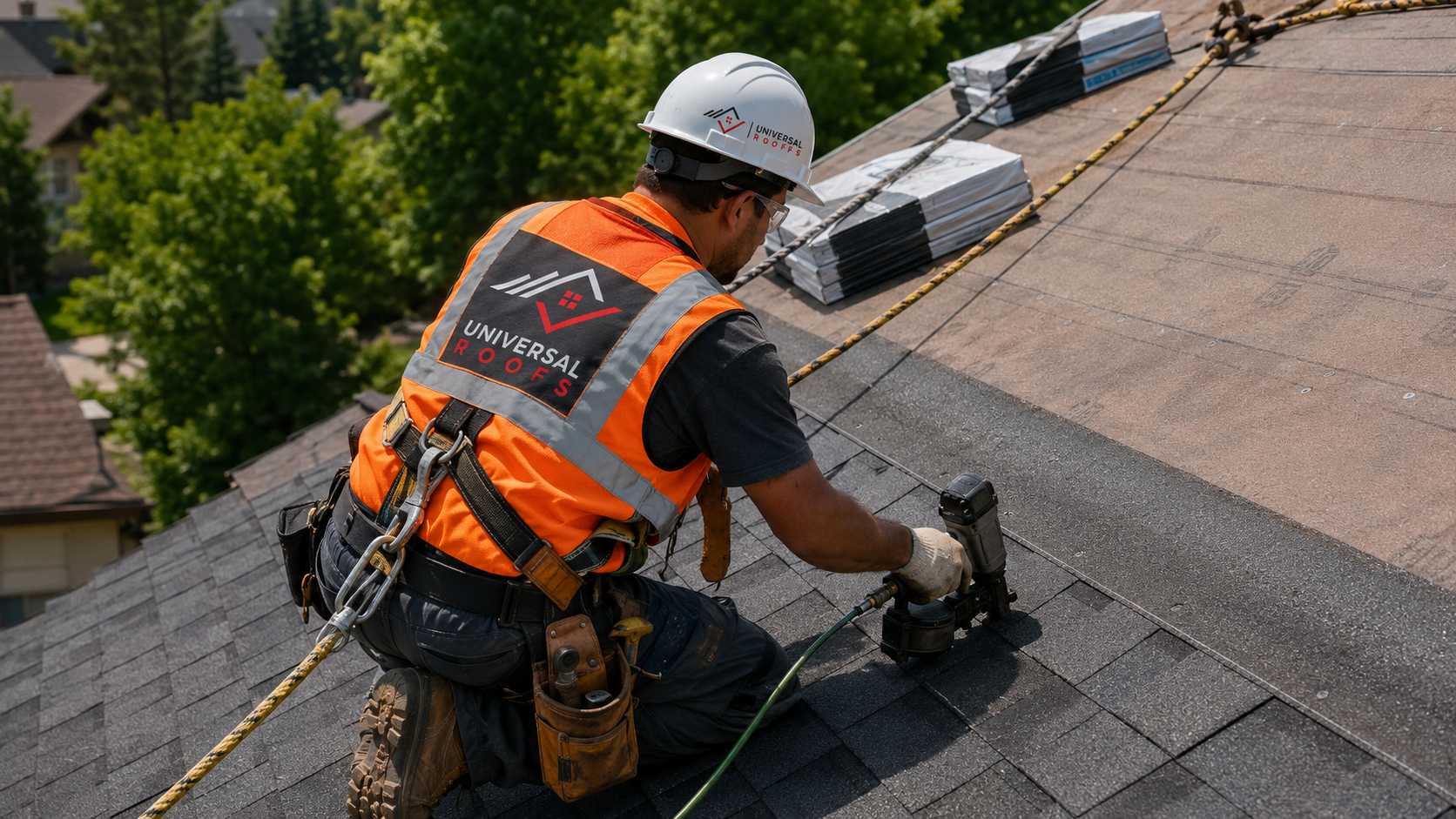
Physical installation is usually the shortest part of a roof replacement in Richmond Hill. On a typical detached home, a full crew strips, decks, dries in and shingles the roof in one to three working days. The overall project, from first phone call to final cleanup, normally runs three to six weeks in peak season because of scheduling and material lead time rather than labour.
| Stage | Typical duration | What happens | Homeowner involvement |
|---|---|---|---|
| Inspection and measurement | 45 to 90 minutes | Roof and attic assessment, photos, measurements | Access to attic hatch required |
| Written quote and material selection | 1 to 3 days | Scope, allowances, colour and product choice | Review and approve in writing |
| Scheduling and material delivery | 1 to 4 weeks | Crew booking, shingle and accessory delivery | Clear driveway access |
| Tear off and deck inspection | Half a day to 1 day | Old roofing removed, sheathing checked and repaired | Move vehicles, secure attic contents |
| Installation and detailing | 1 to 2 days | Underlayment, shingles, flashings, ventilation | Expect noise and vibration indoors |
| Cleanup and final walkthrough | 2 to 4 hours | Magnet sweep, debris removal, sign off | Walk the property with the crew lead |
Weather is the main variable. A crew will not tear off a roof it cannot dry in the same day, so a forecast of afternoon thunderstorms in July can push a start by twenty four hours. That is a good sign rather than a bad one. A contractor who strips a full roof ahead of a storm is gambling with your attic insulation and drywall.
Permits, the Ontario Building Code and Local Requirements
In most cases, a roof replacement in Richmond Hill that replaces like with like does not require a building permit in Ontario. Permits generally become necessary when structural elements change: replacing or altering rafters and trusses, changing the roof line, adding a dormer, converting a flat section to a pitched one, or carrying out significant sheathing replacement that amounts to structural work. If your project touches any of those, your contractor should tell you before work begins, and the permit application goes to the local building department.
Even where no permit is needed, the Ontario Building Code still governs how the work is done. The provisions that matter most on a residential reroof include:
- Eave protection. A self adhered ice and water membrane is required from the eave edge up the slope past the interior wall line, which normally means the first course or two of membrane along every eave.
- Underlayment. The full deck must be covered with an approved underlayment beneath the shingles, with proper laps and fastening.
- Attic ventilation. Ventilation must be provided at a minimum ratio of roughly one square foot of net free vent area for every three hundred square feet of insulated ceiling, balanced between intake at the soffits and exhaust at or near the ridge.
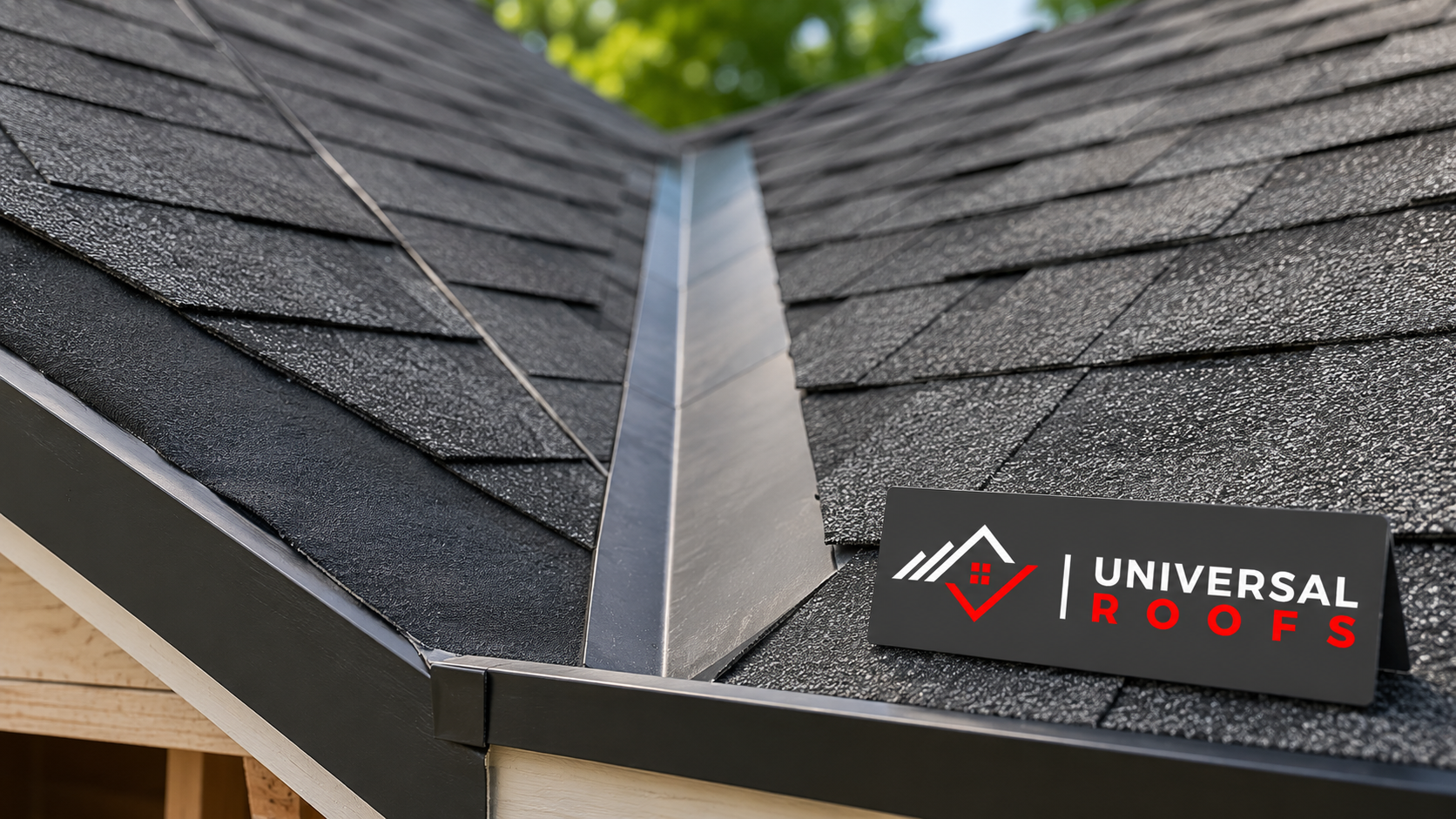
- Flashing. Valleys, chimneys, sidewalls, skylights and roof penetrations all require proper metal flashing rather than a reliance on sealant.
- Fastening. Nail count, placement and penetration into the deck must follow the shingle manufacturer’s instructions, which is also what most warranties depend on.
Ventilation deserves particular attention on older homes. Many bungalows in the town were built with minimal soffit venting and later had blown insulation installed that blocked what little intake existed. The result is a hot, humid attic in summer, frost accumulation in winter, and ice damming at the eaves. Replacing shingles without correcting that will shorten the life of the new roof. If your attic falls into that category, correcting attic ventilation and insulation at the same time as the roof is far cheaper than doing it later.
When Repair Still Makes Sense and When It Does Not
Not every problem calls for a full roof replacement in Richmond Hill. A roof that is fifteen years old with a single failed valley or a leaking plumbing stack boot is a repair. A roof that shows widespread wear across every slope is a replacement, and repeated patching on it is money spent twice. The practical dividing lines are age, extent, and whether the deck is still sound.
Indicators that a roof replacement in Richmond Hill is the right call rather than another repair include:
- Asphalt shingles past roughly eighteen to twenty years of service, particularly on south and west facing slopes
- Widespread granule loss, with heavy granule accumulation in gutters and at downspout outlets
- Curling, cupping or clawing shingle edges across multiple slopes rather than in one isolated area
- Cracked or brittle shingles that break when lifted, which makes any repair unreliable
- Multiple existing layers, since the Ontario Building Code and most manufacturers do not permit a third layer
- Soft or spongy areas underfoot, or visible sagging between rafters, which points to deck rot
- Interior staining in more than one location, or recurring stains after previous repairs
If only one or two of those apply and the roof is under fifteen years old, a targeted roof repair is usually the sensible first step. An honest inspection should tell you which category you are in, with photographs of the actual conditions rather than a generic recommendation.
What Drives Your Quote Up or Down
Two homes of identical square footage on the same street can carry quotes several thousand dollars apart. The variables below explain most of that gap, and understanding them makes it much easier to compare bids fairly. These are the factors that separate one roof replacement in Richmond Hill quote from another, so ask how each one applies to your property.
Pitch and access. Anything above about 7:12 requires roof jacks, additional staging and slower work. Tall three storey elevations and homes on sloped lots add setup time before a single shingle is laid.
Complexity. Valleys, hips, dormers, skylight curbs, chimneys and sidewall transitions all add labour and flashing material. A simple gable roof of 2,000 square feet is a meaningfully cheaper job than a cut up roof of the same area.
Layers and disposal. Two or three layers of old shingles mean roughly double or triple the tear off labour and disposal weight. Disposal in York Region is charged by weight, so this shows directly in the price.
Deck condition. Plank sheathing with wide gaps often needs to be overlaid with new plywood to meet fastening requirements, which adds both material and labour across the entire roof rather than in isolated patches.
Ventilation and accessories. New ridge vent, soffit intake correction, upgraded flashing, new drip edge, and replacement of aged plumbing stack boots are all worth doing during a replacement, and all appear as line items.
Skylights. An existing skylight that is more than fifteen years old should generally be replaced with the roof rather than reflashed, since the labour to open the same area twice is the expensive part. If your home has them, ask that skylight replacement be priced as an option in the same quote.
Warranty level. Manufacturer enhanced warranties require specific accessory packages and certified installers. They cost more up front and transfer differently on sale, so ask what is actually being registered.
How to Compare Roof Replacement in Richmond Hill Quotes Properly
Collect at least three written quotes and compare them line by line rather than by the total at the bottom. A cheap quote is often cheap because it excludes something the others include. Before signing anything for a roof replacement in Richmond Hill, confirm each of the following in writing.
- Scope of tear off. Full removal to the deck, or a layover? A layover is faster and cheaper but hides deck problems and shortens service life.
- Deck repair allowance. How many sheets are included, and what is the per sheet rate beyond that? Vague language here is where change orders come from.
- Underlayment and eave protection. How far up the slope does the ice and water membrane run, and what underlayment covers the rest?
- Ventilation plan. What intake and exhaust will exist when the job is finished, and does it meet the code ratio?
- Flashing. New metal at valleys, chimneys and walls, or reuse of existing flashing? Reused flashing is a common hidden saving that costs you later.
- Insurance and WSIB. Ask for current liability insurance and WSIB clearance certificates. Verify them rather than accepting a verbal assurance.
- Workmanship warranty. How many years, what it covers, and who honours it. A materials warranty is not a labour warranty.
- Cleanup and disposal. Bin placement, driveway protection, magnet sweeping for nails, and landscaping protection.
Payment structure on a roof replacement in Richmond Hill is worth watching too. A modest deposit is normal, but a demand for most of the contract value before materials arrive is not. Under Ontario’s consumer protection rules you also have cancellation rights on contracts signed in your home, so never feel pressured into signing on the spot.
Seasonal Timing Across York Region
Asphalt shingles seal best when the deck is warm enough for the adhesive strip to activate, which in practice means late spring through early autumn. That is also when demand peaks, so lead times stretch. Booking a roof replacement in Richmond Hill in the shoulder seasons often means better scheduling and more crew attention.
Spring work on a roof replacement in Richmond Hill is possible once overnight temperatures stay reliably above freezing, though wet weeks can cause repeated rescheduling. Summer is the most reliable window and the busiest, so book several weeks ahead. Early autumn is arguably the best combination of stable weather and shrinking demand. Late autumn and winter replacements are done when there is an active leak, using hand sealing at critical courses, but they are emergency measures rather than a preferred plan.
If you are weighing timing, remember that a roof already at end of life does not improve while you wait. A roof that survives a wet October will be a worse roof in March. For homeowners across the region, we schedule work through York Region including neighbouring communities, and we recommend booking replacements before the season fills rather than after the first interior stain appears.
Working With a Roofing Contractor That Serves Richmond Hill
Universal Roofs is based in the Toronto area and works throughout York Region, handling roof replacement in Richmond Hill along with residential and commercial projects across the surrounding communities. Being close enough to return quickly matters more than a local mailing address, because warranty callbacks, post storm checks and follow up inspections only mean something if the crew can actually get there. You can read more about our roofing services for Richmond Hill homeowners and about the full scope of our roof replacement service including tear off, deck repair, ventilation correction and flashing.
A good process for a roof replacement in Richmond Hill looks the same on every home. The roof and the attic are both inspected. Measurements are taken rather than estimated from the ground. The quote lists scope, allowances, materials by product name, and exclusions. The crew protects landscaping and driveways, works to manufacturer specification, and sweeps thoroughly for nails at the end of each day. You receive photographs of the deck once it is exposed, so you can see what you paid for beneath the shingles. Anything less than that, at any price, is a gamble on the largest exterior component of your home.
How much does a roof replacement in Richmond Hill cost in 2026?
Do I need a building permit to replace my roof?
How long does the work actually take?
Can I put new shingles over the old ones instead?
What is the best time of year to book?
Will my attic ventilation be corrected during the replacement?
Book Your Roof Replacement in Richmond Hill Assessment
If your shingles are curling, your gutters are filling with granules, or you have already paid for one repair too many, the next step is a proper inspection rather than another guess. Universal Roofs handles roof replacement in Richmond Hill with written, itemised quotes based on measured roofs and inspected attics, with clear allowances so you know exactly what changes if the deck needs work.
Call us today at (416) 732-2421 or request a free consultation. We will assess the roof, photograph the conditions, explain the options honestly, and give you a quote you can compare line by line against any other.
Universal Roofs serves Richmond Hill and communities across York Region and the Greater Toronto Area with residential and commercial roofing, replacement and repair.