
Every autumn we get the same question from homeowners who have put off a new roof: is it too late? The honest answer is that installing shingles in cold weather is possible, and roofers in Ontario do it every year, but it comes with trade-offs. The colder it gets, the more the crew has to work around the material rather than with it. This article explains what actually changes as temperatures drop, what a careful crew does about it, and why booking your re-roof in early autumn avoids most of the compromises.
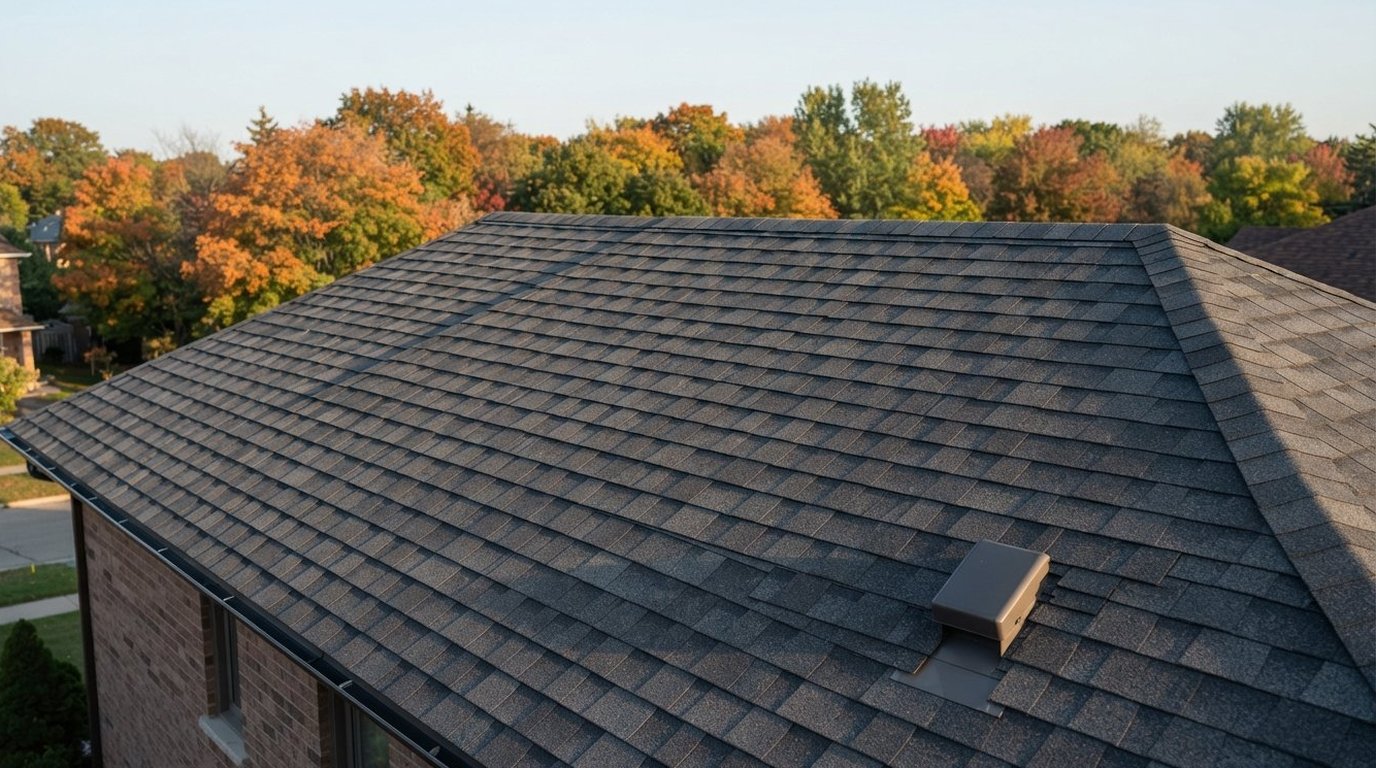
We will stick to how shingles behave and what installation instructions generally address. For the rules that apply to a specific product, always go back to the manufacturer’s current application instructions, printed on the bundle wrapper and in their technical documents.
What Changes When Installing Shingles in Cold Weather
An asphalt shingle is a mat, usually fibreglass, coated in asphalt and covered with granules. Asphalt is a material whose behaviour changes with temperature. In warm sun it softens and becomes tacky. In the cold it stiffens. That one property explains nearly every issue that comes up when the temperature drops.
Three things are affected most:
- The self-seal strip. Each shingle has a strip of asphalt adhesive that bonds it to the shingle below. It needs warmth, usually from sunshine on the roof, to activate.
- Flexibility. Cold shingles are stiffer and can crack if they are bent sharply, such as over a ridge, in a valley or at a hip.
- Everything else that is adhesive. Self-adhered ice and water membranes, some underlayment laps and sealants all rely on temperature to stick well.
Why the Self-Seal Strip Needs Warmth
The self-seal strip is what holds the tabs down against wind. Right after installation, a shingle is held only by its nails. The seal forms over the following days or weeks as the sun warms the roof and the adhesive softens and bonds to the shingle beneath. In summer that can happen within a sunny day or two. In cool weather it can take much longer.
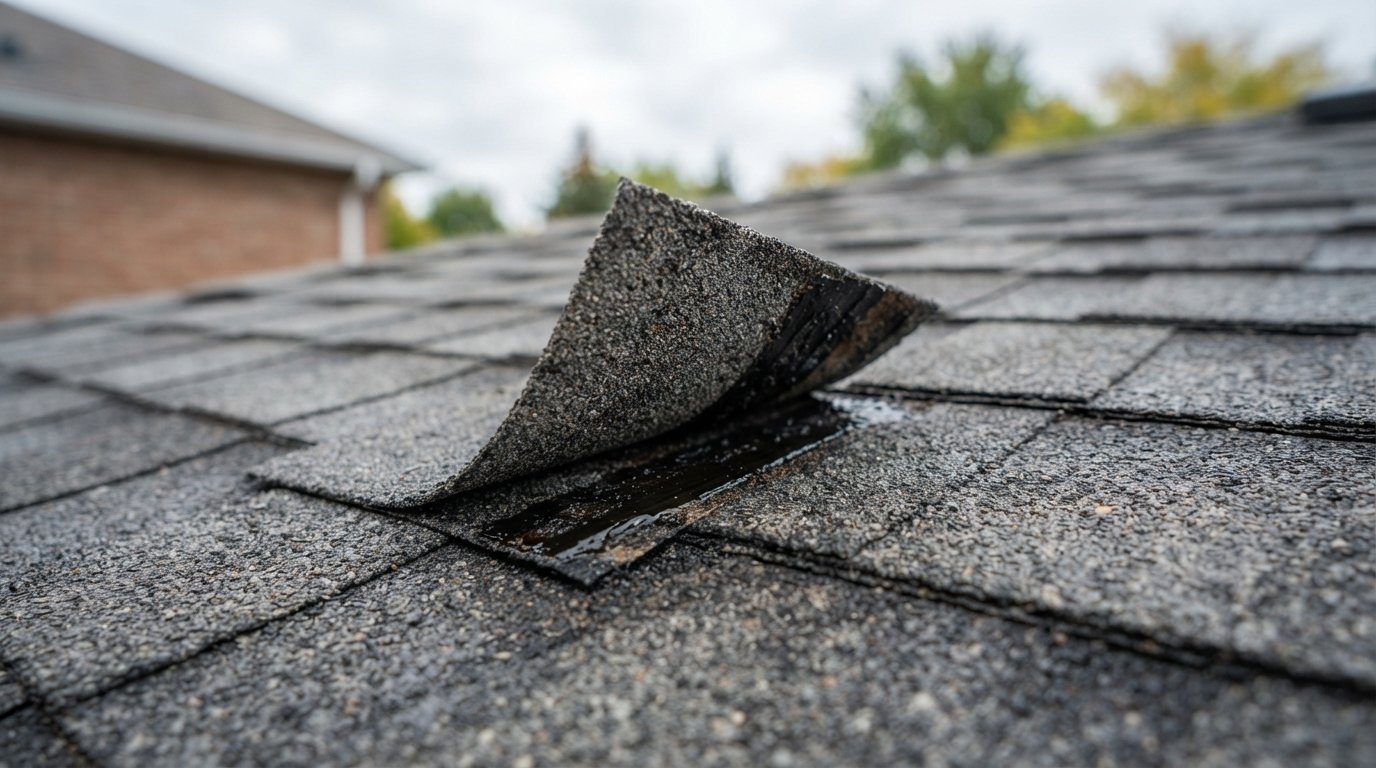
When a roof goes on late in the season, the seal strips may not bond until the following spring. During that period, the tabs are more vulnerable to lifting in strong winds, and wind-driven rain can get under an unsealed edge. The roof is not necessarily leaking, but it is more exposed than a fully sealed one.
A number of manufacturers note in their instructions that shingles installed in cold weather may not seal until warmer weather arrives, and they describe steps to take. The exact temperatures and methods differ by product, which is why a crew should be working from the bundle wrapper, not from habit.
Hand-Sealing: What It Is and When It Is Used
Hand-sealing is the standard answer on a cool day. It means applying small dabs of asphalt roofing cement or a compatible adhesive under the tabs of each shingle, by hand, so they are bonded without relying on the sun. Manufacturers that call for it specify the number, size and placement of the dabs, because too much adhesive can cause blistering or trap water, and too little does nothing.
It works, but it has costs:
- It adds labour to every shingle on the roof, which slows the job and raises the price.
- It has to be done carefully. Globs of cement squeezed out from under tabs are unsightly and can stain.
- It is most important at the edges: along the eaves, rakes and ridge, where wind uplift is strongest.
Many crews hand-seal the perimeter and high-exposure areas as a matter of course later in the season, even when temperatures are still moderate. Ask your contractor whether they plan to, and if so where.
| Condition on install day | How shingles behave | What a careful crew typically does |
|---|---|---|
| Warm, sunny days | Flexible, seal strips activate quickly | Standard installation per the manufacturer’s instructions |
| Mild days with cooler nights, typical of early autumn | Still workable; sealing may take a little longer | Standard installation, with attention to edges on exposed roofs |
| Cool days with little sun | Stiffer; seal strips may not activate for some time | Store bundles warm, handle gently, consider hand-sealing edges |
| Near or below freezing | Brittle; seal strips unlikely to bond until spring | Follow the manufacturer’s cold-weather instructions, hand-seal as specified, or reschedule |
| Frost, dew or moisture on the deck | Membranes and underlayment do not adhere well | Wait for the deck to dry before applying adhesive layers |
The bands in this table are descriptive rather than precise. Your contractor should tell you which conditions the specific product’s instructions address and how they plan to handle them.
Brittleness and Handling in the Cold
Cold shingles are less forgiving. A bundle that is flexible in August can crack along the cut lines if it is bent in November. Problems we watch for:
Cracking at bends
Hip and ridge caps have to be bent over the peak. Cold caps can crack across the bend. Crews often keep ridge cap bundles in a warm spot, such as a heated garage or cab, until they are needed, and install them during the warmest part of the day.
Valleys and tight bends
In closed-cut and woven valleys, shingles are bent across the valley centre. Cold material resists that bend and can crack or not lie flat.
Nail blow-through
Pneumatic nailers set for warm shingles can overdrive nails into stiffer cold ones, or the mat can crack around the nail head. Crews adjust nailer pressure through the day as temperatures change and check that nail heads sit flush, not sunk into the shingle.
Rough handling
Dropping bundles on the roof or folding them over the ridge to balance them, which is common practice in warm weather, can damage cold shingles. Bundles should be laid flat and handled more gently.
The table below sums up the problems we most often see when a late-season roof was rushed, and what usually causes them.
| Problem found later | Likely cause | How it is prevented |
|---|---|---|
| Tabs lifting or flapping along the eaves and rakes | Seal strips never bonded before a windy spell | Hand-sealing at edges and high-exposure areas as the instructions specify |
| Cracked ridge caps | Cold caps bent sharply over the peak | Keeping caps warm and installing them in the warmest part of the day |
| Nail heads sunk into the shingle or torn mat | Nailer pressure set for warmer material | Adjusting pressure through the day and checking nails regularly |
| Wavy or buckled courses | Bundles stored bent, or moisture on the deck at installation | Flat, dry storage and waiting for the deck to dry |
| Membrane edges peeling at the eaves | Self-adhered membrane applied below its application temperature or on a damp deck | Following the membrane’s temperature limits and using a primer where specified |
| Adhesive smears on the roof surface | Too much cement used when hand-sealing | Using the dab size and placement the manufacturer calls for |
None of these are inevitable on a cool-weather job. They are what happens when a crew treats a cool November day the same as a warm August one.
Storing Shingles Before and During the Job
Storage matters more as the season cools. A few practices make a real difference:
- Keep bundles flat. Bundles stored bent or draped over something take a set and do not lie flat on the roof.
- Keep them dry. Wet bundles are heavier, and moisture under shingles is never good.
- Keep them warm if possible. Delivering to a sheltered spot, or bringing a few bundles at a time out of a warmer area, keeps the material workable.
- Avoid long storage on the roof in cold, wet weather. Deliver closer to the installation day when conditions are marginal.
Membranes and self-adhered products have their own minimum application temperatures and may need a primer in cooler conditions. Those limits are in the manufacturer’s documentation for each product.
How Late Is Too Late for Installing Shingles in Cold Weather?
There is no single cut-off date. Roofers in Ontario install shingles well into late autumn and sometimes through the colder months when a roof has failed and cannot wait. The practical question is not whether it can be done, but what compromises you accept.
Here is how we think about it with clients:
- Early autumn is usually excellent. Days are mild, there is still decent sun on the roof, and the seal strips generally bond before the colder months set in.
- Mid to late autumn is often workable, but the days are shorter, mornings are frosty, and sealing may not happen until spring. Expect some extra precautions, possibly hand-sealing, and more weather delays.
- The colder months are for roofs that genuinely cannot wait. The work is slower and more expensive, and the finished roof relies on hand-sealing and careful handling.
If your roof is failing now, do not delay a repair or replacement just to wait for warmer weather. A careful crew can manage the conditions. If your roof is ageing but not leaking, planning around the weather is a sensible choice. You can read more about planning a full asphalt roof replacement and what the job includes.
| Your situation | Our usual advice | Reason |
|---|---|---|
| Roof ageing, no leaks, quote in hand | Book for early autumn if possible | Best conditions for sealing, handling and scheduling |
| Active leak or storm damage | Repair or replace now, with cold-weather precautions | Water damage inside costs more than the extra care outside |
| Roof ageing and it is already late autumn | Consider a repair to get through, then replace in spring | Avoids installing in marginal conditions unless needed |
| Selling the house soon | Discuss timing and documentation with the contractor | Buyers may ask whether seal strips have bonded and what was done about it |
| Exposed, windy site | Schedule earlier rather than later | Unsealed tabs are more vulnerable where wind uplift is highest |
Other Cold-Season Factors on the Job Site
Shingles are not the only thing that behaves differently. When you are planning a late-season re-roof, keep these in mind:
- Shorter days. Less daylight means fewer working hours, so jobs take more calendar days. Crews also avoid leaving the deck open overnight.
- Morning frost and dew. Work may not start until the deck is dry, especially for membranes.
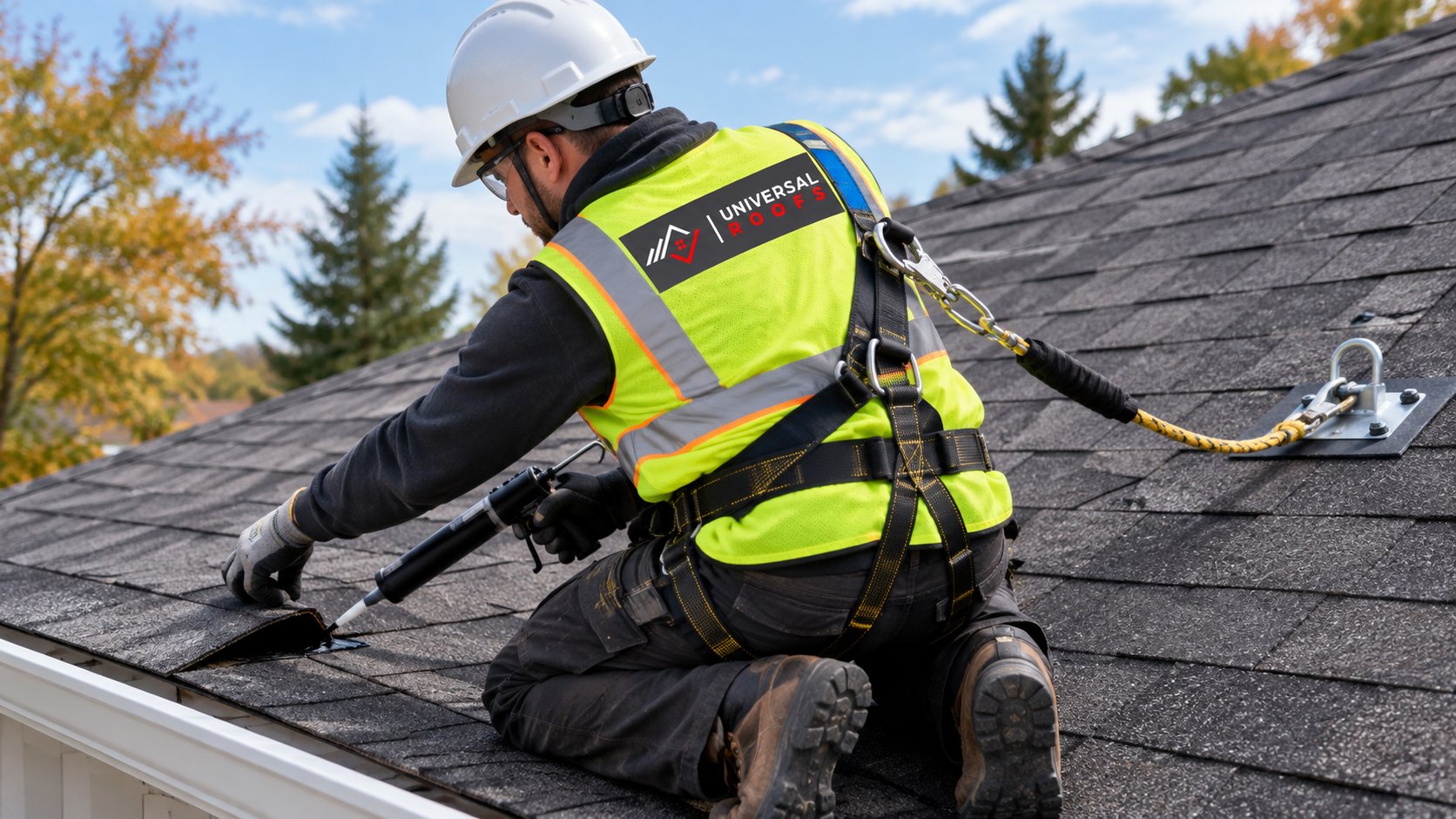
- Safety. Frosty or wet roofs are slippery. A responsible crew will pause if conditions are unsafe, and fall protection is essential.
- Sealants and caulks. Many products have minimum application temperatures. Flashing details that rely on sealant need suitable products.
- Scheduling. Contractors’ calendars fill up in autumn as everyone tries to beat the weather. Booking early gives you a better choice of dates.
Checking a Late-Season Roof in Spring
If your roof did go on late in the year, a quick look in spring is worthwhile. Once a few warm, sunny days have passed, the seal strips should have bonded. From the ground, look along the eaves and rakes for tabs that sit slightly raised or have curled edges, and check for shingle pieces in the yard or eavestroughs after windy days. Do not climb onto the roof yourself. If anything looks off, ask your contractor to inspect it; tabs that have not sealed can be hand-sealed at that point, and catching it early is far easier than repairing wind damage later.
This is also a sensible moment to confirm the paperwork is in order: the product name and colour, the manufacturer’s warranty registration if applicable, and any notes the crew made about cold-weather conditions on your job.
What to Ask Your Contractor About Timing
Before signing for a late-season job, ask:
- What does the manufacturer’s application instruction say about installing shingles in cold weather for this product?
- Will you hand-seal, and if so, where and how?
- How will you store the shingles and ridge caps?
- What will you do if conditions on the scheduled day are too cold or wet?
- Will you adjust nailer pressure and check nail placement through the day?
- What happens if tabs lift before they seal? How would that be handled?
Clear answers mean the crew has thought about it. Vague answers, or “it doesn’t matter,” are a red flag. Homeowners working with our Halton Region roofing, eavestroughs and attic work team get a straight conversation about timing before any date is booked.
Why Early Autumn Beats Installing Shingles in Cold Weather
Early autumn brings together the things that make a re-roof go well. The attic is no longer uncomfortably hot, the sun still has enough strength to warm the roof and activate seal strips, days are long enough for full shifts, and there is time for the shingles to bond before the colder months. It also means any issues found during tear-off, such as deck rot or ventilation problems, can be fixed without racing the weather.
If your roof is near the end of its life, booking now is the simplest way to avoid the compromises that come with roofing later in the season.
Frequently Asked Questions
Can shingles be installed in cold weather?
Why don’t shingles seal in the cold?
What is hand-sealing?
Will a late-season roof leak?
Do cold shingles crack?
When should I book a roof replacement to avoid the cold?
Avoid the Compromises of Installing Shingles in Cold Weather
If your roof is due, now is a good time to get it on the schedule. Universal Roofs will explain how the weather affects your specific shingles and plan the work for the best conditions available. Call us today at (416) 732-2421 or request a free estimate.
Serving homeowners across Halton Region and the wider GTA with roofing, eavestroughs and attic work.