
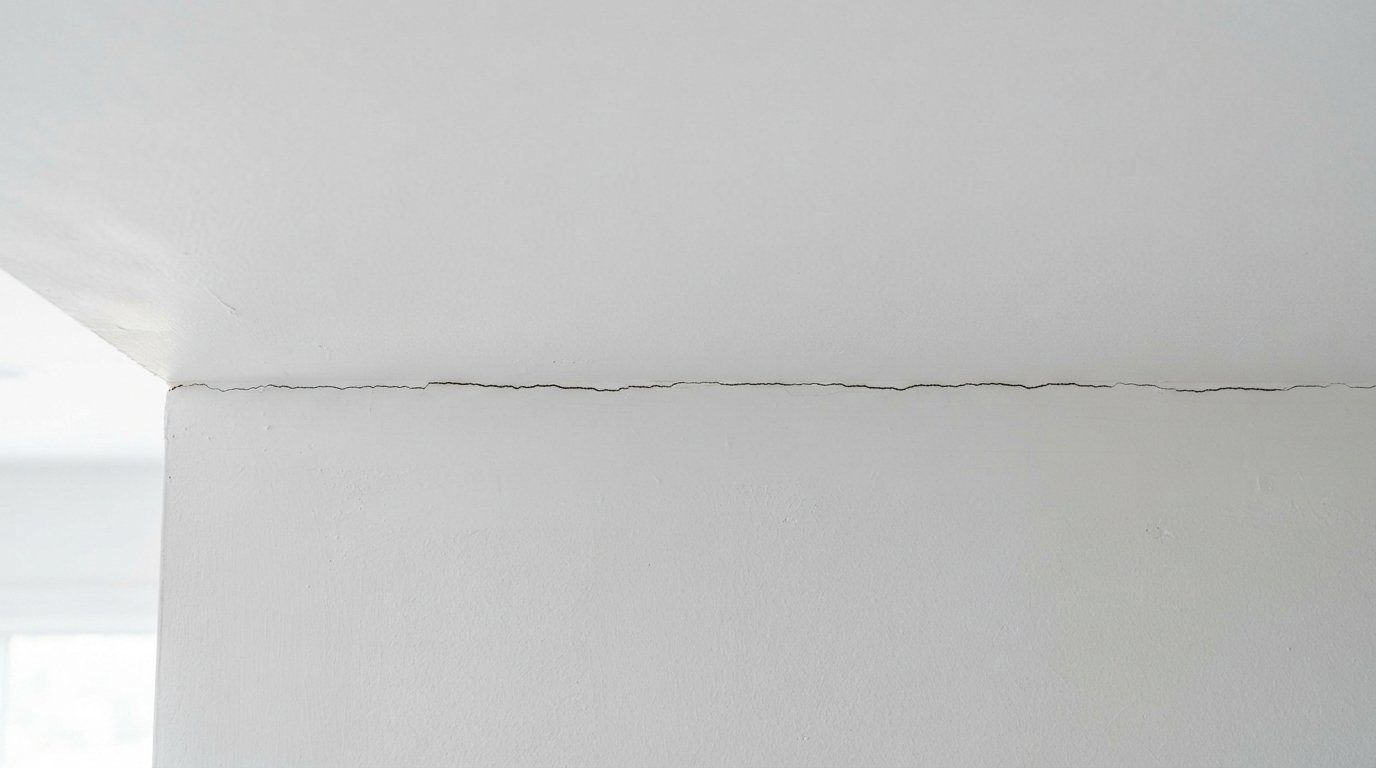
Every year, as the furnace starts running for the season, some homeowners notice a crisp crack opening along the line where an interior wall meets the ceiling. By spring it has mostly closed again. They patch it, paint it, and the next winter it reappears in exactly the same place. That pattern is the signature of truss uplift: a seasonal, upward bow in the bottom chords of roof trusses that lifts the ceiling off the tops of interior walls. It looks alarming, but in most homes it is a predictable movement of wood, not a sign that the roof structure is failing.
The useful questions are practical ones: how to tell this seasonal movement from a crack that deserves a structural look, why patching it with more tape never lasts, how drywall clips let a ceiling move without splitting, and what the attic has to do with any of it.
What Truss Uplift Is
Most houses built in recent decades have roofs framed with engineered trusses rather than individual rafters and ceiling joists. A truss is a triangle of lumber: two top chords that form the roof slope, a bottom chord that forms the ceiling, and web members connecting them, all joined with metal connector plates. The bottom chord spans from one exterior wall to the other, and the ceiling drywall is fastened to it.
Because the truss bears only on the exterior walls, interior partition walls are not supposed to carry it. The bottom chord passes over them, and the wall top plates simply sit close underneath. That design is what allows truss uplift to happen: when the bottom chord bows upward, nothing holds it down at the interior walls, so it lifts away from them, taking the ceiling with it.
Truss uplift typically shows up as a crack or gap at the junction of an interior wall and the ceiling, often near the middle of the house where the bottom chord is furthest from its supports. It usually appears in late autumn or early winter, grows through the coldest months, and closes or nearly closes by late spring or summer. In some houses the ceiling also lifts slightly at the corners of rooms, or a door at the top of an interior partition begins to bind or loosen.
Why Trusses Bow Upward In Winter
Wood swells as it absorbs moisture and shrinks as it dries. Along its length the change is tiny, but over a truss chord several metres long even a fraction of a percent adds up. In winter, the parts of a truss sit in very different environments.
- The top chords are in the cold attic, close to the roof sheathing. Cold air holds little moisture, but its relative humidity is often high, and the wood absorbs moisture and lengthens slightly.
- The bottom chord is buried in attic insulation, sitting just above the warm, heated ceiling. It stays warmer and drier, and it can shrink slightly.
When the top chords lengthen and the bottom chord shortens, the triangle changes shape. The ends of the bottom chord are held at the exterior walls, so the middle rises. Even a small change in length in each chord can lift the centre of a long span by a noticeable amount. When spring arrives and the attic dries and warms, the chords return toward their original lengths and the bottom chord settles back down.
Several factors make the effect stronger: long truss spans, lumber that was installed with a higher moisture content, deep attic insulation that keeps the bottom chord especially warm and dry, and a humid attic caused by warm, moist air leaking up from the house. Our attic insulation and ventilation work often starts with exactly this kind of diagnosis, because moisture moving into the attic affects the trusses, the insulation and the roof sheathing at the same time.
| Time of year | What is happening in the attic | What you usually see indoors |
|---|---|---|
| Late summer | Attic warm and relatively dry; chords close to equal moisture | Ceiling line tight; old cracks closed or barely visible |
| Mid to late autumn | Nights cool, heating begins, top chords start absorbing moisture | Hairline cracks start to open at interior wall tops |
| Early to mid winter | Cold, humid attic air; bottom chord warm and dry under insulation | Cracks widen; gaps may be visible along ceiling lines |
| Late winter | Uplift at or near its seasonal maximum | Largest gaps; doors near the centre of the house may bind |
| Spring | Attic warms and dries; chords move back toward equal length | Gaps narrow; patched cracks may close or wrinkle |
Is Truss Uplift A Structural Problem?
In most cases, no. Engineered trusses are designed to carry roof loads on the exterior walls, and the seasonal movement of truss uplift does not by itself reduce their strength. The problem is cosmetic and sometimes functional, such as cracked drywall, tape lines that keep failing and doors that rub, rather than structural.
That said, not every ceiling crack is truss uplift, and it is worth ruling out other causes before treating it as harmless. Cracks that appear year-round, cracks that run diagonally from the corners of doors and windows, sagging ceilings, roof lines that dip, and cracks accompanied by water stains point to different problems.
| What you notice | Truss uplift is likely when | Look for something else when |
|---|---|---|
| Crack location | Straight crack at interior wall and ceiling junction | Diagonal cracks from door and window corners, or on exterior walls |
| Timing | Opens in the heating season, closes in spring or summer | Present all year, or steadily growing over several years |
| Ceiling shape | Ceiling lifts slightly; no sagging | Ceiling sags, or the roof ridge dips when viewed from outside |
| Staining | No water marks | Brown stains, bubbling paint or damp drywall near the crack |
| Attic condition | Trusses intact, connector plates tight | Damaged, cut or altered trusses; loose or missing connector plates |
| Floors and doors | Doors at interior walls bind only in winter | Sloping floors, doors racking all year, foundation cracks |
If anything in the right-hand column applies, or if trusses have been cut or modified for an attic renovation or ductwork, have the structure assessed. A qualified professional, such as a structural engineer or the truss manufacturer, can confirm whether the trusses are performing as designed. Cutting or repairing a truss should never be done without engineering direction.
How To Repair The Ceiling So It Stops Cracking
Because truss uplift is a normal movement, the goal is not to stop the truss from moving. Trying to hold it down by screwing the ceiling or the bottom chord into the top of an interior wall usually does not work, and it can cause damage: the truss may lift the wall, crack the drywall in a different place, or put loads into the interior wall that it was never meant to carry. The aim is to let the ceiling and the wall move independently.
Drywall clips at interior walls
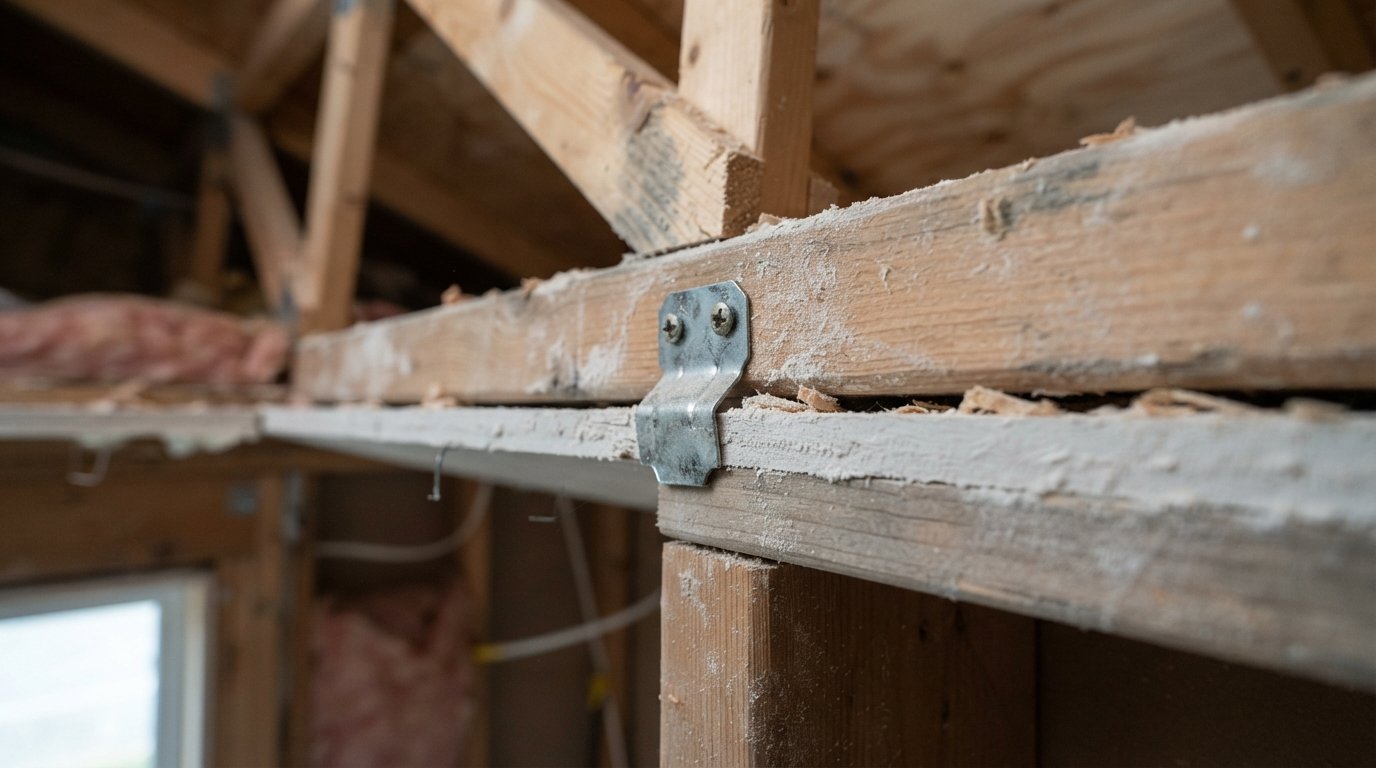
The most reliable fix is to change how the ceiling drywall is fastened near interior walls. Instead of screwing the ceiling to the bottom chord directly above the wall, the edge of the ceiling drywall is supported by drywall clips fastened to the top plate of the partition. The nearest fasteners into the trusses are kept back from the wall, commonly around 16 to 24 inches, following the drywall and truss manufacturers’ guidance. When the truss lifts, the drywall flexes slightly over that distance instead of tearing at the corner.
In an existing house, this usually means removing a strip of ceiling drywall along the affected walls, removing the screws close to the wall, installing clips, refastening the ceiling, and then taping and finishing. It is a messy but straightforward repair, often combined with painting the room.
Truss clips at the top plate
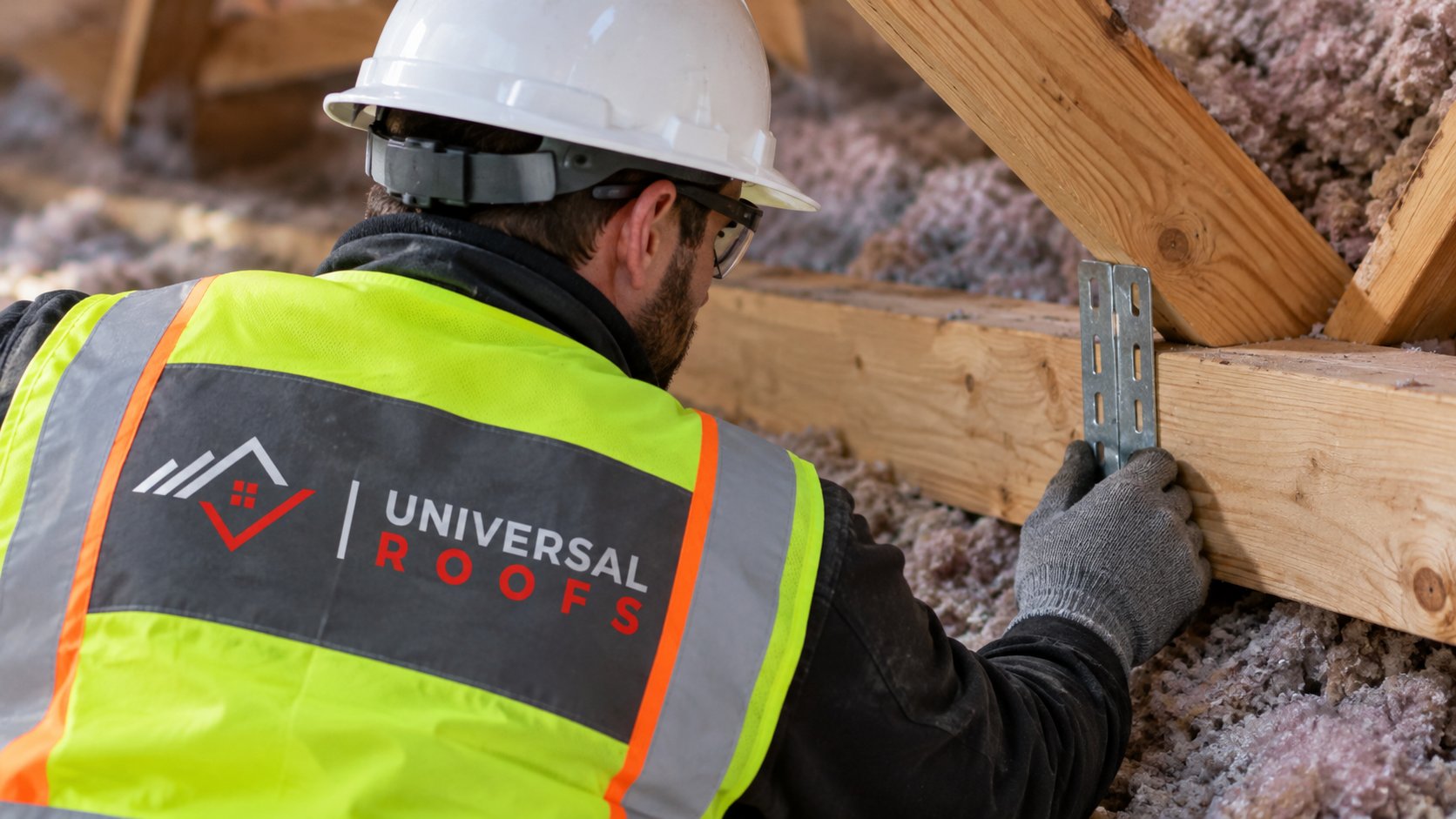
In new construction, trusses are often fastened to interior walls with slotted clips that hold the wall in alignment sideways but let the truss move up and down. In existing homes, if trusses have been nailed tight to interior walls, the nails can be replaced with slotted clips. This work happens in the attic and needs care to avoid disturbing insulation, wiring and ducts.
Mouldings that hide the movement
A simpler cosmetic option is crown moulding fastened to the ceiling only, not to the wall. As the ceiling rises, the moulding rises with it and slides up the wall face, so the gap is hidden behind the moulding. This does not stop the movement, but it can hide a seasonal gap in rooms where removing drywall is not practical. Flexible caulk at the joint can also help small cracks, though it may tear as the gap opens.
| Repair approach | What it does | Best suited to | Limitations |
|---|---|---|---|
| Drywall clips with set-back fasteners | Lets the ceiling flex instead of cracking at the wall | Rooms with recurring cracks along interior walls | Requires removing and refinishing a strip of ceiling |
| Slotted truss clips | Allows vertical truss movement while keeping walls aligned | Attics where trusses were nailed to partitions | Attic access needed; works with drywall clips, not instead of them |
| Ceiling-only crown moulding | Hides the gap as it opens and closes | Finished rooms where drywall work is not wanted | Cosmetic only; gap still opens behind the moulding |
| Flexible caulk or sealant | Bridges small seasonal movement | Hairline cracks with little movement | Can tear or wrinkle as the gap widens |
| Rigid tape and compound repair | Patches the crack | Not recommended for recurring uplift cracks | Usually cracks again the next winter |
Attic Insulation, Air Sealing And Ventilation
Because truss uplift is driven by the moisture and temperature difference between top and bottom chords, the attic environment matters. Two parts of that picture can be improved; one cannot be fully controlled.
Air sealing reduces attic moisture
Warm, humid air leaking from the house into the attic raises attic humidity, which increases moisture uptake in the top chords. Sealing the paths that air takes, including the attic hatch, top plates, wiring and plumbing holes, pot lights and bathroom fan housings, reduces that moisture. Air sealing also protects the roof sheathing from condensation and frost, so it is worth doing for its own sake.
Ventilation helps but does not cure uplift
Balanced soffit intake and ridge or roof exhaust remove moist air from the attic. Good ventilation can moderate the moisture swings in the top chords, but cold outdoor air is itself humid in relative terms, so ventilation alone will not eliminate truss uplift. Bathroom and kitchen fans should always be ducted outdoors, never into the attic.
Insulation can make the difference more visible
Deep attic insulation keeps the bottom chord warm and dry, which is good for energy use but can increase the difference between chords. Some homeowners notice uplift for the first time after an attic insulation top-up. That is not a reason to avoid insulating; it is a reason to plan for drywall clips or moulding in rooms where cracks are likely, and to air seal before adding insulation. Our crews completing roofing, eavestroughs and attic work across Halton Region make a point of checking the truss-to-wall connections while they are in the attic for insulation work, because that is the easiest time to spot nails that are pinning trusses to partitions.
What To Do This Autumn
If cracks are starting to open now that the heating season has begun, a few steps help you understand and manage them:
- Note the date and measure the gap. A photo with a ruler at the same spot each month shows whether the movement is seasonal.
- Look for staining or sagging. Any water mark or sag means it is time for a closer inspection.
- Check the attic, or have it checked. Look for frost on nails or sheathing, damp insulation, bathroom fans venting into the attic and trusses fastened tight to interior walls.
- Hold off on rigid patching. Patching a moving crack in winter usually fails. Plan a proper repair, ideally during the season when the ceiling has settled back down.
- Plan air sealing and insulation together. If attic work is planned, address air leaks first and check truss connections at the same time.
Repair costs vary with the number of walls affected and how much drywall needs to be opened and refinished. As a broad estimate, clip-and-refinish work on a single room’s interior walls often falls in the range of several hundred to a couple of thousand dollars, with painting and access affecting the final price.
Truss Movement Questions
Is a crack between my ceiling and wall dangerous?
Why does the crack come back every winter?
Can I screw the ceiling down to the wall?
Does more attic insulation cause the problem?
Will better ventilation stop it?
Who should I call about ceiling cracks?
Getting Truss Uplift Diagnosed
If ceiling cracks are opening along your interior walls this autumn, Universal Roofs can inspect the attic, check truss connections, air sealing, insulation and ventilation, and recommend a repair that lets your ceiling move without cracking.
Call us today at (416) 732-2421 or request a free estimate.
Attic and ceiling diagnosis for Halton Region homeowners and the wider GTA.