
A sagging roof is never a cosmetic problem. When a roofline dips, bows, or ripples instead of running straight and true, it is telling you that something underneath the shingles has already failed or is failing right now. Homeowners across Toronto and the GTA often notice a sagging roof from the street or driveway long before they see any interior damage, and the temptation is to wait and watch. That delay is exactly what turns a manageable repair into a full roof replacement.
This guide explains, in plain language, why a sagging roof needs immediate attention, what causes the sag in the first place, how professionals diagnose the severity, and what it typically costs to fix depending on how far the damage has progressed. We will also cover how Toronto’s freeze-thaw winters and humid summers accelerate structural roof problems, and what you should do the moment you spot a dip in your roofline.
If you have already noticed a sag, do not wait for the next windstorm or heavy summer rainfall to test it further. A roof repair assessment now, while the deck and framing are still salvageable, is almost always cheaper and less disruptive than the alternative.
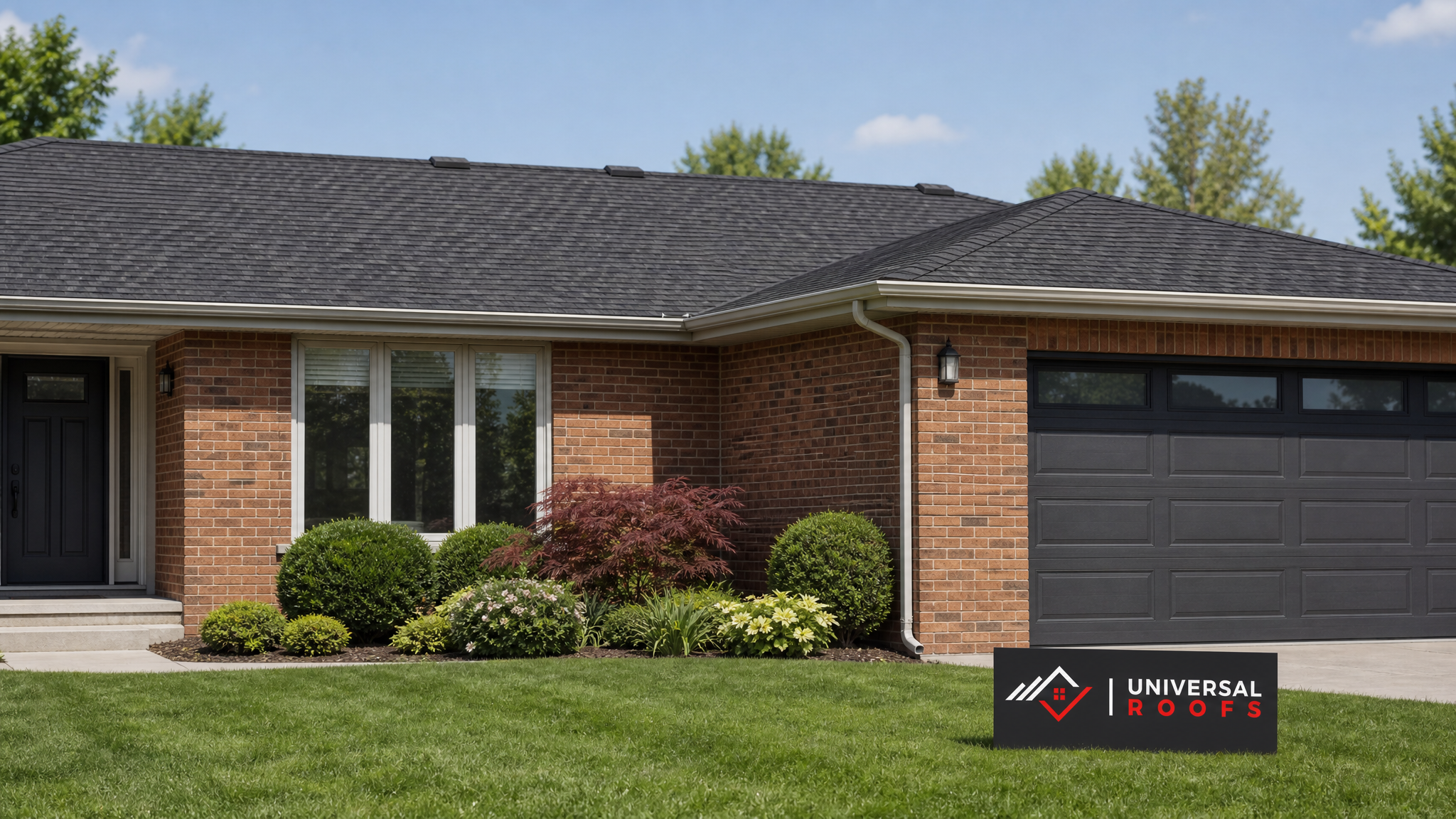
What a Sagging Roof Actually Means Structurally
A healthy roof is a rigid system. The rafters or trusses, the sheathing (decking), the ridge board, and the load-bearing walls all work together to carry weight down to the foundation in a straight, predictable path. When you see a sag, it means one or more of those components has lost its ability to carry that load in a straight line, and the roof is bending under its own weight, plus the weight of snow, ice, rain, or accumulated debris.
Sagging shows up in a few recognizable patterns. A dip in the middle of the roofline, between the ridge and the eaves, usually points to weakened or undersized rafters. A wave or ripple across a section of roof often means the sheathing itself has softened from moisture. A dropped ridge line, where the peak of the roof visibly bows downward in the centre, is one of the more serious signs because it suggests the ridge board or the supporting wall structure underneath is compromised.
None of these patterns improve with time. Wood that has begun to bend under sustained load will continue to bend, and the rate of deflection tends to accelerate once the fibres in the framing member start to fail. That is the core reason immediate repair matters: a sag today is a smaller, cheaper problem than the same sag will be in six months.
The Most Common Causes of a Sagging Roof in the GTA
Roofs in the Greater Toronto Area face a specific combination of stresses that make sagging more common here than in milder climates. Understanding the cause helps determine the urgency and the correct repair approach.
Water damage and rot are the single most frequent culprit. A slow leak around a chimney, valley, or skylight can go unnoticed for years, quietly saturating the sheathing and rafters above the ceiling. Wood loses most of its structural strength long before it visibly rots through, so by the time you see a sag, the framing has often been weakened for a long time already.
Snow and ice load is a distinctly Toronto problem. Our winters bring heavy, wet snow followed by freeze-thaw cycles that create ice damming along the eaves. That trapped ice adds enormous point-loading to the lower third of the roof, exactly where many older homes have the least reinforcement.
Undersized or aging framing shows up often in homes built before modern building codes standardized rafter spans and sizing. A roof that was adequate in 1965 may not meet the load requirements we now expect, especially if additional roofing layers have been added over the decades without accounting for the extra weight.
Multiple roofing layers compound the problem. Ontario building code limits the number of shingle layers permitted on a roof, but many homes still carry two or even three layers from previous re-roofs. Each layer adds dead weight that the original framing was never designed to support indefinitely.
Poor attic ventilation is an underappreciated cause. When an attic is not properly ventilated, moisture from household humidity condenses on the underside of the roof deck, saturating the plywood or oriented strand board from below. This type of rot is harder to spot because it starts on the attic side, invisible from the exterior until the sag is already visible.
Why Waiting Turns a Repair Into a Replacement
The single biggest mistake homeowners make with a sagging roof is assuming it can wait until a more convenient time, or until the next scheduled roof replacement. Structural sagging does not behave like a cosmetic issue such as faded shingle colour or minor granule loss. It is a progressive failure, and every week of delay allows the underlying problem to spread.
Consider what is actually happening: if the sag is caused by a leak, that leak is still active. Every rainfall adds more moisture to already-weakened wood. If the sag is caused by undersized framing carrying too much weight, every snowfall this coming winter will add load to members that are already deflecting. The failure is cumulative, not static.
There is also a safety dimension that homeowners frequently underestimate. A sagging roof deck can fail suddenly under a heavy snow load, particularly after a wet, heavy snowfall followed by rain, a pattern the GTA sees most winters. A sudden collapse is rare, but partial deck failure, where sheathing punctures or a rafter cracks, is a real risk once a sag has progressed past a certain point, and it can happen with no warning during a storm.
From a cost standpoint, the arithmetic favours early action every time. A localized sag caught early might mean sistering a few rafters and replacing a section of sheathing during a standard roof repair visit. Left unaddressed, that same sag can spread to adjacent framing members, compromise the ridge, and ultimately force a full tear-off and roof replacement, including possible interior ceiling and insulation damage if water has been tracking inward.
How Professionals Diagnose a Sagging Roof
A proper diagnosis goes well beyond a visual glance from the ground. When our crews assess a sagging roof, we work through a structured process to identify the cause, the extent, and the safest repair path.
The first step is an exterior visual inspection from a ladder and, when safe, walking the roof surface directly. We look at the ridge line for straightness using a string line or laser level, check valleys and eaves for ripple patterns, and note where the sag is concentrated versus where it may be a broader, whole-roof issue.
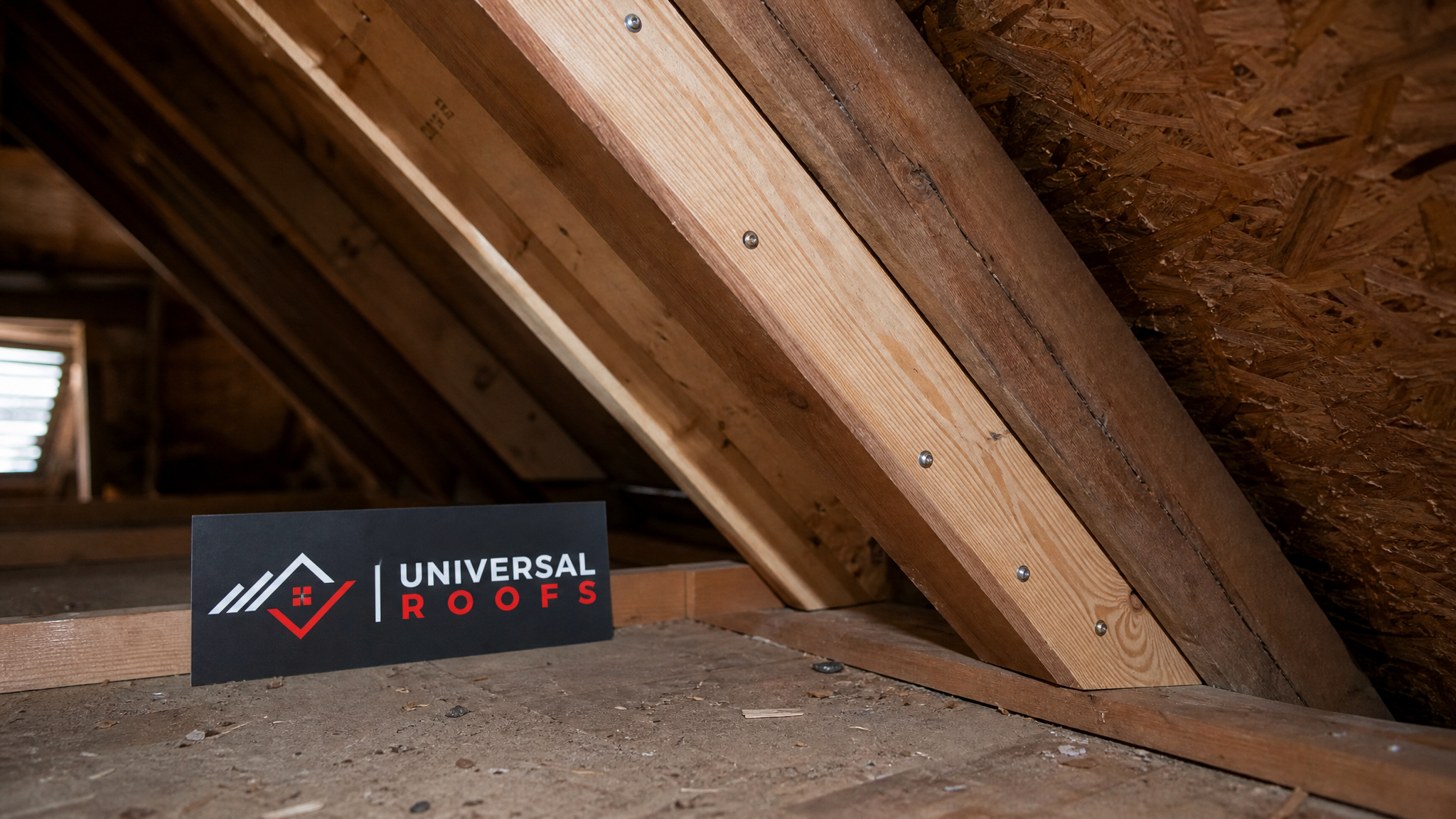
Next comes an attic inspection, which is often more revealing than anything visible from outside. From inside the attic we can see rafters directly, check for daylight or water staining that indicates active leaks, probe sheathing with a moisture meter or an awl to test for soft, rotted wood, and measure rafter deflection against a straight edge.
We also assess the load history: how many layers of shingles are on the roof, whether there have been additions or extra equipment (like HVAC units or solar panels) added to the roof deck since it was built, and whether previous ice damming has left visible staining or damage at the eaves.
Finally, for more serious cases, particularly a dropped ridge or a sag affecting a large section of roof, we may recommend a structural engineer’s assessment to confirm rafter sizing against current span tables before finalizing a repair plan. This step protects the homeowner by ensuring the repair actually resolves the load problem rather than masking it.
Repair Methods Compared: What Fixes a Sagging Roof
Not every sagging roof needs the same fix. The correct method depends on whether the problem is isolated to a small area or affects the broader structure. The table below compares the most common repair approaches.
| Repair Method | Best For | Typical Timeline | Relative Cost |
|---|---|---|---|
| Sistering rafters | Localized weak or slightly bowed rafters with sound sheathing | 1-2 days | $$ |
| Sheathing replacement | Rotted or water-damaged decking with structurally sound rafters | 1-3 days | $$ |
| Ridge board reinforcement | Dropped or bowing ridge line affecting roof peak | 2-4 days | $$$ |
| Full rafter/truss replacement | Severely rotted or undersized framing across a section | 4-7 days | $$$$ |
| Complete tear-off and re-roof | Widespread sagging, multiple failed components, or deferred damage | 1-2 weeks | $$$$$ |
In our experience, the majority of sags we are called out for in the GTA fall into the first three categories when homeowners call promptly after noticing the problem. It is the roofs where the sag has been visible for a year or more, often “waiting for spring” or “waiting for the next mortgage renewal,” that end up needing the more extensive and expensive fourth or fifth option.
Signs Your Sagging Roof Has Become an Emergency
Some sagging roofs can reasonably wait for a scheduled repair appointment within a week or two. Others require same-day or emergency attention. Knowing the difference protects your home and your family.
A roof needs emergency attention when the sag is accompanied by any of the following: visible daylight through the roof deck from inside the attic, active water dripping into a living space during or after rain, cracking or popping sounds coming from the attic or ceiling during wind or snow loading, doors or windows on the top floor suddenly sticking or misaligning (a sign the frame is shifting), or a ridge line that has visibly dropped compared to photos from even a few months earlier.
If you notice any of these signs, especially during or immediately after a heavy summer thunderstorm or a winter snow event, treat it as urgent. Clear the area beneath the affected section if it is safe to do so, and contact a roofing professional the same day rather than waiting for a routine inspection slot.
The table below summarizes how to read the severity of a sag and how quickly you should act in each case.
| Warning Sign | Severity | Recommended Response Time |
|---|---|---|
| Slight dip visible only from certain angles | Early stage | Schedule inspection within 1-2 weeks |
| Noticeable wave or ripple across shingles | Moderate | Schedule inspection within days |
| Dropped ridge line compared to prior photos | Serious | Same-week professional assessment |
| Cracking or popping sounds during wind or snow load | Urgent | Contact a roofer immediately |
| Daylight visible through the roof deck or active indoor dripping | Emergency | Same-day response required |
Cost Factors and What Affects Your Repair Estimate
Homeowners understandably want a ballpark figure before committing to an inspection. While every roof is different, the table below breaks down the variables that most affect the final cost of a sagging roof repair in the Toronto area.
| Cost Factor | Lower Cost Scenario | Higher Cost Scenario |
|---|---|---|
| Extent of the sag | Single localized area, caught early | Spread across multiple rafter bays or the full ridge |
| Cause identified | Isolated leak or point load, source easily fixed | Systemic issue like undersized original framing |
| Access and roof pitch | Low-slope, easily accessible sections | Steep pitch requiring extra fall protection and staging |
| Interior damage | None; problem contained to attic/deck | Ceiling drywall, insulation, or finishes affected |
| Number of shingle layers | Single layer, straightforward tear-back | Two or more layers requiring full removal |
The most controllable factor on this list is timing. Every other variable, extent, cause, access, interior damage, tends to get worse the longer a sag is left unaddressed, which is why an early inspection is the one decision that actually keeps your estimate on the lower end of the range.
How Toronto’s Climate Accelerates Roof Sagging
It is worth understanding why sagging roofs are such a persistent issue specifically in this region. The GTA experiences dozens of freeze-thaw cycles each winter. Water that gets into a seam, a flashing joint, or a cracked shingle freezes, expands, and widens the opening, then thaws and lets more water in on the next cycle. Over a decade or two, this cycle can turn a minor sealant gap into a significant point of water entry directly above vulnerable framing.
Summer brings its own pressures. Humid air trapped in a poorly ventilated attic condenses against the cooler underside of the roof deck overnight, especially during the muggy stretches we get from June through August. That condensation cycle, repeated night after night across a season, is a slower but equally damaging process compared to winter ice damming, and it explains why some sags appear seemingly out of nowhere in mid-summer with no obvious storm event to blame.
Because of this dual seasonal pressure, we generally recommend GTA homeowners have their roof and attic ventilation checked at least once a year, ideally in late spring after the freeze-thaw season has ended and before summer humidity sets in, so any developing weakness is caught before it becomes visible as a sag.
Do-It-Yourself Checks vs. When to Call a Professional
There are a few checks any homeowner can safely perform from the ground or from inside the attic, and knowing them helps you describe the problem accurately when you do call for an inspection.
From the street, stand back and sight along the ridge line and the eave line in both directions. A straight roof should show no visible dip, wave, or unevenness. Take a photo from the same spot every few months if you are monitoring a minor sag, since photos make small changes easier to detect than memory alone.
From inside the attic, on a dry day, look for any staining, dark spots, or sagging insulation that suggests water has been tracking along a rafter. A flashlight held at a low, raking angle across the underside of the roof deck can reveal subtle dips that are hard to see when looking straight on.
What you should not do is walk on a roof you suspect is structurally weakened, attempt to jack or shim rafters yourself, or assume that a sag “looks stable” and can wait. Structural roof work requires fall protection, proper load calculations, and often coordination with the framing beneath finished ceilings, all of which fall squarely in professional territory. A same-week roof repair consultation costs nothing to schedule and gives you a clear, documented picture of what you are actually dealing with.
What Happens During a Sagging Roof Repair Appointment
Understanding the process ahead of time removes a lot of the anxiety homeowners feel about structural repairs. A typical appointment for a diagnosed sagging roof follows a consistent sequence.
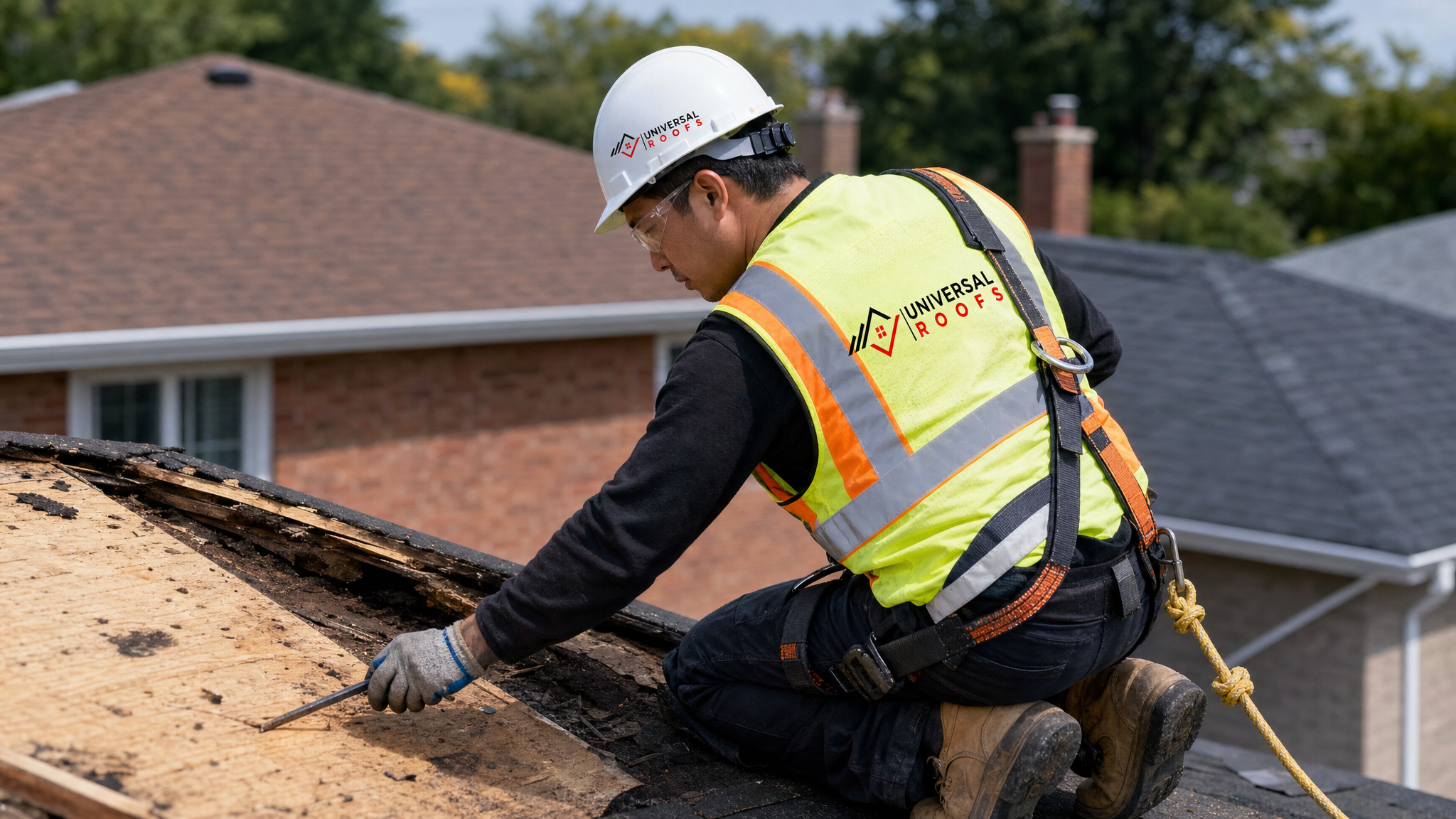
Our crew arrives with the materials anticipated from the initial inspection, plus contingency materials in case the sheathing removal reveals additional hidden damage, which happens more often than not once shingles come off. Fall protection is set up first: harnesses, anchor points, and safety rope for anyone working near the roof edge or on a steep pitch.
Affected shingles and underlayment are removed from the sagging section to expose the deck. If sheathing is soft or delaminated, it is cut back to solid wood and replaced with new sheathing matched to code thickness. If rafters show deflection but are not fully rotted, we typically sister a new rafter alongside the existing one, fastened along its full length to restore straight, rigid load transfer. Severely compromised rafters are cut out and replaced entirely.
Once the structural repair is complete and inspected, new underlayment, flashing, and shingles are installed to match the surrounding roof as closely as possible. We finish with a walk-through, showing the homeowner photos of what was found under the surface and confirming the ridge and roofline are straight again.
Preventing Future Sagging After Your Repair
Once a sagging section has been repaired, a few ongoing habits significantly reduce the odds of it recurring, or of a new sag developing elsewhere on the roof.
Keep gutters and downspouts clear so water is not backing up under the shingle edge, particularly heading into late fall before the first hard freeze. Have your attic ventilation checked as part of any roof inspection, since balanced intake and exhaust airflow is one of the most effective ways to prevent the condensation-driven rot that causes hidden sagging. Avoid adding rooftop equipment, additional shingle layers, or heavy holiday displays without confirming the roof’s load capacity first. And schedule a professional inspection annually, ideally paired with eavestrough cleaning, so any new water intrusion or early-stage deflection is caught well before it becomes visible as a sag from the street.
Homeowners who follow this routine rarely see a repeat sag in the same area, and when new issues do appear elsewhere on an older roof, they are caught and corrected while still inexpensive to fix.
Why does my sagging roof need immediate repair instead of waiting?
What causes a roof to sag in the first place?
Can a sagging roof collapse without warning?
How much does it cost to repair a sagging roof in Toronto?
Can I repair a sagging roof myself?
How do I know if my sagging roof is an emergency?
Need Help With Why Does My Sagging?
A dip in your roofline is not something to monitor for another season, it is a signal that your home’s structure needs professional attention now, while the fix is still small. Universal Roofs has been diagnosing and repairing sagging roofs across the GTA since 2005, and our crews know exactly what freeze-thaw winters and humid summers do to aging rafters, sheathing, and ridge boards in this region.
Call us today at (416) 732-2421 or request a free inspection to get started.
Universal Roofs proudly serves Toronto, Mississauga, Brampton, Vaughan, Markham, Oakville and the GTA since 2005.