
When heavy snow piles up on a Toronto roof after a January nor’easter, homeowners face a stressful question fast: who do you actually call? A search for roof snow removal and repair companies turns up dozens of names, but very few contractors are equipped to safely clear snow AND diagnose the ice damming, flashing failures, or structural stress that heavy snow load often causes. The two jobs are connected, and treating them separately is how homeowners end up paying twice.
This guide breaks down what separates a genuine roof snow removal and repair company from a plow operator with a ladder, what proper snow clearing actually involves, how ice damming forms and how it is fixed, what a fair price looks like across the Greater Toronto Area, and the warning signs that tell you a roof needs professional attention before the next thaw cycle causes real damage. Whether you are planning ahead this summer or dealing with an active problem, the goal here is to help you make an informed, safe decision.
We built this resource from years of emergency winter callouts across Toronto, Mississauga, Brampton, Vaughan, Markham, Oakville and the wider GTA. Universal Roofs has been handling exactly this kind of seasonal roofing work since 2005, and the patterns repeat every year: the same ice dam locations, the same missed warning signs, and the same costly mistakes when the wrong contractor is hired.
What Roof Snow Removal and Repair Companies Actually Do
A legitimate roof snow removal and repair company does far more than shovel snow off shingles. The work generally happens in three stages: assessment, removal, and inspection. Reputable crews start by evaluating the roof’s slope, snow load, and existing vulnerabilities before anyone climbs up with a shovel or roof rake. This matters because removing snow the wrong way — for example, scraping down to bare shingles with a metal blade — can strip granules, crack shingles, or tear off flashing that took years to loosen.
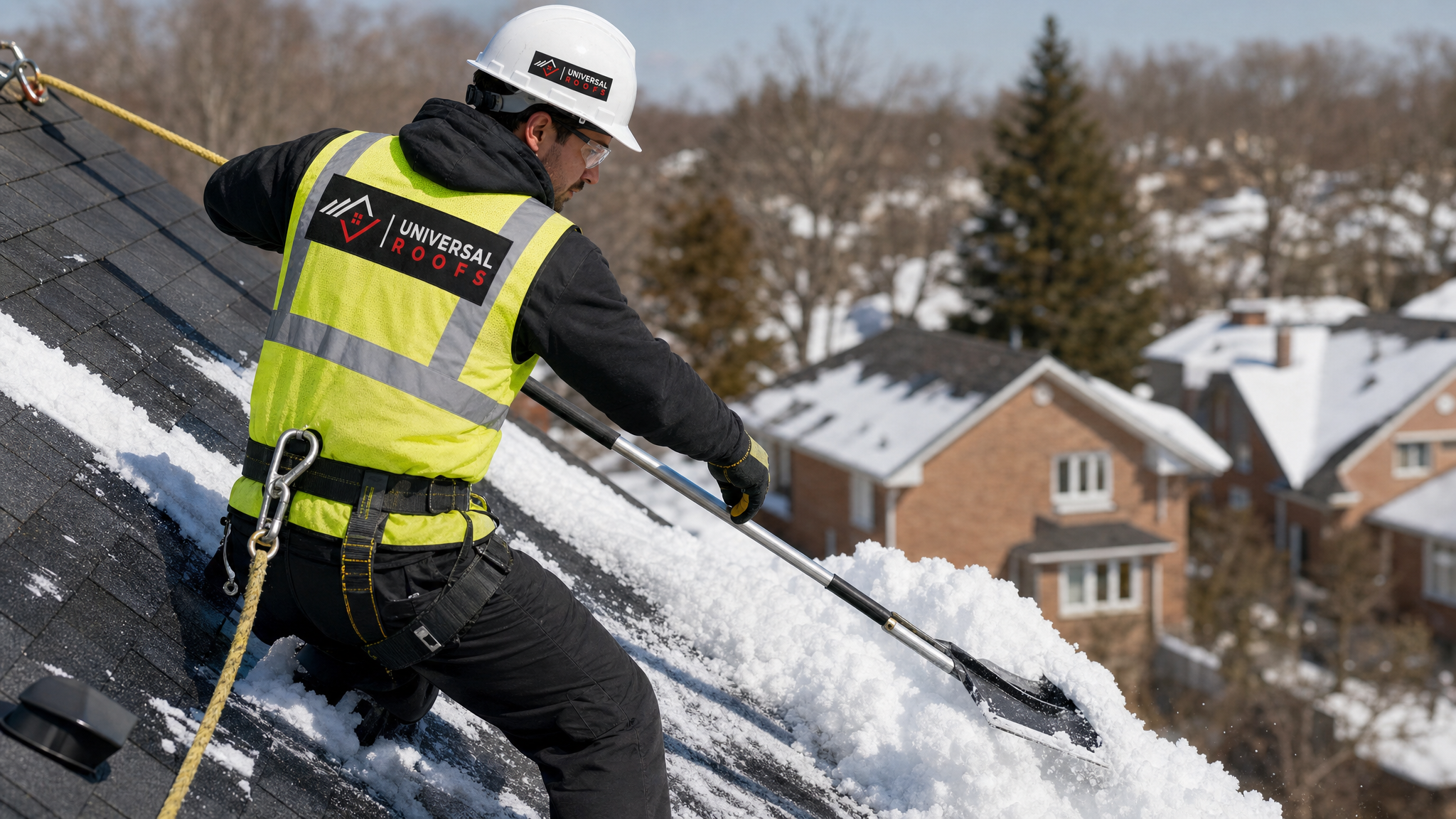
Once the assessment is done, technicians typically use plastic or rubber-edged roof rakes from the ground for lower sections, and manual shovelling techniques for steeper or higher roofs that require rope access and harnesses. Snow is removed in layers, leaving a thin protective base rather than scraping to bare shingle, which helps prevent ice formation directly on the roofing material. After clearing, a proper company inspects the roof deck, flashing, vents, and eavestroughs for signs of ice damming, leaks, or structural stress before leaving the site.
The “and repair” half of the phrase is the part many snow-clearing outfits skip entirely. If the crew that clears your roof cannot also identify a compromised flashing seal or recommend roof repair when the deck shows soft spots, you are only getting half the service — and likely paying for a return visit from someone else a few weeks later.
How Snow Load and Ice Damming Damage a GTA Roof
Toronto’s freeze-thaw cycle is uniquely hard on roofs. A typical winter sees temperatures swing above and below freezing dozens of times between December and March. Snow melts during a mild afternoon, runs down the roof slope, and refreezes overnight at the cold eave edge, where it has less insulation warmth beneath it than the rest of the roof. Repeated over weeks, this builds an ice dam: a ridge of solid ice at the eaves that blocks meltwater from draining into the gutters.
Once an ice dam forms, water backs up under the shingles instead of running off the roof. That water finds every seam, nail hole, and flashing gap, and it can travel along the roof deck until it drips into the attic, along exterior walls, or through ceiling drywall inside the home. This is the single most common cause of winter roof leaks across the GTA, and it is almost entirely preventable with proactive snow removal and adequate attic insulation and ventilation.
Heavy, wet snow also adds significant dead load to a roof structure. A metre of fresh powder might weigh relatively little per square metre, but the same depth of wet, compacted, or partially melted snow can weigh three to five times more. Older roofs, additions with shallower rafters, or flat and low-slope sections are the most vulnerable to sagging, cracking, or in rare severe cases, structural failure under sustained heavy snow load.
| Snow Condition | Approx. Weight per m² | Risk Level for Standard GTA Roofs | Recommended Action |
|---|---|---|---|
| Fresh, dry powder | 10-15 kg | Low | Monitor; usually no action needed |
| Settled/compacted snow | 25-40 kg | Moderate | Rake lower edges, watch eaves for ice buildup |
| Wet, heavy snow | 45-70 kg | High | Professional removal recommended within days |
| Snow plus rain saturation | 75-100+ kg | Severe | Immediate professional assessment and removal |
| Ice dam with standing water | Variable, concentrated at eaves | Severe (localized) | Steam removal and leak inspection required |
Safe Snow Removal Methods, Compared
Not every removal method suits every roof, and the wrong tool can cause more damage than the snow itself. Below is a comparison of the methods homeowners encounter, either as DIY options or offered by contractors.
| Method | Best Suited For | Risk to Roofing Material | DIY Feasible? |
|---|---|---|---|
| Plastic/rubber roof rake from ground | Single-storey homes, low eaves | Low, if used at correct angle | Yes, with caution |
| Manual shovel with rope/harness access | Steep or multi-storey roofs | Moderate; depends on technician skill | No — fall risk is significant |
| Steam-based ice dam removal | Existing ice dams at eaves and valleys | Very low; melts ice without scraping shingles | No — specialized equipment required |
| Metal shovel or ice pick chipping | Not recommended on any roof type | High; frequently punctures or tears shingles | Not recommended at all |
| Calcium chloride socks in eavestroughs | Preventing new ice dam formation | Low | Yes, as a preventive measure |
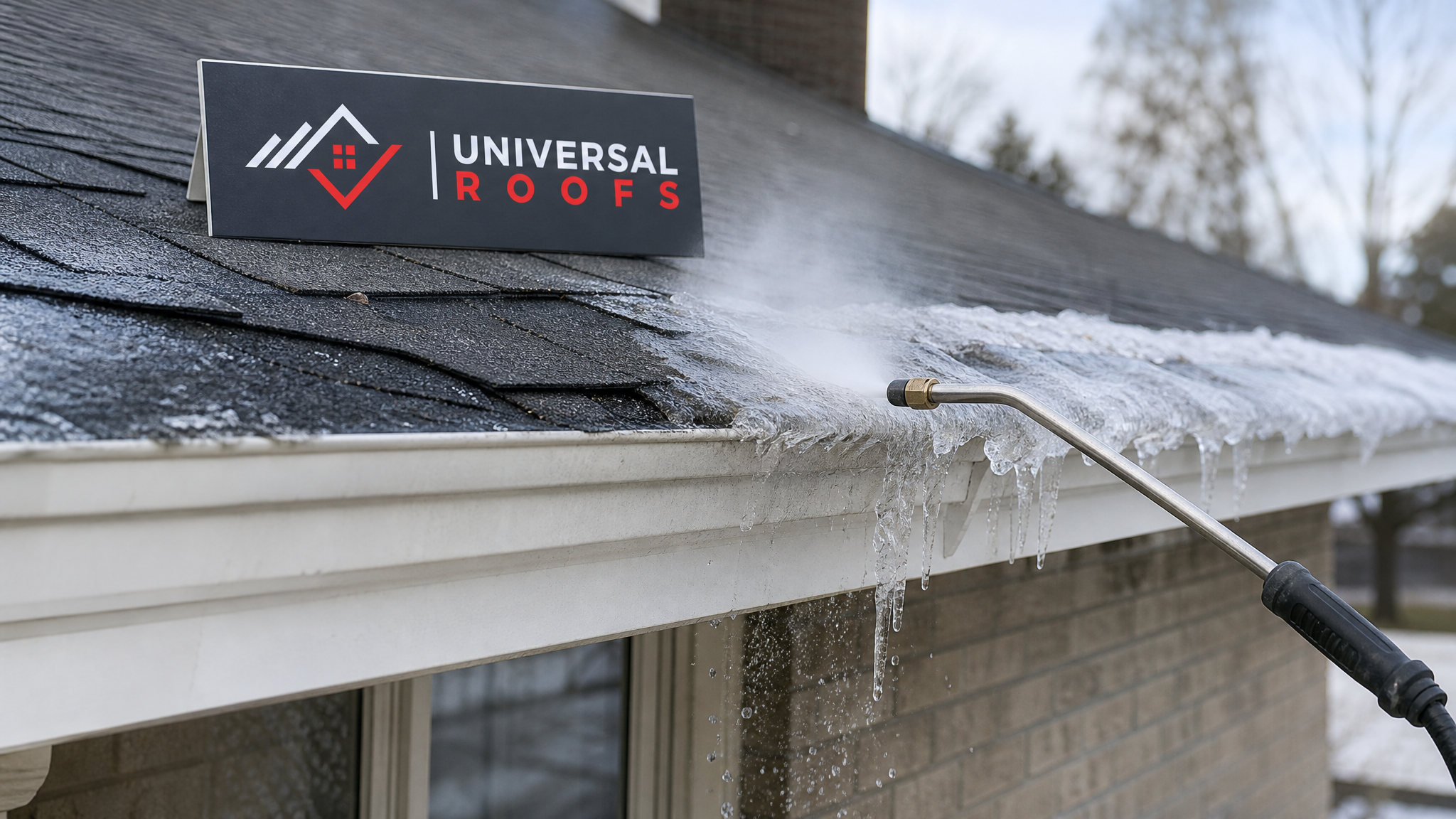
Steam-based ice dam removal deserves particular attention because it is the method most homeowners have never heard of, yet it is the safest way to clear an established ice dam without damaging the roofing membrane underneath. Low-pressure steam melts the ice from the outside in, rather than requiring anyone to chip or pry at frozen shingles. Crews trained in this method can clear a dam and immediately visually check the exposed area for granule loss, cracked shingles, or lifted flashing.
Choosing Between Snow Removal Alone and a Full Repair Assessment
Homeowners often assume snow removal is a standalone service, but in practice the two decisions are linked. If a roof has existing wear — aging shingles, a flashing seal nearing the end of its life, or a deck that has taken on moisture in past seasons — heavy snow load is what turns a minor weak point into an active leak. A company that only offers clearing, with no ability to evaluate or complete roof repair, cannot tell you whether your roof survived the winter intact or is quietly failing under the surface.
This is especially true for homes with a flat roofing section, such as additions, garages, or older bungalow-style homes common across the GTA. Flat and low-slope roofs pond water and trap snow differently than pitched roofs, and they need a membrane-specific inspection rather than a generic shingle check. Similarly, homes with skylights often see snow and ice accumulate directly against the frame, which is one of the most common points of winter leaks. If a skylight seal has degraded, skylight replacement before winter can prevent an expensive mid-season repair.
A full-service company will typically bundle these into one visit: clear the snow, inspect the deck and flashing, check skylights and vent boots, and flag anything that needs follow-up before it becomes a leak. This is both more convenient and, over a multi-year horizon, considerably cheaper than paying separate companies for clearing and diagnosis.
What Fair Pricing Looks Like Across the GTA
Pricing for roof snow removal varies more than most home services because it depends on roof pitch, accessibility, snow depth, and whether ice dam removal or repair work is bundled in. The table below reflects typical ranges reported by GTA homeowners for a standard single-family detached home; townhomes and larger properties will vary.
| Service | Typical Price Range (CAD) | What’s Usually Included | Timeframe |
|---|---|---|---|
| Basic roof rake clearing (single storey) | $150 – $300 | Snow removal to eaves, visual check | 1-2 hours |
| Full roof snow removal (2-storey, steep pitch) | $350 – $700 | Rope access, full clearing, basic inspection | 2-4 hours |
| Steam-based ice dam removal | $400 – $900 | Ice dam melting, leak check, minor flashing check | 2-3 hours |
| Snow removal + minor repair (flashing/shingles) | $600 – $1,500 | Clearing plus targeted repair of damaged areas | Half day |
| Emergency after-hours callout | Add $150 – $300 premium | Priority response during active storm or leak | Same day |
Be cautious of quotes that seem unusually low, particularly during or right after a major snowstorm when demand spikes. A price far below the ranges above often signals an uninsured operator working without fall protection, which is both a safety liability for you as the homeowner and a sign the crew will not properly inspect for underlying damage.
Warning Signs Your Roof Needs Professional Attention
Most winter roof failures give warning signs weeks before an actual leak appears indoors. Homeowners who catch these early save significantly on repair costs and avoid interior water damage entirely.
- Icicles longer than 30 centimetres hanging from the eaves, especially with a visible ice ridge behind them
- Visible sagging along the roofline or in the middle of a flat roof section
- Water stains spreading across ceiling drywall, particularly near exterior walls or below valleys
- Ice forming inside the attic on the underside of the roof deck or on nail points
- Gutters and downspouts packed solid with ice and unable to drain during a thaw
- Cracking or popping sounds from the attic or roof structure during heavy snow load
- Granules from asphalt shingles collecting at the base of downspouts after snow melt
Any one of these on its own may not be an emergency, but two or more together usually indicate that snow load or ice damming has already compromised part of the roof system. At that point, a full inspection through roof repair service is worth scheduling before the next freeze-thaw cycle makes the damage worse.
Preventing Snow and Ice Damage Before Winter Arrives
Because so much ice dam damage traces back to poor attic insulation and ventilation rather than the roofing material itself, the most effective long-term fix often has nothing to do with the shingles. Warm air escaping from a poorly insulated attic heats the underside of the roof deck unevenly, which is exactly what causes snow to melt near the ridge and refreeze at the colder eaves. Improving attic insulation levels and confirming soffit and ridge ventilation are balanced correctly reduces ice dam formation more reliably than any amount of reactive snow clearing.
Summer and early fall are the ideal windows for this kind of preventive work, since attic access is easier without snow load overhead and any necessary roof replacement or deck repair can be completed before temperatures drop. Homeowners who schedule a pre-winter roof and attic assessment consistently report fewer emergency calls once the snow starts falling. It is far cheaper to fix a ventilation imbalance in August than to deal with a mid-January ceiling leak.
Other preventive steps that make a measurable difference include clearing eavestroughs of leaves and debris before the first frost, installing calcium chloride socks in gutters prone to ice damming, ensuring downspouts direct water well away from the foundation, and trimming overhanging branches that dump extra snow load onto vulnerable roof sections.
How to Vet Roof Snow Removal and Repair Companies
Because winter roof work involves working at height on slippery, snow-covered surfaces, the contractor you choose matters more here than for almost any other seasonal home service. A few questions separate reliable companies from risky ones.
| Question to Ask | What a Good Answer Sounds Like | Red Flag Answer |
|---|---|---|
| Are your technicians using fall protection? | Yes, harnesses and rope access are standard on any pitched roof | “We’re careful” with no equipment mentioned |
| Do you carry liability insurance? | Certificate provided on request, coverage confirmed | Vague answer or refusal to provide proof |
| What tools do you use to remove snow? | Plastic/rubber roof rakes, steam for ice dams | Metal shovels or ice picks mentioned |
| Do you inspect for damage after clearing? | Yes, flashing, deck, and vents are checked every visit | “We just clear the snow, that’s it” |
| Can you handle repairs if you find damage? | Yes, same company or same-day scheduling for repairs | “You’d need to call someone else” |
It is also worth checking a company’s reviews specifically for winter service mentions, since a contractor can do excellent summer roofing work while still being inexperienced with snow load assessment or ice dam removal. Look for reviews that reference actual winter callouts, not just installation projects.
Service Availability Across the GTA
Snow load and ice damming patterns vary somewhat across the Greater Toronto Area depending on microclimate, tree cover, and typical roof styles. Homes in Toronto proper tend to see more mixed-age roofing stock, with many older homes needing attic ventilation upgrades alongside snow service. In Peel Region communities like Mississauga and Brampton, newer subdivisions often have larger roof spans that accumulate more total snow load per structure. York Region municipalities including Vaughan and Markham frequently see heavier lake-effect snow accumulation, while Halton Region areas near Oakville and Burlington experience more freeze-thaw cycling due to lake proximity. Homeowners further east in Durham Region, including Ajax and Pickering, often see the heaviest raw snowfall totals of the GTA in a given winter.
Whichever municipality you are in, the underlying principles are the same: snow needs to be cleared before it compacts into ice, and any roof showing wear should be inspected while the crew is already on site rather than scheduling a second visit later.
How much snow is too much for a roof?
Can I remove roof snow myself safely?
What is the difference between snow removal and ice dam removal?
Do roof snow removal and repair companies work on flat roofs too?
How often should a roof be checked during winter?
Will my insurance cover damage from snow load or ice dams?
Need Help With Top Roof Snow Removal?
Whether you are dealing with an active ice dam, planning ahead for the coming winter, or want a professional opinion on whether your roof can handle another heavy snow season, Universal Roofs combines safe, insured snow clearing with full diagnostic and repair capability in a single visit.
Call us today at (416) 732-2421 or request a free inspection to get started.
Universal Roofs proudly serves Toronto, Mississauga, Brampton, Vaughan, Markham, Oakville and the GTA since 2005.