
A summer hailstorm can strip decades off a roof’s lifespan in under ten minutes, yet most Toronto homeowners have no idea how to turn that damage into a fully funded repair. Maximizing insurance claims for roof hail damage repair is less about luck and more about documentation, timing, and knowing exactly how adjusters evaluate a claim. Get any one of those wrong and a legitimate claim can be underpaid, delayed, or denied outright.
Hail is one of the most common causes of sudden roof damage across the Greater Toronto Area, and GTA storm cells routinely produce hail large enough to bruise asphalt shingles, crack skylight glazing, and dent metal flashing. The good news is that most homeowner insurance policies in Ontario cover hail as a named peril. The challenge is that insurers rely on adjusters who are juggling dozens of claims after a major storm, and a rushed or incomplete inspection often misses damage that will cause leaks months later.
This guide walks through the entire process of maximizing insurance claims for roof hail damage repair, from the moment a storm passes to the day a cheque clears and a contractor closes the file. We will cover documentation standards, claim timelines, negotiating with adjusters, common denial reasons, and how a licensed roofing contractor can strengthen your position at every step.
How Hail Actually Damages a Roof
Before you can build a strong claim, it helps to understand what an adjuster is actually looking for. Hail damage is rarely as obvious as a hole punched through shingles. Most impact damage is subtle, and untrained eyes (including some inexperienced adjusters) can miss it entirely.
On asphalt shingles, hail impact typically shows up as:
- Random, non-uniform bruising with soft centres you can feel by pressing a fingertip into the shingle
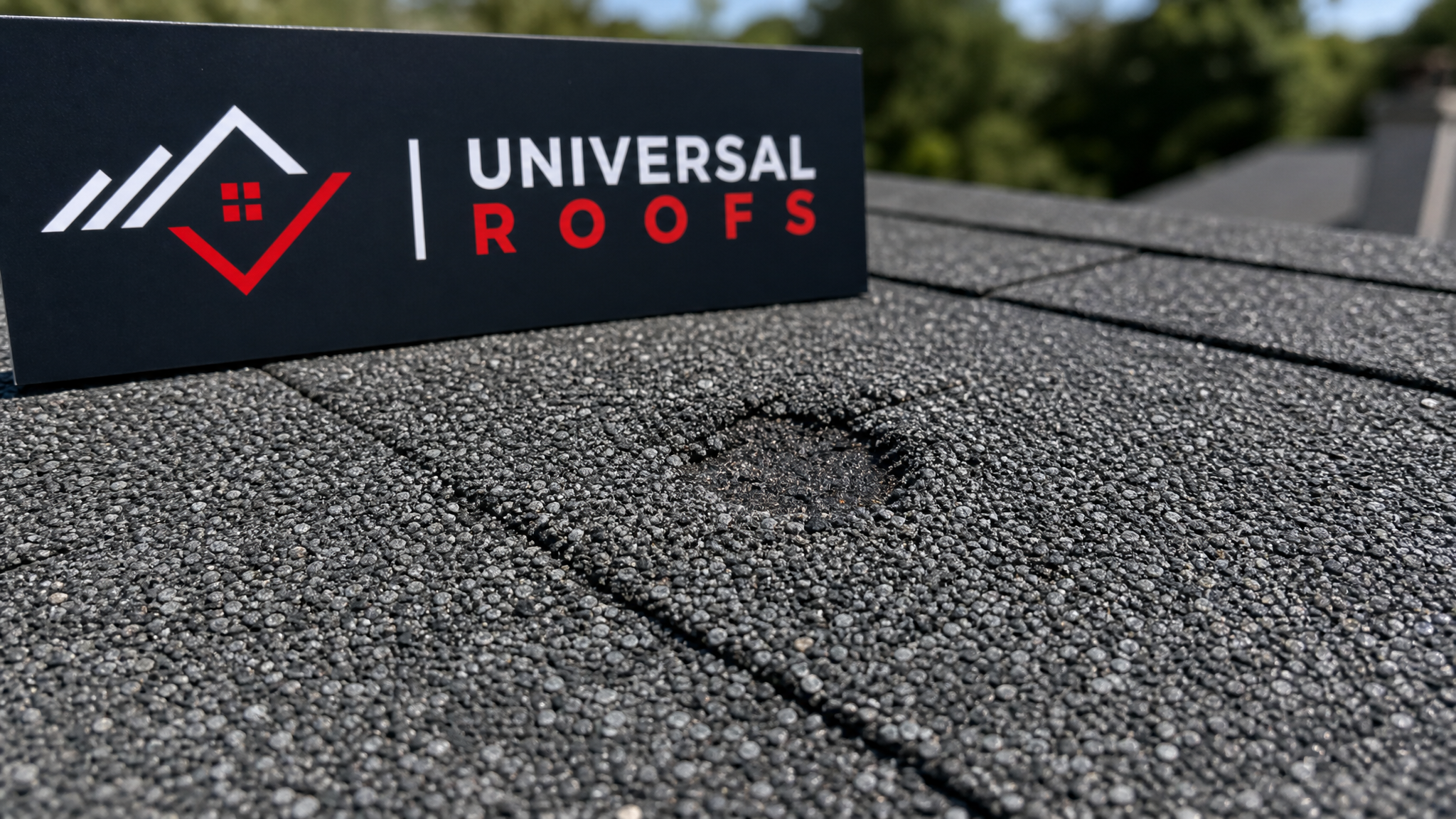
- Granule loss that exposes the black asphalt mat underneath
- Circular cracks radiating from a central impact point
- Fractured fibreglass matting felt as a soft spot when the shingle is flexed
On metal flashing, gutters, and vents, hail leaves dents that are easier to spot visually but easy to dismiss as “cosmetic.” Insurers in Ontario generally distinguish between cosmetic damage and functional damage, and this distinction is where many claims are fought. A dent in aluminum flashing that has not broken the metal’s seal may be classified as cosmetic, while a crack in the same flashing that compromises water-shedding is functional damage that must be repaired.
Skylights and roof vents are particularly vulnerable. Large hailstones can crack tempered glazing or acrylic domes outright, and even smaller hail can pit and craze the surface enough to weaken it against future impacts and UV exposure. If your home has skylights, a dedicated skylight inspection should be part of any post-storm roof assessment, since skylight damage is one of the most commonly overlooked items on a hail claim.
Document Everything Before You Call Your Insurer
The single biggest factor in maximizing insurance claims for roof hail damage repair is the quality of your documentation. Adjusters approve claims based on evidence, not on how bad the storm sounded on the news. Before you pick up the phone, gather as much proof as safely possible.
Start by checking your local weather service or Environment Canada’s historical storm data for the date and reported hail size in your neighbourhood. This establishes that a qualifying weather event actually occurred in your area, which matters because insurers sometimes push back on claims filed weeks after a storm, questioning whether the damage is weather-related at all.
Next, photograph everything from the ground: dented eavestroughs, damaged siding, dinged air conditioning fins, cracked deck boards, and any broken exterior fixtures. Ground-level hail evidence corroborates roof damage even before anyone climbs a ladder, and insurers weigh this kind of circumstantial evidence heavily.
Never climb onto your own roof to inspect hail damage. Beyond the obvious fall risk, walking on a hail-bruised roof can worsen cracks and granule loss, which can actually work against your claim if a later inspection cannot distinguish original storm damage from foot traffic damage. Instead, book a professional roof repair inspection as soon as possible after the storm, ideally within 48-72 hours.
| Evidence Type | How to Capture It | Why Adjusters Value It | Timing |
|---|---|---|---|
| Storm data | Environment Canada historical records, local news reports | Confirms a qualifying weather event occurred | Same day as storm |
| Ground-level photos | Dented gutters, AC units, siding, deck boards | Corroborates roof damage without roof access | Within 24 hours |
| Professional roof inspection report | Licensed contractor climbs roof, photographs impact marks | Provides expert third-party assessment | Within 48-72 hours |
| Chalk-circled test squares | Contractor marks 10×10 ft test areas per slope per industry standard | Meets insurer testing protocols for hail frequency | During inspection |
| Interior leak evidence | Photos of ceiling stains, attic moisture, insulation damage | Demonstrates functional (not cosmetic) damage | As discovered |
Filing the Claim: Timing and Process
Most Ontario home insurance policies require that claims be reported “promptly” or “as soon as reasonably possible,” but they rarely specify an exact number of days. In practice, filing within one to two weeks of the storm is a safe target. Waiting months can create an opening for the insurer to argue that the damage may have occurred from a different, later event or from ordinary wear.
When you call your insurer, have your policy number, the date of the storm, and a summary of visible damage ready. Ask specifically whether your policy uses replacement cost value (RCV) or actual cash value (ACV) for roofing claims, since this single detail can change your payout by thousands of dollars. RCV pays to replace the damaged roofing material with new material of similar kind and quality, while ACV factors in depreciation based on the roof’s age, meaning an older roof will net a smaller cheque under an ACV policy even for identical damage.
Most insurers assign a claim number immediately and schedule an adjuster visit within one to two weeks, faster if your area has an active area-wide storm designation (called a “CAT event” or catastrophe designation) that triggers additional adjuster staffing. Ask your insurer directly whether the storm has been declared a CAT event, since claims tied to a declared event are typically processed with less scrutiny and faster turnaround.
Meeting the Adjuster: What Maximizes Your Payout
The adjuster’s visit is the single most important moment in the entire claims process. Whenever possible, arrange for your roofing contractor to be present during the adjuster’s inspection. This is standard practice and most reputable insurers welcome it, since a contractor who inspects roofs daily can identify damage patterns an adjuster handling dozens of unrelated claim types might miss.
During the inspection, adjusters typically use an industry-standard method of marking 10-by-10-foot test squares on each roof slope and counting hail hits within that square. Slopes facing the direction the storm travelled from usually show denser impact patterns, and this directional evidence supports the claim that damage is storm-related rather than pre-existing wear. A knowledgeable contractor will walk the adjuster through this process, point out granule loss and mat exposure the adjuster’s angle might miss, and document everything with matching photographs for your own records.
If the adjuster’s initial assessment seems to undercount visible damage, you are entitled to request a second inspection or a formal appraisal, a process defined in most Ontario policies where each side names an appraiser and, if they disagree, a neutral umpire settles the difference. This step is rarely needed but is worth knowing about if a claim stalls.

Common Reasons Hail Claims Get Denied or Underpaid
Understanding why claims fail is often more useful than understanding how they succeed, since most denials trace back to a handful of preventable mistakes. Reviewing these patterns before you file can help you avoid the same pitfalls.
| Denial Reason | What Causes It | How to Prevent It |
|---|---|---|
| “Cosmetic damage only” | Adjuster classifies dents/bruising as non-functional | Provide contractor report showing granule loss, mat exposure, or cracked seals |
| Late filing | Claim reported months after the storm | File within 1-2 weeks and photograph damage immediately |
| Pre-existing wear disputed | Roof was already near end of life before the storm | Keep maintenance records and prior inspection reports on file |
| Insufficient photo evidence | Homeowner submits only a few blurry photos | Have a licensed contractor produce a full photo-documented report |
| No matching weather event | Insurer cannot confirm hail occurred at that address | Cite Environment Canada storm data and neighbourhood reports |
| Underestimated scope | Adjuster only counts visible slopes, misses hidden damage | Request a full-roof inspection including flashing, vents, and skylights |
Repair Scope: What Should Be Included in the Claim
A well-built claim covers every component actually affected by the storm, not just the shingles. Homeowners frequently leave money on the table by allowing the claim to be scoped narrowly. A thorough contractor assessment should evaluate:
- Shingles or roofing membrane across every slope, not just the most visibly damaged one
- Flashing around chimneys, valleys, and roof-to-wall transitions
- Eavestroughs and downspouts, which are almost always dented in the same storm
- Roof vents and pipe boots, which crack easily under hail impact
- Skylights, including glazing, seals, and frames — see our skylight replacement guidance if impact has compromised the unit
- Attic insulation and decking, if water has already begun tracking through minor cracks — worth checking against our attic inspection checklist
- Flat roof sections on additions or garages, since membrane roofing bruises differently than shingles — see our flat roofing page for what adjusters look for on membrane systems
If your insurer’s scope of work omits any of these categories despite visible damage, your contractor’s written report is the strongest tool for requesting a supplement, an additional payment added to the original claim once further damage is identified.
| Repair Scope Item | Typical Trigger for Inclusion | Average Timeline to Complete | Common Oversight |
|---|---|---|---|
| Full shingle replacement | Hail hits exceed manufacturer’s damage threshold per test square | 1-3 days | Adjuster only replaces the worst-hit slope |
| Flashing replacement | Dents or seal cracks found at penetrations | Half a day, bundled with shingle work | Assumed to be cosmetic and left off scope |
| Eavestrough replacement | Visible denting or bent hangers | 1 day | Treated as a separate, unrelated claim |
| Skylight repair or replacement | Cracked glazing, crazing, or seal failure | 1-2 days | Skipped because skylights are hard to inspect from the ground |
| Attic/insulation remediation | Moisture found during interior inspection | 1-2 days | Only discovered after a leak appears weeks later |
Working With Your Contractor to Strengthen the Claim
A licensed, experienced roofing contractor is your strongest advocate throughout the claims process, and choosing the right one early can be the difference between a fully funded repair and a fight over pennies on the dollar. Look for a contractor who is willing to meet the adjuster on-site, provide a detailed written scope of work with photographs, and communicate directly with the insurance company rather than leaving that burden entirely on you.
Ask prospective contractors these questions before hiring:
- Have you worked directly with insurance adjusters on hail claims in this region before?
- Can you provide a written, itemized inspection report with photographs for the claim file?
- Do you offer to meet the adjuster on-site at no extra charge?
- Will you help identify a supplement if hidden damage is found once work begins?
- Are your estimates based on current material and labour costs in the Toronto market, not outdated regional averages?
Reputable contractors will never pressure you to inflate a claim or file for damage that does not exist. Insurance fraud carries serious legal consequences, and the goal of this guide is to help you receive the full, legitimate value your policy already promises, not to game the system.
Regional Considerations Across the GTA
Hail patterns and insurer responsiveness can vary across the region. Storm cells tend to track from the southwest, meaning homes in Peel Region and western Toronto often see the first and heaviest hail in a given system, while York Region and Durham Region can see the tail end of the same storm cell hours later with different hail sizes. Homes in Halton Region closer to Lake Ontario sometimes experience localized wind-driven hail that damages one exposed slope far more than others, which is exactly the kind of directional pattern an adjuster should account for during inspection.
Because freeze-thaw cycles are already a stress factor for GTA roofs each winter, any hail damage left unrepaired through the fall risks compounding into much larger problems by spring. A cracked shingle mat that lets in a small amount of moisture in July can split completely after a few hard freezes in January, turning a modest hail claim into a full roof replacement. This is one of the strongest arguments for getting a professional roof repair scheduled promptly rather than deferring it to “sometime before winter.”
Summer Storm Season and Why Timing Matters Now
July marks the peak of hail season across Southern Ontario, with the combination of summer heat and lake-effect atmospheric instability producing the year’s largest and most frequent hailstones. If your roof has been hit by a recent storm, acting now, while the damage is fresh, weather data is easy to pull, and roofing crews have full summer availability, gives you the strongest possible position for a claim. Waiting until autumn means competing with a backlog of storm-damaged roofs across the region and a shrinking window before winter weather makes repairs more difficult and more expensive.
After the Claim is Approved: Managing the Repair
Once your claim is approved, most insurers issue payment in two instalments: an initial payment covering the depreciated (ACV) value, and a final payment for the remaining recoverable depreciation once the repair is complete and the invoice is submitted. Keep every receipt and the final invoice from your contractor, since this paperwork is what triggers the second payment on an RCV policy.
Schedule the repair promptly after approval. Insurers can, in some cases, reduce or deny the recoverable depreciation payment if repairs are unreasonably delayed, and an unrepaired roof left exposed to further weather can also complicate any future claim. A reliable contractor will coordinate scheduling, material ordering, and final documentation so that the last invoice matches exactly what the insurer approved, avoiding delays in that final cheque.
If you are unsure whether your existing roof can be repaired versus needs a full roof replacement, a licensed contractor can advise based on the roof’s age, the extent of hail impact, and manufacturer specifications, since some shingle lines are no longer available and a partial repair may not match the existing roof visually or structurally. You can also review verified homeowner experiences on our reviews page, or check our FAQ for more general roofing questions, and learn more about our history on the about page.
Frequently Asked Questions
What is the best strategy for maximizing insurance claims for roof hail damage repair?
How long do I have to file a hail damage insurance claim in Ontario?
Will my insurance claim cover a full roof replacement or just a repair?
Why do insurance adjusters sometimes call hail damage “cosmetic”?
Should my contractor be present during the adjuster’s inspection?
What should I do if my hail damage claim is denied?
Need Help With Maximizing Insurance Claims for?
Getting the full value your policy promises starts with a proper inspection, and Universal Roofs has helped GTA homeowners document, negotiate, and repair hail damage claims for years.
Call us today at (416) 732-2421 or request a free inspection to get started.
Universal Roofs proudly serves Toronto, Mississauga, Brampton, Vaughan, Markham, Oakville and the GTA since 2005.