
Summer storms across the Greater Toronto Area bring more than just heavy rain — hail is an increasingly common visitor to GTA rooftops between June and August, and it can leave behind dented shingles, cracked flashing and bruised granules that homeowners often don’t notice until a leak appears months later. If your roof has taken a beating this season, you don’t have to choose between a fast repair and a responsible one. This environmentally friendly guide to roof hail damage repair walks through the sustainable materials, waste-reduction practices and energy-conscious decisions that let you fix storm damage while keeping shingles out of the landfill and your home more efficient afterward.
Homeowners across Toronto, Mississauga, Brampton, Vaughan, Markham and Oakville are asking the same question after every hailstorm: can a repair actually be good for the environment, or is “eco-friendly roofing” just marketing? The honest answer is that hail repair is one of the few moments where sustainability and practicality line up naturally. Damaged shingles need to come off regardless, which means you already have an opportunity to recycle materials, choose impact-resistant replacements, and improve attic ventilation and insulation at the same time. Done right, an eco-conscious hail repair costs about the same as a conventional one but reduces landfill waste, lowers long-term energy bills and often qualifies for insurance or municipal incentives.
This guide covers how to recognize hail damage, which environmentally friendly repair options actually hold up in our freeze-thaw climate, how contractors recycle old shingles, and what it costs. We’ll also cover the insulation and ventilation upgrades that pair naturally with a hail repair, since your roof deck and attic are already exposed during the work.
How to Recognize Hail Damage Before It Becomes a Bigger Problem
Hail damage is deceptive because it rarely causes an immediate leak. Instead, it weakens the roofing material’s protective layer, and the real damage shows up as premature aging, granule loss and eventual water infiltration months or years later. Catching it early is the single best thing you can do for both your wallet and the environment, because early intervention means a targeted repair instead of a full tear-off.
Look for these signs after any hailstorm, ideally from the ground with binoculars rather than climbing onto a wet or unstable roof yourself:
- Dark, soft-looking bruises on asphalt shingles where granules have been knocked loose
- Circular dents or dings on metal flashing, vents, and eavestrough
- Cracked or split shingle tabs, especially near ridge lines and valleys
- Granules collecting in downspouts or at the base of downpipes after a storm
- Exposed fibreglass matting or asphalt substrate where the shingle surface has been chipped away
- Dents in skylight frames or cracked skylight glazing
If you spot any of these signs, a professional roof repair assessment is worth scheduling promptly. A trained eye can tell the difference between cosmetic granule loss (which may not need immediate repair) and structural bruising (which will fail eventually and should be addressed before the next freeze-thaw cycle sets in).
Why an Environmentally Friendly Approach Makes Sense for Hail Repairs
Every hail damage repair generates waste — old shingles, cracked flashing, broken vent boots. The environmentally friendly guide to roof hail damage repair we follow is built around three principles: divert as much old material as possible from landfill, choose replacement products with recycled content and longer service life, and use the repair as an opportunity to improve the roof’s overall performance rather than just patching the surface.
Traditional asphalt shingles make up a significant share of construction and demolition waste in Ontario, and a huge percentage of that volume is avoidable. Shingle recycling programs turn old asphalt shingles into aggregate for road paving (RAP — reclaimed asphalt pavement) or hot-mix asphalt production. When a contractor commits to recycling tear-off material rather than sending it straight to a transfer station, a typical hail repair on an average GTA home diverts hundreds of kilograms of asphalt and fibreglass from landfill.
Beyond waste diversion, the materials you choose for the repair itself matter. Impact-resistant shingles rated Class 4 under UL 2218 standards are engineered with modified asphalt and reinforced mats that resist future hail bruising, meaning fewer repeat repairs over the life of the roof. Fewer repairs means less material consumed over 20-30 years, which is the real long-term environmental win.
| Repair Approach | Environmental Impact | Best Used When | Relative Cost |
|---|---|---|---|
| Spot shingle replacement with recycled-content shingles | Low waste, minimal new material needed | Damage limited to a few shingle tabs or one roof slope | $ |
| Section re-roof with Class 4 impact-resistant shingles | Old material recycled; new material resists repeat damage | Widespread bruising across one or more slopes | $$ |
| Full tear-off and replacement with metal or synthetic slate | Highest recyclable content; longest lifespan reduces future waste | Roof is near end of life and hail was the final straw | $$$ |
| Cool-roof reflective coating over existing hail-damaged flat roof | Extends membrane life, reduces cooling energy demand | Flat or low-slope roofs with surface damage but sound structure | $$ |
Environmentally Friendly Material Options for Hail Damage Repair
Not every roofing material recovers from hail the same way, and not every material has the same environmental profile once it’s damaged and needs replacing. Here’s how the common options compare for GTA homes specifically.
Impact-resistant asphalt shingles (Class 4): These use SBS-modified asphalt and a reinforced fibreglass mat, giving them significantly better resistance to bruising than standard three-tab or architectural shingles. They remain fully recyclable at end of life through regional shingle recycling programs, and many manufacturers now blend post-consumer recycled asphalt into the shingle itself. For most Toronto homes doing a hail repair, this is the practical middle ground between cost and sustainability.
Metal roofing: Steel and aluminum panels are inherently hail-resistant when installed with proper underlayment and can be made from up to 95 percent recycled content, and are themselves 100 percent recyclable at the end of their 40-60 year service life. Metal is an excellent environmentally friendly hail damage repair option if your roof is due for replacement anyway, though it’s a bigger investment for a spot repair.
Synthetic slate and shake: Made from recycled rubber and plastics, these products offer excellent impact resistance and diverted waste on the manufacturing side, though recyclability at end of life varies by manufacturer — worth asking about directly before choosing this route.
Flat and low-slope membrane roofing: Hail can puncture or bruise TPO, EPDM and modified bitumen membranes. Reflective “cool roof” membranes reduce summer cooling loads while resisting UV degradation, and many are recyclable through membrane manufacturer take-back programs. If your flat roofing has hail damage, a reflective replacement membrane is often the most energy-conscious choice available.
The Repair Process: What an Eco-Conscious Hail Damage Repair Looks Like
A responsible hail damage repair follows a sequence designed to minimize waste and maximize the lifespan of whatever gets installed. Here is the process our crews follow on GTA homes:
- Detailed inspection and photo documentation — every bruised, cracked, or displaced shingle and flashing point is mapped, which also supports any insurance claim
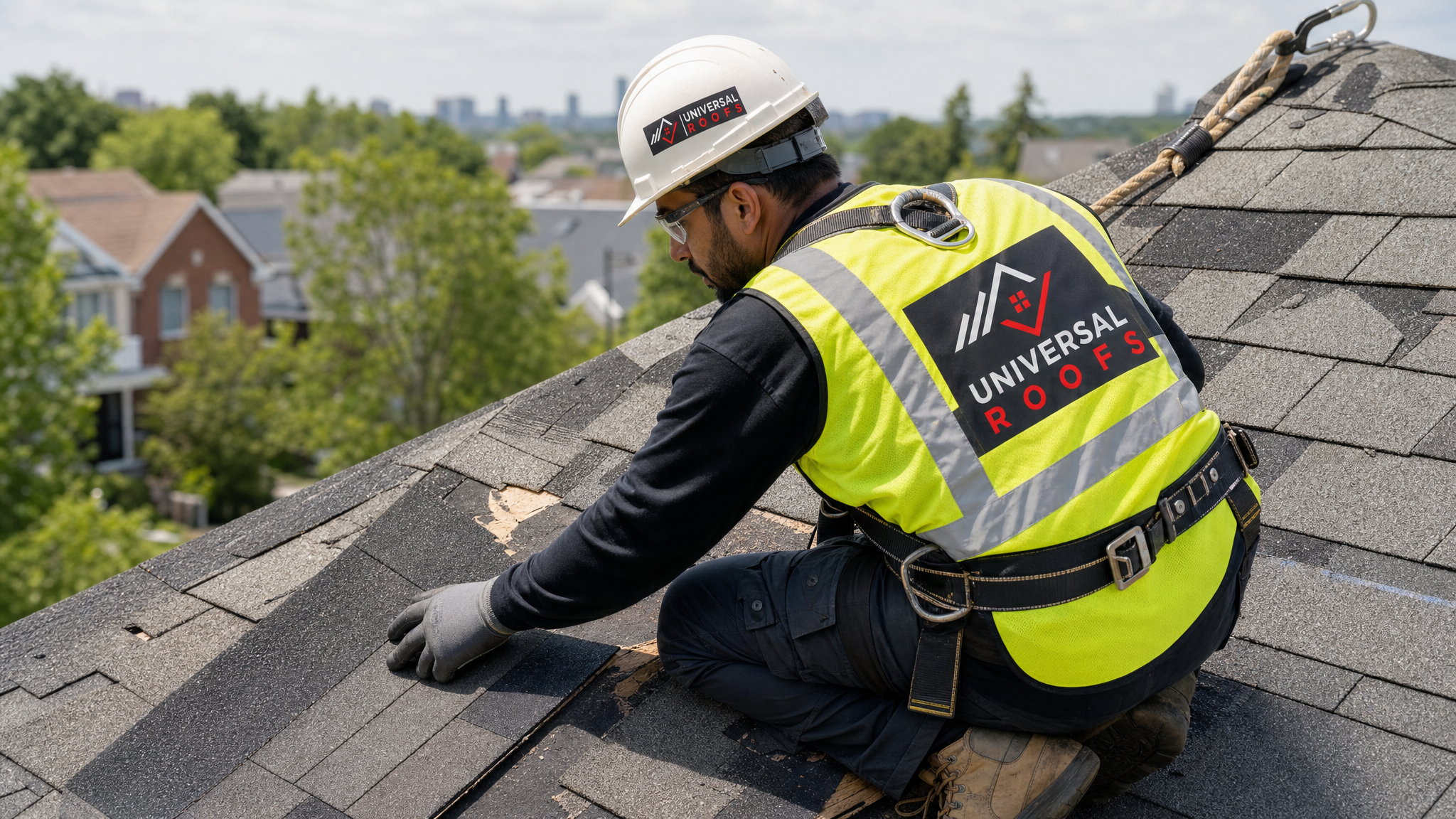
- Selective tear-off — only the affected sections are removed where possible, rather than a full roof strip, unless the damage is widespread
- Material sorting and staging — old shingles are separated from nails, flashing and underlayment so asphalt can go to a recycling facility rather than mixed construction waste
- Deck inspection — the exposed roof deck is checked for rot or soft spots before new material goes down, since covering a compromised deck defeats the purpose of any repair
- Installation of impact-resistant replacement material — matched as closely as possible to existing shingles or upgraded to Class 4 product
- Flashing and ventilation check — hail often dents vent caps and flashing at the same time as shingles, so these get replaced with the same visit
- Final cleanup and magnetic nail sweep — ensuring no debris or fasteners are left in the yard or gutters
What Happens to the Old Shingles: Recycling and Waste Diversion
One of the most overlooked parts of an environmentally friendly guide to roof hail damage repair is what happens after the old material comes off your roof. Asphalt shingles are dense, oil-based products, and when they end up in a regular landfill they simply sit there for decades. Shingle recycling programs available across the GTA process torn-off asphalt shingles by grinding them down and removing nails and debris, producing an aggregate that gets blended into hot-mix asphalt for road construction or used as an additive in other paving applications.
For homeowners, asking your contractor directly whether tear-off material will be recycled is a simple but meaningful question. Not every hauler accepts shingles at recycling-designated facilities, and some contractors still default to standard construction waste bins. A five-minute conversation before work starts can be the difference between your old roof becoming road material or occupying landfill space for the next fifty years.
| Material Removed | Typical Disposal Method | Recyclable Alternative | Environmental Benefit |
|---|---|---|---|
| Asphalt shingles | Landfill (standard C&D waste) | Shingle recycling facility (RAP processing) | Diverted into road-paving aggregate |
| Metal flashing/vents | Scrap metal recycling | Scrap metal recycling | Nearly 100% recyclable, high scrap value |
| Underlayment felt/synthetic | Landfill | Limited — check local facility | Reduced volume when synthetic underlayment used |
| Wood decking (if rotted) | Landfill or wood waste recycling | Municipal wood waste depot | Diverted from general landfill stream |
| Old insulation (attic access disturbed) | Landfill | Some cellulose/fibreglass take-back programs | Reduced volume, some reuse potential |
Pairing Hail Repair With Attic Insulation and Ventilation Upgrades
Because a hail repair often exposes the roof deck and eave area anyway, it’s an efficient time to address attic insulation and ventilation issues that are driving up your energy bills. Poor attic ventilation accelerates ice damming in winter and heat buildup in summer, both of which shorten the lifespan of whatever new shingles you just installed. Since your roofer is already on site working near the ridge and soffit areas, adding or upgrading ridge vents, soffit vents, and topping up attic insulation to current R-value recommendations is far more cost-effective than scheduling it as a separate project later.
This is also where an eco-conscious repair pays for itself over time. Better ventilation reduces summer cooling loads and winter ice dam risk, both of which are common causes of secondary roof damage in the GTA’s freeze-thaw climate. A hail repair that ignores the attic is a missed opportunity; one that addresses it protects your investment for decades.
Skylights and Hail: A Special Consideration
Skylights are particularly vulnerable during hailstorms because their frames and glazing take direct impact without the flexibility of shingle mat underneath. If your roof has skylights, inspect the frame for dents and the glazing for stress cracks or spider-webbing after any hail event. Older single-pane or aging skylight units are rarely worth repairing piecemeal — an eco-conscious approach here usually means skylight replacement with a modern, energy-efficient, impact-rated unit rather than patching a unit that will likely fail again in the next storm. Newer skylight glazing options are engineered for both impact resistance and thermal performance, cutting heat loss in winter and unwanted solar gain in summer.
Cost Breakdown: What to Expect for an Eco-Conscious Hail Repair in the GTA
Costs vary based on roof size, pitch, and how much of the surface was affected, but homeowners consistently ask how “green” options compare in price to standard repairs. In most cases, the difference is modest, and often offset by insurance coverage or long-term energy savings.
| Repair Scope | Standard Materials | Environmentally Friendly Option | Typical Timeline |
|---|---|---|---|
| Spot shingle replacement (1-2 slopes) | $450 – $1,200 | $550 – $1,400 (Class 4 shingles) | 1 day |
| Full slope re-roof section | $2,500 – $5,500 | $3,000 – $6,500 (Class 4 + recycling fee) | 1-2 days |
| Full roof replacement post-hail | $9,000 – $16,000 | $11,000 – $19,000 (metal or Class 4 architectural) | 3-5 days |
| Flat roof membrane section repair | $1,200 – $3,000 | $1,600 – $3,800 (reflective membrane) | 1-2 days |
| Skylight replacement due to hail | $900 – $2,200 per unit | $1,100 – $2,600 (energy-efficient impact-rated unit) | 1 day |
Many home insurance policies in Ontario cover hail damage repair in full after your deductible, and some insurers offer a discount or rebate for choosing impact-resistant Class 4 shingles, since it lowers the likelihood of a repeat claim. Ask your adjuster directly whether upgraded materials are covered as part of the claim — it’s common for insurers to approve the upgrade cost difference when the alternative is simply reinstalling standard shingles that could bruise again in the next storm.
Choosing a Contractor Who Takes Sustainability Seriously
Not every roofing company treats waste diversion and material choice as a priority, so it’s worth asking a few direct questions before hiring anyone for hail damage repair:
- Do you recycle torn-off asphalt shingles, and through which facility?
- Can you source Class 4 impact-resistant shingles with recycled content?
- Will you inspect and address attic ventilation while the roof deck is exposed?
- Do you separate metal flashing and vents for scrap recycling rather than mixed waste bins?
- Can you provide documentation for insurance claims that itemizes both damage and repair materials?
A contractor who answers these questions confidently and specifically — rather than with vague assurances — is one who has actually built sustainable practices into daily operations rather than treating it as a marketing line. You can review how past customers describe our approach to material choice and workmanship on our reviews page, and browse common questions on our FAQ page.
Regional Considerations Across the GTA
Hail patterns and building stock vary somewhat across the region we serve. Detached homes with steeper rooflines in Toronto often show hail bruising concentrated on south and west-facing slopes, which take the brunt of storm direction. Newer subdivisions across Peel Region and York Region tend to have younger roofs still within their impact-resistance warranty period, which is worth checking before paying out of pocket. Larger executive homes in Halton Region frequently have more skylights and dormers, both of which need dedicated hail inspection. And older housing stock in parts of Durham Region may already be near the end of its shingle lifespan, making a hail event the practical trigger for a full, more sustainable roof replacement rather than another patch repair.
Maintenance After the Repair: Protecting Your Investment
Once your environmentally friendly hail damage repair is complete, a few ongoing habits extend the life of the new materials and reduce the odds of needing another repair after the next storm:
- Schedule a roof inspection each spring and after any significant hail or windstorm
- Keep gutters and downspouts clear so water isn’t pooling near repaired flashing points
- Trim overhanging branches that could drop debris onto new shingles
- Check attic ventilation isn’t blocked by insulation that may have shifted during the repair
- Keep your insurance documentation and repair invoices on file in case of a future claim
These simple steps cost nothing and meaningfully extend the service life of the repair, which is itself the most sustainable outcome — a roof that doesn’t need replacing again for another two decades produces far less waste than one repaired repeatedly with short-lived materials.
What is the most environmentally friendly guide to roof hail damage repair recommendation for a typical GTA home?
Can hail-damaged shingles actually be recycled?
Do impact-resistant shingles cost significantly more than standard shingles?
How do I know if my roof needs a full repair or just spot repairs after hail?
Does an eco-friendly hail repair include checking attic insulation and ventilation?
Are metal roofs a good environmentally friendly option after hail damage?
Need Help With Environmentally Friendly Guide Roof?
If a recent hailstorm has left dents, cracks, or granule loss on your roof, don’t wait for a small problem to become a costly leak. Universal Roofs has been helping GTA homeowners repair storm damage with sustainable, long-lasting materials since 2005, and we’ll walk you through every option — from recycled-content shingles to full impact-resistant replacements — so you can make a decision that’s good for your home and the environment.
Call us today at (416) 732-2421 or request a free inspection to get started.
Universal Roofs proudly serves Toronto, Mississauga, Brampton, Vaughan, Markham, Oakville and the GTA since 2005.