
A single severe hailstorm can crack shingles, dent flashing, and leave bruised granules scattered across your roof within minutes. When that happens, the warranty attached to your repair or replacement work matters just as much as the quality of the labour itself. Homeowners across the GTA who have lived through a summer hailstorm know the frustration of discovering, months later, that their “repair” was never actually covered for hail impact at all. Understanding roof hail damage repair warranties before a storm hits — not after — is the single best way to protect your investment.
This guide breaks down the 10 best roof hail damage repair warranties available to homeowners today, explains what separates a strong warranty from a weak one, and gives you a practical framework for comparing manufacturer coverage, workmanship guarantees, and contractor-backed protection plans. We will also cover how Toronto’s freeze-thaw climate and seasonal hailstorms affect warranty claims, what documentation you need, and the red flags that should make you walk away from a contract.
Whether you are dealing with fresh storm damage this summer or simply planning ahead for the next severe weather event, the goal is the same: know exactly what is covered, for how long, and under what conditions, before you sign anything.
What Makes a Roof Hail Damage Repair Warranty Strong
Not all warranties are created equal, and the paperwork you receive after a hail repair can vary enormously between contractors. A genuinely strong roof hail damage repair warranty should address three separate layers of protection: the manufacturer’s product warranty on materials, the contractor’s workmanship warranty on installation, and any storm-specific or impact-resistance rider that explicitly names hail as a covered peril.
Many homeowners assume that a standard shingle warranty automatically covers hail damage. It usually does not. Most base-tier manufacturer warranties cover manufacturing defects only — things like premature granule loss or curling that happens without any external cause. Hail is a physical impact event, and coverage for impact damage is almost always a separate clause or an upgraded warranty class, such as an Impact Resistance (Class 4) rating under UL 2218 testing standards.
When you have work done through a roof repair service, always ask the contractor to show you, in writing, which warranty tier applies to your specific shingle or membrane product, and whether hail is named specifically as a covered cause of failure. Vague language like “protected against the elements” is not the same as an explicit hail clause.
The 10 Best Roof Hail Damage Repair Warranty Types Compared
Below is a comparison of the ten warranty categories homeowners are most likely to encounter when getting quotes for hail repair or replacement. These are not brand names but warranty structures — the actual manufacturer or contractor backing each one will vary by project.
| Warranty Type | Typical Duration | Hail Coverage | Best For |
|---|---|---|---|
| Class 4 Impact-Resistant Shingle Warranty | 10-15 years | Explicit, full replacement | Hail-prone areas, insurance discounts |
| Standard Manufacturer Limited Warranty | 25-30 years | None (defects only) | General wear protection, not storms |
| Extended/Enhanced Manufacturer Warranty | 30-50 years | Partial, prorated | Long-term homeowners |
| Contractor Workmanship Warranty | 2-10 years | Covers install errors after hail repair | Ensuring proper repair technique |
| Manufacturer System/Full-System Warranty | 25-50 years | Depends on rider | New full roof replacements |
| Storm Damage Rider/Endorsement | Length of base policy | Explicit named-peril hail coverage | Homeowners in storm corridors |
| Flat/Low-Slope Membrane Warranty | 10-20 years | Often excludes hail unless upgraded | Flat roofing systems |
| No-Dollar-Limit (NDL) Warranty | 10-25 years | Full cost coverage, no depreciation | Maximum financial protection |
| Prorated Materials-Only Warranty | 20-40 years | Declining coverage after year 1-5 | Budget installs, lower upfront cost |
| Contractor-Backed Storm Guarantee | 1-5 years | Free reinspection after any hail event | Peace of mind after a claim |
The two categories that matter most for hail specifically are the Class 4 Impact-Resistant Shingle Warranty and the Storm Damage Rider. Everything else on this list is useful for general roof longevity, but if hail is your primary concern, start your conversation with your contractor at those two options.
Manufacturer Warranties vs. Workmanship Warranties
One of the most common points of confusion homeowners run into is the difference between a manufacturer warranty and a workmanship warranty, and it becomes especially important after hail damage.
A manufacturer warranty covers the shingles, underlayment, or membrane itself — defects in the materials as they were produced. If your shingles are cracking prematurely because of a manufacturing flaw, that is a manufacturer issue. But if hail cracked otherwise sound shingles, the manufacturer warranty typically will not apply unless you specifically purchased an impact-resistant product with a hail rider.
A workmanship warranty, by contrast, is provided by the contractor and covers the quality of the installation. If your roof was repaired after a hailstorm and the flashing was installed incorrectly, causing a leak six months later, that is a workmanship issue, not a manufacturer defect. This is why the labour and installation portion of your roof repair should always come with its own separate written warranty, distinct from whatever the shingle manufacturer offers.
When getting quotes, ask each contractor to clarify both numbers separately: how many years of manufacturer coverage applies to the specific product being installed, and how many years of workmanship coverage the company itself is providing on the labour.
How Hail Damage Warranty Claims Actually Work
Understanding the claims process itself is often more useful than memorizing warranty terms, because most disputes happen at the claims stage, not at the point of sale.
The general sequence for a hail damage warranty claim looks like this: an inspection documents the damage (ideally by both your contractor and your insurance adjuster), photographs and a written damage report are compiled, the claim is submitted to whichever party is responsible (manufacturer, contractor, or insurer), and then a decision is made on repair versus full replacement based on the extent of the damage.
| Step | What Happens | Typical Timeline | Who Is Involved |
|---|---|---|---|
| 1. Initial Inspection | Visual assessment of granule loss, cracking, dents in flashing/vents | 1-3 days after storm | Contractor, homeowner |
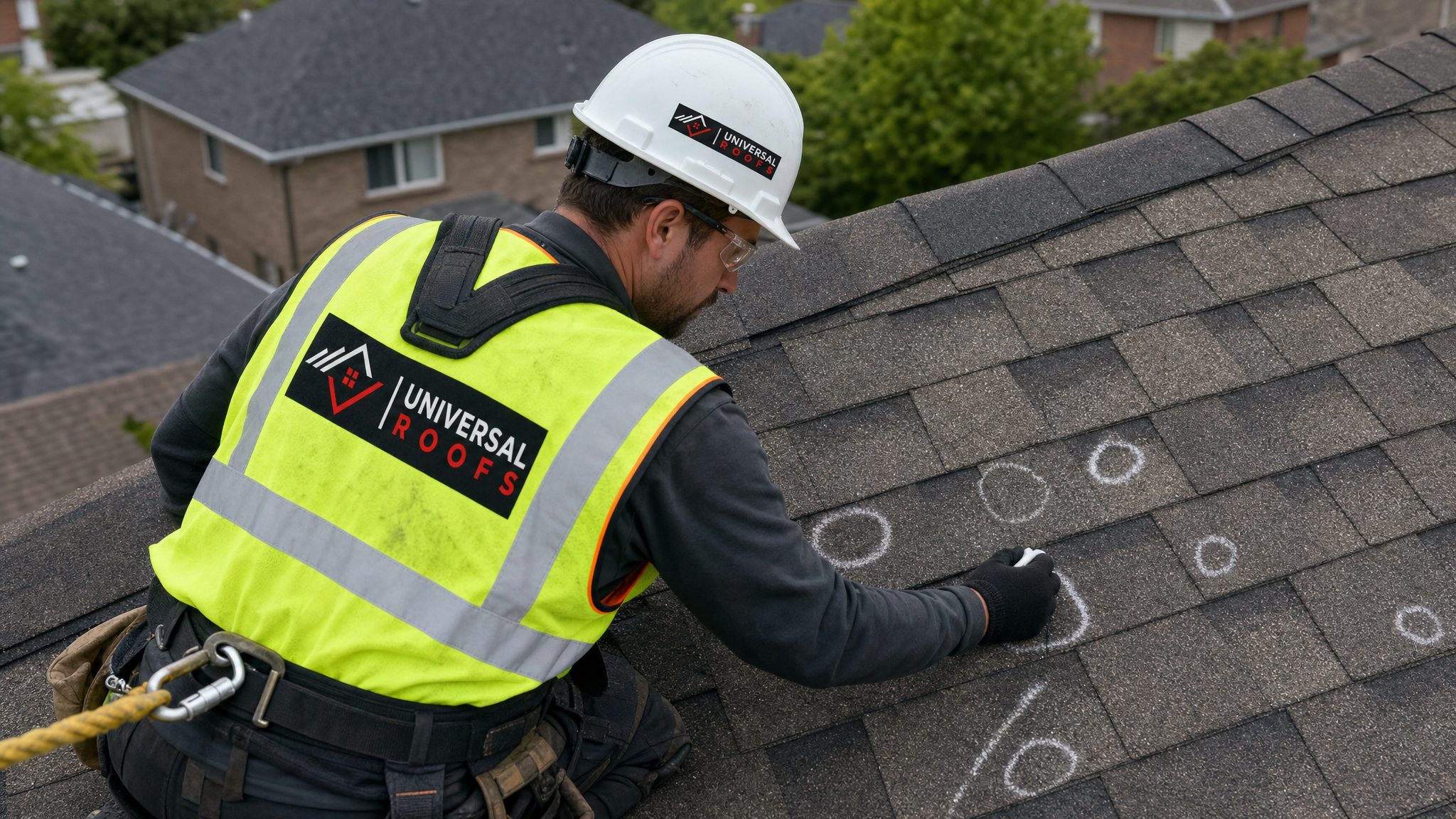
| 2. Documentation | Photos, measurements, chalk-test marking of hail hits | Same visit | Contractor |
| 3. Insurance Adjuster Review | Independent assessment to confirm storm-caused damage | 1-2 weeks | Insurance adjuster |
| 4. Warranty/Claim Submission | Paperwork filed with manufacturer or insurer | 1-4 weeks | Contractor, insurer |
| 5. Approval and Repair Scheduling | Repair or replacement scope finalized | 2-6 weeks | Contractor, homeowner |
| 6. Final Inspection and Sign-off | Confirms repair meets warranty conditions | Day of completion | Contractor, homeowner |
Keep every document generated at each step. Warranty claims are frequently denied or delayed simply because a homeowner cannot produce the original inspection report or proof that repairs were completed by a licensed contractor within the required window after the storm.
Toronto’s Climate and Why Hail Warranties Matter More Here
The GTA sees a distinct severe weather pattern: hot, humid summers that produce fast-moving thunderstorms capable of dropping golf-ball-sized hail, followed by winters defined by repeated freeze-thaw cycles. That combination is tough on roofing systems in two separate ways.
Summer hailstorms cause immediate, visible impact damage — cracked shingles, dented flashing, bruised granule mats, and dinged skylight frames. But the freeze-thaw cycle that follows in winter can turn a small, unrepaired hail crack into a major leak, because water works its way into the crack, freezes, expands, and widens the damage. This is one of the main reasons contractors in this region recommend addressing hail damage promptly rather than waiting, even if the damage looks cosmetic at first.
Because of this local climate reality, homeowners across Toronto, Peel Region, York Region, Halton Region, and Durham Region should treat hail warranty coverage as a standard part of any roofing decision, not an optional upgrade only for the storm-prone prairies.
Flat Roofs, Skylights, and Other Hail-Vulnerable Components
Hail damage warranty conversations tend to focus on asphalt shingles, but sloped shingle roofs are not the only vulnerable surface. Flat and low-slope membrane roofs, common on additions, garages, and many commercial buildings across the GTA, can also suffer hail bruising, particularly on older or UV-brittle membranes. If you have a flat roofing system, ask specifically whether your membrane warranty includes an impact clause, because many standard flat roof warranties exclude hail entirely unless an upgraded rider was purchased at installation.
Skylights are another commonly overlooked component. Hail can crack or pit skylight glazing and dent the surrounding flashing, which is a leading cause of leaks that show up weeks after a storm rather than immediately. If your home has existing skylights, confirm whether your skylights installation included impact coverage, and if a unit needs replacing after a severe storm, a proper skylight replacement should come with its own workmanship warranty separate from the roofing warranty itself.
Don’t forget attic ventilation components either. Roof vents, turbines, and soffit intakes can be dented or cracked by hail, which compromises airflow and can contribute to ice damming in winter. A full inspection of your attic ventilation system after a hailstorm is worth including alongside the shingle inspection.
Comparing Warranty Length, Transferability, and Cost
Beyond hail-specific coverage, the practical value of a warranty depends heavily on three additional factors: how long it lasts, whether it can be transferred to a new owner if you sell the home, and how much it adds to the total project cost.
| Warranty Feature | Basic Tier | Mid Tier | Premium Tier |
|---|---|---|---|
| Duration | 10 years | 25 years | Lifetime/50 years |
| Hail Impact Coverage | Not included | Add-on rider available | Included standard |
| Transferable to New Owner | No | Yes, one-time within first 10 years | Yes, full term |
| Labour/Workmanship Included | 1-2 years | 5-10 years | 10-25 years |
| Approximate Added Cost | $0 (standard) | 5-10% of project cost | 10-20% of project cost |
Premium warranties cost more upfront, but for homeowners who have already been through one expensive hail repair, the added cost is often worth it, particularly the transferability clause. A transferable warranty can also be a meaningful selling point if you list your home within the warranty period, since buyers increasingly ask about roof age and warranty status during due diligence.
Red Flags to Watch For Before Signing a Warranty
Storm-chasing contractors are a well-documented problem after major hail events, and the warranties they offer are frequently the weakest part of the deal. Watch for these warning signs before signing anything:
- Vague wording like “lifetime protection” with no definition of what “lifetime” means (of the shingle, the home, or the original owner)
- No mention of hail specifically, only general phrases like “weather protection”
- A workmanship warranty of less than one year on a full roof replacement
- Refusal to put warranty terms in writing before a deposit is collected
- Pressure to sign immediately, especially from a door-to-door contractor working a storm-damaged neighbourhood
- No local business address or verifiable licence and insurance information
A reputable, established roofing company will have no issue walking you through the exact wording of both the manufacturer and workmanship warranties before any work begins, and will provide references or reviews you can independently verify. Checking a contractor’s reviews and asking how long they have operated in your specific municipality is a simple but effective screening step.
Documentation Checklist for a Hail Warranty Claim
Whether you are filing a claim through a manufacturer, a contractor’s workmanship guarantee, or your home insurance policy, the strength of your documentation drives the outcome. Keep the following on file:
| Document | Why It Matters | When to Collect | Who Provides It |
|---|---|---|---|
| Dated storm photos | Proves timing of the hail event | Immediately after storm | Homeowner |
| Contractor inspection report | Establishes scope and cause of damage | Within days of storm | Roofing contractor |
| Original installation invoice | Confirms warranty start date and product used | At time of original install | Contractor/homeowner records |
| Manufacturer warranty certificate | Specifies coverage terms and duration | At time of original install | Manufacturer/contractor |
| Insurance adjuster report | Independent confirmation of storm damage | 1-2 weeks post-storm | Insurance company |
Store digital copies of all five documents in a single folder as soon as your roof is installed, not after a storm hits. Homeowners who keep this paperwork organized from day one consistently have faster, smoother warranty claims than those scrambling to find records after the fact.
Getting a Second Opinion Before Filing a Claim
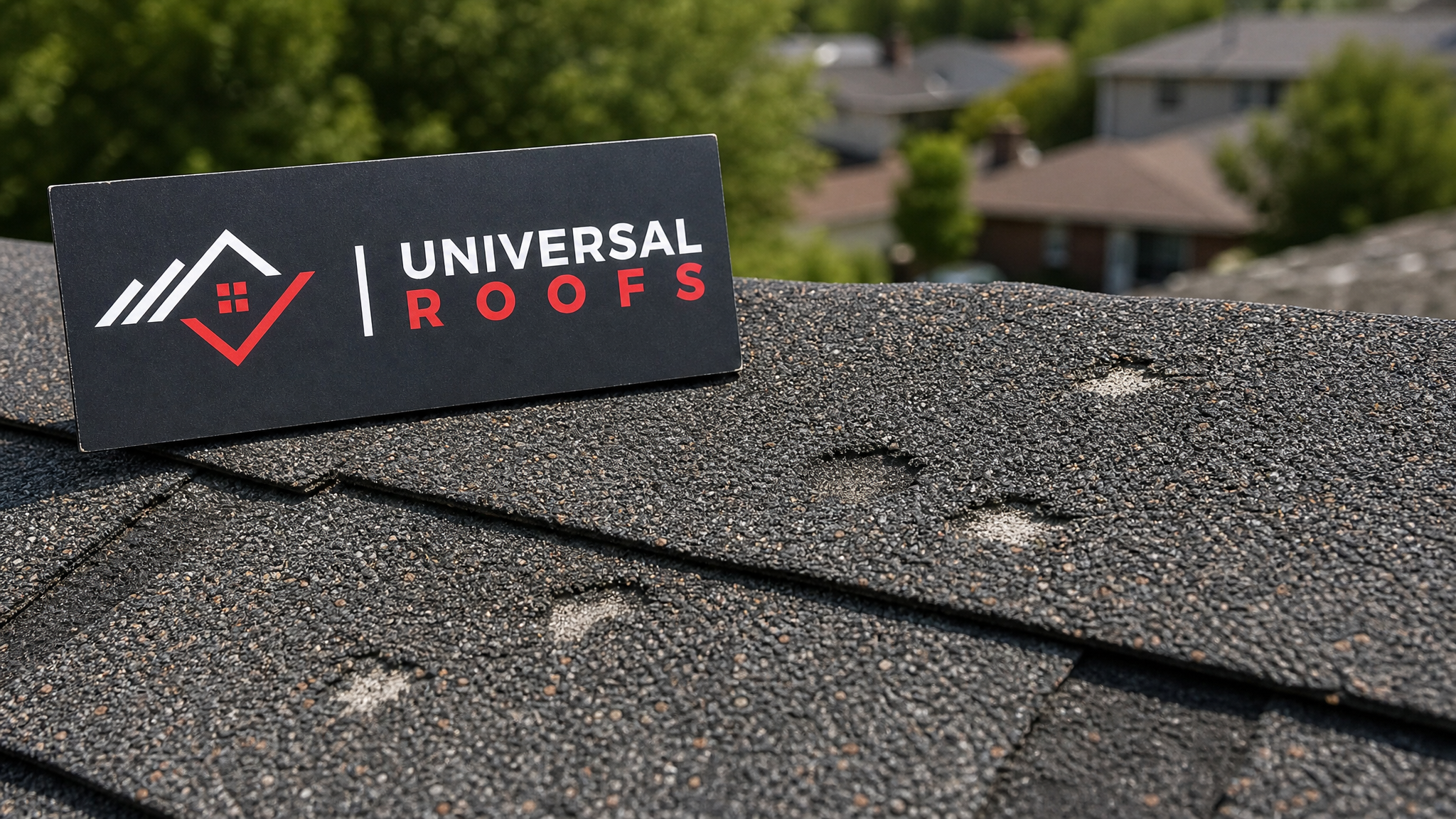
If you are unsure whether hail damage on your roof qualifies for a warranty claim, or you have received conflicting opinions from an insurance adjuster and a contractor, a second, independent roof inspection is a reasonable and common step. A qualified inspector can distinguish true hail impact (which typically shows random, irregular bruising and granule displacement) from normal wear, foot traffic damage, or manufacturing defects unrelated to weather.
This distinction matters because misdiagnosed damage is one of the most common reasons warranty claims are denied. Before accepting a denial at face value, it is worth getting a written second opinion, especially if your roof is less than ten years old and otherwise in good condition.
What is the best type of roof hail damage repair warranty for a GTA homeowner?
Do standard roof warranties automatically cover hail damage?
How long do roof hail damage repair warranties typically last?
What documentation do I need to file a hail damage warranty claim?
Is a workmanship warranty different from a manufacturer warranty after hail repair?
Can hail damage warranty coverage be transferred if I sell my home?
Need Help With 10 Best Roof Hail?
Understanding your warranty options is only half the equation — having a trusted, experienced team assess and repair the damage correctly is what actually protects your home. Universal Roofs has been helping homeowners across the region navigate hail damage repairs and warranty claims since 2005, and we stand behind every repair with a clear, written workmanship guarantee.
Call us today at (416) 732-2421 or request a free inspection to get started.
Universal Roofs proudly serves Toronto, Mississauga, Brampton, Vaughan, Markham, Oakville and the GTA since 2005.