A clean roof is not just about curb appeal. In the Greater Toronto Area, algae streaks, moss clumps, and years of accumulated grit hold moisture against shingles, granules, and flashing details, which speeds up wear and shortens the life of an otherwise healthy roof. Choosing the right roof cleaning equipment and tools is the difference between a roof that sheds water cleanly for another fifteen years and one that quietly deteriorates under a layer of biological growth.
Homeowners often ask us whether roof cleaning is a simple weekend project or a job that calls for a professional. The honest answer is: it depends entirely on the tools you use. A pressure washer set to the wrong PSI can strip asphalt granules off a shingle roof in seconds, while the correct combination of a soft-wash system, a low-pressure sprayer, and the right chemical solution can lift years of algae and moss without damaging a single shingle. This guide walks through the exact equipment professionals rely on, the tools homeowners should avoid, and how to match the right cleaning method to your roof type.
We will also cover safety gear, the seasonal timing that works best in the GTA’s climate, and a realistic cost comparison between DIY tool rental and hiring a licenced contractor. Whether you have an asphalt shingle roof in Etobicoke or a flat membrane roof downtown, the fundamentals of safe, effective roof cleaning are the same: use low pressure, use the correct chemistry, and never rush the process.
Understanding What Roof Cleaning Equipment Actually Does
Before buying or renting anything, it helps to understand the two fundamentally different approaches to roof cleaning, because the tools for each are not interchangeable.
Soft washing uses low water pressure (typically under 100 PSI at the nozzle) combined with a cleaning solution to kill and loosen algae, moss, and lichen at the root. The solution does the work; the water simply rinses it away. This is the industry-standard method for asphalt shingles, cedar shakes, and most sloped residential roofs.
Pressure washing uses mechanical force, often 1,500 to 3,000 PSI, to physically blast debris off a surface. This method is appropriate for hard, non-granular surfaces like concrete pavers, some flat roof membranes, and masonry chimneys, but it is almost never appropriate for asphalt shingles, which can lose their protective granule coating under that kind of force.
Every tool discussed below falls into one of these two categories, and matching the category to your roofing material is the single most important decision in the entire cleaning process. If you only take one thing from this article, let it be this: high-pressure equipment and asphalt shingles do not belong together.
Essential Roof Cleaning Equipment for Soft Washing
Soft washing is the recommended method for the vast majority of GTA homes, and the equipment list is more specialized than most homeowners expect.
Low-Pressure Sprayers and Pump Systems
A dedicated soft-wash pump system is built around a 12-volt or gas-powered diaphragm pump that delivers a steady, low-pressure stream, usually 60 to 100 PSI, through a chemical-resistant hose. Unlike a garden-variety pressure washer, these pumps are designed to run cleaning solutions continuously without corroding internal seals. Professional-grade units typically include a proportioning injector that mixes concentrate with water at a set ratio as it sprays, which keeps the solution consistent from the first litre to the last.
J-Rods and Roof Wands
A J-rod, or roof wand, is a curved, telescoping extension pole with a fan-tip nozzle at the end, shaped so the operator can reach up and over a roofline from ground level or from a ladder without ever stepping onto the shingles. This single tool does more to protect a roof crew’s safety, and the shingles themselves, than almost anything else on this list, since it eliminates the need to walk the entire roof surface during application.
Chemical Cleaning Solutions
The chemistry matters as much as the hardware. A typical professional soft-wash mixture combines sodium hypochlorite (a controlled-strength bleach solution) with a surfactant that helps the liquid cling to a sloped surface long enough to work, plus a rinse aid. Homeowner-grade alternatives use oxygen bleach or specialty enzymatic cleaners, which are gentler but require longer dwell times and sometimes a second application for heavy moss.
Pressure Washing Tools for Flat Roofs and Hard Surfaces
Flat and low-slope membrane roofs, along with masonry and metal flashing, can tolerate more mechanical cleaning than shingles, but only with the right attachments.
Surface Cleaners and Rotary Nozzles
A surface cleaner attachment, essentially a rotating bar with two nozzles enclosed under a circular guard, distributes pressure evenly across a flat membrane and prevents the striping that a single jet nozzle leaves behind. This is standard equipment for TPO, EPDM, and modified bitumen roofs, where an uneven, wandering pressure jet can create visible marks or, worse, wear through the membrane’s protective granule or coating layer over time.
Adjustable Pressure Washers
For anyone renting equipment, an adjustable-PSI electric or gas pressure washer with interchangeable nozzle tips (typically 0, 15, 25, and 40 degree fan patterns) gives the most control. The 25 or 40 degree tip, used at reduced pressure and held a consistent distance from the surface, is the safest setting for most flat roof cleaning tasks. We generally recommend against consumer-grade washers rated above 2,000 PSI for any roofing surface unless the manufacturer of that specific membrane has confirmed it can tolerate that force.
| Roof Material | Recommended Method | Typical PSI Range | Tool Type |
|---|---|---|---|
| Asphalt shingles | Soft wash only | 60-100 PSI | Soft-wash pump, J-rod, chemical solution |
| Cedar shakes | Soft wash only | 50-80 PSI | Soft-wash pump, wide fan-tip nozzle |
| Flat membrane (TPO/EPDM) | Low-pressure rinse or surface cleaner | 500-1,200 PSI | Surface cleaner attachment, adjustable washer |
| Metal roofing | Soft wash or gentle pressure rinse | 200-600 PSI | Fan-tip nozzle, non-abrasive brush |
| Clay or concrete tile | Soft wash preferred | 80-150 PSI | Soft-wash pump, extended wand |
| Masonry chimney and flashing | Pressure washing acceptable | 1,500-2,500 PSI | Standard pressure washer, rotating nozzle |
Safety Gear and Access Equipment
Roof cleaning happens at height, on a wet, chemically treated surface, which makes the safety equipment just as important as the cleaning tools themselves.
Any time a crew member needs to physically access a sloped roof (rather than working entirely from ground level with a J-rod), the minimum standard includes a fall-protection harness anchored to a certified roof anchor point, a shock-absorbing lanyard, and a static safety rope, all inspected before every use. Slip resistance is another concern that is easy to underestimate: wet shingles combined with cleaning solution create a genuinely hazardous surface, so soft-soled work boots with aggressive tread, rather than standard steel-toe boots alone, are strongly recommended for any roof-walking tasks.
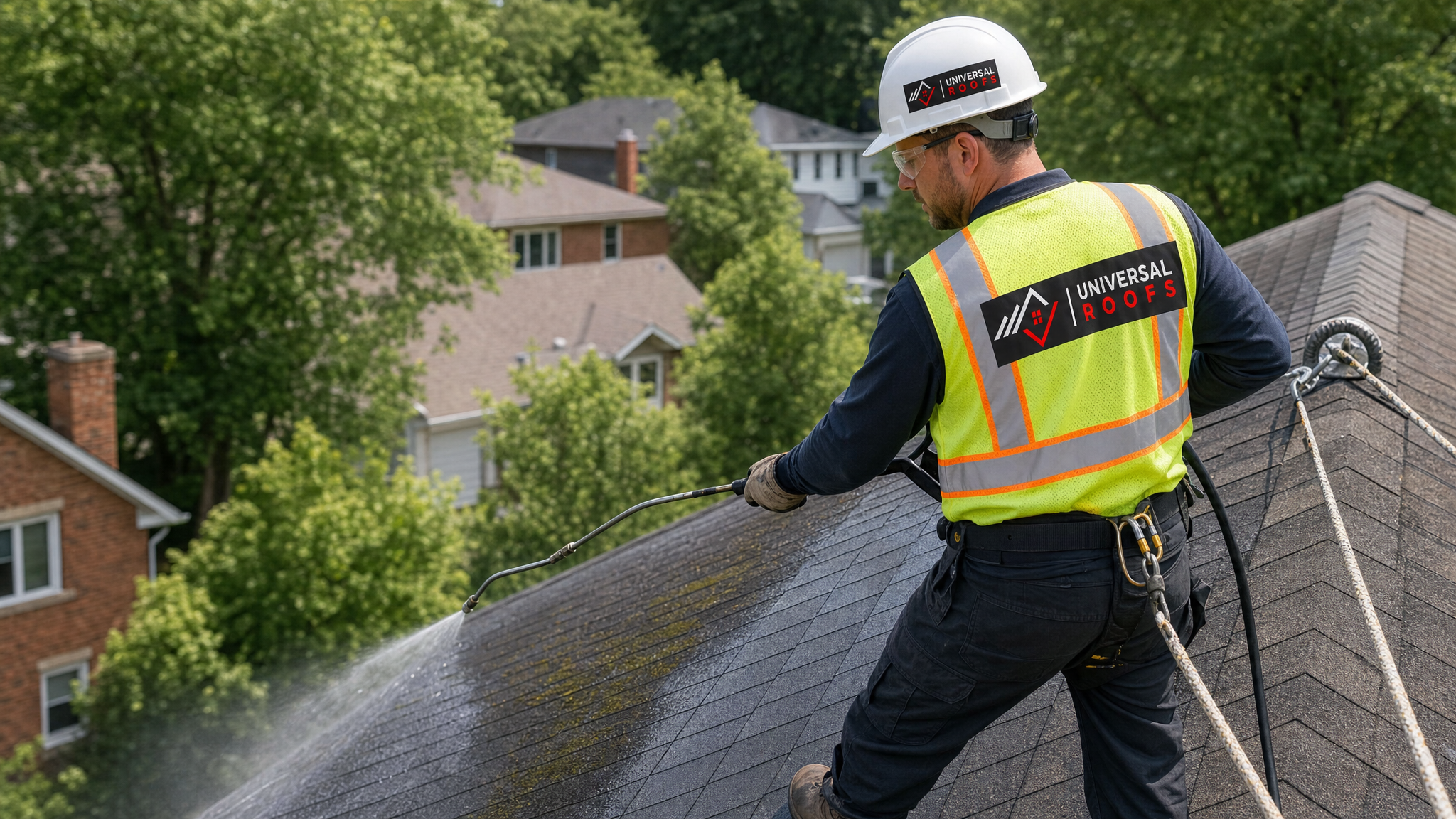
Beyond the harness system, a full roof cleaning kit typically includes chemical-resistant gloves, splash-rated eye protection, and a respirator rated for bleach and cleaning-solution vapours, since sodium hypochlorite mixtures produce fumes that are unpleasant and potentially harmful in enclosed or poorly ventilated areas near the eaves. Ladder stabilizers and standoffs, which hold an extension ladder away from the gutter line and distribute weight across the fascia rather than a single point, round out the access equipment most professional crews carry to every job.
Ground-Level and Roof-Rinsing Tools
Not every part of the job happens on the roof itself. Ground-level equipment plays a bigger role than most homeowners expect.
A garden hose with a shut-off nozzle is often all that is needed for the final rinse step on a soft-wash job, since the cleaning solution is engineered to work on contact and simply needs to be diluted and washed downward off the roof surface over the following days of natural rainfall, rather than power-rinsed immediately. Gutter guards or temporary plant coverings protect landscaping below from chemical runoff, and a plastic sheeting kit to cover sensitive shrubs is inexpensive insurance against leaf burn from concentrated cleaning solution.
For moss and debris removal, a soft-bristle roof brush on an extension pole (never a stiff wire brush, which can strip granules) helps loosen larger clumps before the chemical treatment does the rest of the work. A leaf blower or handheld debris blower is useful afterward for clearing loosened moss and lichen fragments out of valleys and off the surface before the final rinse.
| Tool | Purpose | Typical Rental Cost (GTA) | Skill Level Required |
|---|---|---|---|
| Soft-wash pump system | Low-pressure chemical application | $120-$200/day | Intermediate to advanced |
| Adjustable pressure washer | Flat roof and masonry cleaning | $60-$100/day | Intermediate |
| Extension ladder with stabilizer | Safe roof access | $35-$60/day | Beginner to intermediate |
| Fall-protection harness kit | Worker safety at height | $40-$75/day | Requires training |
| Soft-bristle roof brush | Manual moss and debris removal | $15-$30 (purchase) | Beginner |
| Surface cleaner attachment | Even flat-roof pressure rinsing | $25-$45/day (add-on) | Intermediate |
DIY Rental vs. Hiring a Professional Roofing Contractor
Renting soft-wash and pressure-washing equipment for a weekend is tempting, and for a small, single-storey bungalow with easy roof access, a careful, well-prepared homeowner can achieve reasonable results. But the calculation changes quickly once you factor in the real costs and risks involved.
Professional roofing crews carry commercial insurance that covers accidental damage, whether that means a chemical solution drifting onto a neighbour’s siding or a slip on a wet slope. They also have access to commercial-strength chemical concentrates that are not sold at retail, calibrated proportioning equipment that ensures consistent dilution across the entire roof (uneven mixing is one of the most common causes of streaking after a DIY clean), and, critically, the experience to recognize early signs of shingle damage, flashing deterioration, or soft decking before they become expensive problems.
If your roof shows more than surface-level staining, such as curling shingles, granule loss in the gutters, or soft spots underfoot, that is a signal to have it assessed rather than cleaned. In those cases a roof repair may be the more appropriate first step, since cleaning a compromised roof does nothing to address the underlying issue and can occasionally make small problems worse by forcing water into already-weakened areas.
| Factor | DIY Rental | Professional Service |
|---|---|---|
| Upfront cost | $150-$350 for one weekend rental | $350-$800 for a typical GTA home |
| Insurance coverage | None (homeowner liable) | Full commercial liability coverage |
| Chemical strength | Retail-grade, often diluted | Commercial-grade, properly calibrated |
| Damage risk | Higher, especially with pressure washers | Low, handled by trained crews |
| Time required | Full day or weekend, plus setup/cleanup | Typically 2-4 hours on site |
Seasonal Timing and Toronto Climate Considerations
Timing your roof cleaning around the GTA’s climate makes a real difference to both results and safety. Late spring through late summer, roughly May through early September, is the ideal window: warmer temperatures help cleaning solutions activate fully, and there is enough dry, sunny weather afterward for the roof to shed residue naturally through a few rounds of rainfall. Cleaning in July, as many homeowners are doing right now, takes advantage of long daylight hours and predictable dry stretches, which shortens the whole process considerably.
Cold-weather cleaning is a different story. Below roughly 4 to 7 degrees Celsius, most chemical solutions lose effectiveness and can freeze on contact with a cold shingle surface, which does nothing for the algae and creates a genuinely dangerous ice hazard for anyone on a ladder or the roof itself. We do not recommend scheduling cleaning work once overnight temperatures start dropping toward freezing in the fall, and it is worth remembering that Toronto’s freeze-thaw cycles through winter and early spring are already hard on a roof’s granules and flashing seals, so a spring inspection after the thaw is a smart companion to any summer cleaning schedule.
If your roof is due for more than a clean, such as ongoing granule loss, ice damming, or visible sagging, our attic ventilation and insulation review often uncovers the root cause, since poor attic airflow accelerates both moss growth and shingle aging from the underside.
Roof-Specific Tools for Skylights and Flashing Details
Homes with skylights need an extra layer of care during any roof cleaning project, since the flashing and seal around a skylight is one of the most common points of water intrusion on an otherwise sound roof.
Around skylight curbs, professional crews use a soft detail brush rather than a wand nozzle at close range, since a direct, sustained low-pressure spray aimed at a flashing seam can, over years of repeated cleanings, gradually work sealant loose. A quick visual check of the skylight seal, glazing, and surrounding shingles before and after cleaning is standard practice, and it is a good opportunity to catch early signs of wear. If you notice fogging between panes, visible gaps in the flashing, or staining on the ceiling below a skylight, that is worth a conversation about skylight replacement rather than continuing to clean around a failing unit.
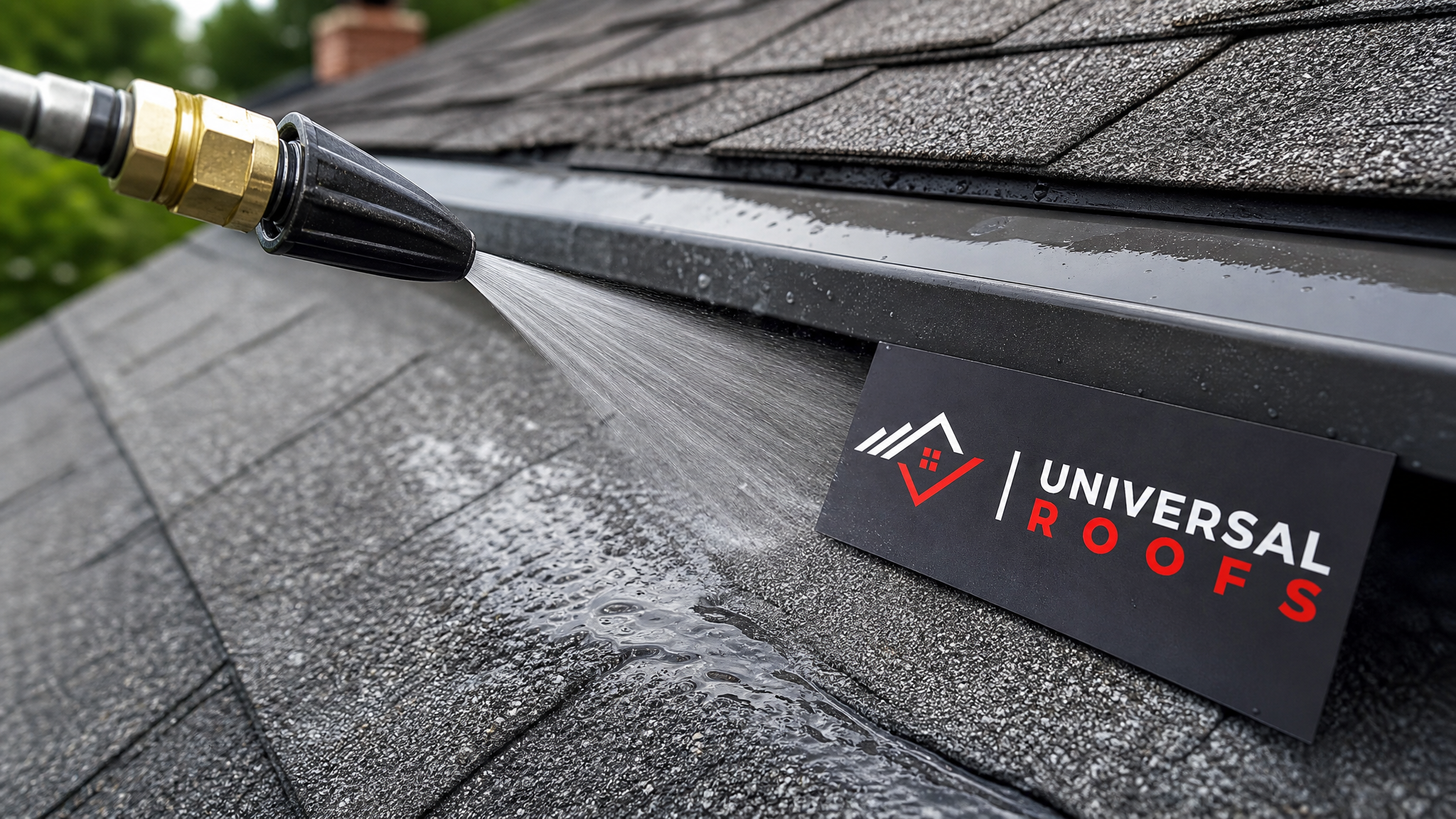
For homes with a mix of sloped and flat sections, which is common on additions and rear extensions across the GTA, the transition point between the two roof types often needs two different tools in the same visit: a soft-wash wand for the shingled slope and a lower-pressure rinse or surface cleaner for the flat section. Our flat roofing team frequently handles these mixed-material homes and adjusts equipment section by section rather than using one blanket approach across the entire roof.
Common Mistakes That Damage Roofs During Cleaning
Most of the roof damage we see from DIY cleaning attempts traces back to a small handful of repeated mistakes, all of which are avoidable with the right equipment and a bit of patience.
Using a standard pressure washer directly on asphalt shingles is the single most common and most costly mistake. Even a brief, close-range blast at 2,000+ PSI can strip the protective granule layer, exposing the asphalt mat underneath to UV damage and accelerating the need for a full roof replacement by years.
Standing directly on a wet roof without proper footwear or fall protection is both a safety hazard and a source of physical damage, since foot traffic on wet, softened shingles can crack them, particularly on older roofs where the asphalt has already lost some flexibility.
Mixing cleaning chemicals incorrectly, especially combining bleach-based products with ammonia-based cleaners, creates toxic fumes and is genuinely dangerous. Always follow manufacturer dilution ratios exactly, and never combine two different commercial products without confirming compatibility first.
Skipping landscape protection allows concentrated runoff to kill grass, shrubs, and garden beds along the drip line. A few minutes spent wetting down and covering plants before starting saves hours of garden recovery afterward.
Ignoring the underlying cause of heavy moss or algae growth, such as overhanging tree branches, poor attic ventilation, or a north-facing slope that rarely dries out, means the growth simply returns within a year or two. Addressing the cause, whether that is trimming back branches or improving airflow, extends the value of every cleaning significantly.
When to Call In Professional Help
Roof cleaning sits on a spectrum from a manageable weekend project to a job that genuinely requires a licenced, insured crew. Steep roof pitches (generally anything over a 6:12 slope), roofs over two storeys, roofs with existing damage, or any project involving chemical application near neighbouring properties are all situations where professional equipment and training matter more than the cost savings of a rental.
We also recommend a professional opinion any time a cleaning reveals something beyond surface algae, whether that is curling or cracked shingles, exposed nail heads, or signs of a leak. In those situations, our team can typically fold an inspection into the same visit, and if the roof has reached the end of its service life, we can walk through the options, including a full roof replacement, without any pressure to choose the most expensive path forward. Homeowners across Toronto, the Peel Region, York Region, Halton Region, and Durham Region can request a straightforward, no-obligation assessment of what their roof actually needs.
You can also read what past clients have said about our approach on our reviews page, or check our FAQ page for answers to more common roofing and maintenance questions before booking a visit.
What roof cleaning equipment and tools are safest for asphalt shingles?
Can I use a regular pressure washer for roof cleaning?
How much does professional roof cleaning cost in the GTA?
What is the best time of year to clean a roof in Toronto?
Do I need fall protection equipment to clean my own roof?
Will roof cleaning damage my skylights or flashing?
Need Help With Top Roof Cleaning Equipment?
Choosing and using the correct roof cleaning equipment and tools protects both your roof’s lifespan and your home’s curb appeal, but getting the technique wrong can turn a routine maintenance task into an expensive repair. Universal Roofs brings the commercial-grade soft-wash systems, safety equipment, and hands-on experience to get it right the first time.
Call us today at (416) 732-2421 or request a free inspection to get started.
Universal Roofs proudly serves Toronto, Mississauga, Brampton, Vaughan, Markham, Oakville and the GTA since 2005.