
A roof inspection in Mississauga is the cheapest piece of roofing work you will ever pay for, and it is usually the piece that saves you the most money. Most of the expensive failures we see on Mississauga homes did not start as expensive failures. They started as a lifted piece of step flashing, a cracked plumbing stack boot, or a plugged soffit vent that nobody looked at for eleven years. By the time the ceiling stains show up in the hallway, the sheathing is soft and the repair bill has multiplied. A properly documented roof inspection catches those problems while they are still a few hundred dollars.
This guide explains what a professional roof inspection in Mississauga covers, what it costs in 2026, how the different levels of inspection differ, what should appear in the written report, and how often a typical Peel Region home should be checked. It is written for homeowners, not contractors, so there is no jargon left unexplained and no pressure to book anything you do not need.
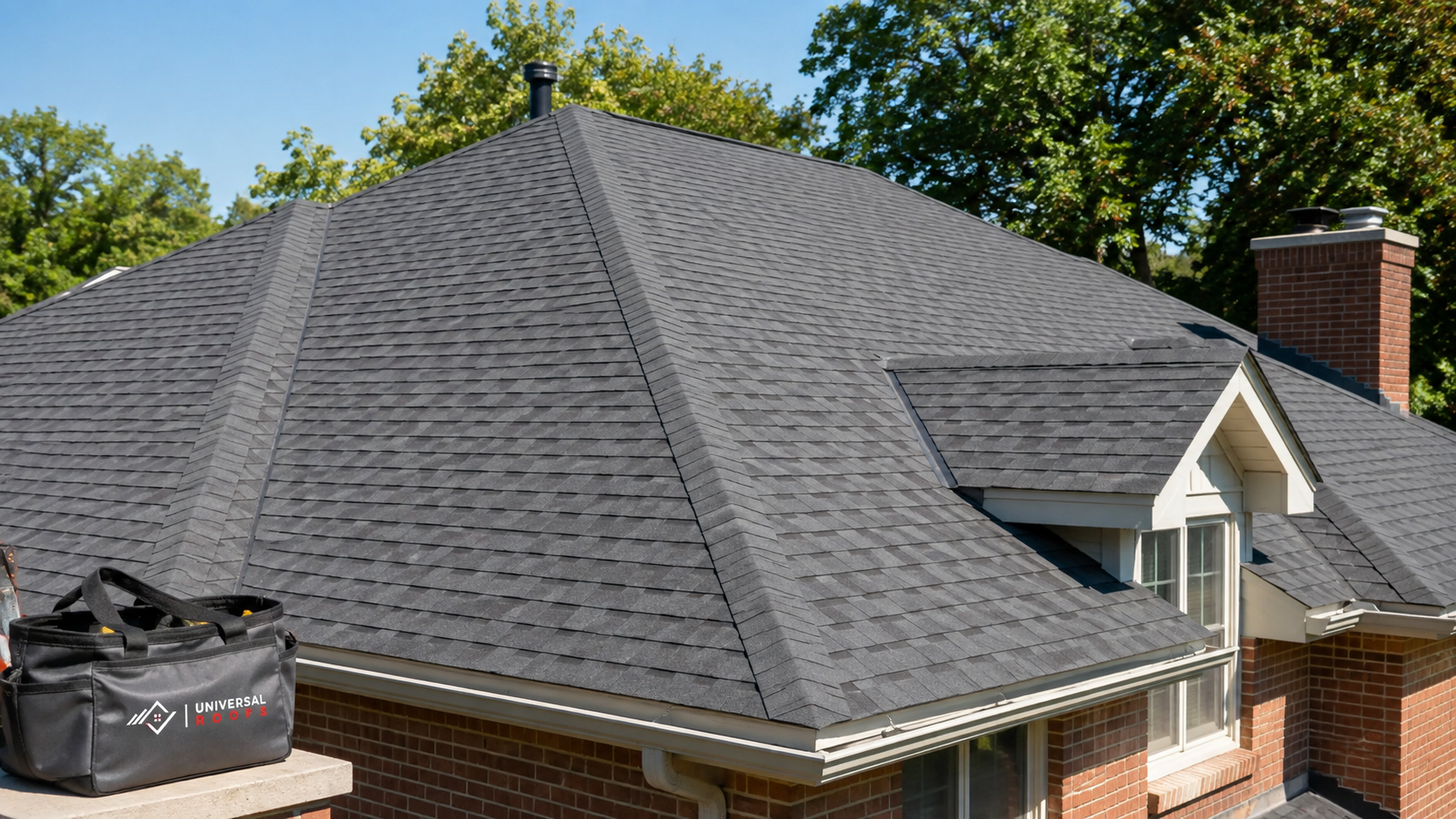
What a Roof Inspection in Mississauga Actually Covers
A real roof inspection is not a contractor standing on your driveway squinting at the ridge. A complete roof inspection in Mississauga covers four separate zones, and a report that skips any one of them is incomplete. The four zones are the roof surface, the roof penetrations and transitions, the drainage system, and the attic underneath.
The roof surface
The inspector walks the field of the roof where the pitch and condition allow it, checking shingle granule loss, curling and cupping at the tab edges, thermal cracking, blistering, exposed fasteners, and any areas where the mat has become brittle. On a laminated architectural shingle the inspector is looking for delamination between the layers. On an older three tab roof the tell is usually granule loss over the south and west slopes, which take the hardest sun exposure. Soft spots underfoot matter as much as anything visible: they indicate the plywood or plank sheathing below has taken on moisture.
Penetrations and transitions
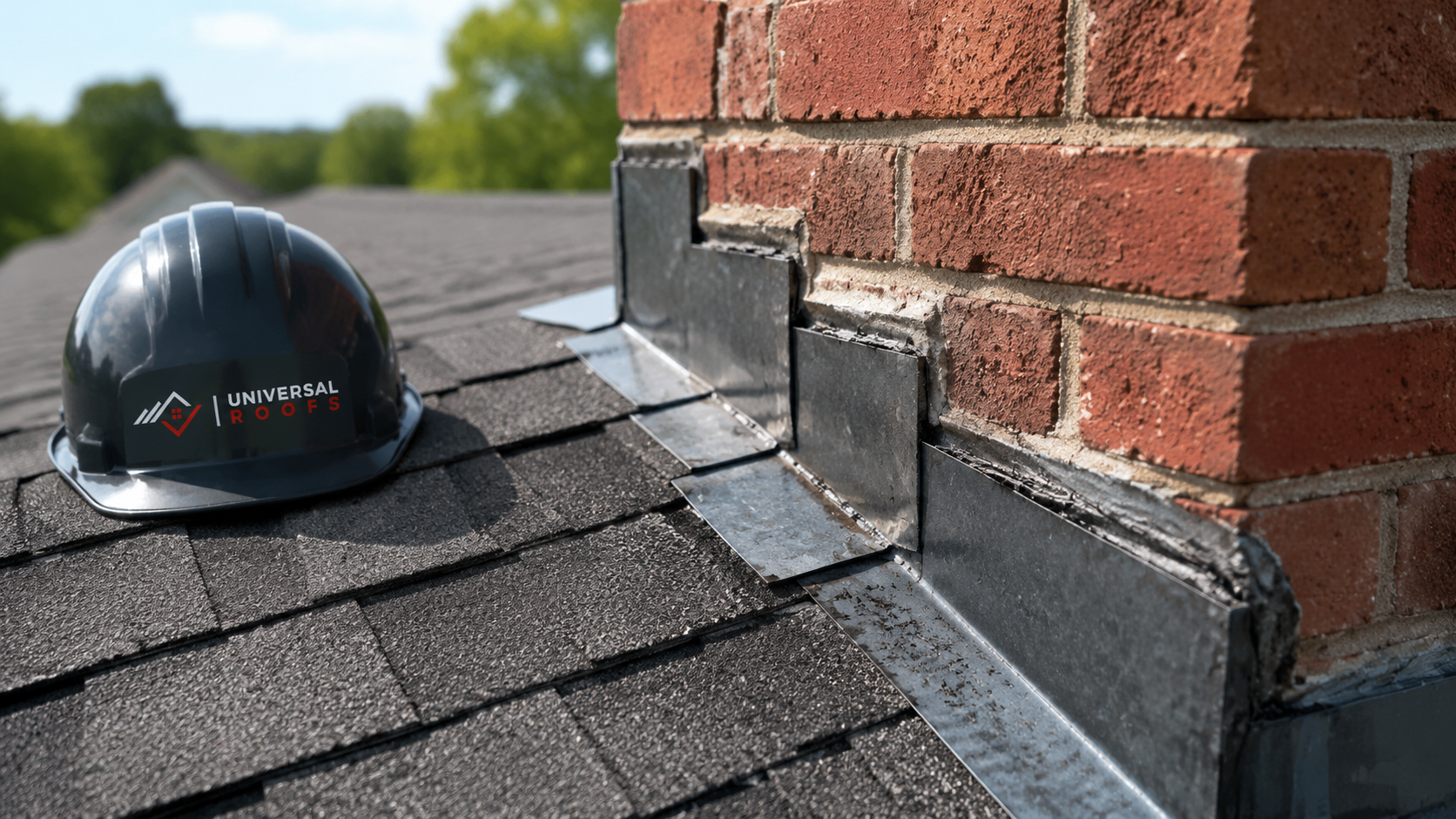
This is where most leaks actually begin. Every roof inspection in Mississauga should include a close look at chimney flashing and counter flashing, sidewall and step flashing where the roof meets a brick or siding wall, valley construction, skylight curbs and flashing kits, plumbing stack boots, bathroom and range exhaust hoods, ridge cap condition, and any satellite or antenna mount penetrations. Rubber plumbing boots are a common failure point because the neoprene collar dries out and splits after roughly twelve to fifteen years of Ontario sun, well before the shingles themselves are finished.
Drainage
Every roof inspection in Mississauga includes drainage, so eavestroughs, downspouts, fascia, drip edge and gutter apron all get checked. Standing water in an eavestrough means it is either plugged or pitched wrong, and either condition sends water back under the drip edge and into the fascia. Downspouts that discharge tight against the foundation are also flagged, because a roof problem and a basement problem are frequently the same problem.
The attic
The attic is the half of the inspection that most cheap quotes skip, and it is the half that tells the truth. From inside, an inspector checks for daylight at penetrations, water staining on the underside of the sheathing, rusted nail shanks, frost or condensation history, mould growth, compressed or displaced insulation, blocked soffit baffles, and exhaust fans that vent into the attic instead of through the roof. Ventilation math is done here too: Ontario practice targets roughly one square metre of net free vent area for every 300 square metres of insulated ceiling, split near evenly between intake at the soffits and exhaust at or near the ridge. Get that wrong and shingles cook from underneath, which is why two identical roofs installed the same week can age a decade apart.
Why Mississauga’s Housing Mix Changes What Inspectors Look For
Mississauga is not one housing stock, it is at least four, and the age of your house predicts the defects an inspector will find. Knowing which group your home falls into tells you what a roof inspection in Mississauga is likely to turn up before anyone climbs a ladder.
- Postwar bungalows and back splits. The older low rise pockets of the city carry shallow pitches, short soffit overhangs, and original plank sheathing in some cases. Ventilation is frequently the weak point because the soffit cavity is small and later insulation top ups buried the intake path.
- Nineteen seventies and eighties two storey detached homes. These typically have straightforward gable or hip roofs, one or two masonry chimneys, and are now on their second or third shingle roof. Chimney counter flashing and old valley metal are the usual findings.
- Nineteen nineties and two thousands subdivisions. Complex rooflines with multiple valleys, dormers, and steep front elevations. More transitions means more flashing means more failure points, and the steep front slopes often need harness access rather than a simple ladder walk.
- Estate lots and custom builds. Larger footprints, sometimes mixed assemblies where a low slope section over an addition or a garage meets a sloped main roof. Those transitions between flat and sloped membranes are inspected differently from an all shingle roof and deserve extra attention.
- Townhome and condo blocks. Shared roof decks and party wall firewall penetrations complicate responsibility. An inspection here should clarify what falls inside your unit’s envelope and what belongs to the corporation.
Local climate loading matters as much as vintage. Peel Region roofs deal with freeze and thaw cycling through late winter, summer surface temperatures that can push well past 60 degrees Celsius on a dark shingle, and the wind driven rain that comes off the lake. Ice damming along north facing eaves is a recurring theme on the older housing stock and is nearly always a ventilation and insulation problem wearing a roofing costume. If you want a broader picture of how we approach roofing services throughout Mississauga, that overview covers the full range of work we handle across the city.
The Three Levels of Roof Inspection in Mississauga and When Each Makes Sense
Not every situation calls for the same depth. Paying for a thermal scan when you need a fifteen minute visual is waste, and accepting a driveway glance when you are buying a house is a gamble. Here is how the levels break down.
Level one, visual assessment. A ladder and roof level walkover, photos of anything notable, and a short summary. Many roofing companies provide this free when it is attached to a quote for work. It is appropriate for routine seasonal checks and for confirming whether visible damage is cosmetic or structural.
Level two, documented inspection with attic access. The full four zone review described above, plus an interior attic assessment and a written report with photos, condition ratings, and a prioritized recommendation list. This is the level of roof inspection in Mississauga that most homeowners should book when they want an honest answer about remaining service life.
Level three, diagnostic and moisture testing. Adds infrared thermal imaging, moisture meter readings, targeted water testing, or on a low slope roof a core cut through the assembly to see the layers and check whether insulation is saturated. Reserved for active leaks with an unclear source, insurance claims, and pre purchase due diligence on larger or more complex buildings.
| Inspection level | What it includes | Typical time on site | 2026 Mississauga price range |
|---|---|---|---|
| Level 1: visual assessment | Exterior and roof level walkover, photos, verbal summary | 30 to 45 minutes | Often free with a quote, otherwise $0 to $200 |
| Level 2: documented inspection | Full surface, flashing, drainage and attic review with written photo report | 60 to 120 minutes | $200 to $450 |
| Level 2 plus drone imaging | Adds aerial capture for steep, tile, slate or unsafe access roofs | 75 to 150 minutes | $250 to $550 |
| Level 3: thermal and moisture | Infrared scan, moisture meter mapping, targeted water testing | 2 to 4 hours | $450 to $900 |
| Level 3: low slope core sample | Destructive core cut, layer analysis, patched and sealed on completion | 2 to 4 hours | $500 to $1,200 |
| Pre purchase roof due diligence | Level 2 scope plus remaining life estimate and budget letter for financing | 90 minutes to 3 hours | $300 to $650 |
What a Roof Inspection Costs in Mississauga in 2026
The price of a roof inspection in Mississauga depends on four things: roof size, pitch and access difficulty, complexity of the roofline, and whether you need documentation. A single storey bungalow with a simple gable and safe ladder access sits at the bottom of every range. A three storey subdivision home with a steep front elevation, four valleys, two dormers and a skylight sits at the top, because the crew needs anchor points and harness setup before anyone steps on it.
Be careful about how you read a free roof inspection in Mississauga. Free is legitimate and common when the inspection is the first step of a quoting process, and a reputable contractor will still show you photos and explain what they found. Free stops being legitimate when it comes with a same day discount that expires at midnight, a refusal to leave written findings, or a diagnosis of total replacement without a single attic photo. A homeowner who wants a genuinely neutral opinion should expect to pay for it, and paying two to four hundred dollars for an unbiased report before committing to a five figure project is sound arithmetic.
| Home type | Approximate roof area | Documented inspection cost | Access notes |
|---|---|---|---|
| Postwar bungalow, simple gable | 1,200 to 1,700 sq ft | $200 to $300 | Ladder access, low pitch, straightforward |
| Back split or side split | 1,500 to 2,100 sq ft | $225 to $350 | Multiple roof planes at differing heights |
| 1980s two storey detached | 1,800 to 2,600 sq ft | $275 to $400 | Chimney and valley detail adds time |
| 2000s subdivision home | 2,400 to 3,400 sq ft | $325 to $475 | Steep front slope, harness required |
| Estate or custom home | 3,500 to 6,000 sq ft | $450 to $750 | Mixed flat and sloped assemblies |
| Freehold townhome | 700 to 1,100 sq ft | $175 to $275 | Party wall and shared drainage review |
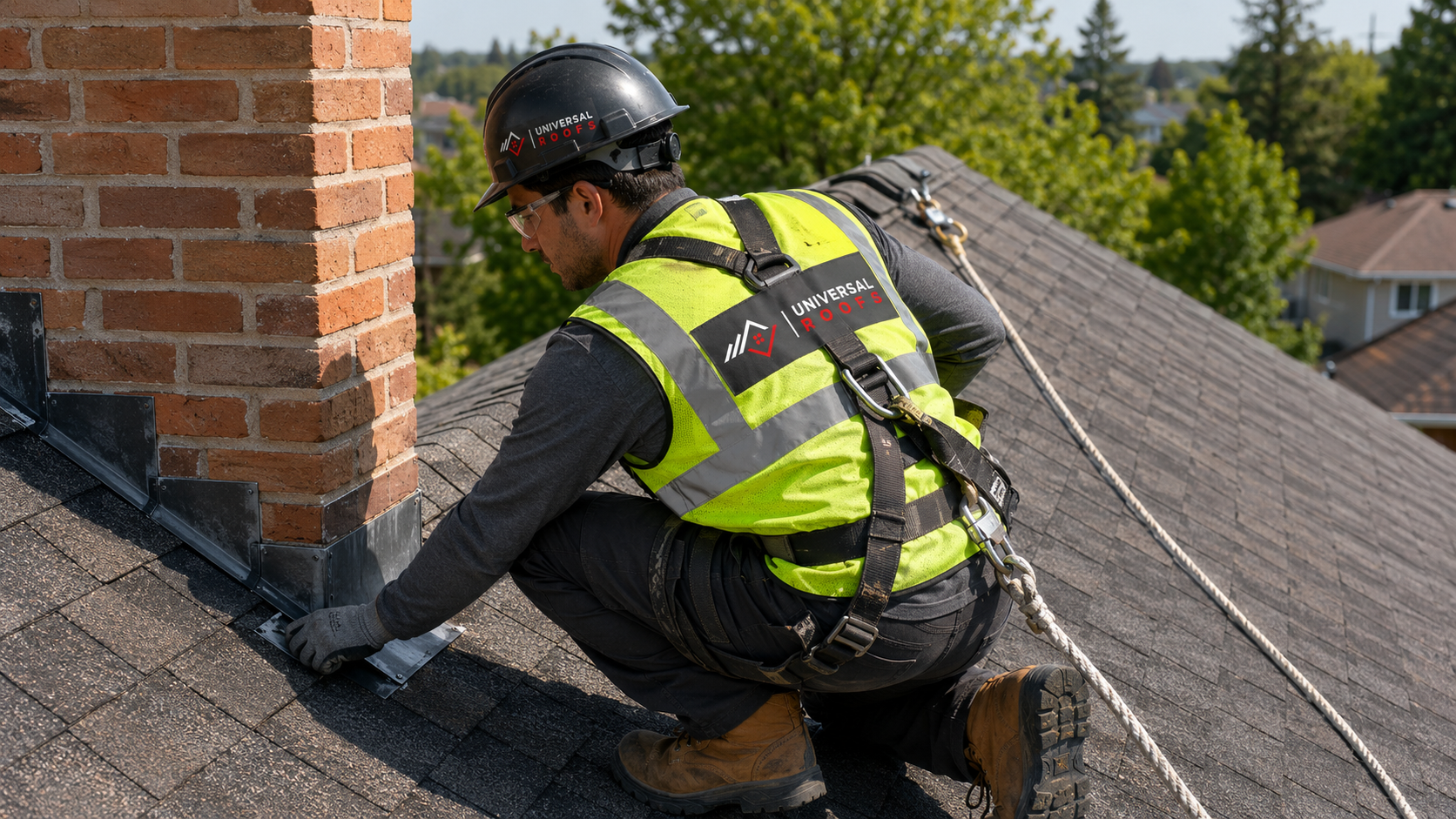
Common Problems Found During a Roof Inspection in Mississauga
Across the housing types described above, a handful of findings account for the large majority of what a roof inspection in Mississauga writes up. Knowing them helps you read your own report and judge whether a recommendation is proportionate. Most of these are ordinary maintenance items rather than emergencies, and most are addressed through targeted roof repair work rather than a full tear off.
| Finding | Typical cause | Urgency | 2026 repair cost range |
|---|---|---|---|
| Cracked or split plumbing stack boot | Neoprene collar degraded by UV after 12 to 15 years | High, active leak path | $200 to $500 per stack |
| Failed chimney counter flashing | Mortar joint erosion, caulk used in place of proper reglet | High | $600 to $1,600 |
| Lifted or short step flashing at sidewall | Original install error or later siding work | Medium to high | $500 to $1,400 |
| Deteriorated valley metal | Corrosion and debris retention over 20 plus years | Medium | $800 to $2,200 |
| Blocked soffit intake vents | Insulation pushed into the soffit cavity, no baffles | Medium, drives premature aging | $400 to $1,200 |
| Missing or damaged ridge cap | Wind uplift on exposed ridges | Medium | $450 to $1,300 |
| Skylight flashing kit failure | Original kit omitted or reused on a reroof | High if leaking | $650 to $1,900 |
| Soft or delaminated sheathing | Long term moisture from a leak or condensation | High, structural | $90 to $180 per sheet installed |
Two findings deserve special comment. First, granule loss on its own is not an emergency. Every asphalt roof sheds granules, and a handful in the eavestrough after a hard rain is normal. Widespread bald patches with the black mat showing through are a different matter, because that is the asphalt losing its UV shield. Second, an inspector who finds soft sheathing should tell you how much of it is soft. Two sheets is a repair. Forty percent of the deck is a replacement conversation, and honest reports say which one you are looking at.
The Inspection Report: What You Should Receive
The deliverable is the whole point. If you pay for a roof inspection in Mississauga and receive a one line text message saying the roof looks fine, you did not get an inspection. A competent written report includes all of the following.
- Dated photographs of every finding, taken close enough to see the defect and wide enough to know where on the roof it sits.
- Assembly description covering shingle type and approximate age, underlayment where visible, ice and water membrane presence at eaves and valleys, ventilation type and count, and deck material.
- Condition rating per component rather than one overall grade, so surface, flashing, drainage and ventilation are each scored separately.
- Remaining service life estimate expressed as a range in years, with the reasoning stated.
- Prioritized recommendations split into items needing attention now, items to budget for within one to three years, and items to monitor.
- Cost estimates or ranges attached to each recommendation so you can plan rather than guess.
- Photographs from inside the attic, which are the ones most likely to be missing from a weak report.
Keep every report you receive. A file of roof inspection reports going back several years is the single most persuasive document you can hand an insurance adjuster or a buyer’s agent, because it demonstrates continuous maintenance instead of a one time scramble.
How Often You Should Book a Roof Inspection in Mississauga
The general rule for Peel Region is once every two years for a roof under ten years old, and once a year after that. Beyond the calendar, certain events should trigger an inspection regardless of when the last one happened.
- After any severe wind event. Sustained winds above roughly 80 kilometres per hour can lift and crease shingle tabs without detaching them, and a creased tab fails quietly a season or two later.
- After a hailstorm. Hail bruising is often invisible from the ground but shows clearly at roof level, and insurers generally impose time limits on claims.
- Before listing or buying. A current report removes the single largest unknown from a real estate negotiation.
- After ice damming or interior staining. Even if the stain dried up on its own, the water path is still there.
- Before major interior work. Finishing a basement or renovating a top floor bathroom under an unknown roof is a poor sequence.
- Around year fifteen of an asphalt roof. This is the point where budgeting decisions should start being informed by data rather than optimism.
Late spring through early autumn is the practical season for a thorough roof inspection in Mississauga. Snow cover hides the surface entirely, and cold makes asphalt shingles brittle enough that walking a roof can cause damage rather than reveal it. Summer daylight also gives an inspector the best conditions for photographing fine cracks and open seams.
Inspection Versus Estimate: Understanding the Difference
These two things get conflated constantly and they serve different purposes. An estimate is a priced proposal to perform specific work. It answers the question of what a defined job will cost. An inspection is a diagnostic exercise. It answers the question of what condition the roof is in and what, if anything, needs doing.
Homeowners often call for an estimate when what they need is a roof inspection in Mississauga, and the difference shows up in the outcome. If you call three companies for a replacement estimate, you will receive three replacement estimates, because that is what you asked for. If you book an inspection first, you may learn that the roof has eight good years left and needs $900 of flashing work. That is a materially different financial year.
The reverse also applies. If your roof is visibly at end of life with widespread curling and multiple leaks, paying for a diagnostic inspection is redundant. Go straight to estimates. The inspection is most valuable in the ambiguous middle, which is where most homes sit.
How to Prepare for Your Roof Inspection in Mississauga
A small amount of preparation makes the visit faster and the report better. None of it is complicated.
- Clear attic access. If the hatch is in a closet, empty the shelf under it. An inspector who cannot get into the attic cannot complete half the job.
- Write down the history. Approximate year of the last roof, who did it, whether a warranty exists, and any past leaks with their locations and dates.
- Photograph interior stains. Especially any that appear only during specific weather, since active conditions may not be present on inspection day.
- Move vehicles and patio items away from the perimeter. Ladder setup needs stable, clear ground on both sides of the house.
- Secure pets and note gate access. A crew that cannot reach the rear elevation will inspect three sides of a four sided roof.
- Have questions ready. Ask about remaining life, ventilation adequacy, and which items are urgent versus deferrable.
Expect the inspector to be on site for one to two hours for a documented assessment, and expect the written report within one to three business days. Anyone who hands you a completed multi page report before leaving the driveway either did the work on a tablet as they went, which is fine, or filled in a template, which is not.
How much does a roof inspection in Mississauga cost?
How long does a roof inspection take?
Do I need a roof inspection before buying a house in Mississauga?
Can a roof be inspected without anyone walking on it?
Will an inspection tell me if insurance should cover the damage?
What is the best time of year to book an inspection?
Book Your Roof Inspection in Mississauga Today
Universal Roofs is a Toronto area roofing contractor serving homeowners throughout Mississauga and the wider Greater Toronto Area. Our roof inspection in Mississauga covers the roof surface, every flashing and penetration, the drainage system and the attic below, and you receive a written photo report with prioritized recommendations and honest cost ranges, whether or not the answer is work we would perform.
Call us today at (416) 732-2421 or request a free consultation.
Universal Roofs serves Mississauga, Brampton, Etobicoke, Oakville and communities across the Greater Toronto Area with roofing inspections, repairs and replacements.