
A metal roof is one of the smartest long-term investments a Toronto homeowner can make, but even the toughest standing-seam or metal-shingle system needs attention to reach its full 50-year lifespan. Consistent metal roof maintenance keeps panels watertight, protects the paint finish from our humid summers and freeze-thaw swings, and catches small problems before they turn into expensive leaks. This year-round care guide walks you through everything a GTA property owner should know about caring for a metal roof, from summer inspection routines to fastener checks, coating renewal, and knowing when to call a professional. Whether your home sits in the west end near High Park or out in Markham, the same fundamentals of good metal roof maintenance apply.
Unlike asphalt shingles that shed granules and degrade steadily, metal roofs fail at specific, identifiable points: seams, fasteners, flashing, and penetrations. That is actually good news, because it means a focused maintenance plan pays off. Below we break the work into seasonal tasks, explain the tools and materials involved, and share the cost ranges we see across Toronto. If you would rather leave the ladder work to a crew, the team at Universal Roofs handles metal roof inspections and repairs across the GTA.
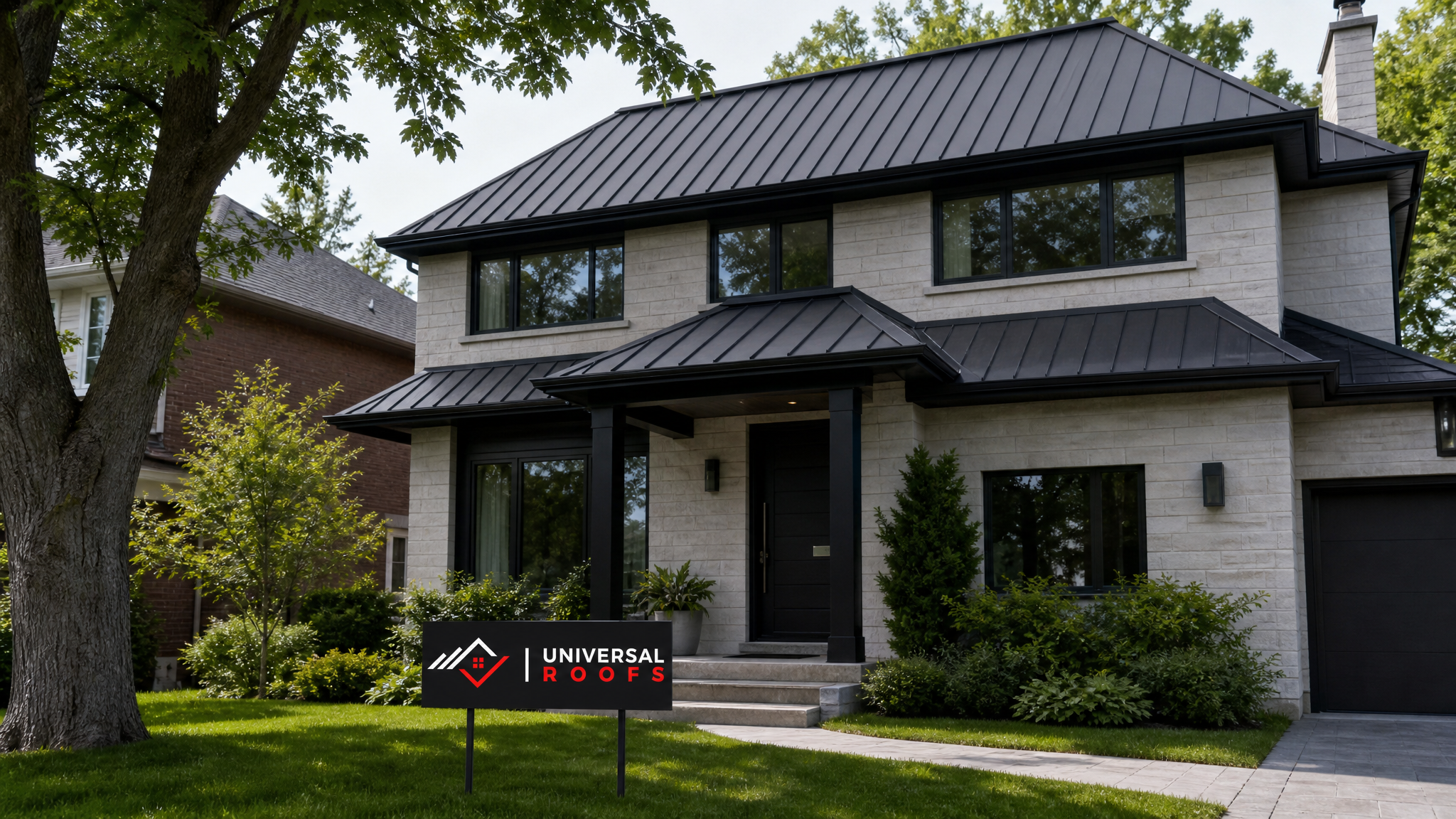
Why Metal Roof Maintenance Matters in the Toronto Climate
Toronto puts metal roofs through a demanding annual cycle. Summer brings intense UV exposure, humidity, and the occasional violent thunderstorm with wind-driven rain and hail. The freeze-thaw transitions of spring and autumn cause panels to expand and contract, which slowly works fasteners loose and stresses sealant joints. Good metal roof maintenance in this region is really about managing movement, moisture, and debris so that none of them get the chance to compromise the system.
The lakeside humidity that defines much of the GTA also accelerates corrosion wherever the protective coating has been scratched or the galvanic barrier has been breached, such as at cut edges or where dissimilar metals meet. A homeowner who spends 30 minutes twice a year looking at their roof, plus a professional inspection every few years, will spot these issues while they are still cosmetic rather than structural. Neglect, on the other hand, lets a single failed fastener grommet channel water into the roof deck for months before anyone notices a ceiling stain.
Metal roofing is popular in Toronto precisely because it lasts, but longevity is earned through upkeep. A roof that could last 50 years might fail at 25 if seams are never resealed and debris is left to trap moisture against the panels. If you are weighing a repair against a full swap, our guide to roof replacement options can help you understand when maintenance stops being cost-effective.
The Core Components a Metal Roof Inspection Should Cover
Every effective inspection follows the water. You start at the ridge and work down, checking each place where the roof could let moisture in. Understanding these components helps you communicate clearly with any contractor and know what you are looking at when you glance up at your own roof.
| Component | What to Inspect | Common Failure Sign |
|---|---|---|
| Panel seams | Standing-seam locks or overlapping edges | Gaps, lifting, separated locks |
| Fasteners | Exposed screws and rubber washers | Backed-out screws, cracked grommets |
| Flashing | Valleys, walls, chimneys, vents | Rust, loose edges, failed sealant |
| Penetrations | Pipe boots, skylights, vents | Cracked boots, dried caulk |
| Coating | Paint and protective finish | Chalking, fading, scratches, rust spots |
| Gutters | Eaves and downspouts | Debris buildup, sagging, overflow |
Skylights deserve special attention on a metal roof because their curbs and flashing are among the most common leak points. If your home has skylights integrated into a metal roof, our skylight specialists can check the flashing seal at the same time as your roof inspection. Likewise, if your inspection turns up soft spots or interior moisture, the problem may extend into the attic, where ventilation and insulation play a big role in keeping the underside of the deck dry.
Your Summer Metal Roof Maintenance Checklist
Summer is the ideal season for hands-on metal roof maintenance in Toronto. The panels are dry, the weather is stable, and any repair sealants cure properly in the warm temperatures. Here is the routine we recommend for the warm months.
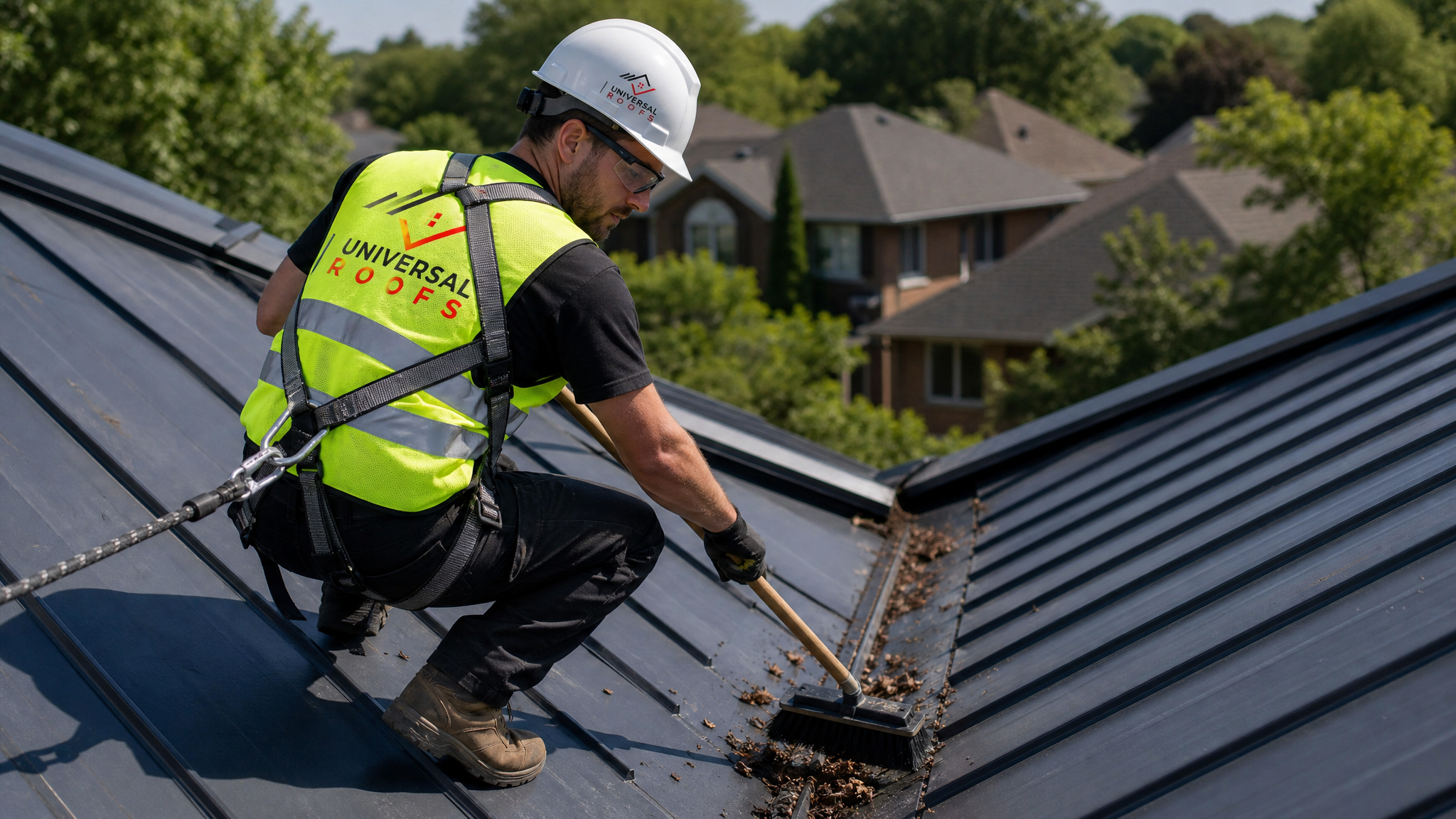
Clear debris. Leaves, seed pods, and windblown twigs collect in valleys and behind roof penetrations, where they hold moisture against the metal and invite corrosion. Use a soft-bristle broom or a leaf blower from a stable position, never a metal rake that could scratch the finish. Pay special attention to the low points where two roof planes meet.
Clean the gutters. Overflowing eavestroughs push water back under the drip edge. Flush them with a hose and confirm the downspouts run freely. Clogged gutters are one of the most common causes of fascia rot on otherwise healthy metal roofs.
Wash the panels. A gentle rinse removes the film of pollen, pollution, and organic growth that dulls the finish and can hold moisture. For stubborn areas, use a soft cloth with mild soap and water, working from the top down. Avoid pressure washers, which can drive water under seams and strip coating.
Inspect after storms. Toronto’s summer thunderstorms can loosen fasteners, dent panels with hail, and lift flashing with high winds. A quick visual check from the ground with binoculars after any significant storm helps you catch damage early. If you spot a problem you cannot safely reach, our roof repair team can assess it.
Fasteners, Seams, and Sealant: The Details That Prevent Leaks
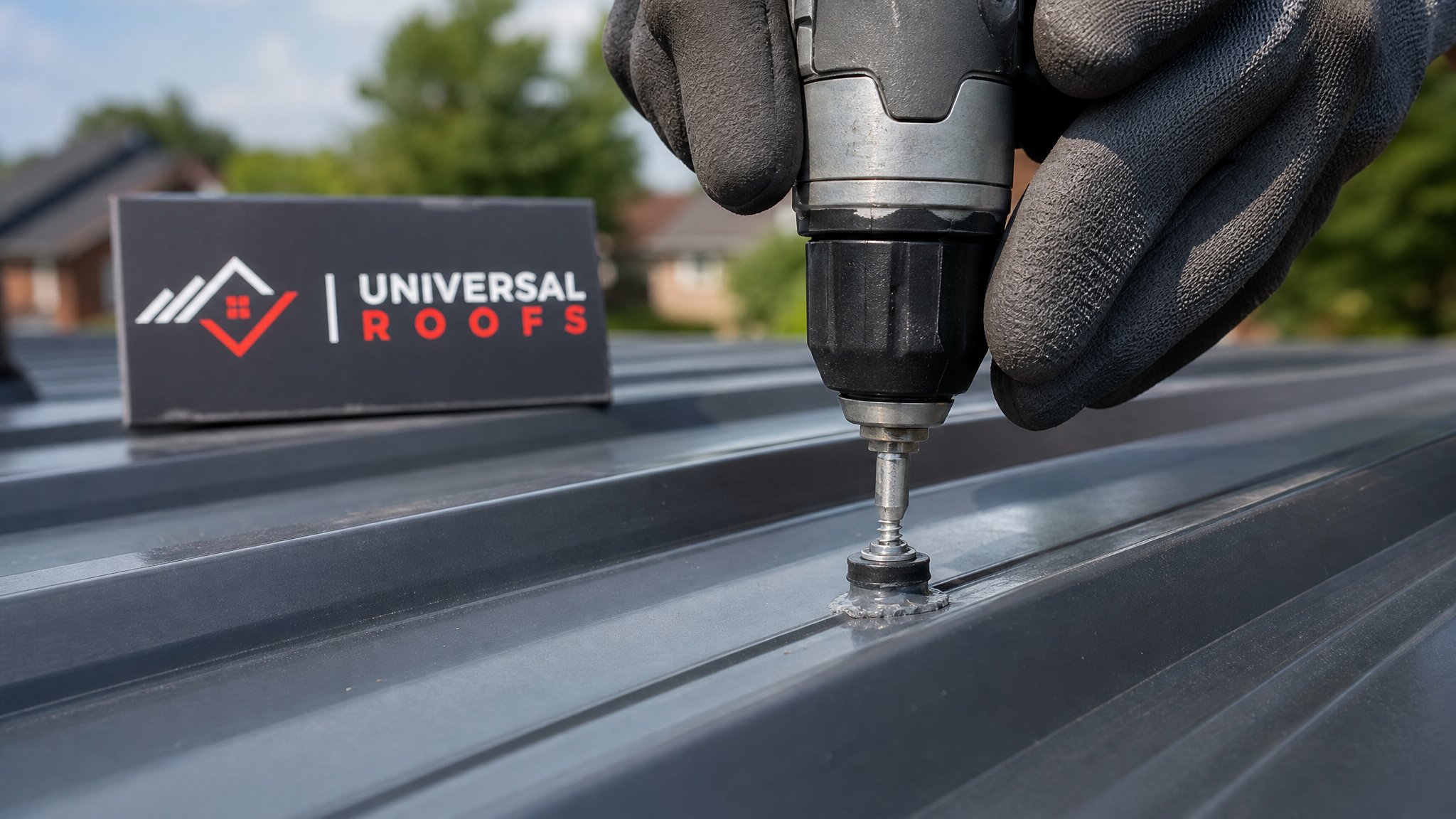
If there is one area where metal roof maintenance earns its keep, it is fasteners and sealant. Exposed-fastener metal roofs use screws with rubber (EPDM) washers that compress against the panel to create a watertight seal. Over years of thermal expansion and UV exposure, those washers harden, crack, and lose their grip. Standing-seam roofs hide most fasteners under the seam locks, which is why they generally need less of this work, but even they rely on sealant at flashing and penetrations.
During a thorough check, a technician looks for screws that have backed out, over-driven screws that have crushed their washer, and any washer that has split or gone brittle. The fix is straightforward but must be done correctly: the old screw is removed and replaced with a slightly larger-diameter fastener with a fresh washer, driven to the right torque so the washer compresses without deforming. Butyl tape and polyurethane or silicone sealants rated for metal are used to renew seams and flashing joints.
| Maintenance Task | Recommended Frequency | Typical Difficulty |
|---|---|---|
| Debris and gutter clearing | Twice per year | Homeowner (with care) |
| Visual storm inspection | After each major storm | Homeowner (from ground) |
| Fastener and washer check | Every 2-3 years | Professional |
| Sealant and flashing renewal | Every 5-10 years | Professional |
| Full professional inspection | Every 2-3 years | Professional |
| Repaint or recoat | Every 15-20 years | Professional |
Sealant renewal is where many DIY efforts go wrong. Applying new caulk over old, cracked, dirty sealant simply hides the failure without fixing it. Proper metal roof maintenance means removing the failed material, cleaning the joint, and applying a fresh bead of a compatible product. Because much of this work happens at height and near penetrations, it is the part of the routine most homeowners hand to a professional crew.
Coating, Corrosion, and Protecting the Finish
The factory-applied paint system on a metal roof is not just cosmetic; it is the primary barrier against corrosion. Modern coatings such as PVDF (Kynar) finishes are extremely durable, but scratches from falling branches, foot traffic, or dragged ladders can expose bare metal. Once the substrate is exposed, especially at a cut edge, rust can begin and spread beneath the surrounding coating.
Part of routine metal roof maintenance is scanning for scratches, chalking (a fine powdery residue that signals the finish is weathering), and any early orange rust spotting. Small scratches can be touched up with a matching manufacturer-supplied paint pen. Larger areas of chalking or fading, typically after 15 to 20 years, may warrant a full recoat with an elastomeric or acrylic roof coating that restores both appearance and weather resistance. A recoat is far cheaper than replacement and can add a decade or more of service life.
Corrosion prevention also means watching for galvanic reactions. When dissimilar metals touch, such as a copper flashing against a steel panel or steel fasteners in an aluminum roof, an electrochemical reaction can accelerate corrosion. A knowledgeable inspector checks that all metals in contact are compatible and that any dissimilar metals are properly isolated. This is one of many reasons a periodic professional inspection is worth the modest cost, and you can read what GTA homeowners say about our work on our reviews page.
When to Call a Professional Versus DIY
Plenty of metal roof maintenance is safe for a careful homeowner to handle from the ground or a stable ladder: monitoring after storms, keeping gutters clear, and rinsing accessible panels. But there is a clear line where the work should shift to a professional. Walking on a metal roof requires soft-soled footwear, knowledge of which parts of the panel can bear weight, and, critically, fall-protection equipment. Metal roofs are slippery even when dry, and steep GTA rooflines are unforgiving.
Any task that involves walking the roof, replacing fasteners, renewing sealant, repairing flashing, or working around skylights and penetrations is best left to a trained crew with proper harnesses and experience. The cost of a professional inspection is trivial compared with the cost of a fall or a botched repair that lets water into the structure. A good contractor also documents the roof’s condition so you can track its aging over time and plan future work.
If your roof is more than 20 years old, has widespread corrosion, or shows sagging or multiple leaks, maintenance may no longer be the right answer. That is the point to have an honest conversation about repair versus replacement. The same principles that govern metal roofs also apply to low-slope systems, and if part of your home has a flat section, our flat roofing team can evaluate it together with the metal areas. Homeowners across the region can learn more about our approach on our about page or explore the neighbourhoods we cover on our Toronto service area page.
Typical Metal Roof Maintenance Costs in the GTA
Budgeting for upkeep is far easier once you know the ranges. The figures below reflect what Toronto-area homeowners typically pay, though your actual cost depends on roof size, pitch, height, and the extent of any repairs found. Investing in regular metal roof maintenance is almost always cheaper than deferring it until a leak forces emergency work.
| Service | Typical GTA Cost Range | What It Covers |
|---|---|---|
| Professional inspection | $150 – $400 | Full condition report, photos |
| Gutter cleaning | $150 – $350 | Clearing and flushing eaves |
| Fastener replacement | $300 – $900 | Backed-out or failed screws |
| Sealant and flashing renewal | $400 – $1,500 | Reseal seams, penetrations |
| Roof recoat | $3,000 – $8,000 | Full elastomeric or acrylic coat |
| Minor leak repair | $300 – $1,200 | Targeted fix at leak source |
Many homeowners find that bundling tasks, for instance combining an inspection with fastener and sealant work during the same summer visit, reduces the per-item cost because the crew only mobilizes once. A maintenance plan that spreads these tasks over a predictable schedule also smooths out the expense so nothing arrives as a surprise. Over a 50-year roof life, planned metal roof maintenance costs a fraction of what a premature replacement would.
How often should metal roof maintenance be done in Toronto?
Can I do metal roof maintenance myself or should I hire a professional?
What are the most common metal roof problems in the GTA?
How much does metal roof maintenance cost in Toronto?
Does a metal roof need to be recoated or repainted?
How long will a metal roof last with proper maintenance?
Schedule Your Metal Roof Maintenance Inspection Today
Protecting your investment starts with a clear picture of your roof’s condition, and the crew at Universal Roofs has spent years keeping metal roofs watertight across the Greater Toronto Area. From summer debris clearing to fastener replacement, sealant renewal, and recoating, we handle every part of a proper metal roof maintenance plan so your roof reaches its full lifespan. You can also review answers to more common questions on our FAQ page.
Call us today at (416) 732-2421 or request a free inspection to get started.
Universal Roofs proudly serves Toronto, Mississauga, Brampton, Vaughan, Markham, Oakville and the GTA since 2005.