
A gutter extension is one of the least expensive upgrades a Toronto homeowner can make, yet it quietly protects the single most expensive part of your property: the foundation. When rainwater pours off your roof during a summer thunderstorm, your eavestroughs collect it and funnel it to the downspouts. But if that water simply dumps out at the base of your wall, it saturates the soil, seeps toward your footings, and eventually finds its way into your basement. A properly installed gutter extension carries that runoff well away from the house, and in a city built on the heavy clay soils of the GTA, that distance matters more than most people realize. At Universal Roofs, we install and repair drainage systems across Toronto every week, and a downspout gutter extension is often the fix that saves a homeowner thousands in water-damage repairs.
This guide explains how gutter extensions work, why Toronto’s soil and lot layouts make them so important, what materials and configurations are available, and how to choose the right approach for your home. Whether you are dealing with a soggy garden bed, a damp basement corner, or simply want to protect a newly finished lower level, understanding your downspout drainage is the first step.
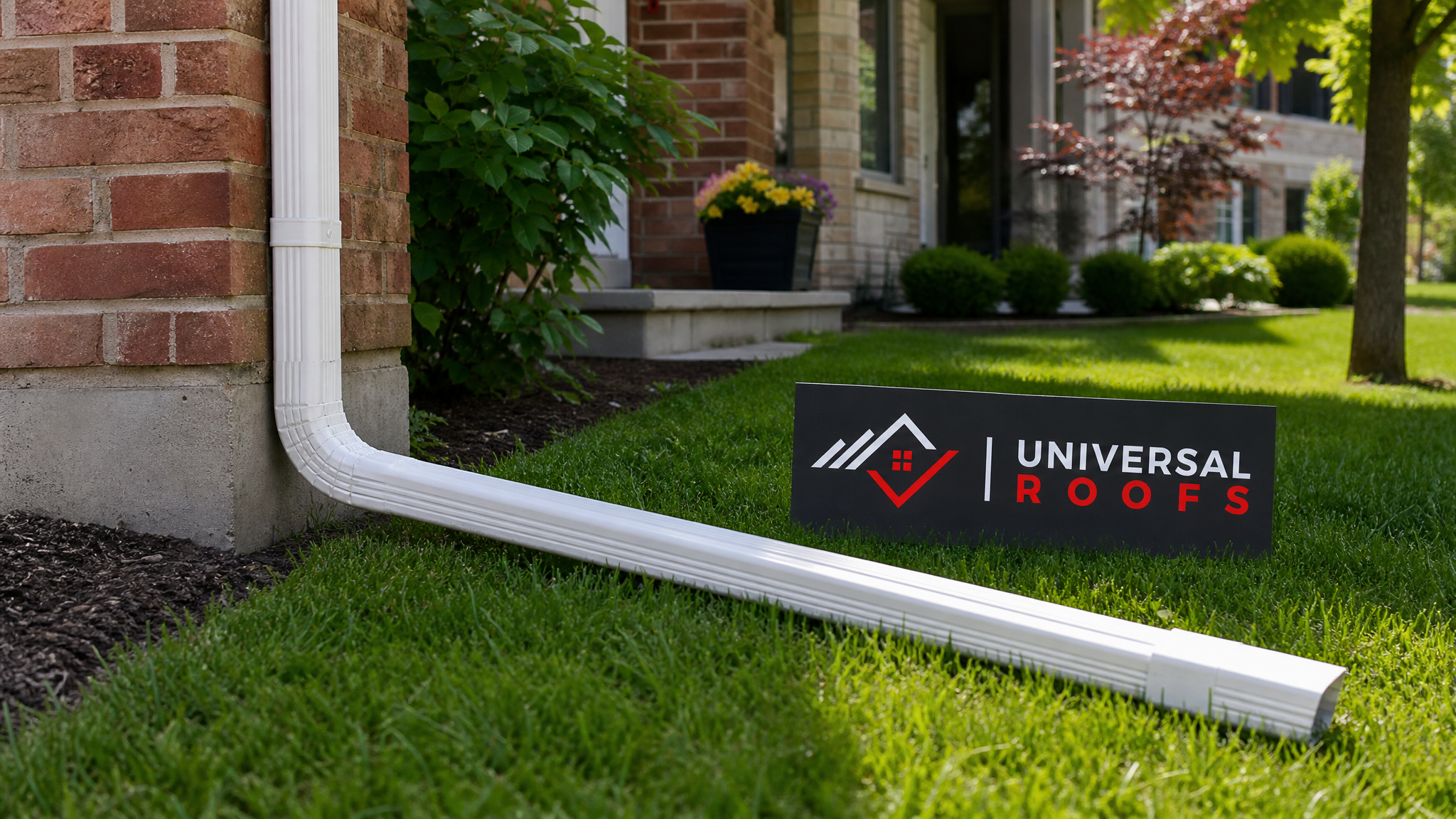
Why a Gutter Extension Matters for Your Toronto Foundation
The purpose of a gutter extension is simple: move roof water far enough from your foundation that it cannot pool against the wall or soak into the ground beside your footings. A standard downspout elbow drops water roughly 15 to 30 centimetres from the wall, which is nowhere near far enough. Industry best practice and most municipal grading guidelines call for discharging runoff at least 1.8 metres (six feet) from the foundation. That gap is exactly what a gutter extension provides.
Toronto sits on dense clay-heavy soil that drains slowly and swells when wet. During a summer downpour, a single downspout can discharge hundreds of litres in a matter of minutes. Without an extension, all of that water collects in the backfill zone right next to your foundation, the very area that was disturbed when your home was built and remains looser than the surrounding earth. Hydrostatic pressure builds against the wall, and water follows any crack, cold joint, or window well it can find. A gutter extension breaks that cycle by relocating the discharge point to a place where the water can spread out and infiltrate harmlessly.
Beyond the basement, poor downspout drainage erodes soil, kills landscaping, undermines patios and walkways, and creates the standing water that mosquitoes love during a humid Toronto July. Extending your gutters is a small change that pays off across your entire property. If you are already dealing with moisture issues, our team frequently pairs a gutter extension with a broader roof repair assessment to make sure water is being managed from the ridge all the way to the ground.
Signs Your Home Needs a Gutter Extension
Many homeowners do not think about their downspouts until water shows up somewhere it should not. Here are the most common warning signs that your home would benefit from a gutter extension:
- Pooling water beside the foundation or under a downspout after rain
- Damp or musty basement corners, especially near exterior walls
- Eroded soil, mulch washout, or exposed roots below a downspout
- Efflorescence (white mineral staining) on interior foundation walls
- Cracks in a patio, driveway, or walkway adjacent to a discharge point
- Water stains at the base of the foundation on the exterior
- Overflowing window wells during heavy rain
If you notice any of these, a downspout extension is usually the first and most affordable intervention. In some cases, moisture problems also point to attic ventilation or insulation issues that trap humidity indoors. A quick review of your attic alongside your drainage can rule out other sources of the problem.
Types of Gutter Extensions Available in the GTA
There is no single “best” gutter extension. The right choice depends on your lot grade, how visible the extension will be, whether you have landscaping to work around, and how far the water needs to travel. Below is a comparison of the most common options we install on Toronto homes.
| Extension Type | Best For | Approx. Reach | Visibility |
|---|---|---|---|
| Rigid aluminum extension | Permanent, tidy above-ground runoff | 1.2 – 2.4 m | Moderate |
| Flip-up / hinged extension | Areas needing lawn mowing access | 0.6 – 1.2 m | Low when up |
| Roll-out sleeve | Occasional heavy rain, seasonal use | 1.8 – 3.6 m | Low when retracted |
| Underground buried pipe | Long runs, clean appearance | 3 – 15 m+ | Hidden |
| Splash block + short extension | Budget fixes, mild grading | 0.5 – 1 m | Low |
Rigid aluminum extensions are the workhorse of downspout drainage. They match your existing eavestrough colour, resist crushing, and last for decades. Flip-up extensions are popular where a homeowner needs to mow or walk past the discharge point regularly. Roll-out sleeves are inexpensive but tend to degrade in UV light and are best treated as a temporary measure. For homes where appearance matters or the water must travel a long way, a buried gutter extension into a dedicated drainage pipe is the premium solution.
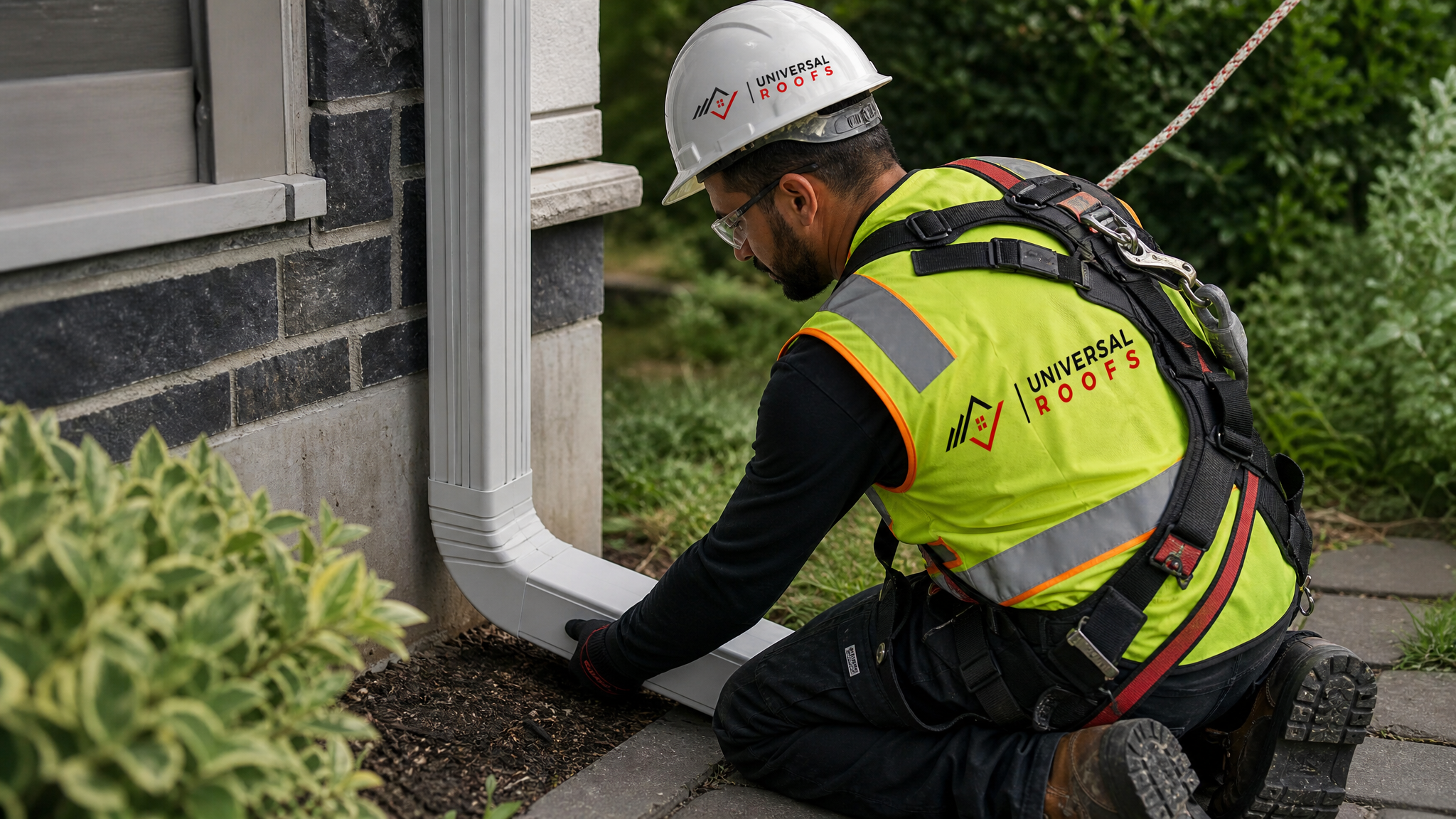
Buried vs. Above-Ground Gutter Extensions
One of the biggest decisions Toronto homeowners face is whether to run their gutter extension above ground or bury it. Both approaches move water away from the foundation, but they differ significantly in cost, longevity, and appearance.
Above-ground extensions are quick to install, easy to inspect, and simple to adjust or replace. Because they sit on the surface, any blockage is visible and clearing them is straightforward. The trade-off is aesthetics and the fact that they can be a tripping hazard or an obstacle for lawn care. Buried extensions, by contrast, disappear from view entirely. The downspout connects to a rigid PVC or corrugated pipe that runs underground with a consistent slope to a discharge point, a pop-up emitter, a dry well, or a gravel bed farther out on the property.
The catch with a buried gutter extension is that it must be installed correctly. It needs a continuous downward slope of at least two per cent, a proper outlet so water can escape, and ideally a cleanout so debris can be flushed. A buried pipe that clogs or freezes with no outlet becomes a hidden reservoir feeding water straight back toward your foundation. This is why we always assess the full grading picture before recommending a buried run. For homes with flat lots, our flat roofing and drainage specialists can design a system that keeps water moving even where gravity offers little help.
| Factor | Above-Ground Extension | Buried Extension |
|---|---|---|
| Installation cost | Lower | Higher (excavation) |
| Appearance | Visible on surface | Hidden underground |
| Maintenance access | Easy, fully visible | Requires cleanout access |
| Clog risk | Low, easy to clear | Higher if no cleanout |
| Lifespan | 15 – 25 years | 20 – 30+ years |
| Lawn / landscaping impact | Obstacle at surface | None once backfilled |
How a Gutter Extension Is Installed Properly
A quality gutter extension installation is about more than snapping a tube onto the bottom of a downspout. Our crews follow a consistent process to make sure the water actually ends up where it should:
- Assess the grade. We confirm which direction the ground slopes so the extension discharges downhill, never toward the house or a neighbour’s lot.
- Measure the required reach. We target a minimum of 1.8 metres from the foundation, longer where soil is especially clay-heavy or the lot is flat.
- Select the material. Rigid aluminum for permanence, hinged for access, or buried PVC for long clean runs.
- Set the slope. Every gutter extension needs a continuous downward pitch so water never sits and stagnates inside the tube.
- Secure the connection. The extension is fastened to the downspout elbow so wind and water pressure cannot dislodge it.
- Establish a discharge point. We choose a spot where water can spread and infiltrate, away from walkways, foundations, and property lines.
Getting the discharge point right is where experience matters most. Dumping water onto a slope that runs back toward the house, or onto a neighbour’s property, simply moves the problem. A well-planned gutter extension considers the entire drainage path across your lot. When we replace an aging eavestrough system entirely, we integrate the extensions into the design from the start, which is often the case during a full roof replacement project.
Gutter Extension Materials, Costs, and Lifespan
Understanding what you are paying for helps you make a confident decision. The table below summarizes the materials we most commonly use for a Toronto gutter extension, along with rough cost ranges and expected service life. Actual pricing depends on the number of downspouts, the reach required, and whether any excavation is involved.
| Material | Typical Use | Cost Range (per downspout) | Expected Lifespan |
|---|---|---|---|
| Aluminum extension | Standard above-ground runoff | $40 – $120 | 15 – 25 years |
| Hinged / flip-up | Mowing and walkway access | $50 – $140 | 10 – 20 years |
| Flexible plastic sleeve | Temporary or seasonal use | $15 – $45 | 2 – 5 years |
| Buried PVC pipe run | Long, hidden drainage path | $300 – $900+ | 20 – 30+ years |
| Pop-up emitter (buried outlet) | Discreet surface discharge | $60 – $150 add-on | 15 – 25 years |
For most Toronto homeowners, a rigid aluminum gutter extension delivers the best balance of durability, appearance, and cost. Flexible sleeves are tempting because they are cheap, but they crack under UV exposure and rarely last more than a few summers, which is why we generally steer clients toward a permanent solution. If you are weighing options, reading through our customer reviews can give you a sense of how our recommendations hold up over time.
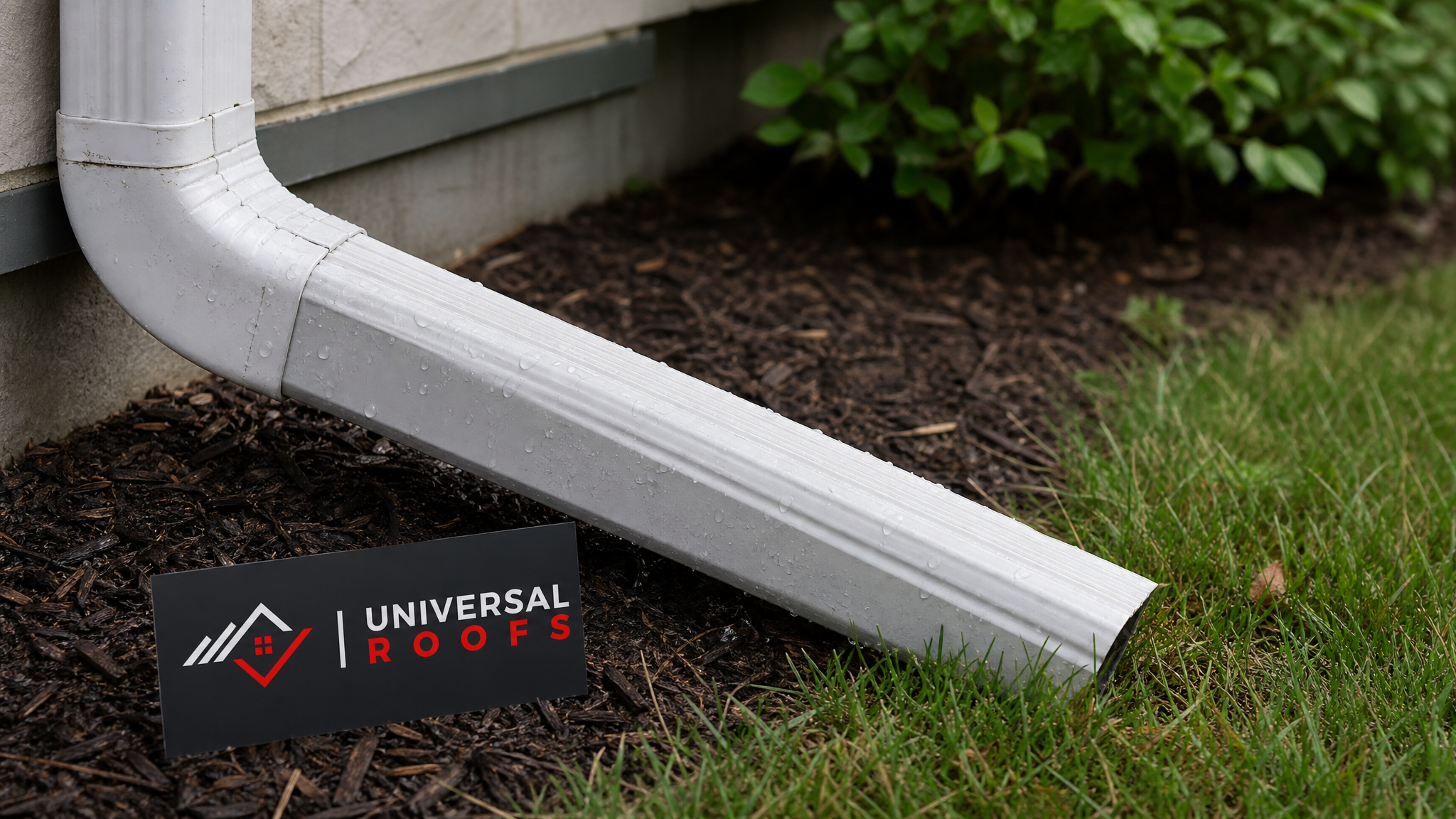
Maintaining Your Gutter Extension Through the Seasons
A gutter extension is low-maintenance, but it is not maintenance-free. Because it sits at the very end of your drainage system, it collects whatever debris makes it through the eavestrough, shingle grit, leaf fragments, seeds, and the occasional twig. Keeping it clear ensures water keeps flowing freely away from your foundation.
Here is a simple seasonal routine we recommend to our Toronto clients:
- After heavy summer storms: Walk the perimeter and confirm each extension is still discharging cleanly and has not been knocked out of alignment.
- Twice a year: Flush each extension with a garden hose to clear any grit or sediment build-up inside the tube.
- For buried runs: Open the cleanout annually and flush the line so it never has a chance to clog underground.
- Check the discharge zone: Make sure the soil at the outlet has not eroded into a channel that redirects water back toward the house.
- Inspect the connection: Confirm the extension is still firmly attached to the downspout elbow.
If your eavestroughs themselves are overflowing, no gutter extension can keep up. Overflow usually means the gutters need cleaning or the system is undersized for your roof’s water volume. In those cases we look at the whole system together. Homeowners with skylights sometimes discover related flashing or drainage details during these inspections, which is where our skylights team can help. To learn more about how our full drainage and roofing services fit together across the city, visit our Toronto service area page.
Frequently Asked Questions About Gutter Extensions
How far should a gutter extension discharge water from the foundation?
Can I install a gutter extension myself?
Will a buried gutter extension clog over time?
Do gutter extensions really help prevent basement leaks?
What is the best material for a gutter extension in Toronto?
How much does a gutter extension cost?
Schedule Your Gutter Extension and Foundation Protection Today
Protecting your foundation starts with something as simple as where your roof water lands. A properly designed gutter extension keeps runoff away from your walls, your basement, and your landscaping, and it is one of the most affordable improvements you can make to a Toronto home. The team at Universal Roofs has been assessing and installing downspout drainage across the GTA for years, and we will recommend the right solution for your lot, whether that is a tidy aluminum extension or a fully buried run. You can learn more about our company or browse our frequently asked questions before you reach out.
Call us today at (416) 732-2421 or request a free inspection to get started.
Universal Roofs proudly serves Toronto, Mississauga, Brampton, Vaughan, Markham, Oakville and the GTA since 2005.