
Eavestrough repair in Oakville is one of those maintenance jobs homeowners postpone until water is running down a foundation wall or dripping through a soffit. The trough system looks simple from the ground, so it rarely gets the attention a roof or a furnace does. In practice, the eavestroughs and downspouts are the only part of the building that actively moves water away from the structure, and when they fail the damage shows up in basements, brickwork, fascia boards and landscaping long before anyone thinks to look up.
Oakville homes make this more interesting than average. The town spans roughly seventy years of building practice, from postwar bungalows on mature tree-lined lots south of the QEW to large estate properties in the north and dense newer subdivisions built in the last two decades. Each of those housing types fails in a different way, and the repair that solves the problem on a 1955 bungalow is often the wrong repair for a 2015 two-storey with a complex roofline. This guide covers what actually goes wrong, what eavestrough repair in Oakville costs in 2026, and how to tell a genuine repair from a temporary patch.
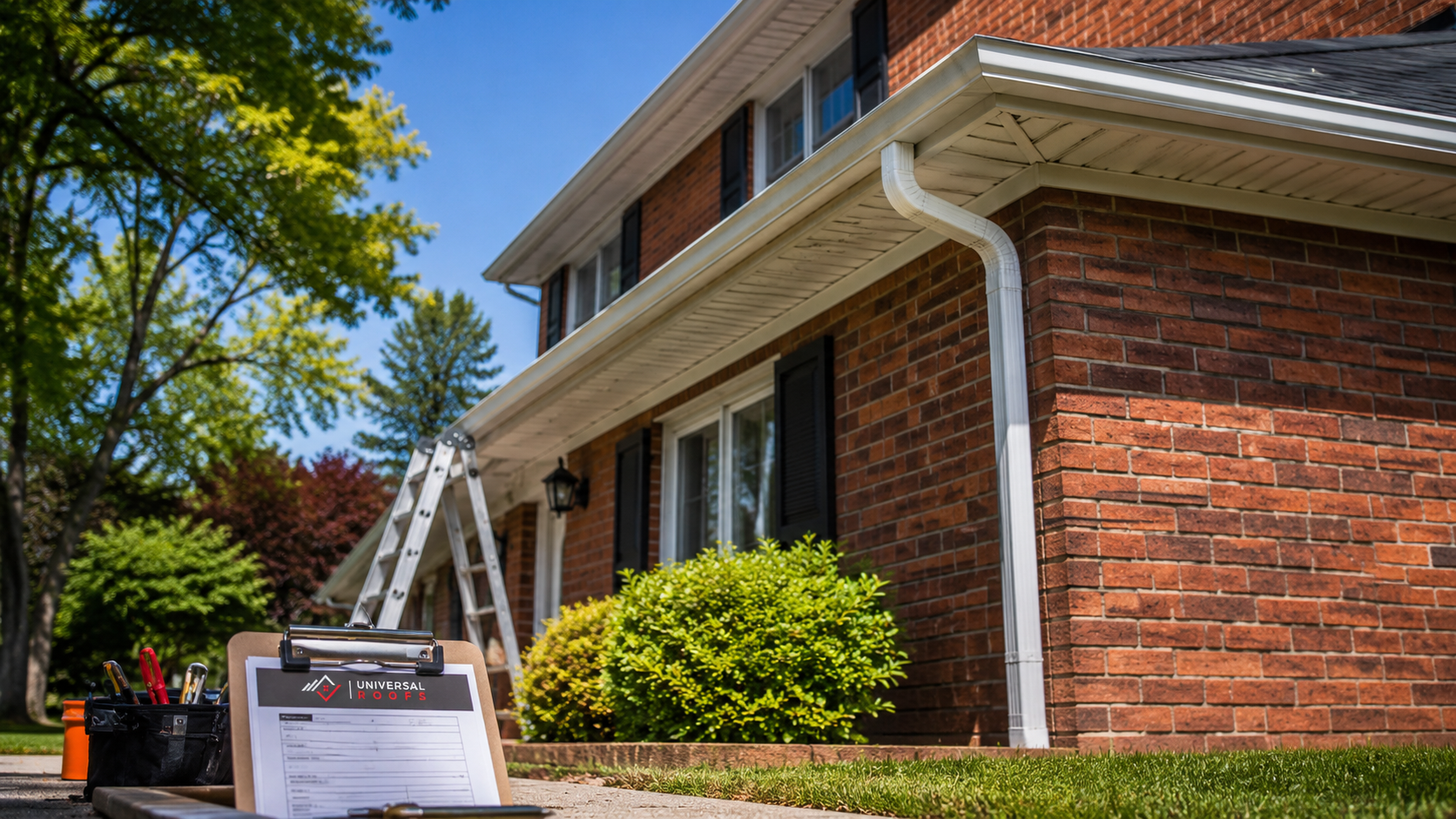
Why Eavestrough Repair in Oakville Deserves Priority Over Cosmetic Work
The case for prompt eavestrough repair in Oakville comes down to what water does when it is not controlled. A typical Oakville roof of 1,800 square feet sheds a very large volume of water during a single significant rainfall, and all of it is meant to travel through a channel about 125 millimetres wide. When that channel is blocked, sagging, or leaking at a seam, the water does not disappear. It spills over the front edge, saturates the soil against the foundation, splashes back onto siding and brick, and works its way behind fascia boards where it rots the wood and eventually reaches the roof deck.
Homeowners often discover the problem indirectly. A damp patch appears at the base of a basement wall. Efflorescence, that white powdery bloom, shows up on interior block. Paint peels on a soffit. Interlock settles unevenly along a walkway. In most of these cases the root cause is a trough or downspout that stopped doing its job one or two seasons earlier. Handling eavestrough repair in Oakville early is inexpensive. Handling foundation water intrusion later is not.
There is also a freeze and thaw component that matters in this part of Ontario. Water sitting in a blocked trough through late autumn freezes, expands, and pulls the hanger fasteners out of the fascia. The following spring the trough sags further, holds more water, and the cycle accelerates. A system that would have needed a two hundred dollar bracket refit in October can need a full run replacement by April. This is why we treat eavestrough repair in Oakville as seasonal work with real deadlines rather than something that can drift indefinitely.
How Oakville’s Housing Mix Changes the Repair Approach
Oakville is not architecturally uniform, and that has direct consequences for eavestrough repair in Oakville. Broadly, we deal with four categories of home, and each brings its own pattern of failure.
Postwar and mid-century bungalows. These homes, common in the older established areas closer to the lake, tend to have simple hip or gable roofs with long straight trough runs and shallow overhangs. The original fascia is usually dimensional lumber, sometimes covered later with aluminum capping. The recurring problem is fastener failure: decades of spike-and-ferrule hangers loosening in softened wood. The trough itself may be sound while the fascia behind it is not, which means a proper repair involves opening the capping and assessing the wood.
Older brick two-storeys and side-splits. Homes from the 1960s through the 1980s often have more roof planes, valleys that dump concentrated water into a single trough section, and downspouts routed through tight side yards. These systems suffer from undersized capacity at valley discharge points and from seam separation where sections were joined during earlier repairs.
Newer subdivision homes. Two-storey homes built from the late 1990s onward typically have continuous seamless aluminum troughs installed at the time of construction, hidden hangers, and multiple downspouts. Failures here are less about age and more about original installation: insufficient slope, downspouts terminating too close to the foundation, and mitred corners that were sealed with caulking rather than properly riveted and sealed with a quality sealant.
Estate properties on larger lots. North Oakville estate homes often have steep roofs, extensive rooflines, mature trees overhanging, and troughs at heights that require serious access equipment. Debris load is the dominant issue, and the repair conversation is usually about capacity, guard systems and safe access as much as the trough itself.
Mature tree cover deserves its own note. Many of Oakville’s older streets have substantial canopy, and that canopy is the single biggest driver of eavestrough failure in the town. Maple keys in spring, leaf fall in late autumn, and shingle granule wash all year combine into a dense sludge that holds water and weight. Any honest plan for eavestrough repair in Oakville on a treed lot has to address debris management, not just the immediate leak.
The Most Common Eavestrough Problems We Find on Oakville Homes
Almost every service call we run for eavestrough repair in Oakville falls into one of a short list of failure modes. Knowing which one you have tells you roughly what the visit will cost.
- Blockage and standing water. The trough holds water between rainfalls, often visible as a rust line or a garden growing in the channel. Straightforward to clear, but the underlying slope should be checked at the same time.
- Loss of pitch or sagging runs. Fasteners have pulled, or the run was never sloped correctly. Water pools mid-run instead of travelling to the outlet. Requires refastening, rehanging, or in bad cases replacing the run.
- Seam and corner leaks. Joints separate as aluminum expands and contracts through Ontario’s temperature swings. Old caulking cracks. This shows as a steady drip at a specific point.
- Fascia and hanger board rot. The trough cannot be secured because the wood behind it has softened. This is the repair most often misdiagnosed as a trough problem.
- Downspout issues. Blocked elbows, disconnected sections, damaged lower lengths, or discharge points that dump water within a few hundred millimetres of the foundation.
- Undersized capacity. Common where a large roof area or a valley feeds a single 50 millimetre by 75 millimetre downspout. The trough overflows during heavy rain despite being clean and correctly pitched.
- Ice damming damage. Winter ice builds at the eave, backs up under shingles, and tears troughs loose. Repair here is genuinely a roofing and attic ventilation question as much as a trough question.
That last point matters. Where ice damming is the driver, replacing the trough alone will not fix anything. The real solution involves attic insulation and ventilation so the roof deck stays cold, which is why we often pair eavestrough repair in Oakville with an attic assessment.
What Eavestrough Repair Costs in Oakville in 2026
Pricing varies with home height, access, debris load and how much of the system is affected. The table below reflects typical 2026 ranges for eavestrough repair in Oakville and surrounding Halton communities. Figures include labour and materials for a standard residential job and assume normal access.
| Repair type | Typical 2026 price range | Usual time on site | Notes |
|---|---|---|---|
| Cleaning and flush, single-storey | $175 to $300 | 1 to 2 hours | Higher on heavily treed lots |
| Cleaning and flush, two-storey | $275 to $450 | 2 to 3 hours | Access equipment may add cost |
| Seam or corner leak resealing | $150 to $350 per joint area | 1 to 2 hours | Often bundled with other work |
| Refastening and re-pitching a run | $225 to $600 per run | 2 to 4 hours | Depends on run length and hanger type |
| Downspout replacement or rerouting | $200 to $550 each | 1 to 3 hours | Includes elbows and extensions |
| Fascia board repair behind trough | $350 to $900 per section | Half day | Requires trough removal and reinstallation |
| Partial seamless trough replacement | $14 to $22 per linear foot | Half to full day | Seamless aluminum, colour matched |
| Full system replacement, average home | $2,200 to $5,500 | 1 to 2 days | Varies with roofline complexity |
Two variables move these numbers more than anything else. The first is height and access. A bungalow with clear ground around it is quick work. A three-storey section over a walkout or a steep grade needs different equipment and more setup time. The second is scope discovery: roughly one repair in four reveals fascia damage that was not visible from the ground, and that changes the job from a fastener fix into a carpentry job.
Homeowners sometimes ask whether it is worth paying for a proper diagnosis rather than just booking a cleaning. In our experience it is. A cleaning on a system with no pitch buys you a few weeks. Fixing the pitch buys you years. Budgeting for eavestrough repair in Oakville works best when you price the diagnosis and the correction together rather than treating cleaning as the whole job.
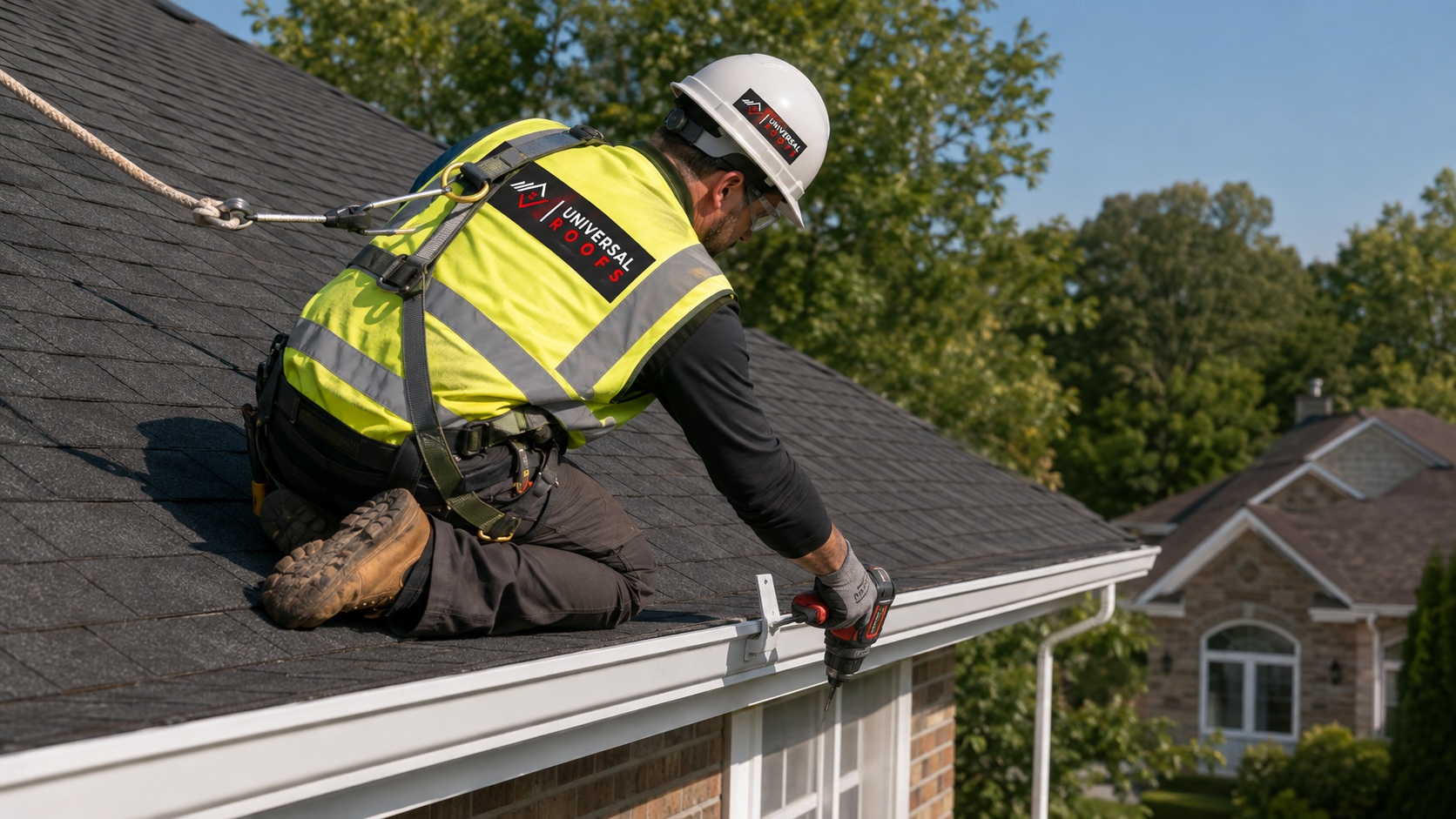
Repair or Replace: How to Decide Without Overspending
The most common question we get when quoting eavestrough repair in Oakville is whether a system is worth repairing at all. There is no single answer, but there are reliable indicators. Aluminum troughs in the GTA typically last twenty to thirty years depending on debris exposure and how well the original installation was done. Galvanized steel systems on older homes may last longer but corrode from the inside once the coating fails.
Use the table below as a practical decision guide. It is not a substitute for an inspection, but it reflects how we assess systems in the field.
| Observation | Likely verdict | Reasoning |
|---|---|---|
| One or two leaking seams, rest of system sound | Repair | Localised failure, low cost to correct |
| Sagging on a single run, fascia solid | Repair | Rehang with hidden hangers and restore pitch |
| Multiple sagging runs on a system over 25 years old | Replace affected sides | Fastener holes multiplied, metal fatigued |
| Visible pinholes or rust perforation along the base | Replace | Corrosion is progressive and not repairable |
| Sectional trough with many joints, frequent leaks | Replace with seamless | Each joint is a future failure point |
| Overflow during heavy rain despite clean troughs | Upgrade capacity | Larger trough profile or additional downspouts |
| Damage confined to storm impact, system otherwise new | Repair | Often eligible for an insurance claim |
One thing worth stating plainly: replacing an entire system when only the north and west runs have failed is rarely necessary. A competent contractor will quote by side or by run and colour match the new aluminum to the existing. The exception is a home where the original troughs are an obsolete size or profile that cannot be matched, in which case partial replacement leaves you with a visible mismatch.
If your roof is also approaching the end of its life, sequence the work. New troughs installed under old shingles that will be torn off in two years means paying twice for removal and reinstallation. Where we see both conditions, we discuss roof replacement timing before committing to a trough plan, so the two projects are coordinated rather than duplicated.
Materials, Profiles and Fastening Systems That Hold Up in Halton
The material and profile decisions made during eavestrough repair in Oakville determine how long the fix lasts. Most residential work in Oakville uses seamless aluminum in a K-style profile, rolled on site from coil stock so there are no joints along the run. That remains the sensible default for the great majority of homes. There are alternatives, and there are situations where they make sense.
| Material or profile | Typical thickness or size | Expected service life | Best suited to |
|---|---|---|---|
| Seamless aluminum, 5 inch K-style | 0.027 inch standard | 20 to 30 years | Most Oakville bungalows and two-storeys |
| Seamless aluminum, 6 inch K-style | 0.032 inch heavy gauge | 25 to 35 years | Large roof areas, steep pitches, valley discharge |
| Half-round aluminum or copper | Varies by fabricator | 30 to 50 years plus | Heritage and architecturally sensitive homes |
| Galvanized steel | 26 to 24 gauge | 15 to 25 years | Commercial and high-impact locations |
| Vinyl sectional | Moulded sections | 8 to 15 years | Rarely recommended in this climate |
| Hidden hanger with screw | Spaced 600 to 900 mm | Matches trough life | All modern installations |
| Spike and ferrule | Legacy fastener | 10 to 15 years | Legacy only, replace when servicing |
Two practical points come out of that table. First, if a home has valleys concentrating water into one trough section, upgrading that side to a six inch profile with a heavier gauge is often cheaper than repeatedly cleaning up overflow damage. Second, spike and ferrule fasteners should be retired whenever a run is opened up. They loosen, they split fascia, and hidden hangers with stainless screws cost very little more.
Vinyl deserves a direct comment. It is inexpensive and widely available at big box stores, but Ontario’s temperature range causes it to become brittle and to expand and contract at joints. On a home that will be lived in for more than a few years, it is a false economy.
What a Professional Eavestrough Repair Visit Actually Involves
A properly run eavestrough repair in Oakville follows a predictable sequence, and knowing it helps you evaluate whether a contractor is doing the work thoroughly.
Inspection and diagnosis
The technician sets up safe access and walks the full perimeter, not just the reported problem area. They check pitch with a level or by flushing water, examine seams and end caps, probe fascia for softness, confirm hanger spacing and check downspout discharge points at grade. Photographs of anything not visible from the ground should be part of the report.
Debris removal and flushing
Troughs are cleared by hand rather than blown out, since blowing debris compacts it into outlets. Downspouts are flushed with a hose and, where blocked, cleared with an auger or by opening the elbow. Debris is bagged and removed rather than left on garden beds.
Mechanical corrections
This is the actual repair: replacing failed hangers, resetting slope toward outlets at roughly ten millimetres of fall for every three metres of run, riveting and resealing separated seams, replacing damaged end caps and mitres, and reattaching or rerouting downspouts.
Carpentry where required
If fascia is soft, the affected board is cut out and replaced with treated or primed lumber before the trough goes back up. Capping is refitted. Skipping this step is the most common shortcut in the trade, because the failure is hidden once the trough is remounted.
Testing and cleanup
Every repaired run is flooded with water and observed for pooling and leaks. Downspout discharge is confirmed to move water at least 1.5 metres from the foundation. The site is cleared and the homeowner gets a summary of what was done and what to watch.
A visit that consists of scooping leaves and quoting a full replacement is not a diagnosis. If you are comparing contractors, ask each one what they found at the fascia and what the measured pitch was. The answers will separate them quickly. Our team handles this work as part of our broader roofing services for Oakville homeowners, which means the trough assessment is made in the context of the whole roof rather than in isolation.
Downspouts, Grading and Where the Water Actually Goes
A perfect trough that discharges beside the foundation solves nothing. Downspout termination is where a surprising number of the water problems behind a call for eavestrough repair in Oakville actually originate, particularly on newer subdivision lots where houses sit close together and side yards are narrow.
The basics are straightforward. Discharge should carry water a minimum of 1.5 metres from the foundation, further on clay soils, and onto ground that slopes away from the house. Extensions should be secured so they do not get kicked loose by lawn maintenance. Splash blocks help protect soil from erosion but do not substitute for distance.
Some older Oakville homes still have downspouts connected directly into the storm or weeping tile system. Municipal practice across Ontario has moved firmly toward disconnection, since roof water in the sanitary or storm system contributes to basement flooding risk during heavy events. If you find a downspout disappearing into the ground, it is worth confirming where it goes before assuming it is fine. Where a buried line has collapsed, water backs up into the trough and mimics a blockage.
Winter adds a further consideration. Downspouts that discharge onto a driveway or walkway create ice hazards. Redirecting those discharge points to a lawn or garden bed during a repair visit costs very little and removes a liability.
Preventing Repeat Eavestrough Repair in Oakville
Most repeat calls are avoidable. The maintenance rhythm that works in this town is tied to the tree canopy more than to the calendar.
- Late spring. Clear maple keys and blossom debris. This is the load homeowners forget, and on treed lots it can be heavier than autumn leaves.
- Late autumn. Clear after the last leaf drop, typically mid to late November in Halton. Clearing in October means doing it twice.
- After major storms. Check for detached extensions and overflow marks on soffits.
- Every few years. Have hangers, seams and fascia inspected properly rather than only cleared.
Gutter guards are worth discussing honestly. A good micro-mesh guard on a treed lot genuinely reduces cleaning frequency and is often worth the investment. Cheap plastic screens tend to trap debris on top and create a new problem. No guard eliminates maintenance entirely, and any contractor claiming otherwise is overselling. Expect roughly $9 to $18 per linear foot installed for a quality guard system in 2026.
Where ice damming keeps damaging the same eave every winter, the fix is upstairs. Improving attic insulation depth and balancing intake and exhaust ventilation keeps the roof deck cold so snow melts uniformly. This is a common recommendation on older Oakville bungalows where insulation was added over the years without any corresponding ventilation upgrade, and it is why we look at attic insulation and ventilation when trough damage recurs in the same spot.
Choosing a Contractor for Eavestrough Repair in Oakville
Eavestrough work is not licensed the way electrical or plumbing work is, which means the quality range in the market is wide. A few checks filter out most of the risk.
- WSIB coverage and liability insurance. Ask for current certificates, not verbal assurance. Work at height on your property without coverage exposes you directly.
- Written scope. The quote should say which runs, which fasteners, whether fascia is included, and what happens if hidden damage is found.
- Access method. Ladder standoffs protect trough edges. A contractor leaning a ladder directly on aluminum is creating the next repair.
- Warranty terms. Workmanship warranties in this trade typically run one to five years on repairs and longer on full replacements. Get it in writing.
- Local track record. Reading a contractor’s customer reviews tells you more about follow-through than any sales conversation.
Be cautious with door-to-door offers, particularly after storms. Legitimate contractors in this market do not typically need to canvass. Be equally cautious with quotes that are dramatically below the ranges in this article, since the usual explanation is that fascia work and proper fasteners have been excluded.
Finally, consider whether the company can address what the trough problem is connected to. Trough failure is frequently a symptom of shingle wear, flashing failure at the eave, or ventilation problems. A contractor who also performs roof repair work can identify those connections in a single visit rather than sending you to a second trade after the fact.
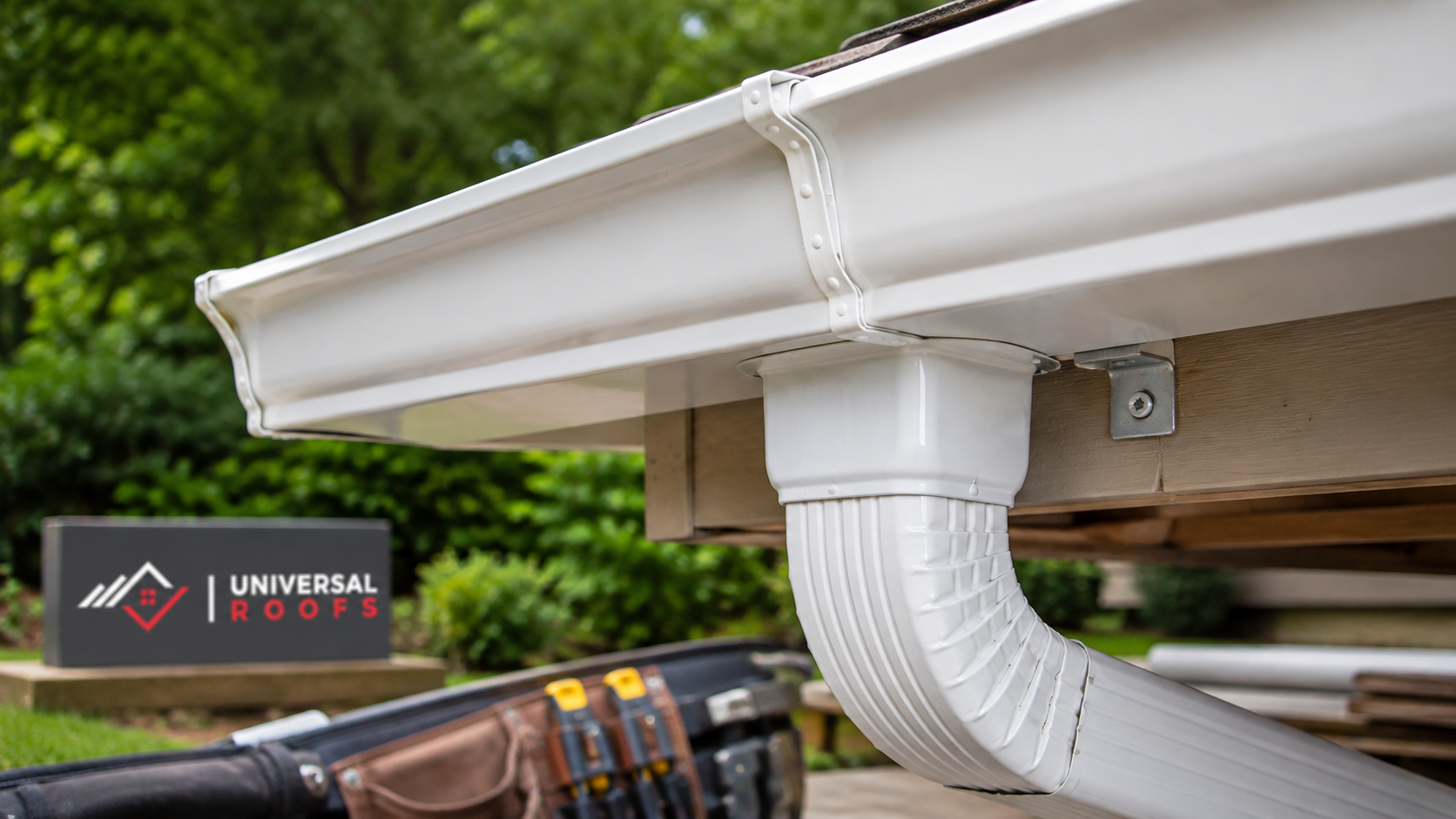
Frequently Asked Questions About Eavestrough Repair
How much does eavestrough repair in Oakville typically cost?
How do I know if I need repair or full replacement?
How long does an eavestrough repair take?
Does eavestrough repair in Oakville require a permit?
What time of year is best for this work?
Will gutter guards mean I never have to clean my troughs?
Book Your Eavestrough Repair in Oakville With a Team That Checks the Whole Roof
Universal Roofs is a Toronto-based roofing company serving homeowners throughout Oakville and the wider Greater Toronto Area. Because our crews work on complete roofing systems rather than troughs alone, a request for eavestrough repair in Oakville gets assessed alongside the shingles, flashing, fascia and attic ventilation that influence how the system performs. That means you get a repair that addresses the cause, a written scope before work begins, and a straight answer about whether repair or replacement is the better use of your money.
Call us today at (416) 732-2421 or request a free consultation.
Universal Roofs proudly serves Oakville and communities across the Greater Toronto Area with professional roofing, eavestrough and attic services.