
Many Victorian and Edwardian houses in older city neighbourhoods were built with box gutters: wooden troughs built into the eave or cornice and lined with sheet metal, so the roof drains without a visible eavestrough hanging off the front of the house. When they work, they are elegant and almost invisible. When the lining fails, box gutters leak straight into the cornice, the top of the wall and sometimes the rooms below, often for a long time before anyone notices.
The fix is rarely another tube of roofing cement. It is usually a choice between relining the trough, rebuilding the wood around it or giving up the built-in gutter for a hung eavestrough, and on a house where the cornice is part of its character, that choice deserves some thought.
How Box Gutters Are Built
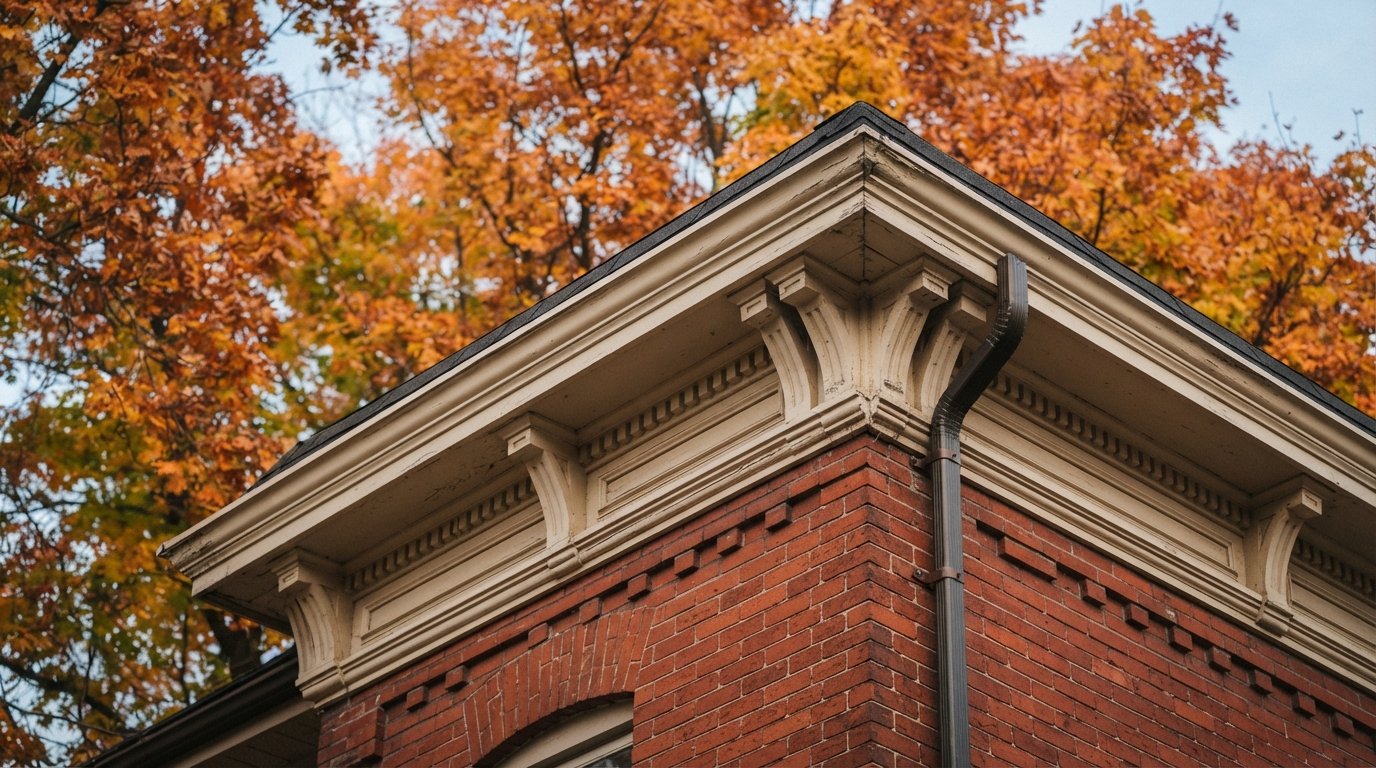
A box gutter is a channel formed in wood at the bottom of the roof slope. On many older homes it sits inside the cornice, the decorative projecting trim at the top of the wall, with the outer face of the gutter forming part of the cornice moulding. The trough was lined with sheet metal, often tin-plated or terne-coated steel and sometimes copper, with soldered seams, and the lining turned up under the bottom courses of roofing on the inside edge.
Water collects in the trough and drains to an outlet, usually a round or rectangular opening in the bottom of the lining that connects to a downspout. On some houses the downspout runs down the face of the brick; on others it was hidden in the wall, which makes leaks at the outlet much harder to spot.
There are variations. Some houses have a gutter formed on the roof surface itself, a short distance up from the edge, with a raised wooden strip creating the channel; these are sometimes called pole or Yankee gutters. Others have a built-in gutter hidden behind a parapet. The repair principles are similar, but the details differ, and the first step is always to look closely at what is actually there. If the trough is leaking right now, start with a targeted roof repair inspection so the source is confirmed before anyone quotes a larger job.
Why Box Gutters Leak Into Walls
A hung eavestrough sits outside the building. If it overflows or leaks, water falls to the ground. A box gutter sits on top of the wall structure. If the lining leaks, water goes into the wooden trough, the cornice framing and the top of the wall. That is why a box gutter leak can stain plaster on an upper floor, peel paint on the soffit, or wash mortar out of the top courses of brick.
The common failure points are:
- Soldered seams in metal linings that crack as the metal expands and contracts over decades.
- Rusted or pinholed linings where the coating has worn through, often under standing water at low spots.
- Outlets where the lining meets the downspout, which are under constant water flow and debris.
- The back edge where the lining meets the roofing, which can leak if the lining does not run far enough up under the shingles.
- Patches of roofing cement or tar that trap water and hide corrosion underneath.
- Ice damming in winter, when meltwater backs up behind ice in the trough and over the top of the lining.
| Symptom | Likely cause | What it usually means |
|---|---|---|
| Peeling paint or soft wood on the cornice or soffit | Water leaking through the lining into the trough framing | Lining failure and likely rot behind the trim |
| Brown staining on brick below the cornice | Overflow or leakage at the outer edge or outlet | Outlet clogged, lining failed or trough sagging |
| Plaster stains near the ceiling of upper rooms | Water travelling into the wall from the gutter | Serious leak, often at a seam or outlet |
| Water standing in the trough days after rain | Trough has lost its slope or the outlet is restricted | Sagging framing or debris; corrosion risk at low spots |
| Plants or moss growing in the gutter | Debris has built up for years | Drainage restricted; lining likely damaged underneath |
| Leaks only in late winter or early spring | Ice backing meltwater over the lining | Lining too low on the roof side, heat loss at the eave |
Autumn is the time to check. Leaves fill these troughs quickly, and a clogged built-in gutter going into winter is much more likely to dam with ice. Clearing the trough and looking at the lining before the first hard freeze is one of the most useful things an owner of an older house can do.
Repair, Reline Or Convert: The Three Real Options
Most box gutters we see have been patched several times. Patching buys time, but it rarely solves the problem. The real decision is whether to reline the trough in place, rebuild it, or convert the eave to a hung eavestrough.
Spot repair
A single failed seam or a small hole in an otherwise sound metal lining can sometimes be repaired with a soldered patch, or with a compatible sealant and reinforcement. This makes sense when the lining is generally in good condition and the framing is sound. It does not make sense when the lining is corroded throughout or has been coated in layers of roofing cement.
Relining with membrane
Relining with a roofing membrane is one of the most common modern repairs. The old lining is removed or covered, damaged wood is replaced, the trough is reshaped for proper slope where possible, and a continuous membrane is installed across the bottom and up both sides. The membrane runs well up the roof side, under the roofing, and is terminated on the outer side so water cannot get behind it. Outlets get a properly sealed drain fitting. Membranes such as EPDM, modified bitumen or thermoplastic sheets are used, depending on the contractor’s system and the gutter shape.
Relining with metal
Relining in metal is the traditional approach and often the choice on houses where the original detail matters. Copper and coated metals are formed to the trough shape with soldered or locked seams, and long runs need expansion joints so the metal can move without cracking. Metal relining is skilled work, usually more expensive than membrane, and it looks right on a historic house.
| Option | Best suited to | Advantages | Limitations |
|---|---|---|---|
| Spot repair | Sound lining with one or two defects | Least disruptive, lowest cost | Short-term if the lining is old or corroded |
| Membrane relining | Most leaking box gutters with sound or repairable framing | Seamless, handles movement, widely available | Appearance differs from metal; needs careful detailing at edges and outlets |
| Metal relining | Heritage homes, visible gutters, owners wanting original detail | Traditional look, long life when well made | Higher cost, skilled labour, expansion joints needed |
| Conversion to hung eavestrough | Badly rotted troughs, houses where the box gutter is not character-defining | Water kept outside the wall; easy to maintain | Changes the look of the eave; may need heritage approval |
Rotted Fascia, Cornices And Framing
A box gutter that has leaked for years almost always has hidden damage. When the lining comes out, we often find soft wood in the trough bottom, rotted fascia boards, and decay in the cornice blocking and the rafter tails. In some cases the trough has sagged enough that water runs the wrong way.
The repair is carpentry first: cut out decayed wood, sister or replace rafter tails, rebuild the trough bottom and sides with appropriate lumber or plywood, and restore the slope to the outlet. Decorative cornice mouldings can often be repaired by replacing short sections with matching profiles, or by having new pieces milled. On houses with a lot of ornamental detail, it is worth discussing which pieces must be kept and which can be replicated.
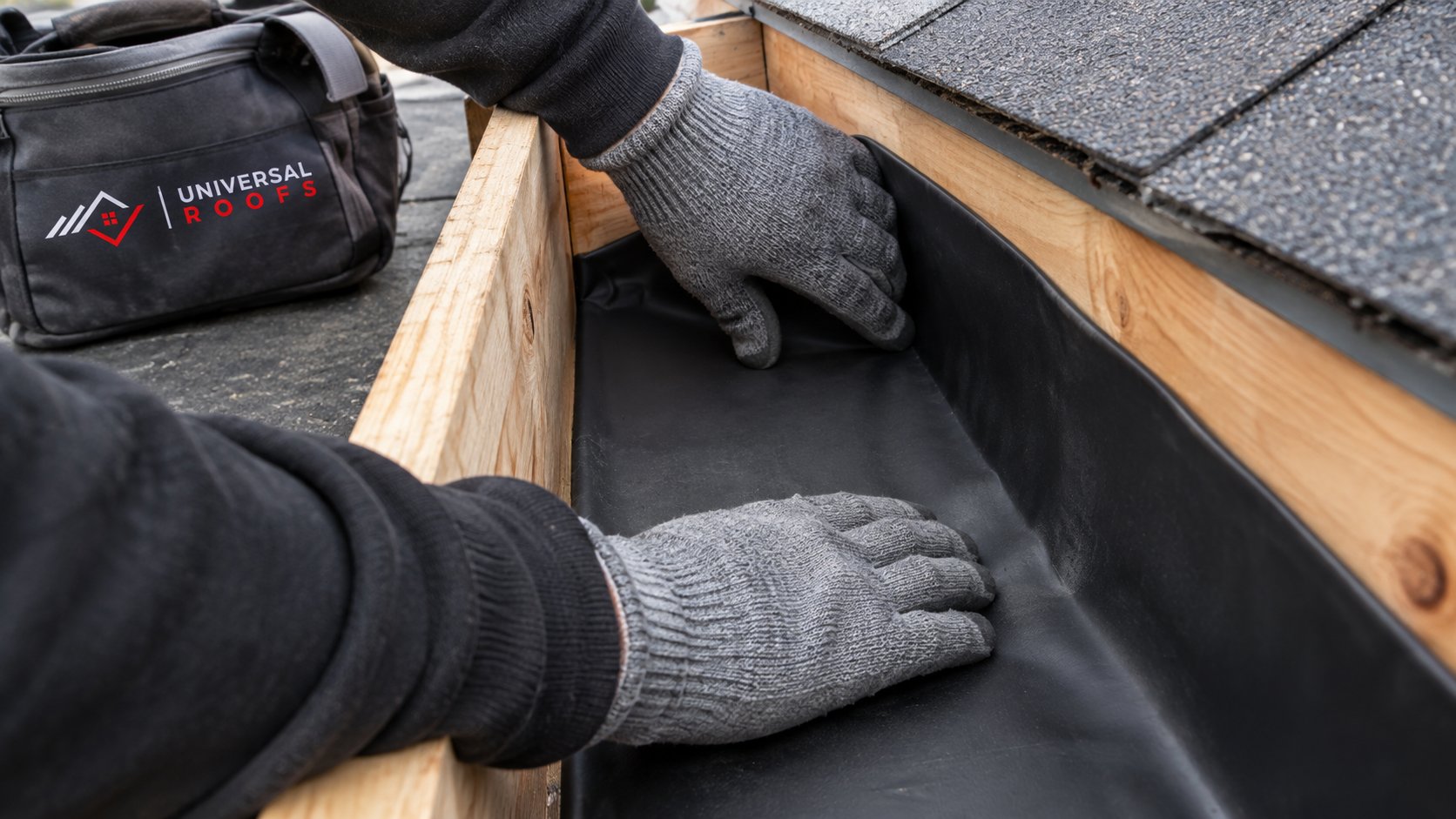
Where it is safe to do so, opening a short test section before giving a final scope shows how far the decay goes, and it is how our Toronto roofing, eavestroughs and attic work team prefers to approach a leaking cornice. It avoids a quote that changes completely halfway through the job.
Converting To Hung Eavestroughs
Converting removes the built-in gutter and moves drainage outside the building line. The trough is filled in or removed, the roof deck is extended to the edge, new fascia is installed, the roofing is carried down over the old gutter area with ice and water protection, and a standard aluminum eavestrough is hung from the new fascia.
The benefit is clear: any future leak or overflow happens outside the wall. Hung eavestroughs are cheap to maintain, easy to clean and simple to replace. On many houses, especially where the box gutter has failed badly or where previous renovations have already altered the eave, conversion is the most practical long-term choice.
The drawback is appearance. A box gutter is part of the cornice design, and a hung eavestrough changes the line of the roof edge. On some houses that change is barely noticeable; on others, particularly those with elaborate cornices, it can alter the character of the front of the house.
Heritage Appearance And Approvals
If your house is designated under the Ontario Heritage Act, or sits within a heritage conservation district, changes to the exterior, including the roof edge, cornice and gutters, may require a heritage permit. Converting box gutters to hung eavestroughs is the kind of change that can need approval. Requirements vary by property and district, so contact your municipality’s heritage planning staff before committing to a conversion.
Even on houses with no designation, keeping the original appearance often adds value. Membrane or metal relining keeps the cornice line intact, and careful carpentry keeps the mouldings. If you do convert, choosing a profile, colour and downspout layout that suit the house helps the change sit comfortably.
Outlets, Downspouts And Hidden Leaders
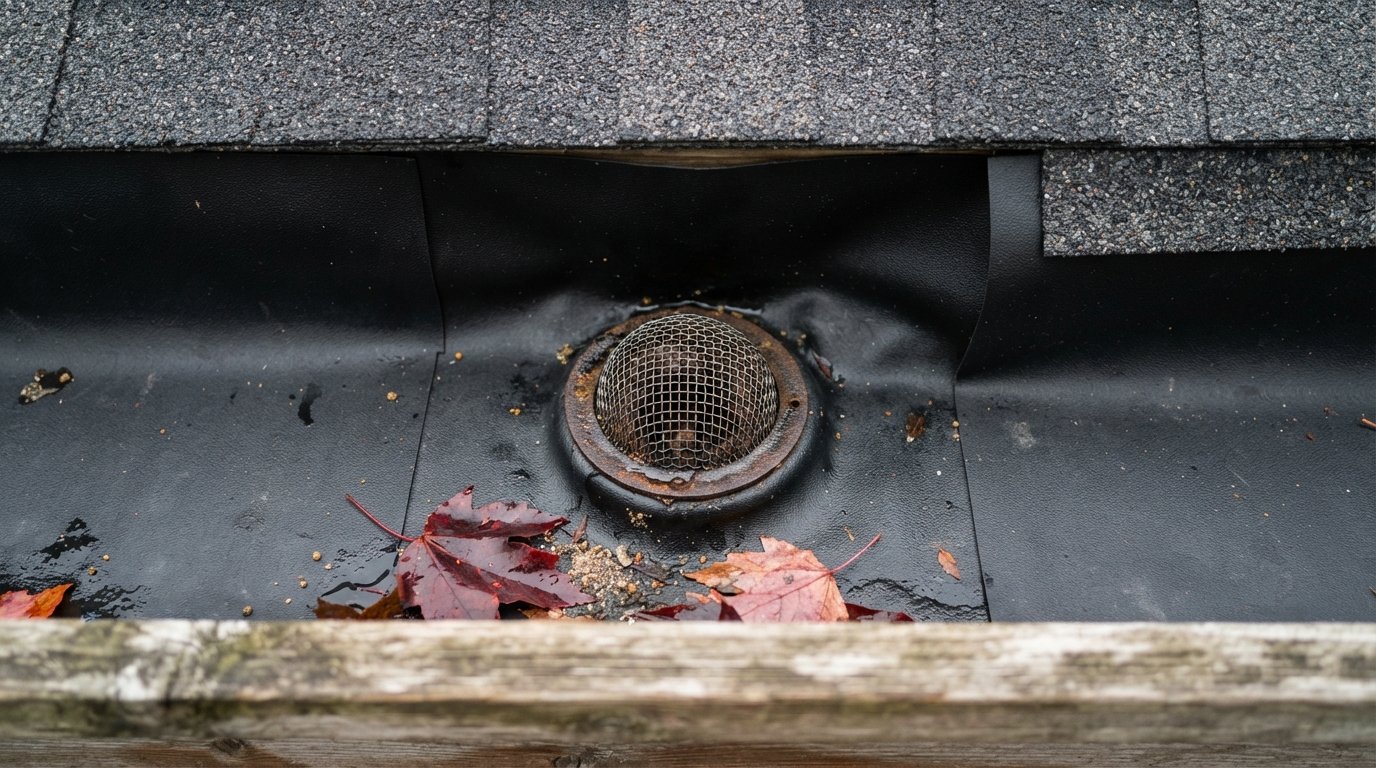
The outlet is where most box gutters fail first, because every litre of water off that roof section passes through it. Original outlets were often a soldered metal tube dropping through the trough bottom into a downspout, and over the decades the solder joint cracks, the tube corrodes or debris builds up until water backs up and finds another way out.
When a trough is relined, the outlet should be replaced, not reused. A new drain fitting is sealed into the membrane or soldered into the metal lining, and a strainer or basket keeps leaves out of the downspout. If the trough is long, adding a second outlet shortens the distance water has to travel and reduces the depth of water standing in the gutter during a heavy autumn storm. An overflow, such as a small scupper through the outer face at the low point, gives water a visible escape route if the outlet ever clogs, which is far better than an overflow that runs into the wall.
Some older houses have downspouts, sometimes called leaders, that run inside the wall or behind the brick. These are hard to inspect and expensive to repair. If a hidden leader is leaking, rerouting the downspout to the outside face of the wall is often the most reliable fix, and it can usually be done with a profile and colour that suit the house.
Questions to ask before you commit
- How much of the trough will be opened, and how will hidden rot be priced if it is found?
- What lining material is proposed, and how is it terminated on the roof side and the outer edge?
- Will the outlets be replaced, and is a second outlet or an overflow worth adding?
- How will decorative mouldings be protected or replicated during the carpentry?
- Does the house need a heritage permit for any of the proposed changes?
What Box Gutter Work Typically Costs
Costs depend on the length of the gutter, the height and access, how much wood is decayed, the choice of lining and how much decorative carpentry is needed. As broad estimates that vary by house:
| Scope | Typical estimate range | Main cost drivers |
|---|---|---|
| Clean, inspect and spot repair a section | Often around $400 to $1,500 | Access, number of defects, outlet work |
| Membrane relining with minor wood repair | Often around $60 to $150 per linear foot | Trough shape, outlet fittings, removal of old patches |
| Metal relining in copper or coated metal | Often around $120 to $300 or more per linear foot | Metal choice, seams, expansion joints, skilled labour |
| Rebuilding rotted trough, fascia and cornice | Highly variable, often several thousand dollars | Extent of decay, custom mouldings |
| Conversion to hung eavestroughs | Often around $3,000 to $10,000 for a typical front elevation | Roofing changes, new fascia, trim, eavestrough and downspouts |
These figures are estimates only. A written quote should separate carpentry, lining, outlets, downspouts and any roofing work, and say how unexpected rot will be priced.
Keeping A Relined Box Gutter Working
A new lining still needs care. Clear leaves and debris every autumn and again in spring. Check that the outlet strainer is clear and that downspouts are not blocked. Look for staining on the cornice and brick after heavy rain. If the house has a history of ice damming, look at attic insulation and ventilation near the eaves, because heat escaping at the top of the wall is what melts snow into the trough. Avoid walking in the gutter, and never chip ice out with tools, which can puncture a membrane or metal lining.
Box Gutter Questions
How do I know if I have a built-in gutter?
Can a leaking built-in gutter be patched?
Is membrane or metal relining better?
Should I convert to regular eavestroughs?
Why does my gutter leak only in late winter?
How often should a box gutter be cleaned?
Getting Your Box Gutters Assessed
If you are seeing stains on the cornice, peeling paint or plaster damage near the top of the wall, Universal Roofs can inspect your box gutters, explain whether repair, relining or conversion makes sense, and plan the carpentry needed to protect the original look.
Call us today at (416) 732-2421 or request a free estimate.
Serving older homes across Toronto and the wider GTA.