
A roof is one of the largest investments a homeowner makes, yet it is also one of the most neglected parts of the house. Most Toronto homeowners think about their roof only when something goes wrong — a leak, a missing shingle after a windstorm, or a sagging patch after a heavy snow load. Routine roof cleaning rarely makes the list of seasonal home maintenance tasks, but it should. Removing algae, moss, leaves, granule debris, and standing organic matter from a roof surface on a regular basis is one of the simplest, least expensive ways to protect the single largest asset most families own.
At Universal Roofs, we have been maintaining and repairing roofs across the Greater Toronto Area since 2005, and the pattern is consistent: the homes that schedule periodic roof cleaning get more usable life out of their shingles, spend less on emergency repairs, and avoid the kind of moisture damage that turns a $400 maintenance visit into a $12,000 roof replacement. This guide walks through the six key advantages of routine roof cleaning, what actually happens to an uncleaned roof over time, how often GTA homes should have it done, and how to tell the difference between a roof that needs a wash and one that needs a repair.
Summer is one of the best windows for this kind of maintenance in Toronto. Dry conditions and long daylight hours make it easier to schedule an inspection and cleaning before the fall leaf drop and winter freeze-thaw cycle put additional stress on the roof deck.
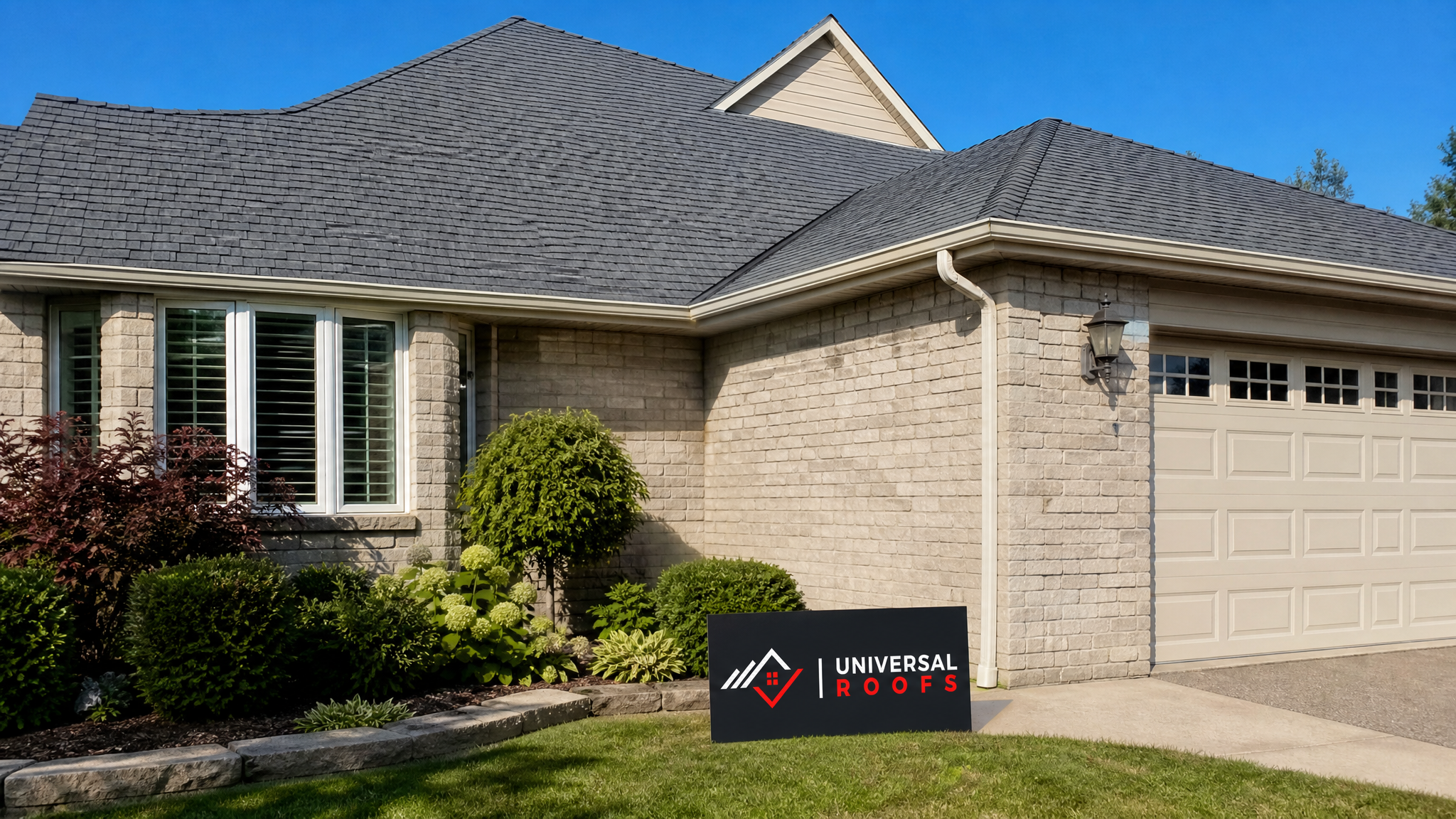
What Happens to an Uncleaned Roof Over Time
Before getting into the advantages, it helps to understand what routine cleaning is actually preventing. Left alone, a roof surface accumulates several types of organic and mineral debris:
- Algae (Gloeocapsa magna) — the dark grey-black streaking commonly mistaken for dirt or age. It feeds on the limestone filler in asphalt shingles and thrives in humid, shaded conditions common in GTA neighbourhoods with mature tree canopy.
- Moss — grows in shaded, north-facing slopes and valleys where moisture lingers. Moss roots work into shingle tabs and lift them, breaking the seal that keeps water out.
- Lichen — a more stubborn combination of algae and fungus that bonds tightly to the shingle surface and is much harder to remove once established.
- Leaf litter and organic debris — collects in valleys, around chimneys, and behind roof vents, holding moisture against the shingle and accelerating granule loss.
- Granule buildup in gutters — a sign that the protective ceramic granules are washing off the shingle surface, exposing the asphalt layer beneath to UV degradation.
None of this happens overnight. It builds gradually across several seasons, which is exactly why routine cleaning — done on a set schedule rather than reactively — outperforms a one-time deep clean after problems are already visible.
Advantage 1: Routine Roof Cleaning Extends Shingle Lifespan
This is the single biggest reason routine roof cleaning matters, and it’s the one with the clearest dollar value attached. A standard asphalt shingle roof in the Toronto climate is rated for roughly 20 to 25 years. That rating assumes normal exposure and reasonable maintenance. Algae, moss, and trapped moisture shorten that lifespan considerably by degrading the asphalt and granule layer faster than sun and weather alone.
Algae in particular retains moisture at the shingle surface, which keeps the asphalt substrate damp for longer after every rain event. Over years, that constant damp-dry cycling causes the asphalt to become brittle and the granules to shed prematurely. Once granules are gone in a patch, that section of shingle is exposed directly to UV radiation and accelerates toward failure much faster than the surrounding roof.
Homeowners who have their roof cleaned every two to three years, paired with a basic inspection, routinely get the full rated lifespan out of their shingles — sometimes more. Homeowners who never clean their roof often see visible curling, cracking, and granule loss appear five to eight years ahead of schedule, which pulls forward the timeline for a full roof replacement by thousands of dollars in present-value terms.
| Maintenance Pattern | Typical Shingle Lifespan (GTA Climate) | First Major Repair Needed | Estimated Lifetime Cost Impact |
|---|---|---|---|
| Routine cleaning every 2-3 years | 22-27 years | Year 15-18 (minor) | Baseline |
| Cleaning only when visibly dirty | 18-22 years | Year 10-12 | +15-20% over roof lifetime |
| Never cleaned | 13-18 years | Year 6-9 (leaks, granule loss) | +30-45% over roof lifetime |
| Cleaned but with harsh pressure washing | 10-15 years | Year 4-7 (granule stripping) | Often requires early replacement |
That last row matters. Not all “roof cleaning” is equal, and the wrong method can do more damage than no cleaning at all — more on that below.
Advantage 2: Preventing Moisture Intrusion and Interior Water Damage
Algae, moss, and debris don’t just sit on top of the shingle — they hold water against it. Moss is the worst offender because its root structure physically lifts shingle tabs, creating channels for wind-driven rain to get underneath the shingle layer during Toronto’s frequent spring and autumn storms. Once water gets under the shingle, it travels along the underlayment and roof deck, often surfacing as a stain on an interior ceiling nowhere near where the actual entry point is.
This is one of the most common reasons homeowners call for a roof repair and are surprised to learn the root cause is months or years of untreated moss growth rather than storm damage. Routine cleaning removes moss and organic debris before it can establish the kind of root structure that lifts shingles, which keeps the shingle seal intact and keeps water where it belongs — on top of the roof, running off to the gutters.
Moisture that gets past the shingle layer also affects the attic space directly below. Trapped moisture in attic insulation reduces its effectiveness, promotes mould growth on rafters and sheathing, and can eventually compromise the structural integrity of the roof deck itself. A clean roof surface is the first line of defence against all of it.
Advantage 3: Protecting Curb Appeal and Property Value
Dark algae streaking is one of the most visible signs of a poorly maintained home, and it’s often the first thing a potential buyer or appraiser notices when looking at a property from the street. A roof with heavy algae staining can visually age a home by a decade, even if every other exterior element is well kept.
For homeowners planning to sell in the next few years, routine roof cleaning is a low-cost way to protect resale value. A clean, uniform roof surface photographs better for listings, avoids the “does this roof need replacing” question during a home inspection, and signals to a buyer that the rest of the home has likely been well maintained too.
This matters across the GTA regardless of neighbourhood. Whether the home is in the Toronto core, Peel Region, York Region, Halton Region, or Durham Region, mature tree cover and humid summer conditions create similar algae and moss growth patterns, and the curb appeal impact is the same.
Advantage 4: Reducing the Risk of Costly Emergency Repairs
Emergency roof repairs are almost always more expensive and more disruptive than planned maintenance. A roof that develops a leak during a heavy summer thunderstorm or a winter thaw often needs same-day attention to prevent interior damage, and emergency service calls typically cost more than a scheduled visit. Routine roof cleaning is a form of preventive maintenance that catches small problems — lifted shingle tabs, a cracked pipe boot, granule loss around a valley — while they are still inexpensive to fix.
Most professional roof cleaning services include a visual inspection as part of the visit. That inspection is often what catches early warning signs of a bigger problem: soft spots in the decking, damaged flashing around a chimney, or deteriorating skylight seals. Addressing these issues during a routine cleaning appointment is dramatically cheaper than waiting for a full failure.
| Issue Caught During Routine Cleaning | Typical Cost to Fix Early | Typical Cost If Left Until Failure |
|---|---|---|
| Lifted shingle tab from moss growth | $150-$350 (spot repair) | $1,500-$4,000 (interior water damage repair) |
| Cracked or worn pipe boot | $100-$250 | $800-$2,500 (attic insulation + drywall repair) |
| Clogged valley with debris buildup | $0-$150 (included in cleaning) | $2,000-$6,000 (deck rot, ice damming) |
| Deteriorating skylight seal | $300-$600 (resealing) | $1,200-$3,500 (skylight replacement) |
| Early granule loss on a slope | Monitored, no cost | $8,000-$15,000+ (partial or full re-roof) |

Advantage 5: Improving Roof Ventilation and Energy Efficiency
Debris buildup doesn’t just sit on the shingle surface — it also accumulates around ridge vents, soffit vents, and other roof ventilation components, restricting airflow through the attic space. Proper attic ventilation is essential in the GTA climate for two reasons: it prevents summer heat buildup that raises cooling costs, and it prevents winter ice damming caused by warm, trapped attic air melting snow that then refreezes at the eaves.
When leaves, moss, and granule debris block ventilation pathways, the attic loses its ability to regulate temperature effectively. This shows up as higher summer air conditioning bills, and in winter, as icicles and ice dams along the eaves — one of the most common causes of roof leaks in the region. Routine roof cleaning that includes clearing vents and valleys keeps this airflow system working as designed.
Advantage 6: Preserving Warranty Coverage and Insurance Standing
Many shingle manufacturers require documented, reasonable maintenance to keep a product warranty valid, and algae-resistant shingle warranties in particular can specify maintenance expectations. Insurance adjusters also look at roof condition when assessing a claim; a roof that shows years of neglect — heavy moss growth, sagging valleys, obvious granule loss — can complicate a claim for storm damage by raising questions about pre-existing condition.
Keeping records of routine roof cleaning and inspection gives homeowners documentation that the roof was reasonably maintained, which can matter significantly if a warranty or insurance claim is ever needed. It’s a simple paperwork advantage that costs nothing extra beyond the cleaning itself.
How Often Should a GTA Roof Be Cleaned?
Frequency depends on a few site-specific factors: how much tree canopy shades the roof, which direction the slopes face, and the type of roofing material. As a general guide for the Toronto area:
| Roof Condition / Setting | Recommended Cleaning Frequency | Notes |
|---|---|---|
| Heavily shaded lot, mature trees overhead | Every 1-2 years | Higher moss and algae risk, especially on north-facing slopes |
| Typical suburban lot, partial tree cover | Every 2-3 years | Standard recommendation for most GTA homes |
| Open lot, minimal shade, good sun exposure | Every 3-4 years | Slower algae growth, but still inspect annually |
| Flat or low-slope roof | Annually | Debris and standing water accumulate faster on flat roofing systems |
Regardless of the cleaning schedule, an annual visual inspection — even a simple walk-around from ground level with binoculars, or a professional check — helps catch problems between cleanings.
Choosing the Right Cleaning Method (Soft Wash vs. Pressure Washing)
This is the part homeowners most often get wrong, and it’s worth being direct about: standard high-pressure power washing is not appropriate for asphalt shingle roofs. The force required to blast off algae and moss with plain pressurized water also strips the protective granules off the shingle surface, which does long-term damage disguised as a clean-looking short-term result.
The professional standard is a soft wash method: a low-pressure application of a cleaning solution (typically a diluted sodium hypochlorite or specialized roof-safe biocide) that kills algae, moss, and lichen at the root without mechanical force. The solution is left to dwell, then rinsed gently, allowing rainfall to carry away the dead organic material over the following days. This approach is safe for asphalt shingles, wood shakes, and most roofing materials, and it’s the method used for the vast majority of residential roof cleaning in the GTA.
| Method | Shingle Safety | Effectiveness on Algae/Moss | Recommended For |
|---|---|---|---|
| Soft wash (low-pressure chemical treatment) | Safe, no granule loss | High, kills roots | Asphalt shingles, most residential roofs |
| High-pressure power washing | Damaging, strips granules | Removes surface growth only, regrows faster | Not recommended for shingles |
| Manual brushing/scraping | Risk of tab damage if forced | Moderate, labour intensive | Small isolated moss patches only |
| Zinc or copper strip installation | Safe, preventive only | Prevents new growth over time | Long-term prevention after cleaning |
Zinc and copper control strips, installed near the roof ridge, are a smart complement to periodic cleaning. Rainwater washing over the metal strip picks up trace ions that inhibit algae growth on the slopes below, extending the interval between cleanings.
Signs Your Roof Needs Cleaning Now
Between scheduled maintenance visits, a few visual cues tell homeowners it’s time to book a cleaning rather than wait:
- Dark grey, black, or greenish streaking running down the slopes, usually starting near the ridge
- Visible green or dark moss patches, especially on north-facing or heavily shaded sections
- Excess granules collecting in the gutters or at downspout outlets
- Standing debris (leaves, twigs, seed pods) built up in valleys or around vents and chimneys
- A musty smell in the attic, which often indicates trapped moisture beneath organic buildup on the roof deck
If any of these signs are combined with soft spots, sagging, or an active leak, that’s no longer a cleaning issue on its own — it’s time for a professional inspection and likely a roof repair assessment before scheduling the cleaning.
What a Professional Roof Cleaning Service Typically Includes
A thorough routine roof cleaning from an experienced contractor generally covers more than just the shingle surface:
- A pre-clean inspection to identify existing damage that cleaning could worsen (loose shingles, exposed nail heads, deteriorated flashing)
- Clearing debris from valleys, around chimneys, vents, and any roof penetrations
- Application of a soft wash treatment appropriate to the roofing material
- Gutter clearing, since granules and debris washed off the roof typically end up there
- A post-clean inspection and photo documentation, useful for warranty and insurance records
- Recommendations for preventive measures like zinc strips if recurring algae or moss is a pattern
Homeowners who bundle this with a broader seasonal check — gutters, flashing, attic ventilation — get the most value out of a single service call, since a technician is already on the roof and can spot issues that would otherwise go unnoticed until the next problem forces a look.

DIY Roof Cleaning: What’s Reasonable and What Isn’t
Some homeowners consider tackling roof cleaning themselves, and for very minor, isolated moss patches on a low-slope, easily accessible roof, light manual removal with a soft brush can be reasonable. However, roof cleaning as a whole carries real risks that are easy to underestimate:
- Fall risk — roofs are steep, often slick when wet, and homeowners typically lack the fall protection equipment that professional crews use as standard practice.
- Wrong chemicals — consumer-grade cleaners not formulated for roofing can damage shingles, harm surrounding landscaping, or simply fail to kill algae at the root, leading to faster regrowth.
- Pressure washer misuse — the single most common DIY mistake, and one of the fastest ways to void a shingle warranty by stripping granules.
- Missed underlying damage — a homeowner cleaning the surface won’t necessarily recognize early signs of flashing failure, deck rot, or vent damage the way an experienced roofer will.
For most GTA homes, the modest cost of professional cleaning is easily justified by the reduced risk and the inspection value that comes bundled with it.
Routine Roof Cleaning and the Broader Roof System
It’s worth remembering that roof cleaning doesn’t exist in isolation — it’s one part of a broader maintenance approach that keeps every component of the roofing system working together. A clean shingle surface sheds water properly, but that water still needs functioning gutters, sound flashing around chimneys and skylights, and a well-ventilated attic to do its job fully. Homes with a skylight replacement on the horizon, or a flat roof section that pools water differently than a sloped one, benefit from having cleaning and inspection scheduled together rather than as separate, disconnected tasks.
Homeowners who want an honest read on where their roof stands can start with a straightforward inspection. Our team has answered many of the most common questions on our FAQ page, and our reviews page reflects two decades of maintenance and repair work across the GTA. You can also learn more about our history and approach on our about page.
What are the key advantages of routine roof cleaning?
How often should I have my roof cleaned in the Toronto area?
Is pressure washing a safe way to clean an asphalt shingle roof?
What causes the dark streaking I see on my roof?
Can moss growth actually cause a roof leak?
Does routine roof cleaning help with energy efficiency?
Need Help With 6 Key Advantages of?
Reinforcing paragraph about Universal Roofs.
Call us today at (416) 732-2421 or request a free inspection to get started.
Universal Roofs proudly serves Toronto, Mississauga, Brampton, Vaughan, Markham, Oakville and the GTA since 2005.