
If you have spent any time researching roof maintenance in the Greater Toronto Area, you have probably run into the question of why choose weather resistant roof coatings over a simple patch job or a full tear-off. It is a fair question. A roof coating is a bigger investment than a bucket of sealant, but a smaller commitment than a full replacement, and homeowners deserve a clear answer about where that money actually goes.
The short version: weather resistant roof coatings extend the life of an ageing roof by sealing it against Toronto’s punishing freeze-thaw cycles, UV degradation, and heavy summer downpours, while also cutting cooling costs and buying you years before a full replacement becomes unavoidable. The longer version — the one that actually helps you make a good decision — depends on your roof type, its current condition, and what “weather resistant” really means once you get past the marketing language.
This guide walks through the practical reasoning behind coating a roof, how the products differ, what the installation process looks like, and where coatings fall short so you can make an informed choice rather than a hopeful one.
What a Weather Resistant Roof Coating Actually Does
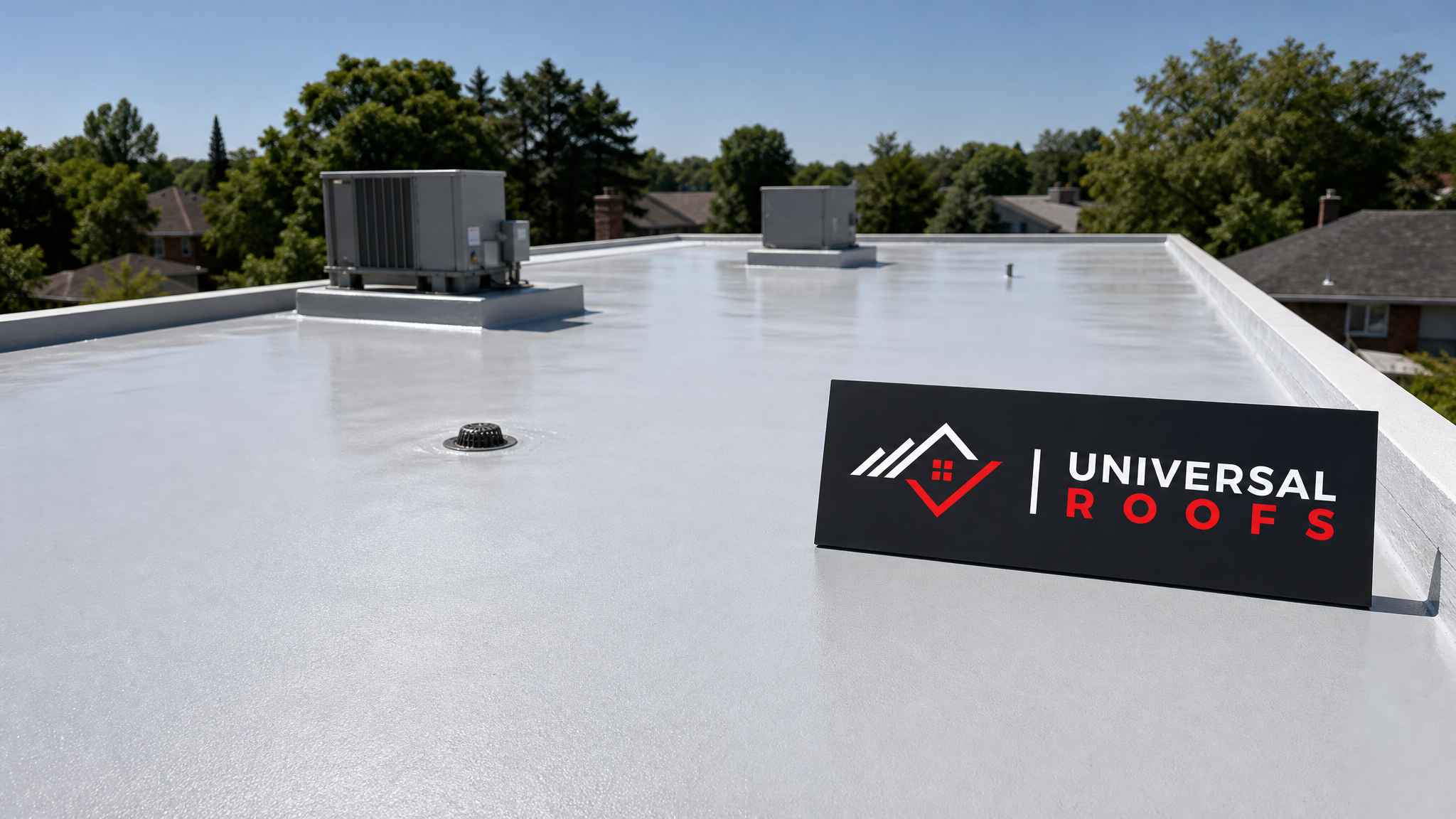
A roof coating is a fluid-applied membrane, usually silicone, acrylic, or polyurethane based, that is rolled or sprayed directly onto an existing roof surface. Once cured, it forms a monolithic, seamless layer that bonds to the substrate below it — whether that is modified bitumen, built-up roofing (BUR), EPDM rubber, or an ageing metal roof.
The reason homeowners and property managers keep asking why choose weather resistant roof coatings comes down to three overlapping benefits: waterproofing, UV reflection, and flexibility. A quality coating seals hairline cracks and seams that would otherwise let water in, reflects a large percentage of solar radiation to reduce heat absorption, and stays flexible enough to expand and contract with temperature swings without cracking.
That last point matters enormously in Toronto. Our climate swings from -20°C cold snaps in January to 30°C-plus humidity in July, and every roofing material on your house expands and contracts through that range hundreds of times per year. Rigid materials fatigue and crack under that stress. A properly formulated weather resistant coating is engineered to flex with the substrate instead of fighting it, which is a big part of why it outperforms basic sealants over a multi-year period.
If your roof is already showing significant structural damage, sagging, or widespread membrane failure, a coating is not going to save it — at that point you are looking at roof repair or, in more advanced cases, full roof replacement. Coatings work best as a proactive or mid-life intervention, not a rescue for a roof that has already failed.
The Case for Coating: Why It Makes Financial Sense
The most persuasive argument for weather resistant roof coatings is simple arithmetic. A full roof replacement on an average GTA home or low-slope commercial building runs into the tens of thousands of dollars once you factor in tear-off, disposal, decking repairs, and new membrane installation. A coating application, by comparison, typically costs a fraction of that, and it can add 10 to 15 years of service life to a roof that would otherwise be approaching replacement.
Here is how the numbers generally compare across the common options homeowners weigh against each other.
| Option | Typical Cost (per sq. ft.) | Added Lifespan | Downtime |
|---|---|---|---|
| Weather resistant coating | $1.50 – $4.00 | 10 – 15 years | 1 – 3 days |
| Localized patch repair | $3.00 – $8.00 (spot) | 1 – 3 years | Same day |
| New membrane overlay | $6.00 – $10.00 | 15 – 20 years | 3 – 7 days |
| Full tear-off and replacement | $8.00 – $15.00+ | 20 – 30 years | 1 – 2 weeks |
The gap between the first row and the last row is the entire reason this conversation exists. If your roof is structurally sound but simply ageing and losing reflectivity or flexibility, a coating gets you most of the protective benefit of a full replacement for a fraction of the cost and disruption. That is the honest, non-salesy answer to why choose weather resistant roof coatings: it is a cost-effective way to extend service life on a roof that still has good bones.
Where coatings do not make sense is on a roof with deep structural issues, widespread ponding water that has already caused rot in the decking, or membrane that has separated at the seams. In those cases, a coating simply seals in a problem rather than solving it, and you will end up paying for both the coating and the eventual repair. A proper inspection before committing to any option is non-negotiable, and it is worth having a professional assess whether coating, repair, or replacement is the right call for your specific roof.
Types of Weather Resistant Coatings and How They Compare
Not all coatings are created equal, and the “weather resistant” label gets applied loosely in the marketplace. The three dominant chemistries used on GTA roofs each have distinct strengths and weaknesses, and understanding them helps you avoid paying for a product that is not suited to your roof type or exposure.
| Coating Type | Best For | UV/Sun Resistance | Water Ponding Tolerance | Expected Lifespan |
|---|---|---|---|---|
| Silicone | Flat and low-slope roofs, high humidity areas | Excellent | Excellent | 15 – 20 years |
| Acrylic | Sloped roofs, moderate climates | Good | Fair (not for standing water) | 10 – 15 years |
| Polyurethane | High foot-traffic or mechanical stress areas | Good | Good | 12 – 18 years |
| Elastomeric acrylic | Metal roofs, general residential use | Very Good | Fair | 10 – 15 years |
Silicone coatings tend to be the go-to choice for flat and low-slope roofs across Toronto because they genuinely tolerate standing water — a common issue on flat roofs after a heavy summer thunderstorm — without breaking down. If your property has a flat roofing system, silicone is usually the strongest weather resistant option because it will not saponify (soften and degrade) the way some acrylics do when water sits on the surface for extended periods.
Acrylics are less expensive and easier to apply, and they perform very well on sloped roofs where water sheds quickly rather than pooling. Polyurethane coatings bring more mechanical toughness, which matters if the roof sees regular foot traffic for HVAC servicing or rooftop equipment access.
How the Application Process Works
A weather resistant coating is only as good as the surface preparation underneath it, and this is the step most corner-cutting contractors skip. Here is the general sequence our crews follow on every coating project in the GTA.
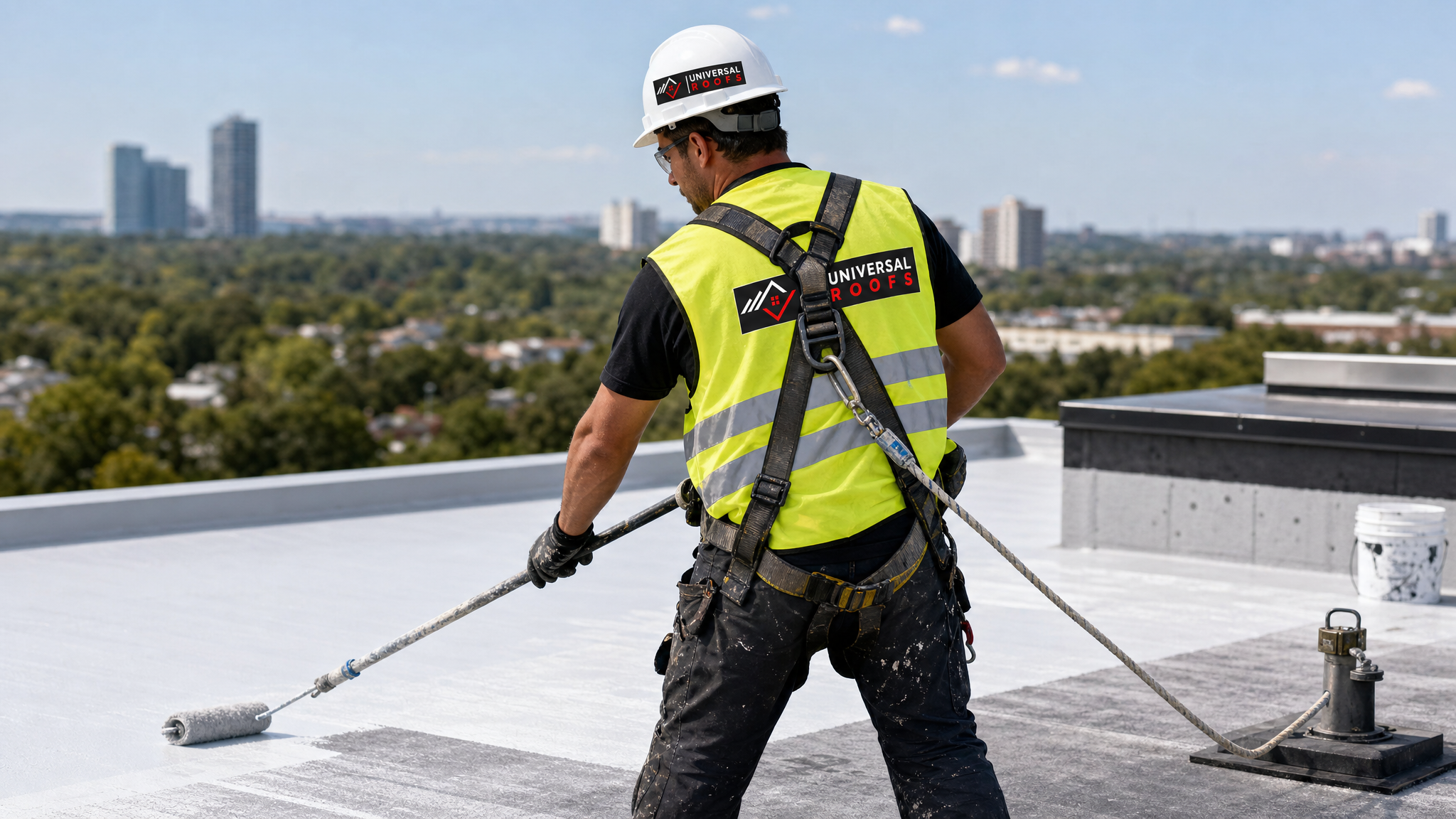
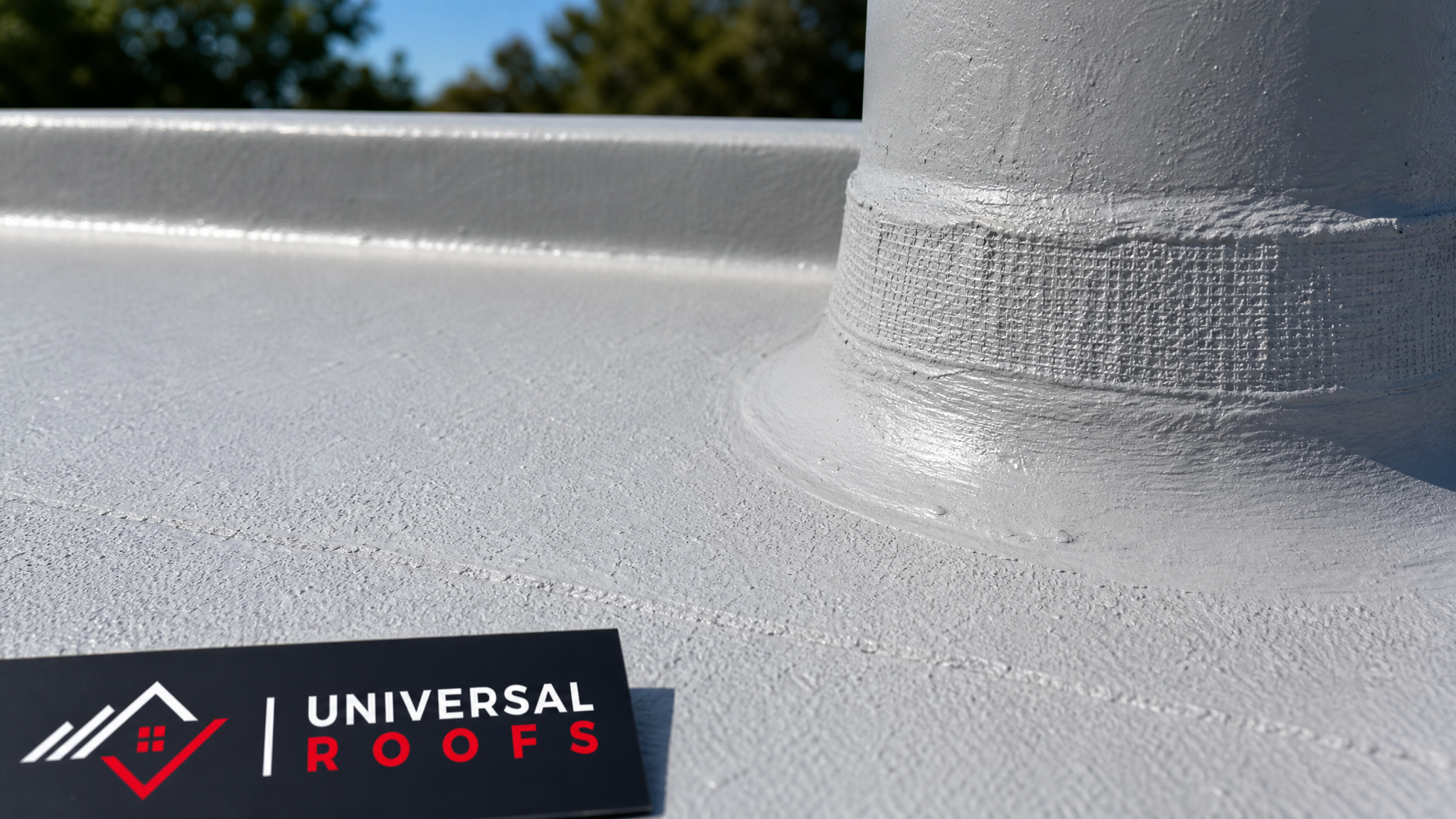
First, the roof gets a full inspection and pressure wash to remove dirt, chalking, moss, and loose debris. Any areas of ponding water, membrane separation, or soft decking get flagged and repaired before coating begins — coating over an unresolved problem just hides it temporarily. Second, all seams, flashing details, penetrations (vents, skylights, HVAC curbs), and drains get reinforced with a fabric-reinforced base coat, since these transition points are where roofs fail first. If your roof has skylights or is due for a skylight replacement, this is the ideal time to address that work, since coating around a failing skylight curb accomplishes very little.
Third, a primer is applied if the substrate requires it (this depends on the existing membrane material). Fourth, the coating itself goes on in two coats, either sprayed or rolled, with the second coat applied once the first has cured — usually 4 to 24 hours later depending on humidity and temperature. Finally, the roof gets a post-application inspection to confirm even coverage and proper thickness, since under-application is the single most common cause of premature coating failure.
Timing the Application: Why Summer Matters in Toronto
Weather resistant coatings are temperature and humidity sensitive during curing, which is why most GTA contractors schedule this work between late spring and early autumn. July, in particular, tends to offer the consistent dry heat that allows silicone and acrylic coatings to cure properly within the manufacturer’s recommended window.
Applying a coating in cold or damp conditions risks improper curing, which can lead to pinholing, poor adhesion, or a tacky surface that never fully sets. If you are weighing a coating project this season, the current summer weather window is close to ideal — dry days, warm temperatures, and enough daylight hours to complete a full application and let the first coat cure before the second goes on the same day.
That said, do not rush a coating job just because the calendar says summer. A coating applied during a heat wave with the wrong product formulation can skin over too fast and trap solvents underneath, causing bubbling. This is another reason to work with a contractor who understands both the chemistry of the coating and the microclimate of your specific property, rather than someone applying a one-size-fits-all schedule.
Reflectivity, Energy Savings, and the Urban Heat Factor
One of the most underrated reasons homeowners eventually land on why choose weather resistant roof coatings is the energy savings angle. Standard dark roofing materials can reach surface temperatures of 60-70°C or higher on a sunny July afternoon in Toronto. That heat transfers into the building below, driving up air conditioning costs and putting additional thermal stress on the roofing membrane itself.
A reflective, weather resistant coating — particularly white or light-coloured silicone and acrylic formulations — can reduce roof surface temperatures by 20-30°C compared to an uncoated dark membrane. That translates into measurably lower cooling loads during the hottest months and less thermal cycling stress on the roof structure year-round, which slows the ageing process of everything underneath the coating.
This “cool roof” effect also has knock-on benefits for attic temperatures. If your attic tends to become oppressively hot in summer, a reflective coating on the roof above it can noticeably reduce the heat load your attic insulation and ventilation system have to manage, which in turn eases strain on your HVAC system.
Common Coating Problems and How to Troubleshoot Them
Even a well-installed coating can develop issues over its service life, and knowing what to watch for helps you catch small problems before they become expensive ones. The table below covers the issues we see most often on coated roofs across the GTA and what typically causes them.
| Symptom | Likely Cause | Recommended Action |
|---|---|---|
| Chalking or fading colour | Normal UV wear after 8-10+ years | Recoat with maintenance layer |
| Bubbling or blistering | Moisture trapped during application, or off-gassing substrate | Cut out, dry substrate, patch and recoat |
| Peeling at seams | Insufficient surface prep or missed fabric reinforcement | Strip section, reinforce, and reapply |
| Ponding water not draining | Underlying structural slope issue, not a coating failure | Assess drainage; may need tapered insulation or repair |
| Cracking along seams in winter | Coating applied too thin or wrong product for freeze-thaw exposure | Inspect thickness; recoat with silicone-based product |
Notice that several of these issues trace back to installation quality rather than the coating product itself. This is why choosing an experienced contractor matters as much as choosing the right coating chemistry — a premium silicone coating applied without proper seam reinforcement will fail in the same places a budget acrylic would.
Maintenance: Getting the Full Lifespan Out of Your Coating
A weather resistant coating is not a “set it and forget it” solution, though it does dramatically reduce the maintenance burden compared to an uncoated ageing roof. Most manufacturers recommend a visual inspection twice a year — typically spring and fall — to check for debris buildup, ponding, or early signs of wear around penetrations and drains.
Debris such as leaves and branches should be cleared regularly, since organic material sitting on a coated surface can trap moisture and accelerate localized wear. Gutters and drains need to stay clear so water sheets off the roof rather than pooling, which is particularly important on flat and low-slope applications. Most coatings also benefit from a light maintenance recoat around the 10 to 12 year mark, which is far less invasive and less expensive than the original application and can extend total service life well past the 15-year mark.
Is Your Roof a Good Candidate? A Practical Checklist
Before committing to a coating project, it helps to walk through a straightforward self-assessment. Coatings tend to be the right call when your roof is structurally sound, less than 15-20 years old, showing surface wear (chalking, minor cracking, granule loss) rather than structural failure, and free of widespread ponding or soft decking.
Coatings are usually the wrong call when the roof has active leaks traced to structural damage, decking that is soft or rotted, membrane that has separated or shrunk at the seams, or is already well past its expected service life for its material type. In those situations, a coating would be treating a symptom while the underlying problem continues to worsen beneath it, and you are better served by a proper roof repair assessment or, if the roof has reached end-of-life, planning for roof replacement.
An honest contractor will tell you which category your roof falls into rather than upselling a coating on a roof that needs more substantial work. That is worth confirming before you sign anything — ask to see photos of the actual problem areas and get a clear explanation of why a coating will or will not solve them.
Choosing the Right Contractor for the Job
Because so much of a coating’s long-term performance depends on surface preparation and correct application thickness, the contractor matters as much as the product. Look for a company that inspects before quoting rather than pricing sight-unseen, specifies the exact coating product and mil thickness in writing, reinforces seams and penetrations with fabric rather than coating alone, and stands behind the work with a warranty that covers both materials and labour.
Universal Roofs has been serving homeowners and property managers across the GTA since 2005, and our crews handle coating projects across Toronto, Peel Region, York Region, Halton Region, and Durham Region. We have seen firsthand which coating systems hold up through a full Ontario winter and which ones start failing at the first hard freeze, and we only recommend what actually fits your roof’s condition and exposure.
You can read what past clients have said about our work on our reviews page, and if you have more specific questions about coatings, materials, or timelines, our FAQ page covers many of the most common ones. You can also learn more about our team’s background on our about page.
Why choose weather resistant roof coatings instead of a full roof replacement?
How long does a weather resistant roof coating last in the GTA climate?
Can weather resistant coatings be applied to any roof type?
Does the type of coating matter for flat roofs that hold standing water?
What time of year is best to apply a weather resistant roof coating in Toronto?
How much maintenance does a coated roof need after installation?
Need Help With Why Choose Weather Resistant?
Deciding whether your roof is a good candidate for a coating, or whether it needs more substantial attention, is easiest with a professional set of eyes on the actual membrane. Universal Roofs has helped GTA homeowners and property managers navigate exactly this decision for close to two decades.
Call us today at (416) 732-2421 or request a free inspection to get started.
Universal Roofs proudly serves Toronto, Mississauga, Brampton, Vaughan, Markham, Oakville and the GTA since 2005.