
Most homeowners think of a roof coating as a simple waterproof shield — a layer that keeps rain out and nothing else. But that logic misses a problem that causes far more damage than a leaky roof ever does: trapped moisture. Every home releases water vapour from cooking, showering, laundry, and even breathing, and that vapour has to go somewhere. If a roof coating seals the deck completely on both sides, moisture gets locked inside the roof assembly with nowhere to escape, and the result is blistering, delamination, mould growth, and a coating that fails years ahead of schedule. This is exactly the problem breathable roof coatings are designed to solve.
A breathable, or vapour-permeable, roof coating allows water vapour trapped within the roof deck or insulation layer to pass through and evaporate, while still blocking liquid water from getting in from above. It is a small distinction on paper but a massive one in practice, especially in a climate like Toronto’s, where freeze-thaw cycles and humid summers put constant pressure on a roof’s moisture balance. Understanding the benefits of breathable roof coatings can be the difference between a coating system that lasts 15-20 years and one that bubbles apart within a single hot summer.
This guide breaks down exactly how breathable coatings work, why they outperform non-breathable alternatives on most GTA roofs, what they cost, and how to tell if your roof is a good candidate. We’ll also cover the maintenance schedule, common failure points, and when a breathable coating makes sense versus a full roof replacement.
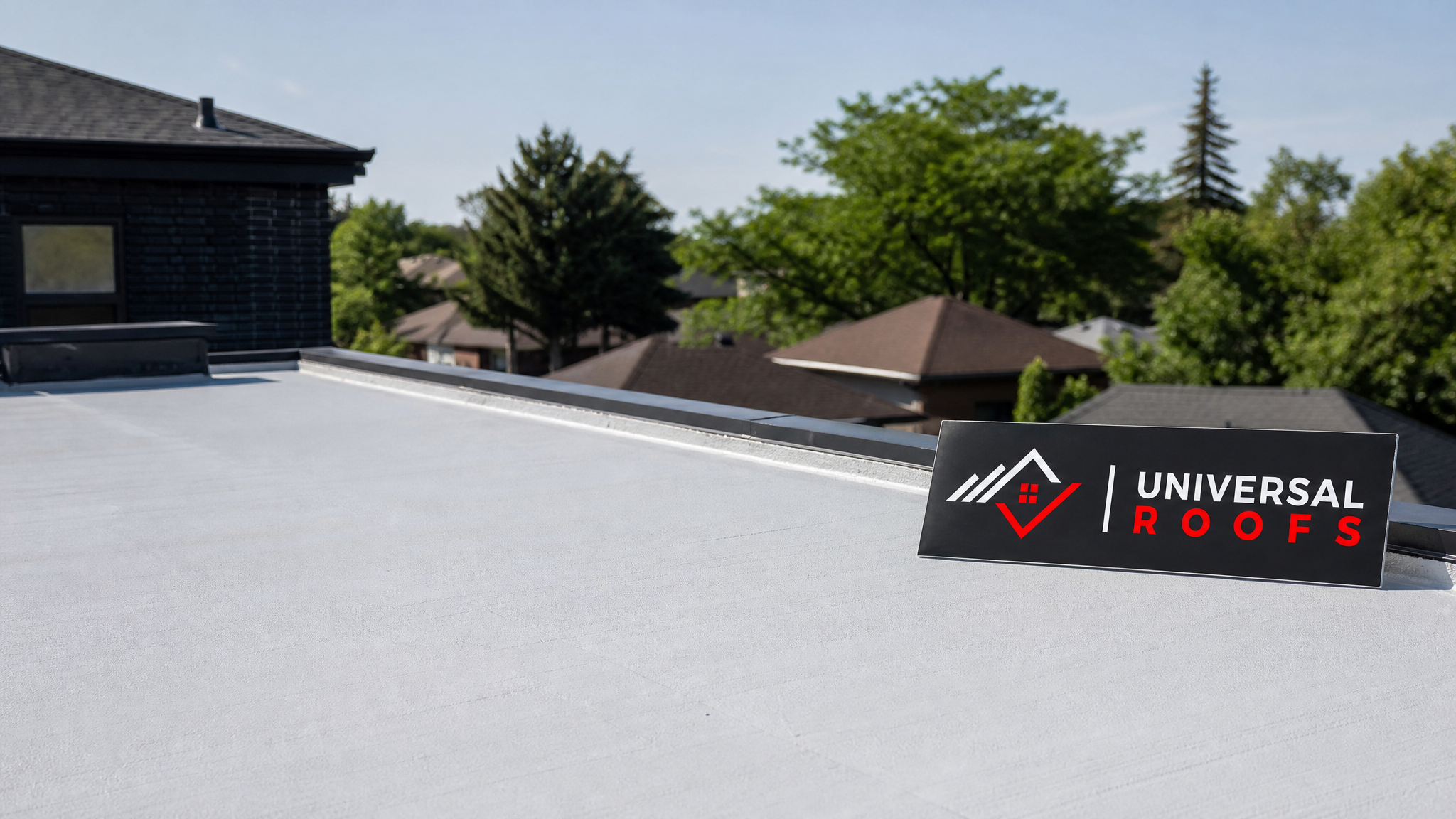
What Makes a Roof Coating “Breathable”?
Every roof coating is rated by its perm rating, a measurement of how many grains of water vapour can pass through one square metre of material per hour under a given pressure difference. A coating with a low perm rating is considered a vapour barrier — it blocks moisture movement in both directions. A coating with a high perm rating is considered vapour-permeable, or breathable — it allows water vapour to diffuse through the membrane while still repelling liquid water on the surface.
The physics behind this comes down to molecular size. Liquid water exists as droplets held together by surface tension, which are far too large to pass through the microscopic pores in a quality breathable membrane. Water vapour, on the other hand, exists as individual molecules small enough to diffuse through those same pores. A well-engineered breathable coating is essentially a one-way valve: rain and snowmelt stay out, while vapour generated inside the building envelope is free to migrate outward and evaporate.
Common breathable coating chemistries include:
- Silicone coatings — naturally high perm ratings, excellent UV resistance, and strong ponding water tolerance, making them a popular choice for GTA flat roofs.
- Acrylic elastomeric coatings — good breathability at a lower price point, though less tolerant of standing water than silicone.
- Breathable polyurethane coatings — higher tensile strength, often used where foot traffic or mechanical wear is a concern.
- Mineral-based (lime or silicate) coatings — traditionally used on masonry and older roof assemblies where vapour management is critical to preventing efflorescence and spalling.
Not every coating marketed as “waterproof” is vapour-permeable, and this is where many homeowners get misled. A product can be excellent at blocking liquid water while being nearly impermeable to vapour — which is exactly the combination that traps moisture and causes long-term damage.
Why Trapped Moisture Is the Real Enemy of a Roof System
To understand why breathability matters, it helps to know where the moisture in a roof assembly actually comes from. It is rarely just rain. Moisture enters a roof deck from several directions simultaneously:
- Interior humidity rising through the ceiling and insulation from bathrooms, kitchens, and laundry rooms
- Residual construction moisture in wood decking or concrete substrates that never fully dried before the roof was sealed
- Condensation forming on the underside of the deck when warm, moist interior air meets a cold roof surface overnight
- Minor leaks or flashing seepage that introduces small amounts of liquid water into the assembly over time
If this moisture cannot escape upward through the coating, it becomes trapped between the vapour-impermeable coating on top and the ceiling finish below. Over weeks and months, that trapped vapour condenses, saturates insulation, and begins to break down the adhesive bond between the coating and the substrate. The classic symptom is blistering — small domed bubbles across the coating surface where trapped vapour pressure has pushed the membrane away from the deck. Left unaddressed, blistered coatings crack, peel, and eventually let bulk water into the building, often causing far more expensive damage than the original problem the coating was meant to prevent.
This is precisely the failure mode our crews see most often when called out to inspect a coating that “should have lasted longer.” In nearly every case involving early blistering, the coating used had a low perm rating and was applied over a roof deck with an active moisture source it was never able to release. If you’re seeing this on your own roof, our roof repair team can diagnose whether the issue is a bad coating choice or a deeper substrate problem before more damage accumulates.
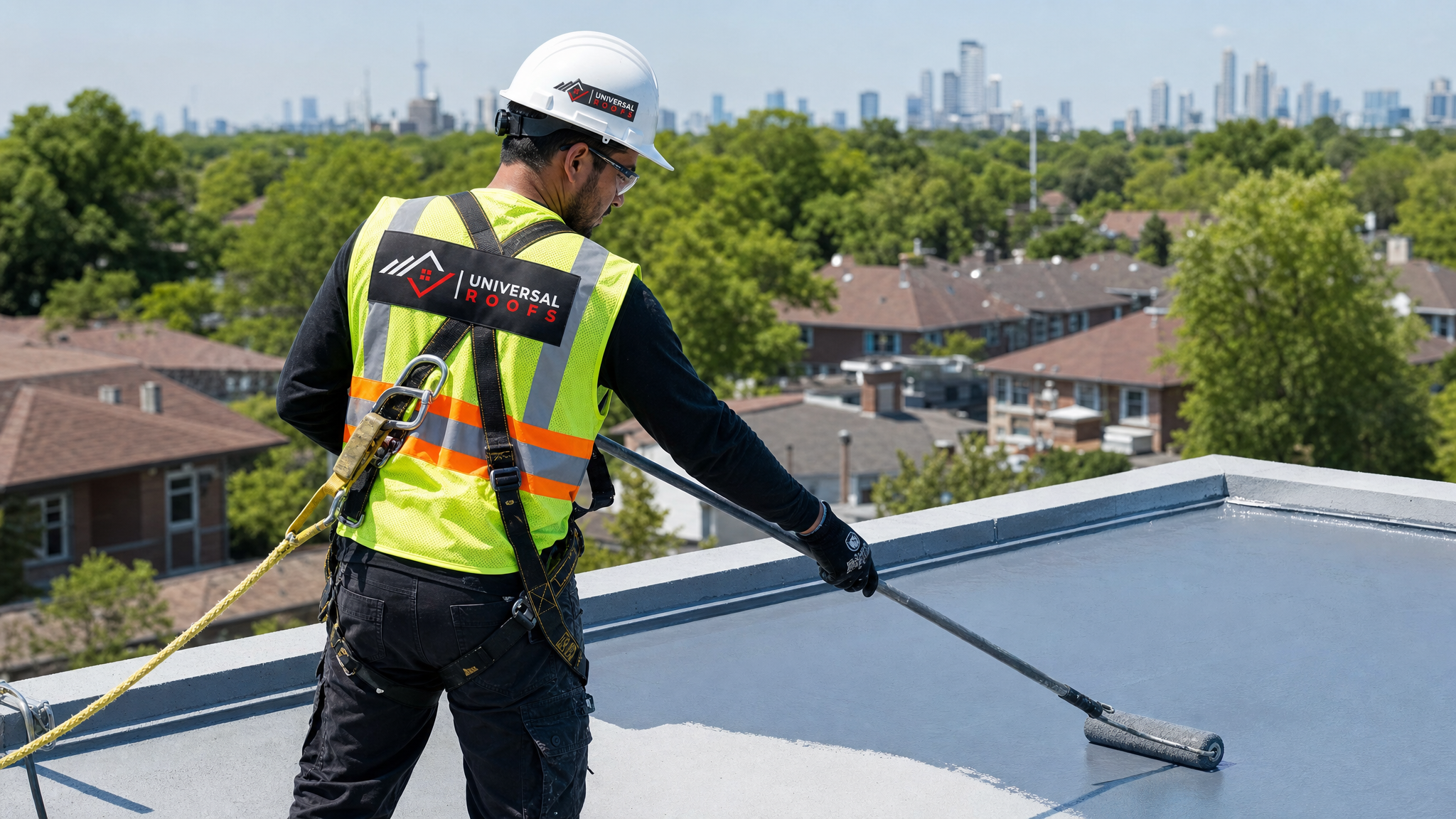
The Core Benefits of Breathable Roof Coatings
Once you understand the vapour-transport mechanism, the practical benefits of breathable roof coatings become clear. Here is what a properly specified breathable system delivers over the life of a roof.
1. Fewer Blisters and Delamination Failures
Because trapped vapour has an escape route, breathable coatings dramatically reduce the blistering and adhesion failures that plague non-breathable systems, especially on roofs with any residual deck moisture or interior humidity load. This alone extends the practical service life of the coating by years.
2. Protection Against Mould and Rot
Trapped moisture inside a roof assembly does not just damage the coating — it feeds mould growth on the underside of the deck and accelerates wood rot in the structural sheathing. A breathable coating keeps moisture levels in the assembly low enough that mould and decay organisms cannot establish themselves, protecting the structural integrity of the roof, not just its surface appearance.
3. Longer Service Life and Better Return on Investment
A breathable coating that avoids blister-driven failure routinely outlasts a non-breathable coating by 5-10 years on the same roof deck. Since coating systems are priced per square metre and reapplication requires labour and material costs each time, extending the interval between recoats materially lowers the lifetime cost of maintaining the roof.
4. Compatibility With a Wider Range of Substrates
Breathable coatings perform well over modified bitumen, built-up roofing, spray polyurethane foam, and even some masonry and concrete substrates that retain construction moisture for months after installation. This flexibility makes them a safer default choice when the exact moisture condition of the existing roof deck is uncertain.
5. Reduced Risk During Seasonal Temperature Swings
Toronto’s climate pushes roofs through dramatic seasonal and even daily temperature swings. As a roof heats in summer sun, any trapped vapour beneath a non-breathable coating expands and pushes outward, exactly the mechanical stress that triggers blistering. A breathable coating relieves that pressure continuously rather than storing it up until a bubble forms.
6. Energy Efficiency Gains
Many breathable coating systems, particularly white or reflective silicone and acrylic formulations, are also highly reflective, reducing rooftop surface temperatures and heat transfer into the building below. Combined with proper attic ventilation, a reflective breathable coating can meaningfully reduce summer cooling loads.
Breathable vs. Non-Breathable Coatings: A Direct Comparison
| Factor | Breathable Coating | Non-Breathable Coating |
|---|---|---|
| Vapour transmission | High — allows trapped moisture to escape | Low — traps vapour beneath the surface |
| Blistering risk | Low to minimal | Moderate to high, especially on moist substrates |
| Typical service life | 15-20 years with proper maintenance | 8-12 years, often shorter with blister failure |
| Best substrate match | Any deck with residual or ongoing moisture risk | Fully dry, well-cured decks only |
| Upfront material cost | Moderate to higher | Lower |
| Long-term cost of ownership | Lower due to fewer recoats and repairs | Higher due to earlier failure and repair calls |
Common Breathable Coating Types and Where They Work Best
| Coating Type | Perm Rating | Best Use Case | Typical Lifespan |
|---|---|---|---|
| Silicone | High | Flat roofs with ponding water, low-slope commercial roofs | 15-20 years |
| Acrylic elastomeric | Moderate-high | Sloped residential roofs, budget-conscious recoats | 10-15 years |
| Breathable polyurethane | Moderate | High foot-traffic roof decks and walkways | 15-18 years |
| Mineral/silicate | Very high | Masonry parapets, older brick and stucco roof transitions | 20-25 years |
Is a Breathable Coating the Right Fix for Your Roof?
Breathable coatings are an excellent maintenance and lifespan-extension tool, but they are not a substitute for structural repair. Before applying any coating, a roof needs to be evaluated for its underlying condition. Here is how we approach that assessment on every job:
- Moisture scan — We use infrared thermography or a capacitance moisture meter to map any wet insulation beneath the membrane. Coatings cannot dry out saturated insulation; wet insulation needs to be cut out and replaced first.
- Substrate condition — Cracked, blistered, or heavily aged membranes may need patch repairs or a base coat before a topcoat is applied.
- Drainage assessment — Ponding water beyond 48 hours after rainfall points to a drainage problem that a coating alone will not fix. In these cases we often recommend addressing the slope or drains as part of the project, sometimes alongside our flat roofing services.
- Flashing and penetration review — Skylight curbs, vent stacks, and parapet walls are the most common leak points and need to be sealed correctly before a coating is applied over them. If you have an ageing or leaking skylight, our skylight replacement team can address that separately so the coating project isn’t compromised by a hidden leak source.
If your roof deck is structurally sound and simply needs a maintenance layer to extend its service life, a breathable coating is usually the most cost-effective option available. If the deck itself has failed — rotted sheathing, collapsed insulation, or membrane that has reached the end of its serviceable life — no coating, breathable or otherwise, will solve that, and a conversation about roof replacement is the more honest starting point.
Application Process and Timeline
A breathable coating project typically follows a consistent sequence, regardless of the specific product chosen:
| Stage | What Happens | Typical Duration |
|---|---|---|
| Inspection & moisture scan | Full roof assessment, infrared or capacitance moisture testing | Half day |
| Surface preparation | Pressure washing, repair of blisters, cracks, and seams | 1 day |
| Primer application | Bonding primer applied where required by the coating manufacturer | Half day, plus cure time |
| Base coat application | First coat applied at manufacturer-specified thickness | 1 day |
| Topcoat application | Final coat applied, often in a contrasting colour to verify even coverage | 1 day |
| Final inspection | Seam check, thickness verification, drainage test | Half day |
Weather is the biggest scheduling variable in the GTA. Most breathable coatings require a dry substrate and stable temperatures during application and initial cure, which is why late spring through early autumn is the preferred application window here. Applying a coating in July, as many Toronto property owners do, takes advantage of long dry stretches and warm surface temperatures that help the coating cure fully before the fall rains arrive.
Maintaining a Breathable Coating for Maximum Lifespan
A breathable coating is not a “set it and forget it” product. Like any exterior building material, it benefits from a simple annual maintenance routine:
- Clear debris, leaves, and standing organic matter from the roof surface each autumn and spring
- Inspect flashing, seams, and penetrations annually for early separation
- Watch for ponding water that lasts more than 48 hours after a rain event
- Recoat high-traffic or high-UV-exposure areas on a shorter cycle than the rest of the roof
- Schedule a professional inspection every 2-3 years to catch minor issues before they need major repair
Homeowners and property managers across our service area — including Toronto, Peel Region, York Region, Halton Region, and Durham Region — rely on this kind of routine check-up to catch coating issues while they are still a quick repair rather than a full recoat.
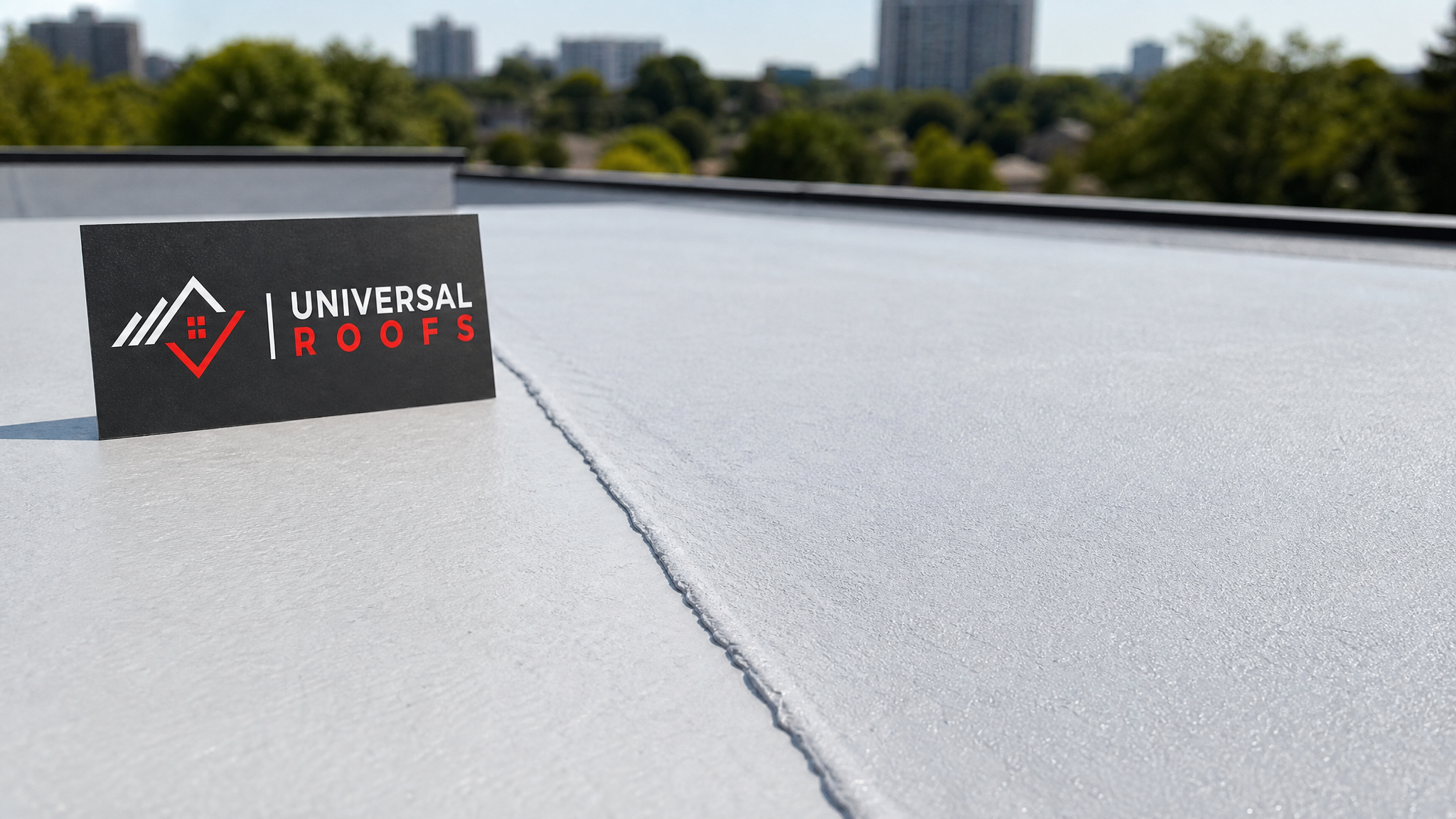
Cost Considerations and Long-Term Value
Breathable coatings generally cost more per square metre than basic non-breathable products, largely due to the higher-grade silicone or polyurethane resins used to achieve high vapour permeability alongside strong waterproofing. However, the total cost of ownership frequently favours the breathable option once you account for the full service life and reduced repair frequency.
A non-breathable coating that blisters and fails within 8-10 years requires a full recoat, including surface prep and repair of any water damage that occurred during the failure period. A breathable coating that reaches 15-20 years defers that recoat cost by nearly a decade, while also avoiding the incidental costs of interior water staining, insulation replacement, or mould remediation that often accompany a blistered coating failure.
For property owners weighing the decision, the right question is rarely “which coating is cheapest to install” but rather “which coating costs the least over the next 15 years.” In almost every case we’ve evaluated, that answer favours a breathable system, particularly for flat and low-slope roofs where moisture management is the single biggest variable in coating performance.
Frequently Asked Questions
What are the main benefits of breathable roof coatings compared to standard coatings?
How do I know if my roof needs a breathable coating instead of a standard one?
Do breathable roof coatings still keep water out effectively?
How long do breathable roof coatings last in the Toronto climate?
Can a breathable coating be applied over an existing roof coating?
Is a breathable roof coating worth the extra cost?
Need Help With What Are the Benefits?
Choosing the right coating system is one of the most cost-effective ways to extend the life of your roof, and getting it wrong can cost far more than the coating itself. Universal Roofs has been assessing and coating roofs across the Greater Toronto Area since 2005, and we can tell you within one visit whether a breathable coating is the right fit for your roof deck.
Call us today at (416) 732-2421 or request a free inspection to get started.
Universal Roofs proudly serves Toronto, Mississauga, Brampton, Vaughan, Markham, Oakville and the GTA since 2005.