
When a roof starts to show its age, the two options homeowners usually hear about are a full replacement or an expensive round of repairs. There is a third option that gets far less attention but can save thousands of dollars: a roof coating. Budget friendly roof coatings save on repairs today because they extend the life of an existing roof surface, seal minor cracks and pinholes before they turn into leaks, and buy homeowners several more years of protection without the cost of tearing off and replacing an entire roof system.
Across the Greater Toronto Area, roof coatings have become a practical middle-ground solution, especially for flat and low-slope roofs on bungalows, additions, garages, and older homes where the underlying deck and structure are still sound but the surface membrane has started to dry out, chalk, or crack from years of freeze-thaw cycles and UV exposure. Instead of paying for a full tear-off, a coating restores the waterproofing layer at a fraction of the cost.
This guide explains exactly how roof coatings work, which types make sense for different roof surfaces, what the process looks like from inspection to cure, how much homeowners in the GTA should expect to pay, and when a coating is the right call versus when it is only delaying an inevitable replacement. We will also cover maintenance, warranty considerations, and the specific questions to ask before hiring anyone to coat your roof.
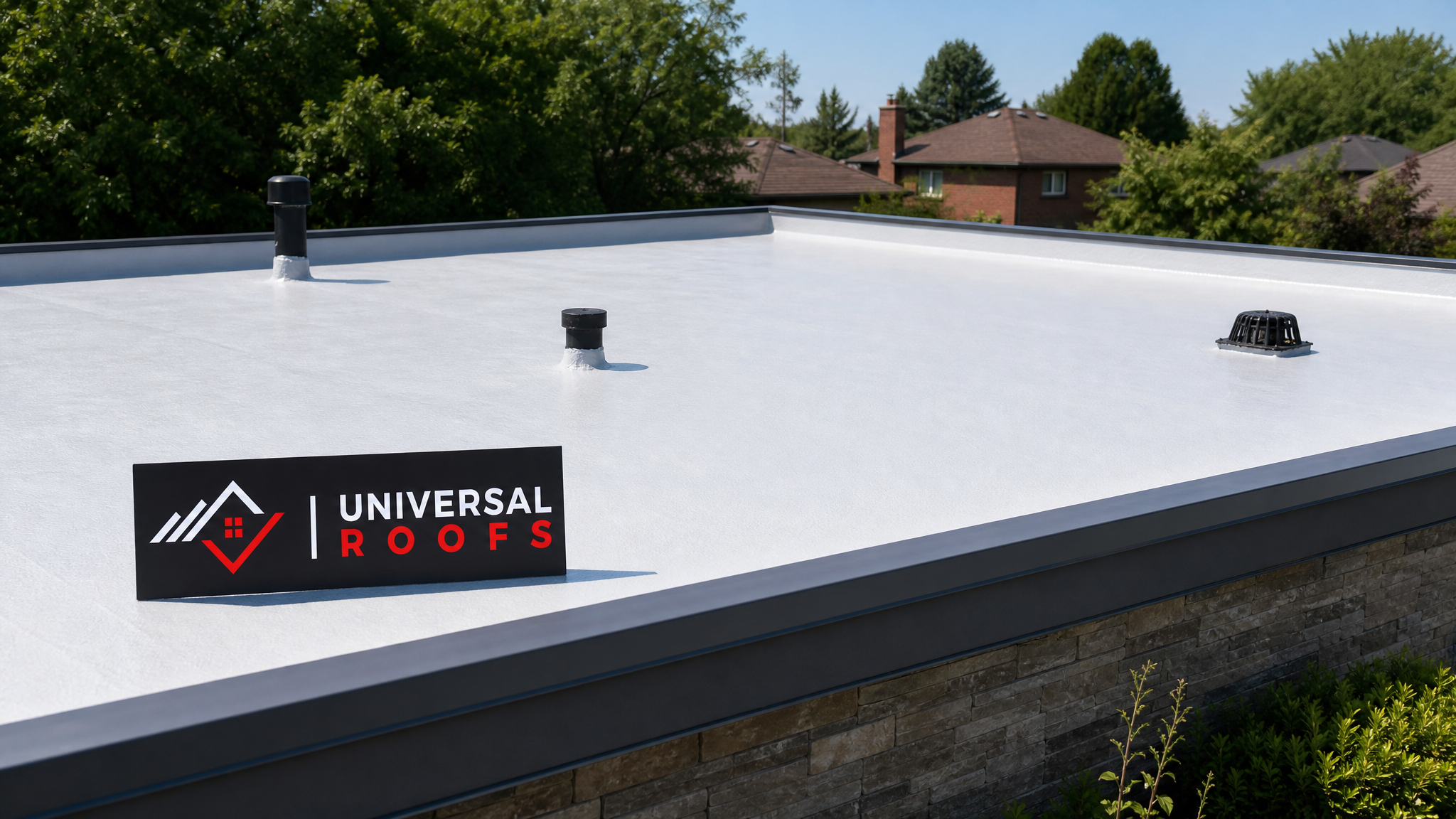
What a Roof Coating Actually Does
A roof coating is a fluid-applied membrane, usually elastomeric or silicone-based, that is rolled or sprayed directly onto an existing roof surface. Once cured, it forms a seamless, flexible, waterproof layer that bonds to the substrate below it. Unlike a new shingle or membrane installation, a coating does not replace the roof — it restores and protects the surface that is already there.
For homeowners trying to stretch a maintenance budget, this distinction matters. A coating is not a cosmetic trick. When applied correctly to a roof that is still structurally sound, it:
- Seals hairline cracks, pinholes, and dried-out seams before they become active leaks
- Restores UV resistance to a membrane that has chalked or faded from sun exposure
- Adds a reflective surface that reduces heat absorption during hot Toronto summers
- Extends the functional life of the existing roof by 5 to 10 years in many cases
- Costs a fraction of a full roof replacement
What a coating cannot do is fix structural problems. If the roof deck is rotted, if there is standing water pooling for more than 48 hours after every rain, or if the membrane has torn away from the deck in sections, a coating will not solve those underlying issues. This is why an honest inspection before any coating project is non-negotiable — a reputable contractor will tell a homeowner when a coating is the right budget-friendly fix and when it would just be an expensive way to delay a necessary roof repair.
Which Roof Types Are Good Candidates for Coating
Coatings work best on certain roof surfaces and are a poor fit for others. Understanding which category a roof falls into saves homeowners from wasting money on a product that was never going to hold up.
Flat and low-slope roofs are the best candidates. This includes built-up roofing (BUR), modified bitumen, single-ply membranes like EPDM and TPO, and metal roofing. These surfaces are common on additions, garages, sheds, porch roofs, and many bungalows and post-war homes throughout Toronto, Mississauga, and Brampton. Because these roofs are relatively smooth and continuous, a coating can bond evenly across the whole surface and create a monolithic waterproof layer.
Steep-slope asphalt shingle roofs are a different story. Coatings are generally not recommended over standard asphalt shingles because the granulated surface, overlapping design, and the way shingles are meant to shed water rather than hold a membrane make coatings unreliable and, in some cases, capable of trapping moisture underneath the shingle tabs. If a shingle roof is failing, the more sensible options are targeted repairs or a full roof replacement, not a surface coating.
| Roof Type | Good Candidate for Coating? | Why |
|---|---|---|
| Flat built-up roofing (BUR) | Yes | Continuous gravel or cap sheet surface bonds well with elastomeric coatings |
| Modified bitumen | Yes | Smooth cap sheet accepts coating evenly, extends membrane life significantly |
| EPDM rubber membrane | Yes, with primer | Needs a compatible primer first, but responds very well to silicone coatings |
| TPO single-ply | Yes, with specific products | Requires TPO-compatible coating chemistry; standard acrylics will not adhere properly |
| Metal roofing | Yes | Coatings stop rust, seal seams, and restore reflectivity on aging metal panels |
| Asphalt shingles | Not recommended | Overlapping shingle design and granule surface do not bond reliably; can trap moisture |
Types of Roof Coatings and How They Compare
Not all coatings are created equal, and the right choice depends on the existing membrane, the roof’s exposure to sun and ponding water, and the homeowner’s budget. The three most common categories used across the GTA are acrylic, silicone, and polyurethane coatings.
Acrylic coatings are the most affordable and the most widely used for general maintenance. They are water-based, easy to apply, and offer strong reflectivity that helps reduce cooling costs in summer. Their main weakness is ponding water — acrylics can soften and degrade if water sits on them for extended periods, which matters on flat roofs with poor drainage.
Silicone coatings cost more but handle ponding water far better than acrylics. They are also more resistant to UV degradation over time, which is a meaningful advantage given how much direct summer sun a flat roof can take in the GTA between May and September. Silicone is generally the preferred choice for roofs with known drainage issues or roofs that have already shown signs of a previous coating breaking down from standing water.
Polyurethane coatings sit at the premium end. They offer the best resistance to foot traffic and mechanical wear, which makes them a good fit for roofs that also serve as a walkway, patio deck, or mechanical equipment platform. They are more expensive to install but hold up better where the roof surface takes regular physical abuse.
| Coating Type | Typical Cost per Square Metre (CAD) | Best For | Expected Added Life |
|---|---|---|---|
| Acrylic elastomeric | $8 – $14 | General maintenance, well-drained roofs | 5 – 8 years |
| Silicone | $14 – $22 | Roofs with ponding water or heavy UV exposure | 8 – 12 years |
| Polyurethane | $18 – $28 | Roofs with foot traffic or mechanical equipment | 8 – 15 years |
| Rubberized asphalt emulsion | $6 – $11 | Spot repairs and budget touch-ups on BUR roofs | 3 – 5 years |
These figures vary based on roof condition, access, and the number of coats applied, but they illustrate why coatings remain one of the most budget-friendly ways to extend a roof’s service life. A typical two-car-garage-sized flat roof coating project often lands in the low thousands of dollars, compared to a full membrane tear-off and replacement that can run several times higher.
The Roof Coating Process Step by Step
A properly applied coating is not a quick spray-and-go job. Skipping steps is the single biggest reason coatings fail prematurely, so homeowners should understand what a thorough process actually involves before agreeing to a quote.
- Inspection and assessment. A contractor walks the entire roof, checks for soft spots, delamination, active leaks, and ponding water. This step determines whether coating is even appropriate or whether repairs need to happen first.
- Cleaning the surface. The roof is pressure washed or manually cleaned to remove dirt, moss, chalking residue, and loose debris. Coatings will not adhere properly to a dirty surface, and this step is frequently rushed by lower-quality contractors.
- Repairing existing damage. Any cracks, blisters, open seams, or soft areas are patched and reinforced before the coating goes on. A coating applied over unrepaired damage will simply fail at that spot again within a season or two.
- Priming, if required. Certain substrates, particularly EPDM and metal, need a compatible primer to help the coating bond. Skipping primer on these surfaces is a common cause of peeling.
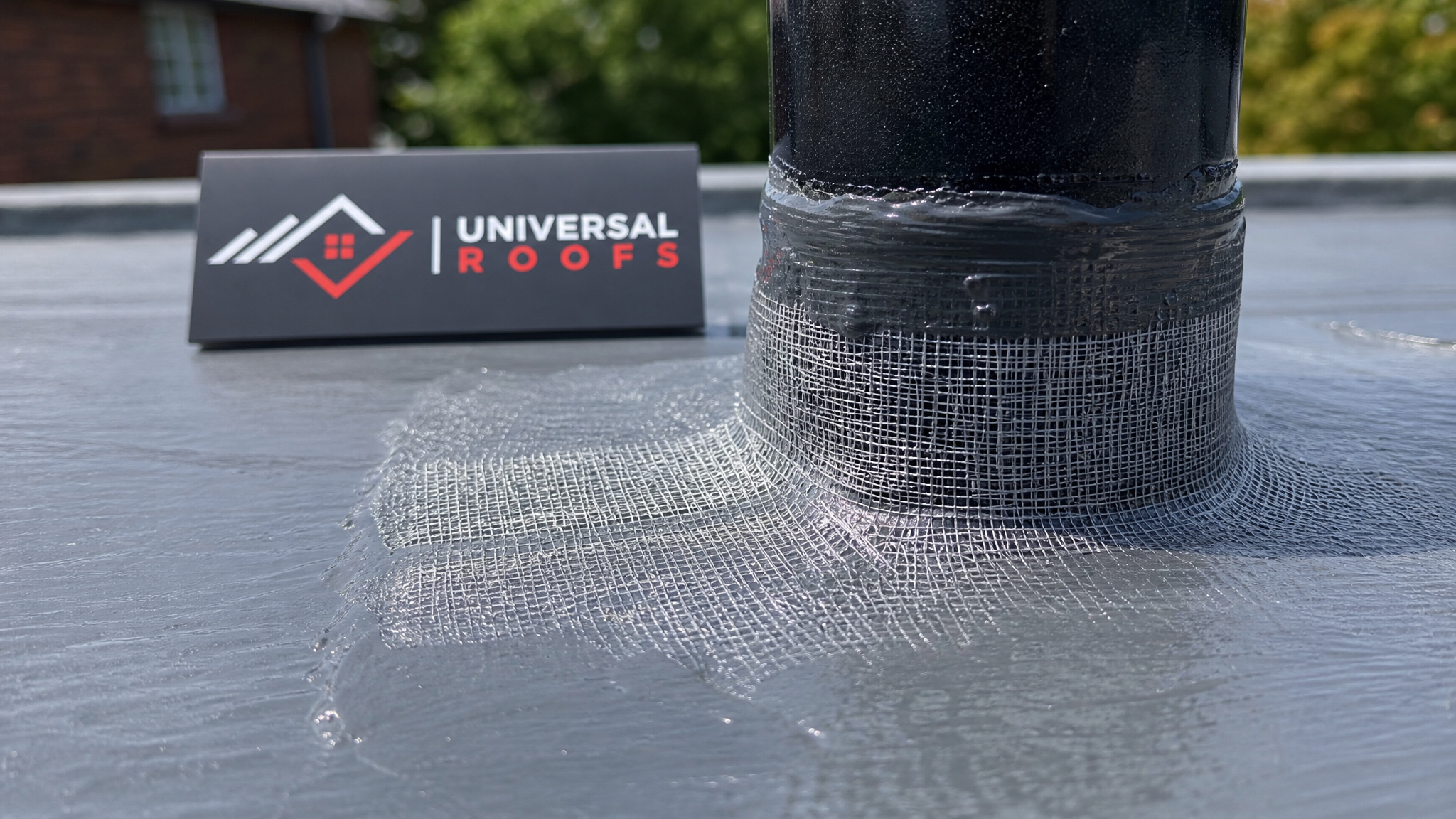
- Reinforcing seams and flashing. Fabric reinforcement or mesh is often embedded in the coating at seams, penetrations, and flashing details, since these are the highest-stress points on any flat roof.
- Applying the base coat. The first coat is applied at the manufacturer’s specified thickness, usually by roller or airless sprayer, and allowed to cure according to the product’s data sheet.
- Applying the topcoat. A second coat is applied once the base coat has cured, building up the total dry film thickness needed to meet the manufacturer’s warranty requirements.
- Final inspection. The contractor checks coverage, thickness, and detail work around drains, vents, and edges before considering the job complete.
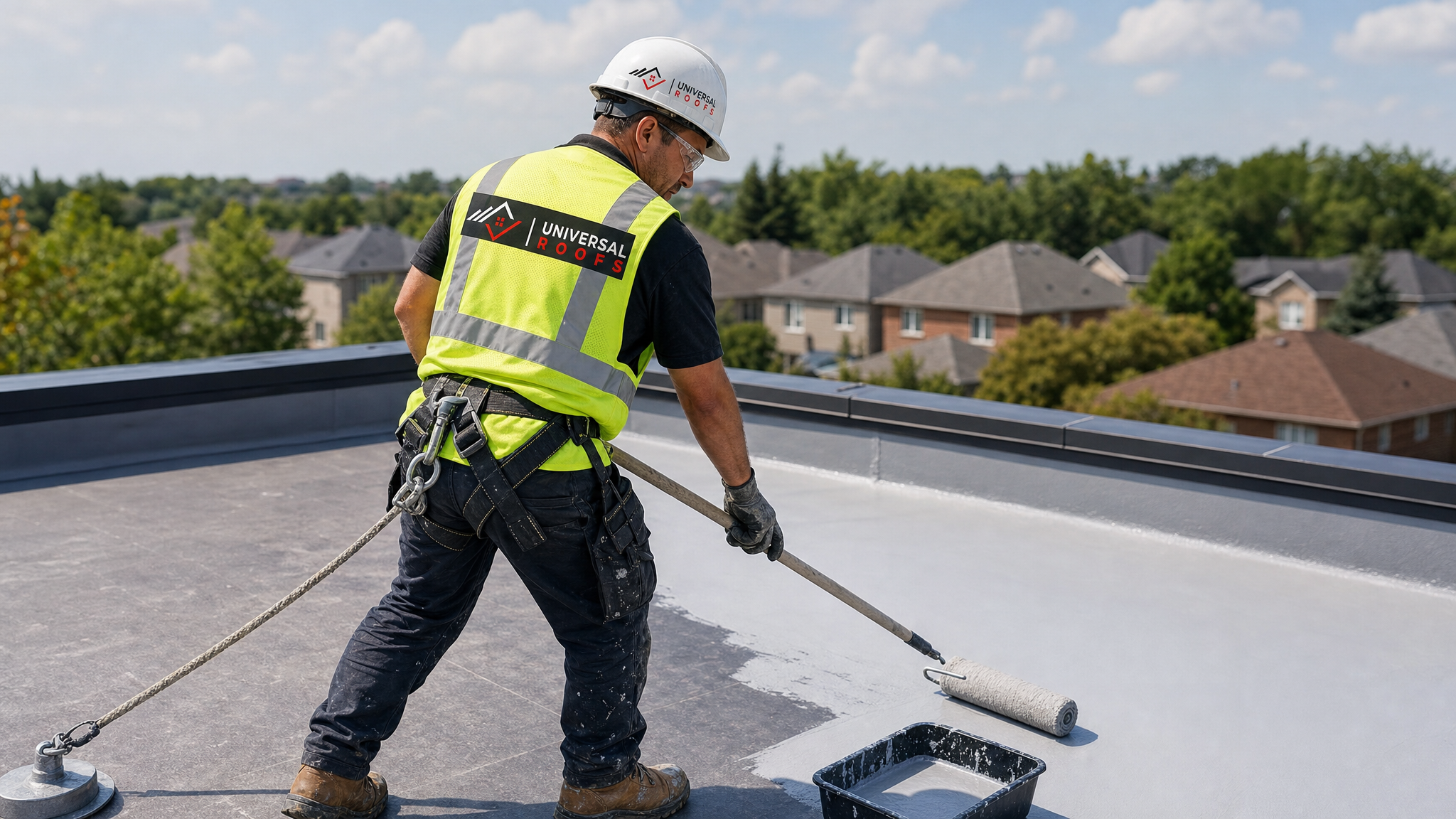
How Toronto’s Climate Affects Coating Performance
The GTA’s climate puts a specific set of demands on any roof coating. Winters bring repeated freeze-thaw cycles that stress seams and any area where the coating is thin or unevenly applied. Water that gets underneath a coating and freezes will expand and force the coating to lift, which is why proper edge detailing and seam reinforcement matter so much in this region compared to milder climates.
Summers bring the opposite challenge: intense UV exposure and heat that cause coatings to expand, contract, and gradually chalk on the surface. This is where reflective, UV-stable coatings like silicone earn their higher price tag, since they resist that breakdown far longer than a basic acrylic in direct summer sun.
Timing the application matters too. Most coatings need a window of dry, moderate-temperature weather to cure properly, which is why late spring through early autumn is the ideal season for this kind of work in Toronto. A coating applied in July, when days are long, dry, and warm, tends to cure more evenly than one rushed in cooler, damper conditions. Homeowners planning maintenance this season should book an inspection early, since qualified contractors book up quickly once the weather turns reliably dry.
Roof Coating vs. Repair vs. Replacement: Making the Right Call
The hardest part of this decision is not the coating itself — it is figuring out whether coating is even the right move compared to a targeted repair or a full replacement. Here is a practical way to think about it.
If a roof is under 15 years old, has no active structural damage, and the main issue is surface wear, UV chalking, or a handful of minor cracks, a coating is usually the most cost-effective choice. It buys years of protection at a small fraction of replacement cost.
If the roof has isolated problem areas — a damaged flashing detail, a torn section near a vent, a soft spot from a slow leak — but the rest of the membrane is in good shape, a targeted roof repair combined with a coating over the whole surface is often the smartest combination. Fix the specific problem first, then coat the entire roof to protect it going forward.
If the roof deck has rotted sections, if there is widespread ponding water that never fully drains, or if the membrane has separated from the deck in multiple areas, no coating will fix that. At that point, a full flat roofing replacement is the responsible choice, even though it costs more upfront, because a coating over failing structure only delays a problem that will get more expensive to fix later.
| Roof Condition | Recommended Approach | Approximate Cost Range (CAD) | Expected Result |
|---|---|---|---|
| Sound structure, minor surface wear | Coating only | $1,500 – $4,500 | 5–12 more years of service life |
| Sound structure, isolated damage | Spot repair + full coating | $2,500 – $6,000 | Restored waterproofing, extended life |
| Failing deck or widespread ponding | Full replacement | $9,000 – $22,000+ | New roof system, 20+ year lifespan |
| Active structural leak, unknown cause | Inspection first, then decide | Inspection typically $150 – $350 | Accurate diagnosis before spending on the wrong fix |
Maintaining a Coated Roof Long-Term
A coating is not a one-time fix-and-forget product. Like any protective surface, it benefits from basic ongoing maintenance that most homeowners can handle themselves or arrange with an annual inspection.
- Clear debris regularly. Leaves, branches, and dirt that accumulate around drains and low points trap moisture against the coating and accelerate wear.
- Check drains and scuppers each season. Blocked drainage is the single biggest cause of ponding water, which shortens the life of almost any coating.
- Inspect after major storms. High wind or hail can cause localized damage that is easy to patch immediately but expensive if left until it becomes a leak.
- Recoat on schedule. Most coatings are designed for a recoat cycle, often every 8 to 10 years for silicone and slightly sooner for acrylic, to maintain full waterproofing performance.
- Keep an eye on the attic below. Musty smells, visible moisture staining, or condensation on the underside of the roof deck are early warning signs that should trigger a professional look at the attic and roof assembly together.
Homeowners who also have skylights on a coated flat roof should pay particular attention to the flashing details around the curb, since this is one of the most common places for a coating to be under-applied. If a skylight is original to an older roof, it is often worth having it assessed alongside the coating project — see our skylights and skylight replacement pages for more on when an aging skylight should be upgraded rather than just resealed.
Warranty and Contractor Vetting Considerations
Roof coating warranties vary widely between manufacturers and installers, and this is one area where the cheapest quote is not always the best value. A legitimate coating warranty typically covers the material itself for a set number of years, provided it was applied at the manufacturer’s specified thickness — which is exactly why the application process matters as much as the product choice.
Before hiring anyone for a coating project, homeowners should ask:
- What is the manufacturer’s minimum dry film thickness requirement, and how will the contractor verify it was met?
- Is the warranty from the manufacturer, the installer, or both, and what voids it?
- Does the quote include repairing existing damage before coating, or is that a separate cost?
- How many coats are included, and what is the expected total service life?
- Can they provide references or photos from similar flat roof coating projects in the GTA?
A contractor who cannot answer these questions clearly, or who quotes a coating job significantly below the ranges outlined above, is often cutting corners on prep work, thickness, or materials — all of which show up as an early failure two or three years later, at which point the “savings” evaporate.
Frequently Asked Questions About Roof Coatings
Do budget friendly roof coatings really save on repairs today, or is it just a temporary fix?
How much does a roof coating cost compared to a full roof replacement?
Can roof coatings be applied to asphalt shingle roofs?
How long does a roof coating take to apply?
What is the best type of roof coating for a flat roof with standing water problems?
How do I know if my roof needs a coating or a full repair first?
Need Help With Budget Friendly Roof Coatings?
Choosing the right maintenance strategy for a tired roof can feel overwhelming, but it does not have to be an expensive guessing game. Universal Roofs has been assessing, repairing, and coating flat and low-slope roofs across the GTA since 2005, and we will always give homeowners an honest answer about whether a coating, a repair, or a replacement is the right call for their specific roof.
Call us today at (416) 732-2421 or request a free inspection to get started.
Universal Roofs proudly serves Toronto, Mississauga, Brampton, Vaughan, Markham, Oakville and the GTA since 2005.