
If your Toronto home or commercial building has a flat or low-slope roof, you already know the challenges it faces every year: baking summer heat that expands the membrane, freezing winter nights that contract it, and a freeze-thaw cycle every spring and fall that stresses every seam and fastener in between. This is exactly why elastomeric roof coatings have become one of the most popular ways to extend the life of an ageing roof without the cost of a full tear-off. Done correctly, an elastomeric coating can add 10 to 15 years of protection to a roof that would otherwise be heading toward replacement.
At Universal Roofs, we have applied elastomeric coatings across hundreds of flat and low-slope roofs throughout the GTA, from small residential additions to large commercial rooftops. This guide explains what elastomeric coatings actually are, why flexibility matters so much in our climate, how the application process works from start to finish, what it costs, and how to keep a coated roof performing for its full service life.
Whether you are trying to stop a slow leak before it becomes a major repair, extend the life of a roof that still has good bones, or simply want to understand your options before your next roofing decision, this article will walk you through everything you need to know.
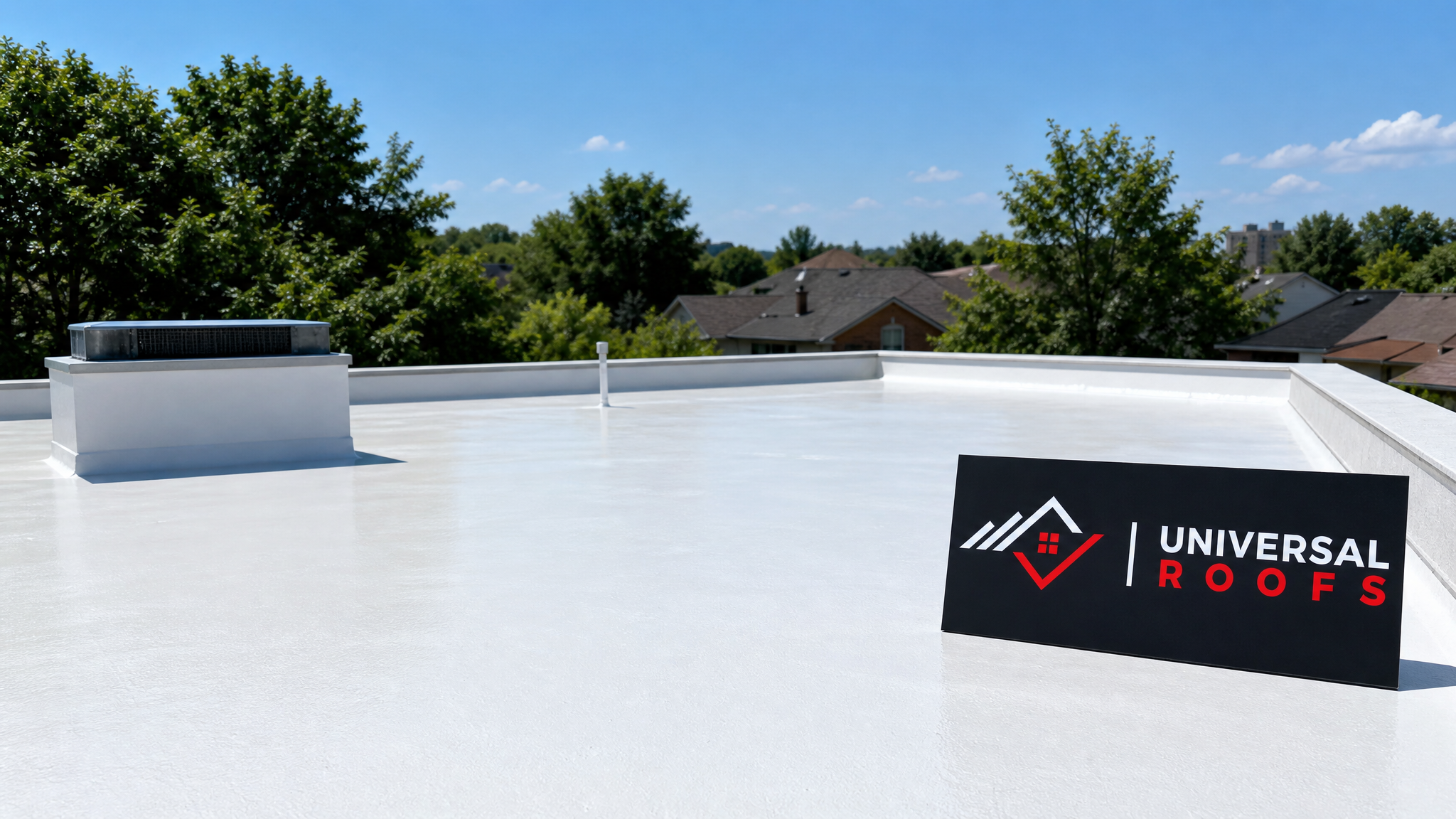
What Is an Elastomeric Roof Coating?
An elastomeric roof coating is a liquid-applied, rubber-like membrane that cures into a seamless, highly flexible waterproof layer over an existing roof surface. Unlike a rigid paint or sealant, elastomeric coatings are engineered to stretch — typically 200% to over 500% of their original size, depending on the formulation — and then return to their original shape without cracking. That elasticity is the entire point: it lets the coating move with the roof as temperatures swing from a humid 30-plus degree July afternoon to a minus-20 January night.
Most elastomeric coatings fall into three chemical families:
- Acrylic elastomeric coatings — water-based, UV-stable, and the most common choice for sloped and flat roofs in our climate because they balance cost, flexibility, and reflectivity well.
- Silicone elastomeric coatings — excellent for roofs with ponding water issues since silicone resists hydrolysis (breakdown from prolonged water contact) better than acrylics.
- Polyurethane elastomeric coatings — prized for higher tensile strength and abrasion resistance, often used on roofs with foot traffic or mechanical equipment.
All three are applied over the existing roof membrane — whether that is modified bitumen, built-up roofing (BUR), EPDM rubber, or a metal roof — rather than replacing it. This is what makes achieving flexibility and longevity with elastomeric roof coatings such an attractive option for GTA property owners: you get a genuinely new waterproof surface without the disruption, dumpster, and cost of a full roof replacement.
Why Flexibility Matters So Much in the GTA Climate
Toronto’s climate is uniquely hard on roofing materials because of how often the temperature crosses the freeze line. Environment Canada data consistently shows the GTA experiencing 50 to 70 freeze-thaw cycles per year — more than almost any other major roofing consideration in the region. Every time water trapped in a hairline crack freezes, it expands by roughly 9%, widening that crack a little further. Do that dozens of times a year and small imperfections become active leaks within a few seasons.
A rigid coating or an aged, brittle membrane cannot absorb that repeated expansion and contraction. It cracks. An elastomeric coating, by contrast, is designed specifically to flex with the substrate underneath it rather than fighting against it. This is the core reason flexibility and longevity go hand in hand: a coating that cannot stretch will fail long before it reaches the end of its rated lifespan, no matter how thick it was applied or how good the underlying membrane was to begin with.
Beyond freeze-thaw stress, elastomeric coatings also need to handle:
- Thermal shock from rooftop surface temperatures that can swing 40+ degrees between a sunny July afternoon and an overnight thunderstorm.
- Building movement as structural members expand and contract, transferring stress to roof seams and penetrations.
- Ponding water on flat and low-slope roofs where drainage is imperfect, which stresses coatings differently than sloped runoff.
- UV degradation from long summer days that break down unprotected membranes over time.
A properly selected and applied elastomeric system addresses all four simultaneously, which is why so many GTA property owners turn to coatings as a mid-life intervention rather than waiting for a full roof repair or replacement cycle.
Is Your Roof a Good Candidate for Elastomeric Coating?
Not every roof is a good fit for coating, and being honest about this upfront saves homeowners money and disappointment. Elastomeric coatings work best as a restorative measure on roofs that are structurally sound but showing surface-level ageing — chalking, minor cracking, small blisters, or reduced reflectivity. They are not a fix for roofs with saturated insulation, widespread membrane failure, or structural sagging.
Here is how the decision typically breaks down:
| Roof Condition | Coating Suitable? | Recommended Action |
|---|---|---|
| Surface chalking, minor UV fading, no leaks | Yes — ideal candidate | Clean, prime, and coat |
| Hairline cracks, small isolated blisters | Yes, with repair first | Patch and reinforce, then coat |
| Occasional ponding water (under 48 hrs to drain) | Yes — use silicone formulation | Silicone elastomeric coating |
| Active leaks with wet insulation underneath | No | Full repair or partial tear-off first |
| Membrane over 20 years old with widespread wear | Rarely | Roof replacement should be evaluated |
| Structural sagging or deflection | No | Structural assessment required |
If you are unsure which category your roof falls into, a professional roof assessment is the right first step. Our team regularly performs this kind of evaluation across the Toronto, Peel Region, York Region, Halton Region, and Durham Region areas, and it is the only reliable way to know whether coating will genuinely extend your roof’s life or simply delay a necessary repair.
The Step-by-Step Elastomeric Coating Application Process
Achieving genuine flexibility and longevity with elastomeric roof coatings depends almost entirely on proper preparation — the coating itself is only as good as the surface it bonds to. Here is the process we follow on every project:
- Roof inspection and moisture scan. Before any coating goes down, the roof is inspected for wet insulation, membrane damage, and drainage issues. A moisture meter or infrared scan can catch trapped water that would otherwise blister a new coating from underneath.
- Cleaning. The entire surface is pressure washed to remove dirt, algae, chalking residue, and loose debris. Elastomeric coatings will not bond properly to a dirty or oxidized substrate.
- Repairs. Cracks, blisters, and failed seams are cut out, dried, and patched. Any deteriorated flashing around penetrations, vents, or the roof edge is corrected at this stage — this is also the point where skylight curbs and skylight flashing are checked, since these are common leak points on flat roofs.
- Priming (if required). Certain substrates, particularly metal or heavily oxidized surfaces, need a primer coat to ensure proper adhesion.
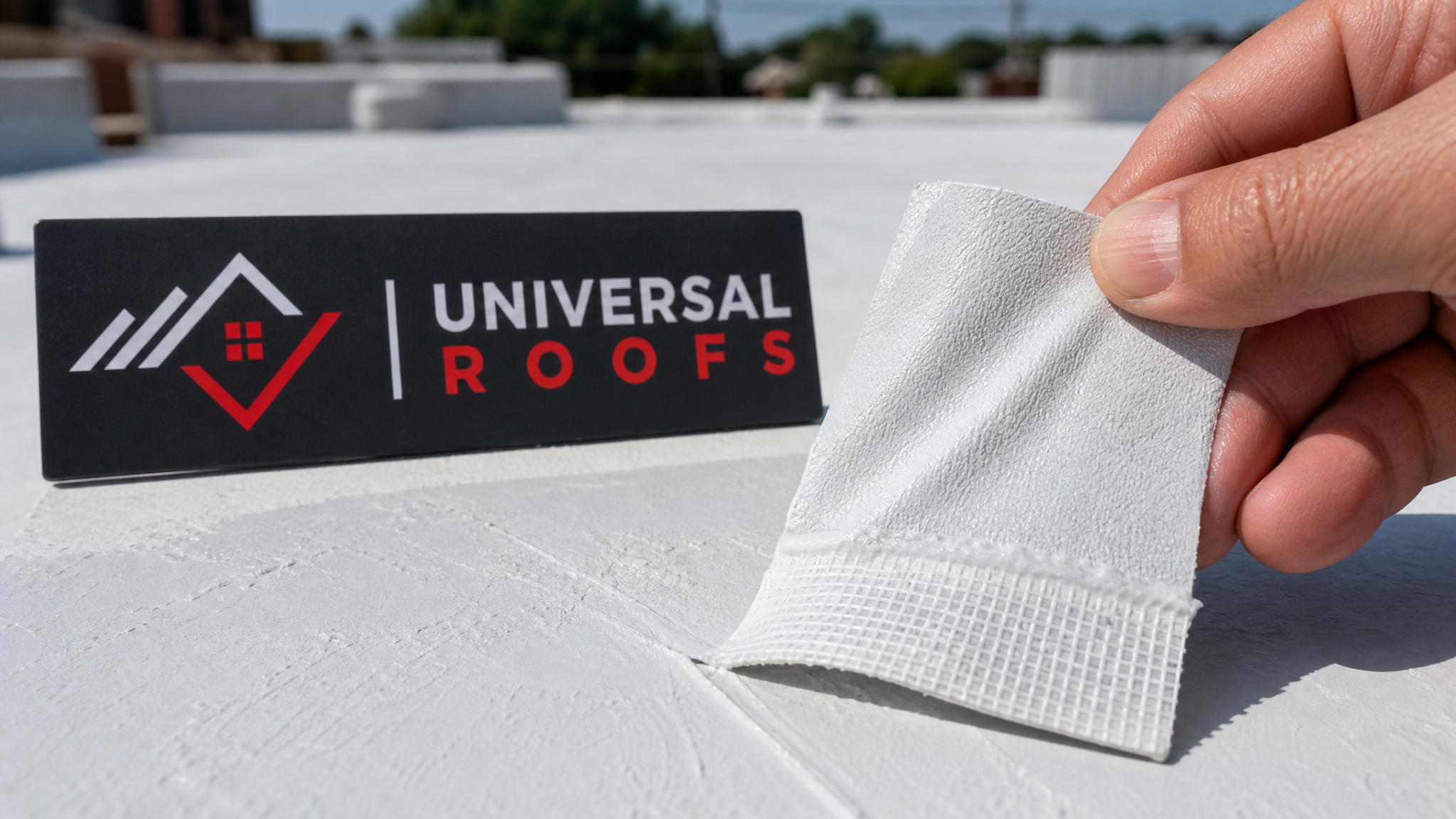
- Reinforcement at seams and penetrations. Polyester or fibreglass reinforcing fabric is embedded in a base coat around seams, drains, curbs, and any area prone to movement, adding tensile strength exactly where the roof needs it most.
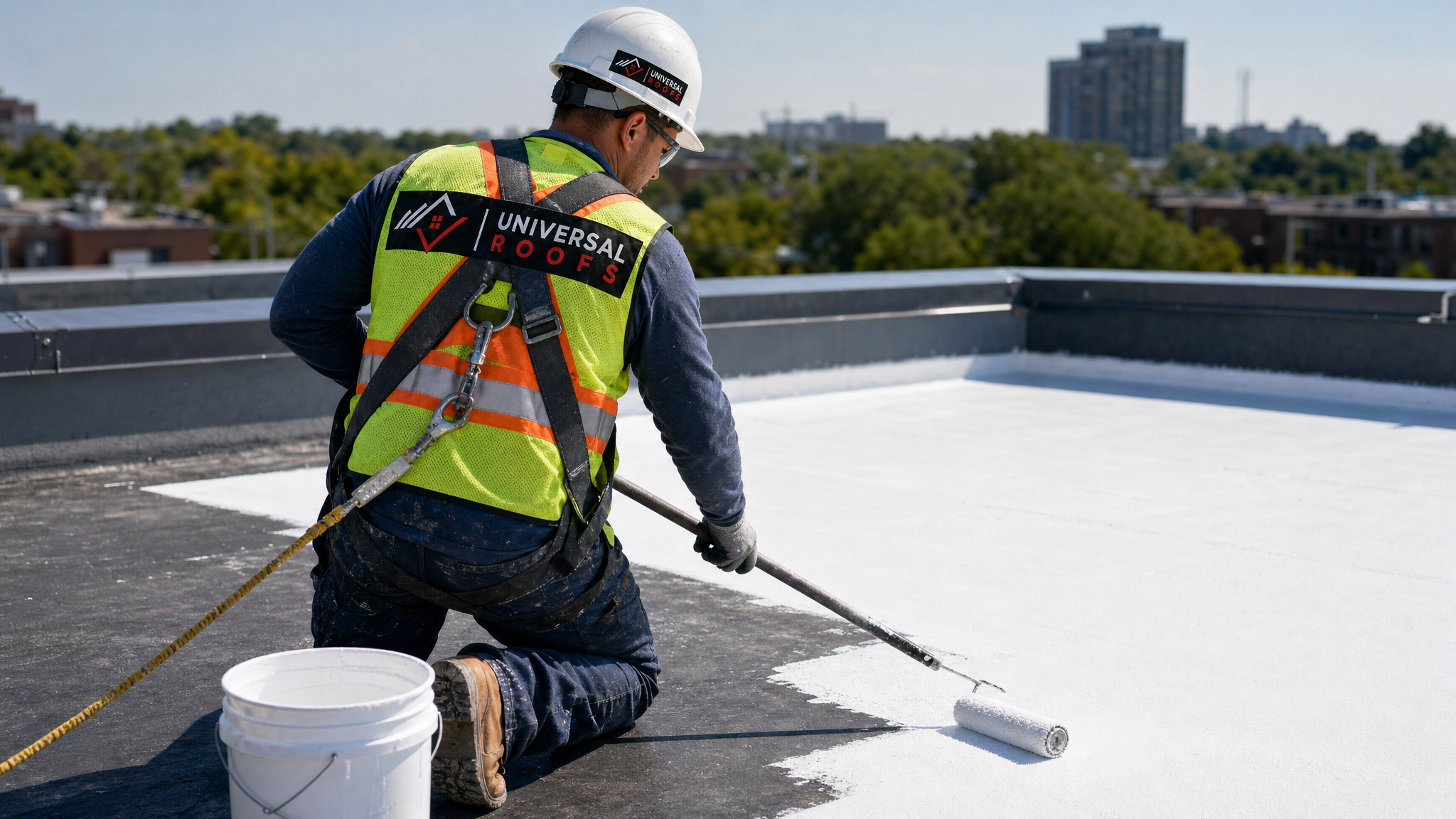
- Base coat application. The first coating layer is applied at the manufacturer’s specified wet-mil thickness, typically by roller, brush, or airless sprayer depending on roof size and detail work required.
- Top coat application. A second coat is applied once the base coat has cured, usually in a contrasting shade so installers can visually verify full, even coverage.
- Final inspection. The completed surface is checked for pinholes, thin spots, and proper thickness before the project is signed off.
Coating Types Compared: Which Formulation Fits Your Roof
Choosing the right elastomeric chemistry matters as much as the application itself. Each formulation has genuine strengths and weaknesses depending on your roof’s exposure, drainage, and traffic.
| Coating Type | Best For | Typical Lifespan | Key Limitation |
|---|---|---|---|
| Acrylic elastomeric | Sloped or well-draining flat roofs, budget-conscious projects | 10–15 years | Softens under prolonged standing water |
| Silicone elastomeric | Roofs with ponding water, high UV exposure | 15–20 years | Higher upfront cost, attracts dirt over time |
| Polyurethane elastomeric | Roofs with foot traffic, mechanical equipment | 12–18 years | Less reflective, more labour-intensive install |
| Butyl rubber elastomeric | Small repairs, spot patching | 8–12 years | Not typically used for full-roof coverage |
For most GTA flat roofs without significant ponding, an acrylic elastomeric coating delivers the best balance of cost and performance. Roofs with drainage challenges — which we see often on additions and older commercial buildings across the region — tend to perform far better with a silicone-based system despite the higher initial investment.
Cost and Return on Investment
One of the main reasons property owners choose coatings is straightforward economics: an elastomeric recoat typically costs a fraction of full replacement while extending the roof’s usable life by a decade or more. Actual pricing depends on roof size, substrate condition, and coating type, but the general ranges below reflect what we see across GTA projects.
| Project Scope | Approximate Cost Range (per sq. ft.) | Expected Added Roof Life |
|---|---|---|
| Acrylic coating, roof in good condition | $2.00 – $3.50 | 10–15 years |
| Silicone coating, roof with ponding | $3.50 – $5.50 | 15–20 years |
| Coating with moderate crack/seam repair | $4.00 – $6.50 | 10–15 years |
| Full roof replacement (for comparison) | $8.00 – $14.00+ | 25–30 years (new install) |
These figures are general planning ranges, not a quote — every roof has its own repair needs, access considerations, and square footage that affect the final number. The clearest way to know your actual cost is a site visit, which our team can arrange through our contact page.
Common Problems and How to Troubleshoot Them
Even a well-installed elastomeric coating can develop issues if the roof was not properly assessed beforehand or if maintenance is neglected afterward. Knowing what to look for helps you catch small problems before they become expensive ones.
| Problem Observed | Likely Cause | Recommended Fix |
|---|---|---|
| Blistering shortly after application | Moisture trapped under the coating during application | Cut out blister, dry substrate fully, re-coat area |
| Cracking along a seam | Insufficient reinforcing fabric at that seam | Re-reinforce with fabric and additional base coat |
| Chalking or fading after several years | Normal UV wear near end of coating’s service life | Schedule a recoat before performance drops further |
| Dirt streaking or algae growth | Poor drainage or infrequent cleaning | Pressure wash and correct drainage slope if possible |
| Coating peeling at the edges | Inadequate surface prep or primer before application | Remove loose material, re-prime, and patch properly |
If you notice any of these signs on a coated roof — your own or one you are evaluating on a property purchase — it is worth having a professional take a look before the issue spreads. Our team handles both new coating applications and corrective work on coatings installed by others.
Maintaining Your Elastomeric Roof Coating for Maximum Lifespan
A coating’s flexibility and longevity are not “set and forget” once the crew packs up. Like any exterior building system, it benefits from a light annual maintenance routine:
- Inspect twice a year — ideally in spring after the freeze-thaw season and again in fall before winter — for cracking, blistering, or debris accumulation.
- Keep drains and scuppers clear of leaves and debris, especially heading into a Toronto autumn, to prevent unnecessary ponding.
- Remove standing debris promptly — organic matter left sitting on a coated surface can trap moisture and encourage algae growth.
- Address foot traffic damage quickly — HVAC technicians and other trades walking on the roof can scuff or puncture a coating; small repairs now prevent larger leaks later.
- Plan a recoat cycle — most elastomeric systems benefit from a maintenance recoat around the two-thirds mark of their rated lifespan, which is far cheaper than waiting for failure.
Because most GTA roofs also have penetrations for HVAC, vents, and sometimes skylights, it’s worth having those checked at the same time — a coating is only as watertight as its weakest flashing detail. If your roof includes an unfinished or poorly ventilated attic space, addressing ventilation alongside a coating project can further reduce the moisture load your roof deals with each year.
Elastomeric Coatings vs. Full Roof Replacement: Making the Right Call
Property owners often ask us directly: should I coat, or should I replace? The honest answer depends on the roof’s remaining structural life, not just its surface appearance. A coating restores and extends a roof that is fundamentally sound. It cannot fix a roof with saturated insulation, deteriorated decking, or widespread membrane failure — in those cases, a coating simply delays an inevitable, and often more expensive, replacement.
Our approach is to give homeowners and building managers an honest assessment rather than push one solution over another. If your roof has 10+ years of usable life left in its structure and substrate, coating is very likely the smarter financial decision. If the underlying materials are genuinely failing, we will tell you that directly and walk you through roof replacement options instead. You can see how other GTA property owners have found this straightforward approach helpful in our customer reviews, and we’ve also answered many of the most common questions on our FAQ page.
How do you achieve flexibility and longevity with elastomeric roof coatings?
How long does an elastomeric roof coating last in Toronto’s climate?
Can elastomeric coating be applied over an old roof without tearing it off?
What is the difference between acrylic and silicone elastomeric coatings?
How much does it cost to achieve flexibility and longevity with elastomeric roof coatings on a typical GTA roof?
How do I know if my roof is a good candidate for an elastomeric coating instead of replacement?
Need Help With Achieve Flexibility and Longevity?
Whether you are dealing with an ageing flat roof showing early wear or planning ahead before winter, the team at Universal Roofs can assess your roof and recommend the coating system that will genuinely extend its service life.
Call us today at (416) 732-2421 or request a free inspection to get started.
Universal Roofs proudly serves Toronto, Mississauga, Brampton, Vaughan, Markham, Oakville and the GTA since 2005.