
Every summer, GTA homeowners watch their air conditioners run non-stop while their top-floor rooms still feel like an oven. A huge share of that heat gain comes straight through the roof deck, and one of the most cost-effective fixes is a product most homeowners have never heard of: an insulating roof coating. Applied directly over an existing roof surface, these coatings reflect solar radiation, add a thermal break, and can knock several degrees off attic and top-floor temperatures without the expense of a full tear-off.
Not all coatings perform the same way, and picking the wrong one for a Toronto climate — with its humid summers, freeze-thaw winters, and UV-intense July afternoons — can mean a short-lived, underperforming roof. This guide breaks down the four best insulating roof coatings for energy savings, how each one works, what they cost installed, and how to decide which is right for your roof type.
We install and maintain all of these systems across the GTA, and we will walk through the real performance differences, application requirements, and long-term maintenance needs so you can make an informed decision before calling a contractor.
How Insulating Roof Coatings Reduce Energy Costs
An insulating roof coating is a liquid-applied membrane, typically rolled or sprayed on, that cures into a seamless, elastomeric layer over the existing roof surface. Unlike a shingle replacement or new membrane, a coating does not remove the old roof — it bonds to it, seals seams and minor cracks, and creates a new weatherproof, reflective skin.
The energy savings come from two separate mechanisms working together. First, most insulating roof coatings for energy savings have a high solar reflectance index (SRI), meaning they bounce a large percentage of the sun’s infrared and ultraviolet radiation back into the atmosphere instead of absorbing it into the roof deck. Second, several formulations incorporate insulating microspheres or foam components that add actual R-value, slowing heat transfer through the membrane itself, not just reflecting it.
For a typical GTA bungalow or two-storey home, roof surface temperatures on an uncoated dark asphalt or membrane roof can reach 65 to 80 degrees Celsius on a July afternoon. A properly applied insulating coating can bring that down to 30 to 40 degrees Celsius, which directly reduces the heat load transferred into the attic and living space below. Homeowners typically see a 10 to 30 percent reduction in summer cooling costs, with the exact figure depending on attic insulation levels, roof colour before coating, and local shading.
These coatings also extend roof lifespan by protecting against UV degradation, ponding water, and thermal cycling — the expansion and contraction that comes with Toronto’s swing from -20 in January to +35 in July. That freeze-thaw stress is one of the biggest causes of premature membrane failure in this region, and a flexible, elastomeric coating helps absorb that movement rather than cracking under it.
The 4 Best Insulating Roof Coating Types Compared
After years of application experience across flat, low-slope, and steep-slope roofs in the GTA, four coating chemistries consistently deliver the best combination of energy performance, durability, and value. Each has a distinct profile suited to different roof types and budgets.
| Coating Type | Best For | Typical R-Value Added | Expected Lifespan |
|---|---|---|---|
| Silicone elastomeric coating | Flat and low-slope roofs, ponding water areas | Minimal direct R-value, high reflectivity (SRI 90+) | 15-20 years |
| Acrylic elastomeric coating | Sloped roofs, budget-conscious projects | Minimal direct R-value, moderate reflectivity (SRI 70-85) | 10-15 years |
| Ceramic/insulating microsphere coating | Metal roofs, older membranes needing added insulation | R-2 to R-4 equivalent per coat system | 12-18 years |
| Polyurethane foam (SPF) with reflective topcoat | Uneven or heavily aged flat roofs, commercial-style buildings | R-6 to R-7 per inch of foam | 20-30 years |
Silicone elastomeric coatings are the gold standard for flat roofing in Toronto because they resist ponding water better than any other option — a critical factor given how many GTA flat roofs hold standing water after spring rain or snowmelt. Silicone does not add meaningful insulation value on its own, but its extremely high solar reflectance means the roof deck simply never gets hot enough to transfer significant heat load indoors. If your home has a flat roof and you are exploring coating options, our flat roofing team can assess whether your existing membrane is a good coating candidate or whether a full replacement makes more sense first.
Acrylic elastomeric coatings are the most budget-friendly option and work well on steeper-sloped asphalt shingle or metal roofs where ponding water is not a concern. They offer solid reflectivity and UV protection at a lower material cost than silicone, though they are more prone to washout in prolonged heavy rain during the curing window, which matters if you are scheduling installation around Toronto’s unpredictable spring and early summer storms.
Ceramic and insulating microsphere coatings are a newer category that actually adds thermal resistance rather than relying purely on reflectivity. Tiny hollow ceramic or glass microspheres suspended in the coating base create thousands of microscopic insulating pockets, similar in principle to how vacuum-insulated glass works. These perform particularly well on metal roofs, which conduct heat quickly without added insulation, and they pair well with attic upgrades — ask our attic specialists about combining a ceramic roof coating with improved attic ventilation and insulation for compounding energy savings.
Polyurethane spray foam (SPF) with a protective reflective topcoat delivers the highest actual R-value of any option on this list because the foam itself is a true insulation material, not just a reflective skin. SPF is sprayed directly onto the roof deck, expands to fill low spots and correct drainage slope, then gets a silicone or acrylic topcoat for UV protection and walkability. This system is best suited to flat commercial-style roofs or homes with older, uneven membranes where correcting the roof’s slope and adding real insulation matters as much as reflectivity.
Cost Breakdown by Coating Type
Cost is usually the deciding factor for GTA homeowners comparing coating types, and the range is wide depending on chemistry, roof size, and existing roof condition. The table below reflects typical installed pricing per square foot across the Greater Toronto Area, including labour, primer, and topcoat where applicable.
| Coating Type | Installed Cost per Sq Ft (CAD) | Cost for 1,500 sq ft Roof | Payback Period (Typical) |
|---|---|---|---|
| Acrylic elastomeric | $1.50 – $2.50 | $2,250 – $3,750 | 4-6 years |
| Silicone elastomeric | $2.50 – $4.00 | $3,750 – $6,000 | 5-7 years |
| Ceramic/insulating microsphere | $3.00 – $5.00 | $4,500 – $7,500 | 6-8 years |
| Polyurethane spray foam + topcoat | $5.00 – $8.50 | $7,500 – $12,750 | 7-10 years |
Payback period assumes average GTA electricity and gas rates and a home with moderate existing attic insulation. Homes with poor attic insulation or older, single-glazed skylights tend to see faster payback because the coating is offsetting a larger existing heat-gain problem. If your home also has aging or poorly sealed skylights contributing to summer heat gain, it is worth having them inspected alongside your roof — our skylights team frequently finds that failed skylight seals are compounding the same energy loss a roof coating is meant to solve.
It is worth noting that these costs assume the existing roof substrate is sound enough to coat. If your roof has active leaks, significant deck rot, or is past 80 percent of its expected service life, a coating is not the right investment — you would be putting new material over a failing structure. In those cases we recommend a proper roof repair assessment first, or in more advanced cases, discussing full roof replacement options, since a coating cannot fix structural or membrane failure underneath it.
Choosing the Right Coating for Your Roof Type
The single biggest factor in selecting between these four systems is your existing roof type and its current condition, not just budget. Flat and low-slope roofs common on additions, garages, and older Toronto homes need a different approach than steep-slope asphalt shingle roofs.
For flat roofs with any history of ponding water — a frequent issue on GTA homes with roofs older than 15 years or built with insufficient drainage slope — silicone is almost always the right call. Silicone coatings maintain their integrity even under standing water for weeks at a time, whereas acrylic coatings can soften, discolour, or lose adhesion when submerged repeatedly.
For steep-slope asphalt shingle roofs, which represent the majority of GTA single-family homes, acrylic elastomeric coatings applied over the shingles (in cases where the shingles are still structurally sound but faded and heat-absorbing) can meaningfully extend roof life while cutting attic heat gain. This is a less common application than flat roof coating but growing in popularity as more homeowners look for a mid-life intervention between a new roof and a full replacement.
For metal roofs, ceramic and insulating microsphere coatings consistently outperform the other three options because metal conducts heat so efficiently that reflectivity alone is not enough — you need the added thermal resistance the microspheres provide. Metal roofs are also excellent coating candidates because their smooth, consistent surface allows for even, long-lasting coating adhesion.
For older or uneven flat roofs where correcting drainage slope matters as much as adding reflectivity, spray polyurethane foam with a protective topcoat is the strongest long-term investment, particularly for homes over 2,000 square feet of flat roof area where the SPF system’s higher upfront cost is offset by a 20 to 30 year service life and genuine insulation value.
| Roof Type | Recommended Coating | Key Reason | Avoid If |
|---|---|---|---|
| Flat roof, ponding water present | Silicone elastomeric | Resists prolonged water exposure | Roof deck already showing rot |
| Steep-slope asphalt shingle | Acrylic elastomeric | Cost-effective, good UV protection | Shingles are curling or brittle |
| Metal roof | Ceramic/insulating microsphere | Adds true thermal resistance | Roof has active rust perforation |
| Older, uneven flat roof | Polyurethane foam + topcoat | Corrects slope, adds highest R-value | Budget under $5,000 |
Application Process and Timeline
Regardless of which coating system you choose, the application process follows a similar sequence, and understanding it helps you plan around Toronto’s weather windows.
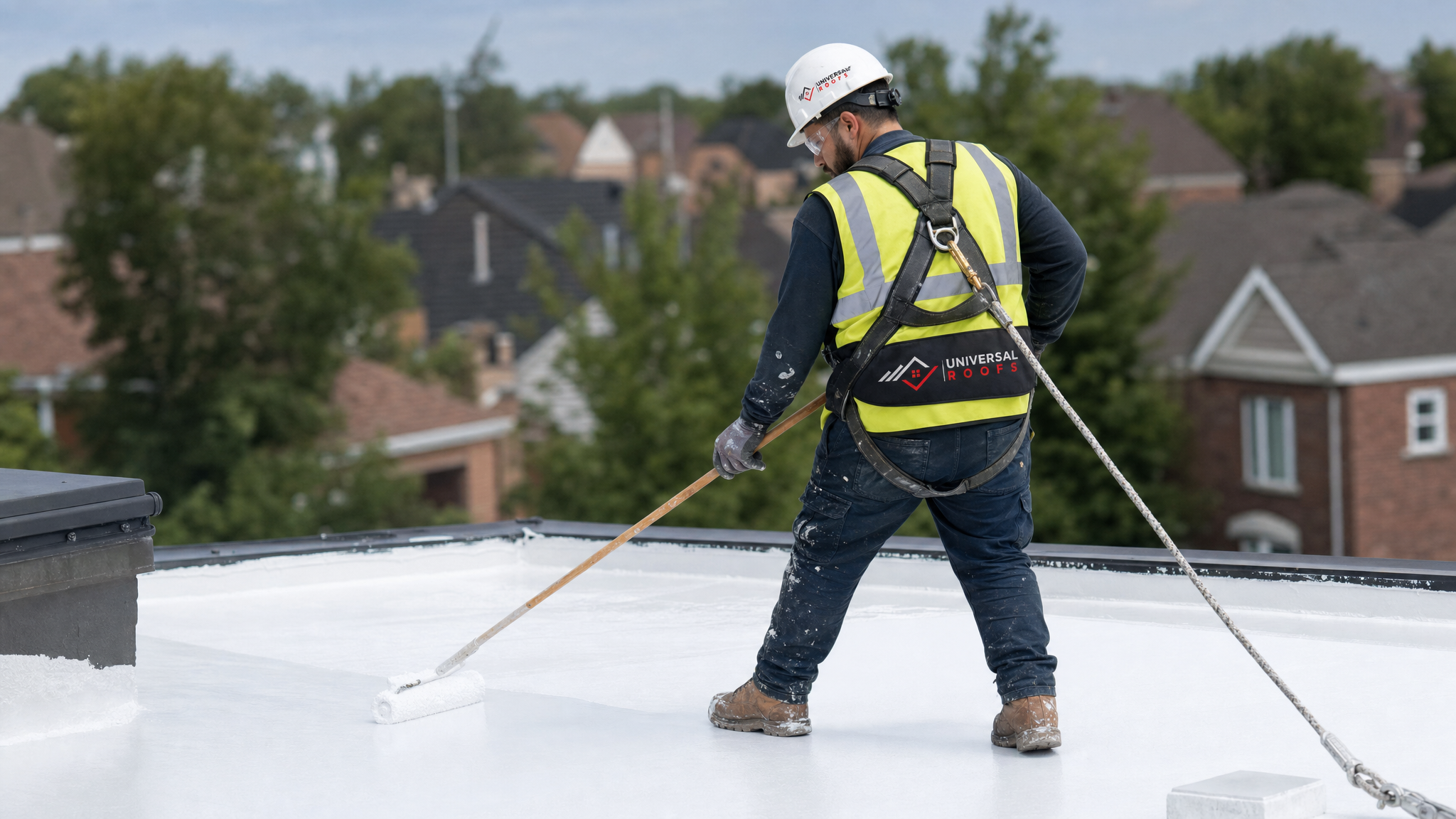
The roof surface must first be pressure washed and fully dried, since any trapped moisture under a coating will cause blistering or delamination within the first year or two. This step alone typically requires a full dry day, which is one reason spring and early fall — rather than the height of summer’s afternoon thunderstorm season — tend to be preferred scheduling windows, though summer application is still very common and entirely workable with proper weather monitoring.
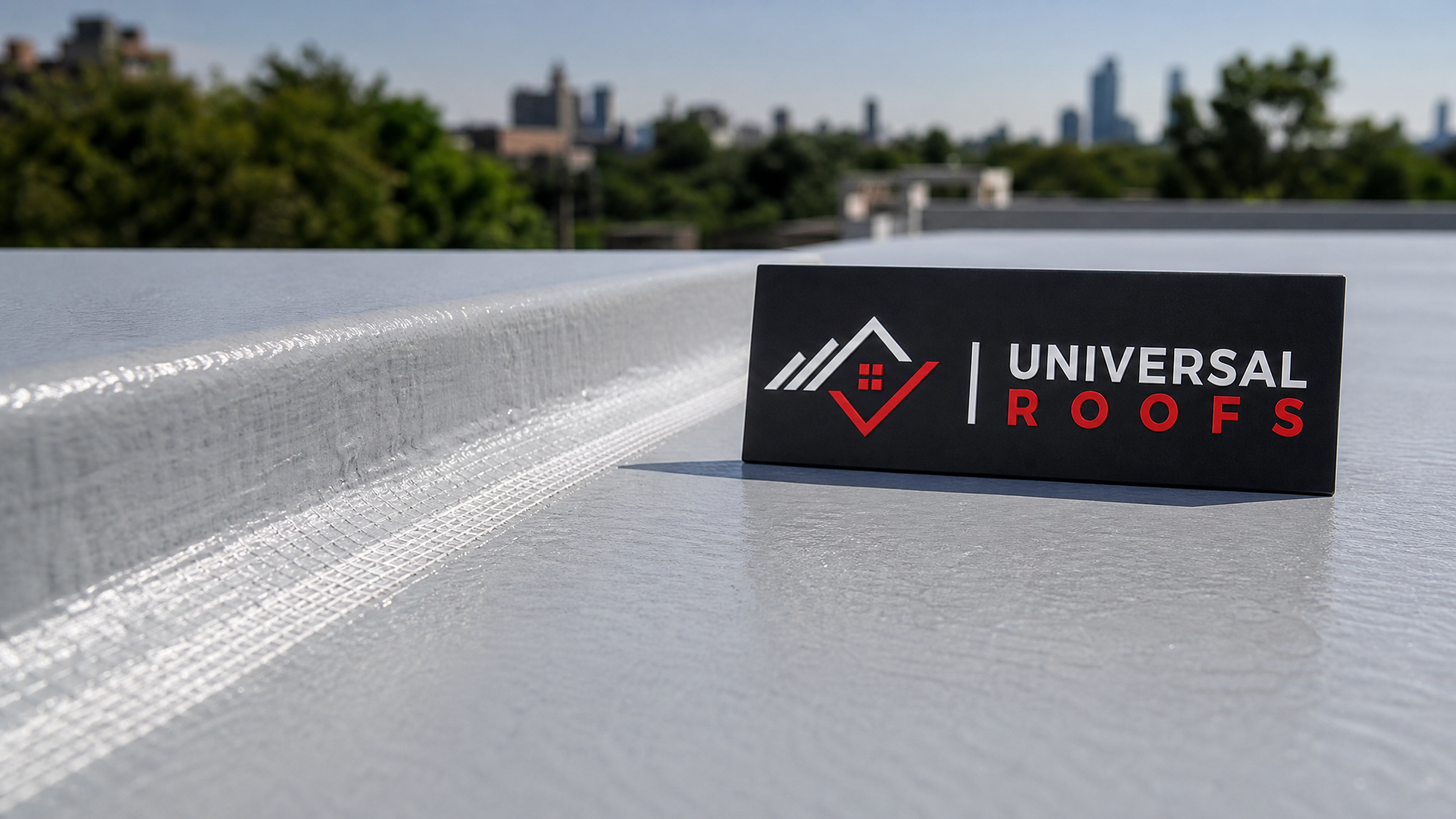
Next, any cracks, seams, or flashing details get treated with a reinforcing fabric or mastic before the base coat goes down. This detail work matters enormously for long-term performance; a coating is only as good as the substrate prep underneath it, and this is where inexperienced applicators most often cut corners.
The base coat is then applied by roller or spray, followed by a cure period (typically 4 to 24 hours depending on temperature and humidity), and finally the topcoat, which contains the bulk of the reflective and UV-protective pigment. Most residential coating projects in the GTA are completed in one to three days, weather permitting, making them significantly faster than a full roof replacement.
Ambient temperature matters more than most homeowners expect. Silicone and acrylic coatings both have minimum application temperatures, typically 10 degrees Celsius and rising, which is why coating work is scheduled from late spring through early fall in this climate. A coating applied too cold, or right before an overnight temperature drop below the dew point, risks poor cure and premature failure.
Maintenance and Recoating Schedule
Insulating roof coatings are not a one-time, forget-it-forever solution — like any exterior membrane, they benefit from periodic inspection and eventual recoating to maintain both their waterproofing and their reflective performance.
Reflectivity naturally degrades over time as the coating surface accumulates dirt, pollen, and airborne pollutants common in the GTA’s urban and suburban environments. Most manufacturers recommend a light cleaning every one to two years to restore reflectivity, particularly for homes near busy roads or under large deciduous trees that drop debris in the fall.
A full recoat — essentially a fresh topcoat applied over the existing base — is typically needed every 10 to 15 years depending on coating type, UV exposure, and foot traffic if the roof is walked on regularly for maintenance of rooftop equipment. This recoat is significantly cheaper than the original installation since it does not require the same substrate prep work, assuming the base coat and underlying roof remain in good condition.
Annual inspections, ideally performed each spring after winter’s freeze-thaw cycles, catch small issues like seam separation, minor punctures from fallen branches, or flashing wear before they become active leaks. This is especially important for homes in more exposed areas of York Region and Durham Region, where wind exposure tends to be higher than in the denser urban core.
| Maintenance Task | Frequency | Approximate Cost | Why It Matters |
|---|---|---|---|
| Surface cleaning (soft wash) | Every 1-2 years | $150 – $400 | Restores reflectivity, removes debris buildup |
| Seam and flashing inspection | Annually (spring) | $100 – $250 | Catches freeze-thaw damage early |
| Spot repair of punctures | As needed | $200 – $600 | Prevents water infiltration to deck |
| Full recoat/topcoat renewal | Every 10-15 years | $1.50 – $3.00/sq ft | Renews UV protection and reflectivity |
Common Mistakes That Reduce Energy Savings
Even a high-quality insulating roof coating can underperform if it is installed or maintained incorrectly. We frequently get called to inspect coated roofs across Toronto, Peel Region, and Halton Region that are not delivering the energy savings homeowners expected, and the causes tend to repeat.
Applying too thin a coat is the most common issue. Reflective and insulating performance depends on achieving the manufacturer’s specified dry film thickness, usually measured in mils. A coating applied too thin, often to save material cost, will look identical on day one but will fail to reflect adequately and will wear through within a few years rather than lasting a full service life.
Skipping substrate cleaning and repair before coating is another frequent shortcut. Any existing moisture trapped in the roof assembly, or unaddressed minor cracks, will compromise the coating’s adhesion and create failure points regardless of how good the coating product itself is.
Choosing the wrong coating chemistry for the roof type — most often an acrylic coating on a ponding-water flat roof, or skipping ceramic microsphere content on a metal roof — leads to premature degradation and underwhelming thermal performance, even though the installation itself may look correct at completion.
Finally, neglecting attic ventilation alongside a roof coating leaves savings on the table. A coating reduces how much heat the roof surface transfers downward, but if your attic lacks adequate intake and exhaust ventilation, trapped heat and humidity will continue to affect comfort and can shorten the coating’s own lifespan from the underside. Pairing a coating project with an attic ventilation review is one of the most overlooked ways to maximize the return on this investment.
Is a Roof Coating Right for Your Home?
Insulating roof coatings make the most financial and practical sense for roofs that are structurally sound but aging, with moderate wear, fading, or minor surface cracking, and roughly 5 to 15 years of remaining useful life if left uncoated. In that window, a coating can add a decade or more of protection while meaningfully cutting cooling costs, at a fraction of full replacement cost.
They make less sense for brand-new roofs, which do not need the added protection yet, or for roofs already showing signs of structural failure, active leaks, or deck damage, where a coating would simply mask a problem that needs proper repair first. An honest inspection is the only reliable way to know which category your roof falls into, which is why we always recommend a professional assessment before committing to a specific coating system.
Homeowners considering this upgrade should also weigh it against other energy-efficiency projects happening around the same time, such as attic insulation top-ups or skylight upgrades, since combining these projects often delivers better total energy performance than any single upgrade alone. You can read about other homeowners’ experience with our coating and roofing projects on our reviews page, and check common questions on our FAQ page before booking an assessment.
What are the best insulating roof coatings for energy savings?
How much can an insulating roof coating actually reduce energy bills?
Do insulating roof coatings work on all roof types?
How long do insulating roof coatings last in the Toronto climate?
Can I apply an insulating roof coating myself?
When is the best time of year to install an insulating roof coating in the GTA?
Need Help With 4 Best Insulating Roof?
If your roof is heat-soaking your top floor every summer and driving up your cooling bills, a professional assessment from Universal Roofs is the best next step to find out which insulating coating system fits your roof and budget.
Call us today at (416) 732-2421 or request a free inspection to get started.
Universal Roofs proudly serves Toronto, Mississauga, Brampton, Vaughan, Markham, Oakville and the GTA since 2005.