
A single unnoticed roof leak can quietly cost a Toronto homeowner thousands of dollars in structural repairs, mould remediation, and ruined insulation before anyone even spots a stain on the ceiling. With the freeze-thaw cycles, heavy spring rain, and summer thunderstorms that define our climate, GTA roofs take a beating every single year. The good news is that most roof leaks are entirely preventable with the right maintenance habits and a bit of seasonal vigilance.
In this guide, we break down the three most effective ways to prevent roof leaks and water damage before they start, along with the warning signs to watch for and the maintenance schedule that keeps a roof performing for its full expected lifespan. Whether you have asphalt shingles, a flat membrane roof, or a skylight cut into your roofline, the same core principles apply: keep water moving away from your home, keep your roofing materials sealed and intact, and catch small problems before they become expensive ones.
At Universal Roofs, we have been inspecting, repairing, and replacing roofs across the Greater Toronto Area since 2005, and the vast majority of the water damage claims we see trace back to the same handful of preventable causes. This article walks through exactly what those causes are and how to stop them.
Why Roof Leaks Happen in the First Place
Before you can prevent roof leaks and water damage, it helps to understand where water actually gets in. A roof is not a single solid barrier — it is a system of overlapping layers, flashing, fasteners, and sealants that all have to work together. Water finds the weakest link in that system, and in Toronto, three forces conspire against that system every year.
First, freeze-thaw cycling. Water that gets trapped under shingles or in cracked caulking freezes overnight, expands, and widens the gap. By spring, a hairline crack has become a real opening. Second, UV exposure and heat cycling from our humid summers dry out and crack sealants, rubber boots around vents, and asphalt shingle tabs. Third, wind-driven rain during summer storms pushes water sideways and upward under shingle edges and around flashing that would otherwise shed water just fine in a straight-down rain.
Add in the sheer age of housing stock across Toronto, Mississauga, Brampton, Vaughan, Markham, and Oakville — many homes still have roofs installed 15 to 20 years ago — and you have a recipe for slow, hidden leaks that often go unnoticed until drywall staining or attic mould shows up. The three tips below target the exact mechanisms described here, in order of impact.
Tip 1: Keep Water Moving — Gutters, Downspouts, and Roof Slope
The single most common cause of roof and fascia water damage we encounter is not a hole in the shingles at all — it is water that has nowhere to go. When gutters clog with leaves, shingle grit, and debris, water backs up under the shingle edge, saturates the fascia board, and eventually finds its way into the attic or soffit.
Clean your gutters at minimum twice a year: once in late spring after the trees have finished flowering and dropping seed pods, and once in late autumn after leaf fall is complete. In heavily treed neighbourhoods across the Halton Region and Durham Region, a mid-summer check is worth the extra half hour, especially after a windstorm. While you are up there (or, better, while a professional is up there), check for these specific warning signs:
- Water marks or streaking on the fascia board below the gutter line
- Gutters pulling away from the roofline or sagging between hangers
- Standing water in the gutter trough more than 24 hours after rain
- Granules from asphalt shingles accumulating in the gutter (a sign of shingle wear, not just normal debris)
Downspouts matter just as much as the gutters themselves. A downspout that dumps water directly against the foundation, rather than extending at least 1.8 metres away from the house, sends water right back up against your basement walls and can undermine the soil supporting your foundation. Extensions are inexpensive and take fifteen minutes to install, yet we still see foundation water damage every summer that traces back to a missing extension.
Finally, check your roof’s actual slope and drainage pattern, particularly if you have a low-slope or flat section over a porch, garage, or addition. Flat and low-slope roofs rely on properly built-in drainage — crickets, tapered insulation, and correctly placed drains — to avoid ponding water. If you notice standing water on a flat roof more than 48 hours after rainfall, that is not cosmetic; it is actively shortening the membrane’s lifespan and increasing leak risk. Our flat roofing team frequently corrects drainage issues on additions and garages that were never sloped correctly during construction.
| Gutter & Drainage Issue | What Causes It | Water Damage Risk | Recommended Fix |
|---|---|---|---|
| Clogged gutter trough | Leaves, seed pods, shingle granules | High — fascia rot, ice damming in winter | Clean twice yearly; consider gutter guards |
| Downspout too short | Missing or crushed extension | High — foundation seepage, basement leaks | Install 1.8m+ extension sloped away from home |
| Sagging gutter run | Worn or spaced-out hangers | Medium — overflow onto fascia and siding | Re-hang with modern hidden hangers |
| Ponding on flat roof | Inadequate slope or blocked drain | High — membrane failure, interior leaks | Add tapered insulation or additional drain |
| Undersized gutters | Original builder-grade 4-inch gutter | Medium — overflow during heavy summer storms | Upgrade to 5- or 6-inch gutter profile |
Tip 2: Seal and Inspect Every Roof Penetration
Every place where something passes through your roof — a plumbing vent stack, a chimney, a skylight, an exhaust fan, or a satellite mount — is a manufactured weak point. Flashing and sealant are what keep these penetrations watertight, and both degrade faster than the shingles around them because they are exposed to more movement, more direct sun, and more thermal expansion and contraction.
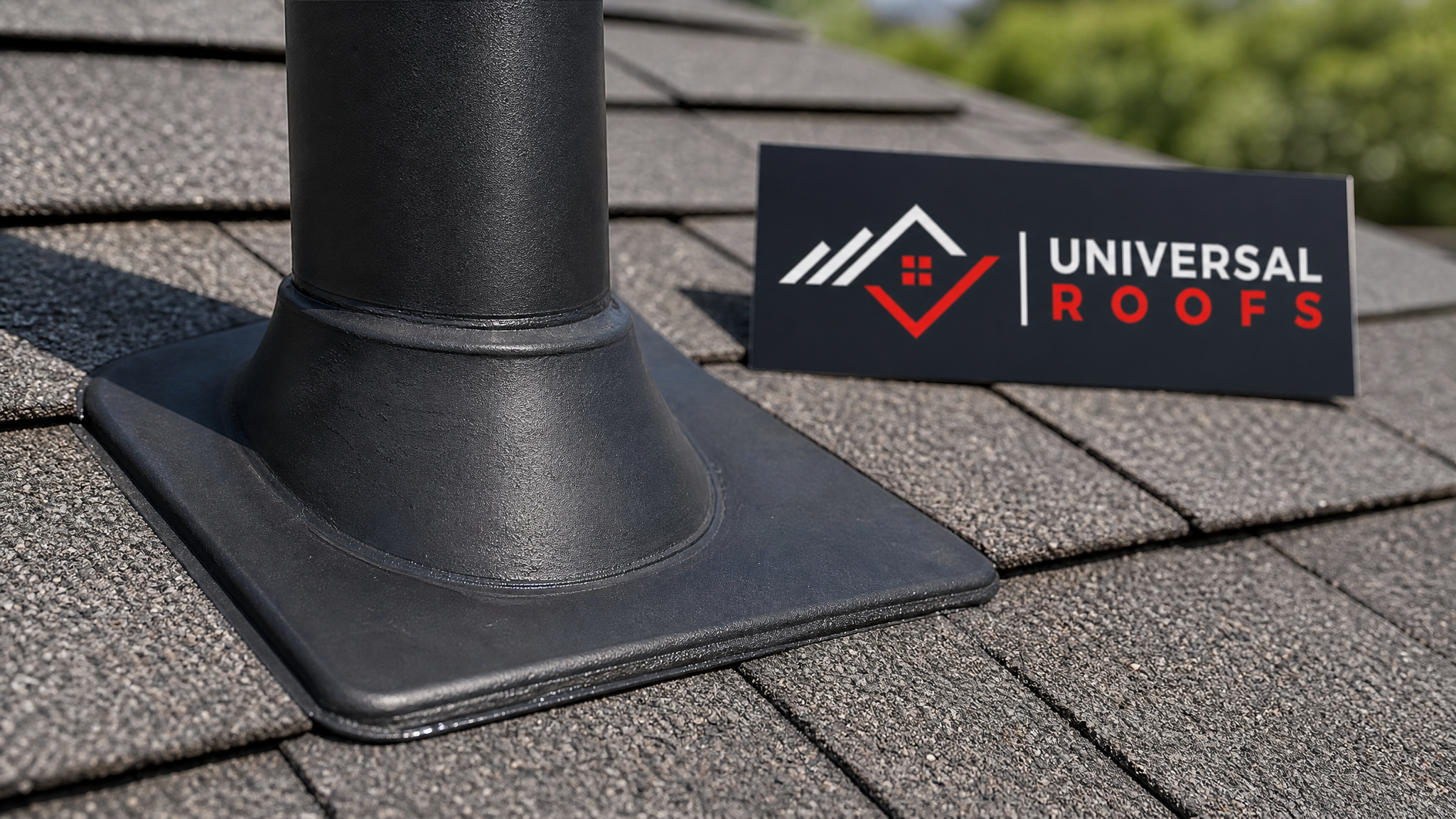
Rubber vent boots are usually the first thing to fail. Standard rubber boots crack and split within 8 to 12 years, well before an asphalt shingle roof reaches the end of its life, which means a 15-year-old roof with original vent boots is very likely leaking right now even if you have not noticed a stain yet. Walk your property this summer and look up at each vent pipe from ground level with binoculars; a cracked or curling rubber collar is visible even from the ground on a clear day.
Chimney flashing deserves particular attention in Toronto because masonry chimneys settle slightly over decades, which can separate the counter-flashing from the brick and open a gap that funnels water directly down the chimney chase and into the attic. If you notice water stains on an interior wall near a chimney, this is almost always the source, not the chimney cap.
Skylights are another common penetration point, but a properly installed and flashed skylight should not leak — most skylight “leaks” homeowners report are actually condensation dripping off the interior glass on cold mornings, not water intrusion. That said, older skylight units with degraded seals or improperly stepped flashing absolutely can leak. If your skylight is more than 15 years old or you see staining on the drywall around its frame, it is worth having it assessed by our skylights team, and in many cases a skylight replacement with a modern, better-sealed unit is more cost-effective long term than repeated resealing.
Satellite dishes and antenna mounts installed by third-party installers are a frequent culprit we find during inspections — many were bolted directly through shingles without proper flashing or sealant, leaving a permanent open wound in the roof. If you no longer use a dish or mount, have it professionally removed and the penetration properly flashed rather than just caulked over.

Tip 3: Schedule Two Professional Inspections Per Year
Homeowners can catch a lot with a pair of binoculars from the driveway, but a trained eye on the actual roof surface catches problems weeks or months before they show up as an interior stain. We recommend two inspections per year for every roof in the GTA: one in late spring, after winter’s freeze-thaw damage has had a chance to reveal itself, and one in early autumn, before winter weather arrives.
A proper professional inspection covers far more than a quick visual scan. It should include a hands-on check of shingle adhesion and granule loss, a flashing inspection at every penetration and roof-to-wall transition, a look inside the attic for daylight gaps, water staining, or insufficient ventilation, and a check of the attic insulation for moisture damage that often precedes a visible ceiling stain by months. Poor attic ventilation is itself a leading cause of what looks like a roof leak — trapped moisture condenses on the underside of the roof deck and drips exactly like a leak would, even though the shingles are perfectly intact.
If an inspection turns up isolated damage — a handful of lifted shingles, one cracked boot, a small area of separated flashing — a straightforward roof repair is usually all that is needed and can often be completed same-day. If the inspection instead reveals widespread granule loss, multiple failure points, or a roof that is simply past its rated lifespan, it is more cost-effective to plan a full roof replacement on your own schedule rather than waiting for an emergency call during the next major storm. You can read what past clients across the region have said about this process on our reviews page.
| Inspection Timing | Primary Focus | Typical Findings | Follow-Up Action |
|---|---|---|---|
| Late spring (May–June) | Winter freeze-thaw damage | Lifted shingle tabs, cracked sealant, minor granule loss | Spot repairs before summer storm season |
| Mid-summer (July–August) | Storm and wind damage check | Displaced shingles, debris on roof, gutter overflow | Clear debris; repair wind-lifted sections |
| Early autumn (Sept–Oct) | Pre-winter readiness | Vent boot cracking, flashing gaps, attic moisture | Seal penetrations before first frost |
| Post-storm (any season) | Impact and wind damage | Missing shingles, dented flashing, hail bruising | Emergency repair within 48 hours |
| Pre-listing (home sale) | Full roof condition report | Age-related wear, deferred maintenance items | Repair or disclose before closing |
What Water Damage Actually Looks Like Once It Starts
Because roof leaks rarely announce themselves with a dramatic drip on day one, it pays to know the early, subtle signs so you can act while the fix is still a simple repair rather than a full remediation project.
Ceiling stains are the most obvious sign, but by the time a yellow-brown ring appears on drywall, water has usually been tracking through the structure for weeks. Musty odours in an upper-floor closet or attic access point often show up before any visible staining, because trapped moisture promotes mould growth in insulation before it soaks through to drywall. Peeling paint or bubbling on an interior wall near the roofline is another early indicator, as is a soft or spongy feeling underfoot in an attic space, which signals that the roof decking itself has absorbed water and begun to weaken.
Outside, watch for shingles that look darker in patches (a sign of granule loss exposing the asphalt beneath), moss or algae streaking on north-facing slopes, and daylight visible through the attic when the access hatch is opened during the day. Any of these signs warrant a prompt inspection rather than a wait-and-see approach, particularly heading into the fall and winter months when a small leak becomes a much bigger problem under snow load and ice.
Regional Considerations Across the GTA
Roof maintenance needs shift slightly depending on where you live in the region. Homes closer to Lake Ontario in the Toronto core often deal with more wind-driven rain off the lake, which puts extra stress on flashing and shingle edges facing south and east. Newer subdivisions across Peel Region and York Region tend to have younger roofs, but builder-grade materials and minimal ventilation upgrades mean these roofs can still show premature wear by year 12 to 15. Properties in Halton Region, with more mature tree canopy in established neighbourhoods, see higher gutter debris loads and benefit from more frequent cleaning. Homes across Durham Region often have larger, more complex rooflines with multiple valleys and dormers, which multiply the number of flashing intersections that need regular inspection.
Regardless of exact location, the underlying physics are the same everywhere in the GTA: freeze-thaw cycles stress materials, summer storms test drainage, and UV exposure ages sealants. A roof maintained with these regional realities in mind will consistently outlast one that is only addressed reactively.
A Simple Seasonal Maintenance Checklist
Consistency matters more than intensity when it comes to preventing roof leaks. The table below lays out a practical, low-effort maintenance rhythm that covers the bulk of preventable water damage causes discussed above.
| Season | Task | Time Required | Why It Matters |
|---|---|---|---|
| Spring | Clean gutters, inspect for winter damage | 1–2 hours | Catches freeze-thaw cracking before storm season |
| Summer | Check vent boots, flashing, and downspout extensions | 30–60 minutes | UV and heat accelerate sealant failure |
| Autumn | Clear leaves, re-inspect flashing, book professional inspection | 1–2 hours | Prepares roof for snow and ice load |
| Winter | Monitor for ice damming and icicle formation | 10–15 minutes weekly | Ice damming forces water under shingles |
| Any season | Check attic for moisture, odour, or daylight gaps | 15 minutes | Attic is often the first place a leak becomes visible |
When to Repair vs. When to Replace
One of the most common questions we field from homeowners across the GTA is whether an active leak means the whole roof needs to go, or whether a targeted repair will hold. The honest answer depends on the age of the roof, the extent of the damage, and how many separate problem areas an inspection turns up.
As a rule of thumb, if your roof is under 12 years old, the damage is isolated to one or two spots, and the surrounding shingles still show good granule coverage and flexibility, a repair is almost always the right call — it is faster, cheaper, and defers the larger expense of replacement. If your roof is past 18 to 20 years old, if an inspection finds several unrelated failure points, or if you are already on your second or third repair within a couple of years, that pattern usually means the underlying materials have simply reached the end of their service life, and a planned replacement will save money over continuing to chase individual leaks. Our team can walk you through both options honestly during an on-site assessment, without pushing a replacement when a repair will genuinely do the job.
Frequently Asked Questions
What are the best ways to prevent roof leaks and water damage?
How often should I check my roof to prevent leaks and water damage?
Can clogged gutters really cause roof water damage?
What is the most common roof penetration that causes leaks?
How do I know if my roof leak needs a repair or a full replacement?
Does poor attic ventilation contribute to roof leaks and water damage?
Need Help With Prevent Roof Leaks and?
Preventing roof leaks and water damage does not require a major renovation — it requires consistency, an eye for early warning signs, and a trusted team to catch what a homeowner might miss from the ground. That is exactly what Universal Roofs has been doing for GTA homeowners for two decades.
Call us today at (416) 732-2421 or request a free inspection to get started.
Universal Roofs proudly serves Toronto, Mississauga, Brampton, Vaughan, Markham, Oakville and the GTA since 2005.