
A slow ceiling stain, a musty smell in the attic, or a damp patch on a bedroom wall rarely announces itself as an emergency. That is exactly why it becomes one. Roof leaks in the Toronto area almost never show up where the water actually enters — moisture travels along rafters, insulation, and vapour barriers before it finally reveals itself indoors, often metres from the true source. This is why choosing our expert leak detection services matters more than most homeowners realize until they have already paid for a “repair” that did not fix anything.
At Universal Roofs, we have been tracing and solving roof leaks across the Greater Toronto Area since 2005. In that time we have learned that leak detection is a genuinely different skill set from leak repair. A contractor who is excellent at replacing shingles can still misdiagnose a leak, patch the wrong spot, and send a homeowner into another wet winter. Proper detection combines a methodical roof inspection, knowledge of how water behaves inside an assembly, and the patience to test rather than guess.
This guide explains why choosing our expert leak detection services produces better outcomes than a generic patch-and-hope approach, walks through how professional leak tracing actually works, and gives GTA homeowners a practical framework for understanding what is happening above their ceiling.
Why Choose Our Expert Leak Detection Services Over a DIY or Generic Approach
Most roof leaks are not simple. Water is lazy in the sense that it always finds the path of least resistance, but that path is rarely a straight line down from the visible stain. A drip you see on a second-floor ceiling might originate at a flashing failure near the chimney, travel along a truss, follow a nail shank, and only then drop onto the drywall — sometimes three or four metres from where it entered the building envelope. Guessing at the source based on the interior stain alone is the single most common mistake we see when we are called in to fix someone else’s failed patch job.
Choosing our expert leak detection services means you get a systematic process rather than a visual guess. Our crews are trained to inspect the entire roof assembly — shingles or membrane, flashing, valleys, penetrations, ventilation, and the attic itself — before touching a caulking gun. We look at the roofing material, the age of the roof, the pitch, and the specific weather patterns the property has been exposed to. A leak that shows up after a windstorm points somewhere different than a leak that only appears during spring melt.
This matters financially as much as it matters structurally. A misdiagnosed leak leads to repeat callbacks, repeated drywall repairs, and in the worst cases, hidden mould growth inside wall cavities. Homeowners who choose our expert leak detection services typically spend less over the life of the problem because the first fix is the right fix.
How Professional Leak Detection Actually Works
Leak detection is part science and part fieldcraft. Here is the process our technicians follow on a typical residential inspection in the GTA.
1. Interior assessment first. We start inside, mapping every stain, bubble in paint, sagging drywall, or musty odour. We note the exact location relative to interior framing, not just “the bedroom ceiling,” because framing members change how water travels.
2. Attic inspection. If the attic is accessible, this is often where the real evidence lives. Water staining on the underside of the roof deck, rusted nail tips, compressed or discoloured insulation, and mould on sheathing all point toward the entry location far more reliably than the ceiling stain does. We also check attic ventilation and insulation at this stage, since poor ventilation causes condensation that mimics a roof leak but has nothing to do with the shingles at all.
3. Exterior roof inspection. We physically walk the roof (weather and pitch permitting) checking flashing around chimneys, skylights, vent stacks, and valleys — the areas responsible for the vast majority of leaks. We also check shingle condition, granule loss, nail pops, and any sealant that has cracked or shrunk.
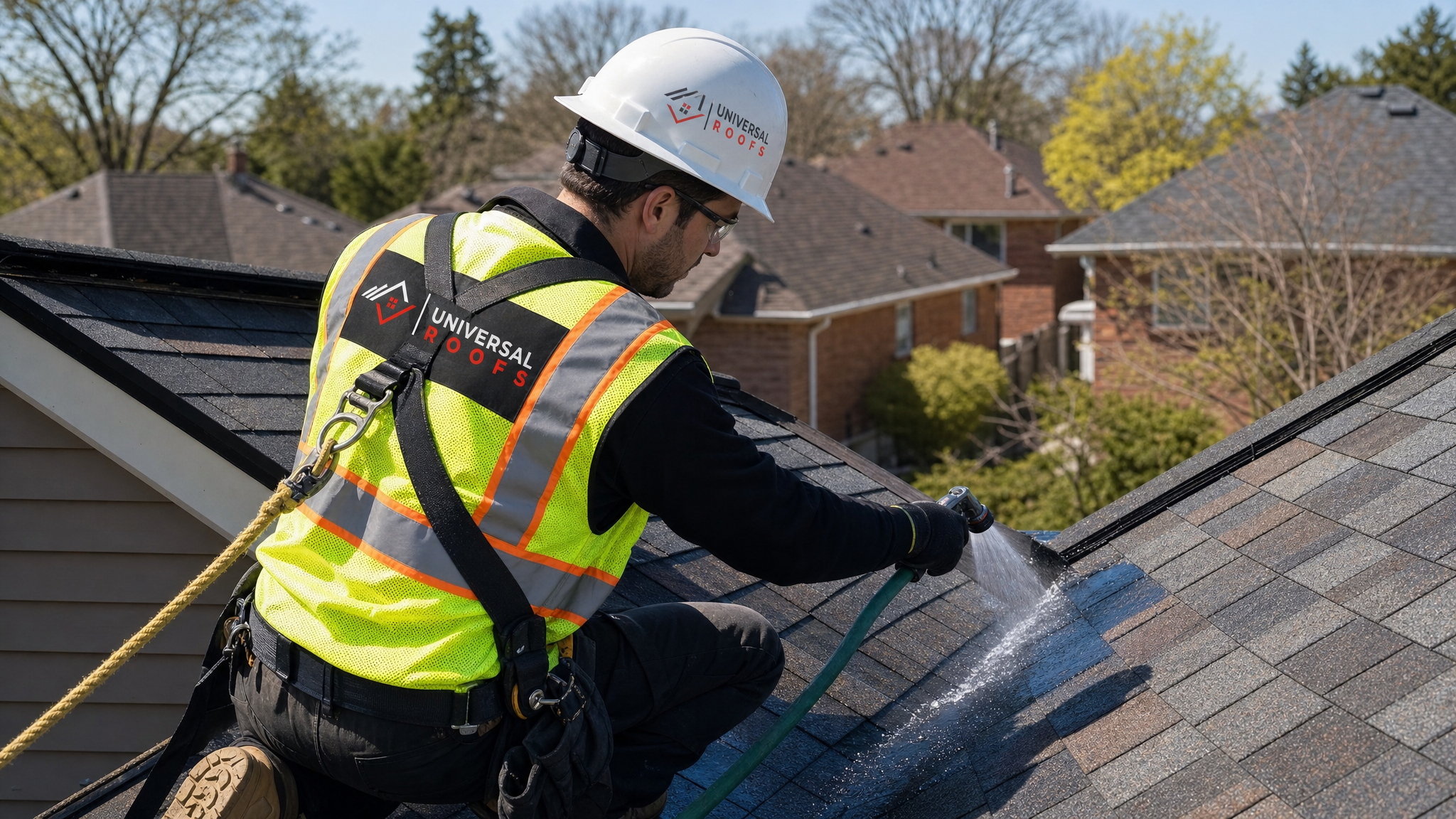
4. Controlled water testing. When the source is not visually obvious, we simulate rain with a garden hose in a deliberate, sectioned sequence — starting low on the roof and working upward — while a second technician watches the interior. This isolates the exact course, row, or penetration responsible, rather than soaking the whole roof and guessing which of five suspect areas actually failed.
5. Documentation and a clear repair plan. Once the source is confirmed, we document it with photos and explain the fix in plain language, including whether it is a targeted roof repair or a sign that a larger section needs attention.
Common Leak Sources We Find Across GTA Homes
After two decades of service calls across Toronto and the surrounding regions, certain leak sources come up again and again. Understanding them helps homeowners describe symptoms accurately when they call for an inspection.
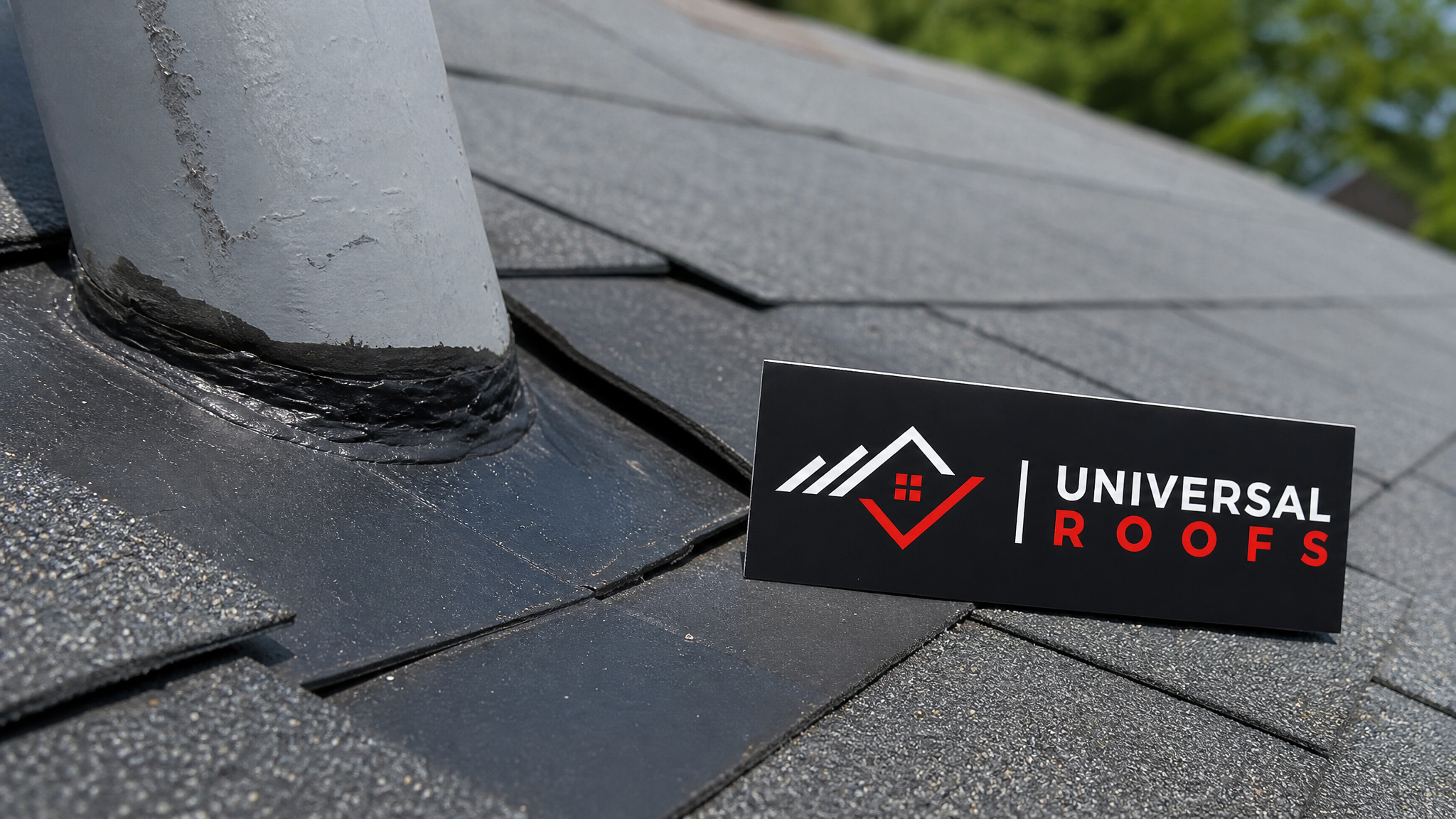
Flashing failures are the most frequent cause we encounter, particularly around chimneys, skylights, and where a roof plane meets a wall. Flashing is metal, and metal expands and contracts with temperature swings — exactly the kind of freeze-thaw cycling Toronto gets every winter and shoulder season. Over years, the sealant around flashing dries out and separates, opening a gap that only leaks during wind-driven rain, which is why these leaks are often intermittent and confusing.
Valley deterioration is next. Valleys carry more water volume than any other part of the roof, and if the valley material has worn thin or was installed with insufficient underlayment, water can work its way under the shingles during heavy summer storms.
Skylight seals are a common culprit, especially on older units. If you have a skylight showing condensation or staining around its frame, it is worth having it assessed alongside the roof — sometimes the fix is resealing, and sometimes it means the unit has reached the point where skylight replacement is more cost-effective than repeated repairs. We also handle straightforward skylight installation and service for homeowners looking to add natural light without adding a future leak point.
Ice damming shows up every winter in the GTA when heat escapes into the attic, melts snow on the upper roof, and refreezes at the cold eaves, forcing water back up under the shingles. This is a ventilation and insulation issue as much as a roofing issue, which is another reason attic inspection matters during leak detection.
Membrane punctures and seam failures affect low-slope and flat roof sections, common on additions, garages, and some bungalow designs. These require different detection techniques than sloped shingle roofs, which is covered in the next section.
| Leak Source | Typical Warning Sign | Season Most Common | Detection Method |
|---|---|---|---|
| Flashing failure (chimney/wall) | Intermittent stain during wind-driven rain | Fall and spring storms | Visual inspection + water test |
| Valley deterioration | Stain appearing after heavy rain only | Summer thunderstorms | Visual inspection + attic check |
| Skylight seal failure | Condensation or staining around frame | Winter and spring | Frame inspection + interior mapping |
| Ice damming | Stain appearing only after snow melt | Winter (Jan-Mar) | Attic inspection + ventilation check |
| Membrane seam failure (flat roof) | Ceiling stain on additions or garages | Year-round, worse in summer heat cycles | Seam probing + water test |
| Nail pop or fastener failure | Small, slow-growing circular stain | Year-round | Attic inspection with flashlight |
Sloped Roofs vs. Flat Roofs: Different Leaks, Different Detection Methods
Not every leak behaves the same way, and treating a flat roof like a shingle roof (or vice versa) is a common reason homeowners get an incomplete diagnosis from less experienced contractors.
On a sloped shingle roof, gravity does most of the work, and water generally enters at a specific point — a flashing gap, a cracked shingle, a valley — then travels downward along the roof deck or rafters. Detection focuses on the highest point of staining in the attic and working upward from there toward the roof’s exterior surface.
On a flat or low-slope roof, water can pool rather than run off immediately, which means it has more time to find its way through any weak point in the membrane — a seam, a scupper, a penetration for plumbing or HVAC. Because there is little to no slope, the entry point is often directly above or very near the interior sign of the leak, which sounds simpler but is complicated by the fact that flat roof membranes can also fail at multiple points simultaneously after years of ponding water and UV exposure. Detection on flat roofs often includes checking drain function, membrane seam integrity, and flashing at every roof penetration, not just the obvious suspects.
| Roof Type | How Water Typically Travels | Primary Detection Focus | Common Repair Timeline |
|---|---|---|---|
| Asphalt shingle (sloped) | Downward along deck/rafters from entry point | Flashing, valleys, shingle condition | 1 day for targeted repair |
| Flat/low-slope membrane | Minimal lateral travel; pools near entry | Seams, drains, penetrations | 1-2 days depending on membrane size |
| Metal roofing | Along seams and fastener lines | Fastener backing, seam sealant | 1 day for spot repair |
| Cedar shake | Downward, but can wick sideways through wood | Individual shake condition, underlayment | 1-2 days depending on extent |
Signs You Need Professional Leak Detection Now
Homeowners often wait too long because early leak signs seem minor. Here is what should prompt a call rather than a wait-and-see approach.
- A ceiling or wall stain that grows, even slowly, over several weeks
- A musty smell in an upstairs room or the attic that was not there before
- Visible daylight through the attic roof deck when the attic access is opened
- Granules collecting in eavestroughs, which signals shingle wear that can precede leaks
- Any staining that appears specifically after a wind-driven rain or after a snow melt
- A skylight with condensation or a discoloured frame edge
None of these signs tell you exactly where the water is entering — that is the entire point of proper detection. But they do tell you it is time to have a professional look before drywall, insulation, or framing sustains further damage.
What Happens After the Leak Is Found
Detection is only useful if it leads to the right fix. Once our technicians confirm the source, we present homeowners with clear options based on the roof’s overall condition, not just the immediate leak.
If the roof is generally sound and the leak is isolated to a flashing detail, a valley section, or a single damaged shingle run, a targeted roof repair is usually the right call — fast, cost-effective, and durable when done correctly. If the inspection reveals the leak is one symptom of broader wear (multiple leak-prone areas, shingles well past their expected lifespan, widespread granule loss), we will say so directly, and a full roof replacement may be the more sensible long-term investment rather than repeatedly patching a roof that is failing in several places at once.
We never recommend replacement when a repair will genuinely solve the problem, and we never recommend a patch when the underlying roof condition makes a repeat leak likely within a season or two. That judgment call is exactly why choosing our expert leak detection services, rather than the cheapest quote, protects your home and your budget over time.
What Accurate Leak Detection Costs — and Why Skipping It Costs More
Some GTA roofing companies will skip formal detection and simply reseal the area a homeowner points to. It is faster to quote and faster to bill. The problem is that if the reseal misses the actual entry point, the leak returns, usually during the next significant rain or thaw, and the homeowner has now paid twice for one fix. Below is a general comparison of approaches and their typical costs in the GTA market as of 2026 (exact pricing depends on roof access, pitch, and material).
| Approach | Typical Cost Range (CAD) | Diagnostic Accuracy | Risk of Repeat Leak |
|---|---|---|---|
| Quick reseal without inspection | $150 – $350 | Low – based on guesswork | High |
| Visual-only roof inspection | $150 – $300 | Moderate – catches obvious issues | Moderate |
| Full inspection + attic assessment | $250 – $450 | High – cross-references interior and exterior evidence | Low |
| Full inspection + controlled water test | $350 – $600 | Very high – confirms exact entry point | Very low |
Many roofing companies apply the inspection fee toward the cost of the repair if you proceed with the work, which is our standard practice as well. The upfront cost of a proper diagnosis is almost always smaller than the cost of a second, third, or fourth attempt at fixing a leak that was never correctly located in the first place.
Why Local GTA Experience Matters for Leak Detection
Roofs in the Greater Toronto Area face a specific combination of stresses: harsh freeze-thaw cycles through the winter, heavy spring melt, humid summer thunderstorms, and increasingly frequent high-wind events. A leak detection approach that works in a milder, drier climate does not automatically transfer here. Ice damming, for instance, is largely a northern-climate problem tied directly to attic heat loss and eavestrough function, and it requires specific attention that a generic national franchise checklist may not emphasize.
Because we have served Toronto, the Peel Region, York Region, Halton Region, and Durham Region since 2005, our technicians have seen how neighbourhood-specific factors — tree canopy, prevailing wind direction, older housing stock with original flashing details, and municipal building code variations — affect where and how leaks develop. That regional pattern recognition speeds up detection considerably compared to a first-time visit from an out-of-area contractor.
We also factor in local building code requirements when recommending a fix, ensuring that any flashing, underlayment, or membrane work we perform meets current Ontario Building Code standards for the applicable roof assembly.
Troubleshooting Guide: Matching Your Symptom to a Likely Cause
While only an on-site inspection can confirm a diagnosis, this table gives homeowners a starting point for describing symptoms accurately when booking an assessment.
| Symptom | Likely Cause | Urgency | Recommended First Step |
|---|---|---|---|
| Stain appears only after wind-driven rain | Flashing gap or lifted shingle edge | Moderate – schedule within 2 weeks | Book a full roof inspection |
| Stain appears after snow melt, not during rain | Ice damming from attic heat loss | Moderate – address before next winter | Request attic ventilation assessment |
| Constant slow drip regardless of weather | Plumbing vent or condensation issue, not roofing | High – can indicate hidden moisture buildup | Request combined attic and interior inspection |
| Staining around a skylight frame | Failed skylight seal or aging unit | Moderate to high depending on age | Request skylight-specific assessment |
| Sagging ceiling section | Prolonged undetected leak with saturated insulation | Urgent – schedule immediately | Call for emergency assessment |
How to Prepare for a Leak Detection Visit
A little preparation on the homeowner’s side makes the inspection faster and more accurate. Before our technicians arrive, it helps to note the exact room and location of any interior staining, whether the stain appears during rain, after rain, or after snow melt, and whether the smell or stain has changed size recently. If you can safely access the attic, a photo of any visible staining on the underside of the roof deck is useful, though this is never required — our team will do a full attic inspection as part of the visit.
It is also worth mentioning any recent roof work, including work done by a previous contractor, since a leak that appears shortly after other roofing work often points to that work rather than an unrelated failure. Being upfront about this history helps us focus the inspection and avoid unnecessary probing of areas that are already known to be sound.
You can review what past clients have said about our inspection and repair process on our reviews page, and browse common questions on our FAQ page before booking. If you want more background on our team and history, our about page covers how we have grown since 2005.
Why choose our expert leak detection services instead of a general handyman or a quick patch?
How long does a professional leak detection inspection take?
Can leak detection be done without going into the attic?
Does Universal Roofs offer leak detection for flat roofs as well as shingle roofs?
What if the leak turns out to be a skylight rather than the roof itself?
Why does choosing our expert leak detection services save money over time?
Need Help With Why Choose Our Expert?
A roof leak rarely gets better on its own, and the longer the true source goes undetected, the more damage it can cause to insulation, framing, and drywall. Universal Roofs has spent nearly two decades tracing and solving leaks across the GTA using a methodical, evidence-based process rather than guesswork.
Call us today at (416) 732-2421 or request a free inspection to get started.
Universal Roofs proudly serves Toronto, Mississauga, Brampton, Vaughan, Markham, Oakville and the GTA since 2005.