
A roof leak rarely announces itself politely. It shows up as a faint brown ring on a bedroom ceiling, a musty smell in the attic, or a drip during a July thunderstorm that seems to come from nowhere. By the time water is visible indoors, it has often already travelled metres from the actual entry point, soaking insulation and framing along the way. That is why homeowners searching for trusted leak detection experts for roof repair need more than a ladder and a flashlight — they need a systematic diagnostic process backed by real roofing experience.
At Universal Roofs, we have spent close to two decades tracing leaks across Toronto and the wider GTA, from century-old brick homes in the west end to new-build subdivisions in Vaughan and Markham. Our summers bring intense, fast-moving thunderstorms, and our winters bring ice damming and freeze-thaw cycles — both are relentless on roofing systems, and both create leak patterns that are notoriously easy to misdiagnose. This guide walks through exactly how professional leak detection works, what separates a reliable roof repair contractor from a guess-and-patch outfit, and what you can expect in terms of cost, timeline, and long-term outcomes.
Why Roof Leaks Are So Difficult to Pinpoint
The single biggest misconception homeowners have about roof leaks is that water enters directly above where it appears indoors. In reality, water is lazy and follows the path of least resistance along rafters, sheathing, and insulation before finally dripping down at a low point — which might be a metre or more from the actual breach. This is the core reason DIY leak-chasing so often fails, and why trusted leak detection experts for roof repair rely on a structured process rather than intuition alone.
Several factors make GTA roofs particularly tricky to diagnose:
- Freeze-thaw cycling. Toronto winters regularly swing above and below freezing multiple times per week, which expands and contracts flashing, shingles, and sealants until tiny cracks form.
- Ice damming. Heat escaping from a poorly insulated attic melts snow on the upper roof, which refreezes at the cold eaves, forcing meltwater back under the shingles.
- Summer downpours. Intense, short-duration storms push huge volumes of water at once, exposing weaknesses that a slow drizzle never would.
- Roof penetrations. Every plumbing vent, chimney, skylight, and satellite mount is a potential entry point, and older homes often have a dozen or more.
- Multiple roof planes. Additions, dormers, and complex rooflines create valleys and step-flashing details that are common failure points but hard to inspect from the ground.
A homeowner who patches the ceiling stain without addressing the true source is signing up for a repeat performance the next time it rains hard. This is precisely why proper diagnosis has to come before any roof repair work begins.
The 7-Step Professional Leak Detection Process
When our technicians arrive at a property, we do not start hammering nails. We follow a repeatable diagnostic sequence designed to find the actual cause, not just the symptom.
- Interior inspection first. We examine ceilings, attic sheathing, and insulation for staining patterns, mould, and moisture trails, which tell us the likely direction water is travelling.
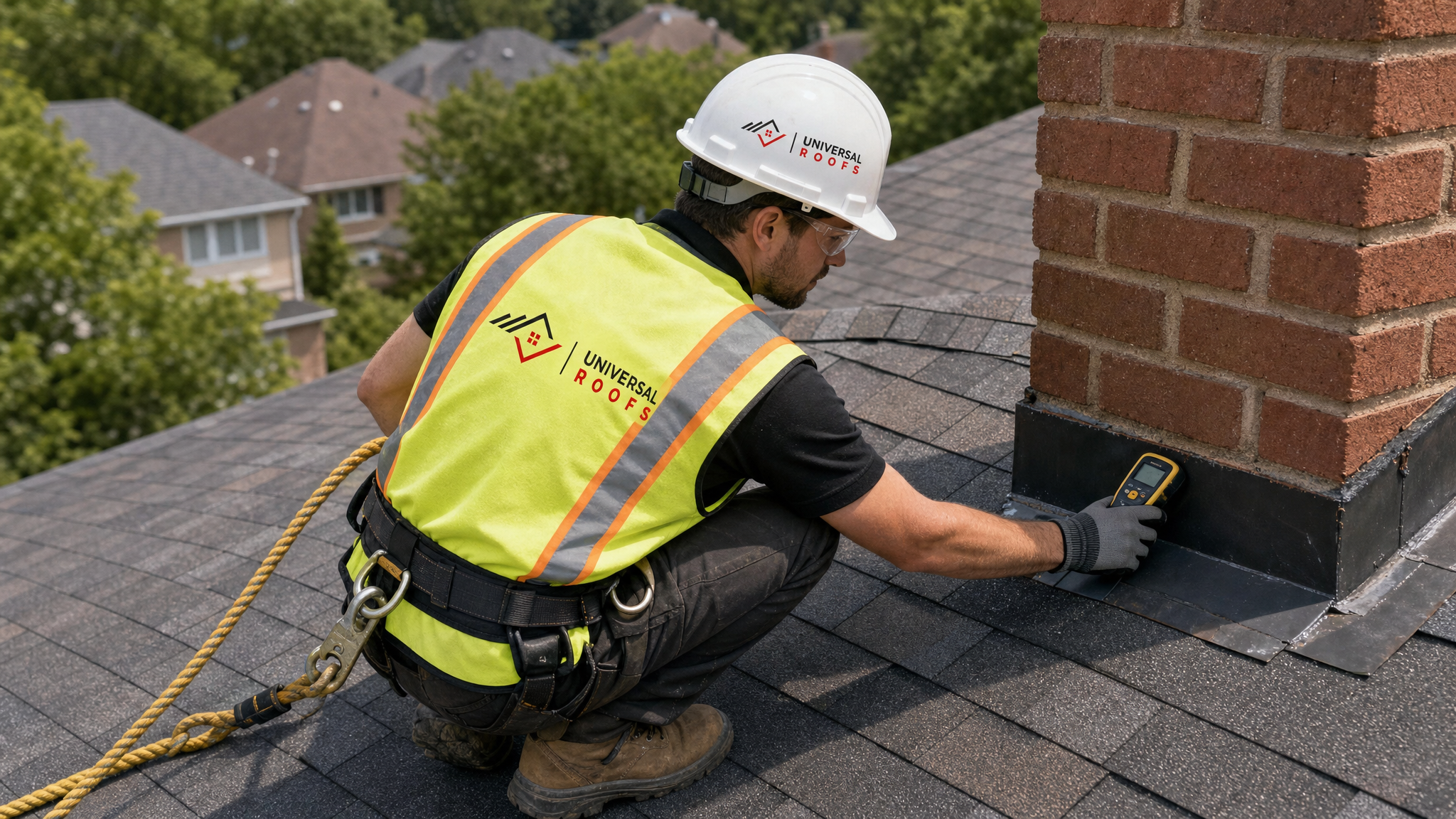
- Moisture meter readings. A calibrated moisture meter measures the water content of wood and drywall at multiple points, helping trace the trail back toward its origin rather than guessing.
- Attic and underside examination. With a flashlight and moisture meter, we check rafters, sheathing, and vent stacks from below, since fresh water stains are often visible here long before they reach the ceiling.
- Exterior roof survey. On the roof surface, we examine shingles, flashing, valleys, pipe boots, and skylight seals for cracking, lifting, or granule loss.
- Controlled water testing. When the source is not obvious, we simulate rainfall with a garden hose over isolated roof sections, working systematically from the lowest suspected point upward, while a second technician watches indoors.
- Thermal imaging (when warranted). Infrared cameras can reveal temperature differences caused by trapped moisture behind finished surfaces, especially useful on flat and low-slope sections.
- Documented findings and repair plan. Every inspection concludes with photos, a written explanation of the cause, and a clear repair recommendation — not just a verbal “it’s fixed.”
This methodical approach is what separates trusted leak detection experts for roof repair from contractors who simply seal whatever looks suspicious and hope for the best.
Comparing Leak Detection Methods
Different diagnostic tools suit different situations. The table below breaks down when each method is most effective, along with realistic cost expectations for the GTA market.
| Detection Method | Best Used For | Typical Cost (CAD) | Accuracy Level |
|---|---|---|---|
| Visual interior/attic inspection | Obvious staining, accessible attics | $150 – $300 | Moderate |
| Moisture meter tracing | Tracking migration path through wood/drywall | $200 – $400 | High |
| Controlled water testing | Intermittent or storm-only leaks | $250 – $500 | High |
| Infrared thermal imaging | Flat roofs, hidden moisture pockets | $400 – $800 | Very high |
| Full roof survey with drone photos | Steep or inaccessible roof planes | $300 – $600 | High |
Many roofing companies bundle the inspection fee into the repair cost if you proceed with the work, so it is worth asking about this upfront when comparing quotes.
Common Leak Sources on GTA Homes
Certain leak origins show up again and again across Toronto, Mississauga, Brampton, and the surrounding regions. Recognizing these patterns helps homeowners describe symptoms accurately and helps contractors narrow down likely causes before ever stepping on the roof.
| Leak Source | Warning Signs | Typical Repair Approach | Urgency |
|---|---|---|---|
| Cracked or lifted flashing | Staining near chimneys, walls, valleys | Re-flash with new metal and sealant | High |
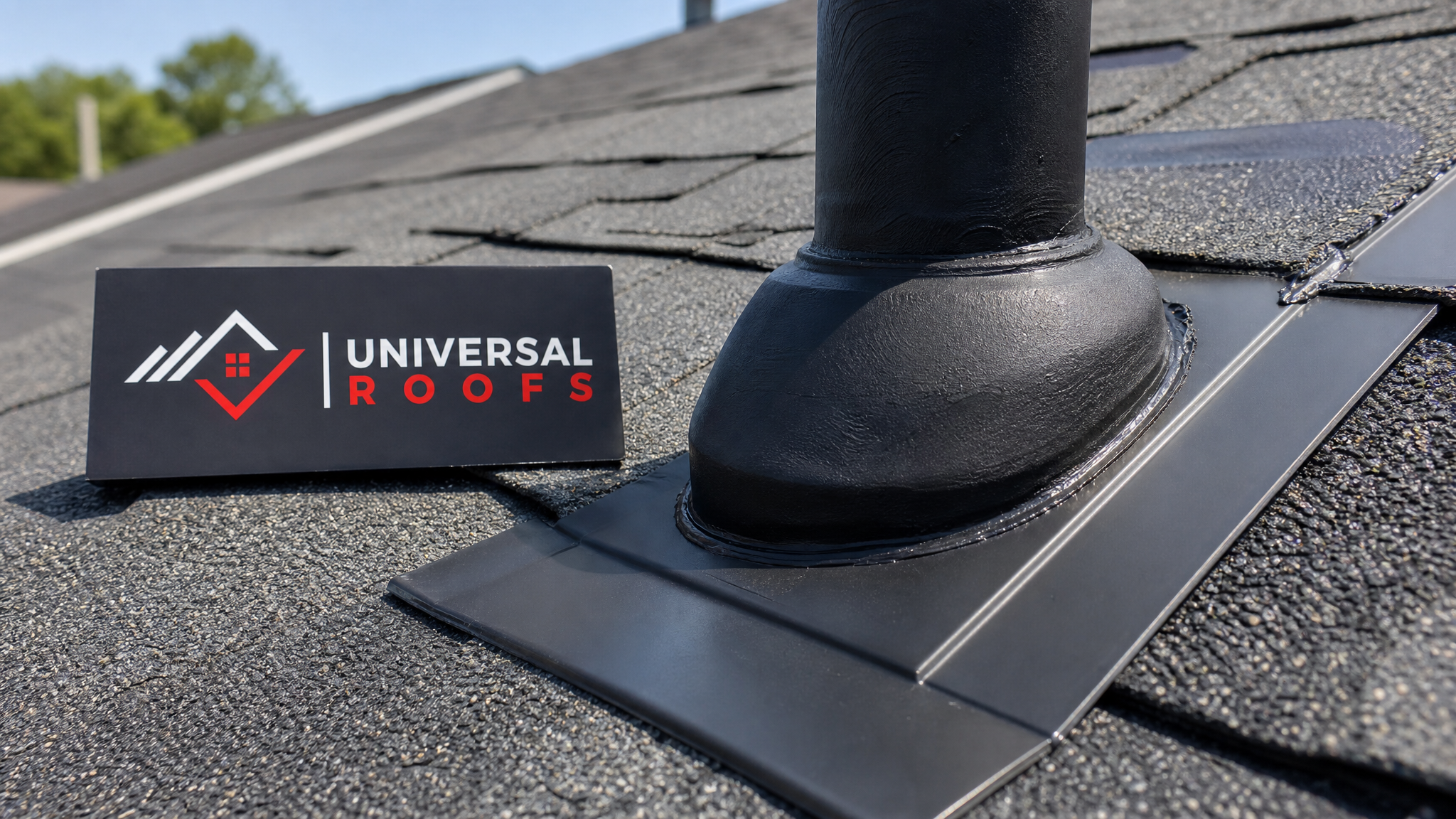
| Deteriorated pipe boots | Ring stains directly under vent stacks | Replace rubber/neoprene boot | Moderate |
| Ice dam back-up | Winter-only leaks, icicles at eaves | Improve attic insulation and ventilation | Seasonal |
| Failed skylight seals | Leaks around skylight frame edges | Reseal or replace flashing kit | High |
| Worn or missing shingles | Granules in gutters, bald patches | Spot shingle replacement | Moderate |
| Clogged or damaged gutters | Water overflow staining on fascia | Clean, repair, or reslope gutters | Moderate |
Skylights deserve special mention, since a poorly sealed unit can mimic a general roof leak for years before anyone identifies the real cause. If your home has a skylight and the staining seems to radiate from that area, our skylights team and skylight replacement specialists can isolate whether the frame, the flashing, or the surrounding shingles are responsible.
What Homeowners Can Check Before Calling a Professional
While full diagnosis is best left to trained technicians — especially anything requiring roof access — there are a few safe, ground-level steps homeowners can take to gather useful information before booking an inspection.
- Photograph the stain immediately after it appears and note the date, weather conditions, and wind direction, since wind-driven rain often reveals the true entry point.
- Check the attic with a flashlight (if safely accessible) for damp insulation, dark streaks on rafters, or daylight visible through the roof deck.
- Look at gutters and downspouts from the ground for sagging, overflow marks, or granule buildup, all of which point to drainage-related issues rather than a shingle failure.
- Note whether the leak only happens during specific conditions — heavy wind, melting snow, or sustained rain — since this narrows the diagnostic path considerably.
- Avoid climbing onto the roof yourself. Wet or aging shingles are slippery and a fall risk, and an untrained eye can easily miss the real source while disturbing evidence a technician would otherwise use.
This information dramatically speeds up a professional inspection and often reduces the number of visits required to nail down the source.
Flat Roofs and Low-Slope Sections Need a Different Approach
Detached garages, additions, and many commercial-style extensions across the GTA use flat or low-slope roofing membranes rather than shingles, and these systems fail in very different ways. Instead of a single cracked shingle, flat roof leaks are usually caused by membrane seams that have separated, ponding water that has worn through a weak spot, or flashing where the flat section meets a wall or parapet.
Because water can travel laterally underneath a membrane for a surprising distance before finding a way through, thermal imaging is especially valuable here — it reveals trapped moisture pockets that are otherwise completely invisible from above. If your property includes a flat or low-slope section, our dedicated flat roofing team applies infrared surveys and membrane-specific repair techniques rather than treating it like a standard shingle roof.
Timeline: From First Call to Confirmed Repair
Homeowners are often surprised at how quickly a leak can go from “first noticed” to “fully resolved” when a structured process is followed. The table below outlines a realistic timeline for a typical residential leak investigation and repair in the GTA.
| Stage | What Happens | Typical Duration |
|---|---|---|
| Initial call and scheduling | Symptoms described, inspection booked | Same day to 2 days |
| On-site diagnostic inspection | Interior, attic, and exterior assessment | 1 – 2 hours |
| Controlled water test (if needed) | Simulated rainfall to isolate the source | 30 – 90 minutes |
| Written estimate delivered | Cause, photos, and repair plan provided | Same day to 1 day |
| Repair work performed | Flashing, shingle, or membrane repair completed | Half day to 2 days |
| Follow-up verification | Post-repair check after next significant rainfall | Within 1 – 2 weeks |
That follow-up verification step matters more than most homeowners realize. A trustworthy contractor stands behind the diagnosis, not just the labour, and will happily return if the same stain reappears after the repair.
What Separates Trusted Leak Detection Experts From the Rest
Not every roofing company invests in proper diagnostic training or equipment. Here is what to look for when choosing who to call:
- They inspect before they quote. Any contractor willing to quote a repair price over the phone without seeing the roof is guessing, not diagnosing.
- They explain the cause in plain language and show you photos or video of the actual problem area, not just a verbal assurance.
- They carry proper licencing and insurance for working at height, and can provide proof on request.
- They offer a written warranty on both materials and labour for the specific repair performed.
- They check attic insulation and ventilation as part of the process, since poor attic conditions are a leading cause of ice-dam-related leaks — something our attic specialists routinely uncover during roof inspections.
- They have verifiable local reviews from homeowners in your area, which you can browse on our reviews page.
Universal Roofs has served the Greater Toronto Area since 2005, which means our technicians have diagnosed leaks through nearly every combination of weather, roof age, and construction style this region can produce. We work regularly across Toronto, Peel Region, York Region, Halton Region, and Durham Region, so our technicians are familiar with the specific building styles and municipal permitting requirements in each municipality.
When a Patch Isn’t Enough: Repair vs. Replacement
Not every leak calls for a full roof replacement — in fact, the majority of leaks we diagnose are resolved with a targeted repair. However, there are situations where patching repeatedly becomes false economy. If your roof is nearing or past the end of its expected service life, if multiple unrelated leak sources are appearing across different sections, or if the underlying decking has been compromised by long-term moisture exposure, a full replacement is usually the more cost-effective long-term decision.
A trustworthy inspection will always tell you honestly which category your roof falls into, supported by photographic evidence, rather than upselling a replacement that isn’t yet necessary or under-quoting a repair that won’t hold. You can also review our FAQ page and about page for more detail on how we approach these decisions.
Preventing Future Leaks After the Repair Is Done
Once the source has been identified and repaired, a few ongoing maintenance habits go a long way toward preventing a repeat visit:
- Clean gutters twice a year, ideally in late spring and late autumn, to prevent overflow and ice dam formation.
- Trim overhanging branches that can drop debris onto the roof surface or scrape shingles during windstorms.
- Schedule an annual roof inspection, ideally before winter, to catch small issues like lifted flashing before freeze-thaw cycling turns them into leaks.
- Improve attic ventilation and insulation if ice damming has been a recurring issue, since this addresses the root cause rather than just the symptom.
- Keep records of past repairs, including photos and invoices, so future contractors have context if new issues appear nearby.
Homeowners who pair a proper diagnostic repair with this kind of routine maintenance rarely need emergency leak service again for the same section of roof.
How do trusted leak detection experts for roof repair find a leak that only happens during storms?
Can a ceiling stain be far from the actual roof leak?
Is thermal imaging necessary for every roof leak inspection?
How much does professional leak detection cost in Toronto?
Why do roof leaks in the GTA often appear seasonally?
Should I repair or replace my roof if it keeps leaking?
Need Help With 7 Trusted Leak Detection?
A stubborn or recurring leak deserves a real diagnosis, not another temporary patch. Universal Roofs combines moisture tracing, controlled water testing, and thermal imaging to find the true source the first time, so the repair actually holds through the next storm and the next winter freeze-thaw cycle.
Call us today at (416) 732-2421 or request a free inspection to get started.
Universal Roofs proudly serves Toronto, Mississauga, Brampton, Vaughan, Markham, Oakville and the GTA since 2005.