
Most homeowners think about attic insulation Richmond Hill contractors install as an energy question. It is, but that is only half of it. The attic is the space that determines whether your roof deck stays dry, whether your shingles reach their rated life, and whether the warm, moist air your household produces every day ends up condensing on the underside of the sheathing through the heating season. Insulation and ventilation are one system, and treating them separately is the most common and most expensive mistake in this part of the trade.
September is the right time to deal with it. The heating season has not started, the attic is workable rather than punishing, and anything that needs doing on the roof itself can be coordinated with the same visit. This guide covers what attic insulation Richmond Hill homes should have, why air sealing comes before adding depth, how intake and exhaust venting have to be balanced, what it all costs in 2026, and how to tell whether your attic is currently working against your roof.
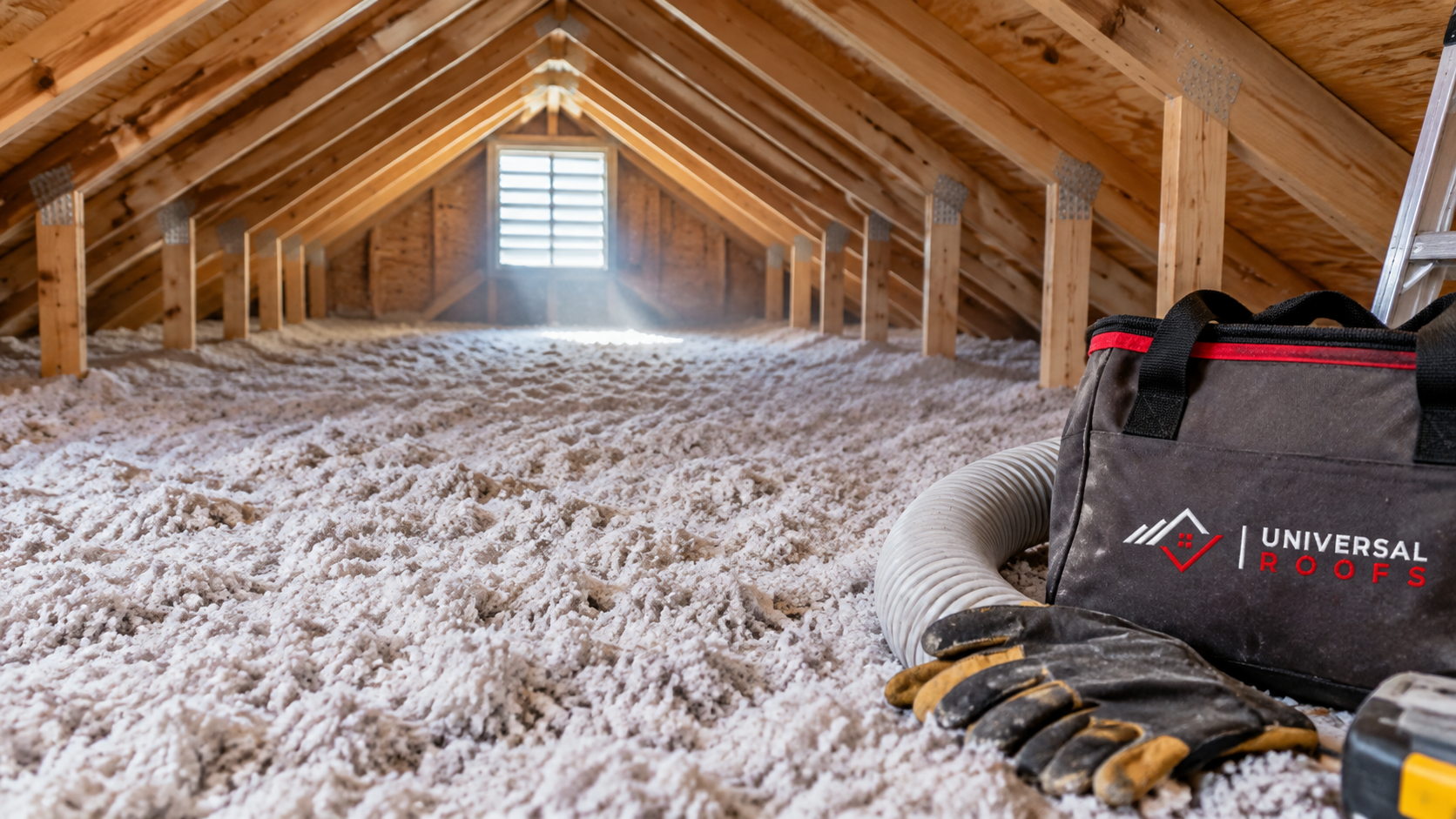
Why Attic Insulation Richmond Hill Homes Need Is A Roofing Issue
Think of attic insulation Richmond Hill contractors install as one half of a buffer between the heated house below and the outdoor air above. In an ideal attic, the ceiling plane is airtight and heavily insulated, and the space above it is ventilated well enough to stay close to outdoor temperature and humidity. When that works, the deck stays dry and the shingles run at an even temperature.
When attic insulation Richmond Hill homes carry does not work, two things go wrong. Warm moist air leaks upward through gaps around light fixtures, plumbing stacks, attic hatches and top plates, carrying household humidity into a cold space where it condenses on the coldest surface available, which is the underside of the roof sheathing. Repeated cycles of that leave dark staining, delamination of the plywood and, in bad cases, mould growth and soft decking that has to be replaced during the next roof replacement.
The second problem is heat. An under-insulated, under-ventilated attic runs warmer than it should, which ages asphalt shingles from beneath and shortens their service life. Manufacturers are explicit about this: most shingle warranties are conditional on ventilation meeting their published requirements, so an attic that fails on venting can cost you warranty coverage as well as shingle life. This is why any serious conversation about attic insulation Richmond Hill properties need has to include the roof.
R Values And What Your Attic Should Have
R value is how attic insulation Richmond Hill installers measure resistance to heat flow. Higher is better, and in an attic it is a function of both material and depth. Current Ontario Building Code requirements for new housing call for roughly R-60 in attic spaces, which is substantially more than most existing homes have.
| Era of construction | Typical original attic R value | Typical existing depth | Recommended top up |
|---|---|---|---|
| Pre 1960 homes | R-0 to R-12 | None to 4 inches | Air seal, then add to R-60 |
| 1960s to 1970s | R-12 to R-20 | 4 to 7 inches | Air seal, then add to R-60 |
| 1980s to mid 1990s | R-20 to R-31 | 7 to 10 inches | Add 8 to 12 inches |
| Late 1990s to 2000s | R-31 to R-40 | 10 to 13 inches | Add 5 to 9 inches |
| 2012 onward | R-50 to R-60 | 18 to 23 inches | Usually none needed |
You can estimate the depth of your existing attic insulation Richmond Hill builders originally provided by measuring from the top of the ceiling drywall to the top of the insulation. As a rough guide, blown fibreglass gives about R-2.6 per inch, blown cellulose about R-3.4 per inch, and fibreglass batts about R-3.2 per inch. If the ceiling joists are visible above the insulation, you are almost certainly well below R-40, which puts most older Richmond Hill homes squarely in the range where a top up pays for itself.
Richmond Hill’s housing stock spans a wide period. Older postwar and mid-century homes near the established core typically have small, low attics with minimal original insulation and soffits that were never generously vented. The large subdivisions built from the late 1980s onward have deeper trussed attics that are easier to top up, but many of them were finished to the minimum standard of their day. Newer estate and executive homes are usually close to current standards. The right attic insulation Richmond Hill strategy depends on which of those you own.
Air Sealing Comes Before Depth
Adding attic insulation Richmond Hill homeowners pay for over a ceiling that leaks air is like putting a thicker sweater over a shirt full of holes. Insulation slows conduction. It does nothing to stop air movement, and air movement is what carries both heat and moisture.
A proper air sealing pass happens before any new attic insulation Richmond Hill crews bring goes down. It targets the places where the ceiling plane is penetrated: pot light housings, plumbing vent stacks, electrical boxes and wire penetrations, bathroom and kitchen exhaust fan bodies, the top plates of interior walls, chimney and flue chases, and the attic hatch itself. Each of those gets sealed with the appropriate material, fire rated where heat is involved, and the hatch gets weatherstripped and insulated on its upper face.
Bathroom fans deserve their own mention because they are a chronic failure point. A fan that discharges into the attic instead of through the roof or a gable wall is pumping shower humidity directly at the roof deck every day. It is a leading cause of the dark staining found on sheathing during tear-offs, and correcting it is inexpensive. Any contractor quoting attic insulation Richmond Hill homeowners request should be checking where those ducts terminate.
Air sealing typically adds a few hundred dollars to a job and delivers a disproportionate share of the benefit. A quote that goes straight to blowing more material on top without mentioning it is a quote for a cheaper job, not a better one.
Ventilation: The Half That Protects The Deck
Ventilation is the other half of any attic insulation Richmond Hill project, and it works on a simple principle. Cool outdoor air enters low at the soffits, moves up along the underside of the deck, and exits high at ridge or roof vents, carrying moisture and heat with it. The general design target is one square foot of net free vent area for every three hundred square feet of attic floor, split roughly evenly between intake and exhaust.
The word that matters is balanced. Exhaust without intake is worse than no upgrade at all, because the exhaust vents will pull their replacement air from the easiest available source, which is the heated house below, drawing conditioned air and humidity straight into the attic. This is exactly what happens when a contractor adds ridge vent to a home whose soffits are blocked with old insulation.
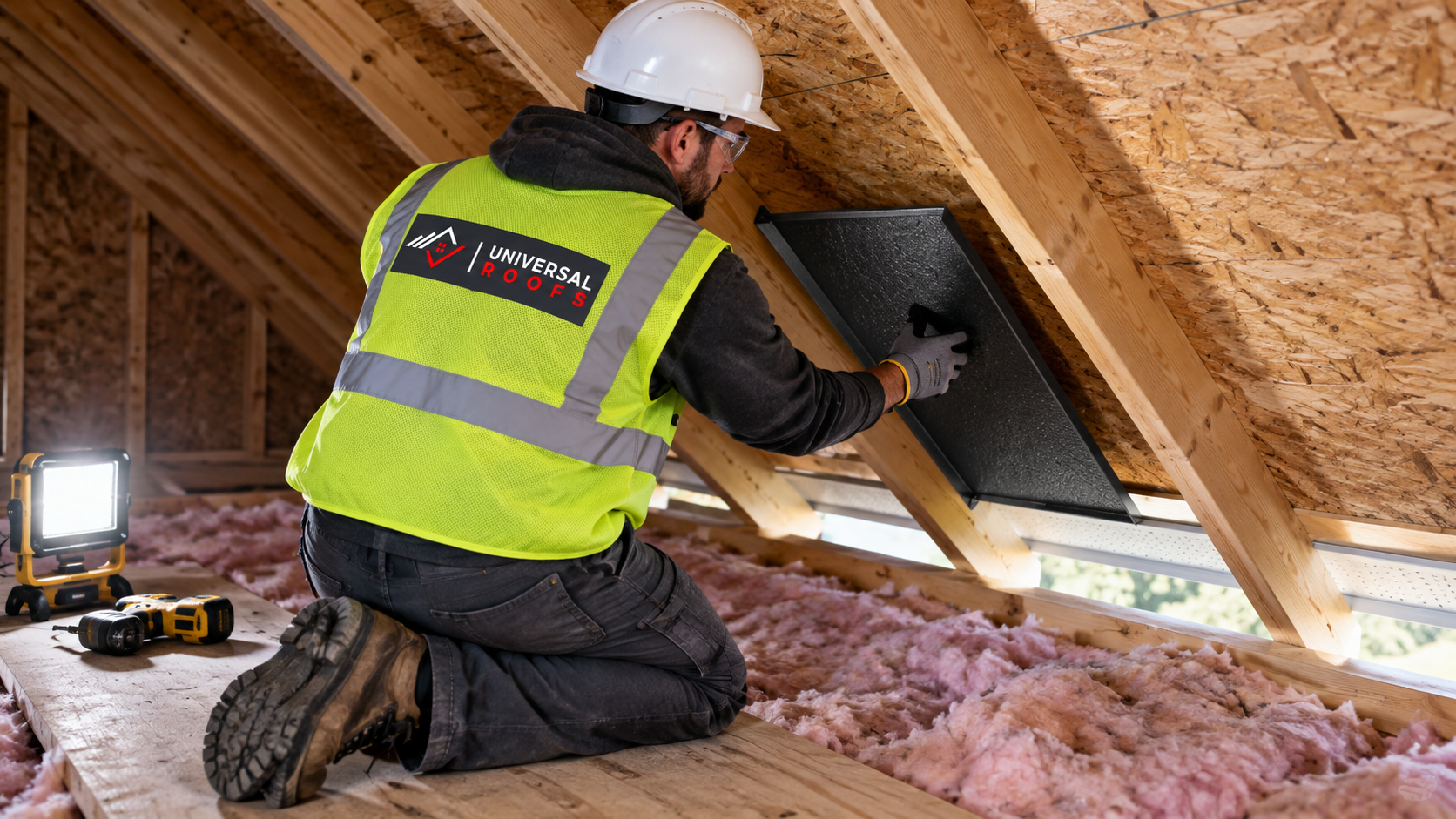
Blocked soffits are extremely common, and they are usually created by a previous insulation top up where material was blown right out to the eaves. The fix is baffles, rigid channels stapled between the rafters at each bay that hold the insulation back and keep a clear air path from the soffit into the attic. Baffles must be installed before new material goes in, and they should be present in every bay, not just a few.
Mixing exhaust types is another frequent error. Ridge vent combined with static box vents or a powered fan on the same roof plane short circuits the airflow, pulling air in through the lower vents rather than from the soffits. Pick one exhaust strategy per roof plane and make the intake match it. Getting this right is the difference between attic insulation Richmond Hill crews install that protects your roof and a top up that quietly damages it.
Insulation Materials Compared
Four materials cover almost all attic insulation Richmond Hill work and residential attic work across Ontario, and each has a clear best use.
| Material | R value per inch | Installed cost per sq ft | Best use |
|---|---|---|---|
| Blown fibreglass | R-2.5 to R-2.7 | $2.20 to $3.40 | Standard top up over existing material |
| Blown cellulose | R-3.2 to R-3.7 | $2.60 to $3.90 | Where depth is limited, better air resistance |
| Fibreglass batts | R-3.1 to R-3.8 | $2.40 to $4.00 | Small accessible attics, knee walls, hatches |
| Closed cell spray foam | R-6.0 to R-6.5 | $6.50 to $11.00 | Cathedral ceilings and unvented assemblies only |
| Removal of contaminated material | Not applicable | $1.60 to $3.20 | Where existing insulation is wet or mould affected |
For a standard vented attic, blown attic insulation Richmond Hill crews install is the right answer because it fills irregular spaces and flows around obstructions in a way batts cannot. Cellulose has a slight edge in low attics because it reaches target R value in less depth, and it resists air movement better. Spray foam belongs on cathedral ceilings and in assemblies deliberately designed to be unvented, not on a conventional attic floor where it costs several times as much for no functional advantage.
2026 Costs And Realistic Payback
Attic insulation Richmond Hill pricing is driven by floor area and by how much preparation is required. The figures below are typical for York Region this season.
| Attic floor area | Air sealing and baffles | Top up to R-60, blown | Typical total |
|---|---|---|---|
| 800 to 1,000 sq ft, bungalow | $450 to $900 | $1,900 to $3,000 | $2,350 to $3,900 |
| 1,000 to 1,400 sq ft, two-storey | $600 to $1,100 | $2,400 to $4,100 | $3,000 to $5,200 |
| 1,400 to 1,900 sq ft, large detached | $800 to $1,500 | $3,300 to $5,600 | $4,100 to $7,100 |
| Add on: removing old wet insulation | Not applicable | $1,400 to $4,200 | Varies with area |
| Add on: new roof vents and soffit work | $400 to $1,400 | Not applicable | Varies with vent count |
On payback, be realistic. A top up from roughly R-20 to R-60 on a typical detached home commonly reduces heating and cooling energy use by somewhere in the range of ten to twenty per cent, which on most bills means the work pays for itself over roughly six to twelve years. The stronger argument is usually comfort and roof protection rather than pure payback: fewer cold ceilings and draughts upstairs, a more even indoor temperature, and a deck that is not being condensed on every winter. Homeowners can read more about what the work involves on our attic insulation and ventilation service page.
Signs Your Attic Is Underperforming
- Visible ceiling joists. If the joists stand above the insulation, you are well below current standards.
- Cold upstairs rooms. Particularly rooms above garages or under large roof areas.
- Frost or moisture on the underside of the sheathing. Clear evidence of warm moist air reaching a cold deck.
- Dark staining on the roof sheathing. Usually chronic condensation, often near bathroom fan terminations.
- Blocked soffits. Look for insulation packed into the eaves with no clear air channel.
- A hot attic in summer. Suggests exhaust or intake is inadequate, which also ages shingles.
- Rising energy bills without a rate change. Settled or compressed insulation loses effective R value over decades.
If you find any of these, get the attic assessed before the heating season rather than after. Our Richmond Hill roofing services page sets out how we handle attic and roof assessments together, which matters because the fix is often part attic and part roof.
What The Work Involves
A typical attic insulation Richmond Hill job runs half a day to a full day. The crew protects the access route and the hatch area, then inspects the existing material for moisture, rodent activity and settling. Contaminated material is removed and bagged where necessary. Air sealing follows, then baffles are installed at every rafter bay, then any wiring, fan ducting or venting corrections are made while there is still clear access.
New material is blown to a measured depth with depth markers left in place so the finished R value can be verified. Roof vents and soffit intake are corrected from outside where needed, which is why having a roofing contractor handle attic insulation Richmond Hill homes require is often more efficient than using an insulation-only company that cannot touch the roof. Finally the hatch is sealed and insulated and the crew documents the finished depth with photos.
Frequently Asked Questions
How much attic insulation Richmond Hill homes should have?
Can I just add insulation on top of what is already there?
Does insulation alone stop condensation on the roof deck?
What does attic insulation cost in Richmond Hill in 2026?
Will more insulation void my shingle warranty?
Should I do the attic before or after replacing the roof?
Book An Assessment For Attic Insulation Richmond Hill Homes Deserve
The best time to look at an attic is before the heating season, while there is still time to correct air leaks, baffles and venting properly. Universal Roofs works from its Toronto base throughout Richmond Hill and York Region, and because we are roofers we assess the insulation, the ventilation and the deck condition as one system rather than quoting depth alone.
Call us today at (416) 732-2421 or request a free consultation. We will measure your existing depth, check the soffits and fan terminations, and give you a written scope covering sealing, baffles, venting and material.
Universal Roofs proudly serves homeowners in Richmond Hill and across the Greater Toronto Area.