
Most attics do not need their old insulation taken out. If it is dry, clean and simply too thin, the usual fix is to air seal what you can reach and add more on top. Attic insulation removal becomes the right call when the existing material is contaminated, damaged or potentially hazardous: rodent nests and droppings, mould growth, smoke from a fire, soaking from a roof leak, or loose vermiculite that may contain asbestos. In those cases, piling new insulation on top just buries the problem.
Knowing which case you are in decides the whole job. A clean, thin layer is a top-up. A contaminated or wet one means sealed vacuum removal, cleaning, air sealing while the floor is bare and then new insulation, ideally finished in autumn before the heating season settles in.
When Attic Insulation Removal Is Actually Necessary
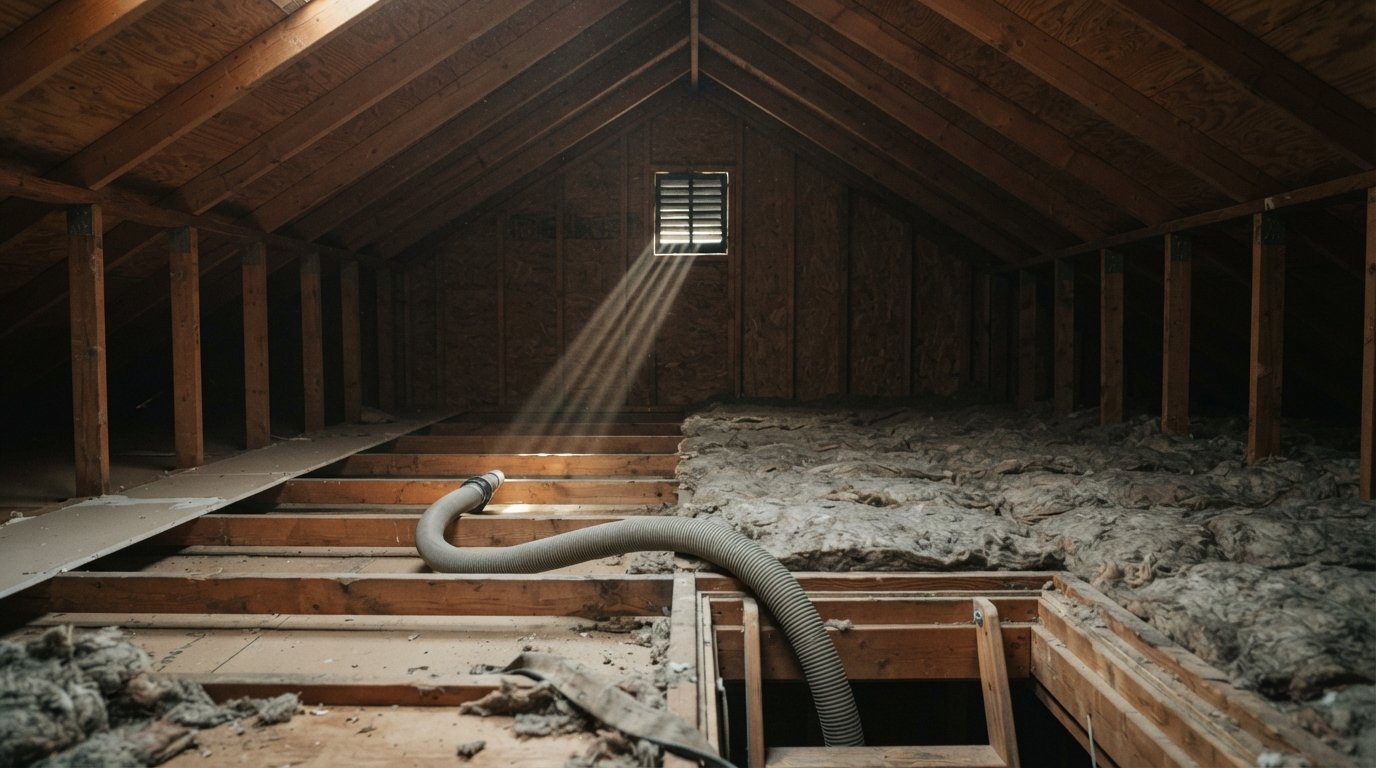
A homeowner usually arrives at the question because of a smell, a noise, a stain or a home inspection report. The trigger matters less than what is found in the attic. We sort what we see into three groups: insulation that can stay and be topped up, insulation that can be partly removed in one area, and insulation that has to come out across the whole attic.
| What is found | Typical signs | Usual approach |
|---|---|---|
| Thin but clean, dry insulation | Joists visible, no odour, no stains | Air seal accessible gaps and top up; removal rarely needed |
| Rodent or raccoon activity | Droppings, tunnels, nesting, urine odour, flattened areas | Exclusion first, then full or zoned removal and sanitizing |
| Mould on sheathing or framing | Dark staining on roof boards, musty smell, frost or damp in winter | Find and fix the moisture cause; remove affected insulation; treat surfaces |
| Water damage from a roof leak | Matted or compressed insulation, ceiling stains below | Repair the leak; remove wet material in that zone; dry and replace |
| Smoke or fire damage | Soot, lingering smoke odour, charred framing | Full removal, cleaning and deodorizing, often through an insurance claim |
| Loose vermiculite | Pebble-like, grey-brown or gold, shiny flecks | Do not disturb; treat as possible asbestos; qualified abatement only |
The diagnosis is the most important part of any attic insulation removal. Removing insulation without understanding why it went bad leads to the same problem a year later. Our attic insulation and ventilation services always start with an inspection of the roof deck, the ventilation, the bathroom fan ducts and any signs of animal entry, because those are usually the root causes.
Rodent And Wildlife Contamination
Attics are warm, dark and quiet, which is why squirrels, mice, rats and raccoons move in, particularly as nights cool in autumn. The damage they do to insulation goes beyond nesting. They tunnel through it, compress it into runways, and leave droppings and urine that soak into the fibres. Over time a contaminated attic develops a persistent odour that can reach the rooms below, especially around pot lights and the attic hatch.
Why contaminated insulation should not stay
Rodent droppings and urine can carry pathogens, and public health agencies advise against sweeping or vacuuming droppings dry because that can put particles in the air. Raccoon latrines can also carry roundworm eggs that are hazardous to people. Insulation soaked with this material cannot be cleaned in place. The safe approach is to remove it with sealed equipment, disinfect the exposed surfaces and replace it.
Exclusion comes first
There is no point booking attic insulation removal while animals can still get back in. Entry points are usually at roof vents, soffit corners, the gap where a lower roof meets a wall, plumbing stack flashings and damaged fascia. Those openings need to be closed with durable materials, and any animals inside need to be dealt with by a licensed wildlife removal service where appropriate, before removal begins. In some cases, roof or soffit repair is part of the exclusion work.
Mould, Smoke And Water Damage
Mould in an attic is almost always a moisture problem first and an insulation problem second. Warm, moist air from the house leaks into the attic through gaps in the ceiling, condenses on the cold underside of the roof sheathing in winter, and feeds mould. Bathroom fans venting into the attic, rather than outdoors, make it much worse. Blocked soffit vents and too little exhaust ventilation trap the moisture in.
The insulation itself may not be growing mould, but if it is damp, stained or carrying spores, it usually comes out so the sheathing and framing can be inspected and treated properly. The bigger job is fixing the cause: sealing air leaks, venting fans outside, opening soffit intake, and balancing intake and exhaust.
Water damage from a roof leak is more localized. Wet blown insulation, especially cellulose, compresses and loses much of its insulating value. Fibreglass can dry but often stays matted. After the leak is repaired, the wet section is removed, the area is dried and new insulation is installed to the same depth as the rest of the attic.
Smoke damage is different again. Even a small fire can push smoke and soot into the attic, and insulation holds odour for a long time. Full removal, cleaning of framing and sheathing, and odour treatment are normally part of the restoration, often coordinated with an insurance adjuster.
Vermiculite: Test Or Treat As Asbestos, Do Not Disturb
Vermiculite is a loose, pebble-like insulation, usually grey-brown or gold with shiny flecks, that was used in many Canadian homes for decades. Some vermiculite insulation sold in Canada, much of it under the Zonolite brand, was contaminated with asbestos. Health Canada’s guidance is that if you have vermiculite in your attic, you should assume it may contain asbestos and avoid disturbing it.
In practice, that means:
- Do not go into the attic or store items there, and keep the hatch closed and sealed.
- Do not try to remove it yourself or use a standard vacuum or insulation vacuum on it.
- Seal cracks and gaps in the ceiling below where dust could drop into the living space.
- If testing is needed, have samples taken by a qualified professional and analysed by an accredited lab, keeping in mind that testing a sample may not represent the whole attic.
- If removal is needed, for a renovation or because the material is disturbed, use a qualified asbestos abatement contractor working to Ontario’s asbestos rules for construction work.
We will not vacuum out vermiculite as a regular insulation job. If we find it during an inspection, we stop, explain the situation and recommend a qualified abatement firm. Once abatement is complete and the attic has been cleared, air sealing and new insulation can proceed normally. Confirm current guidance from Health Canada and Ontario’s occupational health and safety requirements for asbestos before planning any work.
How Vacuum Removal Works
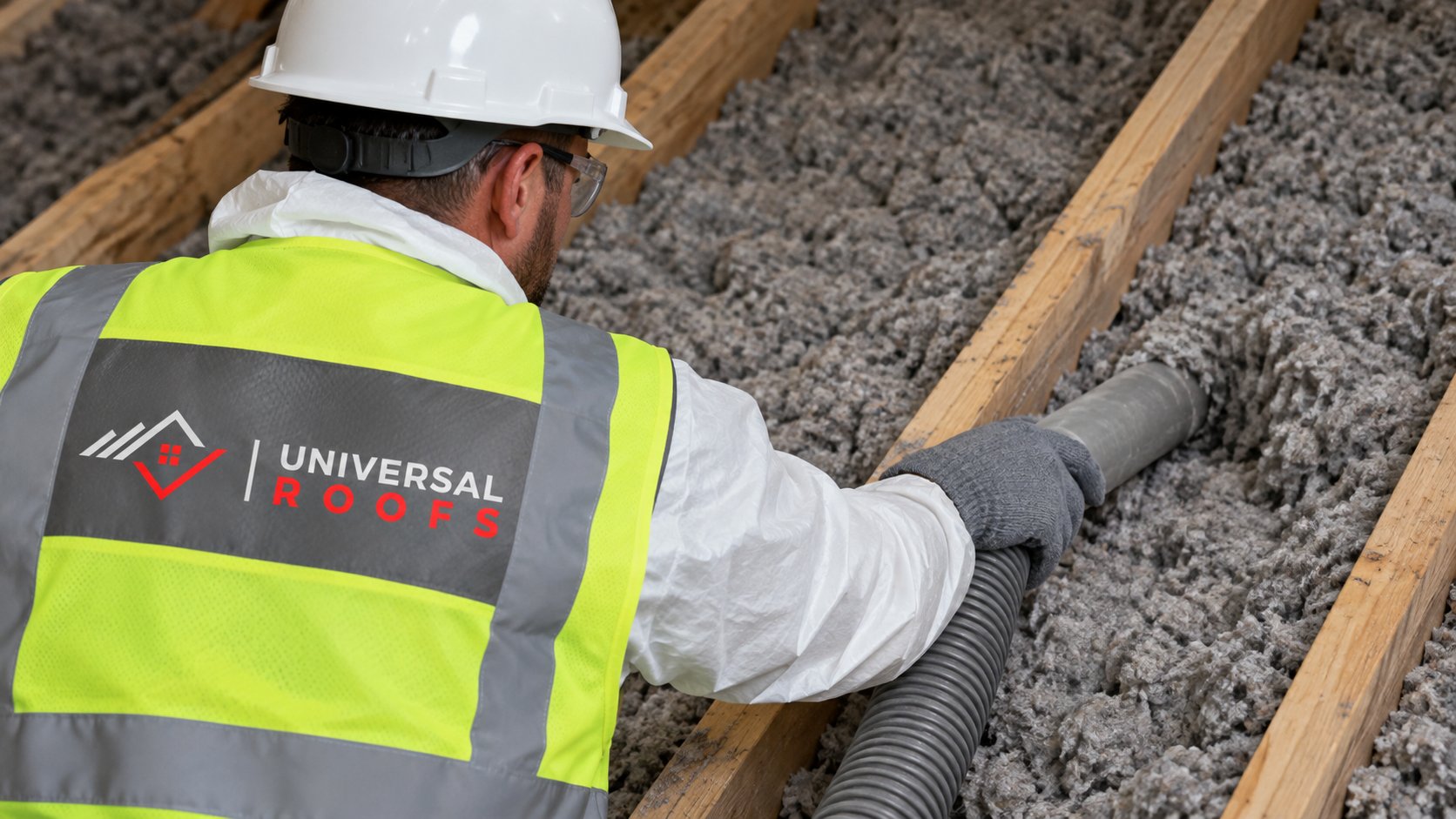
For fibreglass, cellulose or rock wool that is not suspected of containing asbestos, attic insulation removal is done with a high-powered insulation vacuum. A large-diameter hose runs from the vacuum unit outside the house, through a window or door, to the attic hatch. The insulation is pulled through the hose into large collection bags outside, so very little passes through the living space.
| Step | What happens | Why it matters |
|---|---|---|
| 1. Inspection and plan | Assess the attic, identify contamination, find the cause | Avoids repeating the problem after new insulation goes in |
| 2. Protect the house | Floor runners, plastic sheeting, sealed hatch area, hose route | Keeps dust and debris out of living spaces |
| 3. Exclusion or repair | Close animal entry points, fix roof leaks, correct venting | Removal is pointless if the cause remains |
| 4. Vacuum removal | Insulation drawn out through sealed hoses into collection bags | Minimizes airborne dust inside the house |
| 5. Cleaning and treatment | Vacuum debris, sanitize or treat surfaces as needed | Removes residue, droppings and spores |
| 6. Air sealing | Seal top plates, penetrations, light fixtures and the hatch | Stops warm, moist air from reaching the attic |
| 7. Ventilation and baffles | Install or repair baffles at the eaves, check exhaust vents | Keeps intake air moving and insulation clear of the soffits |
| 8. New insulation | Blow in insulation to the planned depth | Restores and usually improves thermal performance |
The crew working in the attic wears respirators rated for the material, protective suits, gloves and eye protection. In contaminated attics, more protection and decontamination steps are used. Bags are sealed and taken for disposal according to local rules.
Air Sealing Before The New Insulation Goes In
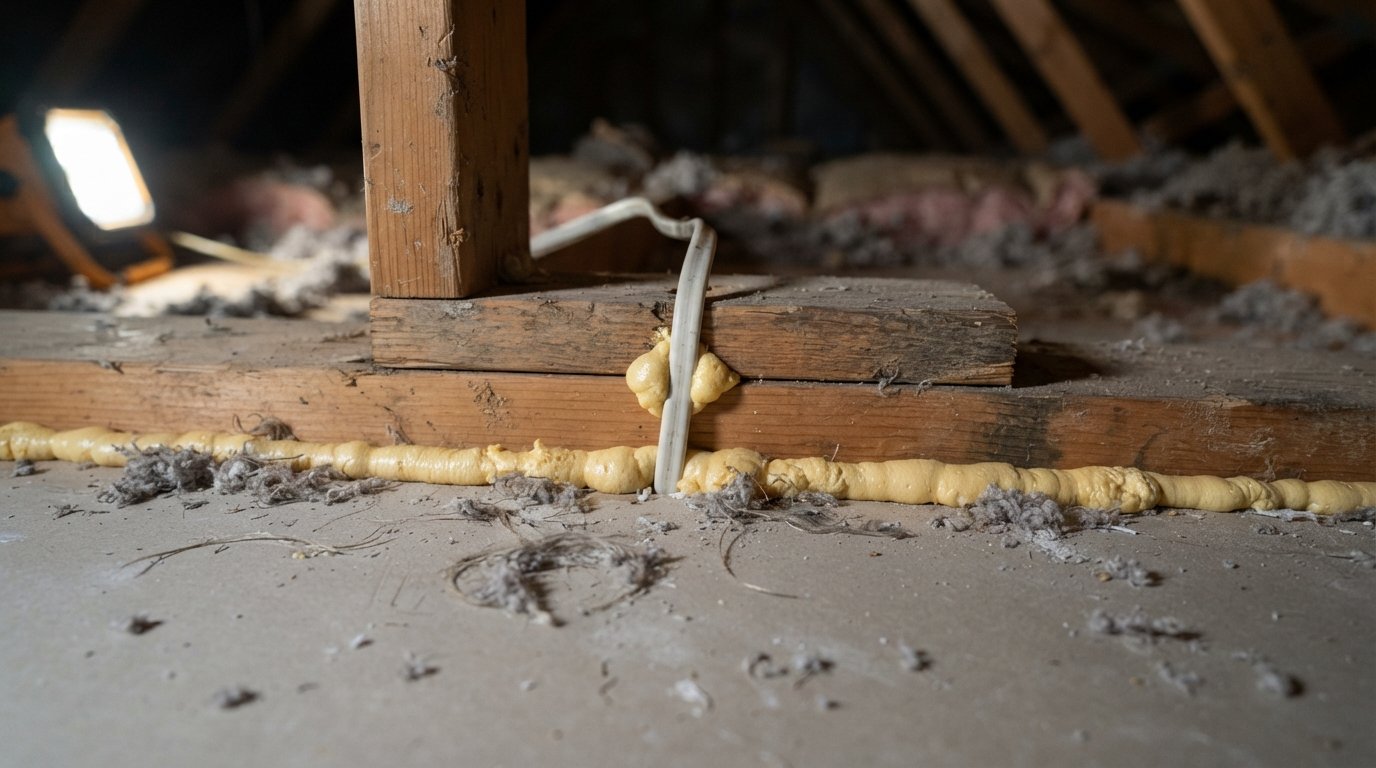
The best part of attic insulation removal is often what it reveals. With the attic floor bare, every gap in the ceiling is accessible: the top plates of interior walls, holes drilled for wiring and plumbing, gaps around chimneys and flues, recessed light housings, bathroom fan housings and the attic hatch. These are the paths warm, moist air takes from the house into the attic.
Air sealing is usually done with spray foam, caulk and rigid materials, with fire-rated materials and clearances where required around chimneys and flues. Recessed lights that are not rated for insulation contact need covers or replacement with rated fixtures. The hatch gets weatherstripping and insulation on its top. Bathroom fan ducts are checked, sealed and run to the outdoors.
This step is difficult to do well once new insulation is in place, which is why it belongs between removal and reinsulation. In many older homes, air sealing makes as much difference to comfort and moisture control as the insulation itself.
Choosing The New Insulation And Ventilation
Most attics are reinsulated with blown fibreglass or cellulose. Both work well when installed to an even depth and kept clear of the soffit vents with baffles. Current Ontario new-home requirements for attic insulation are much higher than what older homes usually have, so a removal is a chance to bring the attic up to a modern level. Ask your contractor what R-value and depth they are proposing and confirm it against current Ontario Building Code requirements and any rebate program rules.
Ventilation should be checked at the same time. A balanced system has clear intake at the soffits and enough exhaust near the ridge. Fixing ventilation without air sealing, or air sealing without ventilation, leaves part of the problem in place. In attics our crews open up during roofing, eavestroughs and attic work across Halton Region, it is common to find original soffit vents painted over or buried under insulation.
Timing Attic Insulation Removal Before Winter
Autumn is a practical window for attic insulation removal. Attic temperatures are comfortable for crews, roof repairs and exclusion work can be done before winter weather, and the new insulation and air sealing are in place for the heating season. Late in the year, rodents look for warm shelter, so autumn is also when exclusion has the most value.
If the work is left until deep winter, attic access can still be done, but roof work such as sealing animal entry points or repairing leaks becomes harder and more weather dependent.
Cost estimates
The cost of attic insulation removal depends on attic size, access, the type and depth of insulation, the level of contamination and what follows the removal. The ranges below are broad estimates that vary by house and scope, not quotes:
| Work item | Typical estimate range | What pushes it higher |
|---|---|---|
| Standard removal of clean or water-damaged insulation | Often around $1.50 to $3.50 per square foot of attic floor | Deep cellulose, low roof pitch, small or awkward hatch |
| Removal of rodent-contaminated insulation with sanitizing | Often around $2.50 to $5.00 per square foot | Heavy contamination, raccoon latrines, extra protective steps |
| Air sealing after removal | Commonly several hundred to a few thousand dollars | Many pot lights, chimneys, open wall cavities |
| New blown insulation | Priced by area and target depth | Higher target R-value, baffles needed at every rafter bay |
| Vermiculite abatement | Quoted separately by abatement contractors, often much higher | Attic size, containment requirements, disposal rules |
Ask for a quote that separates removal, cleaning, exclusion, air sealing, ventilation work and new insulation, so you can see where the money goes.
Questions to ask before you hire
- What did you find, and what caused it? A contractor should be able to explain the source of the contamination or moisture, not just quote a removal.
- How will the house be protected? Ask where the vacuum unit sits, how the hose is routed and how the hatch area is sealed.
- Is air sealing included, and which penetrations will be sealed?
- What depth and R-value will the new insulation reach, and will baffles be installed at the eaves?
- What happens if vermiculite or another suspect material is found partway through the job?
Attic Insulation Questions
Do I have to remove old insulation before adding more?
How do I know if my attic has vermiculite?
Is insulation with mouse droppings dangerous?
How long does attic insulation removal take?
Will removal make a mess inside my house?
Why seal air leaks before reinsulating?
Booking Attic Insulation Removal This Autumn
If your attic has rodent damage, mould, water damage or old insulation you are not sure about, Universal Roofs can inspect it, explain what needs to come out and why, and plan exclusion, air sealing, ventilation and new insulation as one job.
Call us today at (416) 732-2421 or request a free estimate.
Attic clean-outs, air sealing and reinsulation for Halton Region and across the GTA.